

The DOI matches its Crossref record; 34 of the 34 references it cites were found in a registry or an index.
A comparison of methods for differential expression analysis of RNA-seq data
Open accessAbstract
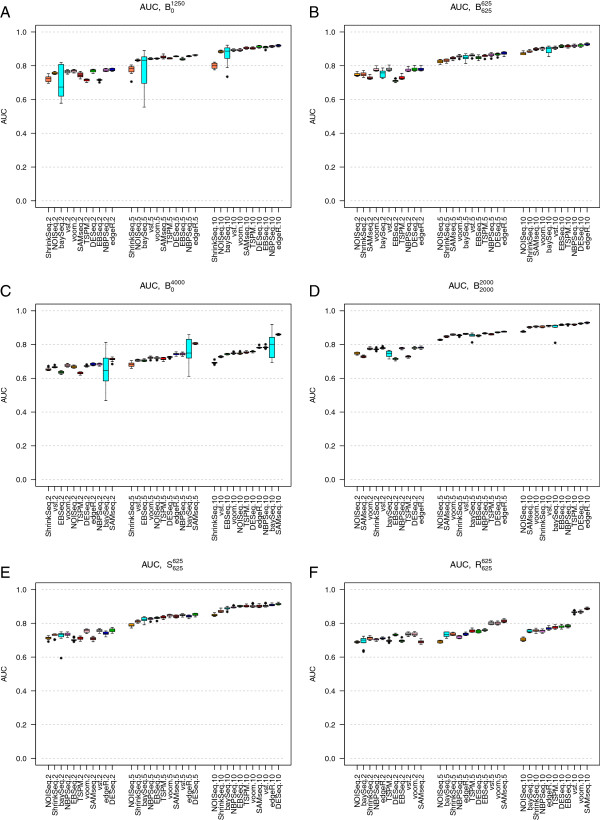
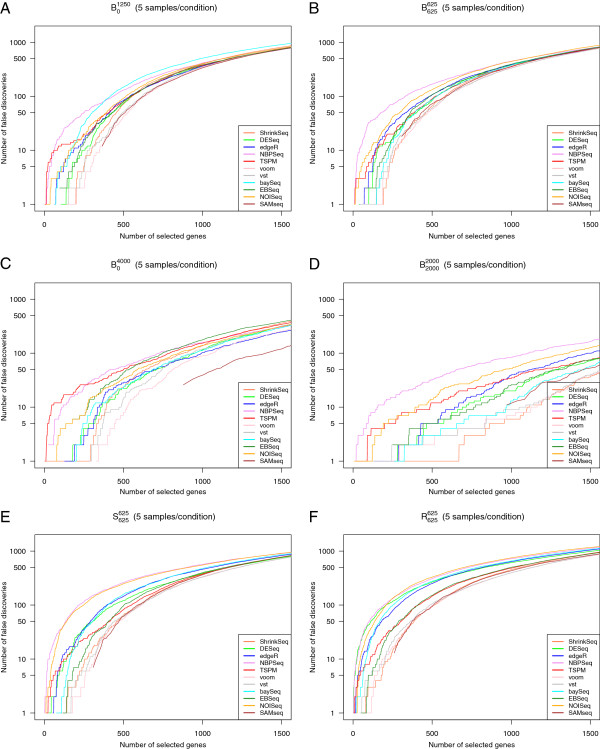
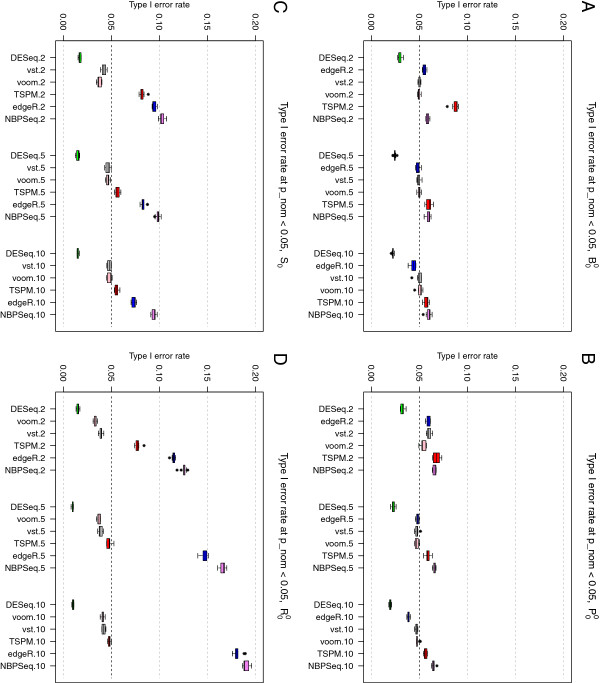
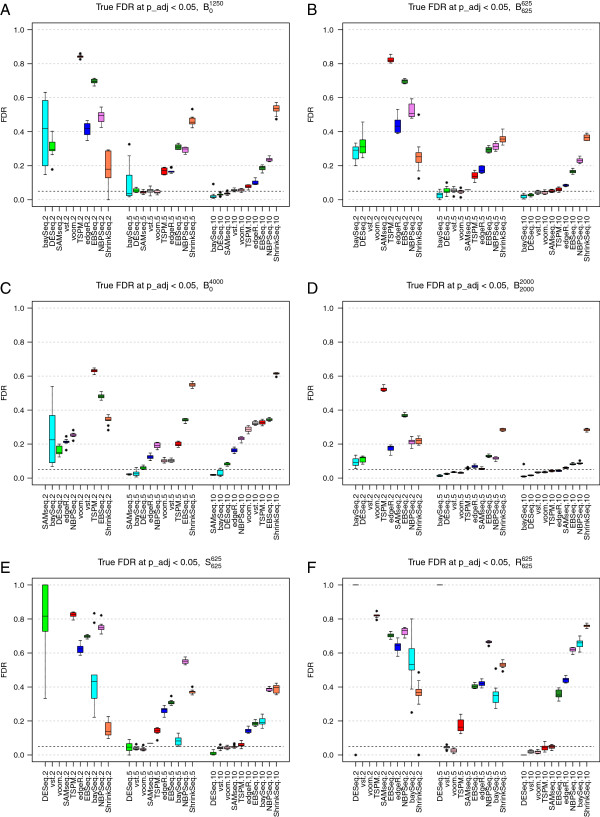
BACKGROUND: Finding genes that are differentially expressed between conditions is an integral part of understanding the molecular basis of phenotypic variation. In the past decades, DNA microarrays have been used extensively to quantify the abundance of mRNA corresponding to different genes, and more recently high-throughput sequencing of cDNA (RNA-seq) has emerged as a powerful competitor. As the cost of sequencing decreases, it is conceivable that the use of RNA-seq for differential expression analysis will increase rapidly. To exploit the possibilities and address the challenges posed by this relatively new type of data, a number of software packages have been developed especially for differential expression analysis of RNA-seq data. RESULTS: We conducted an extensive comparison of eleven methods for differential expression analysis of RNA-seq data. All methods are freely available within the R framework and take as input a matrix of counts, i.e. the number of reads mapping to each genomic feature of interest in each of a number of samples. We evaluate the methods based on both simulated data and real RNA-seq data. CONCLUSIONS: Very small sample sizes, which are still common in RNA-seq experiments, impose problems for all evaluated methods and any results obtained under such conditions should be interpreted with caution. For larger sample sizes, the methods combining a variance-stabilizing transformation with the 'limma' method for differential expression analysis perform well under many different conditions, as does the nonparametric SAMseq method.
Overview
The claims and statistics of this paper haven’t been checked yet.
Run the check — free, no account needed. It reads the open-access text and checks the sources it cites.
Integrity signals
Registry
Cites
Statistics
Figures
Verification
Claims the paper makes
The claims and statistics of this paper haven’t been checked yet.
Run the check — free, no account needed. It reads the open-access text and checks the sources it cites.
Claims other papers make about this one
Each is checked against this paper’s own text: does it say what the citing paper says it does?
The source backs part of the claim, not all of it — or backs it for a different population, condition or comparison.
In the citing paper
“Recent independent comparison studies have demonstrated that the choice of the method (or even the version of a software package) can markedly affect the outcome of the analysis and that no single method is likely to perform favorably for all datasets [56, 63, 64]”
From A survey of best practices for RNA-seq data analysis (2016) · cites this paper as [56]
Experimental — accuracy not yet measuredThe cited source says what the claim attributes to it.
In the citing paper
“Methods for transforming normalized counts of RNA-seq reads while learning the variance structure of the data have been shown to perform well in comparison to the discrete distribution approaches described above [55, 56].”
From A survey of best practices for RNA-seq data analysis (2016) · cites this paper as [56]
In the citing paper
“Most comparison studies have focused on simulated datasets [56, 208, 209] or on samples to which exogenous RNA (‘spike-in’) has been added in known quantities [63, 196].”
From A survey of best practices for RNA-seq data analysis (2016) · cites this paper as [56]
In the citing paper
“Cuffdiff and Cuffdiff2 have performed surprisingly poorly in the comparisons [56, 63].”
From A survey of best practices for RNA-seq data analysis (2016) · cites this paper as [56]
In the citing paper
“Among the tools, limma has been shown to perform well under many circumstances and it is also the fastest to run [56, 63, 64].”
From A survey of best practices for RNA-seq data analysis (2016) · cites this paper as [56]
In the citing paper
“Appropriately transformed and normalized sequencing data can be treated similarly to microarray data as far as statistical modelling and multiple corrections are concerned175,220.”
From Systems biology and gene networks in neurodevelopmental and neurodegenerative disorders (2015) · cites this paper as [220]
Self-check
Percentages, sums and reported differences re-computed from the paper’s own numbers.
The self-check needs the paper’s full text.
Citations
Cites
R: A Language and Environment for Statistical Computing
R Core Team (2000) · doi:10.32614/r.manuals · Cited by 355,893
Robinson, M. D., McCarthy, D. J., & Smyth, G. K. (2010) · Bioinformatics · doi:10.1093/bioinformatics/btp616 · Cited by 41,364
Differential expression analysis for sequence count data
Anders, S., & Huber, W. (2010) · Genome Biology · doi:10.1186/gb-2010-11-10-r106 · Cited by 15,581
Trapnell, C., Williams, B. A., Pertea, G., Mortazavi, A., Kwan, G., van Baren, M. J., Salzberg, S. L., Wold, B. J., & Pachter, L. (2010) · Nature Biotechnology · doi:10.1038/nbt.1621 · Cited by 15,556
Mapping and quantifying mammalian transcriptomes by RNA-Seq
Mortazavi, A., Williams, B. A., McCue, K., Schaeffer, L., & Wold, B. (2008) · Nature Methods · doi:10.1038/nmeth.1226 · Cited by 13,696
Smyth, G. K. (2004) · Statistical Applications in Genetics and Molecular Biology · doi:10.2202/1544-6115.1027 · Cited by 11,829
A scaling normalization method for differential expression analysis of RNA-seq data
Robinson, M. D., & Oshlack, A. (2010) · Genome Biology · doi:10.1186/gb-2010-11-3-r25 · Cited by 7,876
Rue, H., Martino, S., & Chopin, N. (2009) · Journal of the Royal Statistical Society Series B: Statistical Methodology · doi:10.1111/j.1467-9868.2008.00700.x · Cited by 5,279
RNA-seq: An assessment of technical reproducibility and comparison with gene expression arrays
Marioni, J. C., Mason, C. E., Mane, S. M., Stephens, M., & Gilad, Y. (2008) · Genome Research · doi:10.1101/gr.079558.108 · Cited by 2,771
Bullard, J. H., Purdom, E., Hansen, K. D., & Dudoit, S. (2010) · BMC Bioinformatics · doi:10.1186/1471-2105-11-94 · Cited by 1,680
Differential expression in RNA-seq: A matter of depth
Tarazona, S., García-Alcalde, F., Dopazo, J., Ferrer, A., & Conesa, A. (2011) · Genome Research · doi:10.1101/gr.124321.111 · Cited by 1,632
Dillies, M., Rau, A., Aubert, J., Hennequet‐Antier, C., Jeanmougin, M., Servant, N., Keime, C., Marot, G., Castel, D., Estellé, J., et al. (2012) · Briefings in Bioinformatics · doi:10.1093/bib/bbs046 · Cited by 1,363
EBSeq: an empirical Bayes hierarchical model for inference in RNA-seq experiments
Leng, N., Dawson, J. A., Thomson, J. A., Ruotti, V., Rissman, A. I., Smits, B. M. G., Haag, J. D., Gould, M. N., Stewart, R. M., & Kendziorski, C. M. (2013) · Bioinformatics · doi:10.1093/bioinformatics/btt087 · Cited by 1,310
Small-sample estimation of negative binomial dispersion, with applications to SAGE data
Robinson, M. D., & Smyth, G. K. (2007) · Biostatistics · doi:10.1093/biostatistics/kxm030 · Cited by 1,073
Moderated statistical tests for assessing differences in tag abundance
Robinson, M. D., & Smyth, G. K. (2007) · Bioinformatics · doi:10.1093/bioinformatics/btm453 · Cited by 856
baySeq: Empirical Bayesian methods for identifying differential expression in sequence count data
Hardcastle, T. J., & Kelly, K. A. (2010) · BMC Bioinformatics · doi:10.1186/1471-2105-11-422 · Cited by 755
From RNA-seq reads to differential expression results
Oshlack, A., Robinson, M. D., & Young, M. D. (2010) · Genome biology · doi:10.1186/gb-2010-11-12-220 · Cited by 733
Li, J., & Tibshirani, R. J. (2011) · Statistical Methods in Medical Research · doi:10.1177/0962280211428386 · Cited by 447
Nookaew, I., Papini, M., Pornputtapong, N., Scalcinati, G., Fagerberg, L., Uhlén, M., & Nielsen, J. (2012) · Nucleic Acids Research · doi:10.1093/nar/gks804 · Cited by 309
A comparison of statistical methods for detecting differentially expressed genes from RNA‐seq data
Kvam, V. M., Liu, P., & Si, Y. (2012) · American Journal of Botany · doi:10.3732/ajb.1100340 · Cited by 281
Sex-specific and lineage-specific alternative splicing in primatesPreprint
Blekhman, R., Marioni, J. C., Zumbo, P., Stephens, M., & Gilad, Y. (2009) · Genome Research · doi:10.1101/gr.099226.109 · Cited by 270
Evaluating Gene Expression in C57BL/6J and DBA/2J Mouse Striatum Using RNA-Seq and Microarrays
Bottomly, D., Walter, N. A. R., Hunter, J. E., Darakjian, P., Kawane, S., Buck, K. J., Searles, R. P., Mooney, M. A., McWeeney, S. K., & HITZEMANN, R. J. (2011) · PLoS ONE · doi:10.1371/journal.pone.0017820 · Cited by 229
Robles, J. A., Qureshi, S. E., Stephen, S. J., Wilson, S. R., Burden, C. J., & Taylor, J. M. (2012) · BMC Genomics · doi:10.1186/1471-2164-13-484 · Cited by 198
The NBP Negative Binomial Model for Assessing Differential Gene Expression from RNA-Seq
Di, Y., Schafer, D. W., Cumbie, J. S., & Chang, J. H. (2011) · Statistical Applications in Genetics and Molecular Biology · doi:10.2202/1544-6115.1637 · Cited by 191
Bradford, J. R., Hey, Y., Yates, T., Li, Y., Pepper, S. D. V., & Miller, C. J. (2010) · BMC Genomics · doi:10.1186/1471-2164-11-282 · Cited by 145
A Two-Stage Poisson Model for Testing RNA-Seq Data
Auer, P. L., & Doerge, R. W. (2011) · Statistical Applications in Genetics and Molecular Biology · doi:10.2202/1544-6115.1627 · Cited by 139
Bayesian analysis of RNA sequencing data by estimating multiple shrinkage priors
van de Wiel, M. A., Leday, G. G. R., Pardo, L., Rue, H., van der Vaart, A., & van Wieringen, W. N. (2012) · Biostatistics · doi:10.1093/biostatistics/kxs031 · Cited by 128
Comparison and calibration of transcriptome data from RNA-Seq and tiling arrays
Agarwal, A., Koppstein, D., Rozowsky, J. S., Sboner, A., Habegger, L., Hillier, L., Sasidharan, R., Reinke, V., Waterston, R., & Gerstein, M. (2010) · BMC Genomics · doi:10.1186/1471-2164-11-383 · Cited by 127
A powerful and flexible approach to the analysis of RNA sequence count data
Zhou, Y., Xia, K., & Wright, F. A. (2011) · Bioinformatics · doi:10.1093/bioinformatics/btr449 · Cited by 124
EBSeq: an empirical Bayes hierarchical model for inference in RNA-seq experiments
Leng, N., Dawson, J. A., Thomson, J. A., Ruotti, V., Rissman, A. I., Smits, B. M. G., Haag, J. D., Gould, M. N., Stewart, R. M., & Kendziorski, C. M. (2013) · Bioinformatics · doi:10.1093/bioinformatics/btt337 · Cited by 105
Hammer, P., Banck, M. S., Amberg, R., Wang, C., Petznick, G., Luo, S. J., Khrebtukova, I., Schroth, G. P., Beyerlein, P., & Beutler, A. S. (2010) · Genome Research · doi:10.1101/gr.101204.109 · Cited by 77
Overview of available methods for diverse RNA-Seq data analyses
Chen, G., Wang, C., & Shi, T. (2011) · Science China Life Sciences · doi:10.1007/s11427-011-4255-x · Cited by 76
Differential expression--the next generation and beyond
Auer, P. L., Srivastava, S., & Doerge, R. W. (2011) · Briefings in Functional Genomics · doi:10.1093/bfgp/elr041 · Cited by 39
Multiple testing on standardized mortality ratios: a Bayesian hierarchical model for FDR estimation
Ventrucci, M., Scott, E. M., & Cocchi, D. (2010) · Biostatistics · doi:10.1093/biostatistics/kxq040 · Cited by 30
Research works printed but not linked: 1
- Bancroft T, Nettleton D: Estimation of false discovery rate using permutation p-values with different discrete null distributions. Technical Report: Iowa State University; 2009. [ http://www.stat.iastate.edu/preprint/articles/2009-05.pdf ] []
Cited by
Sorted by citations
voom: precision weights unlock linear model analysis tools for RNA-seq read counts
Law, C. W., Chen, Y., Shi, W., & Smyth, G. K. (2014) · Genome Biology · doi:10.1186/gb-2014-15-2-r29 · Cited by 6,155
Waste Not, Want Not: Why Rarefying Microbiome Data Is Inadmissible
McMurdie, P. J., & Holmes, S. (2014) · PLoS Computational Biology · doi:10.1371/journal.pcbi.1003531 · Cited by 3,034
A survey of best practices for RNA-seq data analysis
Conesa, A., Madrigal, P., Tarazona, S., Gomez-Cabrero, D., Cervera, A., McPherson, A., Szcześniak, M. W., Gaffney, D. J., Elo, L. L., Zhang, X., et al. (2016) · Genome Biology · doi:10.1186/s13059-016-0881-8 · Cited by 2,794
Early allopolyploid evolution in the post-Neolithic Brassica napus oilseed genome
Chalhoub, B., Denœud, F., Liu, S., Parkin, I. A. P., Tang, H., Wang, X., Chiquet, J., Belcram, H., Tong, C., Samans, B., et al. (2014) · Science · doi:10.1126/science.1253435 · Cited by 2,514
Normalization and microbial differential abundance strategies depend upon data characteristics
Weiss, S. J., Xu, Z. Z., Peddada, S. D., Amir, A., Bittinger, K. L., González, A., Lozupone, C., Zaneveld, J., Vázquez‐Baeza, Y., Birmingham, A., et al. (2017) · Microbiome · doi:10.1186/s40168-017-0237-y · Cited by 2,231
Metadata
- Authors
- Soneson, C., & Delorenzi, M.
- Affiliations
- SIB Swiss Institute of Bioinformatics (CH)
- Corresponding author
- Soneson, Charlotte
- Venue
- BMC Bioinformatics
- Published
- 2013-03-09
- Volume
- 14
- Issue
- 1
- Pages
- 91-91
- ISSN
- 1471-2105 (ISSN-L)
- PMC
- PMC3608160
- OpenAlex
- W2074414424
- Cited by
- 887
- References
- 34
- Citations by year
- 2026: 24 · 2025: 21 · 2024: 46 · 2023: 45 · 2022: 50 · 2021: 84 · 2020: 66 · 2019: 82 · 2018: 72 · 2017: 83 · 2016: 91 · 2015: 97 · 2014: 101 · 2013: 24
- FWCI
- 46.70
- Type
- journal article
- Language
- en
- Open access
- gold
- doi.org
- Licence
- Locations
- BMC Bioinformatics (publishedVersion, cc-by)
- Europe PMC (PubMed Central) (publishedVersion, cc-by)
- PubMed Central (publishedVersion, cc-by)
- PubMed (publishedVersion)
- IRIS (submittedVersion)
- SERVAL (Université de Lausanne) (submittedVersion, other-oa)
- Topics
- Life Sciences › Biochemistry, Genetics and Molecular Biology › Molecular Biology › Gene expression and cancer classification
- Life Sciences › Biochemistry, Genetics and Molecular Biology › Molecular Biology › Genomics and Phylogenetic Studies
- Life Sciences › Biochemistry, Genetics and Molecular Biology › Molecular Biology › Single-cell and spatial transcriptomics
- Keywords
- differential expression analysis, RNA-seq, method comparison, small sample size, variance stabilizing transformation, limma, count data, R package, simulated data
- MeSH terms
- Animals, Mice, Inbred C57BL, Mice, Inbred DBA, RNA, Messenger, Software, Genome, Sequence Analysis, RNA, DNA, Complementary, Gene Expression Profiling, Genomics, Mice
About these checks
Registry, retraction, Cites and statistics results are computed, not judged, with one exception: a printed reference that no index lists is read once by a model before it counts as a citation error. Claims are extracted by a model and kept only when their quote appears verbatim in the text; each cited source is then checked, with a model’s help, for whether it says what the claim relies on. Those verdicts can be wrong — read the claim’s quote and the cited source before relying on one.
Statistics and arithmetic are recomputed, not judged.
Confidence bands are shown only for fields calibrated on our annotated test set. None is calibrated yet, so no band is shown.
What counts as a claim ›How we measure confidence ›How we check this ›
Are you an author, or do you see a problem with this page? Request a review
