

Comparative analysis of chromatin landscape in regulatory regions of human housekeeping and tissue specific genes
Open accessThe DOI matches its Crossref record; 38 of the 39 references it cites were found in a registry or an index.
Abstract
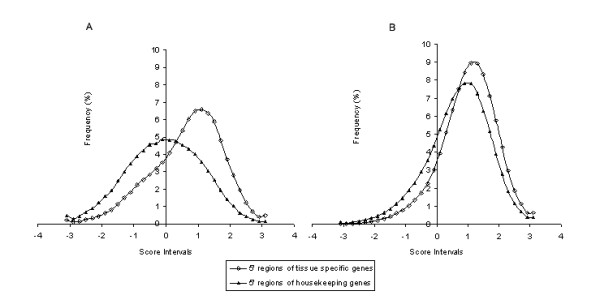
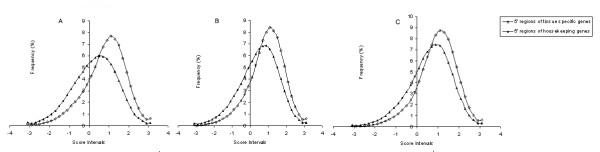
Background: Global regulatory mechanisms involving chromatin assembly and remodelling in the promoter regions of genes is implicated in eukaryotic transcription control especially for genes subjected to spatial and temporal regulation. The potential to utilise global regulatory mechanisms for controlling gene expression might depend upon the architecture of the chromatin in and around the gene. In-silico analysis can yield important insights into this aspect, facilitating comparison of two or more classes of genes comprising of a large number of genes within each group. Results: In the present study, we carried out a comparative analysis of chromatin characteristics in terms of the scaffold/matrix attachment regions, nucleosome formation potential and the occurrence of repetitive sequences, in the upstream regulatory regions of housekeeping and tissue specific genes. Our data show that putative scaffold/matrix attachment regions are more abundant and nucleosome formation potential is higher in the 5' regions of tissue specific genes as compared to the housekeeping genes. Conclusion: The differences in the chromatin features between the two groups of genes indicate the involvement of chromatin organisation in the control of gene expression. The presence of global regulatory mechanisms mediated through chromatin organisation can decrease the burden of invoking gene specific regulators for maintenance of the active/silenced state of gene expression. This could partially explain the lower number of genes estimated in the human genome.
Overview
The claims and statistics of this paper haven’t been checked yet.
Free: it reads the open-access text and checks the first 5 claims that cite a source we can check. Create a free account to check every claim.
Integrity signals
Registry
Cites
Statistics
Figures
Verification
Claims the paper makes
The claims and statistics of this paper haven’t been checked yet.
Free: it reads the open-access text and checks the first 5 claims that cite a source we can check. Create a free account to check every claim.
Claims other papers make about this one
Each is checked against this paper’s own text: does it say what the citing paper says it does?
The source backs part of the claim, not all of it — or backs it for a different population, condition or comparison.
In the citing paper
“Although these analyses support the view that a prevailing characteristic of housekeeping genes may be a dearth of distal regulatory elements (Ganapathi et al., 2005; Gasperini et al., 2017), we cannot fully rule out that the possibility that this result is influenced by our choice of candidate enhancers to target.”
From A Genome-wide Framework for Mapping Gene Regulation via Cellular Genetic Screens (2019) · cites this paper as Ganapathi et al., 2005
Experimental — accuracy not yet measured
Self-check
Percentages, sums and reported differences re-computed from the paper’s own numbers.
The self-check needs the paper’s full text.
Citations
Cites
Heterochromatin and Epigenetic Control of Gene Expression
Grewal, S. I. S., & Moazed, D. (2003) · Science · doi:10.1126/science.1086887 · Cited by 1,065 · cited 2×
“Results and discussion Chromatin landscape of a region plays a major role in determining and modulating the expression status of its neighbouring genes [4].”
BackgroundOrchestrated response: a symphony of transcription factors for gene control
Lemon, B., & Tjian, R. (2000) · Genes & Development · doi:10.1101/gad.831000 · Cited by 768 · cited 1×
“Background Eukaryotic gene transcription is largely known to be orchestrated by protein factors like activators, co-activators and co-repressors [1].”
BackgroundHuman housekeeping genes are compact
Eisenberg, E., & Levanon, E. Y. (2003) · Trends in Genetics · doi:10.1016/s0168-9525(03)00140-9 · Cited by 698 · cited 3×
“Eisenberg E, Levanon EY: Human housekeeping genes are compact.”
BackgroundMethodInfluentialKhorasanizadeh, S. (2004) · Cell · doi:10.1016/s0092-8674(04)00044-3 · Cited by 674
Origin of a substantial fraction of human regulatory sequences from transposable elements
Jordan, I. K., Rogozin, I. B., Glazko, G. V., & Koonin, E. V. (2003) · Trends in Genetics · doi:10.1016/s0168-9525(02)00006-9 · Cited by 577 · cited 3×
“As reported earlier, our data shows enrichment of SINES (Alu) in comparison to other classes of repetitive sequences in both the sets [24].”
BackgroundResultClustering of housekeeping genes provides a unified model of gene order in the human genome
Lercher, M. J., Urrutia, A. O., & Hurst, L. D. (2002) · Nature Genetics · doi:10.1038/ng887 · Cited by 546 · cited 1×
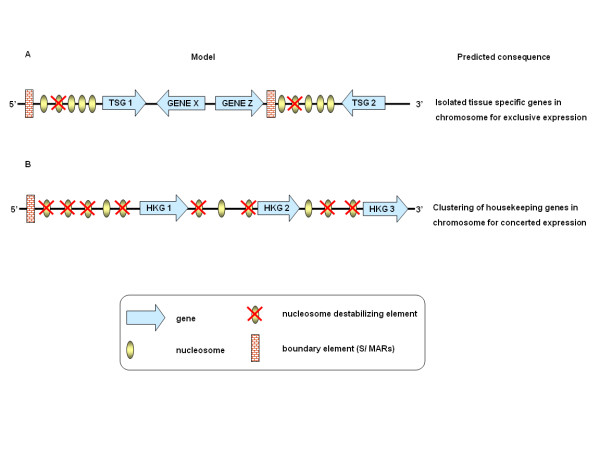
“Housekeeping genes cluster in chromosomes and therefore, they often would be present in distinct chromatin domains along with housekeeping genes that have a co-ordinated expression [9,10].”
BackgroundChromatin Architecture of the Human Genome
Gilbert, N., Boyle, S., Fiegler, H., Woodfine, K., Carter, N. P., & Bickmore, W. A. (2004) · Cell · doi:10.1016/j.cell.2004.08.011 · Cited by 501
Iyer, V., & Struhl, K. (1995) · The EMBO Journal · doi:10.1002/j.1460-2075.1995.tb07255.x · Cited by 416 · cited 2×
“dT) and (CCGNN)n in promoter regions have been implicated in maintaining constitutive gene expression [18-21].”
BackgroundNucleosomes Unfold Completely at a Transcriptionally Active Promoter
Boeger, H., Griesenbeck, J., Strattan, J. S., & Kornberg, R. D. (2003) · Molecular Cell · doi:10.1016/s1097-2765(03)00231-4 · Cited by 402 · cited 1×
“The role played by chromatin in the 5' regulatory regions of genes in transcriptional regulation has been extensively studied [5,6].”
BackgroundSpatial organization of gene expression: the active chromatin hub
de Laat, W., & Grosveld, F. (2003) · Chromosome Research · doi:10.1023/a:1024922626726 · Cited by 352 · cited 2×
“On the other hand, tissue specific genes are known to be dispersed in gene dense as well as heterochromatic regions [9, 11 ].”
Background
Cited by
Human housekeeping genes, revisited
Eisenberg, E., & Levanon, E. Y. (2013) · Trends in Genetics · doi:10.1016/j.tig.2013.05.010 · Cited by 1,282
A Genome-wide Framework for Mapping Gene Regulation via Cellular Genetic Screens
Gasperini, M., Hill, A. J., McFaline-Figueroa, J. L., Martin, B., Kim, S., Zhang, M. D., Jackson, D., Leith, A., Schreiber, J., Noble, W. S., et al. (2019) · Cell · doi:10.1016/j.cell.2018.11.029 · Cited by 613
Barrett, L. W., Fletcher, S., & Wilton, S. D. (2012) · Cellular and Molecular Life Sciences · doi:10.1007/s00018-012-0990-9 · Cited by 605
“The structure and nucleotide content of the 50UTR appears to play an important role in regulating gene expression, with genome-wide studies revealing marked differences in structure and nucleotide content between housekeeping and developmental genes [61].”
BackgroundCharacterization of Ceramide Synthase 2
Laviad, E. L., Albee, L., Pankova-Kholmyansky, I., Epstein, S., Park, H., Merrill, A. H., & Futerman, A. H. (2008) · Journal of Biological Chemistry · doi:10.1074/jbc.m707386200 · Cited by 466
Raising the estimate of functional human sequences: Figure 1.
Pheasant, M., & Mattick, J. S. (2007) · Genome Research · doi:10.1101/gr.6406307 · Cited by 235
“…different between different classes of ARs, as well as between ARs of different age groups within a particular class (Waterston et al. 2002; Ganapathi et al. 2005; Gaffney and Keightley 2006; Pace and Feschotte 2007; Shankar et al. 2007), indicating that these sequences are evolving…”
BackgroundPolak, P., & Domany, E. (2006) · BMC Genomics · doi:10.1186/1471-2164-7-133 · Cited by 237
Housekeeping and tissue-specific genes in mouse tissues
Kouadjo, K. E., Nishida, Y., Cadrin-Girard, J. F., Yoshioka, M., & St-Amand, J. (2007) · BMC Genomics · doi:10.1186/1471-2164-8-127 · Cited by 206
“Furthermore, the differences in the chromatin features between specific genes and housekeeping genes indicate the involvement of chromatin organisation in the control of gene expression [ 6 ].”
BackgroundHow many human genes can be defined as housekeeping with current expression data?
Zhu, J., He, F., Song, S., Wang, J., & Yu, J. (2008) · BMC Genomics · doi:10.1186/1471-2164-9-172 · Cited by 151
“Depending on these HK gene lists, many following-up studies have demonstrated distinct natures of HK genes in comparison with TS genes, including gene structure [8,10], nucleotide composition [11], rate of evolution [12,13], protein domain [14], and other genomic characteristics [15-18].”
BackgroundRach, E. A., Winter, D. R., Benjamin, A. M., Corcoran, D. L., Ni, T., Zhu, J., & Ohler, U. (2011) · PLoS Genetics · doi:10.1371/journal.pgen.1001274 · Cited by 139
“Instead, the majority of reports have taken the approach of dividing genes according to chromatin or insulator patterns, and then associating the promoters in each group with sequence features [6,13] or function [14,15].”
BackgroundStarks, R. R., Biswas, A., Jain, A., & Tuteja, G. (2019) · Epigenetics & Chromatin · doi:10.1186/s13072-019-0260-2 · Cited by 105
“Nucleosome formation potential has been found to be significantly higher in the 5′ regions of tissue-specific genes compared to housekeeping genes [49].”
Integrative genomic analysis reveals widespread enhancer regulation by p53 in response to DNA damage
Younger, S. T., Kenzelmann-Broz, D., Jung, H., Attardi, L. D., & Rinn, J. L. (2015) · Nucleic Acids Research · doi:10.1093/nar/gkv284 · Cited by 99
“For example, Alu elements are enriched within the promoter regions of genes involved in cell proliferation and contain binding sites for multiple TFs that regulate gene expression (55,56).”
BackgroundTsirigos, A., & Rigoutsos, I. (2009) · PLoS Computational Biology · doi:10.1371/journal.pcbi.1000610 · Cited by 98
“tissuespecific genes were also found to have preferences for Alu elements [17].”
BackgroundGenome architecture marked by retrotransposons modulates predisposition to DNA methylation in cancer
Estécio, M. R. H., Gallegos, J., Vallot, C., Castoro, R. J., Chung, W., Maegawa, S., Oki, Y., Kondo, Y., Jelinek, J., Shen, L., et al. (2010) · Genome Research · doi:10.1101/gr.107318.110 · Cited by 89
“For example, SINEs are differentially distributed in imprinted (Greally 2002), tissue-specific (Ganapathi et al. 2005), and monoallelically expressed genes (Allen et al. 2003).”
BackgroundMicroRNAs and Long Non-coding RNAs in Genetic Diseases
Finotti, A., Fabbri, E., Lampronti, I., Gasparello, J., Borgatti, M., & Gambari, R. (2019) · Molecular Diagnosis & Therapy · doi:10.1007/s40291-018-0380-6 · Cited by 78
Mining housekeeping genes with a Naive Bayes classifier
Ferrari, L. D., & Aitken, S. (2006) · BMC Genomics · doi:10.1186/1471-2164-7-277 · Cited by 75
“Chromatin compactness upstream housekeeping genes S/MAR are expected to be less present upstream of human housekeeping genes [15], as less packed chromatin eases gene expression.”
BackgroundInfluentialLarsen, P. A., Lutz, M. W., Hunnicutt, K. E., Mihovilovic, M., Saunders, A. M., Yoder, A. D., & Roses, A. D. (2017) · Alzheimer s & Dementia · doi:10.1016/j.jalz.2017.01.017 · Cited by 79
“5; Supplementary Material), consistent with previous analyses identifying enriched Alu content at transcriptionally active regions of the genome [66].”
Genome size and metabolic intensity in tetrapods: a tale of two lines
Vinogradov, A. E., & Anatskaya, O. V. (2005) · Proceedings of the Royal Society B Biological Sciences · doi:10.1098/rspb.2005.3266 · Cited by 75
“It was also found that both the ratio of non-coding to coding DNA lengths and the nucleosome formation potential are higher in (and around) the tissue-specific genes compared to housekeeping genes, which indicates that non-coding DNA can be involved in chromatin-mediated gene suppression in those tissues where a given…”
Background“Genome design” model: Evidence from conserved intronic sequence in human–mouse comparison
Vinogradov, A. E. (2006) · Genome Research · doi:10.1101/gr.4318206 · Cited by 79
“The higher nucleosome formation potential was found in vertebrate noncoding DNA (including introns) compared to exons, and in human tissuespecific genes compared to housekeeping genes (Levitsky et al. 2001; Ganapathi et al. 2005; Vinogradov 2005; Vinogradov and Anatskaya 2006), which support the notion that noncoding…”
BackgroundThe role of Alu elements in the cis-regulation of RNA processing
Daniel, C., Behm, M., & Öhman, M. (2015) · Cellular and Molecular Life Sciences · doi:10.1007/s00018-015-1990-3 · Cited by 69
Housekeeping and tissue-specific genes differ in simple sequence repeats in the 5′-UTR region
Lawson, M. J., & Zhang, L. (2007) · Gene · doi:10.1016/j.gene.2007.09.017 · Cited by 61
Frericks, M., & Esser, C. (2008) · Biochimica et Biophysica Acta (BBA) - Gene Regulatory Mechanisms · doi:10.1016/j.bbagrm.2008.08.007 · Cited by 47
Levitsky, V. G., Ignatieva, E. V., Ananko, E. A., Turnaev, I. I., Merkulova, T. I., Kolchanov, N. A., & Hodgman, C. T. (2007) · BMC Bioinformatics · doi:10.1186/1471-2105-8-481 · Cited by 45
“We have previously applied this combination for computer analysis of nucleosome formation potentials, RECON [43,44], which has been extensively validated and used to investigate a variety of genomic locations [45-50].”
MethodEpigenetic Regulation of Mammalian Genomes by Transposable Elements
Huda, A., & Jordan, I. K. (2009) · Annals of the New York Academy of Sciences · doi:10.1111/j.1749-6632.2009.05007.x · Cited by 44
Szczecińska, M., & Sawicki, J. (2015) · International Journal of Molecular Sciences · doi:10.3390/ijms160922258 · Cited by 40
Genomic signatures of germline gene expression
McVicker, G., & Green, P. (2010) · Genome Research · doi:10.1101/gr.106666.110 · Cited by 36
“2007) and that Alu density is higher near housekeeping genes than tissue specific genes (Ganapathi et al. 2005; Eller et al. 2007; Urrutia et al. 2008).”
BackgroundPrediction and analysis of nucleosome exclusion regions in the human genome
Radwan, A., Younis, A. A., Luykx, P., & Khuri, S. (2008) · BMC Genomics · doi:10.1186/1471-2164-9-186 · Cited by 29
“The results show that previous localized findings [4,17] are valid on a whole genome level.”
BackgroundInfluentialVidaković, M., Gluch, A., Qiao, J., Oumard, A., Frisch, M., Poznanović, G., & Bode, J. (2009) · Journal of Molecular Biology · doi:10.1016/j.jmb.2009.03.032 · Cited by 21
“It has been claimed that the abundance of S/MARs in the upstream region is a prominent characteristic of tissue-specific as opposed to housekeeping genes.(46) Although this in silico finding awaits experimental confirmation, such a phenomenon might be related to the distribution in the genome: housekeeping genes occur…”
BackgroundInferring Natural Selection on Fine-Scale Chromatin Organization in Yeast
Babbitt, G. A., & Kim, Y. (2008) · Molecular Biology and Evolution · doi:10.1093/molbev/msn127 · Cited by 22
“In agreement with the repressive role of nucleosomes, the upstream sequences of tissue-specific genes showed higher nucleosome formation potential than housekeeping genes in humans (Levitsky et al. 2001; Ganapathi et al. 2005).”
BackgroundDo Alu repeats drive the evolution of the primate transcriptome?
Urrutia, A. O., Ocaña, L. B., & Hurst, L. D. (2008) · Genome biology · doi:10.1186/gb-2008-9-2-r25 · Cited by 24
“Perhaps more startling is the observation that Alu sequences are more common in flanking regions of highly expressed and housekeeping genes than in lowly expressed and tissue-specific ones [15-17].”
BackgroundEmerging insights into enhancer biology and function
Arnold, M., & Stengel, K. R. (2023) · Transcription · doi:10.1080/21541264.2023.2222032 · Cited by 23
“First, housekeeping genes were underrepresented among enhancer-regulated gene targets, an observation that is consistent with previous reports that housekeeping genes are relatively devoid of distal regulatory elements [79].”
BackgroundResultKotekar, A., Weissman, J. D., Gégonne, A., Cohen, H., & Singer, D. S. (2008) · Molecular and Cellular Biology · doi:10.1128/mcb.00889-08 · Cited by 18
“These conclusions are supported by reports that housekeeping and/or widely expressed genes have lower nucleosome-forming potential at their promoters than do tissue-specific genes (15, 25, 33).”
BackgroundMore effective transposon regulation in fertile, long‐lived termite queens than in sterile workers
Post, F., Bornberg‐Bauer, E., Vasseur-Cognet, M., & Harrison, M. C. (2022) · Molecular Ecology · doi:10.1111/mec.16753 · Cited by 16
“This result suggests TE silencing is reduced in euchromatic regions, in which house- keeping genes more often lie, compared with the less accessible heterochromatic regions, where DEGs are more likely to reside (Ganapathi et al., 2005).”
BackgroundAlu tandem sequences inhibit GFP gene expression by triggering chromatin wrapping
Wang, X., Wang, X., Liu, J., Feng, J., Mu, W., Shi, X., Yang, Q., Duan, X., Xie, Y., & Lu, Z. (2009) · Genes & Genomics · doi:10.1007/bf03191192 · Cited by 14
“There is a nonrandom differential distribution of Alu repeats, with clustering in some regions and a paucity of sequences in other regions (Ganapathi et al., 2005).”
BackgroundGanapathi, M., Singh, G. P., Sandhu, K. S., Brahmachari, S. K., & Brahmachari, V. (2007) · Gene · doi:10.1016/j.gene.2007.01.008 · Cited by 17
Self-citationUntranslated Gene Regions and Other Non-coding Elements
Barrett, L. W., Fletcher, S., & Wilton, S. D. (2013) · SpringerBriefs in biochemistry and molecular biology · doi:10.1007/978-3-0348-0679-4_1 · Cited by 18
“The structure and nucleotide content of the 50UTR appears to play an important role in regulating gene expression, with genome-wide studies revealing marked differences in structure and nucleotide content between housekeeping and developmental genes (Ganapathi et al. 2005).”
BackgroundTranscription regulatory codes of eukaryotic genomes
Merkulova, T. I., Ananko, E. A., Ignatieva, E. V., & Kolchanov, N. A. (2013) · Russian Journal of Genetics · doi:10.1134/s1022795413010079 · Cited by 16
“Using computer analysis, differences were discovered in NFP for promoters with various expression patterns [98, 100].”
Datta, S., Alam, M. P., Majumdar, S. S., Mehta, A. K., Maiti, S., Wadhwa, N., & Brahmachari, V. (2011) · Chromosome Research · doi:10.1007/s10577-011-9206-7 · Cited by 13
“GC stretches in general are known to be poor templates for nucleosome formation (Mythily et al. 2005; Napierala et al. 2005).”
BackgroundSelf-citationLuykx, P., Bajić, I. V., & Khuri, S. (2006) · Nucleic Acids Research · doi:10.1093/nar/gkl158 · Cited by 10
“This is in contrast to those of TS genes, whose promoter regions contain sequences more favorable for nucleosome formation (28,29), and which are therefore likely to require additional TS transcription factors to modify or displace nucleosomes before the genes can be expressed.”
BackgroundResultEffects of RNAs on chromatin accessibility and gene expression suggest RNA-mediated activation
Wang, X., Ma, Z., Kong, X., & Lv, Z. (2016) · The International Journal of Biochemistry & Cell Biology · doi:10.1016/j.biocel.2016.08.004 · Cited by 9
Shankar, R., Chaurasia, A., Ghosh, B., Chekmenev, D., Cheremushkin, E., Kel, A. E., & Mukerji, M. (2007) · Molecular Genetics and Genomics · doi:10.1007/s00438-007-0210-8 · Cited by 8
“It has been recently shown in a study that the chromatin architecture with respect to S/MAR biding, nucleosome positioning potential and repetitive sequence are signiWcantly diVerent in human housekeeping and tissue-speciWc genes (Ganapathi et al. 2005).”
BackgroundAnti-aging and anti-oxidant activities of murine short interspersed nuclear element antisense RNA
Song, Z., Shah, S., Lv, B., Ji, N., Liu, X., Yan, L., Khan, M., Zhao, Y., Wu, P., Liu, S., et al. (2021) · European Journal of Pharmacology · doi:10.1016/j.ejphar.2021.174577 · Cited by 7
Combined sense-antisense Alu elements activate the EGFP reporter gene when stable transfection
Ma, Z., Kong, X., Liu, S., Yin, S., Zhao, Y., Liu, C., Lv, Z., & Wang, X. (2017) · Molecular Genetics and Genomics · doi:10.1007/s00438-017-1312-6 · Cited by 6
“However, it has also been shown that Alu elements are abundant in some highly active genome regions including housekeeping genes (Ganapathi et al. 2005; Eller et al. 2007), human chromosome 19 (Grover et al.”
BackgroundThe preparation of endotoxin-free genetically engineered murine B1 antisense RNA
Khan, M., Yan, L., Lv, B., Ji, N., Shah, S., Liu, X., Song, Z., Zhao, Y., Wang, X., & Lv, Z. (2020) · Analytical Biochemistry · doi:10.1016/j.ab.2020.113737 · Cited by 5
Pereira‐Patrón, A., Solís-Pereira, S., Uc, G. L., Ramírez-Prado, J. H., Pérez‐Brito, D., & Tapia‐Tussell, R. (2019) · 3 Biotech · doi:10.1007/s13205-019-1691-y · Cited by 6
SCIG: Machine learning uncovers cell identity genes in single cells by genetic sequence codes
Kulandaisamy, A., Xia, B., Yu, Y., Chen, H., Pu, W. T., Zhang, L., & Chen, K. (2025) · Nucleic Acids Research · doi:10.1093/nar/gkaf431 · Cited by 5
“For example, housekeeping genes tend to show lower promoter sequence conservation [ 17 ], sequences with less potential for nucleosome formation in the promoter region [ 18 ], and shorter gene bodies [ 19–21 ].”
Species‐specific role of gene‐adjacent retroelements in human and mouse gastric carcinogenesis
Rhyu, M., Oh, J. H., & Hong, S. (2017) · International Journal of Cancer · doi:10.1002/ijc.31120 · Cited by 4
“LINE and SINE distributions on autosomes are biased toward tissue-specific genes lacking CpG islands and housekeeping genes containing CpG islands, respectively.(29,41,53) The LINE and SINE elements expand in similar genomic domains.”
BackgroundСадритдинова, А. Ф., Dmitriev, A. A., Snezhkina, A. V., Belenikin, M. S., Krasnov, G. S., Manylov, O. G., Kudryavtsev, A. A., Melnikova, N. V., Speranskaya, A. S., Дарий, М. В., et al. (2014) · Genetics and Molecular Research · doi:10.4238/2014.may.23.8 · Cited by 3
“…in particular the specific structure of CpG islands near the transcription start site, were 3979 ©FUNPEC-RP www.funpecrp.com.brGenetics and Molecular Research 13 (2): 3972-3980 (2014) A new reference gene UBA52 for qPCR studies in a starfish considered in the literature (Ganapathi et al., 2005).”
BackgroundBengani, H., Ganapathi, M., Singh, G. P., & Brahmachari, V. (2007) · Journal of Experimental Zoology Part B Molecular and Developmental Evolution · doi:10.1002/jez.b.21162 · Cited by 5
Self-citationVariation and constraints in species-specific promoter sequences
Calistri, E., Buiatti, M., & Livi, R. (2014) · Journal of Theoretical Biology · doi:10.1016/j.jtbi.2014.08.006 · Cited by 4
“Thus, the presence of low-complexity sequences in promoters suggests a functional involvement of these over-represented structures (Eddy et al., 2011; Gemayel et al., 2010; Sela and Lukatsky, 2011; Ganapathi et al., 2005).”
BackgroundStatistical analysis of DNA sequences containing nucleosome positioning sites
Orlov, Y. L., Levitsky, V. G., Смирнова, О. Г., Podkolodnaya, O. A., Khlebodarova, T. M., & Kolchanov, N. A. (2006) · BIOPHYSICS · doi:10.1134/s0006350906040051 · Cited by 3
Analysis and manipulation of the genome dynamic structure
Tosato, V., & Bruschi, C. V. (2007) · Biotechnology and Molecular Biology Reviews · doi:10.5897/bmbr2007.0007 · Cited by 1
THE SIXTH INTERNATIONAL CONFERENCE ON BIOINFORMATICS OF GENOME REGULATION AND STRUCTURE
Branch, S. (2008) · Cited by 1
Xavier, M. G. (2007) · Portuguese National Funding Agency for Science, Research and Technology (RCAAP Project by FCT)
Computational modeling of DNA sequence effects on the nucleosome core particle
Pierce, L. (2008) · KU ScholarWorks (The University of Kansas)
Heterochromatin effects in Friedreich's ataxia and sexual dimorphism
Yandım, C. (2012) · Spiral (Imperial College London) · doi:10.25560/9644 · Cited by 1
Functional Interpretation of High-Throughput Sequencing Data.
Lee, C. K. (2016) · Deep Blue (University of Michigan)
Transcription regulation dynamics
de Jonge, W. J. (2020) · Utrecht University Repository (Utrecht University) · doi:10.33540/73
Genome-wide discovery of gene regulatory networks in the midgestation mouse placenta
Starks, R. R. (2020) · Iowa State University Digital Repository (Iowa State University) · doi:10.31274/etd-20210114-144
Park, H., Choi, H., Kim, S., Choi, J., Oh, J. H., Rhyu, M.-G., & Hong, S.-J. (2024) · Research Square · doi:10.21203/rs.3.rs-4592450/v1
Hong, S.-J., Park, H., Choi, H., Kim, S., Choi, J., Oh, J. H., & Rhyu, M.-G. (2024) · Research Square · doi:10.21203/rs.3.rs-4484491/v1
Effet de position télomérique : implications dans la régulation du génome et les maladies rares
Chevalier, R. (2022) · theses.fr (ABES) · doi:10.70675/89769afeza443z495cz9933z31ab8621510e
Metadata
- Authors
- Ganapathi, M., Srivastava, P., Sutar, S. K. D., Kumar, K., Dasgupta, D., Pal Singh, G., Brahmachari, V., & Brahmachari, S. K.
- Affiliations
- University of Delhi (IN)
- Institute of Genomics and Integrative Biology (IN)
- Corresponding author
- Brahmachari, Samir K
- Venue
- BMC Bioinformatics
- Published
- 2005-05-26
- Volume
- 6
- Issue
- 1
- Pages
- 126-126
- ISSN
- 1471-2105 (ISSN-L)
- PMC
- PMC1173084
- OpenAlex
- W1822814854
- Cited by
- 66
- References
- 39
- Citations by year
- 2025: 1 · 2024: 3 · 2023: 1 · 2022: 2 · 2021: 3 · 2020: 3 · 2019: 4 · 2018: 1 · 2017: 3 · 2016: 2 · 2015: 3 · 2014: 2 · 2013: 3 · 2012: 2
- FWCI
- 3.14
- Type
- journal article
- Language
- en
- Open access
- gold
- doi.org
- Licence
- cc-by
- creativecommons.org/licenses/by/2.0/ (tdm)
- creativecommons.org/licenses/by/2.0/ (vor)
- Locations
- BMC Bioinformatics (publishedVersion, cc-by)
- Europe PMC (PubMed Central) (publishedVersion)
- PubMed Central (publishedVersion)
- PubMed (publishedVersion)
- DOAJ (DOAJ: Directory of Open Access Journals) (submittedVersion)
- Funders
- Indian Council of Medical Research
- Topics
- Life Sciences › Biochemistry, Genetics and Molecular Biology › Molecular Biology › Genomics and Chromatin Dynamics
- Life Sciences › Biochemistry, Genetics and Molecular Biology › Genetics › Chromosomal and Genetic Variations
- Life Sciences › Biochemistry, Genetics and Molecular Biology › Molecular Biology › Chromatin Remodeling and Cancer
- Keywords
- chromatin landscape, housekeeping genes, tissue-specific genes, promoter, scaffold/matrix attachment regions, repetitive DNA, gene expression regulation, chromatin organization, transcriptional regulation
- MeSH terms
- Cell Nucleus, Chromatin, Enhancer Elements, Genetic, Gene Expression Regulation, Humans, Models, Genetic, Nucleosomes, Regulatory Sequences, Nucleic Acid, Repetitive Sequences, Nucleic Acid, Software, Tissue Distribution, Transcription, Genetic, Genome, Human, Computational Biology, Databases, Genetic, Chromatin Assembly and Disassembly
About these checks
Registry, retraction, Cites and statistics results are computed, not judged, with one exception: a printed reference that no index lists is read once by a model before it counts as a citation error. Claims are extracted by a model and kept only when their quote appears verbatim in the text; each cited source is then checked, with a model’s help, for whether it says what the claim relies on. Those verdicts can be wrong — read the claim’s quote and the cited source before relying on one.
Statistics and arithmetic are recomputed, not judged.
Confidence bands are shown only for fields calibrated on our annotated test set. None is calibrated yet, so no band is shown.
What counts as a claim ›How we measure confidence ›How we check this ›
Are you an author, or do you see a problem with this page? Request a review
Data sources
Bibliographic data: Semantic Scholar, OpenAlex, Crossref.
Contains information from the Semantic Scholar Academic Graph Datasets, made available under the ODC Attribution License (ODC-BY 1.0).
Semantic Scholar’s data is described in: Kinney, R., et al. (2023). The Semantic Scholar Open Data Platform. arXiv:2301.10140.
