

The DOI matches its Crossref record; 27 of the 27 references it cites were found in a registry or an index.
STEM: a tool for the analysis of short time series gene expression data
Open accessAbstract
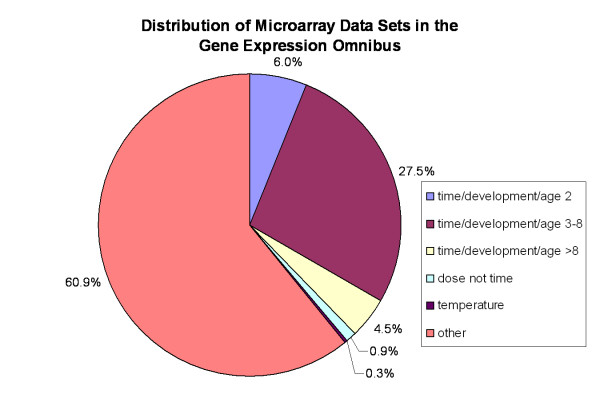
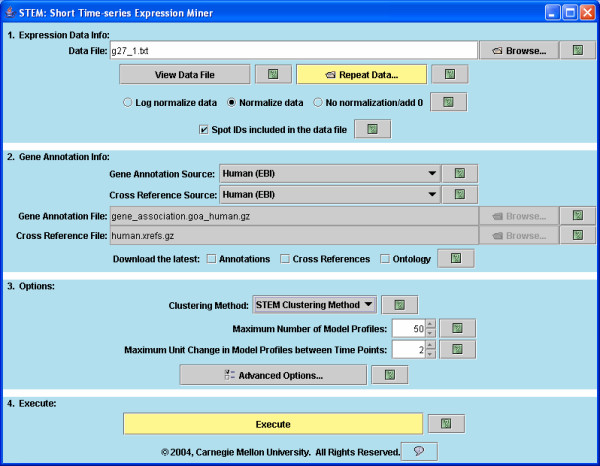
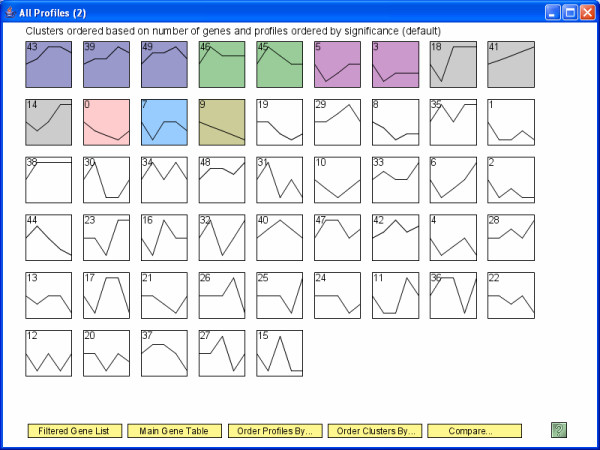
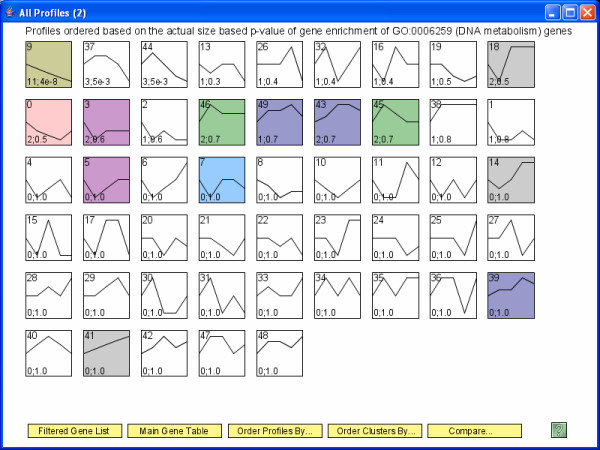
Background: Time series microarray experiments are widely used to study dynamical biological processes. Due to the cost of microarray experiments, and also in some cases the limited availability of biological material, about 80% of microarray time series experiments are short (3–8 time points). Previously short time series gene expression data has been mainly analyzed using more general gene expression analysis tools not designed for the unique challenges and opportunities inherent in short time series gene expression data. Results: We introduce the Short Time-series Expression Miner (STEM) the first software program specifically designed for the analysis of short time series microarray gene expression data. STEM implements unique methods to cluster, compare, and visualize such data. STEM also supports efficient and statistically rigorous biological interpretations of short time series data through its integration with the Gene Ontology. Conclusion: The unique algorithms STEM implements to cluster and compare short time series gene expression data combined with its visualization capabilities and integration with the Gene Ontology should make STEM useful in the analysis of data from a significant portion of all microarray studies. STEM is available for download for free to academic and non-profit users at http://www.cs.cmu.edu/~jernst/stem .
Overview
The claims and statistics of this paper haven’t been checked yet.
Run the check — free, no account needed. It reads the open-access text and checks the sources it cites.
Integrity signals
Registry
Cites
Statistics
Figures
Verification
Claims the paper makes
The claims and statistics of this paper haven’t been checked yet.
Run the check — free, no account needed. It reads the open-access text and checks the sources it cites.
Claims other papers make about this one
Each is checked against this paper’s own text: does it say what the citing paper says it does?
In the citing paper
“edge relationships using mutual information or other association measures might be necessary to accurately detect modules in time-series data, which can be non-monotonic46–48.”
From Systems biology and gene networks in neurodevelopmental and neurodegenerative disorders (2015) · cites this paper as [47]
Self-check
Percentages, sums and reported differences re-computed from the paper’s own numbers.
The self-check needs the paper’s full text.
Citations
Cites
Gene Ontology: tool for the unification of biology
Ashburner, M., Ball, C. A., Blake, J. A., Botstein, D., Butler, H., Cherry, J. M., Davis, A. P., Dolinski, K., Dwight, S. S., Eppig, J. T., et al. (2000) · Nature Genetics · doi:10.1038/75556 · Cited by 43,206
Cluster analysis and display of genome-wide expression patterns
Eisen, M. B., Spellman, P. T., Brown, P. O., & Botstein, D. (1998) · Proceedings of the National Academy of Sciences · doi:10.1073/pnas.95.25.14863 · Cited by 16,184
In silico prediction of protein-protein interactions in human macrophages
Souiai, O., Guerfali, F. Z., Miled, S. B., Brun, C., & Benkahla, A. (2014) · BMC Research Notes · doi:10.1186/1756-0500-7-157 · Cited by 10,785
Significance analysis of microarrays applied to the ionizing radiation response
Tusher, V. G., Tibshirani, R., & Chu, G. (2001) · Proceedings of the National Academy of Sciences · doi:10.1073/pnas.091062498 · Cited by 10,568
TM4: a free, open-source system for microarray data management and analysis
Saeed, A. I., Sharov, V., White, J., Li, J., Liang, W., Bhagabati, N., Braisted, J., Klapa, M., Currier, T., Thiagarajan, M., et al. (2003) · BioTechniques · doi:10.2144/03342mt01 · Cited by 4,837
Spellman, P. T., Sherlock, G. J., Zhang, M. Q., Iyer, V. R., Anders, K. R., Eisen, M. B., Brown, P. O., Botstein, D., & Futcher, B. (1998) · Molecular Biology of the Cell · doi:10.1091/mbc.9.12.3273 · Cited by 4,724
Tamayo, P., Slonim, D. K., Mesirov, J. P., Zhu, Q., Kitareewan, S., Dmitrovsky, E., Lander, E. S., & Golub, T. R. (1999) · Proceedings of the National Academy of Sciences · doi:10.1073/pnas.96.6.2907 · Cited by 2,924
Systematic determination of genetic network architecture
Tavazoie, S., Hughes, J. D., Campbell, M. J., Cho, R. J., & Church, G. M. (1999) · Nature Genetics · doi:10.1038/10343 · Cited by 2,509
NCBI GEO: mining millions of expression profiles--database and tools
Barrett, T. (2004) · Nucleic Acids Research · doi:10.1093/nar/gki022 · Cited by 1,201
Gene Expression During the Life Cycle of Drosophila melanogaster
Arbeitman, M. N., Furlong, E. E. M., Imam, F. B., Johnson, E. A., Null, B. H., Baker, B. S., Krasnow, M. A., Scott, M. P., Davis, R. W., & White, K. P. (2002) · Science · doi:10.1126/science.1072152 · Cited by 926
Ontological analysis of gene expression data: current tools, limitations, and open problems
Khatri, P., & Drăghici, S. (2005) · Bioinformatics · doi:10.1093/bioinformatics/bti565 · Cited by 850
Clustering short time series gene expression data
Ernst, J., Nau, G. J., & Bar‐Joseph, Z. (2005) · Bioinformatics · doi:10.1093/bioinformatics/bti1022 · Cited by 517
Self-citationCluster analysis of gene expression dynamics
Ramoni, M. F., Sebastiani, P., & Kohane, I. S. (2002) · Proceedings of the National Academy of Sciences · doi:10.1073/pnas.132656399 · Cited by 462
EXPANDER – an integrative program suite for microarray data analysis
Ron Shamir, A., Maron‐Katz, A., Tanay, A., Linhart, C., Steinfeld, I., Sharan, R., Shiloh, Y., & Elkon, R. (2005) · BMC Bioinformatics · doi:10.1186/1471-2105-6-232 · Cited by 340
Novel Unsupervised Feature Filtering of Biological Data
Varshavsky, R., Gottlieb, A., Michal Linial, B., & Horn, D. (2006) · Bioinformatics · doi:10.1093/bioinformatics/btl214 · Cited by 339
Identifying periodically expressed transcripts in microarray time series data
Wichert, S., Fokianos, K., & Strimmer, K. (2003) · Bioinformatics · doi:10.1093/bioinformatics/btg364 · Cited by 292
Toolkit design for interactive structured graphics
Bederson, B. B., Grosjean, J., & Meyer, J. (2004) · IEEE Transactions on Software Engineering · doi:10.1109/tse.2004.44 · Cited by 290
Zeebèrg, B. R., Qin, H., Narasimhan, S., Sunshine, M., Cao, H., Kane, D. W., Reimers, M., Stephens, R. M., Bryant, D., Burt, S. K., et al. (2005) · BMC Bioinformatics · doi:10.1186/1471-2105-6-168 · Cited by 279
Identifying periodically expressed transcripts in microarray time series data
Wichert, S., Fokianos, K., & Strimmer, K. (2008) · Bioinformatics · doi:10.1093/bioinformatics/btn430 · Cited by 271
EDGE: extraction and analysis of differential gene expression
Leek, J. T., Monsen, E., Dabney, A. R., & Storey, J. D. (2005) · Bioinformatics · doi:10.1093/bioinformatics/btk005 · Cited by 251
Using hidden Markov models to analyze gene expression time course data
Schliep, A., Schönhuth, A., & Steinhoff, C. (2003) · Bioinformatics · doi:10.1093/bioinformatics/btg1036 · Cited by 247
Guillemin, K. J., Salama, N. R., Tompkins, L. S., & Falkow, S. (2002) · Proceedings of the National Academy of Sciences · doi:10.1073/pnas.182558799 · Cited by 222
ORIOGEN: order restricted inference for ordered gene expression data
Peddada, S. D., Harris, S. F., Zajd, J., & Harvey, E. (2005) · Computer applications in the biosciences · doi:10.1093/bioinformatics/bti637 · Cited by 54
Global Gene Expression Analysis of Human Bronchial Epithelial Cells Treated with Tobacco Condensates
Jorgensen, E. D., Dozmorov, I. M., Frank, M. B., Centola, M. B., & Albino, A. P. (2004) · Cell Cycle · doi:10.4161/cc.3.9.1078 · Cited by 39
Dynamic querying for pattern identification in microarray and genomic data
Hochheiser, H., Baehrecke, E. H., Mount, S. M., & Shneiderman, B. (2003) · IEEE International Conference on Multimedia and Expo (ICME) · doi:10.1109/icme.2003.1221346 · Cited by 31
Criel, J., & Tsiporkova, E. (2005) · Bioinformatics · doi:10.1093/bioinformatics/bti787 · Cited by 30
The Graphical Query Language: a tool for analysis of gene expression time-courses
Costa, I. G., Schönhuth, A., & Schliep, A. (2005) · Computer applications in the biosciences · doi:10.1093/bioinformatics/bti311 · Cited by 26
Cited by
Sorted by citations
Mapping and analysis of chromatin state dynamics in nine human cell types
Ernst, J., Kheradpour, P., Mikkelsen, T. S., Shoresh, N., Ward, L. D., Epstein, C. B., Zhang, X., Wang, L., Issner, R., Coyne, M., et al. (2011) · Nature · doi:10.1038/nature09906 · Cited by 2,898
Self-citationDiscovery and characterization of chromatin states for systematic annotation of the human genome
Ernst, J., & Kellis, M. (2010) · Nature Biotechnology · doi:10.1038/nbt.1662 · Cited by 1,075
Self-citationStudying and modelling dynamic biological processes using time-series gene expression data
Bar‐Joseph, Z., Gitter, A., & Simon, I. (2012) · Nature Reviews Genetics · doi:10.1038/nrg3244 · Cited by 494
Self-citationSystems biology and gene networks in neurodevelopmental and neurodegenerative disorders
Parikshak, N. N., Gandal, M. J., & Geschwind, D. H. (2015) · Nature Reviews Genetics · doi:10.1038/nrg3934 · Cited by 430
Simões, F. C., Cahill, T. J., Kenyon, A., Gavriouchkina, D., Vieira, J. M., Sun, X., Pezzolla, D., Ravaud, C., Masmanian, E., Weinberger, M., et al. (2020) · Nature Communications · doi:10.1038/s41467-019-14263-2 · Cited by 399
Metadata
- Authors
- Ernst, J., & Bar-Joseph, Z.
- Affiliations
- Carnegie Mellon University (US)
- Corresponding author
- Ernst, Jason
- ORCID
- Ernst, Jason
- Venue
- BMC Bioinformatics
- Published
- 2006-04-05
- Volume
- 7
- Issue
- 1
- Pages
- 191-191
- ISSN
- 1471-2105 (ISSN-L)
- PMC
- PMC1456994
- OpenAlex
- W2101142880
- Cited by
- 1,703
- References
- 27
- Citations by year
- 2026: 109 · 2025: 116 · 2024: 185 · 2023: 159 · 2022: 220 · 2021: 158 · 2020: 155 · 2019: 114 · 2018: 78 · 2017: 64 · 2016: 71 · 2015: 57 · 2014: 36 · 2013: 30 · 2012: 30
- FWCI
- 9.64
- Type
- journal article
- Language
- en
- Open access
- gold
- doi.org
- Licence
- cc-by
- Locations
- BMC Bioinformatics (publishedVersion, cc-by)
- PubMed Central (publishedVersion)
- PubMed (publishedVersion)
- eScholarship (California Digital Library) (submittedVersion, cc-by)
- DOAJ (DOAJ: Directory of Open Access Journals) (submittedVersion, cc-by-sa)
- eScholarship (California Digital Library) (submittedVersion)
- Funders
- National Science Foundation (0448453, CAREER)
- National Institutes of Health
- National Institute of Allergy and Infectious Diseases (N01 AI-5001, Z01AI005001)
- Topics
- Life Sciences › Biochemistry, Genetics and Molecular Biology › Molecular Biology › Gene expression and cancer classification
- Life Sciences › Biochemistry, Genetics and Molecular Biology › Molecular Biology › Bioinformatics and Genomic Networks
- Life Sciences › Biochemistry, Genetics and Molecular Biology › Molecular Biology › Genomics and Phylogenetic Studies
- Keywords
- time series microarray data, gene expression clustering, time series comparison, gene expression visualization, gene ontology annotation
- MeSH terms
- Computer Simulation, Gene Expression Regulation, Models, Biological, Pattern Recognition, Automated, Software, Time Factors, Transcription Factors, Signal Transduction, Cluster Analysis, Oligonucleotide Array Sequence Analysis, Gene Expression Profiling
About these checks
Registry, retraction, Cites and statistics results are computed, not judged, with one exception: a printed reference that no index lists is read once by a model before it counts as a citation error. Claims are extracted by a model and kept only when their quote appears verbatim in the text; each cited source is then checked, with a model’s help, for whether it says what the claim relies on. Those verdicts can be wrong — read the claim’s quote and the cited source before relying on one.
Statistics and arithmetic are recomputed, not judged.
Confidence bands are shown only for fields calibrated on our annotated test set. None is calibrated yet, so no band is shown.
What counts as a claim ›How we measure confidence ›How we check this ›
Are you an author, or do you see a problem with this page? Request a review
