

PubMed related articles: a probabilistic topic-based model for content similarity
Open accessThe DOI matches its Crossref record; 28 of the 29 references it cites were found in a registry or an index.
Abstract
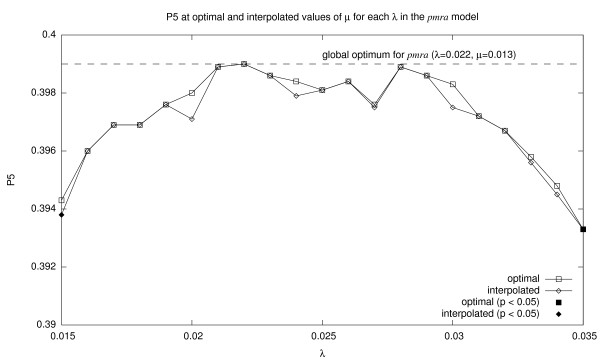
BACKGROUND: We present a probabilistic topic-based model for content similarity called pmra that underlies the related article search feature in PubMed. Whether or not a document is about a particular topic is computed from term frequencies, modeled as Poisson distributions. Unlike previous probabilistic retrieval models, we do not attempt to estimate relevance-but rather our focus is "relatedness", the probability that a user would want to examine a particular document given known interest in another. We also describe a novel technique for estimating parameters that does not require human relevance judgments; instead, the process is based on the existence of MeSH in MEDLINE. RESULTS: The pmra retrieval model was compared against bm25, a competitive probabilistic model that shares theoretical similarities. Experiments using the test collection from the TREC 2005 genomics track shows a small but statistically significant improvement of pmra over bm25 in terms of precision. CONCLUSION: Our experiments suggest that the pmra model provides an effective ranking algorithm for related article search.
Overview
The claims and statistics of this paper haven’t been checked yet.
Free: it reads the open-access text and checks the first 5 claims that cite a source we can check. Create a free account to check every claim.
Integrity signals
Registry
Cites
Statistics
Figures
Verification
Claims the paper makes
The claims and statistics of this paper haven’t been checked yet.
Free: it reads the open-access text and checks the first 5 claims that cite a source we can check. Create a free account to check every claim.
Claims other papers make about this one
Each is checked against this paper’s own text: does it say what the citing paper says it does?
The cited source says what the claim attributes to it.
In the citing paper
“Another is using databases ' built in tools, such as PubMed ' s Related Articles feature [86] or Clarivate Analytics ' Web of Science ' s Related Records feature [87], to locate relevant articles based on commonalities with a starting article.”
From PRISMA-S: an extension to the PRISMA Statement for Reporting Literature Searches in Systematic Reviews (2021) · cites this paper as [86]
Self-check
Percentages, sums and reported differences re-computed from the paper’s own numbers.
The self-check needs the paper’s full text.
Citations
Cites
A vector space model for automatic indexing
Salton, G., Wong, A., & Yang, C. S. (1975) · Communications of the ACM · doi:10.1145/361219.361220 · Cited by 7,521
A maximum entropy approach to natural language processing
Berger, A. L., Pietra, V. J. D., & Pietra, S. A. D. (1996) · doi:10.5555/234285.234289 · Cited by 3,065
Robertson, S. E., Walker, S., Jones, S., Hancock‐Beaulieu, M., & Gatford, M. (1994) · Text REtrieval Conference · Cited by 2,212
De Roeck, A. (1995) · Handbook of Pragmatics · doi:10.1075/hop.m.comm2 · Cited by 1,715
Some Simple Effective Approximations to the 2-Poisson Model for Probabilistic Weighted Retrieval
Robertson, S. E., & Walker, S. (1994) · SIGIR ’94 · doi:10.1007/978-1-4471-2099-5_24 · Cited by 1,477 · cited 1×
“Instead, Robertson and Walker devised simple approximations that work well empirically [ 19 ].”
THE PROBABILITY RANKING PRINCIPLE IN IR
ROBERTSON, S. E. (1977) · Journal of Documentation · doi:10.1108/eb026647 · Cited by 1,103 · cited 1×
“Following typical assumptions in information retrieval [7], we wish to rank documents (MEDLINE citations, in our case) based on the probability that the user will want to see them.”
A probabilistic model of information retrieval: development and comparative experiments
Sparck Jones, K., Walker, S., & Robertson, S. E. (2000) · Information Processing & Management · doi:10.1016/s0306-4573(00)00015-7 · Cited by 942 · cited 3×
“From this starting point, we leverage previous work in probabilistic retrieval models based on Poisson distributions (e.g., [ 6 ,8,9]).”
InfluentialPivoted Document Length Normalization
Singhal, A., Buckley, C., & Mitra, M. (2017) · ACM SIGIR Forum · doi:10.1145/3130348.3130365 · Cited by 848
A Markov random field model for term dependencies
Metzler, D., & Croft, W. B. (2005) · Proceedings of the 28th annual international ACM SIGIR conference on Research and development in information retrieval · doi:10.1145/1076034.1076115 · Cited by 843 · cited 1×
“See [11] for recent work that attempts to introduce term dependencies into retrieval algorithms.”
TREC: Experiment and evaluation in information retrieval
Vicedo, J. L., & Gómez, J. (2007) · Journal of the American Society for Information Science and Technology · doi:10.1002/asi.20583 · Cited by 837
Research works printed but not linked: 1
- Lin J DiCuccio M Grigoryan V Wilbur WJ Exploring the Effectiveness of Related Article Search in PubMed Tech Rep LAMP-TR-145/CS-TR-4877/UMIACS-TR-2007-36/HCIL-2007-10 2007 University of Maryland, College Park, Maryland
Cited by
Items 101–200 of 243
A comparative evaluation of biomedical similar article recommendation
Zhang, L., Lu, W. P., Chen, H., Huang, Y., & Cheng, Q. (2022) · Journal of Biomedical Informatics · doi:10.1016/j.jbi.2022.104106 · Cited by 19
A hybrid approach for article recommendation in research social networks
Sun, J., Jiang, Y., Cheng, X., Du, W., Liu, Y., & Ma, J. (2017) · Journal of Information Science · doi:10.1177/0165551517728449 · Cited by 15
“…rule NSYSU-ETD system Hwang and Chuang [6] O FP, ARHP and ACHP Weighted NSYSU-ETD system Gori and Pucci [38] O PageRank ACM portal Lin and Wilbur [4] O Probabilistic model PubMed portal Liang et al. [26] O SAM NCLT Bogers and Van den Bosch [7] O TFIDF UCF and ICF CiteULike Lee and Brusilovsky…”
MethodCastro, L. J., Berlanga, R., & García, A. (2015) · Journal of Biomedical Informatics · doi:10.1016/j.jbi.2015.07.015 · Cited by 14
“In the experiments reported at [11], BM25 with default parameter settings (k = 1.”
BackgroundMethodInfluentialContext-Specific Recommendation System for Predicting Similar PubMed Articles
Mohammadi, S., Kylasa, S. B., Kollias, G., & Grama, A. Y. (2016) · IEEE ... International Conference on Data Mining workshops · doi:10.1109/icdmw.2016.0146 · Cited by 13
The Career Effects of Scandal: Evidence from Scientific Retractions
Azoulay, P., Bonatti, A., & Krieger, J. (2015) · National Bureau of Economic Research · doi:10.3386/w21146 · Cited by 20
Consoli, S., & Stilianakis, N. I. (2015) · International Transactions in Operational Research · doi:10.1111/itor.12240 · Cited by 12
Omics Discovery Index - Discovering and Linking Public ‘Omics’ DatasetsPreprint
Pérez‐Riverol, Y., Bai, M., Leprevost, F. D. V., Squizzato, S., Park, Y. M., Haug, K., Carroll, A., Spalding, D., Paschall, J. E., Wang, M., et al. (2016) · bioRxiv (Cold Spring Harbor Laboratory) · doi:10.1101/049205 · Cited by 12
“The concept of ‘Related article’ has proven to be extremely useful for other services such as PubMed to explore topic-related documents in biomedical abstracts 11 .”
BackgroundProof of concept : concept-based biomedical information retrieval
Trieschnigg, D. (2010) · doi:10.3990/1.9789036530644 · Cited by 25
Who stands on the shoulders of Chinese (Scientific) Giants? Evidence from chemistry
Qiu, S., Steinwender, C., & Azoulay, P. (2024) · Research Policy · doi:10.1016/j.respol.2024.105147 · Cited by 19
Laumbacher, H., Scholz, K. J., Knüttel, H., & Rosentritt, M. (2025) · Journal of Dentistry · doi:10.1016/j.jdent.2025.106004 · Cited by 11
“The electronic searches were complemented by reference list checking of all included reviews for additional relevant articles, forward citation searching using PubMed functions “ Cited by ” and snowballing with the PubMed function “ Similar articles ” [27,28].”
Anne O’Tate: Value-added PubMed search engine for analysis and text mining
Smalheiser, N. R., Fragnito, D. P., & Tirk, E. E. (2021) · PLoS ONE · doi:10.1371/journal.pone.0248335 · Cited by 13
“Clicking on the “expand” button at the top of the page runs an algorithm that employs the PubMed related articles algorithm [9] in batch mode [1] and adds related articles to the original set.”
BackgroundΘεοδοσίου, Θ., Papanikolaou, N., Savvaki, M., Bonetto, G., Maxouri, S., Fakoureli, E., Eliopoulos, A. G., Tavernarakis, N., Amoutzias, G. D., Pavlopoulos, G. A., et al. (2020) · NAR Genomics and Bioinformatics · doi:10.1093/nargab/lqaa005 · Cited by 11
“With this functionality all relevant documents to the ones collected by the previous step (36) are collected and ranked by relevance.”
BackgroundAzoulay, P., Furman, J., Krieger, J., & Murray, F. (2012) · National Bureau of Economic Research · doi:10.3386/w18499 · Cited by 11
USI: a fast and accurate approach for conceptual document annotation
Fiorini, N., Ranwez, S., Montmain, J., & Ranwez, V. (2015) · BMC Bioinformatics · doi:10.1186/s12859-015-0513-4 · Cited by 10
NCBI Bookshelf: books and documents in life sciences and health care
Hoeppner, M. (2012) · Nucleic Acids Research · doi:10.1093/nar/gks1279 · Cited by 10
Annotation of Chest Radiology Reports for Indexing and Retrieval
Demner‐Fushman, D., Shooshan, S. E., Rodriguez, L. M., Antani, S., & Thoma, G. R. (2015) · Lecture notes in computer science · doi:10.1007/978-3-319-24471-6_9 · Cited by 11
Clustering Scientific Document Based on an Extended Citation Model
Zhang, S., Xu, Y., & Zhang, W. (2019) · IEEE Access · doi:10.1109/access.2019.2913995 · Cited by 13
Searching and Evaluating Publications and Preprints Using Europe PMC
Rosonovski, S., Levchenko, M., Ide‐Smith, M., Faulk, L., Harrison, M., & McEntyre, J. (2023) · Current Protocols · doi:10.1002/cpz1.694 · Cited by 9
Massonnaud, C., Kerdelhué, G., Grosjean, J., Lelong, R., Griffon, N., & Darmoni, S. J. (2020) · JMIR Medical Informatics · doi:10.2196/12799 · Cited by 11
“This feature uses the PubMed-related citations algorithm, which is a probabilistic topic-based model developed by Lin and Wilbur [15].”
MethodSjögårde, P., & Ahlgren, P. (2024) · Journal of the Association for Information Science and Technology · doi:10.1002/asi.24951 · Cited by 9
“The algorithm also takes into account the (1) frequency of a term in the document, (2) length of the document, that is, the total number of retrieved words in the document, and (3) total number of times the term occurs in other documents (Lin & Wilbur, 2007; PubMed, 2023).”
Limited diffusion of scientific knowledge forecasts collapse
Kang, D., Danziger, R. S., Rehman, J., & Evans, J. A. (2024) · Nature Human Behaviour · doi:10.1038/s41562-024-02041-0 · Cited by 11
“…and shifting attention at the level of biomedical subfields, which we defined as a group of biomedical publications tightly related to a medically and biologically relevant research topic, identified through the PubMed similar article function powered by PubMed Related Algorithm (PMRA) 39 .”
InfluentialA bottom-up approach to MEDLINE indexing recommendations.
Yepes, A. J., Wilkowski, B., Mork, J. G., Van Lenten, E., Fushman, D. D., & Aronson, A. R. (2011) · PubMed Central · Cited by 8
Meng, J., Zheng, C., Wang, H., Valimaki, M. A., & Wang, M. (2023) · Frontiers in Neurology · doi:10.3389/fneur.2023.1017896 · Cited by 11
SKIMMR: facilitating knowledge discovery in life sciences by machine-aided skim reading
Nováček, V., & Burns, G. (2014) · PeerJ · doi:10.7717/peerj.483 · Cited by 10
MeSHLabeler and DeepMeSH: Recent Progress in Large-Scale MeSH Indexing
Peng, S., Mamitsuka, H., & Zhu, S. (2018) · Methods in molecular biology · doi:10.1007/978-1-4939-8561-6_15 · Cited by 9
“MTI mainly consists of two parts: MMI (MetaMap Indexing) [14] and PRC (PubMed Related Citations) [15].”
BackgroundA Graph-Based Tag Recommendation for Just Abstracted Scientific Articles Tagging
Boughareb, D., Khobizi, A., Boughareb, R., Farah, N., & Séridi, H. (2020) · International Journal of Cooperative Information Systems · doi:10.1142/s0218843020500045 · Cited by 8
Who Stands on the Shoulders of Chinese (Scientific) Giants? Evidence from Chemistry
Qiu, S., Steinwender, C., & Azoulay, P. (2022) · National Bureau of Economic Research · doi:10.3386/w30772 · Cited by 12
“To facilitate the harvesting of PubMed-related records on a large scale, we have developed an open-source software tool that queries PMRA and stores the retrieved data in a MySQL database.”
InfluentialYeganova, L. E., Kim, W. B., Tian, S., Comeau, D. C., Wilbur, W. J., & Lu, Z. (2025) · Nucleic Acids Research · doi:10.1093/nar/gkaf417 · Cited by 10
Self-citationConvolutional Neural Network for Automatic MeSH Indexing
Rae, A. R., Mork, J. G., & Demner‐Fushman, D. (2020) · Communications in computer and information science · doi:10.1007/978-3-030-43887-6_53 · Cited by 8
KenMeSH: Knowledge-enhanced End-to-end Biomedical Text Labelling
Wang, X., Mercer, R. E., & Rudzicz, F. (2022) · Proceedings of the conference - Association for Computational Linguistics. Meeting · doi:10.18653/v1/2022.acl-long.210 · Cited by 12
Dörpinghaus, J., & Jacobs, M. D. (2020) · Annals of Computer Science and Information Systems · doi:10.15439/2020f36 · Cited by 7
“Many studies have been published on probabilistic or machine-learning-approaches, see [13], [14] or [15].”
BackgroundA Neural Text Ranking Approach for Automatic MeSH Indexing.
Rae, A. R., Mork, J. G., & Demner‐Fushman, D. (2021) · CLEF (Working Notes) · Cited by 10
Smalheiser, N. R., Schneider, J., Torvik, V. I., Fragnito, D. P., & Tirk, E. E. (2022) · Journal of the Medical Library Association JMLA · doi:10.5195/jmla.2022.1117 · Cited by 8
“Co-cited and bibliographically coupled articles represent types of similarity that are complementary to the PubMed Similar Articles ranking [12] and thus may assist in increasing recall for information retrieval [13], such as finding relevant literature for systematic reviews [14].”
BackgroundSensitivity Analysis of a BERT-based scholarly recommendation system
Zhu, J., Wu, H., & Yaseen, A. S. (2022) · Proceedings of the ... International Florida Artificial Intelligence Research Society Conference · doi:10.32473/flairs.v35i.130595 · Cited by 7
“Applications of recommendation systems are currently expanding beyond the commercial area to include scholarly activities (Bollacker, Lawrence, and Giles 1998; Yoneya and Mamitsuka 2007; Lin and Wilbur 2007; Collins and Beel 2019; Hassan et al. 2019; Achakulvisut et al. 2016).”
BackgroundLinking science: approaches for linking scientific publications across different LOD repositories
Hajra, A., & Tochtermann, K. (2017) · International Journal of Metadata Semantics and Ontologies · doi:10.1504/ijmso.2017.090778 · Cited by 12
Sandhiya, R., & Sundarambal, M. (2018) · Cluster Computing · doi:10.1007/s10586-018-2023-4 · Cited by 8
“To start with, for everyMEDLINE document, PubMedgives an arrangement of related articles in the entireMEDLINE gathering, which is pre-processed by looking at words from the title, the theoretical, and the medical subject heading (MeSH) utilizing a word-weighting algorithm [21].”
MethodDoc2Vec on the PubMed corpus: study of a new approach to generate related articlesPreprint
Dynomant, E., Darmoni, S. J., Lejeune, É., Kerdelhué, G., Leroy, J., Lequertier, V., Canu, S., & Julien Grosjean, A. (2019) · arXiv (Cornell University) · doi:10.48550/arxiv.1911.11698 · Cited by 7
“The output will be a list of others PMIDs, each associated with the similarity score computed by the pmra (pubmed related article) model [2].”
MethodUSI at BioASQ 2015: a Semantic Similarity-Based Approach for Semantic Indexing
Fiorini, N., Ranwez, S., Harispe, S., Montmain, J., & Ranwez, V. (2015) · HAL · Cited by 7
Toward automatic facet analysis and need negotiation: Lessons from mediated search
Lin, J., Wu, P. F., & Abels, E. G. (2008) · ACM Transactions on Information Systems · doi:10.1145/1416950.1416956 · Cited by 8
Self-citationThe Popularity of Articles in PubMed
Smith, L. H. (2011) · The Open Information Systems Journal · doi:10.2174/1874133901105010001 · Cited by 6
“The resulting model shows that the topic of an article has the largest single influence on its popularity, and its publication date has a strong secondary influence.”
BackgroundFinding related sentence pairs in MEDLINE
Smith, L. H., & Wilbur, W. J. (2010) · Information Retrieval · doi:10.1007/s10791-010-9126-8 · Cited by 7
“Related articles are pre-computed using a topic-based model that measures the size of overlapping subject matter of two articles (Lin and Wilbur 2007).”
MethodSelf-citationCondensing biomedical journal texts through paragraph ranking
Chiang, J.-H., Liu, H.-H., & Huang, Y.-T. (2011) · Bioinformatics · doi:10.1093/bioinformatics/btr080 · Cited by 6
Automatic classification of PubMed abstracts with Latent semantic indexing: Working notes
Adams, J. R., & Bedrick, S. D. (2014) · Cited by 6
Finding Related Publications: Extending the Set of Terms Used to Assess Article Similarity.
Wei, W., Marmor, R. A., Singh, S., Wang, S., Demner‐Fushman, D., Kuo, T.-T., Hsu, C., & Lucila Ohno-machado, A. (2016) · PubMed Central · Cited by 6
Paper Tiger? Chinese Science and Home Bias in Citations
Qiu, S., Steinwender, C., & Azoulay, P. (2024) · National Bureau of Economic Research · doi:10.3386/w32468 · Cited by 12
Clinical Contradiction Detection
Makhervaks, D., Gillis, P., & Radinsky, K. (2023) · Conference on Empirical Methods in Natural Language Processing (EMNLP) · doi:10.18653/v1/2023.emnlp-main.80 · Cited by 11
“To find similar articles, we use the PubMed Related Articles metric (Lin and Wilbur, 2007).”
Rios, A., & Kavuluru, R. (2015) · IEEE International Conference on Healthcare Informatics (ICHI) · doi:10.1109/ichi.2015.6 · Cited by 5
“For each citation neighbor D j for a test instance I, we also have the corresponding similarity score S(D j , I), which is essential to find the nearest neighbors in the first place (using either BM25 or NLM's PRC).”
InfluentialPatra, B. G., Soltanalizadeh, B., Deng, N., Wu, L., Maroufy, V., Wu, C., Zheng, W. J., Roberts, K. E., Wu, H., & Yaseen, A. S. (2020) · Database · doi:10.1093/database/baaa074 · Cited by 7
“(33) developed a probabilistic topic-based model for content similarity called ‘ pmra ’ on the publications from MEDLINE and this has been used as a related article search function in PubMed.”
Guo, H., Shen, Z., Jianxun, Z., & Hong, N. (2022) · Studies in health technology and informatics · doi:10.3233/shti220080 · Cited by 9
Learning to Annotate Scientific Publications
Huang, M. (2012) · Cited by 5
Butzke, D., Dulisch, N., Dunst, S., Steinfath, M., Neves, M., Mathiak, B., & Grune, B. (2020) · doi:10.21203/rs.3.rs-16454/v1 · Cited by 6
“The `stage ́ of this research was determined `model development ́ (1).”
BackgroundGates, M., Elliott, S. A., Gates, A., Sebastianski, M., Pillay, J., Bialy, L. M., & Hartling, L. (2021) · Systematic Reviews · doi:10.1186/s13643-021-01665-x · Cited by 4
“The Similar Articles function in PubMed allows users to search for citations related to key ‘seed’ articles chosen by the reviewer [17].”
BackgroundIwasaki, W., Yamamoto, Y., & Takagi, T. (2010) · PLoS ONE · doi:10.1371/journal.pone.0015305 · Cited by 4
Related records retrieval and pennant retrieval: an exploratory case study
Akbulut, M., Tonta, Y., & White, H. D. (2019) · Scientometrics · doi:10.1007/s11192-019-03303-9 · Cited by 4
Sharma, B., Willis, V. C., Huettner, C. S., Beaty, K. A., Snowdon, J. L., Xue, S., South, B. R., Jackson, G. P., Weeraratne, D., & Michelini, V. V. (2020) · JAMIA Open · doi:10.1093/jamiaopen/ooaa028 · Cited by 6
MCRWR: a new method to measure the similarity of documents based on semantic network
Pan, X., Huang, P., Li, S., & Cui, L. (2022) · BMC Bioinformatics · doi:10.1186/s12859-022-04578-1 · Cited by 4
“…five popular approaches to measure the similarity between documents based on titles and abstracts: cosine similarity using term frequency-inverse document frequency (TF-IDF cosine), latent semantic analysis (LSA), topic modeling, and two Poisson-based meth-ods best match 25 (BM25) and PMRA [5–11].”
MethodAn Ensemble Semantic Textual Similarity Measure Based on Multiple Evidences for Biomedical Documents
Li, M., Zhou, X., Ryu, K. H., & Theera‐Umpon, N. (2022) · Computational and Mathematical Methods in Medicine · doi:10.1155/2022/8238432 · Cited by 5
“In PubMed, the ranking metrics of PubMed-related articles (PMRA) [5] are used to find “related articles” and obtain a collection of articles similar to the search article.”
BackgroundPageRank without Hyperlinks: Reranking with Related Document Networks
Lin, J. (2008) · Cited by 4
Self-citationEvaluation of find-similar with simulation and network analysis
Allan, J., & Smucker, M. D. (2008) · Scholarworks (University of Massachusetts Amherst) · Cited by 4
Bibliometrics effects of a new paper level classification
Peña-Rocha, M., Gómez-Crisóstomo, R., Guerrero‐Bote, V. P., & Anegón, F. D. M. (2025) · Frontiers in Research Metrics and Analytics · doi:10.3389/frma.2025.1531758 · Cited by 6
Khadka, A., & Sthapit, S. (2025) · Informatics · doi:10.3390/informatics12040108 · Cited by 3
Molecular Insights into Tumor Immunogenicity
Doytchinova, I. A., Sotirov, S., & Dimitrov, I. (2025) · Current Issues in Molecular Biology · doi:10.3390/cimb47080641 · Cited by 3
“Information on 212 immunogenic human tumor peptides was primarily obtained using the PubMed database’s ‘Similar Articles’ tool [33].”
Droste, S., & Rixen, S. (2012) · Zeitschrift für Evidenz Fortbildung und Qualität im Gesundheitswesen · doi:10.1016/j.zefq.2012.05.019 · Cited by 3
Discovering themes in biomedical literature using a projection-based algorithm
Yeganova, L. E., Kim, S., Balasanov, G., & Wilbur, W. J. (2018) · BMC Bioinformatics · doi:10.1186/s12859-018-2240-0 · Cited by 3
Self-citationJudicial Case Screening Based on LDA
Xu, J., He, T., Lian, H., Wan, J., & Kong, Q. (2019) · Communications in computer and information science · doi:10.1007/978-981-15-0118-0_39 · Cited by 3
Amiri, M., & Sotudeh, H. (2025) · Scientometrics · doi:10.1007/s11192-025-05231-3 · Cited by 4
“Thus, by synergizing controlled and natural language processing methods, the algorithm effectively retrieves relevant documents (Dynomant et al., 2019; Lin & Wilbur, 2007).”
Semantic Content-Based Recommendations Using Semantic Graphs
Guo, W., & Kraines, S. B. (2010) · Advances in experimental medicine and biology · doi:10.1007/978-1-4419-5913-3_72 · Cited by 3
“on recommending items containing textual information, such as Web sites [2, 4], documents [5], scientific papers [6], and news feeds.”
BackgroundEvaluation of Vector Space Models for Medical Disorders Information Retrieval.
Zhang, Y., Cohen, T., Jiang, M., Tang, B., & Xu, H. (2013) · Cited by 3
Predicting MeSH Beyond MEDLINE
Kehoe, A. K., Torvik, V. I., Ross, M. B., & Smalheiser, N. R. (2017) · doi:10.1145/3057148.3057155 · Cited by 3
Cydex: Neural Search Infrastructure for the Scholarly Literature
Ding, S., Zhang, E., & Lin, J. (2020) · Workshop on Scholarly Document Processing (SDP) · doi:10.18653/v1/2020.sdp-1.19 · Cited by 5
“…and the highlighting of relevant content (already implemented), the platform could benefit from the integration of additional capabilities such as citation recommendation (Bhagavatula et al., 2018; Nogueira et al., 2020a) and related article browsing (Smucker and Allan, 2006; Lin and Wilbur, 2007).”
BackgroundSelf-citationRecommending Scientific Literature: Comparing Use-Cases and AlgorithmsPreprint
Kern, R., Jack, K., & Granitzer, M. (2014) · arXiv (Cornell University) · doi:10.48550/arxiv.1409.1357 · Cited by 3
“. In testing on the TREC 2005 genomics track (including MEDLINE abstracts), the probabilistic topic-based model is shown to slightly outperform BM25, with 0.399 vs. 0.383 precision at 5, respectively [8]. By taking a random week long sample of logs, PubMed show that out of two million user sessions, 19% of them includ…”
InfluentialComment on ‘MeSH-up: effective MeSH text classification for improved document retrieval’
Névéol, A., Mork, J. G., & Aronson, A. R. (2009) · Bioinformatics · doi:10.1093/bioinformatics/btp483 · Cited by 3
“The second MTI method is adapted from the ‘PubMed Related Citations’ (PRC) algorithm (Lin and Wilbur, 2007), a modified k-NN algorithm.”
BackgroundMethodReviewing knowledgebase and database grant proposals in the life sciences: the role of innovation
Karp, P. D. (2022) · Database · doi:10.1093/database/baac106 · Cited by 2
“As far as I am aware, PubMed has performed very little strong innovation over the years, at least from a user perspective (one exception is its use of synonyms to enrich searches (2); another innovative feature is the ‘similar articles’ operation (3).”
BackgroundMultilingual query expansion in the SveMed+ bibliographic database: A case study
Gavel, Y., & Andersson, P. (2014) · Journal of Information Science · doi:10.1177/0165551514524685 · Cited by 2
Issue-Based Clustering of Scholarly Articles
Liu, R., & Hsu, C.-K. (2018) · Applied Sciences · doi:10.3390/app8122591 · Cited by 2
“Many previous studies have found that titles of articles are more topic-indicative than their abstracts, and hence, following [23,24], words from titles are added twice to give them higher weights in computing inter-article similarity.”
BackgroundInfluentialSuchunterstützung in akademischen Suchmaschinen
Zens, M., Sawitzki, F., & Mayr, P. (2013) · Social Science Open Access Repository (GESIS – Leibniz Institute for the Social Sciences) · Cited by 2
A Content-Based Dataset Recommendation System for Biomedical Datasets
Zhang, Z., & Ashraf, Y. (2023) · International Conference on Information and Computer Technologies (ICICT) · doi:10.1109/icict58900.2023.00040 · Cited by 2
Ettetuani, B., Chahboune, R., & Moussa, A. (2023) · Frontiers in Genetics · doi:10.3389/fgene.2023.1215232 · Cited by 2
Microbiome Data Mining for Microbial Interactions and Relationships
Jiang, X., & Hu, X. T. (2016) · Springer eBooks · doi:10.1007/978-81-322-3628-3_12 · Cited by 2
Incorporating Figure Captions and Descriptive Text in MeSH Term Indexing
Wang, X., & Mercer, R. E. (2019) · BioNLP@ACL · doi:10.18653/v1/w19-5018 · Cited by 3
“There are two main components in MTI, namely, MetaMap (Aronson and Lang, 2010), and PubMed Related Citations (PRC) (Lin and Wilbur, 2007).”
BackgroundA Minimum Set-Cover Problem with several constraints
Dörpinghaus, J., Düing, C., & Weil, V. (2019) · Annals of Computer Science and Information Systems · doi:10.15439/2019f2 · Cited by 2
“Many studies have been published on probabilistic or machine-learning-approaches, see [5], [6] or [7].”
BackgroundMeSHProbeNet-P: Improving Large-scale MeSH Indexing with Personalizable MeSH Probes
Xun, G., Jha, K., & Zhang, A. (2020) · ACM Transactions on Knowledge Discovery from Data · doi:10.1145/3421713 · Cited by 7
“PRC recommends MeSH terms by integrating the MeSH annotations of similar articles in MEDLINE found by PubMed-Related Articles[16].”
MethodInformation Retrieval in Biomedical Research: From Articles to Datasets.
Wei, W. (2017) · eScholarship (California Digital Library) · Cited by 3
The Architecture of Mr. DLib's Scientific Recommender-System APIPreprint
Beel, J., Collins, A., & Aizawa, A. (2018) · arXiv (Cornell University) · doi:10.48550/arxiv.1811.10364 · Cited by 2
“Only a few reference managers such as Mendeley [3,14,15], Docear [16–18], and ReadCube 1 have integrated recommender systems, as have some scholarly search engines and digital libraries such as Google Scholar [19] and PubMed [20].”
BackgroundThe enhanced research impact of self‐archiving platforms: Evidence from bioRxiv
Liu, H., Hu, G., & Li, Y. (2024) · Journal of the Association for Information Science and Technology · doi:10.1002/asi.24932 · Cited by 1
“Developed by the National Library of Medicine, the PMRA uses a numerical statistical method named “ term frequency-inverse document frequency ” (TFIDF) to determine similarities between two articles (Kim et al., 2001; Lin & Wilbur, 2007).”
Shen, Z., Zhu, J., Luo, N., Feng, L., Yue, H., Song, L., Liu, K., Li, H., Cao, H., Zhou, Y., et al. (2025) · Frontiers in Immunology · doi:10.3389/fimmu.2025.1580750 · Cited by 1
“This fi nding is consistent with existing literature that underscores the relationship between speci fi c gene expression patterns and AML prognosis (6).”
InfluentialNeves, M. (2020) · Genomics & Informatics · doi:10.5808/gi.2020.18.2.e18 · Cited by 1
Hersh, W. (2020) · Health informatics · doi:10.1007/978-3-030-47686-1_8 · Cited by 1
Hersh, W. (2020) · Health informatics · doi:10.1007/978-3-030-47686-1_5 · Cited by 1
Neves, M., Schadock, I., Eusemann, B., Schnfelder, G., Bert, B., & Butzke, D. (2023) · Workshop on Biomedical Language Processing (BioNLP) · doi:10.18653/v1/2023.bionlp-1.11 · Cited by 2
“PubMed similar articles allow a search based on seed articles, i.e., it provides a pre-compiled list of articles that are similar to the given seed article 1 (Lin and Wilbur, 2007).”
BackgroundMethodInfluentialSMAFIRA: a literature-based web tool to assist researchers with retrieval of 3R-relevant information
Butzke, D., Bert, B., Gulich, K., Schönfelder, G., & Neves, M. (2024) · Laboratory Animals · doi:10.1177/00236772241237608 · Cited by 1
Keyword annotation of biomedicai documents with graph-based similarity methods
Wang, S., & Hauskrecht, M. (2012) · IEEE International Conference on Bioinformatics and Biomedicine (BIBM) · doi:10.1109/bibm.2012.6392698 · Cited by 2
“In couple of recent studies[8], [9], the authors compared various methods including Medical Text Indexer [10], EAGL [11], and K-nearest neighbor (KNN) method [12].”
MethodNursing Education and the 21st Century Library
Wink, D. M., & Todd, A. D. (2017) · Nurse Educator · doi:10.1097/nne.0000000000000461 · Cited by 1
“Probabilistic algorithms built into the database search process enable users to discover suggested similar articles from related PubMed and other database interfaces.(7) Other advancements that help users retrieve relevant results are semantic (a ‘‘search for information based on the intent of the searcher and context…”
BackgroundMr. DLib's Architecture for Scholarly Recommendations-as-a-Service.
Beel, J., Collins, A., & Aizawa, A. (2018) · AICS · Cited by 1
Kehoe, A. K. (2019) · Illinois Digital Environment for Access to Learning and Scholarship (University of Illinois at Urbana-Champaign) · Cited by 1
Dörpinghaus, J., Düing, C., & Weil, V. (2020) · Studies in computational intelligence · doi:10.1007/978-3-030-58884-7_3 · Cited by 1
Extending PubMed Related Article (PMRA) for Multiple Citations
Pitigala, S., & Li, C. (2014) · Lecture notes in computer science · doi:10.1007/978-3-319-08976-8_5 · Cited by 1
Mining for evidence in enterprise corpora
Almquist, B., Srinivasan, P., Street, W. N., Eichmann, D. A., Boe, W., & Cowles, K. (2011) · doi:10.17077/etd.q31h46iy · Cited by 1
“Lucene implementations of BM25 formula [54, 85].”
Rapid statistical classification on the Medline database of biomedical literature
Poulter, G. (2008) · Open University of Cape Town (University of Cape Town) · Cited by 1
Anchoring Exploration: Knowledge Certification and the Dynamics of InnovationPreprint
Greenblatt, W. H. (2021) · SSRN Electronic Journal · doi:10.2139/ssrn.3919866 · Cited by 1
Metadata
- Authors
- Lin, J., & Wilbur, W. J.
- Affiliations
- National Center for Biotechnology Information (US)
- National Institutes of Health (US)
- Corresponding author
- Lin, Jimmy
- ORCID
- Lin, Jimmy
- Venue
- BMC Bioinformatics
- Published
- 2007-10-30
- Volume
- 8
- Issue
- 1
- Pages
- 423-423
- ISSN
- 1471-2105 (ISSN-L)
- PMC
- PMC2212667
- OpenAlex
- W2061172803
- Cited by
- 243
- References
- 29
- Citations by year
- 2025: 9 · 2024: 15 · 2023: 13 · 2022: 11 · 2021: 10 · 2020: 24 · 2019: 19 · 2018: 8 · 2017: 18 · 2016: 12 · 2015: 17 · 2014: 22 · 2013: 11 · 2012: 14
- FWCI
- 25.83
- Type
- journal article
- Language
- en
- Open access
- gold
- doi.org
- Licence
- cc-by
- creativecommons.org/licenses/by/2.0 (tdm)
- Locations
- BMC Bioinformatics (publishedVersion, cc-by)
- PubMed Central (publishedVersion, cc-by)
- PubMed (publishedVersion)
- DOAJ (DOAJ: Directory of Open Access Journals) (submittedVersion)
- University Libraries (University of Maryland) (submittedVersion)
- Digital Repository at the University of Maryland (University of Maryland College Park)
- Funders
- National Institutes of Health
- U.S. National Library of Medicine
- Topics
- Physical Sciences › Computer Science › Information Systems › Information Retrieval and Search Behavior
- Health Sciences › Medicine › Health Informatics › Biomedical Text Mining and Ontologies
- Physical Sciences › Mathematics › Theoretical Computer Science › Algorithms and Data Compression
- Keywords
- PubMed, probabilistic retrieval models, content similarity, relatedness, mesh, MEDLINE, BM25, document ranking
- MeSH terms
- Algorithms, Artificial Intelligence, Data Interpretation, Statistical, Natural Language Processing, Periodicals as Topic, Models, Statistical, Bibliometrics, Vocabulary, Controlled, PubMed
About these checks
Registry, retraction, Cites and statistics results are computed, not judged, with one exception: a printed reference that no index lists is read once by a model before it counts as a citation error. Claims are extracted by a model and kept only when their quote appears verbatim in the text; each cited source is then checked, with a model’s help, for whether it says what the claim relies on. Those verdicts can be wrong — read the claim’s quote and the cited source before relying on one.
Statistics and arithmetic are recomputed, not judged.
Confidence bands are shown only for fields calibrated on our annotated test set. None is calibrated yet, so no band is shown.
What counts as a claim ›How we measure confidence ›How we check this ›
Are you an author, or do you see a problem with this page? Request a review
Data sources
Bibliographic data: Semantic Scholar, OpenAlex, Crossref.
Contains information from the Semantic Scholar Academic Graph Datasets, made available under the ODC Attribution License (ODC-BY 1.0).
Semantic Scholar’s data is described in: Kinney, R., et al. (2023). The Semantic Scholar Open Data Platform. arXiv:2301.10140.
