

PubMed related articles: a probabilistic topic-based model for content similarity
Open accessThe DOI matches its Crossref record; 28 of the 29 references it cites were found in a registry or an index.
Abstract
BACKGROUND: We present a probabilistic topic-based model for content similarity called pmra that underlies the related article search feature in PubMed. Whether or not a document is about a particular topic is computed from term frequencies, modeled as Poisson distributions. Unlike previous probabilistic retrieval models, we do not attempt to estimate relevance-but rather our focus is "relatedness", the probability that a user would want to examine a particular document given known interest in another. We also describe a novel technique for estimating parameters that does not require human relevance judgments; instead, the process is based on the existence of MeSH in MEDLINE. RESULTS: The pmra retrieval model was compared against bm25, a competitive probabilistic model that shares theoretical similarities. Experiments using the test collection from the TREC 2005 genomics track shows a small but statistically significant improvement of pmra over bm25 in terms of precision. CONCLUSION: Our experiments suggest that the pmra model provides an effective ranking algorithm for related article search.
Overview
The claims and statistics of this paper haven’t been checked yet.
Free: it reads the open-access text and checks the first 5 claims that cite a source we can check. Create a free account to check every claim.
Integrity signals
Registry
Cites
Statistics
Figures
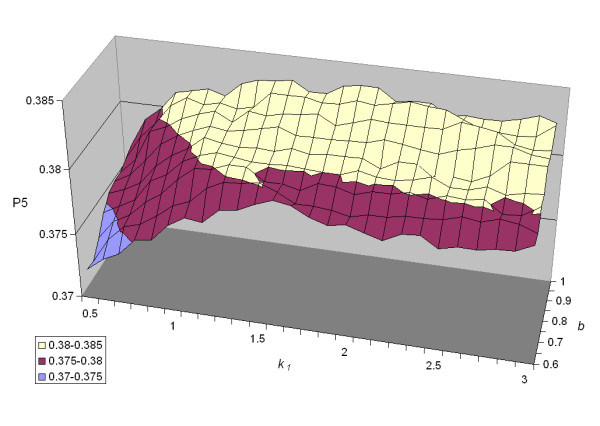
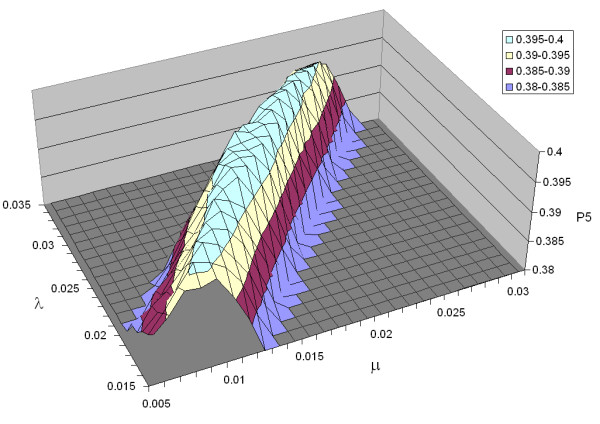
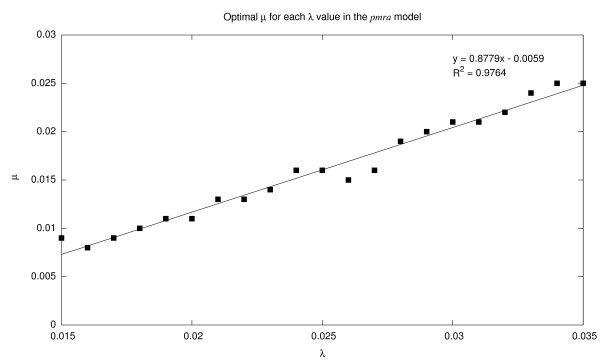
Verification
Claims the paper makes
The claims and statistics of this paper haven’t been checked yet.
Free: it reads the open-access text and checks the first 5 claims that cite a source we can check. Create a free account to check every claim.
Claims other papers make about this one
Each is checked against this paper’s own text: does it say what the citing paper says it does?
The cited source says what the claim attributes to it.
In the citing paper
“Another is using databases ' built in tools, such as PubMed ' s Related Articles feature [86] or Clarivate Analytics ' Web of Science ' s Related Records feature [87], to locate relevant articles based on commonalities with a starting article.”
From PRISMA-S: an extension to the PRISMA Statement for Reporting Literature Searches in Systematic Reviews (2021) · cites this paper as [86]
Self-check
Percentages, sums and reported differences re-computed from the paper’s own numbers.
The self-check needs the paper’s full text.
Citations
Cites
A vector space model for automatic indexing
Salton, G., Wong, A., & Yang, C. S. (1975) · Communications of the ACM · doi:10.1145/361219.361220 · Cited by 7,521
A maximum entropy approach to natural language processing
Berger, A. L., Pietra, V. J. D., & Pietra, S. A. D. (1996) · doi:10.5555/234285.234289 · Cited by 3,065
Robertson, S. E., Walker, S., Jones, S., Hancock‐Beaulieu, M., & Gatford, M. (1994) · Text REtrieval Conference · Cited by 2,212
De Roeck, A. (1995) · Handbook of Pragmatics · doi:10.1075/hop.m.comm2 · Cited by 1,715
Some Simple Effective Approximations to the 2-Poisson Model for Probabilistic Weighted Retrieval
Robertson, S. E., & Walker, S. (1994) · SIGIR ’94 · doi:10.1007/978-1-4471-2099-5_24 · Cited by 1,477 · cited 1×
“Instead, Robertson and Walker devised simple approximations that work well empirically [ 19 ].”
THE PROBABILITY RANKING PRINCIPLE IN IR
ROBERTSON, S. E. (1977) · Journal of Documentation · doi:10.1108/eb026647 · Cited by 1,103 · cited 1×
“Following typical assumptions in information retrieval [7], we wish to rank documents (MEDLINE citations, in our case) based on the probability that the user will want to see them.”
A probabilistic model of information retrieval: development and comparative experiments
Sparck Jones, K., Walker, S., & Robertson, S. E. (2000) · Information Processing & Management · doi:10.1016/s0306-4573(00)00015-7 · Cited by 942 · cited 3×
“From this starting point, we leverage previous work in probabilistic retrieval models based on Poisson distributions (e.g., [ 6 ,8,9]).”
InfluentialPivoted Document Length Normalization
Singhal, A., Buckley, C., & Mitra, M. (2017) · ACM SIGIR Forum · doi:10.1145/3130348.3130365 · Cited by 848
A Markov random field model for term dependencies
Metzler, D., & Croft, W. B. (2005) · Proceedings of the 28th annual international ACM SIGIR conference on Research and development in information retrieval · doi:10.1145/1076034.1076115 · Cited by 843 · cited 1×
“See [11] for recent work that attempts to introduce term dependencies into retrieval algorithms.”
TREC: Experiment and evaluation in information retrieval
Vicedo, J. L., & Gómez, J. (2007) · Journal of the American Society for Information Science and Technology · doi:10.1002/asi.20583 · Cited by 837
Research works printed but not linked: 1
- Lin J DiCuccio M Grigoryan V Wilbur WJ Exploring the Effectiveness of Related Article Search in PubMed Tech Rep LAMP-TR-145/CS-TR-4877/UMIACS-TR-2007-36/HCIL-2007-10 2007 University of Maryland, College Park, Maryland
Cited by
Items 201–243 of 243
Aspect-based Document Similarity for Literature Recommender Systems
Ostendorff, M. (2023) · eDiss (Georg-August-Universität Göttingen) · doi:10.53846/goediss-9937 · Cited by 1
Harnessing PubMed User Query Logs for Post Hoc Explanations of Recommended Similar ArticlesPreprint
Shin, A., Jin, Q., Anibal, J., & Lu, Z. (2024) · PubMed · doi:10.48550/arxiv.2402.03484 · Cited by 1
“Similarly, PubMed does not bold or highlight any part of the similar articles’ titles in its similar articles section [3].”
BackgroundScientific search engines : From the categorization to the information retrieval
Latard, B. (2019) · theses.fr (ABES) · doi:10.70675/5f64e3afz4ac0z4ad7zb54bz6688654cbe5c · Cited by 2
Zhang, R. (2013) · University of Minnesota Digital Conservancy (University of Minnesota)
Apprentissage artificiel de règles d'indexation pour MEDLINE.
Névéol, A., & Claveau, V. (2008)
Ranked Set Search in Medline Documents.
Mittag, K., & Hinneburg, A. (2010)
Srikrishna, D., & Coram, M. (2011) · PLoS ONE · doi:10.1371/journal.pone.0024920
“Clicks on the ‘‘related citations’’ link comprise a fifth of all user sessions on PubMed [3] indicating it is often utilized by researchers.”
BackgroundSearch Query Performance Improvement on Medica Data Bases
Gunnam, S. (2012)
Enhancing MEDLINE Document Clustering using SSNCUT With MS and GC Constraints
Aishwarya, V., & Geetha, R. (2014)
Information retrieval for reducing manual effort in biomedical and clinical research
Zhu, D. (2014) · Library, Museums and Press - UDSpace (University of Delaware) · doi:10.58088/c0v9-7f35
Condition-specific differential subnetwork analysis for biological systems
Jhamb, D. (2015) · Purdue University Indianapolis (Indiana University) · doi:10.7912/c2/947
Ranking of Database Query Results Based on Concept Hierarchies
Kumar, K. R. (2014)
Aldarra, S., Muñoz, E., Vandenbussche, P.-Y., & Nováček, V. (2014)
CLUSTERING OF MEDLINE DOCUMENTS USING SEMI-SUPERVISED SPECTRAL CLUSTERING
AbinCherian (2014) · International Journal of Research in Engineering and Technology · doi:10.15623/ijret.2014.0303026
Featured Article: Genotation: Actionable knowledge for the scientific reader
Nagahawatte, P., Willis, E., Sakauye, M., Jose, R., Chen, H., & Davis, R. L. (2016) · Experimental Biology and Medicine · doi:10.1177/1535370216633795
“There were three major challenges identified in the project: (1) Accurately identifying the subset of terms from an article to be linked to external knowledge, (2) synthesizing a centralized knowledgebase containing information from multiple databases, and (3) presenting the supplementary knowledge intuitively to enha…”
Mining Related Articles for Automatic Journal Cataloging
Mao, Y., & Lu, Z. (2016) · Journal of Data and Information Science · doi:10.20309/jdis.201613
“The retrieval model that underlies the related article search feature in PubMed is a topic-based content similarity model called pmra (Lin & Wilbur, 2007).”
MethodIdentification of Biomedical Articles with Highly Related Core Contents
Liu, R. (2017) · Lecture notes in computer science · doi:10.1007/978-3-319-54472-4_21
Multi-Agent Modeling of Risk-Aware and Privacy-Preserving Recommender Systems
Srivastava, V. (2017) · UWSpace (University of Waterloo) · Cited by 1
Optimizing Query Results using Middle Layers Based on Concept of Hierarchies
Devi, J., & Kumari, K. R. (2012)
Reschke, B. P., & Howell, T. M. (2021) · SSRN Electronic Journal · doi:10.2139/ssrn.3945832
Faculty Opinions recommendation of Does science advance one funeral at a time?
Hunter, L. (2019) · Faculty Opinions – Post-Publication Peer Review of the Biomedical Literature · doi:10.3410/f.732739703.793563691
Status SpilloversPreprint
Reschke, B. P., Azoulay, P., & Stuart, T. E. (2015) · SSRN Electronic Journal · doi:10.2139/ssrn.2611840
Who Stands on the Shoulders of Chinese (Scientific) Giants? Evidence from ChemistryPreprint
Qiu, S., Steinwender, C., & Azoulay, P. (2023) · SSRN Electronic Journal · doi:10.2139/ssrn.4329476
Paper Tiger? Chinese Science and Home Bias in CitationsPreprint
Qiu, S., Steinwender, C., & Azoulay, P. (2024) · SSRN Electronic Journal · doi:10.2139/ssrn.4833948 · Cited by 3
What is the association between the microbiome and cognition? An umbrella review protocol
Goldenberg, J. Z., Wright, T. J., Batson, R. D., Wexler, R. S., McGovern, K. A., Venugopal, N. K., Ward, W. W., Randolph, K. M., Urban, R. J., Pyles, R. B., et al. (2024) · BMJ Open · doi:10.1136/bmjopen-2023-077873
“46 We will use cocitation and bibliographic coupling to build and visualise a force-directed graph of articles related to included studies.”
MethodFan, X., Timorabadi, H., & Emara, S. (2024) · ASEE Annual Conference & Exposition · doi:10.18260/1-2--48398
Rethlefsen, M. L. (2024) · Research Publications (Maastricht University) · doi:10.26481/dis.20250121mr
Maher, P. J., LaFollette, R., Greineder, C. F., & Musey, P. I. (2024) · Academic Emergency Medicine · doi:10.1111/acem.15062
Paper Tiger? Chinese Science and Home Bias in CitationsPreprint
Qiu, S., Steinwender, C., & Azoulay, P. (2025) · SSRN Electronic Journal · doi:10.2139/ssrn.5133274 · Cited by 3
Hema, V. (2024) · International Conference on System Modeling & Advancement in Research Trends (SMART) · doi:10.1109/smart63812.2024.10882561
Rethlefsen, M., Kirtley, S., Waffenschmidt, S., Ayala, A. P., Moher, D., Page, M. J., & Koffel, J. B. (2021) · Figshare · doi:10.6084/m9.figshare.13646921
Gates, M., Elliott, S. A., Gates, A., Sebastianski, M., Pillay, J., Bialy, L., & Hartling, L. (2021) · Figshare · doi:10.6084/m9.figshare.14450851
Zuo, C., Wang, C., & Banerjee, R. (2025) · IEEE International Conference on Bioinformatics and Biomedicine (BIBM) · doi:10.1109/bibm66473.2025.11356094
Cabot, C. (2017) · theses.fr (ABES) · doi:10.70675/b657df73zf981z44ddz82a7z040bf3b69c44 · Cited by 5
Knowledge Discovery Considering Domain Literature and Ontologies : Application to Rare Diseases
Hassan, M. (2017) · theses.fr (ABES) · doi:10.70675/1505b868zbf3dz407bz8328z6f73db1db5ab · Cited by 1
FAIRsharing record for: Omics Discovery Index
FAIRsharing Team, & McQuilton, P. (2018) · FAIRsharing.org · doi:10.25504/fairsharing.re1278
Classifying scientific texts in biology for focus species
Wei, Q. (2012) · SOKENDAI (Graduate University for Advanced Studies)
Metadata
- Authors
- Lin, J., & Wilbur, W. J.
- Affiliations
- National Center for Biotechnology Information (US)
- National Institutes of Health (US)
- Corresponding author
- Lin, Jimmy
- ORCID
- Lin, Jimmy
- Venue
- BMC Bioinformatics
- Published
- 2007-10-30
- Volume
- 8
- Issue
- 1
- Pages
- 423-423
- ISSN
- 1471-2105 (ISSN-L)
- PMC
- PMC2212667
- OpenAlex
- W2061172803
- Cited by
- 243
- References
- 29
- Citations by year
- 2025: 9 · 2024: 15 · 2023: 13 · 2022: 11 · 2021: 10 · 2020: 24 · 2019: 19 · 2018: 8 · 2017: 18 · 2016: 12 · 2015: 17 · 2014: 22 · 2013: 11 · 2012: 14
- FWCI
- 25.83
- Type
- journal article
- Language
- en
- Open access
- gold
- doi.org
- Licence
- cc-by
- creativecommons.org/licenses/by/2.0 (tdm)
- Locations
- BMC Bioinformatics (publishedVersion, cc-by)
- PubMed Central (publishedVersion, cc-by)
- PubMed (publishedVersion)
- DOAJ (DOAJ: Directory of Open Access Journals) (submittedVersion)
- University Libraries (University of Maryland) (submittedVersion)
- Digital Repository at the University of Maryland (University of Maryland College Park)
- Funders
- National Institutes of Health
- U.S. National Library of Medicine
- Topics
- Physical Sciences › Computer Science › Information Systems › Information Retrieval and Search Behavior
- Health Sciences › Medicine › Health Informatics › Biomedical Text Mining and Ontologies
- Physical Sciences › Mathematics › Theoretical Computer Science › Algorithms and Data Compression
- Keywords
- PubMed, probabilistic retrieval models, content similarity, relatedness, mesh, MEDLINE, BM25, document ranking
- MeSH terms
- Algorithms, Artificial Intelligence, Data Interpretation, Statistical, Natural Language Processing, Periodicals as Topic, Models, Statistical, Bibliometrics, Vocabulary, Controlled, PubMed
About these checks
Registry, retraction, Cites and statistics results are computed, not judged, with one exception: a printed reference that no index lists is read once by a model before it counts as a citation error. Claims are extracted by a model and kept only when their quote appears verbatim in the text; each cited source is then checked, with a model’s help, for whether it says what the claim relies on. Those verdicts can be wrong — read the claim’s quote and the cited source before relying on one.
Statistics and arithmetic are recomputed, not judged.
Confidence bands are shown only for fields calibrated on our annotated test set. None is calibrated yet, so no band is shown.
What counts as a claim ›How we measure confidence ›How we check this ›
Are you an author, or do you see a problem with this page? Request a review
Data sources
Bibliographic data: Semantic Scholar, OpenAlex, Crossref.
Contains information from the Semantic Scholar Academic Graph Datasets, made available under the ODC Attribution License (ODC-BY 1.0).
Semantic Scholar’s data is described in: Kinney, R., et al. (2023). The Semantic Scholar Open Data Platform. arXiv:2301.10140.
