

On the phylogenetic position of Myzostomida: Can 77 genes get it wrong?
Open accessThe DOI matches its Crossref record; 56 of the 56 references it cites were found in a registry or an index.
Abstract
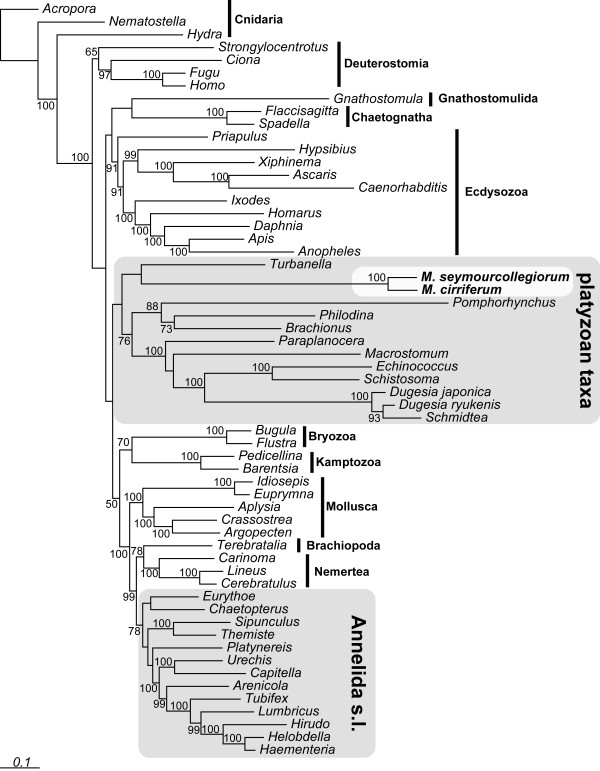
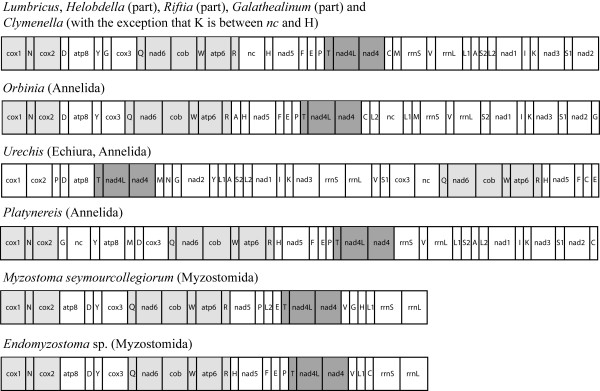
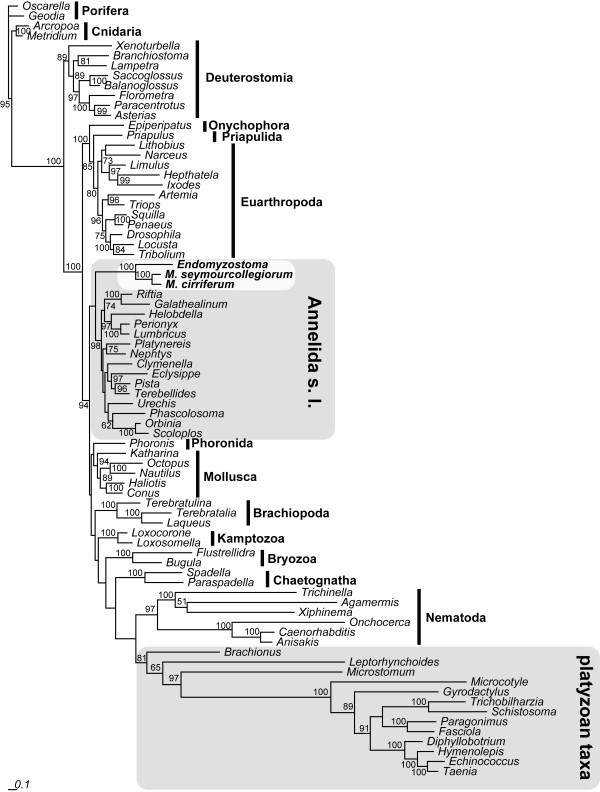
BACKGROUND: Phylogenomic analyses recently became popular to address questions about deep metazoan phylogeny. Ribosomal proteins (RP) dominate many of these analyses or are, in some cases, the only genes included. Despite initial hopes, phylogenomic analyses including tens to hundreds of genes still fail to robustly place many bilaterian taxa. RESULTS: Using the phylogenetic position of myzostomids as an example, we show that phylogenies derived from RP genes and mitochondrial genes produce incongruent results. Whereas the former support a position within a clade of platyzoan taxa, mitochondrial data recovers an annelid affinity, which is strongly supported by the gene order data and is congruent with morphology. Using hypothesis testing, our RP data significantly rejects the annelids affinity, whereas a platyzoan relationship is significantly rejected by the mitochondrial data. CONCLUSION: We conclude (i) that reliance of a set of markers belonging to a single class of macromolecular complexes might bias the analysis, and (ii) that concatenation of all available data might introduce conflicting signal into phylogenetic analyses. We therefore strongly recommend testing for data incongruence in phylogenomic analyses. Furthermore, judging all available data, we consider the annelid affinity hypothesis more plausible than a possible platyzoan affinity for myzostomids, and suspect long branch attraction is influencing the RP data. However, this hypothesis needs further confirmation by future analyses.
Overview
The claims and statistics of this paper haven’t been checked yet.
Free: it reads the open-access text and checks the first 5 claims that cite a source we can check. Create a free account to check every claim.
Integrity signals
Registry
Cites
Statistics
Figures
Verification
Claims the paper makes
The claims and statistics of this paper haven’t been checked yet.
Free: it reads the open-access text and checks the first 5 claims that cite a source we can check. Create a free account to check every claim.
Claims other papers make about this one
Each is checked against this paper’s own text: does it say what the citing paper says it does?
The cited source says what the claim attributes to it.
In the citing paper
“We identified ribosomal protein genes as possessing a conflicting signal compared with other genes, which caused some past studies to infer ctenophores and cnidarians as sister.”
From Error, signal, and the placement of Ctenophora sister to all other animals (2015) · cites this paper as [32]
The cited source says what the claim attributes to it.
In the citing paper
“Ribosomal protein genes have previously been identified as a potential source of phylogenetic error (32)”
From Error, signal, and the placement of Ctenophora sister to all other animals (2015) · cites this paper as [32]
Self-check
Percentages, sums and reported differences re-computed from the paper’s own numbers.
The self-check needs the paper’s full text.
Citations
Cites
Hall, T. A. (1999) · Nucleic Acids Symposium Series · doi:10.14601/phytopathol_mediterr-14998u1.29 · Cited by 38,297
RAxML-VI-HPC: maximum likelihood-based phylogenetic analyses with thousands of taxa and mixed models
Stamatakis, A. (2006) · Bioinformatics · doi:10.1093/bioinformatics/btl446 · Cited by 15,582 · cited 3×
“For Maximum Likelihood (ML) analysis, we used RAxML [ 57 ] with the PROTGAMMARTREV model to analyse single gene partitions, as well as the concatenated dataset.”
MethodInfluentialtRNAscan-SE: A Program for Improved Detection of Transfer RNA Genes in Genomic Sequence
Lowe, T. M., & Eddy, S. R. (1997) · Nucleic Acids Research · doi:10.1093/nar/25.5.955 · Cited by 10,905 · cited 2×
“Blast searches were used to identify protein-coding genes and ribosomal RNA genes; tRNA genes were identified using tRNAscan-SE web server [49] under default settings and source = "mito/chloroplast", or drawn by hand based on their potential secondary structures and anticodon sequences.”
MethodSelection of Conserved Blocks from Multiple Alignments for Their Use in Phylogenetic Analysis
Castresana, J. (2000) · Molecular Biology and Evolution · doi:10.1093/oxfordjournals.molbev.a026334 · Cited by 10,508 · cited 1×
“91 [61] was used to identify unambiguously aligned proportions of the alignments.”
MethodBase-Calling of Automated Sequencer Traces Using Phred. I. Accuracy Assessment
Ewing, B., Hillier, L., Wendl, M. C., & Green, P. (1998) · Genome Research · doi:10.1101/gr.8.3.175 · Cited by 6,967
Base-Calling of Automated Sequencer Traces Using Phred. II. Error Probabilities
Ewing, B., & Green, P. (1998) · Genome Research · doi:10.1101/gr.8.3.186 · Cited by 5,439
CAP3: A DNA Sequence Assembly Program
Huang, X., & Madan, A. (1999) · Genome Research · doi:10.1101/gr.9.9.868 · Cited by 5,261 · cited 2×
“Sequences were then clustered and assembled using the TIGCL package [43] by performing pairwise comparisons (MGIBlast) and a subsequent clustering using CAP3 [45].”
MethodMAFFT version 5: improvement in accuracy of multiple sequence alignment
Katoh, K. (2005) · Nucleic Acids Research · doi:10.1093/nar/gki198 · Cited by 4,837 · cited 2×
“Katoh K, Kuma K, Zoh H, Miyata T: MAFFT version 5: improve- ment in accuracy of multiple sequence alignment.”
MethodProtTest: selection of best-fit models of protein evolution
Abascal, F., Zardoya, R., & Posada, D. (2005) · Bioinformatics · doi:10.1093/bioinformatics/bti263 · Cited by 3,063
An approximately unbiased test of phylogenetic tree selection
Shimodaira, H. (2002) · Systematic Biology · doi:10.1080/10635150290069913 · Cited by 2,791 · cited 3×
“We computed Page 7 of 11 (page number not for citation purposes) per-site log-likelihoods with RAxML for both, the topology inferred by the single gene analysis and the constrained topology from the best tree, and used an AU-test as implemented in CONSEL [18] to test if these hypotheses differ significantly.”
MethodInfluential
Research works printed but not linked: 1
- Zhong M Struck TH Halanych KM Phylogenetic information from three mitochondrial genomes of Terebelliformia (Annelida) worms and duplication of the methionine tRNA Gene 2008 416 11 21 18439769 10.1016/j.gene.2008.02.020 · DOI
Cited by
Phylogenomic analyses unravel annelid evolution
Struck, T. H., Paul, C., Hill, N., Hartmann, S., Hösel, C., Kube, M., Lieb, B., Meyer, A., Tiedemann, R., Purschke, G., et al. (2011) · Nature · doi:10.1038/nature09864 · Cited by 406
Self-citationXenacoelomorpha is the sister group to Nephrozoa
Cannon, J. T., Vellutini, B. C., Smith, J., Ronquist, F., Jondelius, U., & Hejnol, A. (2016) · Nature · doi:10.1038/nature16520 · Cited by 364
Error, signal, and the placement of Ctenophora sister to all other animals
Whelan, N. V., Kocot, K. M., Moroz, L. L., & Halanych, K. M. (2015) · Proceedings of the National Academy of Sciences · doi:10.1073/pnas.1503453112 · Cited by 331
“Ribosomal protein genes have previously been identified as a potential source of phylogenetic error (32), and the above indicates that ctenophores sister to cnidarians as in Philippe et al.”
BackgroundSelf-citationA Phylogenomic Approach to Resolve the Arthropod Tree of Life
Meusemann, K., von Reumont, B. M., Simon, S., Roeding, F., Strauss, S., Kuck, P., Ebersberger, I., Walzl, M., Pass, G., Breuers, S., et al. (2010) · Molecular Biology and Evolution · doi:10.1093/molbev/msq130 · Cited by 324
Illuminating the Base of the Annelid Tree Using Transcriptomics
Weigert, A., Helm, C., Meyer, M., Nickel, B., Arendt, D., Hausdorf, B., Santos, S. R., Halanych, K. M., Purschke, G., Bleidorn, C., et al. (2014) · Molecular Biology and Evolution · doi:10.1093/molbev/msu080 · Cited by 304
“Placement of Sipuncula within Annelida is strongly supported by our analyses and substantiates previous studies (Bleidorn et al. 2009; Mwinyi et al. 2009; Dordel et al. 2010).”
BackgroundResultSelf-citationHigher-level metazoan relationships: recent progress and remaining questions
Edgecombe, G. D., Giribet, G., Dunn, C. W., Hejnol, A., Kristensen, R. M., Neves, R. C., Rouse, G. W., Worsaae, K., & Sørensen, M. V. (2011) · Organisms Diversity & Evolution · doi:10.1007/s13127-011-0044-4 · Cited by 290
“Since the first animal phylogenomic analyses using EST data, relationships have been resolved for several groups of phyla (Bleidorn et al. 2009; Bourlat et al. 2006; Delsuc et al. 2005, 2006; Dunn et al. 2008; Egger et al. 2009; Hausdorf et al. 2007, 2010; Hejnol et al. 2009; Helmkampf et al. 2008a, b; Marlétaz et al.…”
BackgroundInfluentialStatistics and Truth in Phylogenomics
Kumar, S., Filipski, A. J., Battistuzzi, F. U., Kosakovsky Pond, S. L., & Tamura, K. (2012) · Molecular Biology and Evolution · doi:10.1093/molbev/msr202 · Cited by 287
“Other examples of opposing statistical support include the phylogenetic position of myzostomids (parasitic organisms typically found on echinoderms), whose placement in the metazoan tree by use of 77 ribosomal proteins is strongly rejected by mitochondrial sequence data (Bleidorn et al. 2009).”
BackgroundDeep metazoan phylogeny: When different genes tell different stories
Nosenko, T., Schreiber, F., Adamska, M., Adamski, M., Eitel, M., Hammel, J., Maldonado, M., Müller, W. E. G., Nickel, M., Schierwater, B., et al. (2013) · Molecular Phylogenetics and Evolution · doi:10.1016/j.ympev.2013.01.010 · Cited by 254
“The main criticism of the ribosomal gene phylogeny is that it is based on functionally coupled macromolecules, which might share a common evolutionary bias (Bleidorn et al., 2009).”
Current status of annelid phylogeny
Weigert, A., & Bleidorn, C. (2016) · Organisms Diversity & Evolution · doi:10.1007/s13127-016-0265-7 · Cited by 210
“However, a sister group relationship to Clitellata based on molecular data could not be resolved, since studies incorporating only a few genes found a close relationship to Orbiniidae or various other taxa (Struck et al. 2008; T. Struck et al. 2002a, b; Rousset et al. 2007), but a larger phylogenomic approach could fu…”
BackgroundInfluentialSelf-citationPhylogenomics of Lophotrochozoa with Consideration of Systematic Error
Kocot, K. M., Struck, T. H., Merkel, J., Waits, D. S., Todt, C., Brannock, P. M., Weese, D. A., Cannon, J. T., Moroz, L. L., Lieb, B., et al. (2016) · Systematic Biology · doi:10.1093/sysbio/syw079 · Cited by 208
Self-citationPhylogenomic analyses uncover origin and spread of the Wolbachia pandemic
Gerth, M., Gansauge, M.-T., Weigert, A., & Bleidorn, C. (2014) · Nature Communications · doi:10.1038/ncomms6117 · Cited by 174
Self-citationWu, C., Wang, Y., Hsu, C.-Y., Lin, C.-P., & Chaw, S. (2011) · Genome Biology and Evolution · doi:10.1093/gbe/evr095 · Cited by 170
A molecular phylogeny of bryozoans
Waeschenbach, A., Taylor, P. D., & Littlewood, D. T. J. (2011) · Molecular Phylogenetics and Evolution · doi:10.1016/j.ympev.2011.11.011 · Cited by 169
Andrade, S. C. S., Novo, M., Kawauchi, G. Y., Worsaae, K., Pleijel, F., Giribet, G., & Rouse, G. W. (2015) · Molecular Biology and Evolution · doi:10.1093/molbev/msv157 · Cited by 150
Phylogeny of Annelida (Lophotrochozoa): total-evidence analysis of morphology and six genes
Zrzavý, J., Říha, P., Piálek, L., & Janouškovec, J. (2009) · BMC Evolutionary Biology · doi:10.1186/1471-2148-9-189 · Cited by 152
“[ 49 ]]. In the present analyses, the myzostomids seem to belong into the Annelida (possibly into the Aciculata, as suggested by the taxon-exclusion tests).”
BackgroundInfluentialEvolution of Sexual Reproduction in Marine Invertebrates: Example of gymnolaemate bryozoans
Ostrovsky, A. N. (2013) · Springer eBooks · doi:10.1007/978-94-007-7146-8 · Cited by 143
TreSpEx-detection of misleading signal in phylogenetic reconstructions based on tree information
Struck, T. H. (2014) · Evolutionary Bioinformatics · doi:10.4137/ebo.s14239 · Cited by 128
Dating the arthropod tree based on large-scale transcriptome data
Rehm, P., Borner, J., Meusemann, K., von Reumont, B. M., Simon, S., Hadrys, H., Misof, B., & Burmester, T. (2011) · Molecular Phylogenetics and Evolution · doi:10.1016/j.ympev.2011.09.003 · Cited by 121
Phylogeny and diversification of bryozoans
Taylor, P. D., & Waeschenbach, A. (2015) · Palaeontology · doi:10.1111/pala.12170 · Cited by 120
“Interestingly, this sister-group relationship has also found support in molecular studies using ribosomal protein genes (Hausdorf et al. 2007; Helmkampf et al. 2008; Bleidorn et al. 2009; Hausdorf et al. 2010; Nesnidal et al. 2010).”
ResultEvaluating Topological Conflict in Centipede Phylogeny Using Transcriptomic Data Sets
Fernández, R., Laumer, C., Vahtera, V., Libro, S., Kaluziak, S. T., Sharma, P. P., Pérez-Porro, A. R., Edgecombe, G. D., & Giribet, G. (2014) · Molecular Biology and Evolution · doi:10.1093/molbev/msu108 · Cited by 91
Richter, S., Schwarz, F., Hering, L., Böggemann, M., & Bleidorn, C. (2015) · Genome Biology and Evolution · doi:10.1093/gbe/evv224 · Cited by 88
Self-citationA Transcriptomic Approach to Ribbon Worm Systematics (Nemertea): Resolving the Pilidiophora Problem
Andrade, S. C. S., Montenegro, H., Strand, M., Schwartz, M. L., Kajihara, H., Norenburg, J. L., Turbeville, J. M., Sundberg, P., & Giribet, G. (2014) · Molecular Biology and Evolution · doi:10.1093/molbev/msu253 · Cited by 69
“…p. 96), and the advent of phylogenomics has aided in resolving many contentious aspects in animal phylogeny (Delsuc et al. 2005; Dunn et al. 2008; Bleidorn et al. 2009; Hejnol et al. 2009; Meusemann et al. 2010; Kocot et al. 2011; Rehm et al. 2011; 3209 Downloaded from…”
BackgroundKocot, K. M. (2016) · Organisms Diversity & Evolution · doi:10.1007/s13127-015-0261-3 · Cited by 59
“Although these results are at odds with a large body of molecular work inconsistent with lophophorate monophyly, most of these earlier studies were based on relatively small datasets dominated by nuclear ribosomal RNA genes, which may have been saturated (e.g., Struck et al. 2008).”
BackgroundResultMitochondrial genomes to the rescue – Diurodrilidae in the myzostomid trap
Golombek, A., Tobergte, S., Nesnidal, M. P., Purschke, G., & Struck, T. H. (2013) · Molecular Phylogenetics and Evolution · doi:10.1016/j.ympev.2013.03.026 · Cited by 59
Mallatt, J. M., Craig, C. W., & Yoder, M. J. (2012) · Molecular Phylogenetics and Evolution · doi:10.1016/j.ympev.2012.05.016 · Cited by 58
“…never went with the other molluscs, the urochordate sequences never grouped with the other chordates, and the sequence of Myzostoma, which is likely an annelid (Bleidorn et al., 2007, 2009; Giribet, 2008; Philippe et al., 2011a), always went far from the annelids and near the base of the Bilateria.”
BackgroundAnnelid Diversity: Historical Overview and Future Perspectives
Capa, M., & Hutchings, P. (2021) · Diversity · doi:10.3390/d13030129 · Cited by 58
Dordel, J., Fisse, F., Purschke, G., & Struck, T. H. (2010) · Journal of Zoological Systematics and Evolutionary Research · doi:10.1111/j.1439-0469.2010.00567.x · Cited by 48
Wey-Fabrizius, A. R., Herlyn, H., Rieger, B., Rosenkranz, D., Witek, A., Welch, D. B. M., Ebersberger, I., & Hankeln, T. (2014) · PLoS ONE · doi:10.1371/journal.pone.0088618 · Cited by 49
“, [5], [62]) we also compiled ‘‘non-RP’’ data sets by deleting all RP sequences, resulting in data sets ‘‘mintax4_noRPs’’ and ‘‘mintax8_noRPs’’ (Table 1).”
BackgroundSupport for the monophyletic origin of Gnathifera from phylogenomics
Witek, A., Herlyn, H., Ebersberger, I., Welch, D. B. M., & Hankeln, T. (2009) · Molecular Phylogenetics and Evolution · doi:10.1016/j.ympev.2009.07.031 · Cited by 52
“A recent maximum-likelihood analysis of ribosomal proteins grouped myzostomids at yet another position (as sister of gastrotrichs), although mtDNA and other data strongly suggest that myzostomids are related to annelids (Bleidorn et al., 2009).”
BackgroundQu, X., Jin, J., Chaw, S., Li, D.-Z., & Yi, T. (2017) · Scientific Reports · doi:10.1038/srep41005 · Cited by 50
Curious bivalves: Systematic utility and unusual properties of anomalodesmatan mitochondrial genomes
Williams, S. T., Foster, P. G., Hughes, C., Harper, E. M., Taylor, J. D., Littlewood, D. T. J., Dyal, P. L., Hopkins, K., & Briscoe, A. G. (2017) · Molecular Phylogenetics and Evolution · doi:10.1016/j.ympev.2017.03.004 · Cited by 45
Oceguera-Figueroa, A. F., Manzano-Marín, A., Kvist, S., Moyá, A., Siddall, M. E., & Latorre, A. (2016) · PLoS ONE · doi:10.1371/journal.pone.0155441 · Cited by 42
“Whereas Myzostomida seems to only show rearrangements of tRNA genes, Sipunculidae (also an early diverging lineage; Fig 3B) displays large rearrangements involving the translocation of various multigene syntenic blocks (nad2–cob switch location with nad4L and nad4).”
MethodInfluentialSeixas, V. C., Russo, C., & Paiva, P. C. (2016) · Gene · doi:10.1016/j.gene.2016.12.024 · Cited by 36
Conidae phylogenomics and evolution
Abalde, S., Jimenez-Tenorio, M., Uribe, J. E., & Zardoya, R. (2019) · Zoologica Scripta · doi:10.1111/zsc.12329 · Cited by 31
“For many years, one of the main limitations of molecular phylogenetics derived from the use of single or few genes, which could often render unresolved trees (Bleidorn et al., 2009; Rokas, Williams, King, & Carroll, 2003).”
BackgroundExploiting Gene Families for Phylogenomic Analysis of Myzostomid Transcriptome Data
Hartmann, S. A., Helm, C., Nickel, B., Meyer, M., Struck, T. H., Tiedemann, R., Selbig, J., & Bleidorn, C. (2012) · PLoS ONE · doi:10.1371/journal.pone.0029843 · Cited by 31
“It was shown, for example, that the highly conserved ribosomal proteins frequently used for phylogenomic analyses can contain a phylogenetic signal that is incongruent with other marker genes [4,10].”
BackgroundMethodInfluentialSelf-citationReconstructing the ancestral annelid
Eibye‐Jacobsen, D., & Vinther, J. (2012) · Journal of Zoological Systematics & Evolutionary Research · doi:10.1111/j.1439-0469.2011.00651.x · Cited by 29
Polychaete species (Annelida) described from the Philippine and China Seas
Salazar-Vallejo, S. I., Parra, L. F. C., Muir, A. I., de León‐González, J. Á., Piotrowski, C. N., & Sato, M. (2014) · Zootaxa · doi:10.11646/zootaxa.3842.1.1 · Cited by 28
Nesnidal, M. P., Helmkampf, M., Bruchhaus, I., & Hausdorf, B. (2011) · BMC Genomics · doi:10.1186/1471-2164-12-572 · Cited by 27
GPU MrBayes V3.1: MrBayes on Graphics Processing Units for Protein Sequence Data: Table 1.
Pang, S., Stones, R. J., Ren, M., Liu, X., Wang, G., Xia, H.-J., Wu, H., Liu, Y., & Xie, Q. (2015) · Molecular Biology and Evolution · doi:10.1093/molbev/msv129 · Cited by 26
Fossil Constraints on the Timescale of Parasitic Helminth Evolution
Baets, K. D., Dentzien‐Dias, P., Harrison, G. W. M., Littlewood, D. T. J., & Parry, L. A. (2021) · Topics in geobiology · doi:10.1007/978-3-030-42484-8_7 · Cited by 26
KOBAYASHI, G., Itoh, H., Fukuda, H., & Kojima, S. (2020) · Genomics · doi:10.1016/j.ygeno.2020.10.014 · Cited by 25
Kobayashi, G., Itoh, H., & Nakajima, N. (2023) · Molecular Biology Reports · doi:10.1007/s11033-023-08647-3 · Cited by 20
Jondelius, U., Raikova, O. I., & Martínez, P. (2019) · Springer eBooks · doi:10.1007/978-3-030-30363-1_14 · Cited by 19
Porcupine Marine Natural History Society Newsletter
Moore, J. A., Cara, T., Dock, P., Whyte, S., & Tinsley, P. A. (2008) · Cited by 18
Divergence and species discrimination in freshwater bryozoans (Bryozoa: Phylactolaemata)
Hartikainen, H., Waeschenbach, A., Wöss, E., Wood, T. S., & Okamura, B. (2013) · Zoological Journal of the Linnean Society · doi:10.1111/zoj.12025 · Cited by 17
Meyer, A., Witek, A., & Lieb, B. (2011) · Methods in Ecology and Evolution · doi:10.1111/j.2041-210x.2010.00052.x · Cited by 16
“This assumption is confirmed here when analysing the 39 and 40 worst scoring RPs (from a total of 79 genes) revealing typical LBA artefacts, but not for the selected best 18 genes, underlining the impor- tance of carefully selecting marker genes.”
BackgroundKOBAYASHI, G., Itoh, H., & Kojima, S. (2022) · Scientific Reports · doi:10.1038/s41598-022-08103-5 · Cited by 15
Elucidating Animal Phylogeny: Advances in Knowledge and Forthcoming Challenges
Kocot, K. M., Cannon, J. T., & Halanych, K. M. (2010) · Science Publishers eBooks · doi:10.1201/b10425-4 · Cited by 12
Self-citationA myzostomid endoparasitic in black corals
Bo, M., Rouse, G. W., Martin, D. J., & Bavestrello, G. (2013) · Coral Reefs · doi:10.1007/s00338-013-1095-0 · Cited by 12
Capa, M., Aguado, M. T., & Bakken, T. (2015) · Cladistics · doi:10.1111/cla.12134 · Cited by 10
“…to the assessment of the position of the aberrant Myzostomida and other symbiotic annelids (e.g. Eeckhaut et al., 2000; Zrzav y et al., 2001, 2009; Bleidorn et al., 2007, 2009, 2014; Struck et al., 2008, 2011; Hartmann et al., 2012; Aguado et al., 2013; Kvist and Siddall, 2013; Struck, 2013;…”
BackgroundStruck, T. H. (2015) · Springer eBooks · doi:10.1007/978-94-007-6727-0_15-1 · Cited by 8
“However, again careful analyses of the molecular data showed that the results were due to biased data (Bleidorn et al. 2009).”
BackgroundZhang, Z., Li, J., Zhang, X., Lin, B., & Chen, J. (2022) · Frontiers in Genetics · doi:10.3389/fgene.2022.966633 · Cited by 7
“Phylogenetic analyses based on mitogenome sequences often result in better resolution than analyses that use few gene sequences (Bleidorn et al., 2009; Kobayashi et al., 2021).”
MethodRundell, R. J., & Leander, B. S. (2012) · Marine Biology Research · doi:10.1080/17451000.2011.619545 · Cited by 6
“Key words: eastern North Pacific Ocean, Vancouver Island, Entoprocta, Loxosomatidae, meiofauna biodiversity”
BackgroundFirst mitochondrial genome of a lugworm (Annelida: Arenicolidae) and its phylogenetic position
Kobayashi, G., Itoh, H., & Nakajima, N. (2022) · Journal of the Marine Biological Association of the United Kingdom · doi:10.1017/s0025315422001035 · Cited by 4
“oceanica, was the same as that observed in various lineages in Sedentaria (Bleidorn et al., 2009; Oceguera-Figueroa et al., 2016) (Figures 2 and 3).”
BackgroundResultWang, Y., & Xie, Q. (2014) · Journal of Molecular Evolution · doi:10.1007/s00239-014-9635-y · Cited by 3
“During the same period, however, evidence from nuclear rDNAs and protein-coding genes supported the hypothesis that Myzostomida belongs to the flatworms (Eeckhaut et al. 2000; Bleidorn et al. 2009).”
BackgroundResultInfluentialStruck, T. H. (2017) · Toxinology · doi:10.1007/978-94-007-6458-3_15 · Cited by 2
A literature review of the marine annelids of the Ryukyu Islands: still at the “early-bird” stage
Fourreau, C. J. L., Jimi, N., Goto, R., SATO, M., & Reimer, J. D. (2025) · Marine Biodiversity · doi:10.1007/s12526-025-01612-2 · Cited by 1
“…(Pogonophora, Sipuncula, and Echiuria) in the past; however, they are all phylogenetically placed within phylum Annelida according to recent reconstructions (Struck et al. 2007; Bleidorn et al. 2009; Weigert and Blei-dorn 2016; Goto et al. 2020; Rouse et al. 2022), and were therefore included.”
Natural selection on various sites of ribosomal proteins: a cladistic view
Wu, H., Liu, Y., Wang, Y., Lin, J., Xie, Q., & Bu, W. (2016) · Zenodo (CERN European Organization for Nuclear Research) · doi:10.11865/zs.201601
“…biology (Klinge et al. , 2011; Rabl et al. , 2011), abundance of sequences deposited in public databases and utility in phylogenetic reconstruction (Bleidorn et al. , 2009), eukaryotic ribosomal proteins were selected as the test case for a bioinformatics analysis of the conservation of different…”
Data from: Phylogenomics of Lophotrochozoa with consideration of systematic error
Kocot, K., Struck, T., Merkel, J., Waits, D. S., Todt, C., Brannock, P., Weese, D., Cannon, J., Moroz, L., Lieb, B., et al. (2016) · Data Archiving and Networked Services (DANS) · doi:10.5061/dryad.30k4v.1
Self-citation
Metadata
- Authors
- Bleidorn, C., Podsiadlowski, L., Zhong, M., Eeckhaut, I., Hartmann, S., Halanych, K. M., & Tiedemann, R.
- Affiliations
- University of Potsdam (DE)
- Auburn University (US)
- University of Mons (BE)
- Corresponding author
- Bleidorn, Christoph
- Venue
- BMC Evolutionary Biology
- Published
- 2009
- Volume
- 9
- Issue
- 1
- Pages
- 150
- ISSN
- 1471-2148 (ISSN-L)
- PMC
- PMC2716322
- OpenAlex
- W2104347811
- Semantic Scholar
- 682451ed3f69d0e8193dc22348aaf9663779f583
- Cited by
- 59
- References
- 56
- Citations by year
- 2025: 1 · 2023: 1 · 2022: 3 · 2021: 2 · 2020: 1 · 2019: 2 · 2017: 3 · 2016: 7 · 2015: 7 · 2014: 9 · 2013: 5 · 2012: 4
- FWCI
- 2.28
- Type
- journal article
- Language
- en
- Open access
- gold
- doi.org
- Licence
- cc-by
- Locations
- BMC Evolutionary Biology (publishedVersion, cc-by)
- PubMed Central (publishedVersion, cc-by)
- PubMed (publishedVersion)
- MPG.PuRe (Max Planck Society) (submittedVersion, other-oa)
- DOAJ (DOAJ: Directory of Open Access Journals) (submittedVersion, cc-by-sa)
- Max Planck Institute for Plasma Physics (submittedVersion)
- publish.UP (University of Potsdam) (submittedVersion, cc-by)
- Funders
- National Science Foundation (0120646)
- Auburn University
- Deutsche Forschungsgemeinschaft
- Topics
- Life Sciences › Biochemistry, Genetics and Molecular Biology › Molecular Biology › Genomics and Phylogenetic Studies
- Life Sciences › Agricultural and Biological Sciences › Ecology, Evolution, Behavior and Systematics › Invertebrate Taxonomy and Ecology
- Life Sciences › Agricultural and Biological Sciences › Animal Science and Zoology › Marine Invertebrate Physiology and Ecology
- Keywords
- Myzostomida, phylogenetic position, ribosomal protein genes, mitochondrial genes, gene order, long-branch attraction, hypothesis testing
- MeSH terms
- Animals, Annelida, Bayes Theorem, DNA, Mitochondrial, Genetic Markers, Models, Genetic, Phylogeny, Ribosomal Proteins, Gene Library, Sequence Analysis, DNA, Evolution, Molecular, Gene Order, Genes, Mitochondrial, Genome, Mitochondrial
About these checks
Registry, retraction, Cites and statistics results are computed, not judged, with one exception: a printed reference that no index lists is read once by a model before it counts as a citation error. Claims are extracted by a model and kept only when their quote appears verbatim in the text; each cited source is then checked, with a model’s help, for whether it says what the claim relies on. Those verdicts can be wrong — read the claim’s quote and the cited source before relying on one.
Statistics and arithmetic are recomputed, not judged.
Confidence bands are shown only for fields calibrated on our annotated test set. None is calibrated yet, so no band is shown.
What counts as a claim ›How we measure confidence ›How we check this ›
Are you an author, or do you see a problem with this page? Request a review
Data sources
Bibliographic data: Semantic Scholar, OpenAlex, Crossref.
Contains information from the Semantic Scholar Academic Graph Datasets, made available under the ODC Attribution License (ODC-BY 1.0).
Semantic Scholar’s data is described in: Kinney, R., et al. (2023). The Semantic Scholar Open Data Platform. arXiv:2301.10140.
