

Normal colon epithelium: a dataset for the analysis of gene expression and alternative splicing events in colon disease
Open accessThe DOI matches its Crossref record; 24 of the 24 references it cites were found in a registry or an index.
Abstract
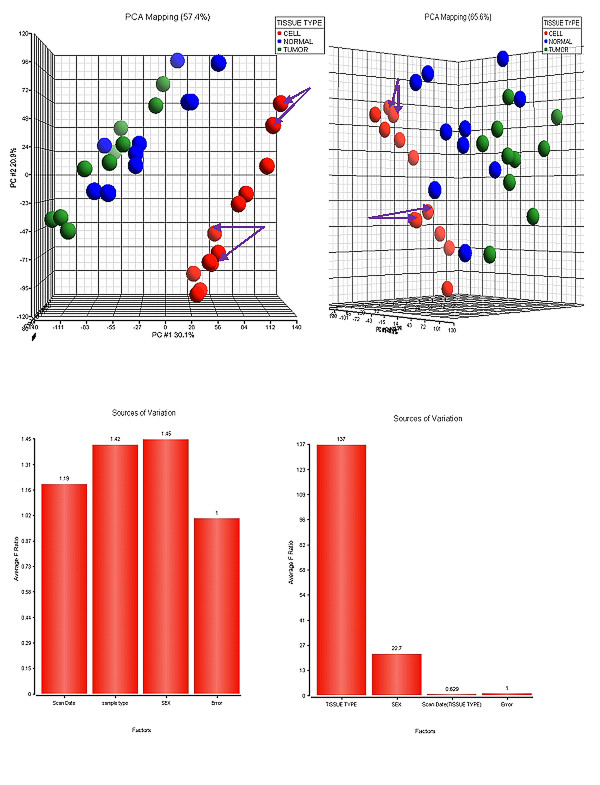
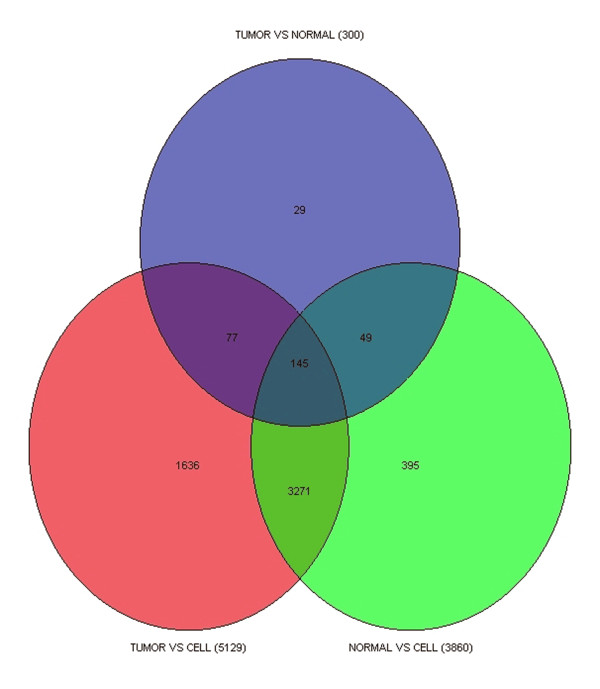
BACKGROUND: Studies using microarray analysis of colorectal cancer have been generally beleaguered by the lack of a normal cell population of the same lineage as the tumor cell. One of the main objectives of this study was to generate a reference gene expression data set for normal colonic epithelium which can be used in comparisons with diseased tissues, as well as to provide a dataset that could be used as a baseline for studies in alternative splicing. RESULTS: We present a dependable expression reference data set for non-neoplastic colonic epithelial cells. An enriched population of fresh colon epithelial cells were obtained from non-neoplastic, colectomy specimens and analyzed using Affymetrix GeneChip EXON 1.0 ST arrays. For demonstration purposes, we have compared the data derived from these cells to a publically available set of tumor and matched normal colon data. This analysis allowed an assessment of global gene expression alterations and demonstrated that adjacent normal tissues, with a high degree of cellular heterogeneity, are not always representative of normal cells for comparison to tumors which arise from the colon epithelium. We also examined alternative splicing events in tumors compared to normal colon epithelial cells. CONCLUSIONS: The findings from this study represent the first comprehensive expression profile for non-neoplastic colonic epithelial cells reported. Our analysis of splice variants illustrate that this is a very labor intensive procedure, requiring vigilant examination of the data. It is projected that the contribution of this set of data derived from pure colonic epithelial cells will enhance studies in colon-related disease and offer a vital baseline for studies aimed at elucidating the mechanisms of alternative splicing.
Overview
The claims and statistics of this paper haven’t been checked yet.
Free: it reads the open-access text and checks the first 5 claims that cite a source we can check. Create a free account to check every claim.
Integrity signals
Registry
Cites
Statistics
Figures
Verification
Claims the paper makes
The claims and statistics of this paper haven’t been checked yet.
Free: it reads the open-access text and checks the first 5 claims that cite a source we can check. Create a free account to check every claim.
Claims other papers make about this one
Each is checked against this paper’s own text: does it say what the citing paper says it does?
The cited source says what the claim attributes to it.
In the citing paper
“Several unbiased studies describe a strong and highly significant reduction of TMIGD1 gene expression in colon cancer in humans72–75 with a progressive downregulation during disease progression21,76.”
From Membrane recruitment of the polarity protein Scribble by the cell adhesion receptor TMIGD1 (2023) · cites this paper as [72]
Self-check
Percentages, sums and reported differences re-computed from the paper’s own numbers.
The self-check needs the paper’s full text.
Citations
Cites
Alternative isoform regulation in human tissue transcriptomes
Wang, E. T., Sandberg, R., Luo, S., Khrebtukova, I., Zhang, L., Mayr, C., Kingsmore, S. F., Schroth, G. P., & Burge, C. B. (2008) · Nature · doi:10.1038/nature07509 · Cited by 5,181 · cited 1×
“Current estimates indicate that up to 95% of genes in the human genome exhibit alternative splicing [ 4 ].”
Alon, U., Barkai, N., Notterman, D. A., Gish, K., Ybarra, S., Mack, D., & Levine, A. J. (1999) · Proceedings of the National Academy of Sciences · doi:10.1073/pnas.96.12.6745 · Cited by 4,167 · cited 1×
“For colon cancer, expression profiling can readily discriminate between tumor and normal tissue as well as distinguish between tumors of different histopathological stage and prognosis to some extent [2,3].”
Notterman, D. A., Alon, U., Sierk, A. J., & Levine, A. J. (2001) · PubMed · Cited by 670
Kosinski, C., Li, V. S. W., Chan, A. S. Y., Zhang, J., Ho, C., Tsui, W. Y., Chan, T. L., Mifflin, R. C., Powell, D. W., Yuen, S. T., et al. (2007) · Proceedings of the National Academy of Sciences · doi:10.1073/pnas.0707210104 · Cited by 596 · cited 1×
“Mucosa from fresh tissue specimens has also been used as a substitute for normal colonic epithelial cells [11-17], although microscopic examination of these samples clearly demonstrates that they represent a heterogeneous collection of cells with varying proportions of lympocytes scattered from the proximal to distal…”
Gardina, P. J., Clark, T. A., Shimada, B., Staples, M. K., Yang, Q., Veitch, J., Schweitzer, A., Awad, T., Sugnet, C., Dee, S., et al. (2006) · BMC Genomics · doi:10.1186/1471-2164-7-325 · Cited by 352 · cited 1×
“affx, [7] which provided raw Exon1.”
Bates, R. C., & Mercurio, A. M. (2003) · Molecular Biology of the Cell · doi:10.1091/mbc.e02-09-0583 · Cited by 343 · cited 2×
“Bates RC, Mercurio AM: Tumor Necrosis Factor-Alpha Stimulates the Epithelial-to-Mesenchymal Transition of Human Colonic Organoids.”
Distinguishing right from left colon by the pattern of gene expression.
Glebov, O. K., Rodriguez, L. M., Nakahara, K., Jenkins, J., Cliatt, J., Humbyrd, C. J., DeNobile, J. W., Soballe, P. W., Simon, R., Wright, G. W., et al. (2003) · PubMed · Cited by 332
Gene expression in colorectal cancer.
Birkenkamp‐Demtröder, K., Christensen, L. L., Olesen, S. H., Frederiksen, C. M., Laiho, P., Aaltonen, L. A., Laurberg, S., Sørensen, F. B., Hagemann, R., & Orntoft, T. F. (2002) · PubMed · Cited by 260
Evaluation of Genetic Variation Contributing to Differences in Gene Expression between Populations
Zhang, W., Duan, S., Kistner, E. O., Bleibel, W. K., Huang, R. S., Clark, T. A., Chen, T. X., Schweitzer, A. C., Blume, J. E., Cox, N. J., et al. (2008) · The American Journal of Human Genetics · doi:10.1016/j.ajhg.2007.12.015 · Cited by 200 · cited 1×
“Hybridization efficiency is also affected by the presence of SNP(s) within the sequence of the probeset [21].”
Global analysis of alternative splicing differences between humans and chimpanzees
Calarco, J. A., Xing, Y., Cáceres, M., Calarco, J. P., Xiao, X., Pan, Q., Lee, C., Preuss, T. M., & Blencowe, B. J. (2007) · Genes & Development · doi:10.1101/gad.1606907 · Cited by 157 · cited 1×
“While these studies have provided extensive information about the factors and interactions that control formation of the spliceosome, relatively little is known about the global regulatory properties of alternative splicing [5,6].”
Cited by
Colonic epithelial cell diversity in health and inflammatory bowel disease
Parikh, K., Antanaviciute, A., Fawkner-Corbett, D., Jagielowicz, M., Aulicino, A., Lagerholm, C., Davis, S., Kinchen, J., Chen, H. H., Alham, N. K., et al. (2019) · Nature · doi:10.1038/s41586-019-0992-y · Cited by 860
INPS-MD: a web server to predict stability of protein variants from sequence and structure
Savojardo, C., Fariselli, P., Martelli, P. L., & Casadio, R. (2016) · Bioinformatics · doi:10.1093/bioinformatics/btw192 · Cited by 290
EMT is the dominant program in human colon cancer
Loboda, A., Nebozhyn, M. V., Watters, J. W., Buser, C. A., Shaw, P. M., Huang, P. S., Van't Veer, L., Tollenaar, R. A., Jackson, D. B., Agrawal, D., et al. (2011) · BMC Medical Genomics · doi:10.1186/1755-8794-4-9 · Cited by 274
“Discussion Colon cancer has heretofore been considered a very heterogeneous disease [24,25].”
BackgroundAberrant gene expression in mucosa adjacent to tumor reveals a molecular crosstalk in colon cancer
Sanz-Pamplona, R., Berenguer, A., Cordero, D., Molleví, D. G., Crous-Bou, M., Sole, X., Paré-Brunet, L., Guino, E., Salazar, R., Santos, C., et al. (2014) · Molecular Cancer · doi:10.1186/1476-4598-13-46 · Cited by 166
“Discussion There is clear evidence of the relevance of the tumormicroenvironment crosstalk for carcinogenesis [12-15].”
BackgroundINPS: predicting the impact of non-synonymous variations on protein stability from sequence
Fariselli, P., Martelli, P. L., Savojardo, C., & Casadio, R. (2015) · Bioinformatics · doi:10.1093/bioinformatics/btv291 · Cited by 147
Xiong, Y., Deng, Y., Wang, K., Zhou, H., Zheng, X., Si, L., & Fu, Z. (2018) · EBioMedicine · doi:10.1016/j.ebiom.2018.09.021 · Cited by 146
“Comparing with microarray used in these resent examples [5,21,22], RNA-Seq enabling the quantitative measure of known and novel AS isoforms, and provides better resolution, deeper coverage and higher accuracy, is the most suitable method to apply in AS study.”
BackgroundMethodEvidence for field effect cancerization in colorectal cancer
Hawthorn, L., Lan, L., & Mojica, W. D. (2013) · Genomics · doi:10.1016/j.ygeno.2013.11.003 · Cited by 80
Self-citationGene signatures in hepatocellular carcinoma (HCC)
Andrisani, O. M., Studach, L., & Merle, P. (2011) · Seminars in Cancer Biology · doi:10.1016/j.semcancer.2010.09.002 · Cited by 60
An integrative framework identifies alternative splicing events in colorectal cancer development
Bisognin, A., Pizzini, S., Perilli, L., Esposito, G., D, S. M. M., Nitti, D., Zanovello, P., Bortoluzzi, S., & Mandruzzato, S. (2013) · Molecular Oncology · doi:10.1016/j.molonc.2013.10.004 · Cited by 62
“…reported exon array-based data from 13 non-neoplastic colonic epithelial cells from 10 patients, and directly compared them with previously mentioned matched samples, showing the complexity of AS and highlighting the limitations of current transcript annotations (Mojica and Hawthorn, 2010).”
ResultGermann, S., Gratadou, L., Dutertre, M., & Auboeuf, D. (2012) · Journal of Nucleic Acids · doi:10.1155/2012/269570 · Cited by 49
“12 samples of isolated cells from 10 patients 3 [44]”
BackgroundBriffa, R., Um, I. H., Faratian, D., Zhou, Y. Y., Turnbull, A., Langdon, S. P., & Harrison, D. J. (2015) · PLoS ONE · doi:10.1371/journal.pone.0144708 · Cited by 52
“differentially expressed between normal and tumor tissue [73].”
BackgroundFusieger, A., Martins, M. C. D. F., de Freitas, R., Nero, L. A., & de Carvalho, A. F. (2019) · Brazilian Journal of Microbiology · doi:10.1007/s42770-019-00182-3 · Cited by 48
Fermentation of Gluten by Lactococcus lactis LLGKC18 Reduces its Antigenicity and Allergenicity
Mecherfi, K. E. E., Lupi, R., Cherkaoui, M., Albuquerque, M., Todorov, S. D., Tranquet, O., Klingebiel, C., Rogniaux, H., Denery-Papini, S., Onno, B., et al. (2021) · Probiotics and Antimicrobial Proteins · doi:10.1007/s12602-021-09808-1 · Cited by 43
Hartmann, C., Schwietzer, Y. A., Kummer, D., Kirschnick, N., Hoppe, E., Thüring, E.-M., Glaesner-Ebnet, M., Brinkmann, F., Gerke, V., Reuter, S., et al. (2020) · BMC Molecular and Cell Biology · doi:10.1186/s12860-020-00274-1 · Cited by 32
Thomas, S., Makar, K. W., Li, L., Zheng, Y., Yang, P., Levy, L., Rudolph, R. Y., Lampe, P. D., Yan, M., Markowitz, S. D., et al. (2015) · BMC Medical Genetics · doi:10.1186/s12881-015-0161-6 · Cited by 29
“Mojica and Hawthorn [16] have presented a data set of gene expression in normal colonic epithelial cells and compared them to a publicly available data set of tumor and matched normal colon data.”
InfluentialIntegrated Exon Level Expression Analysis of Driver Genes Explain Their Role in Colorectal Cancer
Aziz, M. A., Periyasamy, S., Yousef, Z. A., AlAbdulkarim, I., Alotaibi, M. M., Alfahed, A., & Alasiri, G. A. (2014) · PLoS ONE · doi:10.1371/journal.pone.0110134 · Cited by 28
“We used matched paired tumournormal control which is arguably the best way to do a comparative study [21].”
MethodOgrodowczyk, A. M., Kalicki, B., & Wróblewska, B. (2021) · Food Chemistry · doi:10.1016/j.foodchem.2021.129512 · Cited by 27
NOVA1-Mediated SORBS2 Isoform Promotes Colorectal Cancer Migration by Activating the Notch Pathway
Zhang, T., Chen, S., Peng, Y., Wang, C., Cheng, X., Zhao, R., & Liu, K. (2021) · Frontiers in Cell and Developmental Biology · doi:10.3389/fcell.2021.673873 · Cited by 27
Balmaseda, A., Rozés, N., Bordons, A., & Reguant, C. (2021) · International Journal of Food Microbiology · doi:10.1016/j.ijfoodmicro.2021.109490 · Cited by 25
Thrombospondin-1 in a Murine Model of Colorectal Carcinogenesis
Lopez-Dee, Z. P., Chittur, S. V., Patel, H., Chinikaylo, A., Lippert, B., Patel, B., Lawler, J., & Gutierrez, L. S. (2015) · PLOS ONE · doi:10.1371/journal.pone.0139918 · Cited by 23
Feature-based multiple models improve classification of mutation-induced stability changes
Folkman, L., Stantić, B., & Sattar, A. (2014) · BMC Genomics · doi:10.1186/1471-2164-15-s4-s6 · Cited by 20
Intestinal brush border formation requires a TMIGD1-based intermicrovillar adhesion complex
Hartmann, C., Thüring, E.-M., Greune, L., Michels, B. E., Pajonczyk, D., Leußink, S., Brinkmann, F., Glaesner-Ebnet, M., Wardelmann, E., Zobel, T., et al. (2022) · Science Signaling · doi:10.1126/scisignal.abm2449 · Cited by 19
“12 of 18 in human colorectal cancers (30, 59, 60).”
BackgroundWang, G., Wang, F., Meng, Z., Wang, N., Zhou, C., Zhang, J., Zhao, L., Wang, G., & Shan, B. (2022) · BMC Cancer · doi:10.1186/s12885-022-09185-0 · Cited by 17
Chen, X., Du, H., Liu, B., Zou, L., Chen, W., Yang, Y., Zhu, Y., Gong, Y., Tian, J., Li, F., et al. (2015) · PLoS ONE · doi:10.1371/journal.pone.0130377 · Cited by 15
Pesson, M., Eymin, B., de la Grange, P., Simon, B., & Corcos, L. (2014) · Molecular Cancer · doi:10.1186/1476-4598-13-9 · Cited by 15
“0 ST arrays, also referred to as splice-sensitive microarrays, which allow surveying known and predicted AS events throughout the transcriptome [11,12].”
BackgroundIn vivoprofiling reveals immunomodulatory effects of sorafenib and dacarbazine on melanoma
Urosevic‐Maiwald, M., Barysch, M. J., Cheng, P. F., Karpova, M. B., Steinert, H. C., Okoniewski, M. J., & Dummer, R. (2015) · OncoImmunology · doi:10.4161/2162402x.2014.988458 · Cited by 14
“Microarray data were analyzed using Partek software as described by Mojica and Hawthorn.56 Baseline, sorafenib (day 10) and sorafenib plus dacarbazine (day 16) treated samples were used for analysis.”
MethodTMIGD1: Emerging functions of a tumor supressor and adhesion receptor
Thüring, E.-M., Hartmann, C., Schwietzer, Y. A., & Ebnet, K. (2023) · Oncogene · doi:10.1038/s41388-023-02696-5 · Cited by 11
“Additional observations describing reduced TMIGD1 expression in CRC samples were made in studies comparing colonic non-adenomatous, non-neoplastic tissue with colonic tumor tissue, with TMIGD1 being among the 11 most significantly downregulated genes in colonic tumor tisse [70].”
BackgroundXiong, W., Gao, D., Li, Y., Liu, X., Dai, P., Qin, J., Wang, G., Li, K., Bai, H., & Li, W. (2016) · Oncology Reports · doi:10.3892/or.2016.5022 · Cited by 11
Ariyannur, P. S., Joy, R. A., Menon, V. P., Paulose, R. R., Pavithran, K., & Vasudevan, D. M. (2021) · ecancermedicalscience · doi:10.3332/ecancer.2021.1302 · Cited by 10
DOLPHIN advances single-cell transcriptomics beyond gene level by leveraging exon and junction reads
Song, K., Zheng, Y., Zhao, B., Eidelman, D. H., Tang, J., & Ding, J. (2025) · Nature Communications · doi:10.1038/s41467-025-61580-w · Cited by 8
An ionic coordination hybrid hydrogel for bioseparation
Liu, Z., Xia, Z., Fan, L.-Y., Xiao, H., & Cao, C. (2017) · Chemical Communications · doi:10.1039/c7cc01923h · Cited by 8
Nieuwland, J., Sornay, E., Marchbank, A. M., de Graaf, B. H. J., & Murray, J. A. (2012) · Plant Methods · doi:10.1186/1746-4811-8-43 · Cited by 8
Membrane recruitment of the polarity protein Scribble by the cell adhesion receptor TMIGD1
Thüring, E.-M., Hartmann, C., Maddumage, J. C., Javorsky, A., Michels, B. E., Gerke, V., Banks, L., Humbert, P. O., Kvansakul, M., & Ebnet, K. (2023) · Communications Biology · doi:10.1038/s42003-023-05088-3 · Cited by 7
A tissue-specific gene expression template portrays heart development and pathology
Rodemoyer, A., Kibiryeva, N., Bair, A., Marshall, J. A., O’Brien, J. E., & Bittel, D. C. (2014) · Human Genomics · doi:10.1186/1479-7364-8-6 · Cited by 7
“As an outgroup comparison, exon array data was downloaded from nine noncancerous colon samples [16].”
Comparison of Two Methods for Detecting Alternative Splice Variants Using GeneChip® Exon Arrays
Zhao, L., Stirewalt, D. L., Radich, J. P., & Fan, W. (2011) · International Journal of Biomedical Science · doi:10.59566/ijbs.2011.7172 · Cited by 4
Root Attribute Behavior within a Random Forest
Oshiro, T. M., & Baranauskas, J. A. (2012) · Lecture notes in computer science · doi:10.1007/978-3-642-32639-4_87 · Cited by 2
Bioinformatic analysis of cis-encoded antisense transcription
Morrissy, A. S. (2011) · cIRcle (University of British Columbia) · doi:10.14288/1.0071573 · Cited by 2
“GSE19163 12 10 colon 10 cell lines of normal colon, 2 profiled in duplicate; (Mojica and Hawthorn 2010)”
Factors influencing patterns of gene expression in large bowel mucosaPreprint
Vaughan-Shaw, P. G., Ooi, L. Y., Timofeeva, M. N., Grimes, G. R., Din, F. V. N., Farrington, S. M., & Dunlop, M. G. (2022) · bioRxiv (Cold Spring Harbor Laboratory) · doi:10.1101/2022.08.30.505238 · Cited by 1
“Significant variation in sampling and processing methods exist in human expression studies published to date with cadaveric tissue, operative samples, endoscopic biopsies, formalin-fixed paraffin-embedded tissue and isolated cells all being used [1-9] yet the differential impact of these methods expression is not know…”
BackgroundTarget identification and probe development for pancreatic neuroendocrine tumors
Körner, J. L. (2015) · OPUS Publication Server of the University of Stuttgart (University of Stuttgart) · doi:10.18419/opus-2353
Ariyannur, P. S., Joy, R. A., Menon, V. P., Paulose, R. R., Pavithran, K., & Vasudevan, D. M. (2020) · bioRxiv (Cold Spring Harbor Laboratory) · doi:10.1101/2020.10.14.338814
Zhang, T., Chen, S., Peng, Y., Wang, C., Cheng, X., Zhao, R., & Liu, K. (2021) · doi:10.3389/fcell.2021.673873.s005
Metadata
- Authors
- Mojica, W., & Hawthorn, L.
- Affiliations
- Augusta University (US)
- Corresponding author
- Hawthorn, Lesleyann
- Venue
- BMC Genomics
- Published
- 2010
- Volume
- 11
- Issue
- 1
- Pages
- 5
- ISSN
- 1471-2164 (ISSN-L)
- PMC
- PMC2823691
- OpenAlex
- W2145421889
- Cited by
- 43
- References
- 24
- Citations by year
- 2025: 1 · 2023: 3 · 2022: 3 · 2021: 6 · 2020: 2 · 2019: 2 · 2018: 1 · 2017: 4 · 2016: 2 · 2015: 6 · 2014: 5 · 2013: 3 · 2012: 2
- FWCI
- 1.04
- Type
- journal article
- Language
- en
- Open access
- gold
- doi.org
- Licence
- cc-by
- Locations
- BMC Genomics (publishedVersion, cc-by)
- PubMed Central (publishedVersion, cc-by)
- PubMed (publishedVersion)
- DOAJ (DOAJ: Directory of Open Access Journals) (submittedVersion)
- Topics
- Life Sciences › Biochemistry, Genetics and Molecular Biology › Molecular Biology › Gene expression and cancer classification
- Life Sciences › Biochemistry, Genetics and Molecular Biology › Molecular Biology › RNA Research and Splicing
- Life Sciences › Biochemistry, Genetics and Molecular Biology › Molecular Biology › Genomics and Phylogenetic Studies
- Keywords
- alternative splicing, colorectal cancer, colon cancer, splice variants, tumor versus normal tissue comparison, cellular heterogeneity, colectomy specimens
- MeSH terms
- Aged, Aged, 80 and over, Colon, Colonic Diseases, Epithelium, Exons, Female, Humans, Male, Middle Aged, Reference Standards, Colorectal Neoplasms, Alternative Splicing, Oligonucleotide Array Sequence Analysis, Gene Expression Profiling, Principal Component Analysis
About these checks
Registry, retraction, Cites and statistics results are computed, not judged, with one exception: a printed reference that no index lists is read once by a model before it counts as a citation error. Claims are extracted by a model and kept only when their quote appears verbatim in the text; each cited source is then checked, with a model’s help, for whether it says what the claim relies on. Those verdicts can be wrong — read the claim’s quote and the cited source before relying on one.
Statistics and arithmetic are recomputed, not judged.
Confidence bands are shown only for fields calibrated on our annotated test set. None is calibrated yet, so no band is shown.
What counts as a claim ›How we measure confidence ›How we check this ›
Are you an author, or do you see a problem with this page? Request a review
Data sources
Bibliographic data: Semantic Scholar, OpenAlex, Crossref.
Contains information from the Semantic Scholar Academic Graph Datasets, made available under the ODC Attribution License (ODC-BY 1.0).
Semantic Scholar’s data is described in: Kinney, R., et al. (2023). The Semantic Scholar Open Data Platform. arXiv:2301.10140.
