

Normal colon epithelium: a dataset for the analysis of gene expression and alternative splicing events in colon disease
Open accessThe DOI matches its Crossref record; 24 of the 24 references it cites were found in a registry or an index.
Abstract
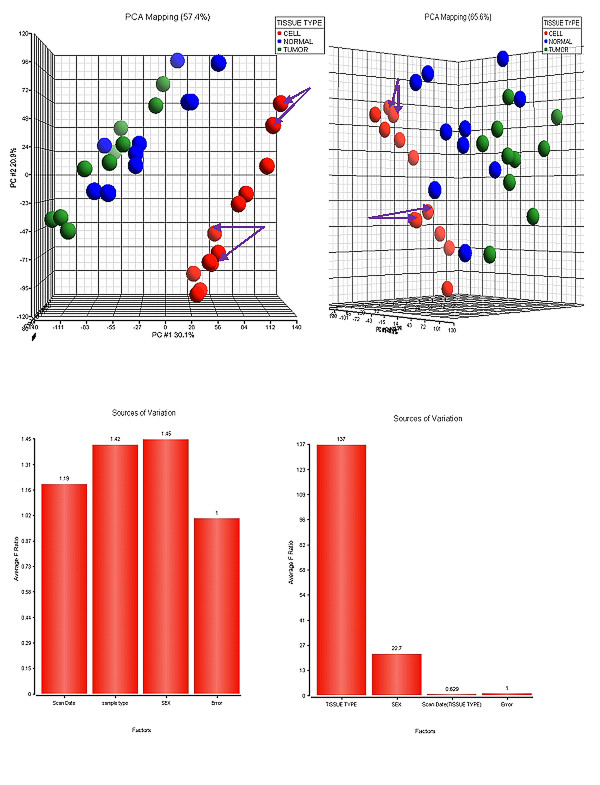
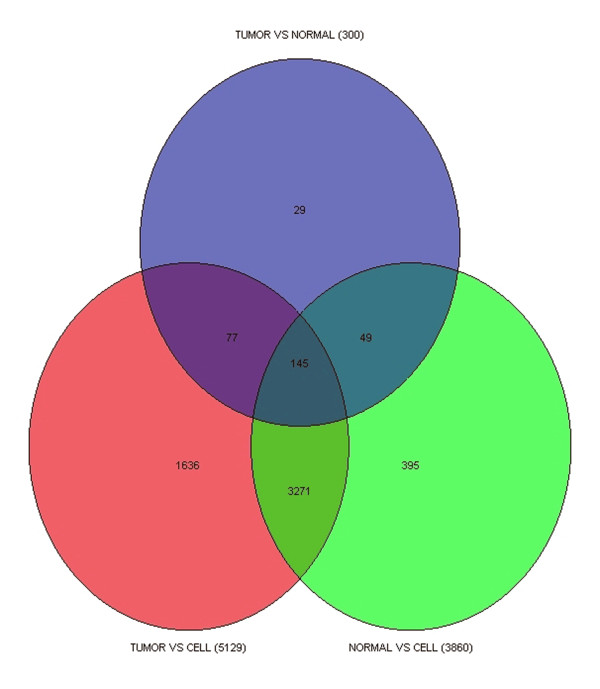
BACKGROUND: Studies using microarray analysis of colorectal cancer have been generally beleaguered by the lack of a normal cell population of the same lineage as the tumor cell. One of the main objectives of this study was to generate a reference gene expression data set for normal colonic epithelium which can be used in comparisons with diseased tissues, as well as to provide a dataset that could be used as a baseline for studies in alternative splicing. RESULTS: We present a dependable expression reference data set for non-neoplastic colonic epithelial cells. An enriched population of fresh colon epithelial cells were obtained from non-neoplastic, colectomy specimens and analyzed using Affymetrix GeneChip EXON 1.0 ST arrays. For demonstration purposes, we have compared the data derived from these cells to a publically available set of tumor and matched normal colon data. This analysis allowed an assessment of global gene expression alterations and demonstrated that adjacent normal tissues, with a high degree of cellular heterogeneity, are not always representative of normal cells for comparison to tumors which arise from the colon epithelium. We also examined alternative splicing events in tumors compared to normal colon epithelial cells. CONCLUSIONS: The findings from this study represent the first comprehensive expression profile for non-neoplastic colonic epithelial cells reported. Our analysis of splice variants illustrate that this is a very labor intensive procedure, requiring vigilant examination of the data. It is projected that the contribution of this set of data derived from pure colonic epithelial cells will enhance studies in colon-related disease and offer a vital baseline for studies aimed at elucidating the mechanisms of alternative splicing.
Overview
The claims and statistics of this paper haven’t been checked yet.
Free: it reads the open-access text and checks the first 5 claims that cite a source we can check. Create a free account to check every claim.
Integrity signals
Registry
Cites
Statistics
Figures
Verification
Claims the paper makes
The claims and statistics of this paper haven’t been checked yet.
Free: it reads the open-access text and checks the first 5 claims that cite a source we can check. Create a free account to check every claim.
Claims other papers make about this one
Each is checked against this paper’s own text: does it say what the citing paper says it does?
The cited source says what the claim attributes to it.
In the citing paper
“Several unbiased studies describe a strong and highly significant reduction of TMIGD1 gene expression in colon cancer in humans72–75 with a progressive downregulation during disease progression21,76.”
From Membrane recruitment of the polarity protein Scribble by the cell adhesion receptor TMIGD1 (2023) · cites this paper as [72]
Self-check
Percentages, sums and reported differences re-computed from the paper’s own numbers.
The self-check needs the paper’s full text.
Citations
Cites
Alternative isoform regulation in human tissue transcriptomes
Wang, E. T., Sandberg, R., Luo, S., Khrebtukova, I., Zhang, L., Mayr, C., Kingsmore, S. F., Schroth, G. P., & Burge, C. B. (2008) · Nature · doi:10.1038/nature07509 · Cited by 5,181 · cited 1×
“Current estimates indicate that up to 95% of genes in the human genome exhibit alternative splicing [ 4 ].”
Alon, U., Barkai, N., Notterman, D. A., Gish, K., Ybarra, S., Mack, D., & Levine, A. J. (1999) · Proceedings of the National Academy of Sciences · doi:10.1073/pnas.96.12.6745 · Cited by 4,167 · cited 1×
“For colon cancer, expression profiling can readily discriminate between tumor and normal tissue as well as distinguish between tumors of different histopathological stage and prognosis to some extent [2,3].”
Notterman, D. A., Alon, U., Sierk, A. J., & Levine, A. J. (2001) · PubMed · Cited by 670
Kosinski, C., Li, V. S. W., Chan, A. S. Y., Zhang, J., Ho, C., Tsui, W. Y., Chan, T. L., Mifflin, R. C., Powell, D. W., Yuen, S. T., et al. (2007) · Proceedings of the National Academy of Sciences · doi:10.1073/pnas.0707210104 · Cited by 596 · cited 1×
“Mucosa from fresh tissue specimens has also been used as a substitute for normal colonic epithelial cells [11-17], although microscopic examination of these samples clearly demonstrates that they represent a heterogeneous collection of cells with varying proportions of lympocytes scattered from the proximal to distal…”
Gardina, P. J., Clark, T. A., Shimada, B., Staples, M. K., Yang, Q., Veitch, J., Schweitzer, A., Awad, T., Sugnet, C., Dee, S., et al. (2006) · BMC Genomics · doi:10.1186/1471-2164-7-325 · Cited by 352 · cited 1×
“affx, [7] which provided raw Exon1.”
Bates, R. C., & Mercurio, A. M. (2003) · Molecular Biology of the Cell · doi:10.1091/mbc.e02-09-0583 · Cited by 343 · cited 2×
“Bates RC, Mercurio AM: Tumor Necrosis Factor-Alpha Stimulates the Epithelial-to-Mesenchymal Transition of Human Colonic Organoids.”
Distinguishing right from left colon by the pattern of gene expression.
Glebov, O. K., Rodriguez, L. M., Nakahara, K., Jenkins, J., Cliatt, J., Humbyrd, C. J., DeNobile, J. W., Soballe, P. W., Simon, R., Wright, G. W., et al. (2003) · PubMed · Cited by 332
Gene expression in colorectal cancer.
Birkenkamp‐Demtröder, K., Christensen, L. L., Olesen, S. H., Frederiksen, C. M., Laiho, P., Aaltonen, L. A., Laurberg, S., Sørensen, F. B., Hagemann, R., & Orntoft, T. F. (2002) · PubMed · Cited by 260
Evaluation of Genetic Variation Contributing to Differences in Gene Expression between Populations
Zhang, W., Duan, S., Kistner, E. O., Bleibel, W. K., Huang, R. S., Clark, T. A., Chen, T. X., Schweitzer, A. C., Blume, J. E., Cox, N. J., et al. (2008) · The American Journal of Human Genetics · doi:10.1016/j.ajhg.2007.12.015 · Cited by 200 · cited 1×
“Hybridization efficiency is also affected by the presence of SNP(s) within the sequence of the probeset [21].”
Global analysis of alternative splicing differences between humans and chimpanzees
Calarco, J. A., Xing, Y., Cáceres, M., Calarco, J. P., Xiao, X., Pan, Q., Lee, C., Preuss, T. M., & Blencowe, B. J. (2007) · Genes & Development · doi:10.1101/gad.1606907 · Cited by 157 · cited 1×
“While these studies have provided extensive information about the factors and interactions that control formation of the spliceosome, relatively little is known about the global regulatory properties of alternative splicing [5,6].”
A gene expression profile that defines colon cell maturation in vitro.
Mariadason, J. M., Arango, D., Corner, G. A., Aranes, M., Hotchkiss, K. A., Yang, W., & Augenlicht, L. H. (2002) · PubMed · Cited by 142
Sääf, A. M., Halbleib, J. M., Chen, X., Yuen, S. T., Leung, S. Y., Nelson, W. J., & Brown, P. O. (2007) · Molecular Biology of the Cell · doi:10.1091/mbc.e07-04-0309 · Cited by 124 · cited 1×
“The similarity to normal epithelial cells stems from phenotypic similarities to in situ enterocytes based on the acquisition of structural and functional polarity [9,10] but it has since been shown that expression characteristics similar to colon cancer have been observed in these cells [9].”
Bianchini, M., Levy, E. M., Zucchini, C., Pinsky, V., Macagno, C., Sanctis, P. D., Valvassori, L., Carinci, P., & Mordoh, J. (2006) · International Journal of Oncology · doi:10.3892/ijo.29.1.83 · Cited by 114 · cited 1×
“Mucosa from fresh tissue specimens has also been used as a substitute for normal colonic epithelial cells [11-17], although microscopic examination of these samples clearly demonstrates that they represent a heterogeneous collection of cells with varying proportions of lympocytes scattered from the proximal to distal…”
Heritability of alternative splicing in the human genome
Kwan, T., Benovoy, D., Dias, C., Gurd, S., Serre, D., Zuzan, H., Clark, T. A., Schweitzer, A., Staples, M. K., Wang, H., et al. (2007) · Genome Research · doi:10.1101/gr.6281007 · Cited by 113 · cited 1×
“This can be further compounded by tissue heterogeneity and the fact that splicing patterns can be inherited [20].”
Suppressor gene alterations in the colorectal adenoma-carcinoma sequence
Cho, K. R., & Vogelstein, B. (1992) · Journal of Cellular Biochemistry · doi:10.1002/jcb.240501124 · Cited by 98 · cited 1×
“Background Colorectal cancer (CRC) is considered to develop as a result of a multi-step progression and accumulation of genetic alterations [1].”
Zhang, W., Duan, S., Bleibel, W. K., Wisel, S. A., Huang, R. S., Wu, X., He, L., Clark, T. A., Chen, T. X., Schweitzer, A. C., et al. (2009) · Human Genetics · doi:10.1007/s00439-008-0601-x · Cited by 85 · cited 1×
“AS has also been found to differ as a function of ethnicity [22].”
Clusterin Expression in Normal Mucosa and Colorectal Cancer
Andersen, C. L., Schepeler, T., Thorsen, K., Birkenkamp-Demtröder, K., Mansilla, F., Aaltonen, L. A., Laurberg, S., & Ørntoft, T. F. (2007) · Molecular & Cellular Proteomics · doi:10.1074/mcp.m600261-mcp200 · Cited by 71 · cited 1×
“Mucosa from fresh tissue specimens has also been used as a substitute for normal colonic epithelial cells [11-17], although microscopic examination of these samples clearly demonstrates that they represent a heterogeneous collection of cells with varying proportions of lympocytes scattered from the proximal to distal…”
Gene Expression and Isoform Variation Analysis using Affymetrix Exon Arrays
Bemmo, A., Benovoy, D., Kwan, T., Gaffney, D. J., Jensen, R. V., & Majewski, J. (2008) · BMC Genomics · doi:10.1186/1471-2164-9-529 · Cited by 70 · cited 3×
“This approach suffers from some methodological and statistical drawbacks resulting in high false positive rates (see [19] for discussion).”
InfluentialKita, H., Hikichi, Y., Hikami, K., Tsuneyama, K., Cui, Z., Osawa, H., Ohnishi, H., Mutoh, H., Hoshino, H., Bowlus, C. L., et al. (2006) · Journal of Gastroenterology · doi:10.1007/s00535-006-1894-y · Cited by 61 · cited 1×
“Mucosa from fresh tissue specimens has also been used as a substitute for normal colonic epithelial cells [11-17], although microscopic examination of these samples clearly demonstrates that they represent a heterogeneous collection of cells with varying proportions of lympocytes scattered from the proximal to distal…”
Roy, M. (2005) · Nucleic Acids Research · doi:10.1093/nar/gki792 · Cited by 55 · cited 1×
“Due to the large amount of EST and genomic information, a vast amount of information can be obtained from in-silico prediction of transcript isoforms but many of the available EST libraries are cloned from tumor samples and as such the databases tend to lack information on normal splice forms [23].”
Barrier, A. J., Boëlle, P., Lemoine, A., Tsé, C., Brault, D., Chiappini, F., LACAINE, F., Houry, S., Huguier, M., Flahault, A., et al. (2005) · Diseases of the Colon & Rectum · doi:10.1007/s10350-005-0175-9 · Cited by 33 · cited 1×
“Mucosa from fresh tissue specimens has also been used as a substitute for normal colonic epithelial cells [11-17], although microscopic examination of these samples clearly demonstrates that they represent a heterogeneous collection of cells with varying proportions of lympocytes scattered from the proximal to distal…”
Data analysis of alternative splicing microarrays
Čuperlović‐Culf, M., Belacel, N., Culf, A. S., & Ouellette, R. J. (2006) · Drug Discovery Today · doi:10.1016/j.drudis.2006.09.011 · Cited by 25 · cited 1×
“While these studies have provided extensive information about the factors and interactions that control formation of the spliceosome, relatively little is known about the global regulatory properties of alternative splicing [5,6].”
Augenlicht, L. H., Velcich, A., Klampfer, L., Huang, J., Corner, G. A., Aranes, M., LABOISSE, C. L., Rigas, B., Lipkin, M., Yang, K., et al. (2003) · Journal of Nutrition · doi:10.1093/jn/133.7.2410s · Cited by 18
Mojica, W. D., Arshad, A., Sharma, S., & Brooks, S. P. (2006) · Archives of Pathology & Laboratory Medicine · doi:10.5858/2006-130-74-mepibs · Cited by 10
Self-citation
Cited by
Colonic epithelial cell diversity in health and inflammatory bowel disease
Parikh, K., Antanaviciute, A., Fawkner-Corbett, D., Jagielowicz, M., Aulicino, A., Lagerholm, C., Davis, S., Kinchen, J., Chen, H. H., Alham, N. K., et al. (2019) · Nature · doi:10.1038/s41586-019-0992-y · Cited by 860
INPS-MD: a web server to predict stability of protein variants from sequence and structure
Savojardo, C., Fariselli, P., Martelli, P. L., & Casadio, R. (2016) · Bioinformatics · doi:10.1093/bioinformatics/btw192 · Cited by 290
EMT is the dominant program in human colon cancer
Loboda, A., Nebozhyn, M. V., Watters, J. W., Buser, C. A., Shaw, P. M., Huang, P. S., Van't Veer, L., Tollenaar, R. A., Jackson, D. B., Agrawal, D., et al. (2011) · BMC Medical Genomics · doi:10.1186/1755-8794-4-9 · Cited by 274
“Discussion Colon cancer has heretofore been considered a very heterogeneous disease [24,25].”
BackgroundAberrant gene expression in mucosa adjacent to tumor reveals a molecular crosstalk in colon cancer
Sanz-Pamplona, R., Berenguer, A., Cordero, D., Molleví, D. G., Crous-Bou, M., Sole, X., Paré-Brunet, L., Guino, E., Salazar, R., Santos, C., et al. (2014) · Molecular Cancer · doi:10.1186/1476-4598-13-46 · Cited by 166
“Discussion There is clear evidence of the relevance of the tumormicroenvironment crosstalk for carcinogenesis [12-15].”
BackgroundINPS: predicting the impact of non-synonymous variations on protein stability from sequence
Fariselli, P., Martelli, P. L., Savojardo, C., & Casadio, R. (2015) · Bioinformatics · doi:10.1093/bioinformatics/btv291 · Cited by 147
Metadata
- Authors
- Mojica, W., & Hawthorn, L.
- Affiliations
- Augusta University (US)
- Corresponding author
- Hawthorn, Lesleyann
- Venue
- BMC Genomics
- Published
- 2010
- Volume
- 11
- Issue
- 1
- Pages
- 5
- ISSN
- 1471-2164 (ISSN-L)
- PMC
- PMC2823691
- OpenAlex
- W2145421889
- Cited by
- 43
- References
- 24
- Citations by year
- 2025: 1 · 2023: 3 · 2022: 3 · 2021: 6 · 2020: 2 · 2019: 2 · 2018: 1 · 2017: 4 · 2016: 2 · 2015: 6 · 2014: 5 · 2013: 3 · 2012: 2
- FWCI
- 1.04
- Type
- journal article
- Language
- en
- Open access
- gold
- doi.org
- Licence
- cc-by
- Locations
- BMC Genomics (publishedVersion, cc-by)
- PubMed Central (publishedVersion, cc-by)
- PubMed (publishedVersion)
- DOAJ (DOAJ: Directory of Open Access Journals) (submittedVersion)
- Topics
- Life Sciences › Biochemistry, Genetics and Molecular Biology › Molecular Biology › Gene expression and cancer classification
- Life Sciences › Biochemistry, Genetics and Molecular Biology › Molecular Biology › RNA Research and Splicing
- Life Sciences › Biochemistry, Genetics and Molecular Biology › Molecular Biology › Genomics and Phylogenetic Studies
- Keywords
- alternative splicing, colorectal cancer, colon cancer, splice variants, tumor versus normal tissue comparison, cellular heterogeneity, colectomy specimens
- MeSH terms
- Aged, Aged, 80 and over, Colon, Colonic Diseases, Epithelium, Exons, Female, Humans, Male, Middle Aged, Reference Standards, Colorectal Neoplasms, Alternative Splicing, Oligonucleotide Array Sequence Analysis, Gene Expression Profiling, Principal Component Analysis
About these checks
Registry, retraction, Cites and statistics results are computed, not judged, with one exception: a printed reference that no index lists is read once by a model before it counts as a citation error. Claims are extracted by a model and kept only when their quote appears verbatim in the text; each cited source is then checked, with a model’s help, for whether it says what the claim relies on. Those verdicts can be wrong — read the claim’s quote and the cited source before relying on one.
Statistics and arithmetic are recomputed, not judged.
Confidence bands are shown only for fields calibrated on our annotated test set. None is calibrated yet, so no band is shown.
What counts as a claim ›How we measure confidence ›How we check this ›
Are you an author, or do you see a problem with this page? Request a review
Data sources
Bibliographic data: Semantic Scholar, OpenAlex, Crossref.
Contains information from the Semantic Scholar Academic Graph Datasets, made available under the ODC Attribution License (ODC-BY 1.0).
Semantic Scholar’s data is described in: Kinney, R., et al. (2023). The Semantic Scholar Open Data Platform. arXiv:2301.10140.
