

An RNA interference screen for identifying downstream effectors of the p53 and pRB tumour suppressor pathways involved in senescence.
Open accessThe DOI matches its Crossref record; 34 of the 34 references it cites were found in a registry or an index.
Abstract
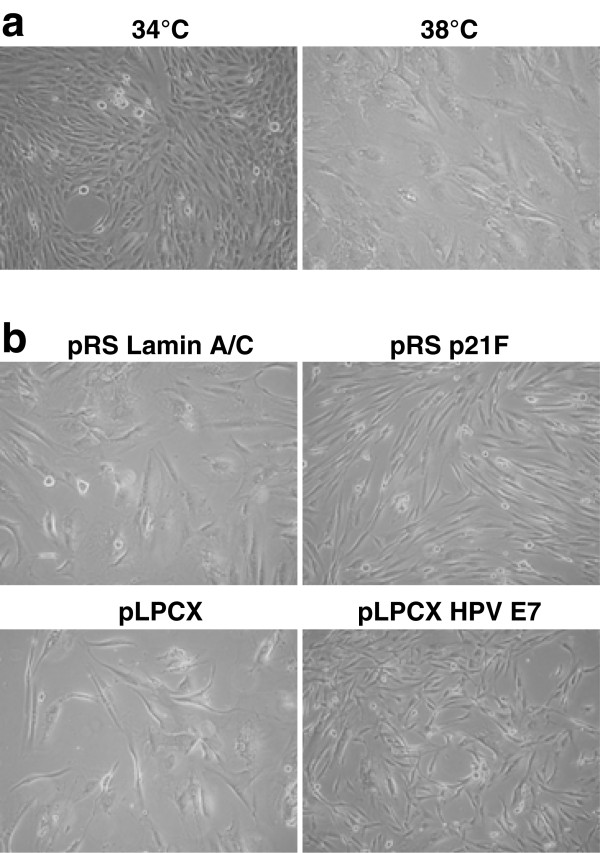
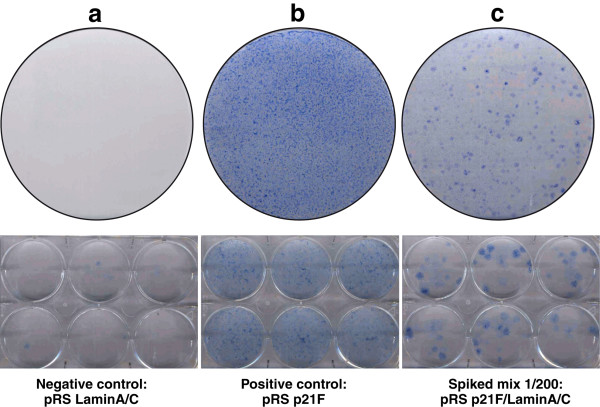
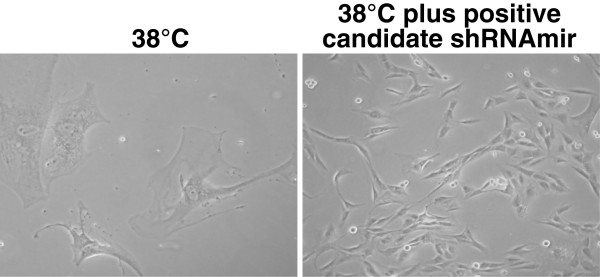
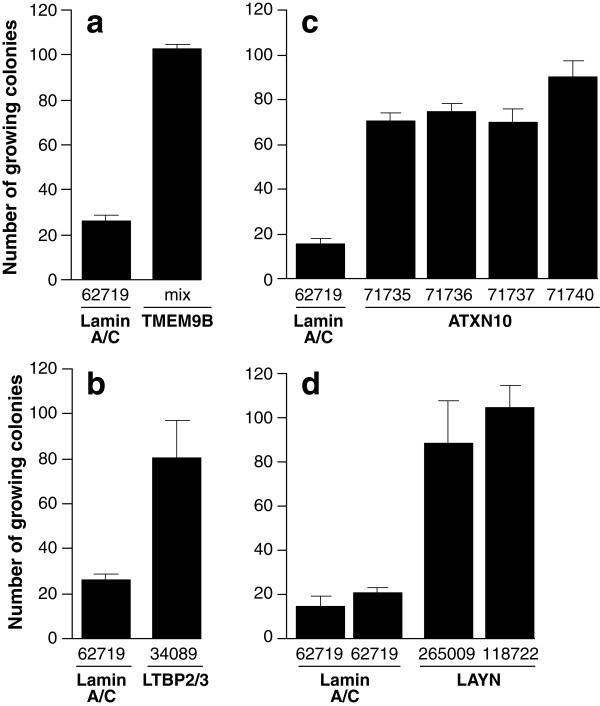
Background: Cellular senescence is an irreversible cell cycle arrest that normal cells undergo in response to progressive shortening of telomeres, changes in telomeric structure, oncogene activation or oxidative stress and acts as an important tumour suppressor mechanism. Results: To identify the downstream effectors of the p53-p21 and p16-pRB tumour suppressor pathways crucial for mediating entry into senescence, we have carried out a loss-of-function RNA interference screen in conditionally immortalised human fibroblasts that can be induced to rapidly undergo senescence, whereas in primary cultures senescence is stochastic and occurs asynchronously. These cells are immortal but undergo a rapid irreversible arrest upon activation of the p53-p21 and p16-pRB pathways that can be readily bypassed upon their inactivation. The primary screen identified 112 known genes including p53 and another 29 shRNAmirs targetting as yet unidentified loci. Comparison of these known targets with genes known to be up-regulated upon senescence in these cells, by micro-array expression profiling, identified 4 common genes TMEM9B, ATXN10, LAYN and LTBP2/3. Direct silencing of these common genes, using lentiviral shRNAmirs, bypassed senescence in the conditionally immortalised cells. Conclusion: The senescence bypass screen identified TMEM9B, ATXN10, LAYN and LTBP2/3 as novel downstream effectors of the p53-p21 and p16-pRB tumour suppressor pathways. Although none of them has previously been linked to cellular senescence, TMEM9B has been suggested to be an upstream activator of NF-κB signalling which has been found to have a causal role in promoting senescence. Future studies will focus on determining on how many of the other primary hits also have a casual role in senescence and what is the mechanism of action.
Overview
The claims and statistics of this paper haven’t been checked yet.
Free: it reads the open-access text and checks the first 5 claims that cite a source we can check. Create a free account to check every claim.
Integrity signals
Registry
Cites
Statistics
Figures
Verification
Claims the paper makes
The claims and statistics of this paper haven’t been checked yet.
Free: it reads the open-access text and checks the first 5 claims that cite a source we can check. Create a free account to check every claim.
Claims other papers make about this one
Each is checked against this paper’s own text: does it say what the citing paper says it does?
The cited source says what the claim attributes to it.
In the citing paper
“Activation of the p53/p21WAF1/CIP1 and p16INK4A/pRB tumor suppressor pathways play a central role in regulating senescence.”
From Mechanisms of Cellular Senescence: Cell Cycle Arrest and Senescence Associated Secretory Phenotype (2021) · cites this paper as Rovillain et al., 2011
The cited source says what the claim attributes to it.
In the citing paper
“Cell cycle arrest in senescence is largely mediated via activation of either one or both p53/p21WAF1/CIP1 and p16INK4A/pRB tumor suppressor pathways (Rovillain et al., 2011; Kobashigawa et al., 2019; Liu and Wan, 2019).”
From Mechanisms of Cellular Senescence: Cell Cycle Arrest and Senescence Associated Secretory Phenotype (2021) · cites this paper as Rovillain et al., 2011
Self-check
Percentages, sums and reported differences re-computed from the paper’s own numbers.
The self-check needs the paper’s full text.
Citations
Cites
Hanahan, D., & Weinberg, R. A. (2000) · Cell · doi:10.1016/s0092-8674(00)81683-9 · Cited by 29,219
The serial cultivation of human diploid cell strains
Hayflick, L., & Moorhead, P. S. (1961) · Experimental Cell Research · doi:10.1016/0014-4827(61)90192-6 · Cited by 8,508 · cited 1×
“Background Normal somatic cells undergo a finite number of divisions before entering a state of irreversible growth arrest termed cellular senescence [1].”
BackgroundCellular senescence: when bad things happen to good cells
Campisi, J., & d'Adda di Fagagna, F. (2007) · Nature Reviews Molecular Cell Biology · doi:10.1038/nrm2233 · Cited by 4,441
Senescent cells, tumor suppression, and organismal aging: good citizens, bad neighbors
Campisi, J. (2005) · Cell · doi:10.1016/j.cell.2005.02.003 · Cited by 2,379 · cited 1×
“Senescence is thought to have evolved as an example of antagonistic pleiotrophy, whereby its beneficial traits in a reproductively active individual have deleterious effects later in life [6,7].”
BackgroundKirkwood, T. B. L., & Austad, S. N. (2000) · Nature · doi:10.1038/35041682 · Cited by 1,774 · cited 1×
“Senescence is thought to have evolved as an example of antagonistic pleiotrophy, whereby its beneficial traits in a reproductively active individual have deleterious effects later in life [6,7].”
BackgroundA large-scale RNAi screen in human cells identifies new components of the p53 pathway
Berns, K., Hijmans, E. M., Mullenders, J., Brummelkamp, T. R., Velds, A., Heimerikx, M., Kerkhoven, R. M., Madiredjo, M., Nijkamp, W., Weigelt, B., et al. (2004) · Nature · doi:10.1038/nature02371 · Cited by 1,065
The signals and pathways activating cellular senescence
Ben-Porath, I., & Weinberg, R. A. (2005) · The International Journal of Biochemistry & Cell Biology · doi:10.1016/j.biocel.2004.10.013 · Cited by 1,046 · cited 1×
“Non-genotoxic stress induces senescence by a telomere independent mechanism involving activation of the p16-pRB pathway by up-regulation of p16 [3,4].”
BackgroundA resource for large-scale RNA-interference-based screens in mammals
Paddison, P. J., Silva, J. M., Conklin, D. S., Schlabach, M., Li, M., Aruleba, S., Balija, V., O'Shaughnessy, A., Gnoj, L., Scobie, K., et al. (2004) · Nature · doi:10.1038/nature02370 · Cited by 695
A Genetic Screen for Candidate Tumor Suppressors Identifies REST
Westbrook, T. F., Martin, E. S., Schlabach, M. R., Leng, Y., Liang, A. C., Feng, B., Zhao, J. J., Roberts, T. M., Mandel, G., Hannon, G. J., et al. (2005) · Cell · doi:10.1016/j.cell.2005.03.033 · Cited by 489 · cited 1×
“It is not clear why other shRNAmirs were not isolated in the screen; however this is exactly what has been observed previously by others such as Westbrook and colleagues [20].”
ResultAn Oncogenomics-Based In Vivo RNAi Screen Identifies Tumor Suppressors in Liver Cancer
Zender, L., Xue, W., Zuber, J., Semighini, C. P., Krasnitz, A., Ma, B., Zender, P., Kubicka, S., Luk, J. M., Schirmacher, P., et al. (2008) · Cell · doi:10.1016/j.cell.2008.09.061 · Cited by 428 · cited 1×
“The discovery of RNA interference as a mechanism to silence gene expression has revolutionized studies on mammalian gene expression and has permitted loss-offunction genome-wide genetic screens, to identify genes involved in a variety of cellular processes, to be performed [8-12].”
Background
Cited by
Mechanisms of Cellular Senescence: Cell Cycle Arrest and Senescence Associated Secretory Phenotype
Kumari, R., & Jat, P. (2021) · Frontiers in Cell and Developmental Biology · doi:10.3389/fcell.2021.645593 · Cited by 1,622
“Senescent cells remain viable with alterations in metabolic activity and are usually resistant to apoptosis (Wang, 1995; Hampel et al., 2004; Marcotte et al., 2004; Ryu et al., 2007; Sanders et al., 2013; Childs et al., 2014; Zhu et al., 2015).”
BackgroundSelf-citationSalminen, A., Kauppinen, A., & Kaarniranta, K. (2012) · Cellular Signalling · doi:10.1016/j.cellsig.2011.12.006 · Cited by 763
Inflammation, Oxidative Stress, Vascular Aging and Atherosclerotic Ischemic Stroke
Koutsaliaris, I. K., Moschonas, I. C., Pechlivani, L., Tsouka, A. N., & Tselepis, A. D. (2021) · Current Medicinal Chemistry · doi:10.2174/0929867328666210921161711 · Cited by 134
Macrophages: Subtypes, Distribution, Polarization, Immunomodulatory Functions, and Therapeutics
Peng, M., Li, N., Wang, H., Li, Y., Liu, H., Luo, Y., Lang, B., Zhang, W., Li, S., Tian, L., et al. (2025) · MedComm · doi:10.1002/mco2.70304 · Cited by 122
“Various stressors—such as ultraviolet radiation [17, 197], disease, psychological or physiological stress, smoking, or oncogene activation [198]—can trigger DNA damage responses that activate multiple downstream signaling pathways critical for macrophage function.”
Deciphering the role of Nuclear Factor-κB in cellular senescence
Vaughan, S., & Jat, P. S. (2011) · Aging · doi:10.18632/aging.100390 · Cited by 86
“found that in the conditionally immortal human fibroblasts, SIRT1 was down-regulated and TMEM9B was up-regulated upon senescence and the differential expression was reversed when senescence was bypassed [29, 44].”
BackgroundSelf-citationMicrobial Signatures Associated with Oropharyngeal and Oral Squamous Cell Carcinomas
Banerjee, S., Tian, T., Wei, Z., Peck, K. N., Shih, N., Chalian, A. A., O’Malley, B. W., Weinstein, G. S., Feldman, M. D., Alwine, J., et al. (2017) · Scientific Reports · doi:10.1038/s41598-017-03466-6 · Cited by 83
Sadaie, M., Dillon, C., Narita, M., Young, A. R. J., Cairney, C. J., Godwin, L. S., Torrance, C. J., Bennett, D. C., Keith, W. N., & Narita, M. (2015) · Molecular Biology of the Cell · doi:10.1091/mbc.e15-01-0003 · Cited by 57
“Although numerous genetic “senescence bypass” screens have been successfully conducted (Jacobs et al., 2000; Shvarts et al., 2002; Gil et al., 2004; Acosta et al., 2008; Kortlever et al., 2008; Leal et al., 2008; Rovillain et al., 2011), attempts at “senescence-inducing” screens are limited (Ewald et al.”
Backgroundp27, The Cell Cycle and Alzheimer´s Disease
García‐Osta, A., Dong, J., Moreno-Aliaga, M. J., & Ramírez, M. J. (2022) · International Journal of Molecular Sciences · doi:10.3390/ijms23031211 · Cited by 39
“In s nescence cells, growth arre t occur the G1 and probably in the G2 c ll cy l phases and se ms to be mainly mediated by the p53/p21WAF/CIP1 and p16INK4/pRb pathways [18,19].”
BackgroundWang, J., Zhang, M., & Wang, H. (2024) · ACS Pharmacology & Translational Science · doi:10.1021/acsptsci.4c00284 · Cited by 35
Multi-omics strategies to decode the molecular landscape of cellular senescence
Basilicata, M. G., Sommella, E., Scisciola, L., Tortorella, G., Malavolta, M., Giordani, C., Barbieri, M., Campiglia, P., & Paolisso, G. (2025) · Ageing Research Reviews · doi:10.1016/j.arr.2025.102824 · Cited by 31
“The p16^INK4a^/Rb pathway provides complementary reinforcement of senescence, with p16^INK4a^ acting as a CDK4/6 inhibitor, promoting irreversible growth arrest and preventing cell cycle re-entry (Kumari and Jat, 2021; Rovillain et al., 2011; Shapiro et al., 1998).”
Protection of melatonin against acidosis‐induced neuronal injuries
Shi, Y., Cai, E., Yang, C., Ye, C., Zeng, P. H., Wang, X., Fang, Y., Cheng, Z., Wang, Q., Cao, F., et al. (2020) · Journal of Cellular and Molecular Medicine · doi:10.1111/jcmm.15351 · Cited by 23
A high-content cellular senescence screen identifies candidate tumor suppressors, including EPHA3
Lahtela, J., Corson, L. B., Hemmes, A., Brauer, M. J., Koopal, S., Lee, J., Hunsaker, T. L., Jackson, P. K., & Verschuren, E. W. (2013) · Cell Cycle · doi:10.4161/cc.23515 · Cited by 20
A large-scale CRISPR screen and identification of essential genes in cellular senescence bypass
Liu, X., Wei, L., Dong, Q., Liu, L., Zhang, M. Q., Xie, Z., & Wang, X. (2019) · Aging · doi:10.18632/aging.102034 · Cited by 21
“A number of senescence bypass genes have been unveiled by functional screen methods such as retroviral cDNA libraries [7, 8] and shRNA libraries [9, 10].”
BackgroundBilsland, A., Pugliese, A., Liu, Y., Revie, J., Burns, S., Mccormick, C., Cairney, C., Bower, J., Drysdale, M., Narita, M., et al. (2015) · Neoplasia · doi:10.1016/j.neo.2015.08.009 · Cited by 16
“Given limitations in current knowledge, phenotypic screening is attractive both for compound and pathway discovery focused on senescence [10 – 12].”
BackgroundHartmann, C., Herling, L., Hartmann, A., Köckritz, V., Fuellen, G., Walter, M., & Hermann, A. (2023) · Frontiers in Aging · doi:10.3389/fragi.2023.1129107 · Cited by 24
“These two pathways are very complex, involving many upstream regulators and downstream effectors, as well as several side branches (Chen et al., 2002; Rovillain et al., 2011).”
BackgroundTumour suppressors and cellular senescence
Chan, A. S. L., Mowla, S. N., Arora, P., & Jat, P. (2014) · IUBMB Life · doi:10.1002/iub.1335 · Cited by 22
“This family of proteins regulate innate and adaptive immunity, which has a protumourigenic side effect (39,41); however, they have recently been shown to promote entry into senescence (42,43).”
BackgroundSelf-citationMurata, M., Yudoh, K., Shimizu, H., Beppu, M., Nakamura, H., Kato, T., & Masuko, K. (2012) · Modern Rheumatology · doi:10.1007/s10165-012-0686-x · Cited by 19
A transmembrane protein family gene signature for overall survival prediction in osteosarcoma
Du, Y., Zeng, X., Yu, W., & Xie, W. (2022) · Frontiers in Genetics · doi:10.3389/fgene.2022.937300 · Cited by 18
“In addition, TMEM9B was reported to be the downstream effector of the p53-p21 and p16-pRB tumor suppressor pathways, and cells, silencing of TMEM9B, would bypass senescence (Rovillain et al., 2011).”
BackgroundRad54L promotes bladder cancer progression by regulating cell cycle and cell senescence
Chen, M., Wang, Y., Zhou, T., Wen, S., Chen, H., Wen, S., & Dao, P. (2022) · Medical Oncology · doi:10.1007/s12032-022-01751-7 · Cited by 18
“Activation of the p16/pRB and p53/p21 tumor suppressor pathways plays a crucial role in regulating senescence[29][30][31][32].”
BackgroundTargeting immunosenesence promotes clearance of senescent cells
Tizazu, A. M., Tessema, E. A., & Cexus, O. (2025) · Immunity & Ageing · doi:10.1186/s12979-025-00518-8 · Cited by 15
“Despite this, it is determined that the cell cycle arrest in these senescent cells is mainly mediated via activation of p53/p21 and/ or p16 INK4a /pRB tumor suppressor pathways [22] (Fig.”
Kim, H. Y., & Kim, H. S. (2024) · Cell Communication and Signaling · doi:10.1186/s12964-024-01705-8 · Cited by 14
“Particularly, cellular senescence upon this irreversible growth arrest state is predominantly regulated by the p53/p21 CIP1 and p16 Ink4a /Rb signaling pathways, both of which are closely interlinked [30, 37, 38].”
BackgroundThe impacts of chronic infections on shaping cellular senescence
Johnson, A., Rought, T., Aronov, J., Pokharel, P., Chiu, A., & Nasuhidehnavi, A. (2025) · Immunity & Ageing · doi:10.1186/s12979-025-00533-9 · Cited by 14
“Two key molecular pathways are commonly involved: the p53 pathway, which induces the expression of its downstream effector p21, and the p16 pathway, which targets and regulates the retinoblastoma protein [9, 10].”
Role of mismatch repair in aging
Wen, J., Wang, Y., Yuan, M., Huang, Z., Zou, Q., Pu, Y., Zhao, B., & Cai, Z. (2021) · International Journal of Biological Sciences · doi:10.7150/ijbs.64953 · Cited by 16
“The activation of P53/p21WAF1/CIP1 and p16INK4A/pRB tumor suppressor pathways plays a central role in regulating aging [145, 146].”
BackgroundKim, K., Kim, C.-E., Baek, D.-J., Park, E., & Oh, Y. S. (2024) · International Journal of Molecular Sciences · doi:10.3390/ijms25147850 · Cited by 11
Ke, J., Wang, Q., Zhang, W., & Mei, H. (2021) · Research Square · doi:10.21203/rs.3.rs-860533/v1 · Cited by 9
Cell Senescence and the DNA Single-Strand Break Damage Repair Pathway
Sarma, P. A. P., Abbadie, C., de Launoit, Y., & Cleri, F. (2024) · DNA · doi:10.3390/dna4040036 · Cited by 10
“…and p21 WAF 1/ CIP 1 activation, whereas OIS results from the activation of either or both of the p53/p21 WAF 1/ CIP 1 and p16 INK 4 A /pRB tumor suppressor pathways along with the participation of DDR and the Ras-Raf-MEK-ERK, PI3K/AKT/mTOR, and p38/MAPK signaling pathways (see Figure 2) [60,61].”
Dou, W., Xie, J., Chen, J., Zhou, J., Xu, Z., Wang, Z., & Zhu, Q. (2022) · Cell Cycle · doi:10.1080/15384101.2022.2135621 · Cited by 11
Wang, H., Pang, J., Zhou, Y., Qi, Q., Tang, Y., Gul, S., Sheng, M., Dan, J., & Tang, W. (2024) · Clinical and Translational Allergy · doi:10.1002/clt2.12350 · Cited by 8
“54,55 Furthermore, LAYN plays a role in cancer development and enhances anti ‐ tumor immunity by promoting the activation of integrins.”
Jia-wen, W., Jinfu, W., Liu, J., Yaoguang, Z., & Wang, J. (2023) · Journal of Cancer Research and Clinical Oncology · doi:10.1007/s00432-023-04986-7 · Cited by 7
Alghamdi, E., & Kono, K. (2025) · Cancer Science · doi:10.1111/cas.70223 · Cited by 12
“…is the upregulation of the cyclin-dependent kinase (CDK) inhibitor p21 Cip1/Waf1 , which acts to suppress CDK activity and arrest the cell cycle [26, 27] (Figure 1). p21 is rapidly induced via activation of the tumor suppressor p53 and can inhibit multiple CDKs, including CDK1, 2, 4, and 6, at…”
Genetic Regulation of DNA Methylation Yields Novel Discoveries in GWAS of Colorectal Cancer
Barfield, R., Huyghe, J. R., Lemire, M., Dong, X., Su, Y.-R., Brezina, S., Buchanan, D. D., Figueiredo, J. C., Gallinger, S., Giannakis, M., et al. (2022) · Cancer Epidemiology Biomarkers & Prevention · doi:10.1158/1055-9965.epi-21-0724 · Cited by 6
Wahlmueller, M., Narzt, M., Strohmeier, K., Arminger, V., Krasensky, A., Lämmermann, I., Schaedl, B., Mairhofer, M., Suessner, S., Wolbank, S., et al. (2022) · Life · doi:10.3390/life12101459 · Cited by 5
“Common hallmarks of senescence are induction of the tumor suppressor pathways involved in cell cycle arrest, such as p53/p21CIP1 (p21) and pRB/p16INK4a (p16) [19], resulting in overexpression of these cyclin-dependent kinase inhibitors.”
BackgroundCellular Senescence in Cancer: Mechanisms, Roles in Tumor Progression, and Therapeutic Implications
Yan, J., Zhang, Y., Mao, G., Yu, J., Zhou, T., & Hao, J. (2025) · MedComm – Oncology · doi:10.1002/mog2.70029 · Cited by 3
Bury, A. G., Olejnik, A., Tocco, C., Saurat, N. G., Stephen, E., Hockemeyer, D. F., Schwamborn, J. C., Studer, L., Mastroberardino, P. G., Bolognin, S., et al. (2025) · npj Parkinson's Disease · doi:10.1038/s41531-025-01137-2 · Cited by 6
“Senescenceisinitiatedbyp16or p21 cyclin-dependent kinase inhibitors, which trigger cell cycle arrest in responsetotheDNAdamageresponseortelomereattrition 46,47 .”
Meinsohn, M.-C., Cleverdon, J., Mermin-Bunnell, A. M., de Mattos, K., May, P., Kashiwagi, A., Stavely, R. G., Nagykery, N. G., Saunders, D. C., Tsui, E. L., et al. (2025) · Biology of Reproduction · doi:10.1093/biolre/ioaf230 · Cited by 2
Layilin: a multifunctional hyaluronan receptor in physiology and pathology
Jin, C., & Zong, Y. (2025) · Frontiers in Oncology · doi:10.3389/fonc.2025.1721065 · Cited by 2
Saka, T., Hayashi, R., Yoshino, Y., Mitsui, T., Maruyama, H., Kono, H., Kawaguchi, M., Nakagawa, H., Ikari, A., & Endo, S. (2026) · Chemico-Biological Interactions · doi:10.1016/j.cbi.2026.112012 · Cited by 2
Epsi, N. J., Richard, S. A., Morris, M. J., Lindholm, D. A., Ganesan, A. V., Colombo, R. E., Mende, K., Jones, M. U., Malloy, A. M. W., Rubin, L. H., et al. (2026) · The Journal of Infectious Diseases · doi:10.1093/infdis/jiag315 · Cited by 1
“This process is largely mediated by key pathways, including p53/p21 and p16 INK4a/Rb , which regulate cell proliferation and survival [6 – 8].”
Women in Molecular Mechanisms of Aging Research
(2024) · Frontiers research topics · doi:10.3389/978-2-8325-5647-4
Etrouth, S., Zhu, Y., & Zhang, D. (2026) · Journal of Respiration · doi:10.3390/jor6030021
“Sustained overexpression of any of the four critical components (p53, pRB, p16 INK4A , p21 WAF1/CIP1 ) is sufficient to trigger cellular senescence [22–25].”
The Relationship Between Immunogenic Cell Death and Cellular Senescence in Cancer Immunotherapy
Shin, S.-A., Kim, M., Kim, M., Choi, S., Park, H. H., & Lee, C. S. (2026) · Life · doi:10.3390/life16091536
“DNA damage or oncogenic stress acti-https://doi.org/10.3390/life16091536 vates p53, inducing p21 and suppressing cyclin-dependent kinase (CDK) activity, whereas p16 reinforces Rb-mediated G1 arrest through inhibition of CDK4/6 [53,54].”
Influential
Metadata
- Authors
- Rovillain, E., Mansfield, L., Lord, C. J., Ashworth, A., & Jat, P. S.
- Affiliations
- National Hospital for Neurology and Neurosurgery (GB)
- Institute of Cancer Research (GB)
- Corresponding author
- Jat, Parmjit S
- Venue
- BMC Genomics
- Published
- 2011-07-08
- Volume
- 12
- Issue
- 1
- Pages
- 355-355
- ISSN
- 1471-2164 (ISSN-L)
- PMC
- PMC3161017
- OpenAlex
- W2075125606
- Cited by
- 43
- References
- 34
- Citations by year
- 2026: 4 · 2025: 9 · 2024: 5 · 2023: 2 · 2022: 8 · 2021: 4 · 2020: 2 · 2019: 1 · 2017: 1 · 2015: 2 · 2014: 1 · 2013: 1 · 2012: 1
- FWCI
- 1.09
- Type
- journal article
- Language
- en
- Open access
- gold
- doi.org
- Licence
- Locations
- BMC Genomics (publishedVersion, cc-by)
- Europe PMC (PubMed Central) (publishedVersion, cc-by)
- PubMed Central (publishedVersion, cc-by)
- PubMed (publishedVersion)
- DOAJ (DOAJ: Directory of Open Access Journals) (submittedVersion, cc-by-sa)
- UCL Discovery (University College London) (submittedVersion)
- Funders
- Wellcome Trust (078305)
- Brain Research Trust
- Topics
- Life Sciences › Biochemistry, Genetics and Molecular Biology › Cell Biology › Telomeres, Telomerase, and Senescence
- Health Sciences › Medicine › Oncology › Cancer-related Molecular Pathways
- Life Sciences › Biochemistry, Genetics and Molecular Biology › Aging › Genetics, Aging, and Longevity in Model Organisms
- Keywords
- cellular senescence, p53/p21 pathway, p16/Rb pathway, tumor suppressor pathways, downstream effectors, senescence bypass, RNAi screen, shRNA, NF-κB signaling
- MeSH terms
- Fibroblasts, Humans, Neoplasm Proteins, Up-Regulation, Lentivirus, Tumor Suppressor Protein p53, Retinoblastoma Protein, Cellular Senescence, Cyclin-Dependent Kinase Inhibitor p16, Oligonucleotide Array Sequence Analysis, RNA Interference, RNA, Small Interfering, Cyclin-Dependent Kinase Inhibitor p21, Genetic Loci, HEK293 Cells
About these checks
Registry, retraction, Cites and statistics results are computed, not judged, with one exception: a printed reference that no index lists is read once by a model before it counts as a citation error. Claims are extracted by a model and kept only when their quote appears verbatim in the text; each cited source is then checked, with a model’s help, for whether it says what the claim relies on. Those verdicts can be wrong — read the claim’s quote and the cited source before relying on one.
Statistics and arithmetic are recomputed, not judged.
Confidence bands are shown only for fields calibrated on our annotated test set. None is calibrated yet, so no band is shown.
What counts as a claim ›How we measure confidence ›How we check this ›
Are you an author, or do you see a problem with this page? Request a review
Data sources
Bibliographic data: Semantic Scholar, OpenAlex, Crossref.
Contains information from the Semantic Scholar Academic Graph Datasets, made available under the ODC Attribution License (ODC-BY 1.0).
Semantic Scholar’s data is described in: Kinney, R., et al. (2023). The Semantic Scholar Open Data Platform. arXiv:2301.10140.
