

Identification of candidate intergenic risk loci in autism spectrum disorder
Open accessThe DOI matches its Crossref record; 25 of the 25 references it cites were found in a registry or an index.
Abstract
BACKGROUND: Copy number variations (CNVs) and DNA sequence alterations affecting specific neuronal genes are established risk factors for Autism Spectrum Disorder (ASD). In what is largely considered a genetic condition, so far, these mutations account for ~20% of individuals having an ASD diagnosis. However, non-coding genomic sequence also contains functional elements introducing additional disease risk loci for investigation. RESULTS: We have performed genome-wide analyses and identified rare inherited CNVs affecting non-genic intervals in 41 of 1491 (3%) of ASD cases examined. Examples of such intergenic CNV regions include 16q21 and 2p16.3 near known ASD risk genes CDH8 and NRXN1 respectively, as well as novel loci contiguous with ZHX2, MOCS1, LRRC4C, SEMA3C, and other genes. CONCLUSIONS: Rare variants in intergenic regions may implicate new risk loci and genes in ASD and also present useful data for comparison with coming whole genome sequence datasets.
Overview
The claims and statistics of this paper haven’t been checked yet.
Free: it reads the open-access text and checks the first 5 claims that cite a source we can check. Create a free account to check every claim.
Integrity signals
Registry
Cites
Statistics
Figures
Verification
Claims the paper makes
The claims and statistics of this paper haven’t been checked yet.
Free: it reads the open-access text and checks the first 5 claims that cite a source we can check. Create a free account to check every claim.
Claims other papers make about this one
Each is checked against this paper’s own text: does it say what the citing paper says it does?
In the citing paper
“ASTN2 has previously gained recognition due to the presence of rare CNV losses in ASD [56, 57].”
Self-check
Percentages, sums and reported differences re-computed from the paper’s own numbers.
The self-check needs the paper’s full text.
Citations
Cites
1 retracted
Bonnet, C., Masurel, A., Khan, A. A., Béri‐Dexheimer, M., Callier, P., Mugneret, F., Philippe, C., Thauvin‐Robinet, C., Faivre, L. O., & Jonveaux, P. (2011) · Human Mutation · doi:10.1002/humu.21649 · Cited by 15 · cited 1×
“Similar findings are even better documented in studies of intellectual disability [14,15], which is observed in ~40% of cases of ASD.”
ResultRetractedAn integrated encyclopedia of DNA elements in the human genome
The ENCODE Project Consortium (2012) · Nature · doi:10.1038/nature11247 · Cited by 18,072
Functional impact of global rare copy number variation in autism spectrum disorders
Pinto, D., Pagnamenta, A. T., Klei, L., Anney, R., Merico, D., Regan, R., Conroy, J., Magalhaes, T. R., Correia, C., Abrahams, B. S., et al. (2010) · Nature · doi:10.1038/nature09146 · Cited by 2,013 · cited 7×
“Rare genic CNVs identified from these data have been reported previously and from these data approximately 10% of cases carry a de novo or rare inherited CNV thought to contribute to ASD in that individual [16,17,19,20].”
BackgroundMethodInfluentialMutations of the X-linked genes encoding neuroligins NLGN3 and NLGN4 are associated with autism
Study, P. A. R. I. S., Jamain, S., Quach, H., Betancur, C., Råstam, M., Colineaux, C., Gillberg, I. C., Soderstrom, H., Giros, B., Leboyer, M., et al. (2003) · Nature Genetics · doi:10.1038/ng1136 · Cited by 1,851 · cited 2×
“Analyses of rare (<1% population frequency) CNVs, insertions and deletions (indels) and point mutations have most convincingly identified synaptic genes such as members * Correspondence: Stephen.Scherer@sickkids.ca 1Program in Genetics and Genome Biology, The Centre for Applied Genomics, The Hospital for Sick Children…”
BackgroundStructural Variation of Chromosomes in Autism Spectrum Disorder
Marshall, C. R., Noor, A., Vincent, J. B., Lionel, A. C., Feuk, L., Skaug, J., Shago, M., Moessner, R., Pinto, D., Ren, Y., et al. (2008) · The American Journal of Human Genetics · doi:10.1016/j.ajhg.2007.12.009 · Cited by 1,815 · cited 4×
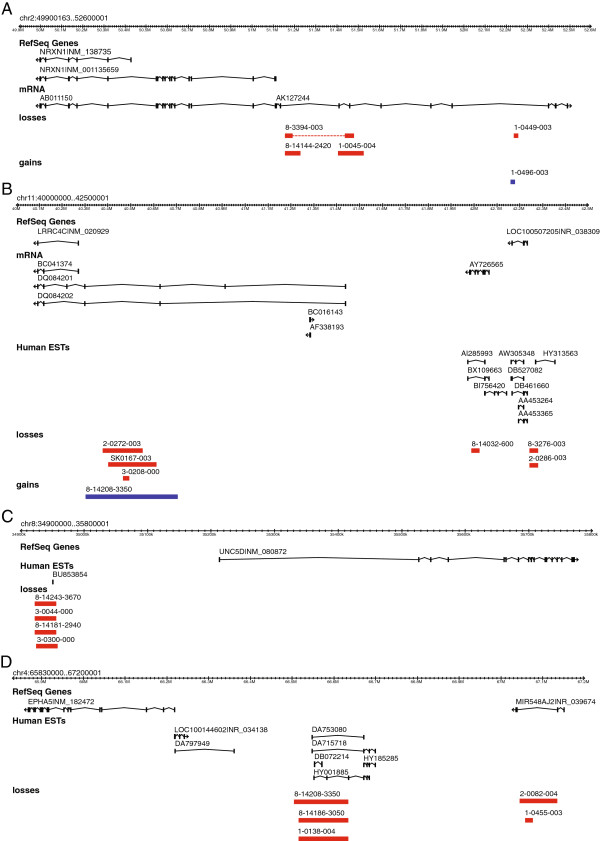
“Additional sample SK0167-003 identified in reference [19].”
BackgroundInfluentialSelf-citationMapping autism risk loci using genetic linkage and chromosomal rearrangements
The Autism Genome Project Consortium (2007) · Nature Genetics · doi:10.1038/ng1985 · Cited by 1,402 · cited 5×
“In 14 of 15, the intergenic interval identified has not been described before and in three regions the CNV neighboured a known ASD gene, namely, CDH8 [21], C3orf58 [22] and NRXN1 [4].”
BackgroundInfluentialIdentifying autism loci and genes by tracing recent shared ancestry
Morrow, E. M., Yoo, S.-Y., Flavell, S. W., Kim, T.-K., Lin, Y., Hill, R. S., Mukaddes, N. M., Balkhy, S., Gascon, G., Hashmi, A., et al. (2008) · Science · doi:10.1126/science.1157657 · Cited by 737 · cited 2×
“In the first scenario, we find CNVs both upstream (e.g. UNC5D (Figure 1C), MOCS1, ASTN2, SEMA3C, ZHX2, LUZP2, CDH8) and downstream (C3orf58, RXRA, MRGPRD) of known ASD risk genes and putative novel loci.”
BackgroundContribution of SHANK3 Mutations to Autism Spectrum Disorder
Moessner, R., Marshall, C. R., Sutcliffe, J. S., Skaug, J., Pinto, D., Vincent, J., Zwaigenbaum, L., Fernandez, B., Roberts, W., Szatmari, P., et al. (2007) · The American Journal of Human Genetics · doi:10.1086/522590 · Cited by 681 · cited 2×
“Analyses of rare (<1% population frequency) CNVs, insertions and deletions (indels) and point mutations have most convincingly identified synaptic genes such as members * Correspondence: Stephen.Scherer@sickkids.ca 1Program in Genetics and Genome Biology, The Centre for Applied Genomics, The Hospital for Sick Children…”
BackgroundSelf-citationMutations in the SHANK2 synaptic scaffolding gene in autism spectrum disorder and mental retardation
Berkel, S., Marshall, C. R., Weiss, B., Howe, J., Roeth, R., Moog, U., Endris, V., Roberts, W., Szatmari, P., Pinto, D., et al. (2010) · Nature Genetics · doi:10.1038/ng.589 · Cited by 563 · cited 2×
“Analyses of rare (<1% population frequency) CNVs, insertions and deletions (indels) and point mutations have most convincingly identified synaptic genes such as members * Correspondence: Stephen.Scherer@sickkids.ca 1Program in Genetics and Genome Biology, The Centre for Applied Genomics, The Hospital for Sick Children…”
BackgroundSelf-citationGenetic architecture in autism spectrum disorder
Devlin, B., & Scherer, S. W. (2012) · Current Opinion in Genetics & Development · doi:10.1016/j.gde.2012.03.002 · Cited by 545 · cited 2×
“While there has been progress identifying risk genes, most are still unknown [2].”
BackgroundSelf-citation
Cited by
Whole genome sequencing resource identifies 18 new candidate genes for autism spectrum disorder
C Yuen, R. K., Merico, D., Bookman, M., L Howe, J., Thiruvahindrapuram, B., Patel, R. V., Whitney, J., Deflaux, N., Bingham, J., Wang, Z., et al. (2017) · Nature Neuroscience · doi:10.1038/nn.4524 · Cited by 844
“3b ), isoforms of single genes 48 and their regulatory elements 27,49 , and they can include noncoding genes such as the known ASD-risk gene PTCHD1-AS ( Fig.”
Self-citationThe Autism Spectrum Disorders Working Group of The Psychiatric Genomics Consortium (2017) · Molecular Autism · doi:10.1186/s13229-017-0137-9 · Cited by 587
“ASTN2 has previously gained recognition due to the presence of rare CNV losses in ASD [56, 57].”
BackgroundOpportunities and challenges in modeling human brain disorders in transgenic primates
Jennings, C. G. B., Landman, R., Zhou, Y., Sharma, J., Hyman, J. B., Movshon, J. A., Qiu, Z., Roberts, A., Roe, A. W., Wang, X., et al. (2016) · Nature Neuroscience · doi:10.1038/nn.4362 · Cited by 152
Genetic insights and neurobiological implications from NRXN1 in neuropsychiatric disorders
Hu, Z., Xiao, X., Zhang, Z., & Li, M. (2019) · Molecular Psychiatry · doi:10.1038/s41380-019-0438-9 · Cited by 106
A Subset of Autism-Associated Genes Regulate the Structural Stability of Neurons
Lin, Y., Frei, J. A., Kilander, M. B. C., Shen, W., & Blatt, G. J. (2016) · Frontiers in Cellular Neuroscience · doi:10.3389/fncel.2016.00263 · Cited by 110
“…Hussman et al., 2011; Pagnamenta et al., 2011; Sanders et al., 2011; O’Roak et al., 2012b; Prandini et al., 2012; Connolly et al., 2013; Walker and Scherer, 2013; Crepel et al., 2014; Krumm et al., 2015); non-clustered protocadherins: PCDH9, PCDH10, and PCDH19 (Morrow et al., 2008; Depienne et…”
BackgroundLowther, C., Speevak, M., Armour, C. M., Goh, E. S., Graham, G. E., Li, C., Zeesman, S., Nowaczyk, M. J. M., Schultz, L.-A., Morra, A., et al. (2017) · Genetics in Medicine · doi:10.1038/gim.2016.54 · Cited by 97
Self-citationPhenotypic spectrum of NRXN1 mono‐ and bi‐allelic deficiency: A systematic review
Castronovo, P., Baccarin, M., Ricciardello, A., Picinelli, C., Tomaiuolo, P., Cucinotta, F., Frittoli, M., Lintas, C., Sacco, R., & Persico, A. M. (2020) · Clinical Genetics · doi:10.1111/cge.13537 · Cited by 65
T‐Brain‐1 – A Potential Master Regulator in Autism Spectrum Disorders
Chuang, H., Huang, T., & Hsueh, Y. (2015) · Autism Research · doi:10.1002/aur.1456 · Cited by 52
“…Lamb et al., 2012; Neale et al., 2012; O’Roak et al., 2011, 2012a, b; Pagnamenta et al., 2011; Pinto et al., 2010; Prasad et al., 2012; Rosenfeld et al., 2010; Sanders et al., 2012; Stone et al., 2007; Sultana et al., 2002; Toma et al., 2011, 2014; van Daalen et al., 2011; Walker & Scherer, 2013].”
Noncoding copy-number variations are associated with congenital limb malformation
Flöttmann, R., Kragesteen, B. K., Geuer, S., Socha, M., Allou, L., Sowińska‐Seidler, A., de Jarcy, L. B., Wagner, J., Jamsheer, A., Oehl‐Jaschkowitz, B., et al. (2017) · Genetics in Medicine · doi:10.1038/gim.2017.154 · Cited by 60
Devanna, P., Chen, X. S., Ho, J., Gajewski, D., Smith, S. D., Gialluisi, A., Francks, C., Fisher, S. E., Newbury, D. F., & Vernes, S. C. (2018) · Molecular Psychiatry · doi:10.1038/mp.2017.30 · Cited by 51
Chen, X., Feng, L., Cai, B., Chen, X., & Chen, G. (2017) · The Journal of Comparative Neurology · doi:10.1002/cne.24311 · Cited by 53
Cadherin-Based Transsynaptic Networks in Establishing and Modifying Neural Connectivity
Friedman, L. G., Benson, D. L., & Huntley, G. W. (2015) · Current topics in developmental biology/Current Topics in Developmental Biology · doi:10.1016/bs.ctdb.2014.11.025 · Cited by 54
“Rare inherited CNVs in the intergenic region immediately upstream of cadherin-8 have been identified as new ASD susceptibility loci (Walker & Scherer, 2013).”
BackgroundFriedman, L. G., Riemslagh, F. W., Sullivan, J. M., Mesias, R., Williams, F. M., Huntley, G. W., & Benson, D. L. (2015) · Journal of Comparative Neurology · doi:10.1002/cne.23666 · Cited by 47
“Another study found that two patients harboring deletions immediately upstream of CDH8 had autism (Walker and Scherer, 2013).”
BackgroundArpi, M. N. T., & Simpson, T. I. (2022) · Scientific Reports · doi:10.1038/s41598-022-14077-1 · Cited by 58
Semaphorin 3C as a Therapeutic Target in Prostate and Other Cancers
Hui, D. H. F., Tam, K. J., Jiao, I. Z. F., & Ong, C. J. (2019) · International Journal of Molecular Sciences · doi:10.3390/ijms20030774 · Cited by 40
“In addition, SEMA3C has been associated with other human conditions including autism [61], Takao syndrome [62], Alzheimer’s [63] and Hirschsprung disease [64].”
BackgroundBowdin, S. C., Ray, P. N., Cohn, R. D., & Meyn, M. S. (2014) · Human Mutation · doi:10.1002/humu.22536 · Cited by 41
RhoGTPase Regulators Orchestrate Distinct Stages of Synaptic Development
Martin-Vilchez, S., Whitmore, L., Asmussen, H., Zareno, J., Horwitz, R., & Newell-Litwa, K. (2017) · PLOS ONE · doi:10.1371/journal.pone.0170464 · Cited by 38
Das, P., & Majumder, A. L. (2018) · Functional & Integrative Genomics · doi:10.1007/s10142-018-0628-6 · Cited by 37
Genome-Wide Association Studies of Autism
Glessner, J., Connolly, J. J., & Hakonarson, H. H. (2014) · Current Behavioral Neuroscience Reports · doi:10.1007/s40473-014-0023-0 · Cited by 28
Functional genomics of human brain development and implications for autism spectrum disorders
Ziats, M. N., Grosvenor, L. P., & Rennert, O. M. (2015) · Translational Psychiatry · doi:10.1038/tp.2015.153 · Cited by 32
Performance of case-control rare copy number variation annotation in classification of autism
Engchuan, W., Dhindsa, K., Lionel, A. C., Scherer, S. W., Chan, J. H., & Merico, D. (2015) · BMC Medical Genomics · doi:10.1186/1755-8794-8-s1-s7 · Cited by 28
“Within this classification framework, improved performance could perhaps be achieved by (i) using additional indexes of genic intolerance to variation [58] (ii) modeling the different level of constraint for different gene components (coding exons, introns, UTRs), (iii) expanding the gene annotation feature set, for i…”
Self-citationCopy Number Variation in Chickens: A Review and Future Prospects
Wang, X., & Byers, M. S. (2014) · Microarrays · doi:10.3390/microarrays3010024 · Cited by 24
“studied by many groups [60–62].”
Wang, C., Pan, Y.-H., Wang, Y., Blatt, G. J., & Yuan, X. (2019) · Molecular Brain · doi:10.1186/s13041-019-0461-4 · Cited by 26
Duong, L. T. T., Hoeffding, L. K., Petersen, K. B., Knudsen, C. D., Thygesen, J. H., Klitten, L. L., Tommerup, N., Ingason, A., & Werge, T. M. (2015) · European Journal of Medical Genetics · doi:10.1016/j.ejmg.2015.11.004 · Cited by 20
“Further, a single study identified five unrelated individuals all diagnosed with autism spectrum disorder carrying CNVs in AK127244 where the majority overlappedwith the two deletions from our study (Walker and Scherer, 2013).”
BackgroundThe Genetics of Autism Spectrum Disorders
Yuen, R. K. C., Szatmari, P., & Vorstman, J. A. S. (2019) · Autism and Pervasive Developmental Disorders · doi:10.1017/9781108297769.006 · Cited by 19
Weak association of glyoxalase 1 (GLO1) variants with autism spectrum disorder
Kovač, J., Podkrajšek, K. T., Macedoni-Lukšič, M., & Battelino, T. (2014) · European Child & Adolescent Psychiatry · doi:10.1007/s00787-014-0537-8 · Cited by 22
“a plausible ASD-risk loci candidate in the microarray analysis of 1,491 unrelated ASD cases [17].”
BackgroundHomozygous deletions implicate non-coding epigenetic marks in Autism spectrum disorder
Schmitz‐Abe, K., Sánchez‐Schmitz, G., Doan, R. N., Hill, R. S., Chahrour, M. H., Mehta, B. K., Servattalab, S. E., Ataman, B., Lam, A.-T. N., Morrow, E. M., et al. (2020) · Scientific Reports · doi:10.1038/s41598-020-70656-0 · Cited by 21
Gong, L., Yang, Y., Chen, Y., Shi, J., Song, Y., & Zhang, H. (2016) · Scientific Reports · doi:10.1038/srep37031 · Cited by 18
The genetics of autism spectrum disorder in an East African familial cohort
Tuncay, İ. O., DeVries, D., Gogate, A., Kaur, K. J., Kumar, A., Xing, C., Goodspeed, K., Seyoum-Tesfa, L., & Chahrour, M. H. (2023) · Cell Genomics · doi:10.1016/j.xgen.2023.100322 · Cited by 15
Metal Dyshomeostasis as a Driver of Gut Pathology in Autism Spectrum Disorders
O'Grady, K., & Grabrucker, A. M. (2025) · Journal of Neurochemistry · doi:10.1111/jnc.70041 · Cited by 13
“Their supplementation has shown benefits for managing ASD symptoms, improving behaviors, and supporting neural function (Laumonnier et al. 2004; Parmeggiani et al. 2018; Poulopoulos et al. 2009; Walker and Scherer 2013).”
Choi, Y., Park, H., Kang, S., Jung, H., Kweon, H., Kim, S., Choi, I., Lee, S. Y., Choi, Y., Lee, S., et al. (2019) · Frontiers in Molecular Neuroscience · doi:10.3389/fnmol.2019.00250 · Cited by 13
“Moderately Suppressed Repetitive Self-Grooming, but Normal Social Interaction and Sensorimotor Function, in Lrrc4c−/− Mice Because NGL-1/LRRC4C (Walker and Scherer, 2013; Maussion et al., 2017) and the NGL-1-interacting proteins netrin-G1 and CDKL5 (O’Roak et al., 2012; Posar et al., 2015; Zhou et al., 2017; Zhu and X…”
InfluentialRoss, P. J., Mok, R. S. F., Smith, B. S., Rodrigues, D. C., Mufteev, M., Scherer, S. W., & Ellis, J. (2020) · Molecular Autism · doi:10.1186/s13229-020-00333-6 · Cited by 13
Self-citationDalton, G. D., Siecinski, S. K., Nikolova, V. D., Cofer, G. P., Hornburg, K. J., Qi, Y. P., Johnson, G. A., Jiang, Y., Moy, S. S., & Gregory, S. G. (2024) · Behavioral and Brain Functions · doi:10.1186/s12993-024-00240-3 · Cited by 10
“The Netrin-G ligand LRRC4C is a synaptic adhesion molecule that interacts with the presynaptic adhesion molecule netrin-G1 (NTNG1) and the ligand-receptor pair LRRC4C/NTNG1 has been implicated in ASD [80, 81].”
BackgroundMolecular Genetic Evidence for Shared Etiology of Autism and Prodigy
Ruthsatz, J. M., Petrill, S. A., Li, N., Wolock, S. L., & Bartlett, C. W. (2015) · Human Heredity · doi:10.1159/000373890 · Cited by 13
Li, N., Wu, Z., & Ma, C. (2022) · Frontiers in Oncology · doi:10.3389/fonc.2022.1038890 · Cited by 8
“Genome-wide analyses identified inherited CNVs (copy number variations) that affect non-genic intervals upstream ZHX2 in autism spectrum disorder (ASD) patients (61).”
BackgroundPawlina‐Tyszko, K., Gurgul, A., Szmatoła, T., Ropka‐Molik, K., Semik‐Gurgul, E., Klukowska‐Rötzler, J., Koch, C., Mählmann, K., & Bugno‐Poniewierska, M. (2017) · Biochimie · doi:10.1016/j.biochi.2017.07.006 · Cited by 8
“To date, research has revealed relationships between such CNVs and gene expression levels [55] as well as autism [56].”
BackgroundAutism spectrum disorder in a patient with a genomic rearrangement that only involves the EPHA5 gene
Pascolini, G., Majore, S., Valiante, M., Bottillo, I., Laino, L., Agolini, E., Novelli, A., Grammatico, B., Calvani, M., & Grammatico, P. (2019) · Psychiatric Genetics · doi:10.1097/ypg.0000000000000217 · Cited by 10
“Therefore, as already postulated (Weiss et al., 2009; Girirajan et al., 2013; Matoso et al., 2013; Walker and Scherer, 2013), our findings further support the hypothesis that deleterious alterations in the EPHA5 gene might contribute toward the onset of autism, playing a role in the complex biological phenomena causin…”
BackgroundResultCopy number variations in Japanese children with autism spectrum disorder
Sakamoto, Y., Shimoyama, S., Furukawa, T., Adachi, M., Takahashi, M., Mikami, T., Kuribayashi, M., Osato‐Kaneda, A., Tsushima, D., Saito, M., et al. (2021) · Psychiatric Genetics · doi:10.1097/ypg.0000000000000276 · Cited by 5
[Molecular aspects of autism spectrum disorders].
Lisik, M. (2014) · PubMed · Cited by 7
Next Generation Sequencing in Autism Spectrum Disorder
Yin, J., Oleson, D. S., & Schaaf, C. P. (2018) · OBM Genetics · doi:10.21926/obm.genet.1801014 · Cited by 5
Lemée, M. V., Loviglio, M. N., Ye, T., Tilly, P., Keime, C., Weber, C., Petrova, A., Klein, P., Morlet, B., Wendling, O., et al. (2025) · Nucleic Acids Research · doi:10.1093/nar/gkaf934 · Cited by 5
Synaptic protein mutations in autism
Sauer, A. K., Walsh, J. A., Curran, D., Zohourian, N., Stanton, J. E., Zabetakis, I., Brown, J. A. L., & Grabrucker, A. M. (2026) · Neurobiology of Disease · doi:10.1016/j.nbd.2026.107365 · Cited by 5
Vernone, A., Ricca, C., Pescarmona, G., & Silvagno, F. (2021) · Applied Sciences · doi:10.3390/app11083511 · Cited by 3
Maurer, M. H., Kohler, A., Hudemann, M., Jüngling, J., Biskup, S., & Menzel, M. (2022) · The Application of Clinical Genetics · doi:10.2147/tacg.s361239 · Cited by 4
Ma, T., & Zhang, A. (2017) · Methods · doi:10.1016/j.ymeth.2017.05.002 · Cited by 2
Holleman, A. M., Broadaway, K. A., Duncan, R., Todor, A., Almli, L. M., Bradley, B., Ressler, K. J., Ghosh, D., Mullé, J. G., & Epstein, M. P. (2019) · Scientific Reports · doi:10.1038/s41598-019-44046-0 · Cited by 3
Navarro, M., & Simpson, T. I. (2021) · bioRxiv (Cold Spring Harbor Laboratory) · doi:10.1101/2021.01.29.428754 · Cited by 2
Metabolic and Genetic Causes of Autism
Golla, S., & Evans, P. (2014) · Elsevier eBooks · doi:10.1016/b978-0-12-410529-4.00019-x · Cited by 1
Arghir, A., Papuc, S. M., Ţuţulan-Cuniţă, A. C., Erbescu, A., Loddo, S., Genovese, S., Ciocca, L., Goldoni, M., Piscopo, C., Bernardini, L., et al. (2020) · Clinical Case Reports · doi:10.1002/ccr3.3523 · Cited by 1
Genetic background of grey matter brain networks related to attention-deficit/hyperactivity disorderPreprint
Schoenmacker, G., Duan, K., Rootes-Murdy, K., Jiang, W., Hoekstra, P. J., Hartman, C. A., Oosterlaan, J., Hoogman, M., Franke, B., Turner, J. A., et al. (2022) · medRxiv · doi:10.1101/2022.01.07.22268852 · Cited by 1
“In humans, UNC5D has been associated with neuronal function (Srikanth et al., 2018; Sasaki et al., 2008) and implicated in ASD (Walker and Scherer, 2013; Hussman et al., 2011; Gamsiz et al., 2013).”
BackgroundWhole Genome Sequencing in Autism: Clinical Translation
Yuen, R. K. C., & Scherer, S. W. (2014) · WORLD SCIENTIFIC eBooks · doi:10.1142/9789814602167_0004
Self-citationA Kernel Method for Dissecting Genetic Signals in Tests of High-Dimensional PhenotypesPreprint
Solís‐Lemus, C., Holleman, A. M., Todor, A., Bradley, B., Ressler, K. J., Ghosh, D., & Epstein, M. P. (2021) · bioRxiv (Cold Spring Harbor Laboratory) · doi:10.1101/2021.07.29.454336
“Previous studies have identified a possible link between ZHX2 and autism spectrum disorder (Walker and Scherer, 2013).”
ResultGenetics and Epigenetics of ASD
Mojarad, B. A., Qaiser, F., & Yuen, R. K. C. (2023) · Springer eBooks · doi:10.1007/978-3-031-20792-1_18 · Cited by 3
Etude épidémiologique, génétique et métabolomique des Troubles du Spectre Autistique au Liban
Bitar, T. (2018) · theses.fr (ABES) · doi:10.70675/44700042z0e35z49f0z9d21zd00543f6df1c · Cited by 1
Metadata
- Authors
- Walker, S., & Scherer, S. W.
- Affiliations
- Hospital for Sick Children (CA)
- University of Toronto (CA)
- Corresponding author
- Scherer, Stephen W
- Venue
- BMC Genomics
- Published
- 2013
- Volume
- 14
- Issue
- 1
- Pages
- 499
- ISSN
- 1471-2164 (ISSN-L)
- PMC
- PMC3734099
- OpenAlex
- W2087512975
- Cited by
- 55
- References
- 25
- Citations by year
- 2026: 1 · 2025: 2 · 2024: 1 · 2023: 2 · 2022: 4 · 2021: 4 · 2020: 3 · 2019: 8 · 2018: 4 · 2017: 8 · 2016: 4 · 2015: 6 · 2014: 8
- FWCI
- 3.29
- Type
- journal article
- Language
- en
- Open access
- gold
- doi.org
- Licence
- cc-by
- Locations
- BMC Genomics (publishedVersion, cc-by)
- Europe PMC (PubMed Central) (publishedVersion, cc-by)
- PubMed Central (publishedVersion, cc-by)
- PubMed (publishedVersion)
- TSpace (University of Toronto) (submittedVersion)
- Funders
- GlaxoSmithKline
- Canadian Institute for Advanced Research
- Genome Canada
- Ontario Genomics
- Government of Ontario
- Ontario Genomics Institute
- University of Toronto
- Hospital for Sick Children
- Canadian Institutes of Health Research
- Ontario Ministry of Research and Innovation
- Topics
- Life Sciences › Neuroscience › Cognitive Neuroscience › Autism Spectrum Disorder Research
- Life Sciences › Biochemistry, Genetics and Molecular Biology › Genetics › Genomic variations and chromosomal abnormalities
- Life Sciences › Biochemistry, Genetics and Molecular Biology › Genetics › Genetics and Neurodevelopmental Disorders
- Keywords
- autism spectrum disorder, copy number variation, intergenic regions, non-coding variants, genetic susceptibility loci, CDH8, NRXN1, ZHX2, SEMA3C
- MeSH terms
- Child, Child Development Disorders, Pervasive, Humans, Genetic Predisposition to Disease
About these checks
Registry, retraction, Cites and statistics results are computed, not judged, with one exception: a printed reference that no index lists is read once by a model before it counts as a citation error. Claims are extracted by a model and kept only when their quote appears verbatim in the text; each cited source is then checked, with a model’s help, for whether it says what the claim relies on. Those verdicts can be wrong — read the claim’s quote and the cited source before relying on one.
Statistics and arithmetic are recomputed, not judged.
Confidence bands are shown only for fields calibrated on our annotated test set. None is calibrated yet, so no band is shown.
What counts as a claim ›How we measure confidence ›How we check this ›
Are you an author, or do you see a problem with this page? Request a review
Data sources
Bibliographic data: Semantic Scholar, OpenAlex, Crossref.
Contains information from the Semantic Scholar Academic Graph Datasets, made available under the ODC Attribution License (ODC-BY 1.0).
Semantic Scholar’s data is described in: Kinney, R., et al. (2023). The Semantic Scholar Open Data Platform. arXiv:2301.10140.
