

Identification of candidate intergenic risk loci in autism spectrum disorder
Open accessThe DOI matches its Crossref record; 25 of the 25 references it cites were found in a registry or an index.
Abstract
BACKGROUND: Copy number variations (CNVs) and DNA sequence alterations affecting specific neuronal genes are established risk factors for Autism Spectrum Disorder (ASD). In what is largely considered a genetic condition, so far, these mutations account for ~20% of individuals having an ASD diagnosis. However, non-coding genomic sequence also contains functional elements introducing additional disease risk loci for investigation. RESULTS: We have performed genome-wide analyses and identified rare inherited CNVs affecting non-genic intervals in 41 of 1491 (3%) of ASD cases examined. Examples of such intergenic CNV regions include 16q21 and 2p16.3 near known ASD risk genes CDH8 and NRXN1 respectively, as well as novel loci contiguous with ZHX2, MOCS1, LRRC4C, SEMA3C, and other genes. CONCLUSIONS: Rare variants in intergenic regions may implicate new risk loci and genes in ASD and also present useful data for comparison with coming whole genome sequence datasets.
Overview
The claims and statistics of this paper haven’t been checked yet.
Free: it reads the open-access text and checks the first 5 claims that cite a source we can check. Create a free account to check every claim.
Integrity signals
Registry
Cites
Statistics
Figures
Verification
Claims the paper makes
The claims and statistics of this paper haven’t been checked yet.
Free: it reads the open-access text and checks the first 5 claims that cite a source we can check. Create a free account to check every claim.
Claims other papers make about this one
Each is checked against this paper’s own text: does it say what the citing paper says it does?
In the citing paper
“ASTN2 has previously gained recognition due to the presence of rare CNV losses in ASD [56, 57].”
Self-check
Percentages, sums and reported differences re-computed from the paper’s own numbers.
The self-check needs the paper’s full text.
Citations
Cites
1 retracted
Bonnet, C., Masurel, A., Khan, A. A., Béri‐Dexheimer, M., Callier, P., Mugneret, F., Philippe, C., Thauvin‐Robinet, C., Faivre, L. O., & Jonveaux, P. (2011) · Human Mutation · doi:10.1002/humu.21649 · Cited by 15 · cited 1×
“Similar findings are even better documented in studies of intellectual disability [14,15], which is observed in ~40% of cases of ASD.”
ResultRetractedAn integrated encyclopedia of DNA elements in the human genome
The ENCODE Project Consortium (2012) · Nature · doi:10.1038/nature11247 · Cited by 18,072
Functional impact of global rare copy number variation in autism spectrum disorders
Pinto, D., Pagnamenta, A. T., Klei, L., Anney, R., Merico, D., Regan, R., Conroy, J., Magalhaes, T. R., Correia, C., Abrahams, B. S., et al. (2010) · Nature · doi:10.1038/nature09146 · Cited by 2,013 · cited 7×
“Rare genic CNVs identified from these data have been reported previously and from these data approximately 10% of cases carry a de novo or rare inherited CNV thought to contribute to ASD in that individual [16,17,19,20].”
BackgroundMethodInfluentialMutations of the X-linked genes encoding neuroligins NLGN3 and NLGN4 are associated with autism
Study, P. A. R. I. S., Jamain, S., Quach, H., Betancur, C., Råstam, M., Colineaux, C., Gillberg, I. C., Soderstrom, H., Giros, B., Leboyer, M., et al. (2003) · Nature Genetics · doi:10.1038/ng1136 · Cited by 1,851 · cited 2×
“Analyses of rare (<1% population frequency) CNVs, insertions and deletions (indels) and point mutations have most convincingly identified synaptic genes such as members * Correspondence: Stephen.Scherer@sickkids.ca 1Program in Genetics and Genome Biology, The Centre for Applied Genomics, The Hospital for Sick Children…”
BackgroundStructural Variation of Chromosomes in Autism Spectrum Disorder
Marshall, C. R., Noor, A., Vincent, J. B., Lionel, A. C., Feuk, L., Skaug, J., Shago, M., Moessner, R., Pinto, D., Ren, Y., et al. (2008) · The American Journal of Human Genetics · doi:10.1016/j.ajhg.2007.12.009 · Cited by 1,815 · cited 4×
“Additional sample SK0167-003 identified in reference [19].”
BackgroundInfluentialSelf-citationMapping autism risk loci using genetic linkage and chromosomal rearrangements
The Autism Genome Project Consortium (2007) · Nature Genetics · doi:10.1038/ng1985 · Cited by 1,402 · cited 5×
“In 14 of 15, the intergenic interval identified has not been described before and in three regions the CNV neighboured a known ASD gene, namely, CDH8 [21], C3orf58 [22] and NRXN1 [4].”
BackgroundInfluentialIdentifying autism loci and genes by tracing recent shared ancestry
Morrow, E. M., Yoo, S.-Y., Flavell, S. W., Kim, T.-K., Lin, Y., Hill, R. S., Mukaddes, N. M., Balkhy, S., Gascon, G., Hashmi, A., et al. (2008) · Science · doi:10.1126/science.1157657 · Cited by 737 · cited 2×
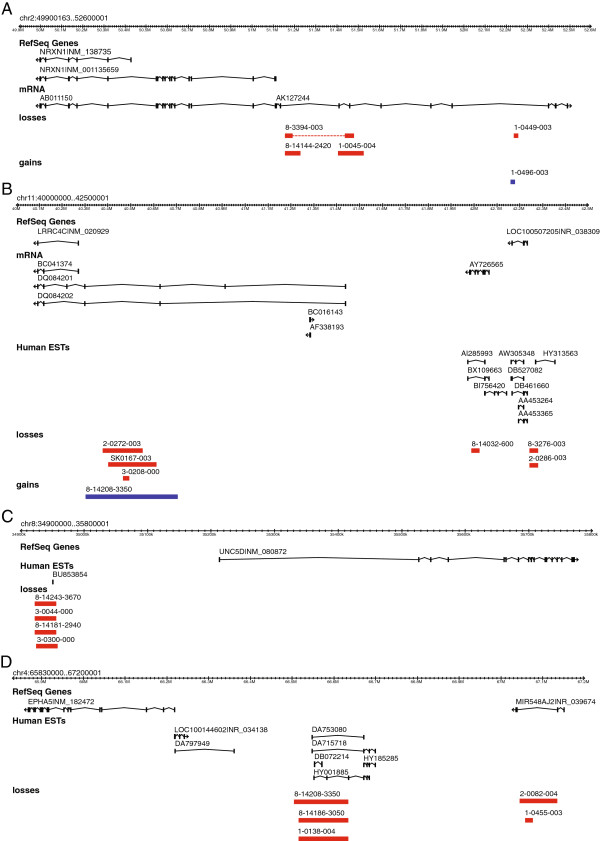
“In the first scenario, we find CNVs both upstream (e.g. UNC5D (Figure 1C), MOCS1, ASTN2, SEMA3C, ZHX2, LUZP2, CDH8) and downstream (C3orf58, RXRA, MRGPRD) of known ASD risk genes and putative novel loci.”
BackgroundContribution of SHANK3 Mutations to Autism Spectrum Disorder
Moessner, R., Marshall, C. R., Sutcliffe, J. S., Skaug, J., Pinto, D., Vincent, J., Zwaigenbaum, L., Fernandez, B., Roberts, W., Szatmari, P., et al. (2007) · The American Journal of Human Genetics · doi:10.1086/522590 · Cited by 681 · cited 2×
“Analyses of rare (<1% population frequency) CNVs, insertions and deletions (indels) and point mutations have most convincingly identified synaptic genes such as members * Correspondence: Stephen.Scherer@sickkids.ca 1Program in Genetics and Genome Biology, The Centre for Applied Genomics, The Hospital for Sick Children…”
BackgroundSelf-citationMutations in the SHANK2 synaptic scaffolding gene in autism spectrum disorder and mental retardation
Berkel, S., Marshall, C. R., Weiss, B., Howe, J., Roeth, R., Moog, U., Endris, V., Roberts, W., Szatmari, P., Pinto, D., et al. (2010) · Nature Genetics · doi:10.1038/ng.589 · Cited by 563 · cited 2×
“Analyses of rare (<1% population frequency) CNVs, insertions and deletions (indels) and point mutations have most convincingly identified synaptic genes such as members * Correspondence: Stephen.Scherer@sickkids.ca 1Program in Genetics and Genome Biology, The Centre for Applied Genomics, The Hospital for Sick Children…”
BackgroundSelf-citationGenetic architecture in autism spectrum disorder
Devlin, B., & Scherer, S. W. (2012) · Current Opinion in Genetics & Development · doi:10.1016/j.gde.2012.03.002 · Cited by 545 · cited 2×
“While there has been progress identifying risk genes, most are still unknown [2].”
BackgroundSelf-citationJiang, Y.-H., Yuen, R. K. C., Jin, X., Wang, M., Chen, N., Wu, X., Ju, J., Mei, J., Shi, Y., He, M., et al. (2013) · The American Journal of Human Genetics · doi:10.1016/j.ajhg.2013.06.012 · Cited by 474 · cited 1×
“Conclusions Given the challenges faced in interpreting the clinical significance of multitudes of genetic variants found in for example, whole genome sequencing [25], accruing evidence across multiple studies will advocate loci outside of known genes or other regulatory elements for further study, particularly for rar…”
BackgroundSelf-citationLeblond, C. S., Heinrich, J., Delorme, R., Proepper, C., Betancur, C., Huguet, G., Konyukh, M., Chaste, P., Ey, E., Rastam, M., et al. (2012) · PLoS Genetics · doi:10.1371/journal.pgen.1002521 · Cited by 429 · cited 2×
“ASD subjects with multiple genetic risk factors for ASD and associated medical conditions are also known [11].”
BackgroundSelf-citationPinto, D., Darvishi, K., Shi, X., Rajan, D., Rigler, D., Fitzgerald, T., Lionel, A. C., Thiruvahindrapuram, B., MacDonald, J. R., Mills, R., et al. (2011) · Nature Biotechnology · doi:10.1038/nbt.1852 · Cited by 403 · cited 1×
“CNV discovery was performed using previously described pipelines [16-18].”
MethodSelf-citationRare Copy Number Variation Discovery and Cross-Disorder Comparisons Identify Risk Genes for ADHD
Lionel, A. C., Crosbie, J., Barbosa, N., Goodale, T., Thiruvahindrapuram, B., Rickaby, J., Gazzellone, M., Carson, A. R., Howe, J. L., Wang, Z., et al. (2011) · Science Translational Medicine · doi:10.1126/scitranslmed.3002464 · Cited by 371 · cited 5×
“Rare genic CNVs identified from these data have been reported previously and from these data approximately 10% of cases carry a de novo or rare inherited CNV thought to contribute to ASD in that individual [16,17,19,20].”
BackgroundMethodInfluentialSelf-citationSHANK1 Deletions in Males with Autism Spectrum Disorder
Sato, D., Lionel, A. C., Leblond, C. S., Prasad, A., Pinto, D., Walker, S., O'Connor, I., Russell, C., Drmic, I. E., Hamdan, F. F., et al. (2012) · The American Journal of Human Genetics · doi:10.1016/j.ajhg.2012.03.017 · Cited by 318 · cited 2×
“The significance of this observation is still to be determined but suggests incomplete and/or variable penetrance of phenotype, which is something often observed in ASD [6,7,17].”
BackgroundSelf-citationDeletions of NRXN1 (neurexin‐1) predispose to a wide spectrum of developmental disorders
Ching, M. S. L., Shen, Y., Tan, W., Jeste, S. S., Morrow, E. M., Chen, X., Mukaddes, N. M., Yoo, S., Hanson, E., Hundley, R., et al. (2010) · American Journal of Medical Genetics Part B: Neuropsychiatric Genetics · doi:10.1002/ajmg.b.31063 · Cited by 298 · cited 1×
“In the case of the NRXN1 gene, upstream CNVs found in five individuals impact the same mRNA (AK127244) reported elsewhere with a CNV in a family with ASD (Table 1, Figure 1A) [23].”
BackgroundTruncating mutations in NRXN2 and NRXN1 in autism spectrum disorders and schizophrenia
Gauthier, J., Siddiqui, T. J., Huashan, P., Yokomaku, D., Hamdan, F. F., Champagne, N., Lapointe, M., Spiegelman, D., Noreau, A., Lafrenière, R. G., et al. (2011) · Human Genetics · doi:10.1007/s00439-011-0975-z · Cited by 286 · cited 2×
“Analyses of rare (<1% population frequency) CNVs, insertions and deletions (indels) and point mutations have most convincingly identified synaptic genes such as members * Correspondence: Stephen.Scherer@sickkids.ca 1Program in Genetics and Genome Biology, The Centre for Applied Genomics, The Hospital for Sick Children…”
BackgroundRare Deletions at the Neurexin 3 Locus in Autism Spectrum Disorder
Vaags, A. K., Lionel, A. C., Sato, D., Goodenberger, M., Stein, Q. P., Curran, S., Ogilvie, C., Ahn, J. W., Drmic, I., Senman, L., et al. (2012) · The American Journal of Human Genetics · doi:10.1016/j.ajhg.2011.11.025 · Cited by 209 · cited 2×
“The significance of this observation is still to be determined but suggests incomplete and/or variable penetrance of phenotype, which is something often observed in ASD [6,7,17].”
BackgroundSelf-citationA Discovery Resource of Rare Copy Number Variations in Individuals with Autism Spectrum Disorder
Prasad, A., Merico, D., Thiruvahindrapuram, B., Wei, J., Lionel, A. C., Sato, D., Rickaby, J., Lu, C., Szatmari, P., Roberts, W., et al. (2012) · G3 Genes|Genomes|Genetics · doi:10.1534/g3.112.004689 · Cited by 206 · cited 1×
“Rare genic CNVs identified from these data have been reported previously and from these data approximately 10% of cases carry a de novo or rare inherited CNV thought to contribute to ASD in that individual [16,17,19,20].”
BackgroundSelf-citationDisruption at the PTCHD1 Locus on Xp22.11 in Autism Spectrum Disorder and Intellectual Disability
Noor, A., Whibley, A., Marshall, C. R., Gianakopoulos, P. J., Piton, A., Carson, A. R., Orlic-Milacic, M., Lionel, A. C., Sato, D., Pinto, D., et al. (2010) · Science Translational Medicine · doi:10.1126/scitranslmed.3001267 · Cited by 193 · cited 7×
“In addition, there are a few examples of mutations in ASD cases identified in non-genic segments of DNA [12] and non-coding RNAs [13].”
BackgroundInfluentialSelf-citationLionel, A. C., Vaags, A. K., Sato, D., Gazzellone, M. J., Mitchell, E. B., Chen, H. Y., Costain, G., Walker, S., Egger, G., Thiruvahindrapuram, B., et al. (2013) · Human Molecular Genetics · doi:10.1093/hmg/ddt056 · Cited by 162 · cited 2×
“Analyses of rare (<1% population frequency) CNVs, insertions and deletions (indels) and point mutations have most convincingly identified synaptic genes such as members * Correspondence: Stephen.Scherer@sickkids.ca 1Program in Genetics and Genome Biology, The Centre for Applied Genomics, The Hospital for Sick Children…”
BackgroundSelf-citationA Noncoding RNA Antisense to Moesin at 5p14.1 in Autism
Kerin, T., Ramanathan, A., Rivas, K., Grepo, N., Coetzee, G. A., & Campbell, D. B. (2012) · Science Translational Medicine · doi:10.1126/scitranslmed.3003479 · Cited by 149
A Noncoding, Regulatory Mutation Implicates HCFC1 in Nonsyndromic Intellectual Disability
Huang, L., Jolly, L. A., Willis‐Owen, S. A. G., Gardner, A. E., Kumar, R., Douglas, E., Shoubridge, C., Wieczorek, D., Tzschach, A., Cohen, M. Y., et al. (2012) · The American Journal of Human Genetics · doi:10.1016/j.ajhg.2012.08.011 · Cited by 111 · cited 1×
“Similar findings are even better documented in studies of intellectual disability [14,15], which is observed in ~40% of cases of ASD.”
ResultPagnamenta, A. T., Khan, H., Walker, S., Gerrelli, D., Wing, K., Bonaglia, M. C., Giorda, R., Berney, T., Mani, E., Molteni, M., et al. (2011) · Journal of Medical Genetics · doi:10.1136/jmg.2010.079426 · Cited by 111 · cited 3×
“In the first scenario, we find CNVs both upstream (e.g. UNC5D (Figure 1C), MOCS1, ASTN2, SEMA3C, ZHX2, LUZP2, CDH8) and downstream (C3orf58, RXRA, MRGPRD) of known ASD risk genes and putative novel loci.”
BackgroundSelf-citationCopy-Number Variations, Noncoding Sequences, and Human Phenotypes
Klopocki, E., & Mundlos, S. (2011) · Annual Review of Genomics and Human Genetics · doi:10.1146/annurev-genom-082410-101404 · Cited by 85 · cited 2×
“This observation coupled with the recognition of the functional relevance of non-genic regions [1] target these genomic segments as candidates for investigation for a role in disease.”
Background
Cited by
Whole genome sequencing resource identifies 18 new candidate genes for autism spectrum disorder
C Yuen, R. K., Merico, D., Bookman, M., L Howe, J., Thiruvahindrapuram, B., Patel, R. V., Whitney, J., Deflaux, N., Bingham, J., Wang, Z., et al. (2017) · Nature Neuroscience · doi:10.1038/nn.4524 · Cited by 844
“3b ), isoforms of single genes 48 and their regulatory elements 27,49 , and they can include noncoding genes such as the known ASD-risk gene PTCHD1-AS ( Fig.”
Self-citationThe Autism Spectrum Disorders Working Group of The Psychiatric Genomics Consortium (2017) · Molecular Autism · doi:10.1186/s13229-017-0137-9 · Cited by 587
“ASTN2 has previously gained recognition due to the presence of rare CNV losses in ASD [56, 57].”
BackgroundOpportunities and challenges in modeling human brain disorders in transgenic primates
Jennings, C. G. B., Landman, R., Zhou, Y., Sharma, J., Hyman, J. B., Movshon, J. A., Qiu, Z., Roberts, A., Roe, A. W., Wang, X., et al. (2016) · Nature Neuroscience · doi:10.1038/nn.4362 · Cited by 152
Genetic insights and neurobiological implications from NRXN1 in neuropsychiatric disorders
Hu, Z., Xiao, X., Zhang, Z., & Li, M. (2019) · Molecular Psychiatry · doi:10.1038/s41380-019-0438-9 · Cited by 106
A Subset of Autism-Associated Genes Regulate the Structural Stability of Neurons
Lin, Y., Frei, J. A., Kilander, M. B. C., Shen, W., & Blatt, G. J. (2016) · Frontiers in Cellular Neuroscience · doi:10.3389/fncel.2016.00263 · Cited by 110
“…Hussman et al., 2011; Pagnamenta et al., 2011; Sanders et al., 2011; O’Roak et al., 2012b; Prandini et al., 2012; Connolly et al., 2013; Walker and Scherer, 2013; Crepel et al., 2014; Krumm et al., 2015); non-clustered protocadherins: PCDH9, PCDH10, and PCDH19 (Morrow et al., 2008; Depienne et…”
Background
Metadata
- Authors
- Walker, S., & Scherer, S. W.
- Affiliations
- Hospital for Sick Children (CA)
- University of Toronto (CA)
- Corresponding author
- Scherer, Stephen W
- Venue
- BMC Genomics
- Published
- 2013
- Volume
- 14
- Issue
- 1
- Pages
- 499
- ISSN
- 1471-2164 (ISSN-L)
- PMC
- PMC3734099
- OpenAlex
- W2087512975
- Cited by
- 55
- References
- 25
- Citations by year
- 2026: 1 · 2025: 2 · 2024: 1 · 2023: 2 · 2022: 4 · 2021: 4 · 2020: 3 · 2019: 8 · 2018: 4 · 2017: 8 · 2016: 4 · 2015: 6 · 2014: 8
- FWCI
- 3.29
- Type
- journal article
- Language
- en
- Open access
- gold
- doi.org
- Licence
- cc-by
- Locations
- BMC Genomics (publishedVersion, cc-by)
- Europe PMC (PubMed Central) (publishedVersion, cc-by)
- PubMed Central (publishedVersion, cc-by)
- PubMed (publishedVersion)
- TSpace (University of Toronto) (submittedVersion)
- Funders
- GlaxoSmithKline
- Canadian Institute for Advanced Research
- Genome Canada
- Ontario Genomics
- Government of Ontario
- Ontario Genomics Institute
- University of Toronto
- Hospital for Sick Children
- Canadian Institutes of Health Research
- Ontario Ministry of Research and Innovation
- Topics
- Life Sciences › Neuroscience › Cognitive Neuroscience › Autism Spectrum Disorder Research
- Life Sciences › Biochemistry, Genetics and Molecular Biology › Genetics › Genomic variations and chromosomal abnormalities
- Life Sciences › Biochemistry, Genetics and Molecular Biology › Genetics › Genetics and Neurodevelopmental Disorders
- Keywords
- autism spectrum disorder, copy number variation, intergenic regions, non-coding variants, genetic susceptibility loci, CDH8, NRXN1, ZHX2, SEMA3C
- MeSH terms
- Child, Child Development Disorders, Pervasive, Humans, Genetic Predisposition to Disease
About these checks
Registry, retraction, Cites and statistics results are computed, not judged, with one exception: a printed reference that no index lists is read once by a model before it counts as a citation error. Claims are extracted by a model and kept only when their quote appears verbatim in the text; each cited source is then checked, with a model’s help, for whether it says what the claim relies on. Those verdicts can be wrong — read the claim’s quote and the cited source before relying on one.
Statistics and arithmetic are recomputed, not judged.
Confidence bands are shown only for fields calibrated on our annotated test set. None is calibrated yet, so no band is shown.
What counts as a claim ›How we measure confidence ›How we check this ›
Are you an author, or do you see a problem with this page? Request a review
Data sources
Bibliographic data: Semantic Scholar, OpenAlex, Crossref.
Contains information from the Semantic Scholar Academic Graph Datasets, made available under the ODC Attribution License (ODC-BY 1.0).
Semantic Scholar’s data is described in: Kinney, R., et al. (2023). The Semantic Scholar Open Data Platform. arXiv:2301.10140.
