

The DOI matches its Crossref record; 114 of the 114 references it cites were found in a registry or an index.
Phylogenetic distribution of translational GTPases in bacteria
Open accessAbstract
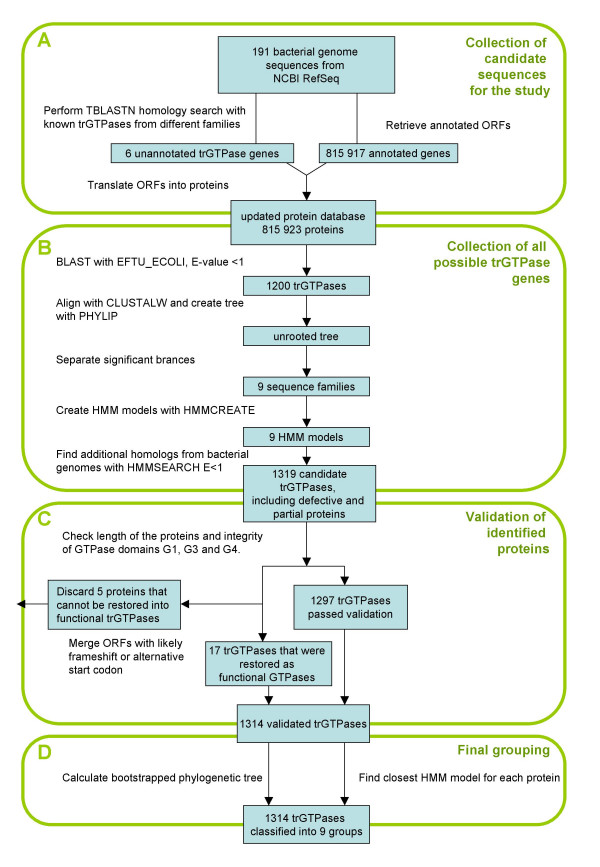
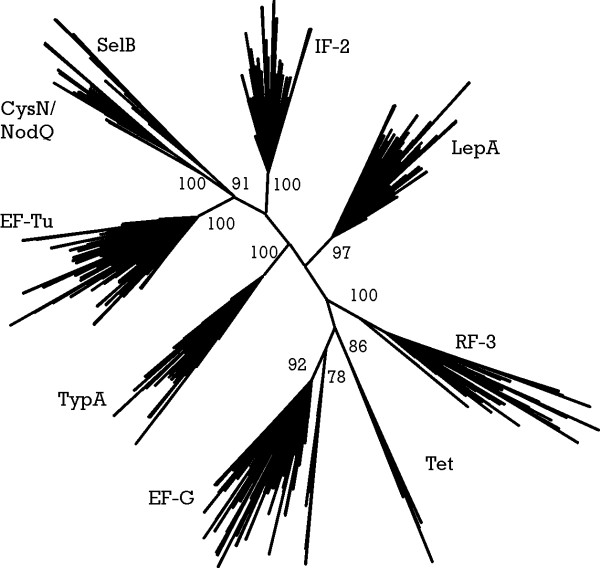
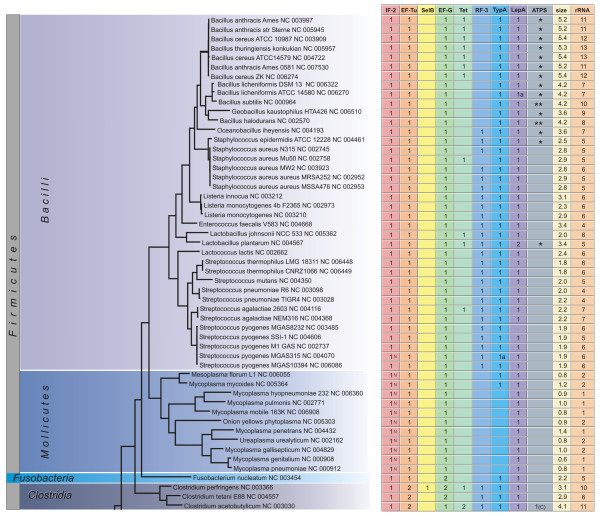
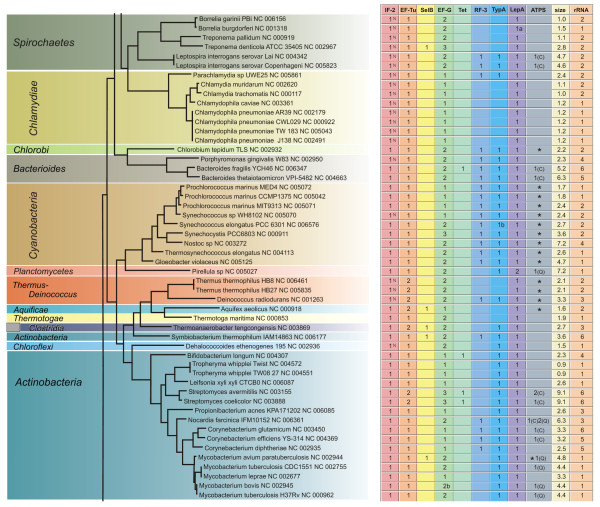
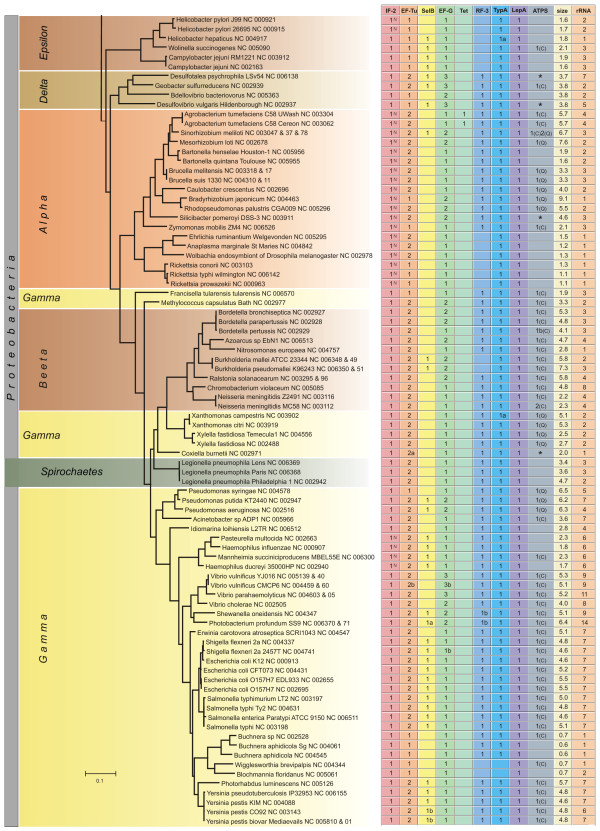
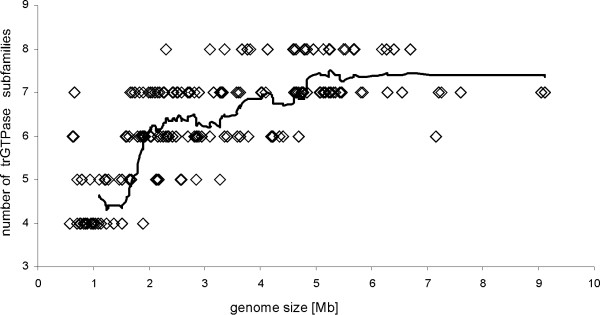
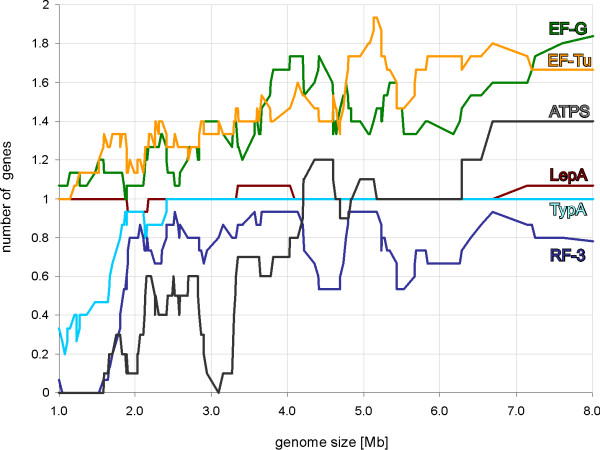
Background: Translational GTPases are a family of proteins in which GTPase activity is stimulated by the large ribosomal subunit. Conserved sequence features allow members of this family to be identified. Results: To achieve accurate protein identification and grouping we have developed a method combining searches with Hidden Markov Model profiles and tree based grouping. We found all the genes for translational GTPases in 191 fully sequenced bacterial genomes. The protein sequences were grouped into nine subfamilies. Analysis of the results shows that three translational GTPases, the translation factors EF-Tu, EF-G and IF2, are present in all organisms examined. In addition, several copies of the genes encoding EF-Tu and EF-G are present in some genomes. In the case of multiple genes for EF-Tu, the gene copies are nearly identical; in the case of multiple EF-G genes, the gene copies have been considerably diverged. The fourth translational GTPase, LepA, the function of which is currently unknown, is also nearly universally conserved in bacteria, being absent from only one organism out of the 191 analyzed. The translation regulator, TypA, is also present in most of the organisms examined, being absent only from bacteria with small genomes. Surprisingly, some of the well studied translational GTPases are present only in a very small number of bacteria. The translation termination factor RF3 is absent from many groups of bacteria with both small and large genomes. The specialized translation factor for selenocysteine incorporation – SelB – was found in only 39 organisms. Similarly, the tetracycline resistance proteins (Tet) are present only in a small number of species. Proteins of the CysN/NodQ subfamily have acquired functions in sulfur metabolism and production of signaling molecules. The genes coding for CysN/NodQ proteins were found in 74 genomes. This protein subfamily is not confined to Proteobacteria, as suggested previously but present also in many other groups of bacteria. Conclusion: Four of the translational GTPase subfamilies (IF2, EF-Tu, EF-G and LepA) are represented by at least one member in each bacterium studied, with one exception in LepA. This defines the set of translational GTPases essential for basic cell functions.
Overview
The claims and statistics of this paper haven’t been checked yet.
Run the check — free, no account needed. It reads the open-access text and checks the sources it cites.
Integrity signals
Registry
Cites
Statistics
Figures
Verification
Claims the paper makes
The claims and statistics of this paper haven’t been checked yet.
Run the check — free, no account needed. It reads the open-access text and checks the sources it cites.
Claims other papers make about this one
Each is checked against this paper’s own text: does it say what the citing paper says it does?
In the citing paper
“Tetracycline resistance protein Tet(O), which protects the bacterial ribosome from binding the antibiotic tetracycline, is a translational GTPase with significant similarity in both sequence and structure to the elongation factor EF-G.”
From Mechanism of tetracycline resistance by ribosomal protection protein Tet(O) (2013) · cites this paper as [6]
In the citing paper
“Several of these proteins–the best-known being Tet(M) and Tet(O) – are paralogs of the translational GTPase EF-G 6 and actively remove Tc from the ribosome in a GTP-hydrolysis-dependent fashion 7,8.”
From Mechanism of tetracycline resistance by ribosomal protection protein Tet(O) (2013) · cites this paper as [6]
Self-check
Percentages, sums and reported differences re-computed from the paper’s own numbers.
The self-check needs the paper’s full text.
Citations
Cites
1 retracted
A dedicated translation factor controls the synthesis of the global regulator Fis
Owens, R. M., Pritchard, G., Skipp, P. J. S., Hodey, M., Connell, S. R., Nierhaus, K. H., & O’Connor, C. D. (2004) · The EMBO Journal · doi:10.1038/sj.emboj.7600343 · Cited by 51
RetractedGapped BLAST and PSI-BLAST: a new generation of protein database search programs
Altschul, S. (1997) · Nucleic Acids Research · doi:10.1093/nar/25.17.3389 · Cited by 73,302
Thompson, J. D., Higgins, D. G., & Gibson, T. J. (1994) · Nucleic Acids Research · doi:10.1093/nar/22.22.4673 · Cited by 64,617
PHYLIP-Phylogeny inference package (Version 3.2)
Felsenstein, J. (1989) · Cladistics · Cited by 17,682
The Pfam Protein Families Database
Bateman, A. G. (2002) · Nucleic Acids Research · doi:10.1093/nar/30.1.276 · Cited by 14,075
MEGA3: Integrated software for Molecular Evolutionary Genetics Analysis and sequence alignment
Kumar, S. (2004) · Briefings in Bioinformatics · doi:10.1093/bib/5.2.150 · Cited by 11,674
EMBOSS: the European molecular biology open software suite.
Rice, P., Longden, I., & Bleasby, A. (2000) · Trends in Genetics · doi:10.1016/s0168-9525(00)02024-2 · Cited by 9,466
Eddy, S. R. (1998) · Bioinformatics · doi:10.1093/bioinformatics/14.9.755 · Cited by 5,515
Chopra, I., & Roberts, M. (2001) · Microbiology and Molecular Biology Reviews · doi:10.1128/mmbr.65.2.232-260.2001 · Cited by 4,517
Pruitt, K. D., Tatusova, T. A., & Maglott, D. R. (2006) · Nucleic Acids Research · doi:10.1093/nar/gkl842 · Cited by 4,441
The GTPase superfamily: conserved structure and molecular mechanism
Bourne, H. R., Sanders, D. A., & McCormick, F. (1991) · Nature · doi:10.1038/349117a0 · Cited by 3,392
Artemis: sequence visualization and annotation
Rutherford, K. M., Parkhill, J., Crook, J., Horsnell, T., Rice, P., Rajandream, M., & Barrell, B. (2000) · Bioinform. · doi:10.1093/bioinformatics/16.10.944 · Cited by 3,295
Pruitt, K., Tatusova, T., & Maglott, D. (2004) · Nucleic Acids Res. · doi:10.1093/nar/gki025 · Cited by 3,248
The Pfam protein families database
Bateman, A. (2004) · Nucleic Acids Research · doi:10.1093/nar/gkh121 · Cited by 3,127
TREE-PUZZLE: maximum likelihood phylogenetic analysis using quartets and parallel computing
Schmidt, H. A., Strimmer, K., Vingron, M., & von Haeseler, A. (2002) · Bioinformatics · doi:10.1093/bioinformatics/18.3.502 · Cited by 2,512
The GTPase superfamily: a conserved switch for diverse cell functions
Bourne, H. R., Sanders, D. A. R., & McCormick, F. P. (1990) · Nature · doi:10.1038/348125a0 · Cited by 2,336
The Ribosomal Database Project (RDP-II): sequences and tools for high-throughput rRNA analysis
Cole, J. R. (2004) · Nucleic Acids Research · doi:10.1093/nar/gki038 · Cited by 1,478
Classification and evolution of P-loop GTPases and related ATPases
Leipe, D. D., Wolf, Y. I., Koonin, E. V., & Aravind, L. (2002) · Journal of Molecular Biology · doi:10.1006/jmbi.2001.5378 · Cited by 1,148
fastDNAml: a tool for construction of phylogenetic trees of DNA sequences using maximum likelihood
Olsen, G. J., Matsuda, H., Hagstrom, R., & Overbeek, R. (1994) · Computer applications in the biosciences · doi:10.1093/bioinformatics/10.1.41 · Cited by 1,108
Update on acquired tetracycline resistance genes
Roberts, M. C. (2005) · FEMS Microbiology Letters · doi:10.1016/j.femsle.2005.02.034 · Cited by 1,010
Ribosome Structure and the Mechanism of Translation
Ramakrishnan, V. (2002) · Cell · doi:10.1016/s0092-8674(02)00619-0 · Cited by 970
Selenocysteine: the 21st amino acid
Böck, A., Forchhammer, K., Heider, J., Leinfelder, W., Sawers, R. G., Veprek, B., & Zinoni, F. (1991) · Molecular Microbiology · doi:10.1111/j.1365-2958.1991.tb00722.x · Cited by 686
Initiation of Protein Synthesis in Bacteria
Laursen, B. S., Sørensen, H. P., Mortensen, K. K., & Petersen, H. U. (2005) · Microbiology and Molecular Biology Reviews · doi:10.1128/mmbr.69.1.101-123.2005 · Cited by 621
Divergence and Redundancy of 16S rRNA Sequences in Genomes with Multiple rrn Operons
Acinas, S. G., Marcelino, L. A., Klepac‐Ceraj, V., & Polz, M. F. (2004) · Journal of Bacteriology · doi:10.1128/jb.186.9.2629-2635.2004 · Cited by 604
STRUCTURAL INSIGHTS INTO TRANSLATIONAL FIDELITY
Ogle, J. M., & Ramakrishnan, V. (2005) · Annual Review of Biochemistry · doi:10.1146/annurev.biochem.74.061903.155440 · Cited by 596
The role of guanosine 5′-triphosphate in polypeptide chain elongation
Kaziro, Y. (1978) · Biochimica et Biophysica Acta (BBA) - Reviews on Bioenergetics · doi:10.1016/0304-4173(78)90009-5 · Cited by 557
Initiation of mRNA translation in prokaryotes
Gualerzi, C. O., & Pon, C. L. (1990) · Biochemistry · doi:10.1021/bi00477a001 · Cited by 502
Ribosomal Protection Proteins and Their Mechanism ofTetracyclineResistance
Connell, S. R., Tracz, D. M., Nierhaus, K. H., & Taylor, D. E. (2003) · Antimicrobial Agents and Chemotherapy · doi:10.1128/aac.47.12.3675-3681.2003 · Cited by 449
Diaconu, M., Kothe, U., Schlünzen, F., Fischer, N., Harms, J., Tonevitsky, A., Stark, H., Rodnina, M. V., & Wahl, M. C. (2005) · Cell · doi:10.1016/j.cell.2005.04.015 · Cited by 425
Evidence for Biased Gene Conversion in Concerted Evolution of Ribosomal DNA
Hillis, D. M., Moritz, C. C., Porter, C. A., & Baker, R. J. (1991) · Science · doi:10.1126/science.1987647 · Cited by 368
The structure of the Escherichia coli EF-Tu· EF-Ts complex at 2.5 Å resolution
Kawashima, T., Berthet-Colominas, C., Wulff, M., Cusack, S., & LEBERMAN, R. (1996) · Nature · doi:10.1038/379511a0 · Cited by 290
A tripeptide ‘anticodon’ deciphers stop codons in messenger RNA
Ito, K., Uno, M., & Nakamura, Y. (2000) · Nature · doi:10.1038/35001115 · Cited by 284
The Cryo-EM Structure of a Translation Initiation Complex from Escherichia coli
Allen, G. S., Zavialov, A. V., Gursky, R. P., Ehrenberg, M., & Frank, J. (2005) · Cell · doi:10.1016/j.cell.2005.03.023 · Cited by 283
Freistroffer, D. V., Pavlov, M. Y., MacDougall, J., Buckingham, R. H., & Ehrenberg, M. (1997) · The EMBO Journal · doi:10.1093/emboj/16.13.4126 · Cited by 278
Zinoni, F., Heider, J., & Böck, A. (1990) · Proceedings of the National Academy of Sciences · doi:10.1073/pnas.87.12.4660 · Cited by 268
Cell size and nucleoid organization of engineered Escherichia coli cells with a reduced genome
Hashimoto, M., Ichimura, T., Mizoguchi, H., Tanaka, K., Fujimitsu, K., Keyamura, K., Ote, T., Yamakawa, T., Yamazaki, Y., Mori, H., et al. (2004) · Molecular Microbiology · doi:10.1111/j.1365-2958.2004.04386.x · Cited by 260
Petry, S., Brodersen, D. E., Murphy, F. V., Dunham, C. M., Selmer, M., Tarry, M. J., Kelley, A. C., & Ramakrishnan, V. (2005) · Cell · doi:10.1016/j.cell.2005.09.039 · Cited by 246
Kredich, N. M. (2008) · EcoSal Plus · doi:10.1128/ecosalplus.3.6.1.11 · Cited by 244
Proofreading of the codon-anticodon interaction on ribosomes.
Thompson, R. C., & Stone, P. J. (1977) · Proceedings of the National Academy of Sciences · doi:10.1073/pnas.74.1.198 · Cited by 214
Zavialov, A. V., Buckingham, R. H., & Ehrenberg, M. (2001) · Cell · doi:10.1016/s0092-8674(01)00508-6 · Cited by 207
Is there proofreading during polypeptide synthesis?
Ruusala, T., Ehrenberg, M., & Kurland, C. G. (1982) · The EMBO Journal · doi:10.1002/j.1460-2075.1982.tb01240.x · Cited by 206
The Highly Conserved LepA Is a Ribosomal Elongation Factor that Back-Translocates the Ribosome
Qin, Y., Polacek, N., Vesper, O., Staub, E., Einfeldt, E., Wilson, D. N., & Nierhaus, K. H. (2006) · Cell · doi:10.1016/j.cell.2006.09.037 · Cited by 205
Godefroy-Colburn, T., Wolfe, A. D., DONDON, J., GRUNBERG‐MANAGO, M., Dessen, P., & Pantaloni, D. (1975) · Journal of Molecular Biology · doi:10.1016/0022-2836(75)90215-6 · Cited by 194
Sequence of Steps in Ribosome Recycling as Defined by Kinetic Analysis
Peske, F., Rodnina, M. V., & Wintermeyer, W. (2005) · Molecular Cell · doi:10.1016/j.molcel.2005.04.009 · Cited by 176
Liao, D. (2000) · Journal of Molecular Evolution · doi:10.1007/s002390010093 · Cited by 168
Recognition and selection of tRNA in translation
Rodnina, M. V., Gromadski, K. B., Kothe, U., & Wieden, H. (2004) · FEBS Letters · doi:10.1016/j.febslet.2004.11.048 · Cited by 159
A member of a family of sulfate-activating enzymes causes murine brachymorphism
Kurima, K., Warman, M. L., Krishnan, S., Domowicz, M. S., Krueger, R. C., Deyrup, A. T., & Schwartz, N. B. (1998) · Proceedings of the National Academy of Sciences · doi:10.1073/pnas.95.15.8681 · Cited by 156
Evolution of a molecular switch: universal bacterial GTPases regulate ribosome function
Caldon, C. E., Yoong, P., & March, P. E. (2001) · Molecular Microbiology · doi:10.1046/j.1365-2958.2001.02536.x · Cited by 155
Wout, P. K., Pu, K., Sullivan, S. M., REESE, V., Zhou, S., Lin, B., & Maddock, J. R. (2004) · Journal of Bacteriology · doi:10.1128/jb.186.16.5249-5257.2004 · Cited by 151
Cross-linking in the Living Cell Locates the Site of Action of Oxazolidinone Antibiotics
Colca, J. R., McDonald, W. G., Waldon, D. J., Thomasco, L. M., Gadwood, R. C., Lund, E. T., Cavey, G. S., Mathews, W. R., Adams, L. D., Cecil, E. T., et al. (2003) · Journal of Biological Chemistry · doi:10.1074/jbc.m302109200 · Cited by 148
Splitting of the Posttermination Ribosome into Subunits by the Concerted Action of RRF and EF-G
Zavialov, A. V., Hauryliuk, V., & Ehrenberg, M. (2005) · Molecular Cell · doi:10.1016/j.molcel.2005.05.016 · Cited by 146
ATP sulphurylase activity of the nodP and nodQ gene products of Rhizobium meliloti
Schwedock, J., & Long, S. R. (1990) · Nature · doi:10.1038/348644a0 · Cited by 146
Selenocysteine inserting tRNAs: an overview
Commans, S., & Böck, A. (1999) · FEMS Microbiology Reviews · doi:10.1111/j.1574-6976.1999.tb00403.x · Cited by 144
Identification of the prfC gene, which encodes peptide-chain-release factor 3 of Escherichia coli.
Mikuni, O., Ito, K., MOFFAT, J. B., Matsumura, K., McCaughan, K. K., Nobukuni, T., Tate, W. P., & Nakamura, Y. (1994) · Proceedings of the National Academy of Sciences · doi:10.1073/pnas.91.13.5798 · Cited by 132
Mechanism of Tet(O)‐mediated tetracycline resistance
Connell, S. R., Trieber, C. A., Dinos, G. P., Einfeldt, E., Taylor, D. E., & Nierhaus, K. H. (2003) · The EMBO Journal · doi:10.1093/emboj/cdg093 · Cited by 127
The hybrid state of tRNA binding is an authentic translation elongation intermediate
Dorner, S., Brunelle, J. L., Sharma, D., & Green, R. (2006) · Nature Structural & Molecular Biology · doi:10.1038/nsmb1060 · Cited by 123
Shin, B., Maag, D., Roll-Mecak, A., Arefin, M. S., Burley, S., Lorsch, J., & Dever, T. (2002) · Cell · doi:10.1016/s0092-8674(02)01171-6 · Cited by 123
Localization and characterization of the gene encoding release factor RF3 in Escherichia coli.
Grentzmann, G., Bréchemier‐Baey, D., Heurgué‐Hamard, V., Mora, L., & Buckingham, R. H. (1994) · Proceedings of the National Academy of Sciences · doi:10.1073/pnas.91.13.5848 · Cited by 122
Function of the universally conserved bacterial GTPases
Caldon, C. E., & March, P. E. (2003) · Current Opinion in Microbiology · doi:10.1016/s1369-5274(03)00037-7 · Cited by 121
Leibundgut, M., Frick, C., Thanbichler, M. R., Böck, A., & Ban, N. (2004) · The EMBO Journal · doi:10.1038/sj.emboj.7600505 · Cited by 121
Crystal structure of the EF-Tu˙EF-Ts complex from Thermus thermophilus
Wang, Y., Jiang, Y., Meyering-Voss, M., Sprinzl, M., & Sigler, P. B. (1997) · Nature Structural Biology · doi:10.1038/nsb0897-650 · Cited by 119
Scoredist: A simple and robust protein sequence distance estimator
Sonnhammer, E. L. L., & Hollich, V. (2005) · BMC Bioinformatics · doi:10.1186/1471-2105-6-108 · Cited by 118
Post‐termination complex disassembly by ribosome recycling factor, a functional tRNA mimic
Hirokawa, G., Kiel, M. C., Muto, A., Selmer, M., Raj, V. S., Liljas, A., Igarashi, K., Kaji, H., & Kaji, A. (2002) · The EMBO Journal · doi:10.1093/emboj/21.9.2272 · Cited by 117
Ribosome formation from subunits studied by stopped-flow and rayleigh light scattering
Antoun, A., Pavlov, M. Y., Tenson, T., & Ehrenberg, M. (2004) · Biological Procedures Online · doi:10.1251/bpo71 · Cited by 114
Self-citationThe roles of initiation factor 2 and guanosine triphosphate in initiation of protein synthesis
Antoun, A., Pavlov, M. Y., Andersson, K. M., Tenson, T., & Ehrenberg, M. (2003) · The EMBO Journal · doi:10.1093/emboj/cdg525 · Cited by 114
Self-citationGrant, A. J., Farris, M., Alefounder, P., Williams, P. H., Woodward, M. J., & O'Connor, C. D. (2003) · Molecular Microbiology · doi:10.1046/j.1365-2958.2003.t01-1-03447.x · Cited by 111
Katunin, V. I., Savelsbergh, A., Rodnina, M. V., & Wintermeyer, W. (2002) · Biochemistry · doi:10.1021/bi0264871 · Cited by 110
Control of phosphate release from elongation factor G by ribosomal protein L7/12
Savelsbergh, A., Mohr, D., Kothe, U., Wintermeyer, W., & Rodnina, M. V. (2005) · The EMBO Journal · doi:10.1038/sj.emboj.7600884 · Cited by 110
Kyrpides, N. C., & Woese, C. R. (1998) · Proceedings of the National Academy of Sciences · doi:10.1073/pnas.95.7.3726 · Cited by 104
Lee, J. H., Choi, S. K., Roll‐Mecak, A., Burley, S. K., & Dever, T. E. (1999) · Proceedings of the National Academy of Sciences · doi:10.1073/pnas.96.8.4342 · Cited by 101
Evolution of selenium utilization traits
Romero, H., Zhang, Y., Gladyshev, V. N., & Salinas, G. (2005) · Genome biology · doi:10.1186/gb-2005-6-8-r66 · Cited by 100
Cameron, D. M., Thompson, J., March, P. E., & Dahlberg, A. E. (2002) · Journal of Molecular Biology · doi:10.1016/s0022-2836(02)00235-8 · Cited by 99
Farris, M., Grant, A. J., Richardson, T. B., & O’Connor, C. D. (1998) · Molecular Microbiology · doi:10.1046/j.1365-2958.1998.00793.x · Cited by 98
Studies of the Interaction of Escherichia coli YjeQ with the Ribosome In Vitro
Daigle, D. M., & Brown, E. D. (2004) · Journal of Bacteriology · doi:10.1128/jb.186.5.1381-1387.2004 · Cited by 97
A novel GTPase activated by the small subunit of ribosome
Himeno, H. (2004) · Nucleic Acids Research · doi:10.1093/nar/gkh861 · Cited by 97
Homologous Recombination between thetufGenes ofSalmonella typhimurium
Abdulkarim, F., & Hughes, D. (1996) · Journal of Molecular Biology · doi:10.1006/jmbi.1996.0418 · Cited by 95
Schwedock, J., & Long, S. R. (1992) · Genetics · doi:10.1093/genetics/132.4.899 · Cited by 89
Elongation factors on the ribosome
Nilsson, J., & Nissen, P. (2005) · Current Opinion in Structural Biology · doi:10.1016/j.sbi.2005.05.004 · Cited by 89
Howe, J. G., & Hershey, J. W. B. (1983) · Journal of Biological Chemistry · doi:10.1016/s0021-9258(18)33081-3 · Cited by 87
Gurvich, O. L., Baranov, P. V., Zhou, J., Hammer, A. W., Gesteland, R. F., & Atkins, J. F. (2003) · The EMBO Journal · doi:10.1093/emboj/cdg561 · Cited by 87
Rowe, S., Hodson, N. W., Griffiths, G., & Roberts, I. S. (2000) · Journal of Bacteriology · doi:10.1128/jb.182.10.2741-2745.2000 · Cited by 84
Butler, J. S., Springer, M., & GRUNBERG‐MANAGO, M. (1987) · Proceedings of the National Academy of Sciences · doi:10.1073/pnas.84.12.4022 · Cited by 83
Spahn, C. M. T., Blaha, G., Agrawal, R. K., Penczek, P., Grassucci, R. A., Trieber, C. A., Connell, S. R., Taylor, D. E., Nierhaus, K. H., & Frank, J. (2001) · Molecular Cell · doi:10.1016/s1097-2765(01)00238-6 · Cited by 81
Structural basis for mRNA recognition by elongation factor SelB
Yoshizawa, S., Rasubala, L., Ose, T., Kohda, D., Fourmy, D., & Maenaka, K. (2005) · Nature Structural & Molecular Biology · doi:10.1038/nsmb890 · Cited by 81
March, P. E., & Inouye, M. (1985) · Proceedings of the National Academy of Sciences · doi:10.1073/pnas.82.22.7500 · Cited by 79
Evolution of the Eukaryotic Translation Termination System: Origins of Release Factors
Inagaki, Y., & Doolittle, W. F. (2000) · Molecular Biology and Evolution · doi:10.1093/oxfordjournals.molbev.a026368 · Cited by 77
Kiss, E., Huguet, T., Poinsot, V., & Batut, J. (2004) · Molecular Plant-Microbe Interactions · doi:10.1094/mpmi.2004.17.3.235 · Cited by 72
Zavialov, A. V., Hauryliuk, V., & Ehrenberg, M. (2005) · Journal of Biology · doi:10.1186/jbiol24 · Cited by 70
BipA is required for growth of Escherichia coli K12 at low temperature
Pfennig, P. L., & Flower, A. (2001) · Molecular Genetics and Genomics · doi:10.1007/s004380100559 · Cited by 67
Ribosomal localization of translation initiation factor IF2
Marzi, S., KNIGHT, W., Brandi, L., Caserta, E., Soboleva, N. G., Hill, W. E., Gualerzi, C. O., & Lodmell, J. S. (2003) · RNA · doi:10.1261/rna.2116303 · Cited by 66
Rosenthal, E., & Leustek, T. (1995) · Gene · doi:10.1016/0378-1119(95)00450-k · Cited by 59
Binns, N., & Masters, M. (2002) · Molecular Microbiology · doi:10.1046/j.1365-2958.2002.02945.x · Cited by 57
Sacerdot, C., Vachon, G., Laalami, S., MOREL‐DEVILLE, F., Cenatiempo, Y., & GRUNBERG‐MANAGO, M. (1992) · Journal of Molecular Biology · doi:10.1016/0022-2836(92)91026-l · Cited by 49
lep operon proximal gene is not required for growth or secretion by Escherichia coli
Dibb, N. J., & Wolfe, P. B. (1986) · Journal of Bacteriology · doi:10.1128/jb.166.1.83-87.1986 · Cited by 49
Molecular Basis for G Protein Control of the Prokaryotic ATP Sulfurylase
Mougous, J. D., Lee, D. H., Hubbard, S. C., Schelle, M. W., Vocadlo, D. J., Berger, J. M., & Bertozzi, C. R. (2006) · Molecular Cell · doi:10.1016/j.molcel.2005.10.034 · Cited by 48
Adenosine 5′-Phosphosulfate Kinase from Penicillium chrysogenum
MacRae, I. J., Rose, A. B., & Segel, I. H. (1998) · Journal of Biological Chemistry · doi:10.1074/jbc.273.44.28583 · Cited by 42
Vijgenboom, E., & Bosch, L. (1989) · Journal of Biological Chemistry · doi:10.1016/s0021-9258(18)51588-x · Cited by 41
Co-evolution of the tuf genes links gene conversion with the generation of chromosomal inversions
Hughes, D. (2000) · Journal of Molecular Biology · doi:10.1006/jmbi.2000.3587 · Cited by 39
Pandit, S. B., & Srinivasan, N. (2003) · Proteins Structure Function and Bioinformatics · doi:10.1002/prot.10420 · Cited by 37
A Conserved Structural Motif at the N Terminus of Bacterial Translation Initiation Factor IF2
Laursen, B. S., Mortensen, K. K., Petersen, H. U., & Hoffman, D. W. (2003) · Journal of Biological Chemistry · doi:10.1074/jbc.m212960200 · Cited by 36
Владимирович, С. П., Bogdanov, A. A., & Dontsova, O. А. (2005) · FEBS Letters · doi:10.1016/j.febslet.2005.09.010 · Cited by 35
Guanine nucleotides stabilize the binding of Bacillus subtilis Obg to ribosomes
Zhang, S., & Haldenwang, W. G. (2004) · Biochemical and Biophysical Research Communications · doi:10.1016/j.bbrc.2004.07.154 · Cited by 33
TheVibrio harveyiGTPase CgtAVIs Essential and Is Associated with the 50S Ribosomal Subunit
Sikora, A. E., Zielke, R. A., Datta, K., & Maddock, J. R. (2006) · Journal of Bacteriology · doi:10.1128/jb.188.3.1205-1210.2006 · Cited by 33
Fujiwara, T., Ito, K., Yamami, T., & Nakamura, Y. (2004) · Molecular Microbiology · doi:10.1111/j.1365-2958.2004.04156.x · Cited by 31
Nyengaard, N. R., Mortensen, K. K., Lassen, S. F., Hershey, J. W. B., & Petersen, H. U. (1991) · Biochemical and Biophysical Research Communications · doi:10.1016/0006-291x(91)92118-4 · Cited by 28
Mechanism of Elongation Factor G Function in tRNA Translocation on the RibosomePreprint
Wintermeyer, W., Savelsbergh, A., Semenkov, Y. P., Katunin, V. I., & Rodnina, M. V. (2001) · Cold Spring Harbor Symposia on Quantitative Biology · doi:10.1101/sqb.2001.66.449 · Cited by 27
Lateral Transfer of an EF-1α Gene
Inagaki, Y., Doolittle, W. F., Baldauf, S. L., & Roger, A. J. (2002) · Current Biology · doi:10.1016/s0960-9822(02)00816-3 · Cited by 25
Laursen, B. S., Steffensen, S., Hedegaard, J., Moreno, J. M. P., Mortensen, K. K., & Petersen, H. U. (2002) · Genes to Cells · doi:10.1046/j.1365-2443.2002.00571.x · Cited by 25
Hüttenhofer, A. (1996) · Nucleic Acids Research · doi:10.1093/nar/24.20.3903 · Cited by 23
On the Origin of Protein Synthesis Factors: A Gene Duplication/Fusion Model
Cousineau, B., Leclerc, F., & Cedergren, R. (1997) · Journal of Molecular Evolution · doi:10.1007/pl00006270 · Cited by 15
Hubert, M., Nyengaard, N. R., Shazand, K., Mortensen, K. K., Lassen, S. F., GRUNBERG‐MANAGO, M., & Petersen, H. U. (1992) · FEBS Letters · doi:10.1016/0014-5793(92)80920-c · Cited by 13
Arwidsson, O., & Hughes, D. (2004) · Journal of Molecular Biology · doi:10.1016/j.jmb.2004.03.002 · Cited by 12
Genomic investigation of the system for selenocysteine incorporation in the bacterial domain
Matsugi, J., & Murao, K. (2003) · Biochimica et Biophysica Acta (BBA) - Gene Structure and Expression · doi:10.1016/j.bbaexp.2003.10.003 · Cited by 3
Evolution of tuf genes: ancient duplication, differential loss and gene conversion.
金栗, 聡., & Peer Bork, B. (2001) · PubMed · doi:10.1016/s0014-5793(01)02639-4
Research works printed but not linked: 1
- Garrity GM Bell, J. A., Lilburn, T. G.: Taxonomic Outline of the Procaryotes. Bergey's Manual of Systematic Bacteriology, Second Edition. 2004, Springer-Verlag, 5:
Cited by
Sorted by citations
Stiffening hydrogels to probe short- and long-term cellular responses to dynamic mechanics
Guvendiren, M., & Burdick, J. A. (2012) · Nature Communications · doi:10.1038/ncomms1792 · Cited by 707
Structure-Function Relationships of the G Domain, a Canonical Switch Motif
Wittinghofer, A., & Vetter, I. R. (2011) · Annual Review of Biochemistry · doi:10.1146/annurev-biochem-062708-134043 · Cited by 470
The Mechanism for Activation of GTP Hydrolysis on the Ribosome
Voorhees, R. M., Schmeing, T. M., Kelley, A. C., & Ramakrishnan, V. (2010) · Science · doi:10.1126/science.1194460 · Cited by 366
The bacterial translation stress response.
Starosta, A. L., Lassak, J., Jung, K., & Wilson, D. N. (2014) · FEMS Microbiology Reviews · doi:10.1111/1574-6976.12083 · Cited by 210
Barret, M., Morrissey, J. P., & O’Gara, F. (2011) · Biology and Fertility of Soils · doi:10.1007/s00374-011-0605-x · Cited by 212
Metadata
- Authors
- Margus, T., Remm, M., & Tenson, T.
- Affiliations
- University of Tartu (EE)
- Corresponding author
- Tenson, Tanel
- Venue
- BMC Genomics
- Published
- 2007-01-10
- Volume
- 8
- Issue
- 1
- Pages
- 15-15
- ISSN
- 1471-2164 (ISSN-L)
- PMC
- PMC1780047
- OpenAlex
- W1939105798
- Cited by
- 115
- References
- 114
- Citations by year
- 2026: 1 · 2025: 5 · 2024: 2 · 2023: 3 · 2022: 5 · 2021: 14 · 2020: 8 · 2019: 1 · 2018: 5 · 2017: 7 · 2016: 11 · 2015: 8 · 2014: 6 · 2013: 8 · 2012: 4
- FWCI
- 2.51
- Type
- journal article
- Language
- en
- Open access
- gold
- doi.org
- Licence
- Locations
- BMC Genomics (publishedVersion, cc-by)
- PubMed Central (publishedVersion, cc-by)
- PubMed (publishedVersion)
- DOAJ (DOAJ: Directory of Open Access Journals) (submittedVersion)
- Funders
- Wellcome Trust (070210)
- Eesti Teadusfondi
- Topics
- Life Sciences › Biochemistry, Genetics and Molecular Biology › Molecular Biology › RNA and protein synthesis mechanisms
- Life Sciences › Biochemistry, Genetics and Molecular Biology › Molecular Biology › Genomics and Phylogenetic Studies
- Life Sciences › Biochemistry, Genetics and Molecular Biology › Genetics › Bacterial Genetics and Biotechnology
- Keywords
- translational GTPases, bacterial phylogeny, elongation factor Tu, elongation factor G, initiation factor 2, Lepas, Rf3, Selb, selenocysteine incorporation, essential genes, gene family evolution
- MeSH terms
- Amino Acid Sequence, Bacteria, Base Sequence, DNA, Bacterial, Markov Chains, Molecular Sequence Data, Phylogeny, Sequence Homology, Nucleic Acid, Protein Biosynthesis, Genome, Bacterial, GTP Phosphohydrolases
About these checks
Registry, retraction, Cites and statistics results are computed, not judged, with one exception: a printed reference that no index lists is read once by a model before it counts as a citation error. Claims are extracted by a model and kept only when their quote appears verbatim in the text; each cited source is then checked, with a model’s help, for whether it says what the claim relies on. Those verdicts can be wrong — read the claim’s quote and the cited source before relying on one.
Statistics and arithmetic are recomputed, not judged.
Confidence bands are shown only for fields calibrated on our annotated test set. None is calibrated yet, so no band is shown.
What counts as a claim ›How we measure confidence ›How we check this ›
Are you an author, or do you see a problem with this page? Request a review
