

Sequence divergence of Mus spretus and Mus musculus across a skin cancer susceptibility locus
Open accessThe DOI matches its Crossref record; 41 of the 43 references it cites were found in a registry or an index.
Abstract
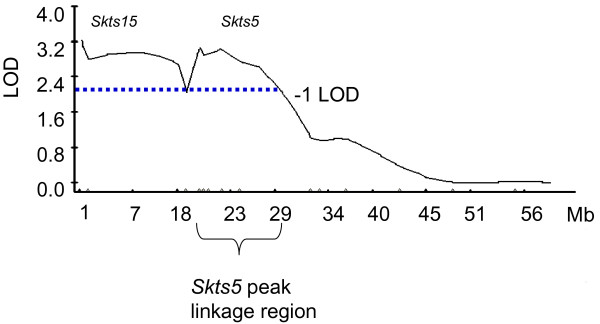
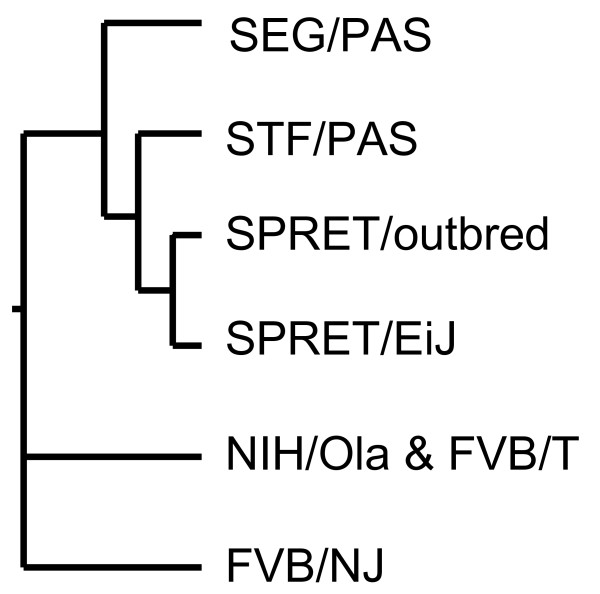
Background: Mus spretus diverged from Mus musculus over one million years ago. These mice are genetically and phenotypically divergent. Despite the value of utilizing M. musculus and M. spretus for quantitative trait locus (QTL) mapping, relatively little genomic information on M. spretus exists, and most of the available sequence and polymorphic data is for one strain of M. spretus, Spret/Ei. In previous work, we mapped fifteen loci for skin cancer susceptibility using four different M. spretus by M. musculus F1 backcrosses. One locus, skin tumor susceptibility 5 (Skts5) on chromosome 12, shows strong linkage in one cross. Results: To identify potential candidate genes for Skts5, we sequenced 65 named and unnamed genes and coding elements mapping to the peak linkage area in outbred spretus, Spret/EiJ, FVB/NJ, and NIH/Ola. We identified polymorphisms in 62 of 65 genes including 122 amino acid substitutions. To look for polymorphisms consistent with the linkage data, we sequenced exons with amino acid polymorphisms in two additional M. spretus strains and one additional M. musculus strain generating 40.1 kb of sequence data. Eight candidate variants were identified that fit with the linkage data. To determine the degree of variation across M. spretus, we conducted phylogenetic analyses. The relatedness of the M. spretus strains at this locus is consistent with the proximity of region of ascertainment of the ancestral mice. Conclusion: Our analyses suggest that, if Skts5 on chromosome 12 is representative of other regions in the genome, then published genomic data for Spret/EiJ are likely to be of high utility for genomic studies in other M. spretus strains.
Overview
The claims and statistics of this paper haven’t been checked yet.
Free: it reads the open-access text and checks the first 5 claims that cite a source we can check. Create a free account to check every claim.
Integrity signals
Registry
Cites
Statistics
Figures
Verification
Claims the paper makes
The claims and statistics of this paper haven’t been checked yet.
Free: it reads the open-access text and checks the first 5 claims that cite a source we can check. Create a free account to check every claim.
Claims other papers make about this one
Each is checked against this paper’s own text: does it say what the citing paper says it does?
The check wasn’t confident either way, so it gives no verdict — never disputed.
In the citing paper
“Figure 1C shows the cumulative size of these non-reference regions per chromosome, which varies between 1.26 Kbp per 1 Mbp in chromosome 16 of C57BL/6NJ and 175.82 Kbp per 1 Mbp of chromosome X in SPRET/EiJ.20”
From High-quality mouse reference genomes reveal the structural complexity of the murine protein-coding landscape (2026) · cites this paper as [20]
Experimental — accuracy not yet measured
Self-check
Percentages, sums and reported differences re-computed from the paper’s own numbers.
The self-check needs the paper’s full text.
Citations
Cites
The Consensus Coding Sequences of Human Breast and Colorectal Cancers
Sjöblom, T., Jones, S., Wood, L. D., Parsons, D. W., Lin, J., Barber, T. D., Mandelker, D., Leary, R. J., Ptak, J., Silliman, N., et al. (2006) · Science · doi:10.1126/science.1133427 · Cited by 3,169 · cited 1×
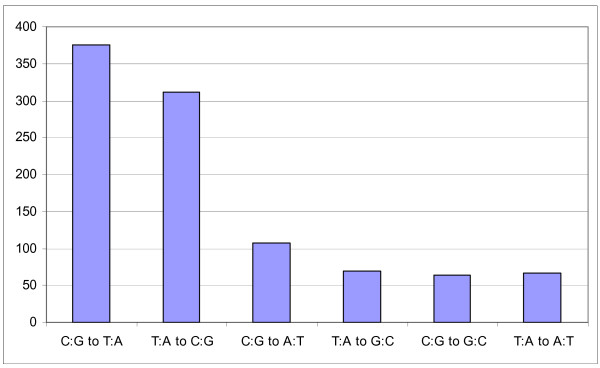
“Given that C to T (G to A) transitions are a common mutation type due to the CpG methylation deamination process; these data are consistent with other large sequence comparisons[25,26].”
ResultWang, S., Basten, C., & Zeng, Z. (2011) · Cited by 2,039
Antisense Transcription in the Mammalian Transcriptome
Katayama, S., Tomaru, Y., Kasukawa, T., Waki, K., Nakanishi, M., Nakamura, M., Nishida, H., Yap, C. C., Suzuki, M., Kawai, J., et al. (2005) · Science · doi:10.1126/science.1112009 · Cited by 1,661
Simplified mammalian DNA isolation procedure
Laird, P. W., Zijderveld, A., Linders, K., Rudnicki, M. A., Jaenisch, R., & Berns, A. (1991) · Nucleic Acids Research · doi:10.1093/nar/19.15.4293 · Cited by 1,494 · cited 1×
“Ola and FVB/NT mice using standard methods [40].”
MethodGenetic variants and strains of the laboratory mouse
(1990) · Choice Reviews Online · doi:10.5860/choice.28-1324 · Cited by 1,483
Prediction of deleterious human alleles
Sunyaev, S. (2001) · Human Molecular Genetics · doi:10.1093/hmg/10.6.591 · Cited by 1,044 · cited 1×
“Because synonomous changes are less likely to affect protein function, these were not evaluated further in the other strains of mice used in the linkage crosses [22-24].”
BackgroundHearing silence: non-neutral evolution at synonymous sites in mammals
Chamary, J. V., Parmley, J. L., & Hurst, L. D. (2006) · Nature Reviews Genetics · doi:10.1038/nrg1770 · Cited by 831 · cited 1×
“Because synonomous changes are less likely to affect protein function, these were not evaluated further in the other strains of mice used in the linkage crosses [22-24].”
BackgroundAccounting for Human Polymorphisms Predicted to Affect Protein Function
Ng, P. C., & Henikoff, S. (2002) · Genome Research · doi:10.1101/gr.212802 · Cited by 699 · cited 1×
“musculus gene at Skts5 [29].”
Benzo[ a ]pyrene carcinogenicity is lost in mice lacking the aryl hydrocarbon receptor
Shimizu, Y., Nakatsuru, Y., Ichinose, M., Takahashi, Y., Kume, H., Mimura, J., Fujii-Kuriyama, Y., & Ishikawa, T. (2000) · Proceedings of the National Academy of Sciences · doi:10.1073/pnas.97.2.779 · Cited by 633 · cited 1×
“Ahr (aryl hydrocarbon receptor) mediates the toxicity of dioxin compounds, particularly polycylic aromatic hydrocarbons [32].”
BackgroundGenetic variants and strains of the Laboratory mouse
(1996) · doi:10.1093/oso/9780198548690.001.0001 · Cited by 503
Chasman, D., & Adams, R. M. (2001) · Journal of Molecular Biology · doi:10.1006/jmbi.2001.4510 · Cited by 394 · cited 1×
“Because synonomous changes are less likely to affect protein function, these were not evaluated further in the other strains of mice used in the linkage crosses [22-24].”
BackgroundWild mice: an ever-increasing contribution to a popular mammalian model
Guénet, J.-L., & Bonhomme, F. (2003) · Trends in Genetics · doi:10.1016/s0168-9525(02)00007-0 · Cited by 321
Ewart-Toland, A., Briassouli, P., de Koning, J. P., Mao, J.-H., Yuan, J., Chan, F., MacCarthy-Morrogh, L., Ponder, B. A. J., Nagase, H., Burn, J., et al. (2003) · Nature Genetics · doi:10.1038/ng1220 · Cited by 320
Self-citationZhang, Z. (2003) · Nucleic Acids Research · doi:10.1093/nar/gkg745 · Cited by 267 · cited 1×
“Given that C to T (G to A) transitions are a common mutation type due to the CpG methylation deamination process; these data are consistent with other large sequence comparisons[25,26].”
ResultSHE, J. X., BONHOMME, F., BOURSOT, P., THALER, L., & CATZEFLIS, F. (1990) · Biological Journal of the Linnean Society · doi:10.1111/j.1095-8312.1990.tb00823.x · Cited by 186
Suzuki, H., Shimada, T., Terashima, M., Tsuchiya, K., & Aplin, K. (2004) · Molecular Phylogenetics and Evolution · doi:10.1016/j.ympev.2004.08.003 · Cited by 160 · cited 1×
“spretus diverged from Mus musculus one to three million years ago[3,4].”
BackgroundSNPdetector: A Software Tool for Sensitive and Accurate SNP Detection
Zhang, J., Wheeler, D. A., Yakub, I., Wei, S., Sood, R., Rowe, W., Liu, P. P., Gibbs, R. A., & Buetow, K. H. (2005) · PLoS Computational Biology · doi:10.1371/journal.pcbi.0010053 · Cited by 126 · cited 1×
“Recent data suggest that these mice are reported to have an average of one sequence variant every 50 bp [5].”
Distinct genetic loci control development of benign and malignant skin tumours in mice
Nagase, H., Bryson, S., Cordell, H. J., Kemp, C. J., Fee, F., & Balmain, A. (1995) · Nature Genetics · doi:10.1038/ng0895-424 · Cited by 126
Self-citationOKEY, A., FRANC, M., MOFFAT, I., TIJET, N., BOUTROS, P., KORKALAINEN, M., TUOMISTO, J., & POHJANVIRTA, R. (2005) · Toxicology and Applied Pharmacology · doi:10.1016/j.taap.2004.12.028 · Cited by 122 · cited 1×
“Some variants within Ahr have been associated with differences in chemical toxicity in mouse and man [33-35] and in modest effects on cancer risk in humans [36,37].”
BackgroundConnor, K. T., & Aylward, L. L. (2006) · Journal of Toxicology and Environmental Health, Part B · doi:10.1080/15287390500196487 · Cited by 111 · cited 1×
“Some variants within Ahr have been associated with differences in chemical toxicity in mouse and man [33-35] and in modest effects on cancer risk in humans [36,37].”
BackgroundZhu, Y., Spitz, M. R., Amos, C. I., Lin, J., Schabath, M. B., & Wu, X. (2004) · Cancer Research · doi:10.1158/0008-5472.can-03-2800 · Cited by 106 · cited 2×
“In addition to sequence alignments, we assessed amino acid polymorphisms for potential functionality through a sequence homology-based tool Sorting Intolerant From Tolerant (SIFT)[28].”
BackgroundMethodPrager, E. M., Tichy, H., & Sage, R. D. (1996) · Genetics · doi:10.1093/genetics/143.1.427 · Cited by 87
A subset of skin tumor modifier loci determines survival time of tumor-bearing mice
Nagase, H., Mao, J., & Balmain, A. (1999) · Proceedings of the National Academy of Sciences · doi:10.1073/pnas.96.26.15032 · Cited by 75 · cited 2×
“musculus strains and have been utilized for mapping of cancer susceptibility loci [11-16].”
BackgroundMethodSelf-citationA functional switch from lung cancer resistance to susceptibility at the Pas1 locus in Kras2LA2 mice
To, M. D., Pérez‐Losada, J., Mao, J., Hsu, J., Jacks, T., & Balmain, A. (2006) · Nature Genetics · doi:10.1038/ng1836 · Cited by 72 · cited 1×
“musculus strains and have been utilized for mapping of cancer susceptibility loci [11-16].”
MethodSelf-citationLong, J., Egan, K. M., Dunning, L., Shu, X., Cai, Q., Cai, H., Dai, Q., Holtzman, J. L., Gao, Y.-T., & Zheng, W. (2006) · Pharmacogenetics and Genomics · doi:10.1097/01.fpc.0000189803.34339.ed · Cited by 66 · cited 1×
“Some variants within Ahr have been associated with differences in chemical toxicity in mouse and man [33-35] and in modest effects on cancer risk in humans [36,37].”
BackgroundGouyon, B., Melanitou, E., Richard, M. F., Requarth, M., Hahn, I. H., Jl, G., Démenais, F., Julier, C., Lathrop, M. G., & Boîtard, C. (1993) · Proceedings of the National Academy of Sciences · doi:10.1073/pnas.90.5.1877 · Cited by 63
Nagase, H., Mao, J., de Koning, J. P., Minami, T., & Balmain, A. (2001) · PubMed · Cited by 60
Self-citationAryl hydrocarbon receptor gene polymorphisms affect lung cancer risk
Kim, J. H., Kim, H., Lee, K. Y., Kang, J., Lee, K.-H., Park, S., Yoon, H.-I., Jheon, S. H., Sung, S. W., & Hong, Y. (2006) · Lung Cancer · doi:10.1016/j.lungcan.2006.11.010 · Cited by 58 · cited 1×
“Some variants within Ahr have been associated with differences in chemical toxicity in mouse and man [33-35] and in modest effects on cancer risk in humans [36,37].”
BackgroundSantos, J., Montagutelli, X., Acevedo‐Arozena, A., López, P., Vaquero, C., Fernández, M., Arnau, M. R., Szatanik, M., SALIDO, E. C., Guénet, J., et al. (2002) · Oncogene · doi:10.1038/sj.onc.1205846 · Cited by 49
Liu, G. E., Matukumalli, L. K., Sonstegard, T. S., Shade, L. L., & Van Tassell, C. P. (2006) · BMC Genomics · doi:10.1186/1471-2164-7-140 · Cited by 41
Genetic variants of Tgfb1 act as context-dependent modifiers of mouse skin tumor susceptibility
Mao, J.-H., Saunier, E. F., de Koning, J. P., McKinnon, M. M., Higgins, M. N., Nicklas, K., Yang, H.-T., Balmain, A., & Akhurst, R. J. (2006) · Proceedings of the National Academy of Sciences · doi:10.1073/pnas.0602581103 · Cited by 41 · cited 2×
“We performed additional crosses between skin tumor resistant mice (Spret/EiJ, STF/PAS) and skin tumor susceptible mice (NIH/Ola, FVB/NT) to further test this locus for linkage [13,20,21].”
BackgroundSelf-citationAbnet, C. C., Fagundes, R. B., Strickland, P. T., Kamangar, F., Roth, M. J., Taylor, P. R., & Dawsey, S. M. (2006) · Carcinogenesis · doi:10.1093/carcin/bgl131 · Cited by 38
Staelens, J., Wielockx, B., Puimège, L., Roy, F. M. V., Guénet, J., & Libert, C. (2002) · Proceedings of the National Academy of Sciences · doi:10.1073/pnas.142293699 · Cited by 34 · cited 1×
“spretus mice have been valuable for the identification of loci contributing to differences in immune response and inflammation [8-10].”
BackgroundGenetic analysis of the innate immune responses in wild‐derived inbred strains of mice
Stephan, K., Smirnova, I., Jacque, B., & Poltorak, A. (2006) · European Journal of Immunology · doi:10.1002/eji.200636156 · Cited by 27 · cited 1×
“spretus mice have been valuable for the identification of loci contributing to differences in immune response and inflammation [8-10].”
BackgroundGene flow of unique sequences between Mus musculus domesticus and Mus spretus
Greene-Till, R., Zhao, Y., & Hardies, S. C. (2000) · Mammalian Genome · doi:10.1007/s003350010041 · Cited by 26
Villa‐Morales, M., Santos, J., & Fernández‐Piqueras, J. (2005) · Oncogene · doi:10.1038/sj.onc.1209234 · Cited by 25 · cited 1×
“spretus strains exist, and most have been generally limited to one gene or small genomic region [17-19].”
BackgroundHochepied, T., Schoonjans, L., Staelens, J., Kreemers, V., Danloy, S., Puimège, L., Collen, D., Roy, F. M. V., & Libert, C. (2004) · Stem Cells · doi:10.1634/stemcells.22-4-441 · Cited by 16
Park, Y., Lukes, L., Yang, H. H., Debies, M. T., Samant, R. S., Welch, D. R., Lee, M. Y., & Hunter, K. W. (2002) · Mammalian Genome · doi:10.1007/s00335-001-2151-6 · Cited by 15 · cited 1×
“Previous studies have reported different phylogenetic trees when comparing sequence samples from across the genome (global comparison) with gene-specific phylogenetic trees (local comparison)[39].”
BackgroundFunctional nonsynonymous single nucleotide polymorphisms from the TGF-β protein interaction network
Savas, S., Taylor, I. W., Wrana, J. L., & Özçelik, H. (2006) · Physiological Genomics · doi:10.1152/physiolgenomics.00226.2006 · Cited by 12
Benelli, R., Peissel, B., Manenti, G., Gariboldi, M., Vanzetto, C., Albini, A., & Dragani, T. A. (2003) · Oncogene · doi:10.1038/sj.onc.1207088 · Cited by 12 · cited 1×
“musculus strains and have been utilized for mapping of cancer susceptibility loci [11-16].”
MethodResponse of TNF-hyporesponsive SPRET/Ei mice in models of inflammatory disorders
Staelens, J., Puimège, L., Mahieu, T., PYNAERT, G. N., Hochepied, T., Vandenabeele, A., Grooten, J., Kontoyiannis, D. L., Roy, F. M. V., Kollias, G. A., et al. (2004) · Mammalian Genome · doi:10.1007/s00335-004-3002-z · Cited by 7 · cited 1×
“spretus mice have been valuable for the identification of loci contributing to differences in immune response and inflammation [8-10].”
Background
Cited by
Multi-stage chemical carcinogenesis in mouse skin: Fundamentals and applications
Abel, E. L., Angel, J. M., Kiguchi, K., & DiGiovanni, J. (2009) · Nature Protocols · doi:10.1038/nprot.2009.120 · Cited by 563
Thirty years of Mus spretus: a promising future
Dejager, L., Libert, C., & Montagutelli, X. (2009) · Trends in Genetics · doi:10.1016/j.tig.2009.03.007 · Cited by 83
The Impact of 3′UTR Variants on Differential Expression of Candidate Cancer Susceptibility Genes
Skeeles, L. E., Fleming, J. L., Mahler, K. L., & Toland, A. E. (2013) · PLoS ONE · doi:10.1371/journal.pone.0058609 · Cited by 62
“Sequence analyses of 54 genes and coding elements across a 14-Mb peak linkage region at Skts5 led to the identification of a number of coding changes consistent with the linkage analyses (Mahler et al. 2008).”
InfluentialSelf-citationChiu, H. K., Qian, K., Ogimoto, K., Morton, G. J., Wisse, B. E., Agrawal, N., McDonald, T. O., Schwartz, M. W., & Dichek, H. L. (2010) · Endocrinology · doi:10.1210/en.2009-1100 · Cited by 49
García-Sevillano, M. Á., García‐Barrera, T., Abril, N., Pueyo, C., López‐Barea, J., & Gómez‐Ariza, J. L. (2014) · Journal of Proteomics · doi:10.1016/j.jprot.2014.02.032 · Cited by 37
Metadata
- Authors
- Mahler, K. L., Fleming, J. L., Dworkin, A. M., Gladman, N., Cho, H.-Y., Mao, J.-H., Balmain, A., & Toland, A. E.
- Affiliations
- The Ohio State University Comprehensive Cancer Center – Arthur G. James Cancer Hospital and Richard J. Solove Research Institute (US)
- The Ohio State University (US)
- University of California, San Francisco (US)
- Corresponding author
- Toland, Amanda Ewart
- ORCID
- Venue
- BMC Genomics
- Published
- 2008-12
- Volume
- 9
- Issue
- 1
- Pages
- 626-626
- ISSN
- 1471-2164 (ISSN-L)
- PMC
- PMC2628916
- OpenAlex
- W2172154788
- Semantic Scholar
- 120fe0c19ec143cb8e7448ad738edb787ca40225
- Cited by
- 18
- References
- 43
- Citations by year
- 2026: 1 · 2025: 1 · 2021: 1 · 2019: 1 · 2018: 2 · 2017: 1 · 2016: 1 · 2015: 2 · 2014: 1 · 2013: 2
- FWCI
- 0.95
- Type
- journal article
- Language
- en
- Open access
- gold
- doi.org
- Licence
- cc-by
- Locations
- BMC Genomics (publishedVersion, cc-by)
- PubMed Central (publishedVersion, cc-by)
- PubMed (publishedVersion)
- DOAJ (DOAJ: Directory of Open Access Journals) (submittedVersion)
- eScholarship (California Digital Library) (submittedVersion)
- The Knowledge Bank (The Ohio State University) (submittedVersion, cc-by)
- Funders
- American Cancer Society (RSG-07-083-01-MGO)
- Concern Foundation
- Ohio State University
- National Institutes of Health
- National Cancer Institute
- Topics
- Life Sciences › Biochemistry, Genetics and Molecular Biology › Genetics › Genetic Mapping and Diversity in Plants and Animals
- Life Sciences › Biochemistry, Genetics and Molecular Biology › Genetics › Genetic Associations and Epidemiology
- Life Sciences › Biochemistry, Genetics and Molecular Biology › Genetics › Genetic and phenotypic traits in livestock
- Keywords
- Mus spretus, Mus musculus, skin cancer predisposition, chromosome 12, amino acid polymorphism, candidate genes, linkage mapping, phylogenetic analysis, sequence divergence, candidate variants
- MeSH terms
- Animals, Chromosome Mapping, Genotype, Genetic Linkage, Phylogeny, Polymorphism, Genetic, Skin Neoplasms, Species Specificity, Sequence Alignment, Sequence Analysis, DNA, Evolution, Molecular, Amino Acid Substitution, Genetic Predisposition to Disease, Mice
About these checks
Registry, retraction, Cites and statistics results are computed, not judged, with one exception: a printed reference that no index lists is read once by a model before it counts as a citation error. Claims are extracted by a model and kept only when their quote appears verbatim in the text; each cited source is then checked, with a model’s help, for whether it says what the claim relies on. Those verdicts can be wrong — read the claim’s quote and the cited source before relying on one.
Statistics and arithmetic are recomputed, not judged.
Confidence bands are shown only for fields calibrated on our annotated test set. None is calibrated yet, so no band is shown.
What counts as a claim ›How we measure confidence ›How we check this ›
Are you an author, or do you see a problem with this page? Request a review
Data sources
Bibliographic data: Semantic Scholar, OpenAlex, Crossref.
Contains information from the Semantic Scholar Academic Graph Datasets, made available under the ODC Attribution License (ODC-BY 1.0).
Semantic Scholar’s data is described in: Kinney, R., et al. (2023). The Semantic Scholar Open Data Platform. arXiv:2301.10140.
