

The DOI matches its Crossref record; 50 of the 50 references it cites were found in a registry or an index.
Characterization of murine macrophages from bone marrow, spleen and peritoneum
Open accessAbstract
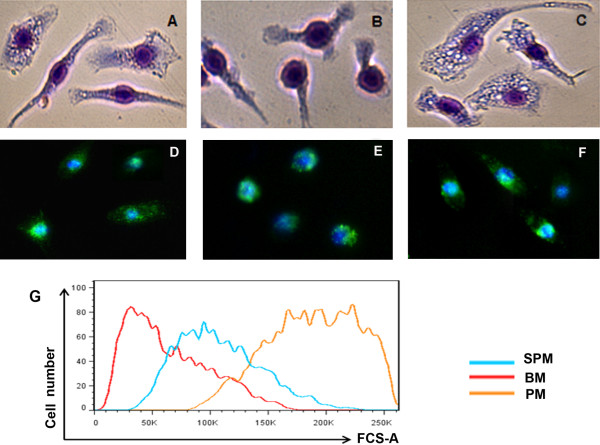
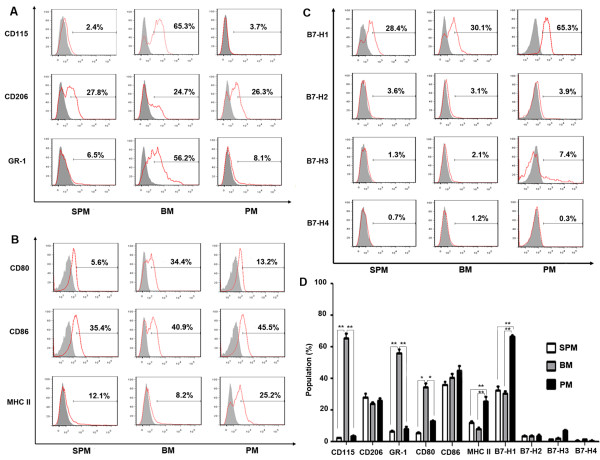
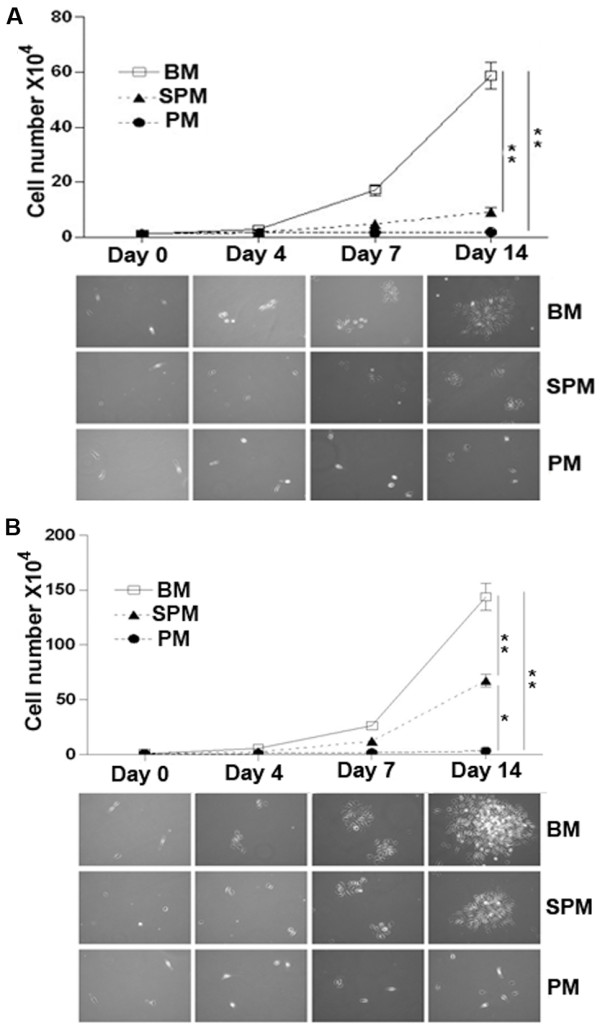
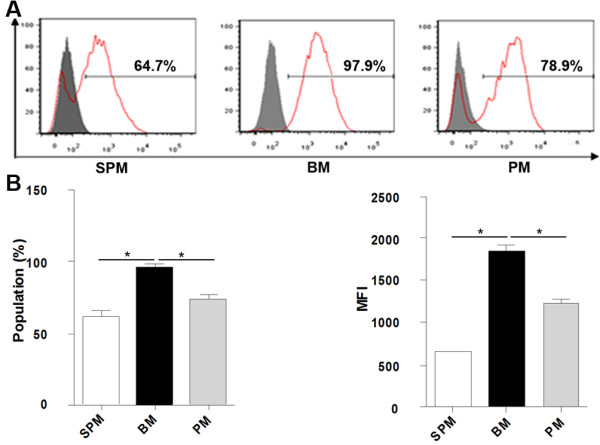
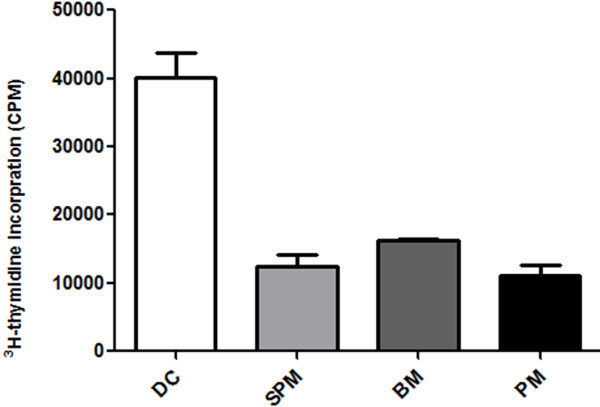
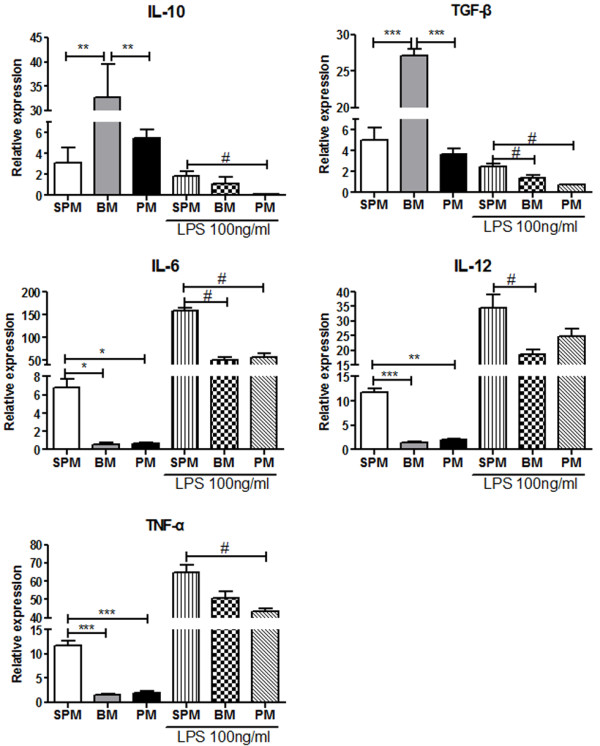
BACKGROUND: Macrophages have heterogeneous phenotypes and complex functions within both innate and adaptive immune responses. To date, most experimental studies have been performed on macrophages derived from bone marrow, spleen and peritoneum. However, differences among macrophages from these particular sources remain unclear. In this study, the features of murine macrophages from bone marrow, spleen and peritoneum were compared. RESULTS: We found that peritoneal macrophages (PMs) appear to be more mature than bone marrow derived macrophages (BMs) and splenic macrophages (SPMs) based on their morphology and surface molecular characteristics. BMs showed the strongest capacity for both proliferation and phagocytosis among the three populations of macrophage. Under resting conditions, SPMs maintained high levels of pro-inflammatory cytokines expression (IL-6, IL-12 and TNF-α), whereas BMs produced high levels of suppressive cytokines (IL-10 and TGF-β). However, SPMs activated with LPS not only maintained higher levels of (IL-6, IL-12 and TNF-α) than BMs or PMs, but also maintained higher levels of IL-10 and TGF-β. CONCLUSIONS: Our results show that BMs, SPMs and PMs are distinct populations with different biological functions, providing clues to guide their further experimental or therapeutic use.
Overview
The claims and statistics of this paper haven’t been checked yet.
Run the check — free, no account needed. It reads the open-access text and checks the sources it cites.
Integrity signals
Registry
Cites
Statistics
Figures
Verification
Claims the paper makes
The claims and statistics of this paper haven’t been checked yet.
Run the check — free, no account needed. It reads the open-access text and checks the sources it cites.
Claims other papers make about this one
Each is checked against this paper’s own text: does it say what the citing paper says it does?
The source backs part of the claim, not all of it — or backs it for a different population, condition or comparison.
In the citing paper
“This population was selected over bone-marrow derived macrophages as peritoneal macrophages differentiate within the tissue, which allows them to mold to their environment and experience hormonal changes throughout the animal’s lifespan [29, 31, 32].”
From Alzheimer’s disease-associated protective variant Plcg2-P522R modulates peripheral macrophage function in a sex-dimorphic manner (2024) · cites this paper as [32]
Experimental — accuracy not yet measured
Self-check
Percentages, sums and reported differences re-computed from the paper’s own numbers.
The self-check needs the paper’s full text.
Citations
Cites
Development of Monocytes, Macrophages, and Dendritic Cells
Geissmann, F., Manz, M. G., Jung, S., Sieweke, M. H., Merad, M., & Ley, K. (2010) · Science · doi:10.1126/science.1178331 · Cited by 3,049
Arnold, L., Henry, A., Poron, F., Baba-Amer, Y., van Rooijen, N., Plonquet, A., Gherardi, R. K., & Chazaud, B. (2007) · The Journal of Experimental Medicine · doi:10.1084/jem.20070075 · Cited by 2,002
Isaacson, P. G., Doǧan, A., Price, S. K., & Spencer, J. (1989) · The American Journal of Surgical Pathology · doi:10.1097/00000478-198912000-00004 · Cited by 1,913
F4/80, a monoclonal antibody directed specifically against the mouse macrophage
Austyn, J. M., & Gordon, S. (1981) · European Journal of Immunology · doi:10.1002/eji.1830111013 · Cited by 1,596
Huang, B., Pan, P.-Y., Li, Q., Sato, A. I., Levy, D. E., Bromberg, J., Divino, C. M., & Chen, S.-H. (2006) · Cancer Research · doi:10.1158/0008-5472.can-05-1299 · Cited by 1,435
Mac‐1: a macrophage differentiation antigen identified by monoclonal antibody
Springer, T. A., Galfré, G., Secher, D. S., & Milstein, C. (1979) · European Journal of Immunology · doi:10.1002/eji.1830090410 · Cited by 1,108
Bone Marrow-Derived Macrophages (BMM): Isolation and ApplicationsPreprint
Weischenfeldt, J., & Porse, B. T. (2008) · Cold Spring Harbor Protocols · doi:10.1101/pdb.prot5080 · Cited by 959
Brown, B. N., Ratner, B. D., Goodman, S. B., Amar, S., & Badylak, S. F. (2012) · Biomaterials · doi:10.1016/j.biomaterials.2012.02.034 · Cited by 926 · cited 1×
“Following great technical improvements in the in vitro generation of macrophages, they are now considered as candidates for cell therapy [17,30-32].”
BackgroundSasmono, R. T., Oceandy, D., Pollard, J. W., Tong, W., Pavli, P., Wainwright, B. J., Ostrowski, M. C., Himes, S. R., & Hume, D. A. (2003) · Blood · doi:10.1182/blood-2002-02-0569 · Cited by 662
The macrophage: Past, present and future
Gordon, S. (2007) · European Journal of Immunology · doi:10.1002/eji.200737638 · Cited by 640
Ruffell, D., Mourkioti, F., Gambardella, A., Kirstetter, P., Lopez, R. G., Rosenthal, N., & Nerlov, C. (2009) · Proceedings of the National Academy of Sciences · doi:10.1073/pnas.0908641106 · Cited by 626
Zhou, X., Nicoletti, A., Elhage, R., & Hansson, G. K. (2000) · Circulation · doi:10.1161/01.cir.102.24.2919 · Cited by 559
The mononuclear phagocyte system revisited
Hume, D. A., Ross, I. L., Himes, S. R., Sasmono, R. T., Wells, C. A., & Ravasi, T. (2002) · Journal of Leukocyte Biology · doi:10.1189/jlb.72.4.621 · Cited by 423
Hume, D. A., Robinson, A. P., MacPherson, G. G., & Gordon, S. (1983) · The Journal of Experimental Medicine · doi:10.1084/jem.158.5.1522 · Cited by 390
Marim, F. M., Silveira, T. N., Lima-Junior, D. S., & Zamboni, D. S. (2010) · PLoS ONE · doi:10.1371/journal.pone.0015263 · Cited by 351
A novel phenotype for an activated macrophage: the type 2 activated macrophage
Anderson, C. F., & Mosser, D. M. (2002) · Journal of Leukocyte Biology · doi:10.1189/jlb.72.1.101 · Cited by 347
Regulation of human cytolytic lymphocyte responses by interleukin-12
Gately, M. K., Wolitzky, A. G., Quinn, P. M., & Chizzonite, R. (1992) · Cellular Immunology · doi:10.1016/0008-8749(92)90011-d · Cited by 321
The macrophage capacity for phagocytosis
Cannon, G. J., & Swanson, J. A. (1992) · Journal of Cell Science · doi:10.1242/jcs.101.4.907 · Cited by 289
The role of the macrophage in immune regulation
Gordon, S. (1998) · Research in Immunology · doi:10.1016/s0923-2494(99)80039-x · Cited by 252
Wang, Y., & Harris, D. C. H. (2011) · Journal of the American Society of Nephrology · doi:10.1681/asn.2010030269 · Cited by 248
Self-citationThe Renal Mononuclear Phagocytic System
Nelson, P. J., Rees, A. J., Griffin, M. D., Hughes, J., Kurts, C., & Duffield, J. S. (2011) · Journal of the American Society of Nephrology · doi:10.1681/asn.2011070680 · Cited by 242
MILLARD, A. L., MERTES, P. M., ITTELET, D., VILLARD, F., JEANNESSON, P., & BERNARD, J. (2002) · Clinical and Experimental Immunology · doi:10.1046/j.0009-9104.2002.01977.x · Cited by 220
Surface Phenotype Analysis of Human Monocyte to Macrophage Maturation
Andreesen, R., Brugger, W., Scheibenbogen, C., Kreutz, M. P., Leser, H.-G., Rehm, A., & Löhr, G. W. (1990) · Journal of Leukocyte Biology · doi:10.1002/jlb.47.6.490 · Cited by 206
Warren, M. K., & Vogel, S. N. (1985) · The Journal of Immunology · doi:10.4049/jimmunol.134.2.982 · Cited by 179
Kraal, G., Rep, M. H. G., & Janse, M. (1987) · Scandinavian Journal of Immunology · doi:10.1111/j.1365-3083.1987.tb02301.x · Cited by 165
Hume, D., & Gordon, S. (1985) · Springer eBooks · doi:10.1007/978-94-009-5020-7_2 · Cited by 147
The immunogenic capacity of antigen taken up by peritoneal exudate cells.
Mitchison, N. A. (1969) · PubMed Central · Cited by 144
Genetic control of the innate immune response
Wells, C. A., Ravasi, T., Faulkner, G. J., Carninci, P., Okazaki, Y., Hayashizaki, Y., Sweet, M. J., Wainwright, B. J., & Hume, D. A. (2003) · BMC Immunology · doi:10.1186/1471-2172-4-5 · Cited by 138
Baek, Y.-S., Haas, S. A., Hackstein, H., Bein, G., Hernandez-Santana, M., Lehrach, H., Sauer, S., & Seitz, H. (2009) · BMC Immunology · doi:10.1186/1471-2172-10-18 · Cited by 130
THE RELATIVE REACTION WITHIN LIVING MAMMALIAN-TISSUES
Rous, P. (1925) · The Journal of Experimental Medicine · doi:10.1084/jem.41.3.399 · Cited by 97
Petroff, M. G., Kharatyan, E., Torry, D. S., & Holets, L. M. (2005) · American Journal Of Pathology · doi:10.1016/s0002-9440(10)62990-2 · Cited by 86
Xu, W., Schlagwein, N., Roos, A., van den Berg, T. K., Daha, M. R., & van Kooten, C. (2007) · European Journal of Immunology · doi:10.1002/eji.200737042 · Cited by 85
Transfused Macrophages Ameliorate Pancreatic and Renal Injury in Murine Diabetes Mellitus
Zheng, D., Wang, Y., Cao, Q., Lee, V. W., Zheng, G., Sun, Y., Tan, T. K., Wang, Y., Alexander, S. I., & Harris, D. C. H. (2011) · Nephron Experimental Nephrology · doi:10.1159/000321034 · Cited by 82
Self-citationIL-25 Induces M2 Macrophages and Reduces Renal Injury in Proteinuric Kidney Disease
Cao, Q., Wang, C., Dong, Z., Wang, Y., Lee, V. W., Wang, Y. M., Zheng, G., Tan, T. K., Yu, D., Alexander, S. I., et al. (2011) · Journal of the American Society of Nephrology · doi:10.1681/asn.2010070693 · Cited by 82
Self-citationAntigen presentation and recognition in bacterial infections
Kaufmann, S. H. E., & Schaible, U. E. (2004) · Current Opinion in Immunology · doi:10.1016/j.coi.2004.12.004 · Cited by 80
By Homing to the Kidney, Activated Macrophages Potently Exacerbate Renal Injury
Wang, Y., Wang, Y., Cai, Q., Zheng, G., Lee, V. W., Dong, Z., Li, X., Tan, T. K., & Harris, D. C. H. (2008) · American Journal Of Pathology · doi:10.2353/ajpath.2008.070825 · Cited by 76
Self-citationLane, T. E., Wu‐Hsieh, B. A., & Howard, D. H. (1993) · Infection and Immunity · doi:10.1128/iai.61.4.1468-1473.1993 · Cited by 65
Liu, G., Xia, X., Gong, S., & Zhao, Y. X. (2006) · Journal of Cellular Physiology · doi:10.1002/jcp.20732 · Cited by 63
Self-citationAn efficient culture method for generating large quantities of mature mouse splenic macrophages
Alatery, A., & Basta, S. (2008) · Journal of Immunological Methods · doi:10.1016/j.jim.2008.07.009 · Cited by 60
A Critical Role of Activin A in Maturation of Mouse Peritoneal Macrophages in vitro and in vivo
Wang, Y., Cui, X., Tai, G., Ge, J., Li, N., Chen, F., Yu, F., & Liu, Z. (2009) · Cellular and Molecular Immunology · doi:10.1038/cmi.2009.50 · Cited by 40
Self-citationFresh mouse peritoneal macrophages have low scavenger receptor activity
Kim, J. G., Keshava, C., Murphy, A. A., Pitas, R. E., & Parthasarathy, S. (1997) · Journal of Lipid Research · doi:10.1016/s0022-2275(20)34934-8 · Cited by 38
Pathogen recognition or homeostasis? APC receptor functions in innate immunity
Gordon, S. (2004) · Comptes Rendus Biologies · doi:10.1016/j.crvi.2004.04.005 · Cited by 36
THE RELATIVE REACTION WITHIN LIVING MAMMALIAN TISSUES
Rous, P., & Beattie, W. W. (1926) · The Journal of Experimental Medicine · doi:10.1084/jem.44.6.835 · Cited by 33
Are dendritic cells end cells?
Shortman, K., & Wu, L. (2004) · Nature Immunology · doi:10.1038/ni1104-1105 · Cited by 22
Complement Component C3 Secretion by Mouse Macrophage-Like Cell Lines
Goodrum, K. J. (1987) · Journal of Leukocyte Biology · doi:10.1002/jlb.41.4.295 · Cited by 20
Zhu, Y., Yang, Y., Ono, S., Zhong, X., Feng, Y., Ren, Y., Ni, J., Fu, Y., Tang, W., & Zuo, J. (2006) · International Immunology · doi:10.1093/intimm/dxl034 · Cited by 15
Pathways of T Cell Activation and Terminal Differentiation in Chronic Inflammation
Isomäki, P., Clark, J., Panesar, M., & Cope, A. P. (2005) · Current Drug Targets - Inflammation & Allergy · doi:10.2174/1568010054022042 · Cited by 15
Regulation of Bone-Marrow Macrophage Proliferation
Hume, D. A., & Gordon, S. (1982) · Advances in experimental medicine and biology · doi:10.1007/978-1-4684-4394-3_26 · Cited by 7
Yang, X., Ye, R. G., Kong, Q. Y., Yang, Q., Gao, Y., Zhong, J., & Wang, T. (2000) · PubMed · Cited by 7
Galligioni, E., Favaro, D., Santarosa, M., Quaia, M., Spada, A., Freschi, A., & Alberti, D. (1995) · PubMed · Cited by 4
Research works printed but not linked: 1
- Cao Q, Zheng D, Sun Y, Wang Y, Lee VW, Zheng G, Alexander SI, Harris DC: Impaired alternative activated macrophages from bone marrow in treatment of CKD: Associations with their proliferation in inflamed kidney. Presented in abstract form at the annual meeting of the American Society of Nephrology; October 27 through November 1. 2009, CA: San Diego
Cited by
Sorted by citations
Gpr132 sensing of lactate mediates tumor–macrophage interplay to promote breast cancer metastasis
Chen, P., Zuo, H., Xiong, H., Kolar, M. J., Chu, Q., Saghatelian, A., Siegwart, D. J., & Wan, Y. (2017) · Proceedings of the National Academy of Sciences · doi:10.1073/pnas.1614035114 · Cited by 530
Qian, Y., Qiao, S., Dai, Y., Xu, G., Dai, B., Lu, L., Yu, X. M., Luo, Q., & Zhang, Z. (2017) · ACS Nano · doi:10.1021/acsnano.7b05465 · Cited by 339
Self-citationRevisiting Mouse Peritoneal Macrophages: Heterogeneity, Development, and Function
Cassado, A. D. A., D’Império Lima, M. R., & Bortoluci, K. R. (2015) · Frontiers in Immunology · doi:10.3389/fimmu.2015.00225 · Cited by 315
The origin, fate, and contribution of macrophages to spinal cord injury pathology
Milich, L. M., Ryan, C. B., & Lee, J. K. (2019) · Acta Neuropathologica · doi:10.1007/s00401-019-01992-3 · Cited by 290
Parayath, N. N., Parikh, A. B., & Amiji, M. M. (2018) · Nano Letters · doi:10.1021/acs.nanolett.8b00689 · Cited by 263
Metadata
- Authors
- Wang, C., Yu, X., Cao, Q., Wang, Y., Zheng, G., Tan, T. K., Zhao, H., Zhao, Y., Wang, Y., & Harris, D. C.
- Affiliations
- Westmead Hospital (AU)
- Shanxi Medical University (CN)
- Corresponding author
- Wang, Changqi
- Venue
- BMC Immunology
- Published
- 2013-02-05
- Volume
- 14
- Issue
- 1
- Pages
- 6-6
- ISSN
- 1471-2172 (ISSN-L)
- PMC
- PMC3574850
- OpenAlex
- W2171040124
- Cited by
- 225
- References
- 50
- Citations by year
- 2026: 5 · 2025: 14 · 2024: 18 · 2023: 16 · 2022: 12 · 2021: 13 · 2020: 32 · 2019: 22 · 2018: 25 · 2017: 27 · 2016: 17 · 2015: 17 · 2014: 7
- FWCI
- 7.56
- Type
- journal article
- Language
- en
- Open access
- gold
- doi.org
- Licence
- Locations
- BMC Immunology (publishedVersion, cc-by)
- Europe PMC (PubMed Central) (publishedVersion, cc-by)
- PubMed Central (publishedVersion, cc-by)
- PubMed (publishedVersion)
- DOAJ (DOAJ: Directory of Open Access Journals) (submittedVersion, cc-by-sa)
- Funders
- Medical Research Council
- National Health and Medical Research Council (457345)
- Topics
- Life Sciences › Immunology and Microbiology › Immunology › Immune cells in cancer
- Life Sciences › Immunology and Microbiology › Immunology › Phagocytosis and Immune Regulation
- Life Sciences › Immunology and Microbiology › Immunology › Immune Response and Inflammation
- Keywords
- macrophage heterogeneity, peritoneal macrophages, bone marrow-derived macrophages, splenic macrophages, macrophage maturation, phagocytosis, macrophage proliferation, inflammatory cytokines, IL-10, TGF-beta, lipopolysaccharide stimulation, murine macrophages
- MeSH terms
- Animals, Bone Marrow Cells, Cell Membrane, Cells, Cultured, Dextrans, Flow Cytometry, Gene Expression Regulation, Lymphocyte Activation, Macrophages, Male, Mice, Inbred BALB C, Phagocytosis, Phenotype, RNA, Messenger, Spleen, CD4-Positive T-Lymphocytes, Cytokines, Fluorescein-5-isothiocyanate, Macrophages, Peritoneal, Antigen Presentation, Cell Shape, Cell Proliferation, Mice
About these checks
Registry, retraction, Cites and statistics results are computed, not judged, with one exception: a printed reference that no index lists is read once by a model before it counts as a citation error. Claims are extracted by a model and kept only when their quote appears verbatim in the text; each cited source is then checked, with a model’s help, for whether it says what the claim relies on. Those verdicts can be wrong — read the claim’s quote and the cited source before relying on one.
Statistics and arithmetic are recomputed, not judged.
Confidence bands are shown only for fields calibrated on our annotated test set. None is calibrated yet, so no band is shown.
What counts as a claim ›How we measure confidence ›How we check this ›
Are you an author, or do you see a problem with this page? Request a review
