

Real-time PCR expression profiling of genes encoding potential virulence factors in Candida albicans biofilms: identification of model-dependent and -independent gene expression
Open accessThe DOI matches its Crossref record; 48 of the 48 references it cites were found in a registry or an index.
Abstract
Background: Candida albicans infections are often associated with biofilm formation. Previous work demonstrated that the expression of HWP1 (hyphal wall protein) and of genes belonging to the ALS (agglutinin-like sequence), SAP (secreted aspartyl protease), PLB (phospholipase B) and LIP (lipase) gene families is associated with biofilm growth on mucosal surfaces. We investigated using real-time PCR whether genes encoding potential virulence factors are also highly expressed in biofilms associated with abiotic surfaces. For this, C. albicans biofilms were grown on silicone in microtiter plates (MTP) or in the Centres for Disease Control (CDC) reactor, on polyurethane in an in vivo subcutaneous catheter rat (SCR) model, and on mucosal surfaces in the reconstituted human epithelium (RHE) model. Results: HWP1 and genes belonging to the ALS, SAP, PLB and LIP gene families were constitutively expressed in C. albicans biofilms. ALS1-5 were upregulated in all model systems, while ALS9 was mostly downregulated. ALS6 and HWP1 were overexpressed in all models except in the RHE and MTP, respectively. The expression levels of SAP1 were more pronounced in both in vitro models, while those of SAP2, SAP4 and SAP6 were higher in the in vivo model. Furthermore, SAP5 was highly upregulated in the in vivo and RHE models. For SAP9 and SAP10 similar gene expression levels were observed in all model systems. PLB genes were not considerably upregulated in biofilms, while LIP1-3, LIP5-7 and LIP9-10 were highly overexpressed in both in vitro models. Furthermore, an elevated lipase activity was detected in supernatans of biofilms grown in the MTP and RHE model. Conclusions: Our findings show that HWP1 and most of the genes belonging to the ALS, SAP and LIP gene families are upregulated in C. albicans biofilms. Comparison of the fold expression between the various model systems revealed similar expression levels for some genes, while for others model-dependent expression levels were observed. This suggests that data obtained in one biofilm model cannot be extrapolated to other model systems. Therefore, the need to use multiple model systems when studying the expression of genes encoding potential virulence factors in C. albicans biofilms is highlighted.
Overview
The claims and statistics of this paper haven’t been checked yet.
Free: it reads the open-access text and checks the first 5 claims that cite a source we can check. Create a free account to check every claim.
Integrity signals
Registry
Cites
Statistics
Figures
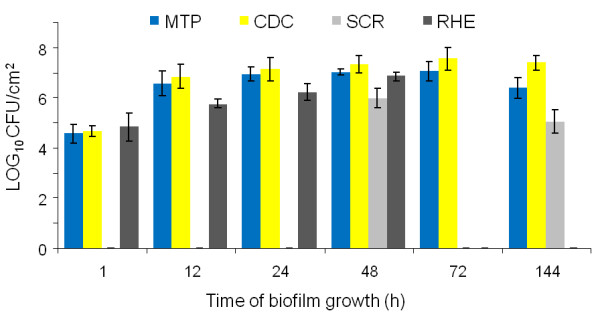
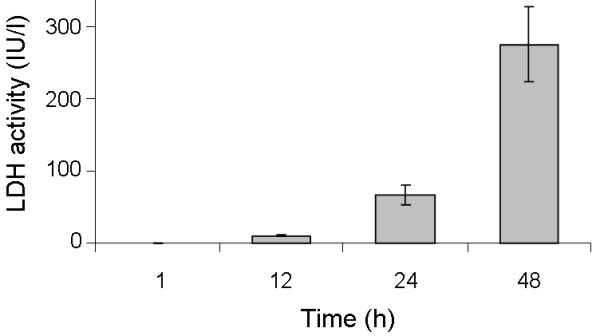
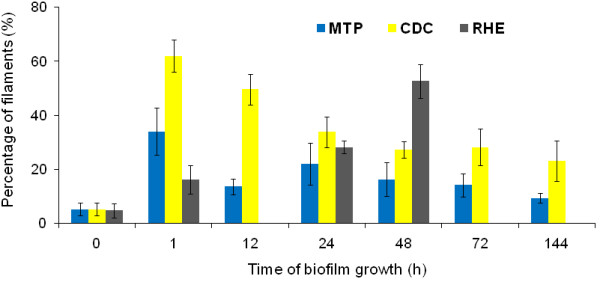
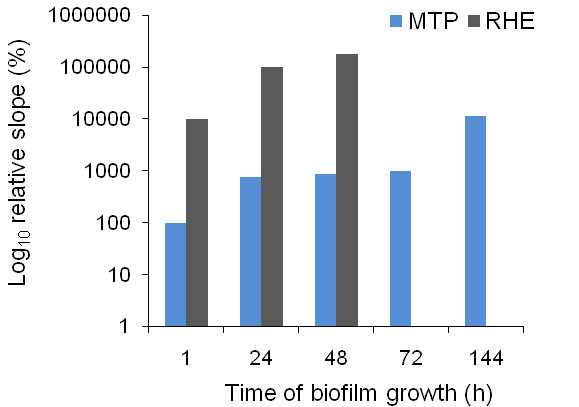
Verification
Claims the paper makes
The claims and statistics of this paper haven’t been checked yet.
Free: it reads the open-access text and checks the first 5 claims that cite a source we can check. Create a free account to check every claim.
Claims other papers make about this one
Each is checked against this paper’s own text: does it say what the citing paper says it does?
The source backs part of the claim, not all of it — or backs it for a different population, condition or comparison.
In the citing paper
“These proteins as well as the ALS family are significantly induced in biofilms [58,68–70].”
From Carbon source‐induced reprogramming of the cell wall proteome and secretome modulates the adherence and drug resistance of the fungal pathogen C andida albicans (2012) · cites this paper as [69]
Experimental — accuracy not yet measuredThe cited source says what the claim attributes to it.
In the citing paper
“Interestingly, the expression of multiple SAP and LIP genes is upregulated in untreated C. albicans biofilms compared to a planktonic culture as well26.”
From Stimulation of superoxide production increases fungicidal action of miconazole against Candida albicans biofilms (2016) · cites this paper as [26]
Self-check
Percentages, sums and reported differences re-computed from the paper’s own numbers.
The self-check needs the paper’s full text.
Citations
Cites
Gapped BLAST and PSI-BLAST: a new generation of protein database search programs
Altschul, S. (1997) · Nucleic Acids Research · doi:10.1093/nar/25.17.3389 · Cited by 73,302 · cited 1×
“albicans database using BLAST [49].”
Virulence factors of Candida albicans
Calderone, R. A., & Fonzi, W. A. (2001) · Trends in Microbiology · doi:10.1016/s0966-842x(01)02094-7 · Cited by 1,331 · cited 2×
“In addition, the formation of hyphae and phenotypic switching are also involved in virulence of the fungus [2].”
BackgroundCandida albicans Secreted Aspartyl Proteinases in Virulence and Pathogenesis
Naglik, J. R., Challacombe, S. J., & Hube, B. (2003) · Microbiology and Molecular Biology Reviews · doi:10.1128/mmbr.67.3.400-428.2003 · Cited by 1,179 · cited 4×
“It is known that SAP4-6 are predominantly expressed in hyphae [9] and that hyphae are the predominant form in biofilms grown in the in vivo model [32].”
BackgroundInfluentialCandida biofilms and their role in infection
Douglas, L. J. (2003) · Trends in Microbiology · doi:10.1016/s0966-842x(02)00002-1 · Cited by 1,150 · cited 1×
“albicans infections are often associated with the formation of biofilms [11-13].”
BackgroundCandida Infections of Medical Devices
Kojic, E. M., & Darouiche, R. O. (2004) · Clinical Microbiology Reviews · doi:10.1128/cmr.17.2.255-267.2004 · Cited by 1,055 · cited 1×
“Recently, it has become more and more clear that C. albicans infections are often associated with the formation of biofilms [ 11-13 ].”
BackgroundPotential Role of Phospholipases in Virulence and Fungal Pathogenesis
Ghannoum, M. A. (2000) · Clinical Microbiology Reviews · doi:10.1128/cmr.13.1.122 · Cited by 818 · cited 2×
“However, it is known that the expression of ALS, SAP, LIP and PLB genes can be influenced by other factors such as the growth medium, temperature and other environmental conditions [6-9].”
BackgroundAdhesive and Mammalian Transglutaminase Substrate Properties of Candida albicans Hwp1
Staab, J. F., Bradway, S. D., Fidel, P. L., & Sundstrom, P. (1999) · Science · doi:10.1126/science.283.5407.1535 · Cited by 607 · cited 2×
“Genes belonging to the ALS (agglutinin-like sequence) gene family [4] and HWP1 (hyphal wall protein) [5] encode cell-surface associated glycosylphosphatidylinositol (GPI) anchored glycoproteins that mediate adhesion of C.”
BackgroundBiofilm formation by Candida species on the surface of catheter materials in vitro
Hawser, S. P., & Douglas, L. J. (1994) · Infection and Immunity · doi:10.1128/iai.62.3.915-921.1994 · Cited by 599 · cited 1×
“Various model systems have been developed to study C. albicans biofilm biology on mucosal [16] and on abiotic surfaces [ 17-20 ].”
BackgroundThe ALS gene family of Candida albicans.
Hoyer, L. L. (2001) · Trends in Microbiology · doi:10.1016/s0966-842x(01)01984-9 · Cited by 540 · cited 1×
“Genes belonging to the ALS (agglutinin-like sequence) gene family [4] and HWP1 (hyphal wall protein) [5] encode cell-surface associated glycosylphosphatidylinositol (GPI) anchored glycoproteins that mediate adhesion of C.”
BackgroundHow to build a biofilm: a fungal perspective
Blankenship, J. R., & Mitchell, A. P. (2006) · Current Opinion in Microbiology · doi:10.1016/j.mib.2006.10.003 · Cited by 530 · cited 1×
“albicans biofilms are comprised of yeast cells and filaments that are attached to biotic or abiotic surfaces and embedded in an extracellular matrix [14,15].”
Background
Research works printed but not linked: 1
- Odds FC Meeting Candida and Candidiosis 1988 2 Bailliere Tindall London UK
Cited by
Pathogenesis of Candida albicans biofilm
Tsui, C., Kong, E. F., & Jabra-Rizk, M. A. (2016) · Pathogens and Disease · doi:10.1093/femspd/ftw018 · Cited by 481
“In fact, a study by Nailis et al. (2010) examining the expression of ergosterol in treated planktonic C. albicans cells following exposure to fluconazole revealed an upregulation in the ERG9 and ERG11 genes.”
BackgroundIn vitro and in vivo model systems to study microbial biofilm formation
Coenye, T., & Nelis, H. J. (2010) · Journal of Microbiological Methods · doi:10.1016/j.mimet.2010.08.018 · Cited by 463
Self-citationBiofilm of Candida albicans : formation, regulation and resistance
Pereira, R., Santos Fontenelle, R. O., Brito, E. H. S., & Morais, S. M. (2021) · Journal of Applied Microbiology · doi:10.1111/jam.14949 · Cited by 368
Recent insights into Candida albicans biofilm resistance mechanisms
Mathé, L., & Van Dijck, P. (2013) · Current Genetics · doi:10.1007/s00294-013-0400-3 · Cited by 271
“1998) Common (Borecká-Melkusová et al. 2009; Khot et al. 2006; Nailis et al. 2010; White 1997)”
Kean, R., Delaney, C., Sherry, L., Borman, A., Johnson, E. M., Richardson, M. D., Rautemaa-Richardson, R., Williams, C., & Ramage, G. (2018) · mSphere · doi:10.1128/msphere.00334-18 · Cited by 220
“Indeed, studies have identified its increased expression in biofilm-associated infections (31), with sap5Δ/Δ strains demonstrating a less adherent phenotype, therefore highlighting its potential as a promising biofilm biomarker (32).”
Background
Metadata
- Authors
- Nailis, H., Kucharíková, S., Řičicová, M., Van Dijck, P., Deforce, D., Nelis, H., & Coenye, T.
- Affiliations
- Ghent University (BE)
- VIB-KU Leuven Center for Microbiology (BE)
- Corresponding author
- Coenye, Tom
- Venue
- BMC Microbiology
- Published
- 2010-04-16
- Volume
- 10
- Issue
- 1
- Pages
- 114-114
- ISSN
- 1471-2180 (ISSN-L)
- PMC
- PMC2862034
- OpenAlex
- W2020055431
- Cited by
- 157
- References
- 48
- Citations by year
- 2026: 2 · 2025: 7 · 2024: 9 · 2023: 6 · 2022: 15 · 2021: 15 · 2020: 6 · 2019: 14 · 2018: 17 · 2017: 11 · 2016: 14 · 2015: 9 · 2014: 9 · 2013: 10 · 2012: 6
- FWCI
- 4.75
- Type
- journal article
- Language
- en
- Open access
- gold
- doi.org
- Licence
- cc-by
- Locations
- BMC Microbiology (publishedVersion, cc-by)
- PubMed Central (publishedVersion, cc-by)
- PubMed (publishedVersion)
- Ghent University Academic Bibliography (Ghent University) (submittedVersion, other-oa)
- DOAJ (DOAJ: Directory of Open Access Journals) (submittedVersion)
- Funders
- Friedrich-Schiller-Universität Jena
- Fonds Wetenschappelijk Onderzoek
- Universiteit Gent
- Topics
- Health Sciences › Medicine › Infectious Diseases › Antifungal resistance and susceptibility
- Life Sciences › Biochemistry, Genetics and Molecular Biology › Molecular Biology › Fungal and yeast genetics research
- Life Sciences › Biochemistry, Genetics and Molecular Biology › Molecular Biology › Bacterial biofilms and quorum sensing
- Keywords
- biofilm, virulence factors, gene expression profiling, HWP1, phospholipase B, lipase, mucosal surfaces, abiotic surfaces
- MeSH terms
- Animals, Candida albicans, Catheterization, Epithelial Cells, Equipment and Supplies, Fungal Proteins, Humans, Gene Expression Regulation, Fungal, Rats, Sprague-Dawley, Biofilms, Reverse Transcriptase Polymerase Chain Reaction, Gene Expression Profiling, Virulence Factors, Rats
About these checks
Registry, retraction, Cites and statistics results are computed, not judged, with one exception: a printed reference that no index lists is read once by a model before it counts as a citation error. Claims are extracted by a model and kept only when their quote appears verbatim in the text; each cited source is then checked, with a model’s help, for whether it says what the claim relies on. Those verdicts can be wrong — read the claim’s quote and the cited source before relying on one.
Statistics and arithmetic are recomputed, not judged.
Confidence bands are shown only for fields calibrated on our annotated test set. None is calibrated yet, so no band is shown.
What counts as a claim ›How we measure confidence ›How we check this ›
Are you an author, or do you see a problem with this page? Request a review
How to cite
Cite CoChat for the checks on this page, and the paper for its own findings.
- This page
- CoChat. (2026). Citation check: Real-time PCR expression profiling of genes encoding potential virulence factors in Candida albicans biofilms: identification of model-dependent and -independent gene expression. https://app.cochat.ai/papers/10.1186/1471-2180-10-114
- The paper
- Nailis, H., Kucharíková, S., Řičicová, M., Van Dijck, P., Deforce, D., Nelis, H., & Coenye, T. (2010). Real-time PCR expression profiling of genes encoding potential virulence factors in Candida albicans biofilms: identification of model-dependent and -independent gene expression. BMC Microbiology. https://doi.org/10.1186/1471-2180-10-114
Data sources
Bibliographic data: Semantic Scholar, OpenAlex, Crossref.
Contains information from the Semantic Scholar Academic Graph Datasets, made available under the ODC Attribution License (ODC-BY 1.0).
Semantic Scholar’s data is described in: Kinney, R., et al. (2023). The Semantic Scholar Open Data Platform. arXiv:2301.10140.
