

The surface protein Shr of Streptococcus pyogenes binds heme and transfers it to the streptococcal heme-binding protein Shp.
Open accessThe DOI matches its Crossref record; 35 of the 36 references it cites were found in a registry or an index.
Abstract
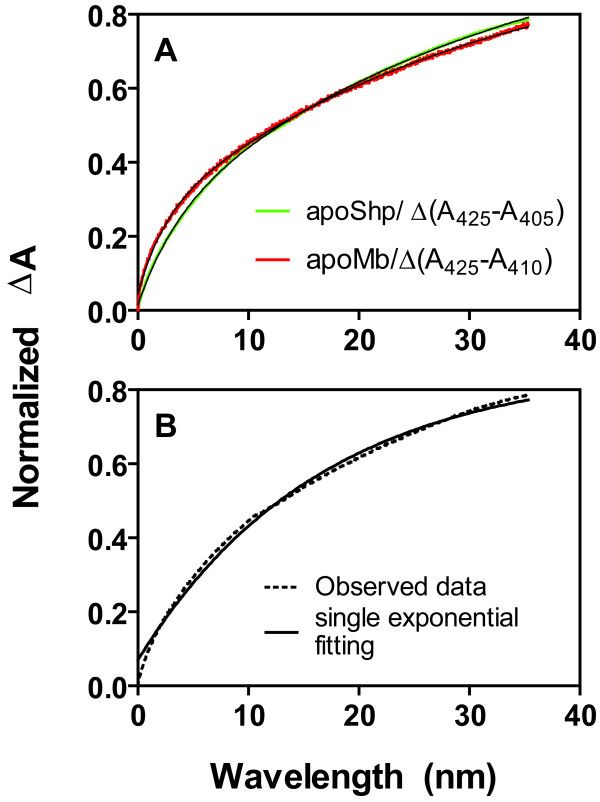
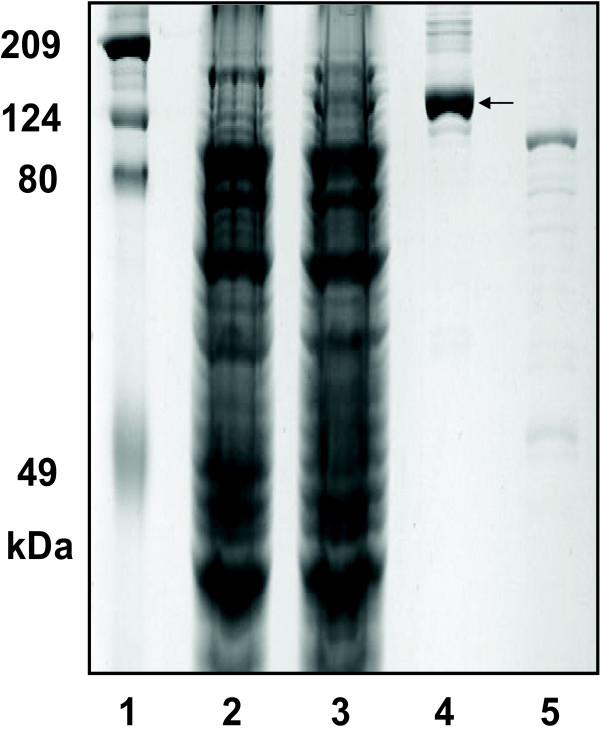
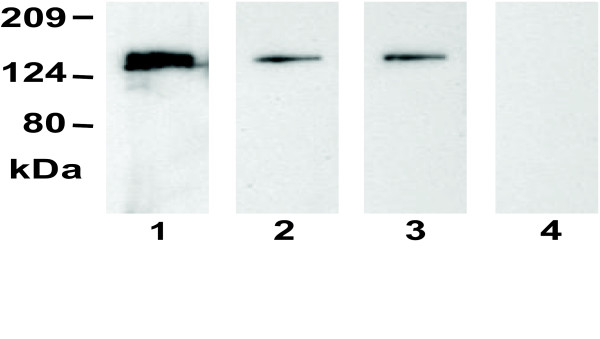
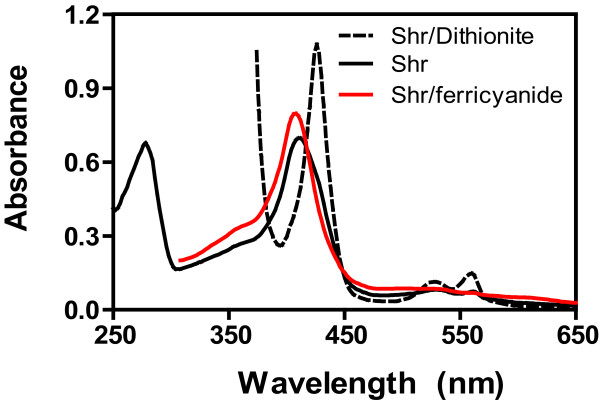
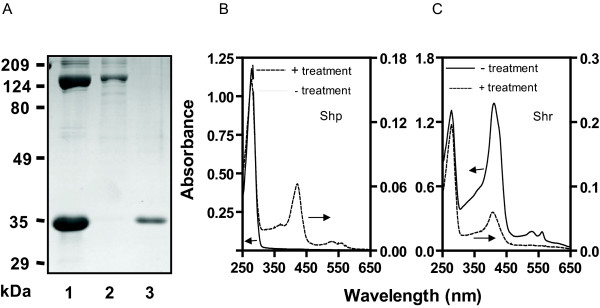
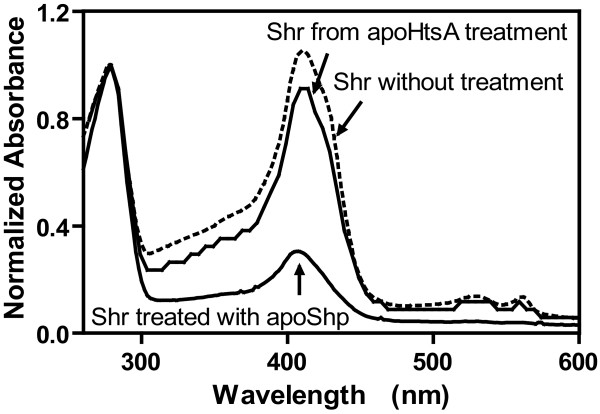
BACKGROUND: The heme acquisition machinery in Streptococcus pyogenes is believed to consist of the surface proteins, Shr and Shp, and heme-specific ATP-binding cassette transporter HtsABC. Shp has been shown to rapidly transfer its heme to the lipoprotein component, HtsA, of HtsABC. The function of Shr and the heme source of Shp have not been established. RESULTS: The objective of this study was to determine whether Shr binds heme and is a heme source of Shp. To achieve the objective, recombinant Shr protein was prepared. The purified Shr displays a spectrum typical of hemoproteins, indicating that Shr binds heme and acquires heme from Escherichia coli hemoproteins in vivo. Spectral analysis of Shr and Shp isolated from a mixture of Shr and heme-free Shp (apoShp) indicates that Shr and apoShp lost and gained heme, respectively; whereas Shr did not efficiently lose its heme in incubation with apoHtsA under the identical conditions. These results suggest that Shr directly transfers its heme to Shp. In addition, the rates of heme transfer from human hemoglobin to apoShp are close to those of simple ferric heme dissociation from hemoglobin, suggesting that methemoglobin does not directly transfer its heme to apoShp. CONCLUSION: We have demonstrated that recombinant Shr can acquire heme from E. coli hemoproteins in vivo and appears to directly transfer its heme to Shp and that Shp appears not to directly acquire heme from human methemoglobin. These results suggest the possibility that Shr is a source of heme for Shp and that the Shr-to-Shp heme transfer is a step of the heme acquisition process in S. pyogenes. Further characterization of the Shr/Shp/HtsA system would advance our understanding of the mechanism of heme acquisition in S. pyogenes.
Overview
The claims and statistics of this paper haven’t been checked yet.
Free: it reads the open-access text and checks the first 5 claims that cite a source we can check. Create a free account to check every claim.
Integrity signals
Registry
Cites
Statistics
Figures
Verification
Claims the paper makes
The claims and statistics of this paper haven’t been checked yet.
Free: it reads the open-access text and checks the first 5 claims that cite a source we can check. Create a free account to check every claim.
Claims other papers make about this one
Each is checked against this paper’s own text: does it say what the citing paper says it does?
The source backs part of the claim, not all of it — or backs it for a different population, condition or comparison.
In the citing paper
“In the heme acquisition pathway (Lei et al., 2002; Bates et al., 2003; Zhu et al., 2008), Shr obtains heme from heme-containing proteins such as hemoglobin and myoglobin and efficiently transports it combined with heme to Shp.”
From The Heme Transporter HtsABC of Group A Streptococcus Contributes to Virulence and Innate Immune Evasion in Murine Skin Infections (2018) · cites this paper as Zhu et al., 2008
Experimental — accuracy not yet measuredThe source backs part of the claim, not all of it — or backs it for a different population, condition or comparison.
In the citing paper
“Streptococcal hemoprotein receptor (Shr), streptococcal heme binding protein (Shp) and streptococcal heme-specific ABC transporter (HtsABC) encode a machine that takes up and transports heme in GAS.”
From The Heme Transporter HtsABC of Group A Streptococcus Contributes to Virulence and Innate Immune Evasion in Murine Skin Infections (2018) · cites this paper as Zhu et al., 2008
Experimental — accuracy not yet measuredThe cited source says what the claim attributes to it.
In the citing paper
“Heme transporter A (HtsA) protein is a lipoprotein component of HtsABC that obtains heme from Shp as an iron source for GAS survival (Nygaard et al., 2006; Zhu et al., 2008; Lu et al., 2012).”
From The Heme Transporter HtsABC of Group A Streptococcus Contributes to Virulence and Innate Immune Evasion in Murine Skin Infections (2018) · cites this paper as Zhu et al., 2008
In the citing paper
“In a manner similar to that of Corynebacterium diphtheriae Hta/Hmu, Streptococcus spp. encode surfaceexposed heme-binding proteins (Shp and Shr) and an ABC transporter (HtaABC) (130).”
From Overcoming the Heme Paradox: Heme Toxicity and Tolerance in Bacterial Pathogens (2010) · cites this paper as [130]
Self-check
Percentages, sums and reported differences re-computed from the paper’s own numbers.
The self-check needs the paper’s full text.
Citations
Cites
Porphyrins and metalloporphyrins
Gray, C. H. (1976) · Trends in Biochemical Sciences · doi:10.1016/0968-0004(76)90037-2 · Cited by 1,941
Porphyrins and Metalloporphyrins
(1978) · Coordination Chemistry Reviews · doi:10.1016/s0010-8545(00)80351-3 · Cited by 1,716
Passage of Heme-Iron Across the Envelope of Staphylococcus aureus
Mazmanian, S. K., Skaar, E. P., Gaspar, A. H., Humayun, M., Gornicki, P., Jelenska, J., Joachmiak, A., Missiakas, D. M., & Schneewind, O. (2003) · Science · doi:10.1126/science.1081147 · Cited by 593 · cited 3×
“pyogenes [12], Staphylococcus aureus [13], and Streptococcus equi [14].”
BackgroundIron-Source Preference of Staphylococcus aureus Infections
Skaar, E. P., Humayun, M., Bae, T., DeBord, K. L., & Schneewind, O. (2004) · Science · doi:10.1126/science.1099930 · Cited by 440 · cited 1×
“Heme is abundant in mammalian hosts and a preferred iron source for bacterial pathogens [ 8-11 ].”
BackgroundExchange of Heme among Hemoglobins and between Hemoglobin and Albumin
Bunn, H. F., & Jandl, J. H. (1968) · Journal of Biological Chemistry · doi:10.1016/s0021-9258(18)93628-8 · Cited by 415 · cited 2×
“In this reaction, methemoglobin dissociates heme into solvent, which is caught by the mutant apomyoglobin, and the fast and slow phases are the dissociation of heme from the β and α subunits, respectively [22,23].”
BackgroundTransferrins and Heme-Compounds as Iron Sources for Pathogenic Bacteria
Otto, B. R., Verweij-van Vught, A. M. J. J., & Maclaren, D. M. (1992) · Critical Reviews in Microbiology · doi:10.3109/10408419209114559 · Cited by 395 · cited 1×
“Heme is abundant in mammalian hosts and a preferred iron source for bacterial pathogens [8-11].”
BackgroundStaphylococcus aureus IsdB Is a Hemoglobin Receptor Required for Heme Iron Utilization
Torres, V. J., Pishchany, G., Humayun, M., Schneewind, O., & Skaar, E. P. (2006) · Journal of Bacteriology · doi:10.1128/jb.01335-06 · Cited by 302
The Association Rate Constant for Heme Binding to Globin Is Independent of Protein Structure
Hargrove, M. S., Barrick, D., & Olson, J. S. (1996) · Biochemistry · doi:10.1021/bi960371l · Cited by 209 · cited 1×
“Heme is usually bound to host proteins at extremely high affinities [15,16].”
BackgroundHis64(E7)–>Tyr apomyoglobin as a reagent for measuring rates of hemin dissociation.
Hargrove, M. S., Singleton, E. W., Quillin, M. L., Ortiz, L. A., Phillips, G. N., Olson, J. S., & Mathews, A. J. (1994) · Journal of Biological Chemistry · doi:10.1016/s0021-9258(17)41764-9 · Cited by 208
HIS64(E7)-> TYR APOMYOGLOBIN AS A REAGENT FOR MEASURING RATES OF HEMIN DISSOCIATION: 1mgn
Hargrove, M. S., Quillin, M. L., & Phillips Jr., G. N. (1994) · Worldwide Protein Data Bank · doi:10.2210/pdb1mgn/pdb · Cited by 190 · cited 5×
“The biphasic kinetics and rate constants are similar to those in the dissociation of heme from methemoglobin using H64Y/V68F apomyoglobin as a heme scavenger [22], in which the fast and slow phases are heme dissociation from the β and α subunits, respectively [22,23].”
BackgroundMethodInfluentialJanulczyk, R., Ricci, S., & Björck, L. (2003) · Infection and Immunity · doi:10.1128/iai.71.5.2656-2664.2003 · Cited by 182 · cited 3×
“Janulczyk R, Ricci S, Bjorck L: MtsABC is important for manganese and iron transport, oxidative stress resistance, and virulence of Streptococcus pyogenes.”
BackgroundHaem recognition by a Staphylococcus aureus NEAT domain
Grigg, J. C., Vermeiren, C. L., Heinrichs, D. E., & Murphy, M. E. P. (2007) · Molecular Microbiology · doi:10.1111/j.1365-2958.2006.05502.x · Cited by 166
Bates, C. S., Montañez, G. E., Woods, C. R., Vincent, R. M., & Eichenbaum, Z. (2003) · Infection and Immunity · doi:10.1128/iai.71.3.1042-1055.2003 · Cited by 154 · cited 2×
“Shr, another cell surface protein, is proposed to be a receptor of host hemoproteins [3]; however, its function has not been firmly established.”
BackgroundQuaternary Structure Regulates Hemin Dissociation from Human Hemoglobin
Hargrove, M. S., Whitaker, T., Olson, J. S., Vali, R. J., & Mathews, A. J. (1997) · Journal of Biological Chemistry · doi:10.1074/jbc.272.28.17385 · Cited by 144 · cited 1×
“Heme is usually bound to host proteins at extremely high affinities [15,16].”
BackgroundAndrade, M. A., Ciccarelli, F. D., Perez-Iratxeta, C., & Bork, P. (2002) · Genome Biology · doi:10.1186/gb-2002-3-9-research0047 · Cited by 135 · cited 1×
“[24] identified a domain in genes near the components of a putative Fe3+ siderophore transporter (designated NEAT domain) from Gram-positive pathogenic bacteria.”
BackgroundLiu, M., Tanaka, W. N., Zhu, H., Xie, G., Dooley, D. M., & Lei, B. (2008) · Journal of Biological Chemistry · doi:10.1074/jbc.m708372200 · Cited by 129
Sharp, K. H., Schneider, S., Cockayne, A., & Paoli, M. (2007) · Journal of Biological Chemistry · doi:10.1074/jbc.m700234200 · Cited by 120 · cited 7×
“This idea is supported by the similarity in the structures of the Shp heme-binding domain and the NEAT domain of IsdA and IsdC [20,25,26] and by the homology between S. pyogenes HtsA and S. aureus IsdE [29].”
BackgroundResultInfluentialLei, B., Smoot, L. M., Menning, H. M., Voyich, J. M., Kala, S. V., Deleo, F. R., Reid, S. D., & Musser, J. M. (2002) · Infection and Immunity · doi:10.1128/iai.70.8.4494-4500.2002 · Cited by 113 · cited 3×
“pyogenes [12], Staphylococcus aureus [13], and Streptococcus equi [14].”
BackgroundMethodSelf-citationPilpa, R. M., Fadeev, E. A., Villareal, V. A., Wong, M. L., Phillips, M. L., & Clubb, R. (2006) · Journal of Molecular Biology · doi:10.1016/j.jmb.2006.05.019 · Cited by 107 · cited 1×
“aureus surface proteins IsdA and IsdC binds heme [25,26], whereas the NEAT domain of IdsH does not bind heme [27], suggesting that the binding of heme to Shr may be mediated by one or both NEAT domains.”
BackgroundNygaard, T. K., Blouin, G. C., Liu, M., Fukumura, M., Olson, J. S., Fabian, M., Dooley, D. M., & Lei, B. (2006) · Journal of Biological Chemistry · doi:10.1074/jbc.m601832200 · Cited by 95 · cited 4×
“6 μM-1s-1), and the association constant for HtsA-ferric heme complex (K = 31,000 μM-1) is 5-fold greater than that for Shp-ferric heme complex (K = 5,300 μM-1) [19].”
BackgroundInfluentialSelf-citationAcquisition of iron from host proteins by the group A streptococcus.
Eichenbaum, Z., Muller, E., Morse, S. A., & Scott, J. R. (1996) · Infection and Immunity · doi:10.1128/iai.64.12.5428-5429.1996 · Cited by 94 · cited 2×
“pyogenes is capable of utilizing heme derived from human hemoproteins as a source of iron [9,17].”
BackgroundLei, B., Liu, M., Voyich, J. M., Prater, C. I., Kala, S. V., DeLeo, F. R., & Musser, J. M. (2003) · Infection and Immunity · doi:10.1128/iai.71.10.5962-5969.2003 · Cited by 92
Self-citationHeme Coordination by Staphylococcus aureus IsdE
Grigg, J. C., Vermeiren, C. L., Heinrichs, D. E., & Murphy, M. E. P. (2007) · Journal of Biological Chemistry · doi:10.1074/jbc.m704602200 · Cited by 86
Lei, B., Liu, M., Chesney, G. L., & Musser, J. M. (2004) · The Journal of Infectious Diseases · doi:10.1086/380491 · Cited by 80 · cited 1×
“The presence of Shr-specific antibody in convalescent sera of patients was assessed by Western blotting analysis, as described previously [32].”
MethodPathogenic bacteria prefer heme.
Rouault, T. A. (2004) · Science · doi:10.1126/science.1102975 · Cited by 76 · cited 1×
“Heme is abundant in mammalian hosts and a preferred iron source for bacterial pathogens [8-11].”
BackgroundUptake of iron from hemoglobin and the haptoglobin-hemoglobin complex by hemolytic bacteria
Francis, R. T., Booth, J. W., & Becker, R. R. (1985) · International Journal of Biochemistry · doi:10.1016/0020-711x(85)90262-9 · Cited by 72 · cited 1×
“pyogenes is capable of utilizing heme derived from human hemoproteins as a source of iron [9,17].”
BackgroundHeme Transfer from Streptococcal Cell Surface Protein Shp to HtsA of Transporter HtsABC
Liu, M., & Lei, B. (2005) · Infection and Immunity · doi:10.1128/iai.73.8.5086-5092.2005 · Cited by 72 · cited 4×
“Shp rapidly and directly transfers its heme to HtsA, the lipoprotein component of HtsABC, in a concerted two-step process with one kinetic phase [18,19].”
BackgroundInfluentialBates, C. S., Toukoki, C., Neely, M. N., & Eichenbaum, Z. (2005) · Infection and Immunity · doi:10.1128/iai.73.9.5743-5753.2005 · Cited by 69 · cited 1×
“Expression of htsABC and mtsABC are negatively regulated by the same metalloregulator MtsR in response to levels of Fe only and Fe or Mn, respectively [6,7].”
BackgroundReticulon RTN2B Regulates Trafficking and Function of Neuronal Glutamate Transporter EAAC1
Liu, Y., Vidensky, S., Ruggiero, A. M., Maier, S., Sitte, H. H., & Rothstein, J. D. (2008) · Journal of Biological Chemistry · doi:10.1074/jbc.m708096200 · Cited by 68
ABC transporter FtsABCD of Streptococcus pyogenes mediates uptake of ferric ferrichrome.
Hanks, T. S., Liu, M., McClure, M. J., & Lei, B. (2005) · BMC Microbiology · doi:10.1186/1471-2180-5-62 · Cited by 63 · cited 1×
“The human pathogen Streptococcus pyogenes produces three ABC transporters, FtsABCD [2], HtsABC or SiaABC [3,4], and MtsABC [5], which acquire ferric ferrichrome, heme, and Fe3+ and Mn2+, respectively.”
BackgroundSelf-citationAranda, R., Worley, C. E., Liu, M., Bitto, E., Cates, M. S., Olson, J. S., Lei, B., & Phillips, G. N. (2007) · Journal of Molecular Biology · doi:10.1016/j.jmb.2007.08.058 · Cited by 59 · cited 7×
“This idea is supported by the similarity in the structures of the Shp heme-binding domain and the NEAT domain of IsdA and IsdC [20,25,26] and by the homology between S. pyogenes HtsA and S. aureus IsdE [29].”
BackgroundResultInfluentialHanks, T. S., Liu, M., McClure, M. J., Fukumura, M., Duffy, A., & Lei, B. (2006) · Infection and Immunity · doi:10.1128/iai.00176-06 · Cited by 53 · cited 1×
“Expression of htsABC and mtsABC are negatively regulated by the same metalloregulator MtsR in response to levels of Fe only and Fe or Mn, respectively [6,7].”
BackgroundSelf-citationLiu, M., Zhu, H. F., Zhang, J., & Lei, B. (2007) · Infection and Immunity · doi:10.1128/iai.00038-07 · Cited by 53 · cited 2×
“The PCR product was digested with NcoI and EcoRI and ligated into pETHis2 [31] to create pET-His2-shr3'f.”
BackgroundMethodRan, Y., Zhu, H., Liu, M., Fabian, M., Olson, J. S., Aranda, R., Phillips, G. N., Dooley, D. M., & Lei, B. (2007) · Journal of Biological Chemistry · doi:10.1074/jbc.m705967200 · Cited by 43 · cited 1×
“The structure of the Shp heme-binding domain reveals that the Shp heme iron is ligated to Met66 and Met153 [20], and the Met axial ligands are both important for rapid heme transfer from Shp to HtsA [21].”
BackgroundNygaard, T. K., Liu, M., McClure, M. J., & Lei, B. (2006) · BMC Microbiology · doi:10.1186/1471-2180-6-82 · Cited by 29 · cited 2×
“pyogenes [12], Staphylococcus aureus [13], and Streptococcus equi [14].”
Background(1999)
Cited by
Nutritional immunity: the battle for nutrient metals at the host–pathogen interface
Murdoch, C. C., & Skaar, E. P. (2022) · Nature Reviews Microbiology · doi:10.1038/s41579-022-00745-6 · Cited by 701
Streptococcus Adherence and Colonization
Nobbs, A. H., Lamont, R. J., & Jenkinson, H. F. (2009) · Microbiology and Molecular Biology Reviews · doi:10.1128/mmbr.00014-09 · Cited by 657
Iron in infection and immunity
Nairz, M., & Weiss, G. (2020) · Molecular Aspects of Medicine · doi:10.1016/j.mam.2020.100864 · Cited by 359
Overcoming the Heme Paradox: Heme Toxicity and Tolerance in Bacterial Pathogens
Anzaldi, L. L., & Skaar, E. P. (2010) · Infection and Immunity · doi:10.1128/iai.00613-10 · Cited by 295
“encode surfaceexposed heme-binding proteins (Shp and Shr) and an ABC transporter (HtaABC) (130).”
BackgroundHolden, M. T. G., Heather, Z., Paillot, R., Steward, K. F., Webb, K., Ainslie, F., Jourdan, T., Bason, N. C., Holroyd, N. E., Mungall, K., et al. (2009) · PLoS Pathogens · doi:10.1371/journal.ppat.1000346 · Cited by 265
“pyogenes binds heme and transfers it to the streptococcal hemebinding protein Shp for import by the HtsABC heme transporter [27].”
Background
Metadata
- Authors
- Zhu, H., Liu, M., & Lei, B.
- Affiliations
- Montana State University (US)
- Corresponding author
- Lei, Benfang
- Venue
- BMC Microbiology
- Published
- 2008-01-23
- Volume
- 8
- Issue
- 1
- Pages
- 15-15
- ISSN
- 1471-2180 (ISSN-L)
- PMC
- PMC2266757
- OpenAlex
- W2169490506
- Cited by
- 82
- References
- 35
- Citations by year
- 2026: 1 · 2025: 4 · 2024: 2 · 2023: 1 · 2022: 5 · 2021: 3 · 2020: 2 · 2019: 3 · 2018: 5 · 2017: 3 · 2016: 5 · 2015: 3 · 2014: 7 · 2013: 5 · 2012: 10
- FWCI
- 7.58
- Type
- journal article
- Language
- en
- Open access
- gold
- doi.org
- Licence
- cc-by
- Locations
- BMC Microbiology (publishedVersion, cc-by)
- PubMed Central (publishedVersion, cc-by)
- PubMed (publishedVersion)
- DOAJ (DOAJ: Directory of Open Access Journals) (submittedVersion)
- Funders
- U.S. Department of Agriculture (2006-01690)
- Montana State University
- National Institutes of Health
- National Institute of Allergy and Infectious Diseases (K22AI057347)
- National Center for Research Resources (P20RR020185)
- Topics
- Health Sciences › Medicine › Infectious Diseases › Streptococcal Infections and Treatments
- Life Sciences › Biochemistry, Genetics and Molecular Biology › Biochemistry › Hemoglobin structure and function
- Life Sciences › Biochemistry, Genetics and Molecular Biology › Genetics › Bacterial Genetics and Biotechnology
- Keywords
- Streptococcus pyogenes, heme acquisition, heme transfer, heme proteins, methemoglobin, bacterial surface proteins
- MeSH terms
- Heme-Binding Proteins, Bacterial Proteins, Carrier Proteins, Heme, Hemeproteins, Humans, Molecular Sequence Data, Protein Binding, Recombinant Proteins, Streptococcus pyogenes, Blotting, Western
About these checks
Registry, retraction, Cites and statistics results are computed, not judged, with one exception: a printed reference that no index lists is read once by a model before it counts as a citation error. Claims are extracted by a model and kept only when their quote appears verbatim in the text; each cited source is then checked, with a model’s help, for whether it says what the claim relies on. Those verdicts can be wrong — read the claim’s quote and the cited source before relying on one.
Statistics and arithmetic are recomputed, not judged.
Confidence bands are shown only for fields calibrated on our annotated test set. None is calibrated yet, so no band is shown.
What counts as a claim ›How we measure confidence ›How we check this ›
Are you an author, or do you see a problem with this page? Request a review
Data sources
Bibliographic data: Semantic Scholar, OpenAlex, Crossref.
Contains information from the Semantic Scholar Academic Graph Datasets, made available under the ODC Attribution License (ODC-BY 1.0).
Semantic Scholar’s data is described in: Kinney, R., et al. (2023). The Semantic Scholar Open Data Platform. arXiv:2301.10140.
