

Identification of critical residues in Gap3 of Streptococcus parasanguinis involved in Fap1 glycosylation, fimbrial formation and in vitroadhesion
Open accessThe DOI matches its Crossref record; 33 of the 33 references it cites were found in a registry or an index.
Abstract
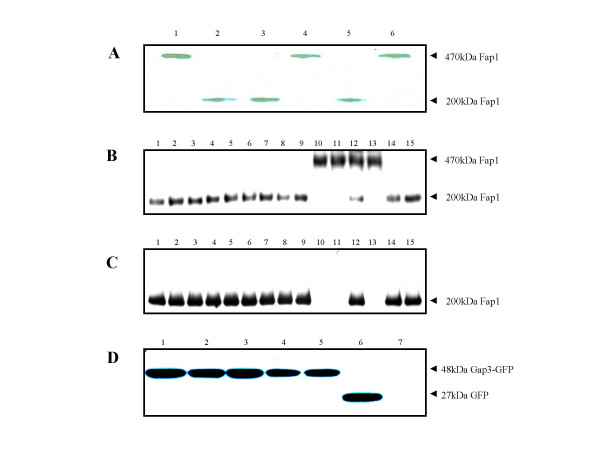
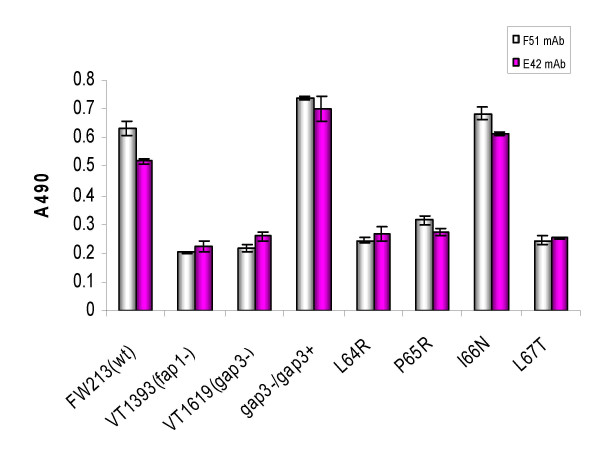
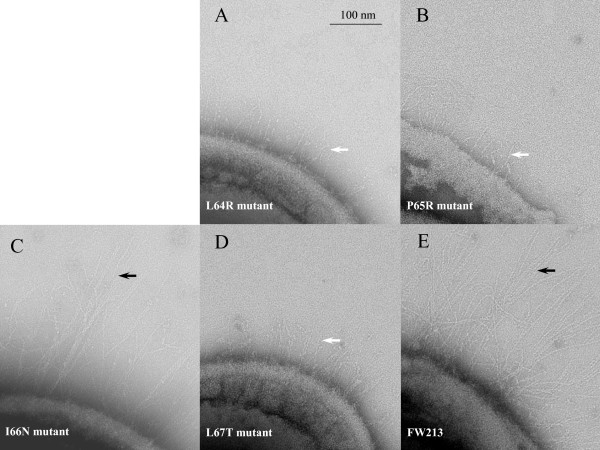
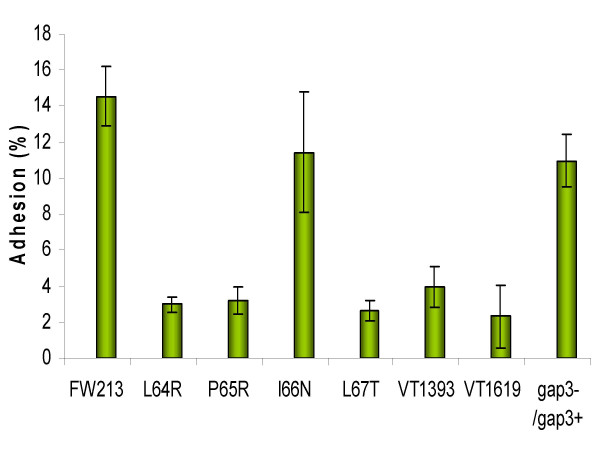
Background: Streptococcus parasanguinis is a primary colonizer of human tooth surfaces and plays an important role in dental plaque formation. Bacterial adhesion and biofilm formation are mediated by long peritrichous fimbriae that are composed of a 200 kDa serine rich glycoprotein named Fap1 (fimbriae-associated protein). Glycosylation and biogenesis of Fap1 are modulated by a gene cluster downstream of the fap1 locus. A gene encoding a glycosylation-associated protein, Gap3, was found to be important for Fap1 glycosylation, long fimbrial formation and Fap1-mediated biofilm formation. Results: Deletion and site-directed mutagenesis were employed to dissect the regions within Gap3 that were important for its function in Fap1 glycosylation and biogenesis. A deletion of 6 consecutive amino acids, PDLPIL, eliminated the production of the mature 200 kDa Fap1 protein and gave rise instead to a 470 kDa Fap1 intermediate that was only partially glycosylated. Site-directed mutagenesis of the 6 amino acids revealed that only three of these amino acids were required. Mutants in these amino acids (L64R, P65R and L67T) produced the premature 470 kDa Fap1 intermediate. Mutants in the remaining amino acids produced the mature form of Fap1. Cell surface expression of the Fap1 precursor among L64R, P65R and L67T mutants was reduced to levels consistent with that of a gap3 insertional mutant. Electron micrographs showed that these 3 mutants lost their long peritrichous fimbriae. Furthermore, their in vitro adhesion ability to saliva-coated hydroxylapatite (SHA) was inhibited. Conclusion: Our data suggest that 3 highly conserved, hydrophobic residues L64, P65 and L67 in Gap3 are essential for Gap3 function and are important for complete glycosylation of Fap1, fimbrial formation and bacterial adhesion.
Overview
The claims and statistics of this paper haven’t been checked yet.
Free: it reads the open-access text and checks the first 5 claims that cite a source we can check. Create a free account to check every claim.
Integrity signals
Registry
Cites
Statistics
Figures
Verification
Claims the paper makes
The claims and statistics of this paper haven’t been checked yet.
Free: it reads the open-access text and checks the first 5 claims that cite a source we can check. Create a free account to check every claim.
Claims other papers make about this one
Each is checked against this paper’s own text: does it say what the citing paper says it does?
The source backs part of the claim, not all of it — or backs it for a different population, condition or comparison.
In the citing paper
“For example, loss of glycosylation of the Fap1 serine-rich repeat adhesin with GalNAc, GlcNAc, and rhamnose of the oral commensal Streptococcus parasanguinis influences biofilm-forming ability.36–38”
From The dental plaque biofilm matrix (2021) · cites this paper as [36]
Experimental — accuracy not yet measured
Self-check
Percentages, sums and reported differences re-computed from the paper’s own numbers.
The self-check needs the paper’s full text.
Citations
Cites
Molecular Cloning: A Laboratory Manual
Sambrook, J., Fritsch, E., & Maniatis, T. (1989) · UCLA - Biblioteca de Ciencias de la Salud · Cited by 133,589
Molecular cloning: A laboratory manual
Deininger, P. (1990) · Analytical Biochemistry · doi:10.1016/0003-2697(90)90595-z · Cited by 84,682
SPIDER and WEB: Processing and Visualization of Images in 3D Electron Microscopy and Related Fields
Frank, J., Radermacher, M., Penczek, P., Zhu, J., Li, Y., Ladjadj, M., & Leith, A. (1996) · Journal of Structural Biology · doi:10.1006/jsbi.1996.0030 · Cited by 2,027 · cited 1×
“Images were converted to SPIDER format [35] and high-pass filter to remove the background variations.”
MethodGenome and virulence determinants of high virulence community-acquired MRSA
Baba, T., Takeuchi, F., Kuroda, M., Yuzawa, H., Aoki, K.-I., Oguchi, A., Nagai, Y., Iwama, N., Asano, K., Naimi, T., et al. (2002) · The Lancet · doi:10.1016/s0140-6736(02)08713-5 · Cited by 1,370 · cited 1×
“Moreover, gene clusters similar to the fap1 locus have been identified in other Gram-positive bacteria such as Streptococcus gordonii, Streptococcus sanguinis, Streptococcus pneumoniae, Staphylococcus aureus, Staphylococcus epidermidis, and Streptococcus agalactiae [12-17].”
BackgroundComplete Genome Sequence of a Virulent Isolate of Streptococcus pneumoniae
Tettelin, H., Nelson, K. E., Paulsen, I. T., Eisen, J. A., Read, T. D., Peterson, S., Heidelberg, J., DeBoy, R. T., Haft, D. H., Dodson, R. J., et al. (2001) · Science · doi:10.1126/science.1061217 · Cited by 1,342 · cited 1×
“Moreover, gene clusters similar to the fap1 locus have been identified in other Gram-positive bacteria such as Streptococcus gordonii, Streptococcus sanguinis, Streptococcus pneumoniae, Staphylococcus aureus, Staphylococcus epidermidis, and Streptococcus agalactiae [12-17].”
BackgroundAmino‐Acid Properties and Consequences of Substitutions
Betts, M. J., & Russell, R. B. (2007) · Bioinformatics for Geneticists · doi:10.1002/9780470059180.ch13 · Cited by 452 · cited 2×
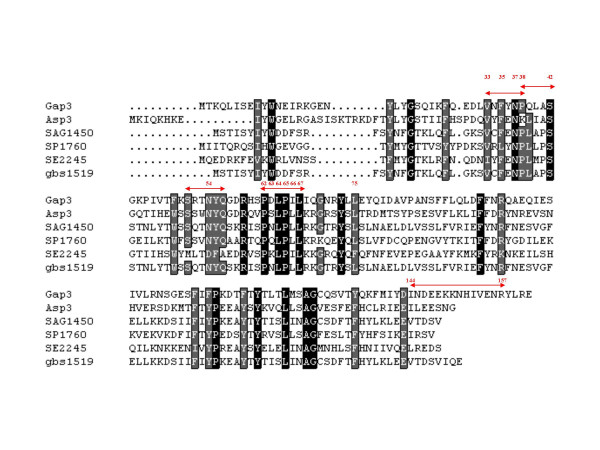
“Site-directed mutagenesis was used to replace every amino acid in the sequence 62PDLPIL67 by a disfavored amino acid [27] to determine which amino acid(s) in this region are important for Fap1 glycosylation.”
BackgroundMethodBacteriological studies of developing supragingival dental plaque
Socransky, S. S., Manganiello, A. D., Propas, D., Oram, V., & Van Houte, J. (1977) · Journal of Periodontal Research · doi:10.1111/j.1600-0765.1977.tb00112.x · Cited by 320 · cited 1×
“Background Streptococcus parasanguinis is an early colonizer of human tooth surface [1,2] and functions for the subsequent colonization of other oral bacteria.”
BackgroundStreptococcal Adhesion and Colonization
Jenkinson, H. F., & Lamont, R. (1997) · Critical Reviews in Oral Biology & Medicine · doi:10.1177/10454411970080020601 · Cited by 271 · cited 1×
“The accumulation of oral microorganisms on the tooth surfaces leads to the development of a structured microbial community known as dental plaque, one of the most common human biofilms [3-5].”
BackgroundBensing, B. A., & Sullam, P. M. (2002) · Molecular Microbiology · doi:10.1046/j.1365-2958.2002.02949.x · Cited by 227 · cited 1×
“Moreover, gene clusters similar to the fap1 locus have been identified in other Gram-positive bacteria such as Streptococcus gordonii, Streptococcus sanguinis, Streptococcus pneumoniae, Staphylococcus aureus, Staphylococcus epidermidis, and Streptococcus agalactiae [12-17].”
BackgroundBioinformatics for Geneticists: A Bioinformatics Primer for the Analysis of Genetic Data
(2007) · Wiley eBooks · doi:10.1002/9780470059180 · Cited by 201
Research works printed but not linked: 4
- Cisar JO Brennan MJ Sandberg AL Lectin-specific Interaction of Actinomyces Fimbriae with Oral Streptococci 1985 Washington, DC: American Society for Microbiology Press
- Fives-Taylor PM Schlessinger D Isolation and characterization of a Streptococcus sanguis FW213 mutant nonadherent of saliva coated hydroxyapatite beads Microbiology-1982 1982 Washington, DC: American Society for Microbiology 206 209
- Stephenson AE Characterization of the glycan moiety and processing of the Fap1 glycoprotein that mediates fimbrial biogenesis and adhesion in Streptococcus parasanguis Ph D thesis 2001 University of Vermont, Burlington
- Elder BL Identification of antigenic surface structures involved in the adherence of Streptococcus sanguis FW213 PhD thesis 1984 University of Vermont, Burlington
Cited by
The dental plaque biofilm matrix
Jakubovics, N. S., Goodman, S. D., Mashburn‐Warren, L., Stafford, G. P., & Cieplik, F. (2021) · Periodontology 2000 · doi:10.1111/prd.12361 · Cited by 488
Similarities and Differences in the Glycosylation Mechanisms in Prokaryotes and Eukaryotes
Dell, A., Galadari, A., Sastre, F., & Hitchen, P. (2010) · International Journal of Microbiology · doi:10.1155/2010/148178 · Cited by 190
The Sweet Tooth of Bacteria: Common Themes in Bacterial Glycoconjugates
Tytgat, H. L. P., & Lebeer, S. (2014) · Microbiology and Molecular Biology Reviews · doi:10.1128/mmbr.00007-14 · Cited by 146
A role for glycosylated serine‐rich repeat proteins in Gram‐positive bacterial pathogenesis
Lizcano, A., Sanchez, C. J., & Orihuela, C. J. (2012) · Molecular Oral Microbiology · doi:10.1111/j.2041-1014.2012.00653.x · Cited by 92
“…first step of SRRP glycosylation, which is required for protein stability, and five genes encoding components of the alternate secY2A2 complex necessary for SRRP transport [secA2, secY2, Asp1–3 (also known as gap1–3); the latter may also be involved in glycosylation (Peng et al., 2008a,b)] (Fig.”
BackgroundInteractions in Bacterial Biofilm Development: A Structural Perspective
Garnett, J. A., & Matthews, S. J. (2012) · Current Protein and Peptide Science · doi:10.2174/138920312804871166 · Cited by 101
“The presence of such extensive regions of alternating serine dipeptide repeats (~80% of the overall sequence), which are O-glycosylated through the serine residues [53,67,70-76], has led to Fap1 being termed a ‘serine-rich repeat glycoprotein’ (SRRP).”
Background
Metadata
- Authors
- Peng, Z., Fives-Taylor, P., Ruiz, T., Zhou, M., Sun, B., Chen, Q., & Wu, H.
- Affiliations
- University of Vermont (US)
- University of Alabama at Birmingham (US)
- Corresponding author
- Wu, Hui
- ORCID
- Venue
- BMC Microbiology
- Published
- 2008-03-27
- Volume
- 8
- Issue
- 1
- Pages
- 52-52
- ISSN
- 1471-2180 (ISSN-L)
- PMC
- PMC2335109
- OpenAlex
- W2051293849
- Cited by
- 21
- References
- 33
- Citations by year
- 2025: 1 · 2023: 2 · 2022: 1 · 2021: 1 · 2017: 1 · 2016: 1 · 2014: 2 · 2013: 1 · 2012: 4
- FWCI
- 0.96
- Type
- journal article
- Language
- en
- Open access
- gold
- doi.org
- Licence
- cc-by
- Locations
- BMC Microbiology (publishedVersion, cc-by)
- PubMed Central (publishedVersion, cc-by)
- PubMed (publishedVersion)
- eScholarship@UMassChan (submittedVersion, cc-by)
- DOAJ (DOAJ: Directory of Open Access Journals) (submittedVersion)
- Funders
- National Institutes of Health
- National Institute of Dental and Craniofacial Research (K22DE014726, R01DE017954, DE014726, R01DE011000, R37DE011000, DE11000, DE017954)
- Topics
- Life Sciences › Biochemistry, Genetics and Molecular Biology › Molecular Biology › Biochemical and Structural Characterization
- Health Sciences › Dentistry › Periodontics › Oral microbiology and periodontitis research
- Life Sciences › Biochemistry, Genetics and Molecular Biology › Molecular Biology › Glycosylation and Glycoproteins Research
- Keywords
- Streptococcus parasanguinis, fimbriae, glycosylation, bacterial adhesion, biofilm formation, dental plaque, site-directed mutagenesis, deletion mutants, hydrophobic residues, cell surface expression
- MeSH terms
- Amino Acid Sequence, Bacterial Adhesion, Bacterial Proteins, Glycosylation, Humans, Molecular Sequence Data, Fimbriae, Bacterial, Streptococcus, Mutagenesis, Site-Directed, Sequence Deletion, Sequence Homology, Amino Acid, Fimbriae Proteins
About these checks
Registry, retraction, Cites and statistics results are computed, not judged, with one exception: a printed reference that no index lists is read once by a model before it counts as a citation error. Claims are extracted by a model and kept only when their quote appears verbatim in the text; each cited source is then checked, with a model’s help, for whether it says what the claim relies on. Those verdicts can be wrong — read the claim’s quote and the cited source before relying on one.
Statistics and arithmetic are recomputed, not judged.
Confidence bands are shown only for fields calibrated on our annotated test set. None is calibrated yet, so no band is shown.
What counts as a claim ›How we measure confidence ›How we check this ›
Are you an author, or do you see a problem with this page? Request a review
How to cite
Cite CoChat for the checks on this page, and the paper for its own findings.
- This page
- CoChat. (2026). Citation check: Identification of critical residues in Gap3 of Streptococcus parasanguinis involved in Fap1 glycosylation, fimbrial formation and in vitroadhesion. https://app.cochat.ai/papers/10.1186/1471-2180-8-52
- The paper
- Peng, Z., Fives-Taylor, P., Ruiz, T., Zhou, M., Sun, B., Chen, Q., & Wu, H. (2008). Identification of critical residues in Gap3 of Streptococcus parasanguinis involved in Fap1 glycosylation, fimbrial formation and in vitroadhesion. BMC Microbiology. https://doi.org/10.1186/1471-2180-8-52
Data sources
Bibliographic data: Semantic Scholar, OpenAlex, Crossref.
Contains information from the Semantic Scholar Academic Graph Datasets, made available under the ODC Attribution License (ODC-BY 1.0).
Semantic Scholar’s data is described in: Kinney, R., et al. (2023). The Semantic Scholar Open Data Platform. arXiv:2301.10140.
