

The DOI matches its Crossref record; 79 of the 79 references it cites were found in a registry or an index.
Left auditory cortex gamma synchronization and auditory hallucination symptoms in schizophrenia
Open accessAbstract
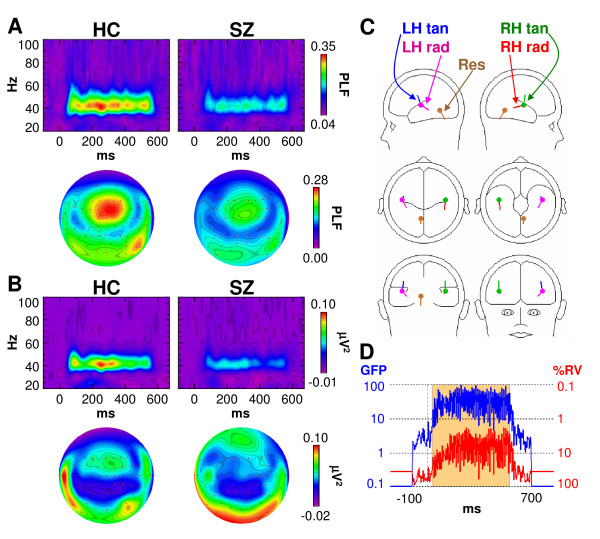
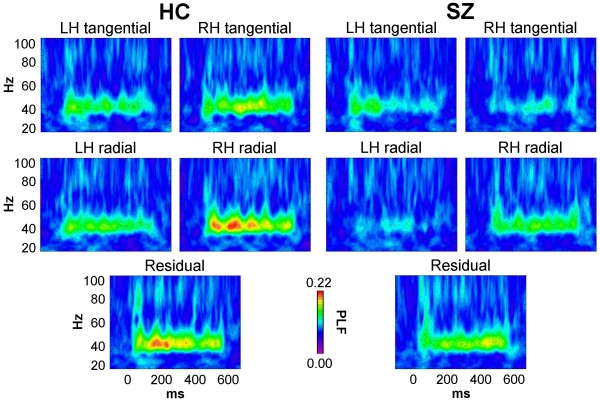
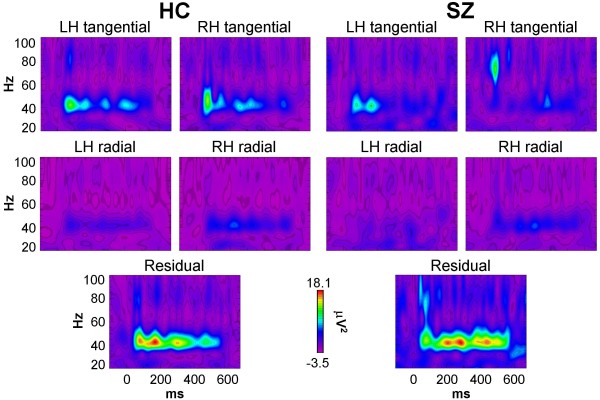
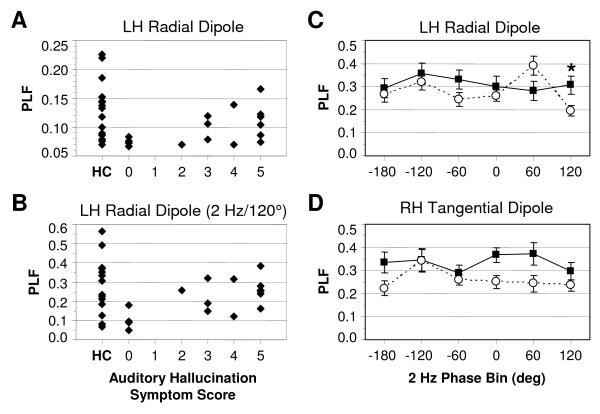
BACKGROUND: Oscillatory electroencephalogram (EEG) abnormalities may reflect neural circuit dysfunction in neuropsychiatric disorders. Previously we have found positive correlations between the phase synchronization of beta and gamma oscillations and hallucination symptoms in schizophrenia patients. These findings suggest that the propensity for hallucinations is associated with an increased tendency for neural circuits in sensory cortex to enter states of oscillatory synchrony. Here we tested this hypothesis by examining whether the 40 Hz auditory steady-state response (ASSR) generated in the left primary auditory cortex is positively correlated with auditory hallucination symptoms in schizophrenia. We also examined whether the 40 Hz ASSR deficit in schizophrenia was associated with cross-frequency interactions. Sixteen healthy control subjects (HC) and 18 chronic schizophrenia patients (SZ) listened to 40 Hz binaural click trains. The EEG was recorded from 60 electrodes and average-referenced offline. A 5-dipole model was fit from the HC grand average ASSR, with 2 pairs of superior temporal dipoles and a deep midline dipole. Time-frequency decomposition was performed on the scalp EEG and source data. RESULTS: Phase locking factor (PLF) and evoked power were reduced in SZ at fronto-central electrodes, replicating prior findings. PLF was reduced in SZ for non-homologous right and left hemisphere sources. Left hemisphere source PLF in SZ was positively correlated with auditory hallucination symptoms, and was modulated by delta phase. Furthermore, the correlations between source evoked power and PLF found in HC was reduced in SZ for the LH sources. CONCLUSION: These findings suggest that differential neural circuit abnormalities may be present in the left and right auditory cortices in schizophrenia. In addition, they provide further support for the hypothesis that hallucinations are related to cortical hyperexcitability, which is manifested by an increased propensity for high-frequency synchronization in modality-specific cortical areas.
Overview
The claims and statistics of this paper haven’t been checked yet.
Run the check — free, no account needed. It reads the open-access text and checks the sources it cites.
Integrity signals
Registry
Cites
Statistics
Figures
Verification
Claims the paper makes
The claims and statistics of this paper haven’t been checked yet.
Run the check — free, no account needed. It reads the open-access text and checks the sources it cites.
Claims other papers make about this one
Each is checked against this paper’s own text: does it say what the citing paper says it does?
In the citing paper
“a variety of evidence exists indicating subtle cortical hyperexcitability in patients with schizophrenia”
From Perineuronal nets and schizophrenia: The importance of neuronal coatings (2014) · cites this paper as Spencer et al., 2009
Self-check
Percentages, sums and reported differences re-computed from the paper’s own numbers.
The self-check needs the paper’s full text.
Citations
Cites
The assessment and analysis of handedness: The Edinburgh inventory
Oldfield, R. C. (1971) · Neuropsychologia · doi:10.1016/0028-3932(71)90067-4 · Cited by 35,900
Neural Mechanisms of Selective Visual Attention
Desimone, R., & Duncan, J. (1995) · Annual Review of Neuroscience · doi:10.1146/annurev.ne.18.030195.001205 · Cited by 8,388
Two Factor Index of Social Position
Hollingshead, A. B. (1957) · Cited by 3,757
Visual Feature Integration and the Temporal Correlation Hypothesis
Singer, W., & Gray, C. M. (1995) · Annual Review of Neuroscience · doi:10.1146/annurev.ne.18.030195.003011 · Cited by 3,217
Recent advances in the phencyclidine model of schizophrenia
(1991) · American Journal of Psychiatry · doi:10.1176/ajp.148.10.1301 · Cited by 2,904
Scale for the Assessment of Negative Symptoms (SANS)*
(1989) · The British Journal of Psychiatry · doi:10.1192/s0007125000291502 · Cited by 2,710
Scale for Assessment of Positive Symptoms (SAPS) 1984
Andreasen, N. C. (1995) · Open Scholarship Institutional Repository (Washington University in St. Louis) · Cited by 2,423
Independent Component Analysis of Electroencephalographic Data
Makeig, S., Bell, A. J., Jung, T., & B, T. J. S. A. (1995) · Cited by 1,957
The Scale for the Assessment of Negative Symptoms (SANS): Conceptual and Theoretical Foundations
Andreasen, N. C. (1989) · The British Journal of Psychiatry · doi:10.1192/s0007125000291496 · Cited by 1,532
Stimulus Specificity of Phase-Locked and Non-Phase-Locked 40 Hz Visual Responses in Human
Tallon‐Baudry, C., Bertrand, O., Delpuech, C., & Pernier, J. (1996) · Journal of Neuroscience · doi:10.1523/jneurosci.16-13-04240.1996 · Cited by 1,526
Research works printed but not linked: 1
- Stoll AL: The Psychopharmacology Reference Card. 2001, Belmont, Massachusetts, McLean Hospital
Cited by
Sorted by citations
Items 101–200 of 248
Hall, M., Chen, C., Cohen, B. M., Spencer, K., Levy, D. L., Öngür, D., & Smoller, J. W. (2015) · American Journal of Medical Genetics Part B Neuropsychiatric Genetics · doi:10.1002/ajmg.b.32298 · Cited by 36
Self-citationAtypical antipsychotics normalize low-gamma evoked oscillations in patients with schizophrenia
Alegre, M., Molero, P., Valencia, M., Mayner, G., Ortuño, F., & Artieda, J. (2016) · Psychiatry Research · doi:10.1016/j.psychres.2016.11.030 · Cited by 34
Shahriari, Y., Krusienski, D. J., Dadi, Y. S., Seo, M., Shin, H., & Choi, J. H. (2016) · The World Journal of Biological Psychiatry · doi:10.3109/15622975.2015.1112036 · Cited by 32
By our bootstraps: Comparing methods for measuring auditory 40 Hz steady‐state neural activity
Edgar, J. C., Fisk, C. L., Chen, Y., Stone‐Howell, B., Hunter, M. A., Huang, M., Bustillo, J., Cañive, J. M., & Miller, G. A. (2017) · Psychophysiology · doi:10.1111/psyp.12876 · Cited by 31
Danjou, P., Viardot, G., Maurice, D., Garcés, P., Wams, E. J., Phillips, K. G., Bertaina‐Anglade, V., McCarthy, A. P., & Pemberton, D. J. (2018) · Neuroscience & Biobehavioral Reviews · doi:10.1016/j.neubiorev.2018.09.004 · Cited by 31
Parčiauskaitė, V., Voicikas, A., Jurkuvėnas, V., Tarailis, P., Kraulaidis, M., Pipinis, E., & Griškova-Bulanova, I. (2019) · PLoS ONE · doi:10.1371/journal.pone.0223127 · Cited by 30
Alherz, F. A., Alherz, M., & Almusawi, H. M. (2017) · Schizophrenia Research Cognition · doi:10.1016/j.scog.2017.02.001 · Cited by 32
Hayes, S. H., Schormans, A. L., Sigel, G. G. P., Beh, K., Herrmann, B., & Allman, B. L. (2020) · Progress in Neurobiology · doi:10.1016/j.pneurobio.2020.101893 · Cited by 29
Phillips, K. G., & Uhlhaas, P. J. (2015) · Journal of Psychopharmacology · doi:10.1177/0269881114562093 · Cited by 30
Moseley, P., Alderson‐Day, B., Ellison, A., Jardri, R., & Fernyhough, C. (2016) · Frontiers in Neuroscience · doi:10.3389/fnins.2015.00515 · Cited by 31
Griškova-Bulanova, I., Hubl, D., van Swam, C., Dierks, T., & Koenig, T. W. (2016) · Clinical Neurophysiology · doi:10.1016/j.clinph.2016.02.009 · Cited by 29
A novel cross-frequency coupling detection method using the generalized Morse wavelets
Nakhnikian, A., Ito, S., Dwiel, L. L., Grasse, L. M., Rebec, G. V., Lauridsen, L. N., & Beggs, J. M. (2016) · Journal of Neuroscience Methods · doi:10.1016/j.jneumeth.2016.04.019 · Cited by 29
KEIL, J. E., Romero, Y. R., Balz, J., Henjes, M. S., & Senkowski, D. (2016) · Frontiers in Human Neuroscience · doi:10.3389/fnhum.2016.00104 · Cited by 28
Tikka, S. K., Nizamie, S. H., Das, B., Katshu, M. Z. U. H., & Goyal, N. (2012) · Psychiatry Research · doi:10.1016/j.psychres.2012.09.006 · Cited by 29
Cannabinoid–glutamate interactions and neural oscillations: implications for psychosis
Sherif, M. A., Cortes-Briones, J., Ranganathan, M., & Skosnik, P. D. (2017) · European Journal of Neuroscience · doi:10.1111/ejn.13800 · Cited by 28
Language-Related Neurophysiological Deficits in Schizophrenia
Hirano, S., Spencer, K., Onitsuka, T., & Hirano, Y. (2019) · Clinical EEG and Neuroscience · doi:10.1177/1550059419886686 · Cited by 27
Self-citationAberrant EEG responses to gamma-frequency visual stimulation in schizophrenia
Riečanský, I., Kašpárek, T., Řehulová, J., Katina, S., & Přikryl, R. (2010) · Schizophrenia Research · doi:10.1016/j.schres.2010.06.022 · Cited by 27
Gamma Band Phase Delay in Schizophrenia
Roach, B. J., Ford, J. M., & Mathalon, D. H. (2018) · Biological Psychiatry Cognitive Neuroscience and Neuroimaging · doi:10.1016/j.bpsc.2018.08.011 · Cited by 26
Locus Coeruleus Malfunction Is Linked to Psychopathology in Prodromal Dementia With Lewy Bodies
Hansen, N. (2021) · Frontiers in Aging Neuroscience · doi:10.3389/fnagi.2021.641101 · Cited by 26
Coffman, B. A., Ren, X., Longenecker, J., Torrence, N., Fishel, V., Seebold, D., Wang, Y., Curtis, M. T., & Salisbury, D. F. (2022) · Journal of Psychiatric Research · doi:10.1016/j.jpsychires.2022.03.059 · Cited by 28
Koychev, I. G., Deakin, J. F. W., Haenschel, C., & El‐Deredy, W. (2011) · Neuropsychologia · doi:10.1016/j.neuropsychologia.2011.06.012 · Cited by 25
Tikka, S. K., Yadav, S., Nizamie, S. H., Das, B., Tikka, D. L., & Goyal, N. (2014) · Psychiatry Investigation · doi:10.4306/pi.2014.11.4.467 · Cited by 25
40 Hz Auditory Steady-State Response: The Impact of Handedness and Gender
Mėlynytė, S., Pipinis, E., Genyte, V., Voicikas, A., Rihs, T. A., & Griškova-Bulanova, I. (2017) · Brain Topography · doi:10.1007/s10548-017-0611-x · Cited by 25
Oscillatory dynamics of Gestalt perception in schizophrenia revisited
Spencer, K., & Ghorashi, S. M. (2014) · Frontiers in Psychology · doi:10.3389/fpsyg.2014.00068 · Cited by 25
Self-citationAuditory Steady-State Responses in Schizophrenia: An Updated Meta-Analysis
Zouaoui, I., Dumais, A., Lavoie, M. E., & Potvin, S. (2023) · Brain Sciences · doi:10.3390/brainsci13121722 · Cited by 24
Wang, J., Tang, Y., Curtin, A., Chan, R. C. K., Wang, Y., Li, H., Zhang, T., Qian, Z., Guo, Q., Li, Y., et al. (2018) · Progress in Neuro-Psychopharmacology and Biological Psychiatry · doi:10.1016/j.pnpbp.2018.04.016 · Cited by 25
Wieczerzak, K. B., Patel, S. V., MacNeil, H., Scott, K. E., Schormans, A. L., Hayes, S. H., Herrmann, B., & Allman, B. L. (2020) · Neuroscience · doi:10.1016/j.neuroscience.2020.11.019 · Cited by 25
Tada, M., Kirihara, K., Koshiyama, D., Nagai, T., Fujiouka, M., Usui, K., Satomura, Y., Koike, S., Sawada, K., Matsuoka, J., et al. (2023) · Translational Psychiatry · doi:10.1038/s41398-023-02511-5 · Cited by 22
Venkatasubramanian, G., Jayakumar, P. N., Reddy, V. V., Reddy, U. S., Gangadhar, B. N., & Keshavan, M. S. (2010) · Psychiatry Research Neuroimaging · doi:10.1016/j.pscychresns.2010.01.004 · Cited by 22
EEG and MEG Probes of Schizophrenia Pathophysiology
Neustadter, E. S., Mathiak, K., & Turetsky, B. I. (2016) · Elsevier eBooks · doi:10.1016/b978-0-12-801829-3.00021-5 · Cited by 27
Sklar, A. L., Coffman, B. A., & Salisbury, D. F. (2020) · Schizophrenia Bulletin · doi:10.1093/schbul/sbaa010 · Cited by 22
Gawne, T. J., Overbeek, G., Killen, J., Reid, M. A., Kraguljac, N. V., Denney, T. S., Ellis, C. A., & Lahti, A. C. (2020) · Schizophrenia · doi:10.1038/s41537-020-00113-4 · Cited by 22
The Etiology of Auditory Hallucinations in Schizophrenia: From Multidimensional Levels
Shao, X., Liao, Y., Gu, L., Chen, W., & Tang, J. (2021) · Frontiers in Neuroscience · doi:10.3389/fnins.2021.755870 · Cited by 21
Ying, J., Zhou, D., Lin, K. C., & Gao, X. (2015) · Journal of Medical and Biological Engineering · doi:10.1007/s40846-015-0004-0 · Cited by 21
Tikka, S. K., Nizamie, S. H., Goyal, N., Pradhan, N., Tikka, D. L., & Katshu, M. Z. U. H. (2014) · International Journal of Developmental Neuroscience · doi:10.1016/j.ijdevneu.2014.11.002 · Cited by 21
The effects of dexamphetamine on the resting‐state electroencephalogram and functional connectivity
Albrecht, M. A., Roberts, G., Price, G. W., Lee, J., Iyyalol, R., & Martin-Iverson, M. T. (2015) · Human Brain Mapping · doi:10.1002/hbm.23052 · Cited by 23
Delgado-Sallent, C., Nebot, P., Gener, T., Fath, A. B., Timplalexi, M., & Puig, M. V. (2021) · Cerebral Cortex · doi:10.1093/cercor/bhab427 · Cited by 21
Wang, X., Li, Y., Chen, J., Li, Z., Li, J., & Qin, L. (2020) · The International Journal of Neuropsychopharmacology · doi:10.1093/ijnp/pyaa022 · Cited by 20
Increased visual gamma power in schizoaffective bipolar disorder
Brealy, J., Shaw, A. D., Richardson, H., Singh, K. D., Muthukumaraswamy, S. D., & Keedwell, P. A. (2014) · Psychological Medicine · doi:10.1017/s0033291714001846 · Cited by 18
The role of sub-second neural events in spontaneous brain activity
Florin, E., Watanabe, M., & Logothetis, N. K. (2014) · Current Opinion in Neurobiology · doi:10.1016/j.conb.2014.10.006 · Cited by 19
Leonhardt, B. L., Vohs, J. L., Bartolomeo, L. A., Visco, A. C., Hetrick, W. P., Bolbecker, A. R., Breier, A. F., Lysaker, P. H., & O’Donnell, B. F. (2019) · Clinical EEG and Neuroscience · doi:10.1177/1550059419857971 · Cited by 18
Transient Dose-dependent Effects of Ketamine on Neural Oscillatory Activity in Wistar-Kyoto Rats
Manduca, J. D., Thériault, R.-K., Williams, O. O. F., Rasmussen, D. J., & Perreault, M. L. (2020) · Neuroscience · doi:10.1016/j.neuroscience.2020.05.012 · Cited by 19
Albrecht, M. A., Price, G. W., Lee, J. J., Iyyalol, R., & Martin-Iverson, M. T. (2012) · Journal of Psychiatry and Neuroscience · doi:10.1503/jpn.110145 · Cited by 18
Advanced Transgenic Approaches to Understand Alcohol-Related Phenotypes in Animals
Bilbao, A. (2012) · Current topics in behavioral neurosciences · doi:10.1007/7854_2012_204 · Cited by 17
Kjærby, C., Hovelsø, N., Dalby, N. O., & Sotty, F. (2017) · Journal of Neurophysiology · doi:10.1152/jn.00081.2017 · Cited by 18
Balla, A., Ginsberg, S. D., Abbas, A. I., Sershen, H. W., & Javitt, D. C. (2020) · Biomarkers in Neuropsychiatry · doi:10.1016/j.bionps.2020.100019 · Cited by 17
Neuroimaging as a Window Into the Pathophysiological Mechanisms of Schizophrenia
Kraguljac, N. V., & Lahti, A. C. (2021) · Frontiers in Psychiatry · doi:10.3389/fpsyt.2021.613764 · Cited by 17
McKeon, S. D., Perica, M. I., Calabro, F. J., Foran, W., Hetherington, H. P., Moon, C., & Luna, B. (2024) · Progress in Neurobiology · doi:10.1016/j.pneurobio.2024.102695 · Cited by 18
Electrocorticographic effects of acute ketamine on non-human primate brains
Yan, T., Suzuki, K., Kameda, S., Maeda, M., Mihara, T., & Hirata, M. (2022) · Journal of Neural Engineering · doi:10.1088/1741-2552/ac6293 · Cited by 16
Griškova-Bulanova, I., Voicikas, A., Dapšys, K., Mėlynytė, S., Andruskevicius, S., & Pipinis, E. (2020) · Brain Sciences · doi:10.3390/brainsci11010022 · Cited by 15
Analysis Methods of EEG Signals: A Review in EEG Application for Brain Disorder
Rahman, F. A., Othman, M. F., & Shaharuddin, N. A. (2015) · Jurnal Teknologi · doi:10.11113/jt.v72.3886 · Cited by 15
Physiological Correlates of Positive Symptoms in Schizophrenia
Galderisi, S., Vignapiano, A., Mucci, A., & Boutros, N. N. (2014) · Current topics in behavioral neurosciences · doi:10.1007/7854_2014_322 · Cited by 15
Matsubara, T., Ogata, K., Hironaga, N., Uehara, T., Mitsudo, T., Shigeto, H., Maekawa, T., & Tobimatsu, S. (2018) · Clinical Neurophysiology · doi:10.1016/j.clinph.2018.11.026 · Cited by 14
Mao, Z., He, S., Mesnard, C., Synowicki, P., Zhang, Y., Chung, L., Wiesman, A. I., Wilson, T. W., & Monaghan, D. T. (2019) · Brain Research · doi:10.1016/j.brainres.2019.146571 · Cited by 14
Edgar, J. C., Fisk, C. L., Chen, Y., Stone‐Howell, B., Liu, S., Hunter, M. A., Huang, M., Bustillo, J., Cañive, J. M., & Miller, G. A. (2018) · Psychophysiology · doi:10.1111/psyp.13074 · Cited by 14
Increased Gamma Oscillations Evoked by Physically Salient Distracters are Associated with Schizotypy
Kornmayer, L., Leicht, G., & Mulert, C. (2014) · Brain Topography · doi:10.1007/s10548-014-0418-y · Cited by 13
Multifactorial Modeling of Impairment of Evoked Gamma Range Oscillations in Schizophrenia
Metzner, C., Schweikard, A., & Zurowski, B. (2016) · Frontiers in Computational Neuroscience · doi:10.3389/fncom.2016.00089 · Cited by 13
Wang, X., Zhang, X., Chang, Y., Liao, J., Liu, S., & Ming, D. (2025) · Translational Psychiatry · doi:10.1038/s41398-025-03256-z · Cited by 12
The contribution of gamma bursting to spontaneous gamma activity in schizophrenia
Spencer, K., Nakhnikian, A., Hirano, Y., & Levin, M. E. (2023) · Frontiers in Human Neuroscience · doi:10.3389/fnhum.2023.1130897 · Cited by 12
Self-citationStrong Gamma Frequency Oscillations in the Adolescent Prefrontal Cortex
Wang, Z., Singh, B., Zhou, X., & Constantinidis, C. (2022) · Journal of Neuroscience · doi:10.1523/jneurosci.1604-21.2022 · Cited by 11
Syed, S. A., Martin, A. M. S., Cortes-Briones, J., & Skosnik, P. D. (2022) · Clinical EEG and Neuroscience · doi:10.1177/15500594221138280 · Cited by 12
Nakanishi, S., Tamura, S., Hirano, S., Takahashi, J., Kitajima, K., Takai, Y., Mitsudo, T., Togao, O., Nakao, T., Onitsuka, T., et al. (2023) · Frontiers in Neuroscience · doi:10.3389/fnins.2023.1277733 · Cited by 11
Korostenskaja, M., Rukšėnas, O., Pipinis, E., & Griškova-Bulanova, I. (2015) · Experimental Brain Research · doi:10.1007/s00221-015-4494-3 · Cited by 11
Konoike, N., Iwaoki, H., Miwa, M., Sakata, H., Itoh, K., & Nakamura, K. (2022) · Scientific Reports · doi:10.1038/s41598-022-13228-8 · Cited by 11
Differences in EEG complexity of cognitive activities among subtypes of schizophrenia
Qi, H., Zou, J., Yao, Z., Zhao, G., Zhang, J., Liu, C., & Chen, M. (2025) · Frontiers in Psychiatry · doi:10.3389/fpsyt.2025.1473693 · Cited by 10
Roach, B. J., Hirano, Y., Ford, J. M., Spencer, K., & Mathalon, D. H. (2022) · Clinical EEG and Neuroscience · doi:10.1177/15500594221130896 · Cited by 10
Self-citationGautam, D., Raza, M. U., Miyakoshi, M., Molina, J. L., Joshi, Y. B., Clayson, P. E., Light, G. A., Swerdlow, N. R., & Sivarao, D. V. (2023) · Neuropharmacology · doi:10.1016/j.neuropharm.2023.109707 · Cited by 10
A Network Model of the Modulation of γ Oscillations by NMDA Receptors in Cerebral Cortex
Susin, E., & Alain Destexhe, A. (2023) · eNeuro · doi:10.1523/eneuro.0157-23.2023 · Cited by 11
Candidate Genes Involved in the Expression of Psychotic Symptoms: A Focus on Hallucinations
Sanjuán, J., Moltó, M. D., & Tolosa, A. (2012) · Springer eBooks · doi:10.1007/978-1-4614-4121-2_13 · Cited by 10
Choi, K., Im, C., Yang, C., Lee, H. S., Kim, S., & Lee, S. (2023) · Schizophrenia · doi:10.1038/s41537-023-00377-6 · Cited by 9
Donati, F. L., Mayeli, A., Couto, B. A., Sharma, K., Janssen, S., Krafty, R., Casali, A. G., & Ferrarelli, F. (2024) · Biological Psychiatry Cognitive Neuroscience and Neuroimaging · doi:10.1016/j.bpsc.2024.07.013 · Cited by 9
Siekmeier, P. J. (2015) · Neuroscience & Biobehavioral Reviews · doi:10.1016/j.neubiorev.2015.09.014 · Cited by 9
Neural synchronization as a hypothetical explanation of the psychoanalytic unconscious
Ceylan, M. E., Dönmez, A., Ünsalver, B. Ö., & Evrensel, A. (2015) · Consciousness and Cognition · doi:10.1016/j.concog.2015.12.011 · Cited by 9
Endogenously generated gamma‐band oscillations in early visual cortex: A neurofeedback study
Merkel, N. B., Wibral, M., Bland, G., & Singer, W. (2018) · Human Brain Mapping · doi:10.1002/hbm.24189 · Cited by 9
Kornmayer, L., Leicht, G., & Mulert, C. (2016) · The World Journal of Biological Psychiatry · doi:10.1080/15622975.2016.1258491 · Cited by 9
de la Salle, S., Choueiry, J., Payumo, M., Devlin, M., Noël, C., Abozmal, A., Hyde, M., Baysarowich, R., Duncan, B., & Knott, V. (2022) · Clinical EEG and Neuroscience · doi:10.1177/15500594231179679 · Cited by 8
Consciousness, Memory, and Hallucinations
Behrendt, R. (2011) · Springer eBooks · doi:10.1007/978-1-4614-0959-5_3 · Cited by 8
Wang, X., Hu, R., Wang, T., Yuan, C., Liu, X., Li, M., Gao, Y. H., Liu, S., & Ming, D. (2024) · IEEE Journal of Biomedical and Health Informatics · doi:10.1109/jbhi.2024.3509438 · Cited by 7
Potential Roles for the GluN2D NMDA Receptor Subunit in Schizophrenia
Vinnakota, C., Hudson, M. R., Jones, N. C., Sundram, S., & Hill, R. (2023) · International Journal of Molecular Sciences · doi:10.3390/ijms241411835 · Cited by 7
Abnormal connectivity and activation during audiovisual speech perception in schizophrenia
Hirano, Y., Nakamura, I., & Tamura, S. (2023) · European Journal of Neuroscience · doi:10.1111/ejn.16183 · Cited by 7
Zimmerman, E. M., Golla, M. A., Paciora, R. A., Epstein, P. S., & Konopka, L. M. (2011) · Activitas Nervosa Superior · doi:10.1007/bf03379939 · Cited by 7
Dexamphetamine reduces auditory P3 delta power and phase-locking while increasing gamma power
Albrecht, M. A., Price, G. W., Lee, J. J., Iyyalol, R., & Martin-Iverson, M. T. (2012) · European Neuropsychopharmacology · doi:10.1016/j.euroneuro.2012.02.009 · Cited by 7
Local Oscillatory Brain Dynamics of Mind Wandering in Schizophrenia
Prieto, M., Iglesias‐Parro, S., Soriano, M. F., & Ibáñez-Molina, A. J. (2021) · Brain Sciences · doi:10.3390/brainsci11070910 · Cited by 7
Yanagi, M., Tsuchiya, A., Hosomi, F., Terada, T., Ozaki, S., Shirakawa, O., & Hashimoto, M. (2022) · Scientific Reports · doi:10.1038/s41598-022-15311-6 · Cited by 7
Pathophysiology of Schizophrenia
Padmanabhan, J. L., & Keshavan, M. S. (2014) · Springer eBooks · doi:10.1007/978-1-4939-0656-7_4 · Cited by 7
Adraoui, F. W., Hettak, K., Viardot, G., Alix, M., Guiffard, S., Meot, B., L’Hostis, P., Maurin, A., Delpy, E., Rochelle, C. D. L., et al. (2024) · International Journal of Molecular Sciences · doi:10.3390/ijms25021035 · Cited by 7
Sugiyama, S., Inui, K., Ohi, K., & Shioiri, T. (2024) · Progress in Neuro-Psychopharmacology and Biological Psychiatry · doi:10.1016/j.pnpbp.2024.111096 · Cited by 6
Neural Binding, Consciousness, and Mental Disorders: Complexity as a Common Element
Assis, L. P. G. D. (2015) · Activitas Nervosa Superior · doi:10.1007/bf03379943 · Cited by 6
Nakamura, T., Dinh, T. H., Asai, M., Matsumoto, J., Nishimaru, H., Setogawa, T., Honda, S., Yamada, H., Mihara, T., & Nishijo, H. (2022) · Brain Research Bulletin · doi:10.1016/j.brainresbull.2022.12.006 · Cited by 6
Li, S., Hu, R., Yan, H., Chu, L., Qiu, Y., Gao, Y., Li, M., & Li, J. (2023) · Psychiatry Research Neuroimaging · doi:10.1016/j.pscychresns.2023.111748 · Cited by 6
Graux, J., Bidet‐Caulet, A., Bonnet‐Brilhault, F., Camus, V., & Bruneau, N. (2014) · Schizophrenia Research · doi:10.1016/j.schres.2014.03.007 · Cited by 8
Metzner, C., Mäki‐Marttunen, T., Zurowski, B., & Steuber, V. (2018) · Computational Psychiatry · doi:10.1162/cpsy_a_00015 · Cited by 6
Power spectral density and coherence analysis of eye disease with and without visual hallucination
Yıldız, S., Yuluğ, B., Kocabora, M. S., & Hanoğlu, L. (2020) · Neuroscience Letters · doi:10.1016/j.neulet.2020.135444 · Cited by 5
Bianciardi, B., Mastek, H., Franka, M., & Uhlhaas, P. J. (2024) · Schizophrenia Bulletin · doi:10.1093/schbul/sbae090 · Cited by 6
Trigeminal Nerve Stimulation for olfactory hallucinations in schizophrenia: case study
Gomes, J. S., Akiba, H. T., Dias, Á. M., Soares, A. R. A., Taiar, I., Gadelha, A., Cordeiro, Q., & Shiozawa, P. (2016) · Schizophrenia Research · doi:10.1016/j.schres.2016.08.002 · Cited by 5
Lee, J. H. (2017) · Journal of Computational Neuroscience · doi:10.1007/s10827-017-0666-4 · Cited by 5
Okamoto, H., Onitsuka, T., Kuga, H., Oribe, N., Nakayama, N., Fukushima, S., Nakao, T., & Ueno, T. (2022) · Frontiers in Psychiatry · doi:10.3389/fpsyt.2022.833896 · Cited by 4
A Novel Approach to Study Coherent γ-Band Oscillations in Hippocampal Brain Sections
Díaz, J. C. R., Jenkins, P. M., Pritchett, D. L., & Jones, K. S. (2023) · eNeuro · doi:10.1523/eneuro.0167-23.2023 · Cited by 4
Sklar, A. L., Matinrazm, S., Esseku, A., López‐Caballero, F., Ren, X., Chlpka, L., Curtis, M. T., Coffman, B. A., & Salisbury, D. F. (2024) · Schizophrenia Research · doi:10.1016/j.schres.2024.03.042 · Cited by 4
Griškova-Bulanova, I., Pipinis, E., Voicikas, A., & Koenig, T. W. (2018) · Neuroscience Letters · doi:10.1016/j.neulet.2018.03.033 · Cited by 4
Metadata
- Authors
- Spencer, K. M., Niznikiewicz, M. A., Nestor, P. G., Shenton, M. E., & McCarley, R. W.
- Affiliations
- Harvard University (US)
- Brigham and Women's Hospital (US)
- Corresponding author
- Spencer, Kevin M
- Venue
- BMC Neuroscience
- Published
- 2009-07-20
- Volume
- 10
- Issue
- 1
- Pages
- 85-85
- ISSN
- 1471-2202 (ISSN-L)
- PMC
- PMC2719648
- OpenAlex
- W2124019844
- Cited by
- 253
- References
- 79
- Citations by year
- 2026: 6 · 2025: 6 · 2024: 12 · 2023: 16 · 2022: 17 · 2021: 16 · 2020: 13 · 2019: 11 · 2018: 13 · 2017: 17 · 2016: 16 · 2015: 23 · 2014: 20 · 2013: 22 · 2012: 18
- FWCI
- 7.26
- Type
- journal article
- Language
- en
- Open access
- gold
- doi.org
- Licence
- Locations
- BMC Neuroscience (publishedVersion, cc-by)
- PubMed Central (publishedVersion, cc-by)
- PubMed (publishedVersion)
- Digital Access to Scholarship at Harvard (DASH) (Harvard University) (submittedVersion, cc-by)
- DOAJ (DOAJ: Directory of Open Access Journals) (submittedVersion)
- Funders
- U.S. Department of Veterans Affairs (R01 MH080187, I01 CX000154)
- National Alliance for Research on Schizophrenia and Depression
- U.S. Public Health Service (R0140799, R03 076760)
- National Institute of Mental Health (MH080187, R01MH080187)
- Topics
- Life Sciences › Neuroscience › Cognitive Neuroscience › Neural dynamics and brain function
- Health Sciences › Medicine › Psychiatry and Mental health › Schizophrenia research and treatment
- Life Sciences › Neuroscience › Cognitive Neuroscience › Hallucinations in medical conditions
- Keywords
- schizophrenia, auditory hallucinations, gamma oscillations, 40 Hz auditory steady-state response, cross-frequency coupling, delta phase, cortical hyperexcitability
- MeSH terms
- Adult, Auditory Cortex, Brain Mapping, Electroencephalography, Evoked Potentials, Auditory, Hallucinations, Humans, Functional Laterality, Male, Middle Aged, Schizophrenia, Signal Processing, Computer-Assisted
About these checks
Registry, retraction, Cites and statistics results are computed, not judged, with one exception: a printed reference that no index lists is read once by a model before it counts as a citation error. Claims are extracted by a model and kept only when their quote appears verbatim in the text; each cited source is then checked, with a model’s help, for whether it says what the claim relies on. Those verdicts can be wrong — read the claim’s quote and the cited source before relying on one.
Statistics and arithmetic are recomputed, not judged.
Confidence bands are shown only for fields calibrated on our annotated test set. None is calibrated yet, so no band is shown.
What counts as a claim ›How we measure confidence ›How we check this ›
Are you an author, or do you see a problem with this page? Request a review
