

Gene expression changes following extinction testing in a heroin behavioral incubation model
Open accessThe DOI matches its Crossref record; 57 of the 59 references it cites were found in a registry or an index.
Abstract
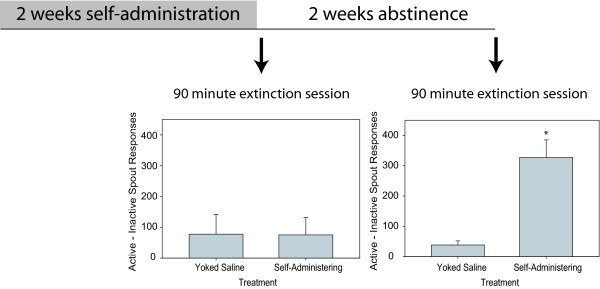
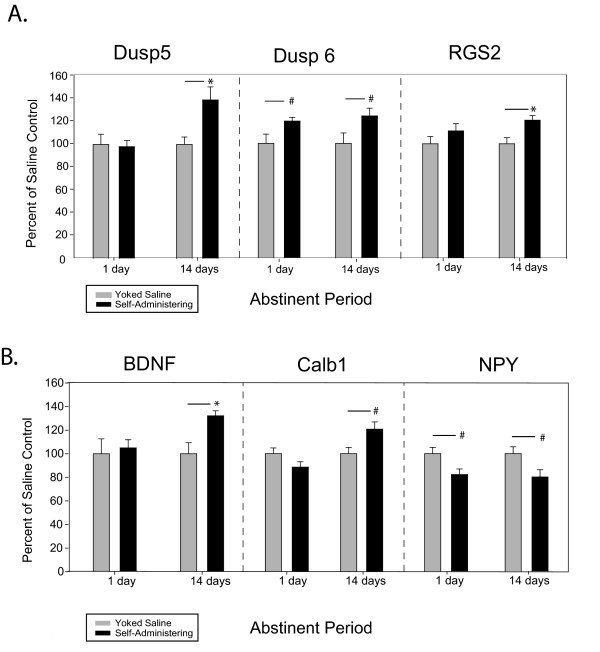
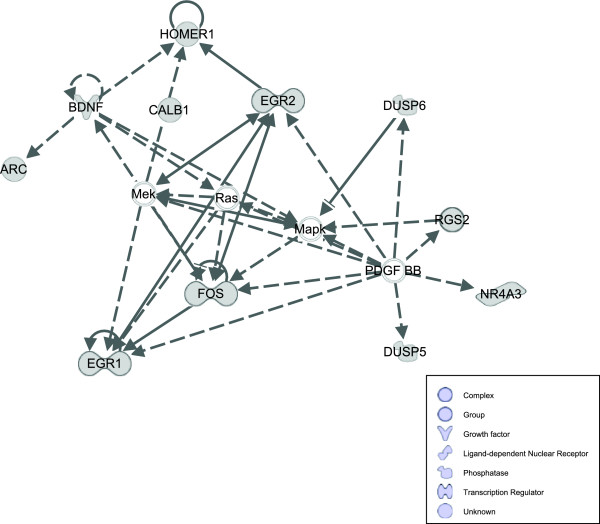
Background: A number of gene expression studies have investigated changes induced by drug exposure, but few reports describe changes that persist following relapse. In this study, genome-wide analysis of gene expression was conducted following an extinction session (90 min) in rats that expressed behavioral incubation of heroin-seeking and goal-directed behavior. As an important modulator of goal-directed behavior, the medial prefrontal cortex (mPFC) was the target of genomic analysis. Rats were trained to self-administer heroin during 3 h daily sessions for 14 d. Following the self-administration period, rats were reintroduced to the self-administration chambers for a 90-minute extinction session in which they could seek heroin, but received none. Extinction sessions were conducted on groups after either 1 d or 14 d of drug-free enforced abstinence to demonstrate behavioral incubation. Results: Behavioral data demonstrated incubation (increased expression) of heroin-seeking and goal-directed behavior after the 14 d abstinent period. That is, following 14 d of enforced abstinence, animals displayed heightened drug-seeking behavior when returned to the environment where they had previously received heroin. This increased drug-seeking took place despite the fact that they received no drug during this extinction session. Whole genome gene expression analysis was performed and results were confirmed by quantitative real-time PCR (RT-qPCR). Microarrays identified 66 genes whose expression was identified as changed by at least 1.4 fold (p < 0.02) following 14 d of abstinence and the 90-minute extinction session compared to the saline treated controls. Orthogonal confirmation by RT-qPCR demonstrated significant alterations in bdnf, calb1, dusp5, dusp6, egr1, npy, rgs2. Conclusion: Ontological analysis indicates that several of the genes confirmed to be changed are important for neuroplasticity, and through that role may impact learning and behavior. The importance of drug-seeking behavior and memory of previous drug-taking sessions suggest that such genes may be important for relapse. The global gene expression analysis adds to the knowledge of heroin-induced changes and further highlights similarities between heroin and other drugs of abuse.
Overview
The claims and statistics of this paper haven’t been checked yet.
Free: it reads the open-access text and checks the first 5 claims that cite a source we can check. Create a free account to check every claim.
Integrity signals
Registry
Cites
Statistics
Figures
Verification
Claims the paper makes
The claims and statistics of this paper haven’t been checked yet.
Free: it reads the open-access text and checks the first 5 claims that cite a source we can check. Create a free account to check every claim.
Self-check
Percentages, sums and reported differences re-computed from the paper’s own numbers.
The self-check needs the paper’s full text.
Citations
Cites
Analysis of Relative Gene Expression Data Using Real-Time Quantitative PCR and the 2−ΔΔCT Method
Livak, K. J., & Schmittgen, T. D. (2001) · Methods · doi:10.1006/meth.2001.1262 · Cited by 180,860
What is the role of dopamine in reward: hedonic impact, reward learning, or incentive salience?
Berridge, K. C., & Robinson, T. E. (1998) · Brain Research Reviews · doi:10.1016/s0165-0173(98)00019-8 · Cited by 4,127
Dopamine, learning and motivation.
Wise, R. A. (2004) · Nature Reviews Neuroscience · doi:10.1038/nrn1406 · Cited by 3,379 · cited 1×
“Increased drug-seeking has been inferred to represent the craving that drives humans to relapse [2,14,15].”
BackgroundMicroarray data analysis: from disarray to consolidation and consensus
Allison, D. B., Cui, X., Page, G. P., & Sabripour, M. (2006) · Nature Reviews Genetics · doi:10.1038/nrg1749 · Cited by 1,339 · cited 1×
“4 fold and greater differences in expression in accordance with standards for microarray analysis [28].”
ResultGOstat: find statistically overrepresented Gene Ontologies within a group of genes
Beißbarth, T., & Speed, T. P. (2004) · Bioinformatics · doi:10.1093/bioinformatics/bth088 · Cited by 1,257
Differential regulation of MAP kinase signalling by dual-specificity protein phosphatases
Owens, D. M., & Keyse, S. M. (2007) · Oncogene · doi:10.1038/sj.onc.1210412 · Cited by 777 · cited 1×
“Dusp5 preferentially dephosphorylates ERK [36,37] and is intranuclear, while dusp6 is cytoplasmic [38].”
BackgroundChomczyński, P., & Mackey, K. (1995) · PubMed · Cited by 590
Infralimbic Prefrontal Cortex Is Responsible for Inhibiting Cocaine Seeking in Extinguished Rats
Peters, J., LaLumiere, R. T., & Kalivas, P. W. (2008) · Journal of Neuroscience · doi:10.1523/jneurosci.1045-08.2008 · Cited by 537 · cited 1×
“Additionally, the ventral mPFC is believed to play an essential role for expression of incubation of cocaine-seeking [19] and reinstatement of cocaine-seeking [20].”
BackgroundNeurobiological substrates for the dark side of compulsivity in addiction
Koob, G. F. (2009) · Neuropharmacology · doi:10.1016/j.neuropharm.2008.07.043 · Cited by 458 · cited 2×
“Although npy is a neurotransmitter most recognized for its role in regulating food intake [49], it has been hypothesized that npy may contribute to the negative motivational state of withdrawal [50].”
BackgroundIncubation of cocaine craving after withdrawal: a review of preclinical data
Lu, L., Grimm, J. W., Hope, B. T., & Shaham, Y. (2004) · Neuropharmacology · doi:10.1016/j.neuropharm.2004.06.027 · Cited by 446 · cited 1×
“Incubation is a behavioral phenomenon that is characterized by increased drug seeking following increasing periods of abstinence after the last self-administration session [13].”
Background
Cited by
Brain-Derived Neurotrophic Factor and Neuropsychiatric Disorders
Autry, A. E., & Monteggia, L. M. (2012) · Pharmacological Reviews · doi:10.1124/pr.111.005108 · Cited by 1,390
“BDNF mRNA expression is also enhanced after long-term withdrawal from self-administered heroin (Kuntz-Melcavage et al., 2009).”
BackgroundNeurobiology of the incubation of drug craving
Pickens, C. L., Airavaara, M., Theberge, F., Fanous, S., Hope, B. T., & Shaham, Y. (2011) · Trends in Neurosciences · doi:10.1016/j.tins.2011.06.001 · Cited by 642
The Role of Early Growth Response 1 (EGR1) in Brain Plasticity and Neuropsychiatric Disorders
Duclot, F., & Kabbaj, M. (2017) · Frontiers in Behavioral Neuroscience · doi:10.3389/fnbeh.2017.00035 · Cited by 363
Drug Addiction: Hyperkatifeia/Negative Reinforcement as a Framework for Medications Development
Koob, G. F. (2021) · Pharmacological Reviews · doi:10.1124/pharmrev.120.000083 · Cited by 337
Epigenetic Mechanisms of Opioid Addiction
Browne, C. J., Godino, A., Salery, M., & Nestler, E. J. (2020) · Biological Psychiatry · doi:10.1016/j.biopsych.2019.06.027 · Cited by 223
Towers, E. B., Williams, I. L., Qillawala, E. I., Rissman, E. F., & Lynch, W. J. (2022) · Pharmacological Reviews · doi:10.1124/pharmrev.121.000361 · Cited by 174
Relapse to opioid seeking in rat models: behavior, pharmacology and circuits
Reiner, D. J., Fredriksson, I., Lofaro, O. M., Bossert, J. M., & Shaham, Y. (2018) · Neuropsychopharmacology · doi:10.1038/s41386-018-0234-2 · Cited by 139
The role of neuropeptide Y (NPY) in alcohol and drug abuse disorders
Robinson, S. L., & Thiele, T. E. (2017) · International Review of Neurobiology · doi:10.1016/bs.irn.2017.06.005 · Cited by 75
Piechota, M., Korostyński, M., Sikora, M., Gołda, S., Dzbek, J., & Przewłocki, R. (2012) · Genes Brain & Behavior · doi:10.1111/j.1601-183x.2012.00777.x · Cited by 66
“Genes from a cluster enriched in the nucleus accumbens were previously shown to be regulated by chronic treatment with drugs of abuse (i.e. Cartpt, Pdyn and Rgs2) (Dandekar et al. 2008; Hurd et al. 1992; Kuntz-Melcavage et al. 2009; Zió -lkowska et al. 2006).”
BackgroundProtracted abstinence from distinct drugs of abuse shows regulation of a common gene network
Le Merrer, J., Befort, K., Gardon, O., Filliol, D., Darcq, E., Dembele, D., Becker, J. A. J., & Kieffer, B. L. (2012) · Addiction Biology · doi:10.1111/j.1369-1600.2011.00365.x · Cited by 58
“Drug abstinence has been little studied at the transcriptome level (Spijker et al. 2004; Kuntz-Melcavage et al. 2009), and the identification of gene regulation patterns, which pertain or develop after prolonged abstinence from distinct drugs of abuse, remains an open research field.”
BackgroundTheberge, F. R. M., Pickens, C. L., Goldart, E. M., Fanous, S., Hope, B. T., Liu, Q., & Shaham, Y. (2012) · Psychopharmacology · doi:10.1007/s00213-012-2784-z · Cited by 62
“Additionally, acute cue-driven activation of BDNF signaling during late abstinence (Kuntz-Melcavage et al. 2009) in mPFC or potentially drug-induced long-term BDNF-driven epigenetic changes in this brain area (Sadri-Vakili et al.”
InfluentialFanous, S., Guez‐Barber, D., Goldart, E. M., Schrama, R., Theberge, F. R. M., Shaham, Y., & Hope, B. T. (2012) · Journal of Neurochemistry · doi:10.1111/jnc.12074 · Cited by 50
Dual-specificity phosphatases in mental and neurological disorders
An, N., Bassil, K. C., Jowf, G. I. A., Steinbusch, H. W. M., Rothermel, M., de Nijs, L., & Rutten, B. P. F. (2020) · Progress in Neurobiology · doi:10.1016/j.pneurobio.2020.101906 · Cited by 53
“The importance of drug-seeking behavior and memory of previous drug-taking sessions suggest that such genes may be essential for relapse (Kuntz-Melcavage et al., 2009).”
BackgroundImperio, C. G., McFalls, A. J., Hadad, N., Blanco-Berdugo, L., Masser, D. R., Colechio, E. M., Coffey, A. A., Bixler, G. V., Stanford, D. R., Vrana, K. E., et al. (2018) · Neuropharmacology · doi:10.1016/j.neuropharm.2018.06.037 · Cited by 46
“Targeted gene expression analysis was conducted on the VTA, mPFC, and NAc using genes of interest that have been shown to be altered with heroin administration or abstinence (Kuntz-Melcavage et al., 2009; Kuntz et al., 2008a) to determine both their responsiveness to environmental enrichment and to identify specific g…”
InfluentialSelf-citationNeuroepigenetics and addictive behaviors: Where do we stand?
Nogueira, D. D. S., Mérienne, K., & Befort, K. (2018) · Neuroscience & Biobehavioral Reviews · doi:10.1016/j.neubiorev.2018.08.018 · Cited by 45
“Earlier studies have investigated drug abstinence at the transcriptome level (Kuntz-Melcavage et al., 2009; Spijker et al., 2004) and even fewer studies directly compared adaptations across drugs.”
BackgroundGao, P., Limpens, J. H. W., Spijker, S., Vanderschuren, L. J. M. J., & Voorn, P. (2015) · Addiction Biology · doi:10.1111/adb.12330 · Cited by 38
“(Kuntz-Melcavage et al. 2009; Larson et al. 2010; Zahm et al. 2010; Fumagalli et al. 2013; Radley et al. 2015).”
BackgroundEffects of drugs of abuse on the central neuropeptide Y system: NPY and drug abuse
Gonçalves, J., Martins, J., Baptista, S., Ambrósio, A. F., & Silva, A. P. (2015) · Addiction Biology · doi:10.1111/adb.12250 · Cited by 41
“However, during abstinence period, rat NPY mRNA expression is reduced (Kuntz-Melcavage et al. 2009).”
BackgroundMadsen, H. B., Brown, R. M., Short, J. L., & Lawrence, A. J. (2012) · The Journal of Physiology · doi:10.1113/jphysiol.2011.225219 · Cited by 43
“Although the majority of this research has been performed with respect to cocaine seeking, relapse to opiate seeking appears to involve similar circuitry with some additional structures identified (Kuntz et al. 2008; Rogers et al. 2008; Kuntz-Melcavage et al. 2009; Badiani et al. 2011).”
BackgroundSu, H., Li, Z., Du, J., Jiang, H., Chen, Z., Sun, H., & Zhao, M. (2015) · American Journal of Medical Genetics Part B Neuropsychiatric Genetics · doi:10.1002/ajmg.b.32376 · Cited by 33
“Both animal and human studies have indicated neurobiological and psychological factors could lead to relapse [Kuntz-Melcavage et al., 2009; Li et al., 2014; Zhou et al., 2015].”
Imperio, C. G., McFalls, A. J., Colechio, E. M., Masser, D. R., Vrana, K. E., Grigson, P. S., & Freeman, W. M. (2015) · Brain Research Bulletin · doi:10.1016/j.brainresbull.2015.12.005 · Cited by 31
Self-citationPreventing incubation of drug craving to treat drug relapse: from bench to bedside
Liu, X., Yuan, K., Lu, T., Lin, X., Zheng, W., Xue, Y.-X., Shi, J., Lü, L., & Han, Y. (2023) · Molecular Psychiatry · doi:10.1038/s41380-023-01942-2 · Cited by 28
“Similar increases in BDNF levels were also found in other brain regions, such as the NAc and amygdala in “cocaine-incubated rats” [69, 70] and mPFC in “heroin-incubated rats” [71].”
BackgroundBisagno, V., & Cadet, J. L. (2018) · Neurochemistry International · doi:10.1016/j.neuint.2018.12.004 · Cited by 27
Hitchcock, L. N., Raybuck, J. D., Wood, M. A., & Lattal, K. M. (2018) · Psychopharmacology · doi:10.1007/s00213-018-5122-2 · Cited by 28
“These HDAC inhibitors enhance extinction after fear or place preference conditioning (e.g., Bredy et al. 2007; Gaglio et al. 2014; Lattal et al. 2007; Malvaez et al. 2010; Raybuck et al. 2013; reviewed in Whittle and Singewald 2014; Singewald et al. 2015), but little is known about specific HDACs…”
Fattore, L., Spano, M. S., Melis, V., Fadda, P., & Fratta, W. (2011) · British Journal of Pharmacology · doi:10.1111/j.1476-5381.2011.01459.x · Cited by 27
“This increased expression of heroin-seeking (i.e. incubation) is accompanied by important time-dependent changes in the expression of genes that are important for neuroplasticity (Kuntz-Melcavage et al., 2009).”
BackgroundGeoffroy, H., & Noble, F. (2016) · Vitamins and hormones · doi:10.1016/bs.vh.2016.10.009 · Cited by 28
Mayberry, H. L., Bavley, C. C., Karbalaei, R., Peterson, D. R., Bongiovanni, A. R., Ellis, A. S., Downey, S. H., Toussaint, A. B., & Wimmer, M. E. (2022) · Neuropsychopharmacology · doi:10.1038/s41386-022-01289-2 · Cited by 23
“The present results reinforce the idea that reexposure to cues, the route and regimen of exposure, as well as biological sex are all critical considerations in establishing the molecular correlates of drug seeking and drug craving behaviors [20, 37, 78, 88].”
ResultSamson, K. R., Xu, W., Kortagere, S., & España, R. A. (2022) · Addiction Biology · doi:10.1111/adb.13241 · Cited by 23
Cross talk about the role of Neuropeptide Y in CNS disorders and diseases
Bale, R., & Doshi, G. (2023) · Neuropeptides · doi:10.1016/j.npep.2023.102388 · Cited by 23
Marrero‐Cristobal, G., Gelpi‐Dominguez, U., Silva, R. J. M., Alvarado-Torres, J. K., Perez‐Torres, J., Perez‐Perez, Y., & Sepulveda-Orengo, M. T. (2021) · Journal of Neuroscience Research · doi:10.1002/jnr.24990 · Cited by 23
“…abstinence from heroin self- administration, BDNF gene expression in the rat's medial prefrontal cortex and drug- seeking behavior increased (Kuntz- Melcavage et al., 2009); and mature- and pro- BDNF expression increased after morphine withdrawal in the frontal cortex (Bachis et al., 2017; Peregud…”
BackgroundFalconnier, C., Caparros-Roissard, A., Decraene, C., & Lutz, P.-É. (2023) · Molecular Psychiatry · doi:10.1038/s41380-023-02238-1 · Cited by 21
“777 No similar analysis was possible in rats, as all available studies used Sprague-Dawley (except 778 one that did not state the strain used[67]).”
BackgroundDrug-associated cues and drug dosage contribute to increased opioid seeking after abstinence
Zanda, M. T., Floris, G., & Daws, S. E. (2021) · Scientific Reports · doi:10.1038/s41598-021-94214-4 · Cited by 21
Heroin Regulates Orbitofrontal Circular RNAs
Floris, G., Gillespie, A., Zanda, M. T., Dabrowski, K. R., & Sillivan, S. E. (2022) · International Journal of Molecular Sciences · doi:10.3390/ijms23031453 · Cited by 19
Geoffroy, H., Puig, S., Benturquia, N., & Noble, F. (2014) · The International Journal of Neuropsychopharmacology · doi:10.1093/ijnp/pyu088 · Cited by 15
“…reflects brain BDNF tissue (Klein et al., 2011), this is in agreement with previous work demonstrating a higher level of BDNF gene expression in the medial cortex of rats after 14, but not 1, day of forced abstinence following 2 weeks of heroin self-administration (Kuntz-Melcavage et al., 2009).”
ResultLiang, J., Chen, J.-H., Chen, X.-H., Peng, Y.-H., & Zheng, X. (2010) · Behavioural Brain Research · doi:10.1016/j.bbr.2010.08.012 · Cited by 13
mPFC DUSP1 mediates adolescent cocaine exposure‐induced higher sensitivity to drug in adulthood
Wei, X., Chang, J., Cheng, Z., Chen, W., Guo, H., Liu, Z., Mai, Y., Hu, T., Zhang, Y., Cai, Q., et al. (2023) · EMBO Reports · doi:10.15252/embr.202356981 · Cited by 10
“Kuntz-Melcavage et al (2009) reported that Dusp5 and Dusp6 genes were significantly increased in mPFC of heroin-exposed rats, which may be involved in the incubation of heroin-seeking behavior.”
Imhoff, A. M., Sweeney, N. L., Bongard, R. D., Syrlybaeva, R. R., Gupta, A., Carpio, E. D., Talipov, M. R., Garcia-Keller, C., Crans, D. C., Ramchandran, R., et al. (2024) · Frontiers in Chemical Biology · doi:10.3389/fchbi.2024.1385560 · Cited by 9
Roviš, D., Vasiljev, V., Pražnikar, Z. J., Petelin, A., Drevenšek, G., Peruč, D., & Černelič-Bizjak, M. (2019) · Journal of Mental Health · doi:10.1080/09638237.2019.1644492 · Cited by 10
PYY3-36 infused systemically or directly into the VTA attenuates fentanyl seeking in male rats
Caffrey, A., Lavecchia, E., Merkel, R., Zhang, Y., Chichura, K. S., Hayes, M. R., Doyle, R. P., & Schmidt, H. D. (2023) · Neuropharmacology · doi:10.1016/j.neuropharm.2023.109686 · Cited by 8
Zanda, M. T., Saikali, L., Morris, P., & Daws, S. E. (2023) · Advances in Drug and Alcohol Research · doi:10.3389/adar.2023.11668 · Cited by 7
Performing Integrative Functional Genomics Analysis in GeneWeaver.org
Jay, J. J., & Chesler, E. J. (2013) · Methods in molecular biology · doi:10.1007/978-1-62703-721-1_2 · Cited by 6
Pintori, N., Piva, A., Guardiani, V., Decimo, I., & Chiamulera, C. (2021) · Behavioural Brain Research · doi:10.1016/j.bbr.2021.113556 · Cited by 6
Li, Z., Liu, Y.-F., Li, K., DuanMu, H., Chang, Z., Li, Z., Zhang, S.-Z., & Xu, Y. (2011) · Journal of Biomedical Informatics · doi:10.1016/j.jbi.2011.08.014 · Cited by 5
“[28] GSE13166 GPL7294 5 6 syndrome shared by the drugs.”
BackgroundBrox, B. W., Day, D. J., & Ellenbroek, B. A. (2018) · OBM Neurobiology · doi:10.21926/obm.neurobiol.1802010 · Cited by 4
Koob, G. F., Arends, M. A., McCracken, M. L., & Moal, M. L. (2023) · Elsevier eBooks · doi:10.1016/b978-0-12-816988-9.00001-1 · Cited by 2
Taborda-Bejarano, J. P., Meyerink, M. E., Crans, D. C., Ramchandran, R., & García‐Keller, C. (2025) · Cells · doi:10.3390/cells15010032 · Cited by 1
“DUSP5 and DUSP6 mRNA expression is upregulated (~1.4-fold) in the prefrontal cortex following heroin abstinence [16].”
InfluentialMuenstermann, C., Baracz, S. J., Heffernan, E. C., Lister, N. C., Waters, P. D., & Clemens, K. J. (2026) · Cellular and Molecular Neurobiology · doi:10.1007/s10571-026-01667-0 · Cited by 1
“Here, the extent to which animals’ relapse to drug seeking increases with time since last drug exposure (Li, Caprioli, et al., 2015), a pattern of behaviour that has been linked to a progressive increase in the expression of plasticity-related genes (Cates et al. 2018; Kuntz-Melcavage et al. 2009).”
Theoretical Background and Literature Review
Stallwitz, A. (2012) · Springer eBooks · doi:10.1007/978-94-007-3861-4_2
Transcriptional Effects of Heroin and Methamphetamine in the Striatum
Przewłocki, R., Korostyński, M., & Piechota, M. (2016) · Elsevier eBooks · doi:10.1016/b978-0-12-800213-1.00087-0
Zhang, W., Deng, X., Liu, H., Ke, J., Xiang, M., Ma, Y., Zhang, L., Yang, M. J., Liu, Y., & Huang, F. (2022) · Frontiers in Genetics · doi:10.3389/fgene.2022.837123
Biological mechanisms underlying susceptibility to traumatic stress: evidence from rodent models
An, N. (2024) · Research Publications (Maastricht University) · doi:10.26481/dis.20240116an
Nogueira, D. D. S. (2019) · theses.fr (ABES) · doi:10.70675/d429d5dbz5001z4e60z9622z4f636e667f17
Sex differences in functional genomic mechanisms of opioid action
Falconnier, C. (2023) · theses.fr (ABES) · doi:10.70675/3a582f0az7be5z4cefzb85fz594ba4d910cd
Metadata
- Authors
- Kuntz-Melcavage, K. L., Brucklacher, R. M., Grigson, P. S., Freeman, W. M., & Vrana, K. E.
- Affiliations
- Pennsylvania State University (US)
- Corresponding author
- Vrana, Kent E
- Venue
- BMC Neuroscience
- Published
- 2009-08-07
- Volume
- 10
- Issue
- 1
- Pages
- 95-95
- ISSN
- 1471-2202 (ISSN-L)
- PMC
- PMC2733140
- OpenAlex
- W2001351304
- Cited by
- 53
- References
- 57
- Citations by year
- 2026: 1 · 2025: 2 · 2024: 2 · 2023: 8 · 2022: 5 · 2021: 3 · 2020: 2 · 2019: 3 · 2018: 6 · 2017: 2 · 2016: 2 · 2015: 4 · 2014: 1 · 2013: 1 · 2012: 6
- FWCI
- 1.52
- Type
- journal article
- Language
- en
- Open access
- gold
- doi.org
- Licence
- cc-by
- Locations
- BMC Neuroscience (publishedVersion, cc-by)
- PubMed Central (publishedVersion, cc-by)
- PubMed (publishedVersion)
- DOAJ (DOAJ: Directory of Open Access Journals) (submittedVersion, cc-by-sa)
- Funders
- National Institute on Drug Abuse (DA12473, DA021450, R01DA012473, R01DA013770, F31DA021450, DA13770)
- Topics
- Life Sciences › Neuroscience › Cellular and Molecular Neuroscience › Neurotransmitter Receptor Influence on Behavior
- Health Sciences › Medicine › Epidemiology › Substance Abuse Treatment and Outcomes
- Life Sciences › Neuroscience › Cellular and Molecular Neuroscience › Neuropeptides and Animal Physiology
- Keywords
- heroin, extinction, drug-seeking behavior, relapse, self-administration, goal-directed behavior, medial prefrontal cortex, gene expression, brain-derived neurotrophic factor, calbindin-D28k, DUSP5, DUSP6, EGR1, neuropeptide Y, RGS2, neuroplasticity, drug memory
- MeSH terms
- Animals, Conditioning, Operant, Heroin, Extinction, Psychological, Heroin Dependence, Nerve Tissue Proteins, Self Administration, Up-Regulation, Behavior, Addictive, Prefrontal Cortex, Reverse Transcriptase Polymerase Chain Reaction, Oligonucleotide Array Sequence Analysis, Gene Expression Profiling, Rats
About these checks
Registry, retraction, Cites and statistics results are computed, not judged, with one exception: a printed reference that no index lists is read once by a model before it counts as a citation error. Claims are extracted by a model and kept only when their quote appears verbatim in the text; each cited source is then checked, with a model’s help, for whether it says what the claim relies on. Those verdicts can be wrong — read the claim’s quote and the cited source before relying on one.
Statistics and arithmetic are recomputed, not judged.
Confidence bands are shown only for fields calibrated on our annotated test set. None is calibrated yet, so no band is shown.
What counts as a claim ›How we measure confidence ›How we check this ›
Are you an author, or do you see a problem with this page? Request a review
Data sources
Bibliographic data: Semantic Scholar, OpenAlex, Crossref.
Contains information from the Semantic Scholar Academic Graph Datasets, made available under the ODC Attribution License (ODC-BY 1.0).
Semantic Scholar’s data is described in: Kinney, R., et al. (2023). The Semantic Scholar Open Data Platform. arXiv:2301.10140.
