

Gene expression changes following extinction testing in a heroin behavioral incubation model
Open accessThe DOI matches its Crossref record; 58 of the 59 references it cites were found in a registry or an index.
Abstract
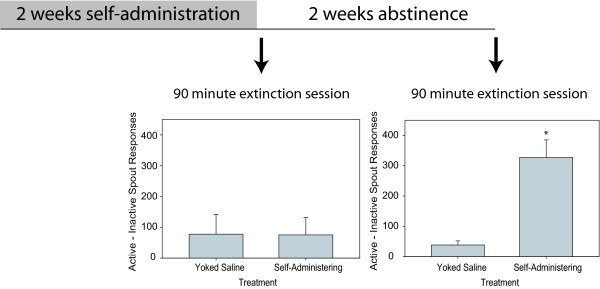
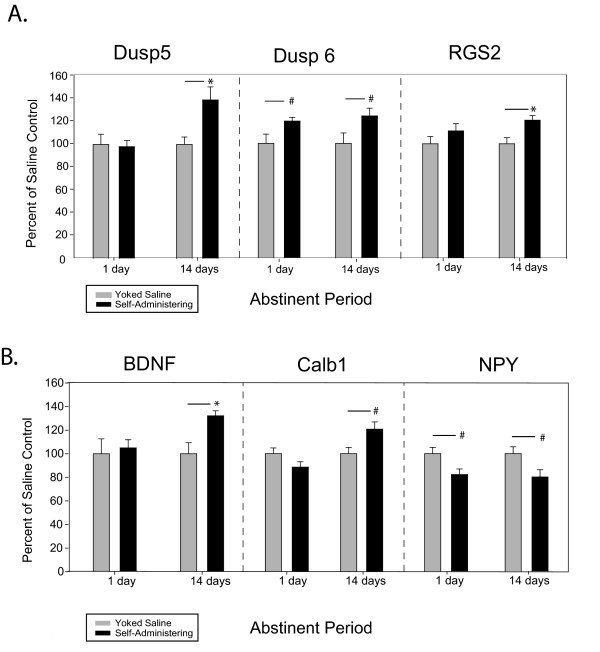
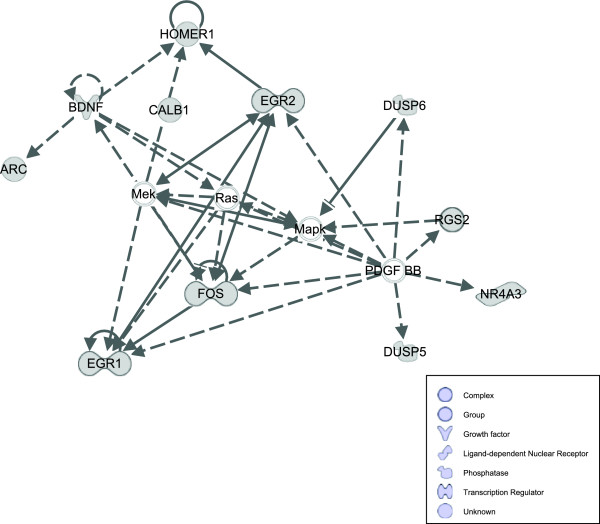
Background: A number of gene expression studies have investigated changes induced by drug exposure, but few reports describe changes that persist following relapse. In this study, genome-wide analysis of gene expression was conducted following an extinction session (90 min) in rats that expressed behavioral incubation of heroin-seeking and goal-directed behavior. As an important modulator of goal-directed behavior, the medial prefrontal cortex (mPFC) was the target of genomic analysis. Rats were trained to self-administer heroin during 3 h daily sessions for 14 d. Following the self-administration period, rats were reintroduced to the self-administration chambers for a 90-minute extinction session in which they could seek heroin, but received none. Extinction sessions were conducted on groups after either 1 d or 14 d of drug-free enforced abstinence to demonstrate behavioral incubation. Results: Behavioral data demonstrated incubation (increased expression) of heroin-seeking and goal-directed behavior after the 14 d abstinent period. That is, following 14 d of enforced abstinence, animals displayed heightened drug-seeking behavior when returned to the environment where they had previously received heroin. This increased drug-seeking took place despite the fact that they received no drug during this extinction session. Whole genome gene expression analysis was performed and results were confirmed by quantitative real-time PCR (RT-qPCR). Microarrays identified 66 genes whose expression was identified as changed by at least 1.4 fold (p < 0.02) following 14 d of abstinence and the 90-minute extinction session compared to the saline treated controls. Orthogonal confirmation by RT-qPCR demonstrated significant alterations in bdnf, calb1, dusp5, dusp6, egr1, npy, rgs2. Conclusion: Ontological analysis indicates that several of the genes confirmed to be changed are important for neuroplasticity, and through that role may impact learning and behavior. The importance of drug-seeking behavior and memory of previous drug-taking sessions suggest that such genes may be important for relapse. The global gene expression analysis adds to the knowledge of heroin-induced changes and further highlights similarities between heroin and other drugs of abuse.
Overview
The claims and statistics of this paper haven’t been checked yet.
Free: it reads the open-access text and checks the first 5 claims that cite a source we can check. Create a free account to check every claim.
Integrity signals
Registry
Cites
Statistics
Figures
Verification
Claims the paper makes
The claims and statistics of this paper haven’t been checked yet.
Free: it reads the open-access text and checks the first 5 claims that cite a source we can check. Create a free account to check every claim.
Self-check
Percentages, sums and reported differences re-computed from the paper’s own numbers.
The self-check needs the paper’s full text.
Citations
Cites
Analysis of Relative Gene Expression Data Using Real-Time Quantitative PCR and the 2−ΔΔCT Method
Livak, K. J., & Schmittgen, T. D. (2001) · Methods · doi:10.1006/meth.2001.1262 · Cited by 180,860
What is the role of dopamine in reward: hedonic impact, reward learning, or incentive salience?
Berridge, K. C., & Robinson, T. E. (1998) · Brain Research Reviews · doi:10.1016/s0165-0173(98)00019-8 · Cited by 4,127
Dopamine, learning and motivation.
Wise, R. A. (2004) · Nature Reviews Neuroscience · doi:10.1038/nrn1406 · Cited by 3,379 · cited 1×
“Increased drug-seeking has been inferred to represent the craving that drives humans to relapse [2,14,15].”
BackgroundMicroarray data analysis: from disarray to consolidation and consensus
Allison, D. B., Cui, X., Page, G. P., & Sabripour, M. (2006) · Nature Reviews Genetics · doi:10.1038/nrg1749 · Cited by 1,339 · cited 1×
“4 fold and greater differences in expression in accordance with standards for microarray analysis [28].”
ResultGOstat: find statistically overrepresented Gene Ontologies within a group of genes
Beißbarth, T., & Speed, T. P. (2004) · Bioinformatics · doi:10.1093/bioinformatics/bth088 · Cited by 1,257
Differential regulation of MAP kinase signalling by dual-specificity protein phosphatases
Owens, D. M., & Keyse, S. M. (2007) · Oncogene · doi:10.1038/sj.onc.1210412 · Cited by 777 · cited 1×
“Dusp5 preferentially dephosphorylates ERK [36,37] and is intranuclear, while dusp6 is cytoplasmic [38].”
BackgroundChomczyński, P., & Mackey, K. (1995) · PubMed · Cited by 590
Infralimbic Prefrontal Cortex Is Responsible for Inhibiting Cocaine Seeking in Extinguished Rats
Peters, J., LaLumiere, R. T., & Kalivas, P. W. (2008) · Journal of Neuroscience · doi:10.1523/jneurosci.1045-08.2008 · Cited by 537 · cited 1×
“Additionally, the ventral mPFC is believed to play an essential role for expression of incubation of cocaine-seeking [19] and reinstatement of cocaine-seeking [20].”
BackgroundNeurobiological substrates for the dark side of compulsivity in addiction
Koob, G. F. (2009) · Neuropharmacology · doi:10.1016/j.neuropharm.2008.07.043 · Cited by 458 · cited 2×
“Although npy is a neurotransmitter most recognized for its role in regulating food intake [49], it has been hypothesized that npy may contribute to the negative motivational state of withdrawal [50].”
BackgroundIncubation of cocaine craving after withdrawal: a review of preclinical data
Lu, L., Grimm, J. W., Hope, B. T., & Shaham, Y. (2004) · Neuropharmacology · doi:10.1016/j.neuropharm.2004.06.027 · Cited by 446 · cited 1×
“Incubation is a behavioral phenomenon that is characterized by increased drug seeking following increasing periods of abstinence after the last self-administration session [13].”
BackgroundDisrupting Reconsolidation of Drug Memories Reduces Cocaine-Seeking Behavior
Lee, J. L. C., Di Ciano, P., Thomas, K. L., & Everitt, B. J. (2005) · Neuron · doi:10.1016/j.neuron.2005.08.007 · Cited by 391 · cited 1×
“Therefore, relapse to drug use is currently being investigated on both the molecular and behavioral levels [6-10].”
BackgroundThe Role of Orbitofrontal Cortex in Drug Addiction: A Review of Preclinical Studies
Schoenbaum, G., & Shaham, Y. (2008) · Biological Psychiatry · doi:10.1016/j.biopsych.2007.06.003 · Cited by 317 · cited 1×
“The prefrontal cortex is important for decision making and guiding behavior [16], and the medial prefrontal cortex (mPFC) is known to be especially important for goaldirected behaviors [17,18].”
BackgroundCue-Induced Cocaine Seeking and Relapse Are Reduced by Disruption of Drug Memory Reconsolidation
Lee, J. L. C., Milton, A. L., & Everitt, B. J. (2006) · The Journal of Neuroscience · doi:10.1523/jneurosci.0323-06.2006 · Cited by 288 · cited 1×
“Therefore, relapse to drug use is currently being investigated on both the molecular and behavioral levels [6-10].”
BackgroundNeurotransmitters in key neurons of the hypothalamus that regulate feeding behavior and body weight
Meister, B. (2007) · Physiology & Behavior · doi:10.1016/j.physbeh.2007.05.021 · Cited by 281 · cited 1×
“Although npy is a neurotransmitter most recognized for its role in regulating food intake [49], it has been hypothesized that npy may contribute to the negative motivational state of withdrawal [50].”
BackgroundRole of ventral medial prefrontal cortex in incubation of cocaine craving
Koya, E., Uejima, J. L., Wihbey, K. A., Bossert, J. M., Hope, B. T., & Shaham, Y. (2009) · Neuropharmacology · doi:10.1016/j.neuropharm.2008.04.022 · Cited by 229 · cited 1×
“Additionally, the ventral mPFC is believed to play an essential role for expression of incubation of cocaine-seeking [19] and reinstatement of cocaine-seeking [20].”
BackgroundNestler, E. J. (2000) · Nature Genetics · doi:10.1038/81570 · Cited by 206 · cited 1×
“Physiological and gene expression changes that may increase an individual's likelihood to relapse are known to exist well into a period of abstinence [1-5].”
BackgroundSelf, D. W. (2004) · Neuropharmacology · doi:10.1016/j.neuropharm.2004.07.005 · Cited by 189 · cited 2×
“Physiological and gene expression changes that may increase an individual's likelihood to relapse are known to exist well into a period of abstinence [1-5].”
BackgroundA BDNF infusion into the medial prefrontal cortex suppresses cocaine seeking in rats
Berglind, W. J., See, R. E., Fuchs, R. A., Ghee, S. M., Whitfield, T. W., Miller, S. W., & McGinty, J. F. (2007) · European Journal of Neuroscience · doi:10.1111/j.1460-9568.2007.05692.x · Cited by 187 · cited 1×
“This observation supports the proposed importance of bdnf to drugseeking behavior [57].”
ResultChen, Y., Geis, C., & Sommer, C. (2008) · The Journal of Neuroscience · doi:10.1523/jneurosci.4170-07.2008 · Cited by 164 · cited 1×
“Beyond being affected by mere drug exposure, MAPK molecules have also been shown to play a role in morphine tolerance [46] and to be activated following opiate withdrawal [47].”
BackgroundGeorge, O., Mandyam, C. D., Wee, S., & Koob, G. F. (2008) · Neuropsychopharmacology · doi:10.1038/sj.npp.1301626 · Cited by 163 · cited 1×
“The prefrontal cortex is important for decision making and guiding behavior [16], and the medial prefrontal cortex (mPFC) is known to be especially important for goaldirected behaviors [17,18].”
BackgroundMattson, B. J., Bossert, J. M., Simmons, D. E., Nozaki, N., Nagarkar, D., Kreuter, J. D., & Hope, B. T. (2005) · Journal of Neurochemistry · doi:10.1111/j.1471-4159.2005.03500.x · Cited by 151 · cited 1×
“Numerous studies have suggested MAPK involvement in neuroadaptations that occur following drug use [43-45].”
BackgroundBidirectional modulation of goal-directed actions by prefrontal cortical dopamine
Hitchcott, P. K., Quinn, J. J., & Taylor, J. R. (2007) · Cerebral Cortex · doi:10.1093/cercor/bhm010 · Cited by 143 · cited 1×
“The prefrontal cortex is important for decision making and guiding behavior [16], and the medial prefrontal cortex (mPFC) is known to be especially important for goaldirected behaviors [17,18].”
BackgroundFreeman, W. M., Patel, K. M., Brucklacher, R. M., Lull, M. E., Erwin, M. S., Morgan, D., Roberts, D. C. S., & Vrana, K. E. (2007) · Neuropsychopharmacology · doi:10.1038/sj.npp.1301577 · Cited by 131 · cited 1×
“Physiological and gene expression changes that may increase an individual's likelihood to relapse are known to exist well into a period of abstinence [1-5].”
BackgroundSelf-citationGrigson, P. S., & Twining, R. C. (2002) · Behavioral Neuroscience · doi:10.1037//0735-7044.116.2.321 · Cited by 125 · cited 1×
“Spout-licking has been the operant behavior in previous drug self-administration studies [23-25].”
Self-citationKwak, S. P., & Dixon, J. E. (1995) · Journal of Biological Chemistry · doi:10.1074/jbc.270.3.1156 · Cited by 116 · cited 2×
“Dusp5 preferentially dephosphorylates ERK [36,37] and is intranuclear, while dusp6 is cytoplasmic [38].”
BackgroundNielsen, D. A., Ji, F., Yuferov, V. P., Ho, A., Chen, A. C. H., Levran, O., Ott, J., & Kreek, M. J. (2008) · Molecular Psychiatry · doi:10.1038/sj.mp.4002147 · Cited by 110 · cited 1×
“These approaches are useful for discovering novel targets affected by drug abuse and examining hypotheses concerning categories of genes that are affected by drug use [11,12].”
BackgroundBrucklacher, R. M., Patel, K. M., VanGuilder, H. D., Bixler, G. V., Barber, A. J., Antonetti, D. A., Lin, C.-M., LaNoue, K. F., Gardner, T. W., Bronson, S. K., et al. (2008) · BMC Medical Genomics · doi:10.1186/1755-8794-1-26 · Cited by 107 · cited 2×
“Studies were performed by the Penn State College of Medicine Functional Genomics Core Facility on 12 arrays (n = 6 per treatment group: 14 d abstinent selfadministering and yoked saline) according to standard procedures [27].”
MethodSelf-citationPsychological and neural mechanisms of relapse
Stewart, J. (2008) · Philosophical Transactions of the Royal Society B: Biological Sciences · doi:10.1098/rstb.2008.0084 · Cited by 105
Lambeth, J. D., Kwak, J.-Y., Bowman, E. P., Perry, D., Uhlinger, D. J., & Lopez, I. (1995) · Journal of Biological Chemistry · doi:10.1074/jbc.270.6.2431 · Cited by 104
Analysis of γc-Family Cytokine Target Genes
Kovanen, P. E., Rosenwald, A., Fu, J., Hurt, E. M., Lam, L. T., Giltnane, J. M., Wright, G., Staudt, L. M., & Leonard, W. J. (2003) · Journal of Biological Chemistry · doi:10.1074/jbc.m209015200 · Cited by 91 · cited 1×
“Both dusp5 [ 41 ] and dusp6 [42] regulate mitogen-activated protein kinase (MAPK).”
Thorsell, A., Repunte-Canonigo, V., O'Dell, L. E., Chen, S. A., King, A. R., Lekic, D., Koob, G. F., & Paolo Sanna, P. (2007) · Brain · doi:10.1093/brain/awm033 · Cited by 91 · cited 1×
“intra-amygdalar infusions of a viral expression vector, diminished alcohol intake following longer periods of abstinence or repeated alcohol withdrawals [52].”
BackgroundOpioid withdrawal activates MAP kinase in locus coeruleus neurons in morphine‐dependent rats in vivo
Schulz, S., & Höllt, V. (1998) · European Journal of Neuroscience · doi:10.1046/j.1460-9568.1998.00103.x · Cited by 91 · cited 1×
“Beyond being affected by mere drug exposure, MAPK molecules have also been shown to play a role in morphine tolerance [46] and to be activated following opiate withdrawal [47].”
BackgroundYao, L., McFarland, K., Fan, P., Jiang, Z., Inoue, Y., & Diamond, I. (2005) · Proceedings of the National Academy of Sciences · doi:10.1073/pnas.0503419102 · Cited by 90 · cited 2×
“A GPCR-regulating molecule (AGS3; Activator of G-protein signaling 3) was shown, through a gene knock-down approach, to be essential to activating protein kinase A (PKA) signaling and observing reinstatement of heroinseeking [48].”
BackgroundOstrander, M. M., Badiani, A., Day, H. E. W., Norton, C. S., Watson, S. J., Akil, H., & Robinson, T. E. (2003) · Neuroscience · doi:10.1016/s0306-4522(03)00247-1 · Cited by 87 · cited 1×
“It is documented that exposure to environments previously paired with drug administration can affect gene expression [54-56], so future studies will be required to discern whether the observed changes in gene expression after 14 days of abstinence resulted from contextual re-exposure, the pharmacological drug abstinen…”
BackgroundHearing, M. C., Miller, S. W., See, R. E., & McGinty, J. F. (2008) · Psychopharmacology · doi:10.1007/s00213-008-1090-2 · Cited by 82 · cited 1×
“It is documented that exposure to environments previously paired with drug administration can affect gene expression [54-56], so future studies will be required to discern whether the observed changes in gene expression after 14 days of abstinence resulted from contextual re-exposure, the pharmacological drug abstinen…”
BackgroundKoya, E., Spijker, S., Voorn, P., Binnekade, R., Schmidt, E. D., Schoffelmeer, A. N. M., De Vries, T. J., & Smit, A. B. (2006) · Journal of Neurochemistry · doi:10.1111/j.1471-4159.2006.03917.x · Cited by 79 · cited 4×
“Additionally, Nr4a3 was detected by our arrays to be significantly increased and has been previously reported to be increased by another laboratory [33] and EGR1 was confirmed to be changed in our previous report of gene expression changes [22].”
BackgroundResultInfluentialBowyer, J. F., Robinson, B., Ali, S., & Schmued, L. C. (2008) · Synapse · doi:10.1002/syn.20478 · Cited by 76 · cited 1×
“Quantitative PCR was carried out on a real-time detection instrument (ABI 7900HT Sequence Detection System) in 384-well optical plates using TaqMan Universal PCR Master Mix and Assay on Demand primers and probes (Applied Biosystems, Foster City, CA) as described previously [27,30].”
MethodReffas, S., & Schlegel, W. (2000) · Biochemical Journal · doi:10.1042/bj3520701 · Cited by 68 · cited 1×
“Both dusp5 [41] and dusp6 [42] regulate mitogen-activated protein kinase (MAPK).”
BackgroundHearing, M. C., See, R. E., & McGinty, J. F. (2008) · Brain Structure and Function · doi:10.1007/s00429-008-0182-4 · Cited by 61 · cited 1×
“It is documented that exposure to environments previously paired with drug administration can affect gene expression [54-56], so future studies will be required to discern whether the observed changes in gene expression after 14 days of abstinence resulted from contextual re-exposure, the pharmacological drug abstinen…”
BackgroundGuitart, X., & Nestler, E. J. (1993) · Neurochemical Research · doi:10.1007/bf00966918 · Cited by 60 · cited 1×
“Previously, increased gene expression has been found for opiate receptors in humans that died from an opiate overdose [34], as well as components of the cyclic AMP signaling system following opiate use [35].”
BackgroundKuntz‐Melcavage, K. L., Patel, K. M., Grigson, P. S., Freeman, W. M., & Vrana, K. E. (2008) · Pharmacology Biochemistry and Behavior · doi:10.1016/j.pbb.2008.03.019 · Cited by 59 · cited 3×
“The self-administration and extinction procedures have been previously described [21,22].”
MethodResultSelf-citationTakaki, M., Ujike, H., Kodama, M., Takehisa, Y., Nakata, K., & Kuroda, S. (2001) · Journal of Neurochemistry · doi:10.1046/j.1471-4159.2001.00615.x · Cited by 57 · cited 1×
“MDMA (3,4-methylenedioxymethamphetamine) has been shown to increase expression of dusp 1, dusp 5, and dusp 14 genes [39], while methamphetamine treatment increases dusp6 gene expression in multiple brain regions [40].”
BackgroundFerrer‐Alcón, M., García-Fuster, M. J., Harpe, R. L., & García-Sevilla, J. A. (2004) · Journal of Neurochemistry · doi:10.1111/j.1471-4159.2004.02473.x · Cited by 57
Thorsell, A., Slawecki, C. J., & Ehlers, C. L. (2005) · Alcoholism: Clinical & Experimental Research · doi:10.1097/01.alc.0000160084.13148.02 · Cited by 54 · cited 1×
“Intracerebroventricular administration of npy has been found to block increased ethanol intake in rats [50,51], and overexpression of the npy gene, using”
BackgroundOpioid control of MAP kinase cascade
Schulz, R., Eisinger, D. A., & Wehmeyer, A. (2004) · European Journal of Pharmacology · doi:10.1016/j.ejphar.2004.07.010 · Cited by 44 · cited 1×
“Numerous studies have suggested MAPK involvement in neuroadaptations that occur following drug use [43-45].”
BackgroundGenetic and genomic approaches to reward and addiction
Mohn, A. R., Yao, W., & Caron, M. G. (2004) · Neuropharmacology · doi:10.1016/j.neuropharm.2004.07.025 · Cited by 36 · cited 1×
“Physiological and gene expression changes that may increase an individual's likelihood to relapse are known to exist well into a period of abstinence [1-5].”
BackgroundHandling multiple testing while interpreting microarrays with the Gene Ontology Database
Osier, M. V., Zhao, H., & Cheung, K.-H. (2004) · BMC Bioinformatics · doi:10.1186/1471-2105-5-124 · Cited by 35 · cited 1×
“, Bonferroni) produce gene lists with the lowest rate of type I and type II errors [29].”
BackgroundJeong, D. G., Cho, Y. H., Yoon, T., Kim, J. H., Ryu, S. E., & Kim, S. J. (2007) · Proteins: Structure, Function, and Bioinformatics · doi:10.1002/prot.21224 · Cited by 34 · cited 2×
“Dusp5 preferentially dephosphorylates ERK [36,37] and is intranuclear, while dusp6 is cytoplasmic [38].”
BackgroundMadras, B. K. (2006) · Cited by 34
Maric, T., Tobin, S., Quinn, T., & Shalev, U. (2008) · Behavioural Brain Research · doi:10.1016/j.bbr.2008.06.023 · Cited by 33 · cited 1×
“In the present context, intraventricular injections of npy have been found to induce heroin-seeking behavior following extinction sessions [53], suggesting that the decrease in npy gene expression observed in the present study may be related to the extinction component of the behavioral testing.”
BackgroundAssessment of genome and proteome profiles in cocaine abuse
Hemby, S. E. (2006) · Progress in brain research · doi:10.1016/s0079-6123(06)58009-4 · Cited by 32 · cited 1×
“Physiological and gene expression changes that may increase an individual's likelihood to relapse are known to exist well into a period of abstinence [1-5].”
BackgroundBrief access to sweets protect against relapse to cocaine-seeking
Liu, C., & Grigson, P. S. (2005) · Brain Research · doi:10.1016/j.brainres.2005.05.013 · Cited by 32
Self-citationHeroin self-administration: I. Incubation of goal-directed behavior in rats
Kuntz‐Melcavage, K. L., Twining, R. C., Baldwin, A. E., Vrana, K. E., & Grigson, P. S. (2008) · Pharmacology Biochemistry and Behavior · doi:10.1016/j.pbb.2008.03.018 · Cited by 31 · cited 2×
“The self-administration and extinction procedures have been previously described [21,22].”
BackgroundMethodSelf-citationMarie-Claire, C., Benturquia, N., Lundqvist, A., Courtin, C., & Noble, F. (2008) · Brain Research · doi:10.1016/j.brainres.2008.08.050 · Cited by 22 · cited 1×
“MDMA (3,4-methylenedioxymethamphetamine) has been shown to increase expression of dusp 1, dusp 5, and dusp 14 genes [39], while methamphetamine treatment increases dusp6 gene expression in multiple brain regions [40].”
BackgroundCynthia Marie-claire, A., Palminteri, S., Romualdi, P., & Noble, F. (2008) · Neuropharmacology · doi:10.1016/j.neuropharm.2008.03.001 · Cited by 15 · cited 1×
“Therefore, relapse to drug use is currently being investigated on both the molecular and behavioral levels [6-10].”
BackgroundBecker, J., Schmidt, P. M., Mußhoff, F., Fitzenreiter, M., & Madea, B. (2004) · Forensic Science International · doi:10.1016/j.forsciint.2003.10.012 · Cited by 15 · cited 1×
“Previously, increased gene expression has been found for opiate receptors in humans that died from an opiate overdose [34], as well as components of the cyclic AMP signaling system following opiate use [35].”
BackgroundIron deficiency in rats decreases acquisition of and suppresses responding for cocaine
Jones, B. C., Wheeler, D. S., Beard, J. L., & Grigson, P. S. (2002) · Pharmacology Biochemistry and Behavior · doi:10.1016/s0091-3057(02)00906-1 · Cited by 13 · cited 1×
“Spout-licking has been the operant behavior in previous drug self-administration studies [23-25].”
Self-citationReffas, S., & Schlegel, W. (2000) · Biochemical Journal · doi:10.1042/0264-6021:3520701 · Cited by 13
CNS Genes Implicated in Relapse
Kuntz‐Melcavage, K. L., Freeman, W. M., & Vrana, K. E. (2008) · Substance Abuse Research and Treatment · doi:10.4137/sart.s1042 · Cited by 3
Self-citation
Cited by
Brain-Derived Neurotrophic Factor and Neuropsychiatric Disorders
Autry, A. E., & Monteggia, L. M. (2012) · Pharmacological Reviews · doi:10.1124/pr.111.005108 · Cited by 1,390
“BDNF mRNA expression is also enhanced after long-term withdrawal from self-administered heroin (Kuntz-Melcavage et al., 2009).”
BackgroundNeurobiology of the incubation of drug craving
Pickens, C. L., Airavaara, M., Theberge, F., Fanous, S., Hope, B. T., & Shaham, Y. (2011) · Trends in Neurosciences · doi:10.1016/j.tins.2011.06.001 · Cited by 642
The Role of Early Growth Response 1 (EGR1) in Brain Plasticity and Neuropsychiatric Disorders
Duclot, F., & Kabbaj, M. (2017) · Frontiers in Behavioral Neuroscience · doi:10.3389/fnbeh.2017.00035 · Cited by 363
Drug Addiction: Hyperkatifeia/Negative Reinforcement as a Framework for Medications Development
Koob, G. F. (2021) · Pharmacological Reviews · doi:10.1124/pharmrev.120.000083 · Cited by 337
Epigenetic Mechanisms of Opioid Addiction
Browne, C. J., Godino, A., Salery, M., & Nestler, E. J. (2020) · Biological Psychiatry · doi:10.1016/j.biopsych.2019.06.027 · Cited by 223
Metadata
- Authors
- Kuntz-Melcavage, K. L., Brucklacher, R. M., Grigson, P. S., Freeman, W. M., & Vrana, K. E.
- Affiliations
- Pennsylvania State University (US)
- Corresponding author
- Vrana, Kent E
- Venue
- BMC Neuroscience
- Published
- 2009-08-07
- Volume
- 10
- Issue
- 1
- Pages
- 95-95
- ISSN
- 1471-2202 (ISSN-L)
- PMC
- PMC2733140
- OpenAlex
- W2001351304
- Cited by
- 53
- References
- 57
- Citations by year
- 2026: 1 · 2025: 2 · 2024: 2 · 2023: 8 · 2022: 5 · 2021: 3 · 2020: 2 · 2019: 3 · 2018: 6 · 2017: 2 · 2016: 2 · 2015: 4 · 2014: 1 · 2013: 1 · 2012: 6
- FWCI
- 1.52
- Type
- journal article
- Language
- en
- Open access
- gold
- doi.org
- Licence
- cc-by
- Locations
- BMC Neuroscience (publishedVersion, cc-by)
- PubMed Central (publishedVersion, cc-by)
- PubMed (publishedVersion)
- DOAJ (DOAJ: Directory of Open Access Journals) (submittedVersion, cc-by-sa)
- Funders
- National Institute on Drug Abuse (DA12473, DA021450, R01DA012473, R01DA013770, F31DA021450, DA13770)
- Topics
- Life Sciences › Neuroscience › Cellular and Molecular Neuroscience › Neurotransmitter Receptor Influence on Behavior
- Health Sciences › Medicine › Epidemiology › Substance Abuse Treatment and Outcomes
- Life Sciences › Neuroscience › Cellular and Molecular Neuroscience › Neuropeptides and Animal Physiology
- Keywords
- heroin, extinction, drug-seeking behavior, relapse, self-administration, goal-directed behavior, medial prefrontal cortex, gene expression, brain-derived neurotrophic factor, calbindin-D28k, DUSP5, DUSP6, EGR1, neuropeptide Y, RGS2, neuroplasticity, drug memory
- MeSH terms
- Animals, Conditioning, Operant, Heroin, Extinction, Psychological, Heroin Dependence, Nerve Tissue Proteins, Self Administration, Up-Regulation, Behavior, Addictive, Prefrontal Cortex, Reverse Transcriptase Polymerase Chain Reaction, Oligonucleotide Array Sequence Analysis, Gene Expression Profiling, Rats
About these checks
Registry, retraction, Cites and statistics results are computed, not judged, with one exception: a printed reference that no index lists is read once by a model before it counts as a citation error. Claims are extracted by a model and kept only when their quote appears verbatim in the text; each cited source is then checked, with a model’s help, for whether it says what the claim relies on. Those verdicts can be wrong — read the claim’s quote and the cited source before relying on one.
Statistics and arithmetic are recomputed, not judged.
Confidence bands are shown only for fields calibrated on our annotated test set. None is calibrated yet, so no band is shown.
What counts as a claim ›How we measure confidence ›How we check this ›
Are you an author, or do you see a problem with this page? Request a review
Data sources
Bibliographic data: Semantic Scholar, OpenAlex, Crossref.
Contains information from the Semantic Scholar Academic Graph Datasets, made available under the ODC Attribution License (ODC-BY 1.0).
Semantic Scholar’s data is described in: Kinney, R., et al. (2023). The Semantic Scholar Open Data Platform. arXiv:2301.10140.
