

The DOI matches its Crossref record; 74 of the 75 references it cites were found in a registry or an index.
Rehabilitation needs for older adults with stroke living at home: perceptions of four populations
Open accessAbstract
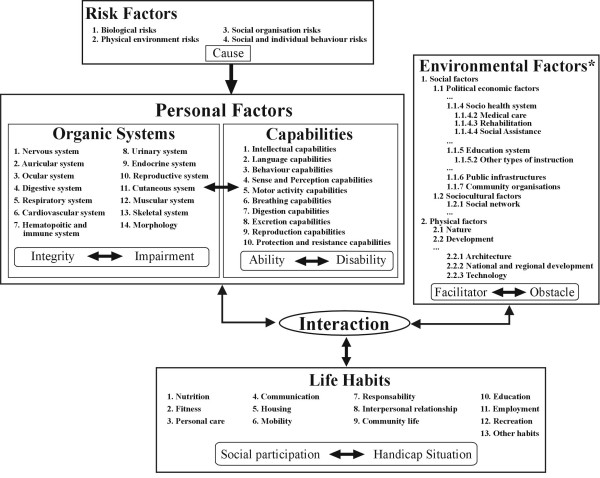
BACKGROUND: Many people who have suffered a stroke require rehabilitation to help them resume their previous activities and roles in their own environment, but only some of them receive inpatient or even outpatient rehabilitation services. Partial and unmet rehabilitation needs may ultimately lead to a loss of functional autonomy, which increases utilization of health services, number of hospitalizations and early institutionalization, leading to a significant psychological and financial burden on the patients, their families and the health care system. The aim of this study was to explore partially met and unmet rehabilitation needs of older adults who had suffered a stroke and who live in the community. The emphasis was put on needs that act as obstacles to social participation in terms of personal factors, environmental factors and life habits, from the point of view of four target populations. METHODS: Using the focus group technique, we met four types of experts living in three geographic areas of the province of Québec (Canada): older people with stroke, caregivers, health professionals and health care managers, for a total of 12 groups and 72 participants. The audio recordings of the meetings were transcribed and NVivo software was used to manage the data. The process of reducing, categorizing and analyzing the data was conducted using themes from the Disability Creation Process model. RESULTS: Rehabilitation needs persist for nine capabilities (e.g. related to behaviour or motor activities), nine factors related to the environment (e.g. type of teaching, adaptation and rehabilitation) and 11 life habits (e.g. nutrition, interpersonal relationships). The caregivers and health professionals identified more unmet needs and insisted on an individualized rehabilitation. Older people with stroke and the health care managers had a more global view of rehabilitation needs and emphasized the availability of resources. CONCLUSION: Better knowledge of partially met or unmet rehabilitation needs expressed by the different types of people involved should lead to increased attention being paid to education for caregivers, orientation of caregivers towards resources in the community, and follow-up of patients' needs in terms of adjustment and rehabilitation, whether for improving their skills or for carrying out their activities of daily living.
Overview
The claims and statistics of this paper haven’t been checked yet.
Run the check — free, no account needed. It reads the open-access text and checks the sources it cites.
Integrity signals
Registry
Cites
Statistics
Figures
Verification
Claims the paper makes
The claims and statistics of this paper haven’t been checked yet.
Run the check — free, no account needed. It reads the open-access text and checks the sources it cites.
Claims other papers make about this one
Each is checked against this paper’s own text: does it say what the citing paper says it does?
In the citing paper
“By knowing what happens between outpatient visits, treatment interventions can be fine-tuned to the needs of individual patients [99].”
From A review of wearable sensors and systems with application in rehabilitation (2012) · cites this paper as [99]
Self-check
Percentages, sums and reported differences re-computed from the paper’s own numbers.
The self-check needs the paper’s full text.
Citations
Cites
Rigor in Qualitative Research: The Assessment of Trustworthiness
Krefting, L. (1991) · American Journal of Occupational Therapy · doi:10.5014/ajot.45.3.214 · Cited by 4,174
Bowman, P. W. (1963) · AIBS Bulletin · doi:10.2307/1292957 · Cited by 3,654
Heart Disease and Stroke Statistics—2006 Update
Writing Group Members, Thom, T., Haase, N., Rosamond, W. D., Howard, V. J., Rumsfeld, J. S., Manolio, T. A., Zheng, Z., Flegal, K. M., O’Donnell, C. J., et al. (2006) · Circulation · doi:10.1161/circulationaha.105.171600 · Cited by 3,488
Activity, participation, and quality of life 6 months poststroke
Mayo, N. E., Wood-Dauphinée, S., Côté, R., Durcan, L., & Carlton, J. (2002) · Archives of Physical Medicine and Rehabilitation · doi:10.1053/apmr.2002.33984 · Cited by 868
Cognitive impairment after stroke: frequency, patterns, and relationship to functional abilities.
Tatemichi, T. K., Desmond, D. W., Stern, Y., Paik, M. C., Sano, M., & Bagiella, E. (1994) · Journal of Neurology Neurosurgery & Psychiatry · doi:10.1136/jnnp.57.2.202 · Cited by 865
King, R. B. (1996) · Stroke · doi:10.1161/01.str.27.9.1467 · Cited by 595
Mayo, N. E., Wood-Dauphinée, S., Ahmed, S., Gordon, C. D., Higgins, J., McEwen, S. E., & Salbach, N. M. (1999) · Disability and Rehabilitation · doi:10.1080/096382899297684 · Cited by 541
Social consequences of long term impairments and disabilities
Fougeyrollas, P., Noreau, L., Bergeron, H., CLOUTIER, R., DION, S.-A., & St-Michel, G. (1998) · International Journal of Rehabilitation Research · doi:10.1097/00004356-199806000-00002 · Cited by 393
Quality of life 4 years after stroke.
Niemi, M., Laaksonen, R., Kotila, M., & Waltimo, O. (1988) · Stroke · doi:10.1161/01.str.19.9.1101 · Cited by 327
Measuring quality of life in stroke.
de Haan, R. J., Aaronson, N. K., Limburg, M., Hewer, R. L., & van Crevel, H. (1993) · Stroke · doi:10.1161/01.str.24.2.320 · Cited by 325
Research works printed but not linked: 14
- Fougeyrollas P, Cloutier R, Bergeron H, Côté J, St-Michel G: The Quebec Classification: Disability Creation Process. 1999, Québec, International Network on the Disability Creation Process. National Library of Canada, ISBN 2-922213-06-4
- Lebel P: Services gérontologiques et gériatriques. Précis pratique de gériatrie. Edited by: Arcand M, Hébert R. 1997, Paris/St-Hyacinthe: Edisem/Maloine
- Trahan L, Bélanger L, Bolduc M: Une évaluation de la prestation de services dans les C.L.S.C. et les centres hospitaliers. Pour des services de qualité aux personnes âgées en perte d'autonomie. 1993, Québec: Ministère de la santé et des services sociaux
- Ministère des travaux publics et services gouvernementaux: Les défis d'une société canadienne vieillissante. 1999 et après. 1999, Ottawa: Gouvernement du Canada: Ottawa
- Garant L: Synthèse d'un programme d'évaluation sur la réponse aux besoins de longue durée des personnes âgées ayant des limitations fonctionnelles. 1994, Québec: Division planification-évaluation santé et services sociaux du ministère de la santé et services sociaux, [Collection: Études et analyses]
- Association des hôpitaux du Québec et fédération de la réadaptation en déficience physique du Québec: Centres hospitaliers et établissements de réadaptation : partenaires pour la complémentarité des services de réadaptation. Une vision et des actions intégrées. 1997, Québec: Ministère de la santé et des services sociaux
- Association québécoise des personnes aphasiques: Guide d'information et de référence sur l'aphasie. S'informer pour mieux agir. 1997, Québec
- Le Dorze G, Généreux S, Laporte D, Navennec C, Brassard C, Daigle MA, Hubert M: Les déterminants individuels et sociaux de la réinsertion professionnelle des personnes aphasiques. Rapport final (DEIP-1054). 1998, Association québécoise des personnes aphasiques (AQPA)
- Gauthier L: Comprendre le processus de fardeau subjectif. Master thesis. 1995, Université de Sherbrooke, département de service social
- Brandriet LM, Lyons M, Bentley J: Perceived needs of poststroke following termination. Nurs Health Care. 1994, 15: 514-520.
- Desnoyers D, Lagacé C: La réadaptation: tendances et perspectives. Synthèse d'une recension d'écrits. 1995, Montréal: Association des hôpitaux du Québec, [Collection: La reconfiguration du réseau.]
- Morgan DL, Krueger RA: Focus Group Kit. Edited by: King JA. 1998, London: Sage Publications, 1–6:
- Laperrière A: Critères de scientificité des recherches qualitatives. La recherche qualitative: Enjeux épistémologiques et méthologiques. Edited by: Poupart J, Deslauriers JP, Groulx LH, Laperrière A, Mayers R, Pires AP. 1997, Montréal: Gaëtan Morin Éditeur Ltée, 341-364.
- Laboratoire d'informatique et de terminologie de la réadaptation et de l'intégration sociale du Centre François-Charon et Office de la langue française: Dictionnaire de la réadaptation. Tome 1: Termes techniques d'évaluation. 1995, Québec: Les publications du Québec
Cited by
Sorted by citations
Items 101–110 of 110
do Carmo, M., de Alencar, B., Henemann, L., & Rothenbuhler, R. (2008)
Profile of and challenges experienced by stroke patients admitted to Ruhengeri Hospital in Rwanda
Urimubenshi, G. (2009) · University of the Western Cape Electronic Theses and Dissertations Repository (University of the Western Cape)
Afzal, A. (2020) · UWSpace (University of Waterloo)
Systematic Review of Occupational Therapist’s Home-based Intervention for Stroke Patients
Lim, Y.-M., & Cha, T.-H. (2019) · The Journal of Korean Society of Occupational Therapy · doi:10.14519/kjot.2019.27.4.02
Li, M., Zhu, W., Yang, Z., Luo, Q., Chen, H., Duan, Y., Chen, K., & Xie, H. (2020) · doi:10.21203/rs.3.rs-116721/v1
Contextualized Activities of Daily Living in Stroke Rehabilitation
Chandran, P. I., Alabdulla, S. S. H., Asirvatham, T., & Kamalakannan, S. (2026) · Springer eBooks · doi:10.1007/978-981-92-0403-8_7
Stroke duties : a hermeneutic enquiry into family experience six months post-stroke
Duthie, A. J. (2013) · Unitec Research Bank (Unitec Institute of Technology)
Metadata
- Authors
- other members of the BRAD group, Vincent, C., Deaudelin, I., Robichaud, L., Rousseau, J., Viscogliosi, C., Talbot, L. R., & Desrosiers, J.
- Affiliations
- Centre interdisciplinaire de recherche en réadaptation et intégration sociale (CA)
- Université Laval (CA)
- Centre de recherche sur le vieillissement (CA)
- Université de Sherbrooke (CA)
- Corresponding author
- Vincent, Claude
- Venue
- BMC Geriatrics
- Published
- 2007-08-13
- Volume
- 7
- Issue
- 1
- Pages
- 20-20
- ISSN
- 1471-2318 (ISSN-L)
- PMC
- PMC1994951
- OpenAlex
- W2133570642
- Cited by
- 110
- References
- 75
- Citations by year
- 2026: 2 · 2025: 2 · 2024: 3 · 2023: 1 · 2022: 3 · 2021: 5 · 2020: 9 · 2019: 5 · 2018: 3 · 2017: 8 · 2016: 7 · 2015: 6 · 2014: 8 · 2013: 9 · 2012: 7
- FWCI
- 6.80
- Type
- journal article
- Language
- en
- Open access
- gold
- doi.org
- Licence
- Locations
- BMC Geriatrics (publishedVersion, cc-by)
- PubMed Central (publishedVersion, cc-by)
- PubMed (publishedVersion)
- DOAJ (DOAJ: Directory of Open Access Journals) (submittedVersion, cc-by-sa)
- Papyrus : Institutional Repository (Université de Montréal) (submittedVersion)
- Topics
- Health Sciences › Medicine › Rehabilitation › Stroke Rehabilitation and Recovery
- Health Sciences › Health Professions › Physical Therapy, Sports Therapy and Rehabilitation › Medical Practices and Rehabilitation
- Health Sciences › Medicine › Public Health, Environmental and Occupational Health › Aging, Health, and Disability
- Keywords
- stroke, older adults, unmet rehabilitation needs, home-based rehabilitation, community-dwelling stroke survivors, caregivers, healthcare workers, health managers, social participation (health and rehabilitation), activities of daily living, personalized rehabilitation, caregiver education, functional autonomy
- MeSH terms
- Stroke Rehabilitation, Activities of Daily Living, Adult, Aged, Aged, 80 and over, Communication, Cross-Sectional Studies, Environment, Female, Geriatrics, Home Care Services, Humans, Interpersonal Relations, Male, Middle Aged, Quebec, Social Perception, Social Support, Caregivers, Focus Groups, Needs Assessment, Stroke
About these checks
Registry, retraction, Cites and statistics results are computed, not judged, with one exception: a printed reference that no index lists is read once by a model before it counts as a citation error. Claims are extracted by a model and kept only when their quote appears verbatim in the text; each cited source is then checked, with a model’s help, for whether it says what the claim relies on. Those verdicts can be wrong — read the claim’s quote and the cited source before relying on one.
Statistics and arithmetic are recomputed, not judged.
Confidence bands are shown only for fields calibrated on our annotated test set. None is calibrated yet, so no band is shown.
What counts as a claim ›How we measure confidence ›How we check this ›
Are you an author, or do you see a problem with this page? Request a review
