

Uniform distribution of three Candida albicans microsatellite markers in two French ICU populations supports a lack of nosocomial cross-contamination
Open accessThe DOI matches its Crossref record; 22 of the 22 references it cites were found in a registry or an index.
Abstract
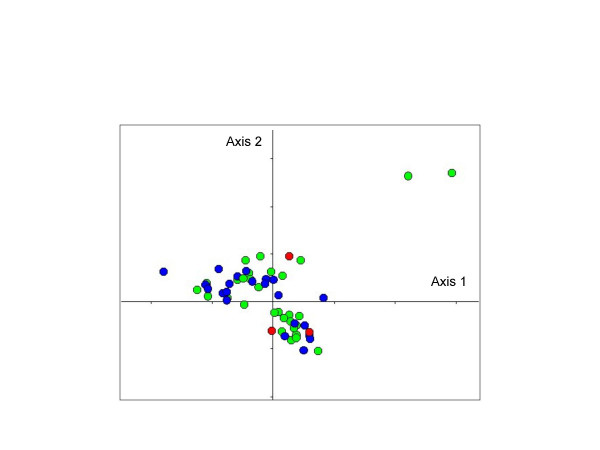
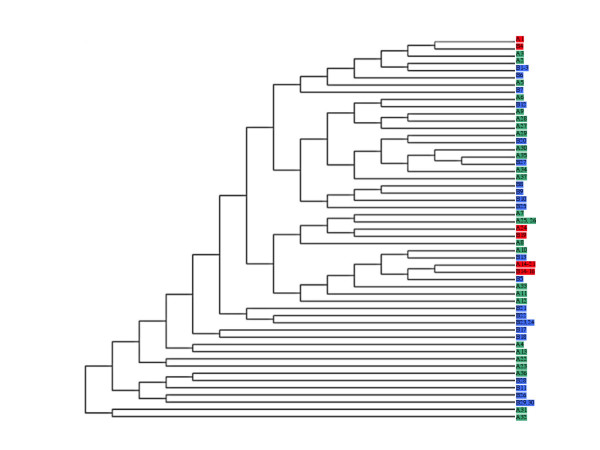
Background: The nosocomial acquisition of Candida albicans is a growing concern in intensive care units (ICUs) and understanding the route of contamination is relevant for infection control guidelines. Methods: To analyze whether there is a specific ecology for any given hospital, we genotyped C. albicans isolates of the ICU of Versailles hospital (Hospital A) and compared the results with those previously obtained in another ICU in Henri Mondor hospital (Hospital B) using three polymorphic microsatellite markers (PMM). Results: Among 36 patients with at least one positive culture for C. albicans, 26 had a specific multilocus genotype, two shared a common multilocus genotype, and 8 had the most common multilocus genotype found in the general population. The time interval between periods of hospitalization between patients with common genotypes differed by 13 to 78 days, thus supporting a lack of direct contamination. To confirm this hypothesis, the multilocus genotypic distributions of the three PMM were compared between the two hospitals. No statistically significant difference was observed. Multiple correspondences analysis did not indicate the association of a multilocus genotypic distribution with any given hospital. Conclusion: The present epidemiological study supports the conclusions that each patient harbours his/her own isolate, and that nosocomial transmission is not common in any given ICU. This study also supports the usefulness and practicability of PMM for studying the epidemiology of C. albicans.
Overview
The claims and statistics of this paper haven’t been checked yet.
Free: it reads the open-access text and checks the first 5 claims that cite a source we can check. Create a free account to check every claim.
Integrity signals
Registry
Cites
Statistics
Figures
Verification
Claims the paper makes
The claims and statistics of this paper haven’t been checked yet.
Free: it reads the open-access text and checks the first 5 claims that cite a source we can check. Create a free account to check every claim.
Claims other papers make about this one
Each is checked against this paper’s own text: does it say what the citing paper says it does?
In the citing paper
“More recent studies using microsatellite markers have confirmed that, in most cases, the fungal acquisition was mainly endogenous [44,45].”
From Management of invasive candidiasis and candidemia in adult non-neutropenic intensive care unit patients: part I. Epidemiology and diagnosis (2009) · cites this paper as [45]
Self-check
Percentages, sums and reported differences re-computed from the paper’s own numbers.
The self-check needs the paper’s full text.
Citations
Cites
GENEPOP (Version 1.2): Population Genetics Software for Exact Tests and Ecumenicism
Raymond, M., & Rousset, F. (1995) · Journal of Heredity · doi:10.1093/oxfordjournals.jhered.a111573 · Cited by 15,397
Le Gall, J.-R. (1993) · JAMA: The Journal of the American Medical Association · doi:10.1001/jama.270.24.2957 · Cited by 7,773 · cited 1×
“The following information was recorded for each patient: age, sex, new Simplified Acute Physiology Score (SAPS II) [8], presence of diabetes, immunodepression, wide-spectrum antibiotic therapy, orally administered amphotericin B, presence of arterial or central venous catheter, transfusion requirement, total parentera…”
MethodTesting Differentiation in Diploid Populations
Goudet, J., Raymond, M., de Meeüs, T., & Rousset, F. (1996) · Genetics · doi:10.1093/genetics/144.4.1933 · Cited by 1,296
Epidemiology of Candida species infections in critically ill non-immunosuppressed patients
Eggimann, P., Garbino, J., & Pittet, D. (2003) · The Lancet Infectious Diseases · doi:10.1016/s1473-3099(03)00801-6 · Cited by 900 · cited 2×
“Background Candida infections are a growing concern in patients hospitalized in intensive care units (ICUs) [1].”
BackgroundTortorano, A. M., Peman, J., Bernhardt, H., Klingspor, L., Kibbler, C. C., Faure, O., Biraghi, E., Canton, E., Zimmermann, K., Seaton, S., et al. (2004) · European Journal of Clinical Microbiology & Infectious Diseases · doi:10.1007/s10096-004-1103-y · Cited by 509 · cited 1×
“albicans is still predominant in ICUs, accounting for 55% of yeast bloodstream infections [2,3].”
BackgroundThe Ins and Outs of DNA Fingerprinting the Infectious Fungi
Soll, D. R. (2000) · Clinical Microbiology Reviews · doi:10.1128/cmr.13.2.332 · Cited by 346 · cited 1×
“Several genotyping techniques have been reported [4].”
Pfaller, M. A., & Diekema, D. J. (2002) · Journal of Clinical Microbiology · doi:10.1128/jcm.40.10.3551-3557.2002 · Cited by 269 · cited 1×
“albicans is still predominant in ICUs, accounting for 55% of yeast bloodstream infections [2,3].”
BackgroundOptimization and Validation of Multilocus Sequence Typing for Candida albicans
Tavanti, A., Gow, N. A. R., Senesi, S., Maiden, M. C. J., & Odds, F. C. (2003) · Journal of Clinical Microbiology · doi:10.1128/jcm.41.8.3765-3776.2003 · Cited by 140 · cited 2×
“This may be due to the 0.97 discriminatory power of the present PMM and can be solved by using other PMM [6] to increase the discriminatory power or by using another typing method such as MLST [17].”
MethodInfluentialSampaio, P., Gusmão, L., Correia, A., Alves, C., Rodrigues, A. G., Pina-Vaz, C., Amorim, A., & Pais, C. (2005) · Journal of Clinical Microbiology · doi:10.1128/jcm.43.8.3869-3876.2005 · Cited by 134 · cited 3×
“albicans by other authors using PMM [6,14-16].”
MethodHigh-Precision Genotyping by Denaturing Capillary Electrophoresis
Wenz, H.-M., Robertson, J. M., Menchen, S., Oaks, F., Demorest, D. M., Scheibler, D., Rosenblum, B. B., Wike, C., Gilbert, D. A., & Efcavitch, J. W. (1998) · Genome Research · doi:10.1101/gr.8.1.69 · Cited by 130 · cited 1×
“The lengths of the PCR fragments and their secondary structures probably interfered with the migration [22].”
Background
Cited by
Zaborin, A., Smith, D., Garfield, K., Quensen, J., Shakhsheer, B., Kade, M., Tirrell, M., Tiedje, J., Gilbert, J. A., Zaborina, O., et al. (2014) · mBio · doi:10.1128/mbio.01361-14 · Cited by 367
“Infections due to C. albicans are known to originate from the gut during critical illness and are a major cause of late-onset sepsis and mortality in the ICU (26–28).”
Guery, B. P., Arendrup, M. C., Auzinger, G., Azoulay, É., Borges Sá, M., Johnson, E. M., Müller, E., Putensen, C., Rotstein, C., Sganga, G., et al. (2009) · Intensive Care Medicine · doi:10.1007/s00134-008-1338-7 · Cited by 173
“More recent studies using microsatellite markers have confirmed that, in most cases, the fungal acquisition was mainly endogenous [44, 45].”
BackgroundMolecular Phylogenetics and Epidemiology of Candida Albicans
Odds, F. C. (2010) · Future Microbiology · doi:10.2217/fmb.09.113 · Cited by 125
Albano, L., Bretagne, S., Mamzer, M., Kacso, I., Desnos‐Ollivier, M., Guerrini, P., Luong, T. L., Cassuto, É., Dromer, F., Lortholary, O., et al. (2008) · Clinical Infectious Diseases · doi:10.1086/595688 · Cited by 125
Self-citationMolecular Approaches in the Diagnosis of Dermatophytosis
Kanbe, T. (2008) · Mycopathologia · doi:10.1007/s11046-008-9107-2 · Cited by 97
“This system is used for strain delineation in Candida species, targeting repeating units in microsatellites, rather than for species identification [29].”
MethodCandida africana and its closest relatives: Candida africana: the non-conforming strain
Romeo, O., & Criseo, G. (2010) · Mycoses · doi:10.1111/j.1439-0507.2010.01939.x · Cited by 82
Molecular methods for strain typing of Candida albicans : a review
Saghrouni, F., Abdeljelil, J. B., Boukadida, J., & Saïd, M. B. (2013) · Journal of Applied Microbiology · doi:10.1111/jam.12132 · Cited by 86
“(Bretagne et al. 1997; Dalle et al. 2000, 2003; Botterel et al. 2001; Sampaio et al. 2005; Eloy et al. 2006).”
Investigating Clinical Issues by Genotyping of Medically Important Fungi: Why and How?
Alanio, A., Desnos‐Ollivier, M., Garcia‐Hermoso, D., & Bretagne, S. (2017) · Clinical Microbiology Reviews · doi:10.1128/cmr.00043-16 · Cited by 71
“event (141, 142), even if an outbreak is suspected (143), although some authors have”
BackgroundSelf-citationGarcia‐Hermoso, D., Cabaret, O., Lecellier, G. J., Desnos‐Ollivier, M., Hoinard, D., Raoux‐Barbot, D., Costa, J., Dromer, F., & Bretagne, S. (2007) · Journal of Clinical Microbiology · doi:10.1128/jcm.01261-07 · Cited by 68
“albicans is epidemiologically important for recognizing outbreaks of infection, detecting cross-transmission, determining the source of the infection, recognizing particularly virulent strains if any, or detecting the emergence of drugresistant strains (5, 6, 17).”
BackgroundSelf-citationSabino, R., Sampaio, P., Rosado, L., Videira, Z., Grenouillet, F., & Pais, C. (2015) · Clinical Microbiology and Infection · doi:10.1016/j.cmi.2015.06.001 · Cited by 49
Molecular assay to detect nosocomial fungal infections in intensive care units
Badiee, P., Alborzi, A., & Joukar, M. (2011) · European Journal of Internal Medicine · doi:10.1016/j.ejim.2011.08.025 · Cited by 47
“These authors reported that “each patient harbors his/her own isolate, and that nosocomial transmission is not common in any given ICU” [27].”
BackgroundMarol, S., & Yücesoy, M. (2007) · Mycoses · doi:10.1111/j.1439-0507.2007.01435.x · Cited by 40
Endemic Genotypes of Candida albicans Causing Fungemia Are Frequent in the Hospital
Escribano, P., Rodríguez‐Créixems, M., Sánchez‐Carrillo, C., Muñóz, P., Bouza, E., & Guinea, J. (2013) · Journal of Clinical Microbiology · doi:10.1128/jcm.00516-13 · Cited by 36
“ent genotypes, suggesting an endogenous origin, as reported by others (26, 27).”
ResultRuiz, L. D. S., Montelli, A. C., Sugizaki, M. D. F., Silva, E. G., de Batista, G. C. M., Moreira, D. A., & Paula, C. R. (2012) · Revista Iberoamericana de Micología · doi:10.1016/j.riam.2012.10.003 · Cited by 31
Allyn, J., Ferdynus, C., Pinto, H. L., Bouchet, B., Persichini, R., Vandroux, D., Puech, B., & Allou, N. (2018) · PLoS ONE · doi:10.1371/journal.pone.0203643 · Cited by 24
Typing Candida Species Using Microsatellite Length Polymorphism and Multilocus Sequence Typing
Garcia‐Hermoso, D., Desnos‐Ollivier, M., & Bretagne, S. (2015) · Methods in molecular biology · doi:10.1007/978-1-4939-3052-4_15 · Cited by 22
Self-citationGarcia‐Hermoso, D., MacCallum, D. M., Lott, T. J., Sampaio, P., Buitrago, M. J., Grenouillet, F., Klaassen, C. H. W., & Bretagne, S. (2010) · Journal of Clinical Microbiology · doi:10.1128/jcm.00040-10 · Cited by 26
“albicans can be performed using fluorescence-based microsatellite length polymorphism (MLP) analysis of PCR-amplified DNA fragments (2, 4, 5, 9, 11, 20, 21).”
MethodSelf-citationHammarskjöld, F., Mernelius, S., Andersson, R. E., Berg, S., Hanberger, H., Löfgren, S., Malmvall, B., Petzold, M., & Matussek, A. (2013) · Journal of Hospital Infection · doi:10.1016/j.jhin.2013.06.002 · Cited by 18
Adachi, H., Shimizu, K., Hattori, H., Tanaka, R. J., Chibana, H., Takagi, Y., Tomita, Y., & Kanbe, T. (2009) · Nippon Ishinkin Gakkai Zasshi · doi:10.3314/jjmm.50.167 · Cited by 16
Molecular Fingerprints to IdentifyCandidaSpecies
Spampinato, C. P., & Leonardi, D. (2013) · BioMed Research International · doi:10.1155/2013/923742 · Cited by 20
Analysis of strain relatedness using High Resolution Melting in a case of recurrent candiduria
Gago, S., Lorenzo, B., Gómez‐López, A., Cuesta, I., Cuenca‐Estrella, M., & Buitrago, M. J. (2013) · BMC Microbiology · doi:10.1186/1471-2180-13-13 · Cited by 17
“MLP analysis has proved its efficacy and reproducibility in a large number of epidemiological studies [9,14-19]; however, this technique is not easy to use and the estimated cost per isolate remains high.”
BackgroundMarcos-Zambrano, L. J., Escribano, P., Sanguinetti, M., de la Pedrosa, E. G. G., Carolis, E. D., Vella, A., Cantón, R., Bouza, E., & Guinea, J. (2015) · Clinical Microbiology and Infection · doi:10.1016/j.cmi.2015.03.007 · Cited by 16
Shimizu, K., Hattori, H., Adachi, H., Oshima, R., Horii, T., Tanaka, R. J., Yaguchi, T., Tomita, Y., Akiyama, M., Kawamoto, F., et al. (2011) · Nippon Ishinkin Gakkai Zasshi · doi:10.3314/jjmm.52.129 · Cited by 15
Gharaghani, M., Rezaei‐Matehkolaei, A., Hardani, A. K., & Mahmoudabadi, A. Z. (2021) · Journal of Applied Microbiology · doi:10.1111/jam.15006 · Cited by 11
“For example, 49 genotypes were detected in French isolates of C. albicans from different sources (Eloy et al. 2006).”
BackgroundMethodTakagi, Y., Hattori, H., Adachi, H., Takakura, S., Horii, T., Chindamporn, A., Kitai, H., Tanaka, R. J., Yaguchi, T., Fukano, H., et al. (2011) · Medical Mycology Journal · doi:10.3314/mmj.52.315 · Cited by 7
Nurat, A. A., Babalola, G. O., Shittu, M. O., Tijani, M. A., & Ayodeji, A. T. (2016) · International Journal of Reproduction Contraception Obstetrics and Gynecology · doi:10.18203/2320-1770.ijrcog20160363 · Cited by 5
“One (1) from the 28 strains that were identified as negative for C.”
BackgroundFarahbakhsh, E., Katiraee, F., Mohammadi, S. R., Shahbazi, S., & Yadegari, M. H. (2018) · Jundishapur Journal of Microbiology · doi:10.5812/jjm.64041 · Cited by 6
Miyakawa, Y., & Ozawa, T. (2009) · Current Microbiology · doi:10.1007/s00284-008-9337-z · Cited by 2
Candidiasis Opportunistic Mycosis within Nigeria: A Review
Sule, H., Kumurya, A. S., & Shema, F. B. (2019) · UMYU Journal of Microbiology Research (UJMR) · doi:10.47430/ujmr.1941.012 · Cited by 2
Afsarian, M. H., Badali, H., & Shokohi, T. (2013) · Majallah-i dānishgāh-i ̒ulūm-i pizishkī-i Māzandarān/Journal of Mazandaran University of Medical Sciences · Cited by 1
Microsatellite Typing of Catheter-Associated Candida albicans Strains
Helga, A., Heiling, B., Willinger, B., & Buzi, W. (2012) · InTech eBooks · doi:10.5772/32298 · Cited by 1
“These results are comparable to those of Eloy et al. (2006) who studied the genotypes of C. albicans in two different hospitals using the CDC3, EF3, and HIS3 typing system.”
ResultAntigènes fongiques en réanimation: tests disponibles et état des lieux
Bretagne, S. (2007) · Réanimation · doi:10.1016/j.reaurg.2007.02.016 · Cited by 2
Self-citationPreventing Infections Related to Central Venous and Arterial Catheters
Hammarskjöld, F. (2013) · DiVA (Linkoping University) · Cited by 1
Genotype Comparisons of Strains of Candida albicans from Patients with Vaginal Candidiasis
Hani, M., & Baker, A. H. (2012) · Cited by 3
Katiraee, F., Kiasat, N., Kasmaie, A., Salimi, A., & Shokri, H. (2023) · Jundishapur Journal of Microbiology · doi:10.5812/jjm-132587
Metadata
- Authors
- Eloy, O., Marque, S., Botterel, F., Stephan, F., Costa, J.-M., Lasserre, V., & Bretagne, S.
- Affiliations
- Hôpital André Mignot (FR)
- Centre Hospitalier Universitaire Henri-Mondor (FR)
- Hôpital américain de paris (FR)
- Université Paris Descartes (FR)
- Institut Pasteur (FR)
- Corresponding author
- Bretagne, Stéphane
- Venue
- BMC Infectious Diseases
- Published
- 2006-11-13
- Volume
- 6
- Issue
- 1
- Pages
- 162-162
- ISSN
- 1471-2334 (ISSN-L)
- PMC
- PMC1660576
- OpenAlex
- W1846288566
- Cited by
- 35
- References
- 22
- Citations by year
- 2023: 1 · 2021: 1 · 2019: 1 · 2018: 2 · 2017: 1 · 2016: 1 · 2015: 3 · 2014: 1 · 2013: 7 · 2012: 3
- FWCI
- 1.86
- Type
- journal article
- Language
- en
- Open access
- gold
- doi.org
- Licence
- Locations
- BMC Infectious Diseases (publishedVersion, cc-by)
- PubMed (publishedVersion)
- DOAJ (DOAJ: Directory of Open Access Journals) (submittedVersion, cc-by-sa)
- Topics
- Health Sciences › Medicine › Infectious Diseases › Antifungal resistance and susceptibility
- Health Sciences › Medicine › Infectious Diseases › Infection Control in Healthcare
- Life Sciences › Immunology and Microbiology › Microbiology › Yeasts and Rust Fungi Studies
- Keywords
- Candida albicans, nosocomial transmission, intensive care unit, microsatellite markers, multilocus genotyping, infection control, fungal epidemiology
- MeSH terms
- Aged, Aged, 80 and over, Candida albicans, Candidiasis, Cross Infection, Female, France, Humans, Intensive Care Units, Male, Middle Aged, Polymorphism, Genetic, Microsatellite Repeats
About these checks
Registry, retraction, Cites and statistics results are computed, not judged, with one exception: a printed reference that no index lists is read once by a model before it counts as a citation error. Claims are extracted by a model and kept only when their quote appears verbatim in the text; each cited source is then checked, with a model’s help, for whether it says what the claim relies on. Those verdicts can be wrong — read the claim’s quote and the cited source before relying on one.
Statistics and arithmetic are recomputed, not judged.
Confidence bands are shown only for fields calibrated on our annotated test set. None is calibrated yet, so no band is shown.
What counts as a claim ›How we measure confidence ›How we check this ›
Are you an author, or do you see a problem with this page? Request a review
Data sources
Bibliographic data: Semantic Scholar, OpenAlex, Crossref.
Contains information from the Semantic Scholar Academic Graph Datasets, made available under the ODC Attribution License (ODC-BY 1.0).
Semantic Scholar’s data is described in: Kinney, R., et al. (2023). The Semantic Scholar Open Data Platform. arXiv:2301.10140.
