

Serum 25-hydroxyvitamin D3 levels and vitamin D receptor variants in melanoma patients from the Mediterranean area of Barcelona
Open accessThe DOI matches its Crossref record; 56 of the 57 references it cites were found in a registry or an index, and 1 are not checked yet.
Abstract
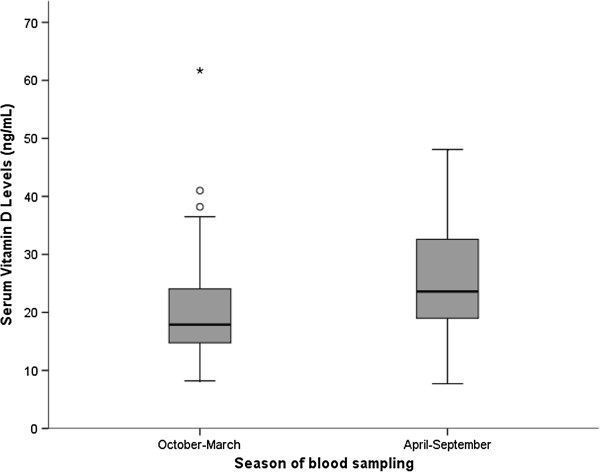
BACKGROUND: Serum 25-hydroxyvitamin D3 (Vitamin D) insufficiency and single-nucleotide polymorphisms (SNPs) on its receptor, Vitamin D receptor (VDR), have been reported to be involved in melanoma susceptibility in populations mostly from northern countries. OBJECTIVE: To investigate 25-hydroxyvitamin D3 levels and VDR SNPs in melanoma patients from sunny area of Barcelona, two studies were carried out. The first study evaluated the levels of Vitamin D at time of melanoma diagnosis and the second one analyzed the association between VDR genetic variants and risk of having a high nevus number, the strongest phenotypic risk factor for melanoma. METHODS: The levels of 25-hydroxyvitamin D3 in 81 melanoma patients at diagnosis were measured. In a second group of melanoma patients, including 150 with low and 113 with high nevus number, 11 VDR SNPs were analyzed for their association with nevus number. RESULTS: In the first study, 68% of patients had insufficient levels of 25-hydroxyvitamin D3 (<25 ng/ml). Autumn-winter months and fair phototype were associated with 25-hydroxyvitamin D3 insufficiency; after multivariate analysis, season of sampling remained the only independent predictor of 25-hydroxyvitamin D3 levels. In the second study, VDR variant rs2189480 (P = 0.006) was associated with risk of high nevus number whereas rs2239179 (P = 0.044) and rs7975128 (P = 0.0005) were protective against high nevus number. After Bonferroni adjustment only rs7975128 remained significant. In stratified analysis, SNP rs7975128 was found protective against multiple melanomas (P = 0.021). CONCLUSION: This study showed that even in Barcelona, a sunny Mediterranean area, 25-hydroxyvitamin D3 levels were sub-optimal in the majority of melanoma patients at diagnosis. The involvement of VDR in nevi and, in turn, in melanoma susceptibility has also been suggested. Larger studies are needed to confirm our findings.
Overview
The claims and statistics of this paper haven’t been checked yet.
Free: it reads the open-access text and checks the first 5 claims that cite a source we can check. Create a free account to check every claim.
Integrity signals
Registry
Cites
Statistics
Figures
Verification
Claims the paper makes
The claims and statistics of this paper haven’t been checked yet.
Free: it reads the open-access text and checks the first 5 claims that cite a source we can check. Create a free account to check every claim.
Claims other papers make about this one
Each is checked against this paper’s own text: does it say what the citing paper says it does?
The source backs part of the claim, not all of it — or backs it for a different population, condition or comparison.
In the citing paper
“In several studies, normal serum levels of vitamin D3 at the time of diagnosis correlate with a better prognosis136,137.”
From Mechanisms and prevention of UV‐induced melanoma (2018) · cites this paper as [136]
Experimental — accuracy not yet measured
Self-check
Percentages, sums and reported differences re-computed from the paper’s own numbers.
The self-check needs the paper’s full text.
Citations
Cites
Holick, M. F. (2007) · New England Journal of Medicine · doi:10.1056/nejmra070553 · Cited by 13,720
Ross, A. C., Manson, J. E., Abrams, S. A., Aloia, J. F., Brannon, P. M., Clinton, S. K., Durazo-Arvizu, R. A., Gallagher, J. C., Gallo, R. L., Jones, G., et al. (2011) · The Journal of Clinical Endocrinology & Metabolism · doi:10.1210/jc.2010-2704 · Cited by 4,026 · cited 1×
“2011 The IOM committee reported guidelines stating that a level of 25-hydroxyvitamin D3 >20 ng/ml is needed for good bone and general health for practically all individuals [37].”
BackgroundNorman, A. W. (1979) · Cited by 3,769
Holick, M. F. (2004) · The American Journal of Clinical Nutrition · doi:10.1093/ajcn/80.6.1678s · Cited by 3,198 · cited 2×
“The skin exposure to UVB induces the photolytic conversion of 7-dehydrocholesterol (7-DHC) to previtamin D and from there to vitamin D3.”
BackgroundEfficiency and power in genetic association studies
de Bakker, P. I. W., Yelensky, R., Pe'er, I., Gabriel, S. B., Daly, M. J., & Altshuler, D. (2005) · Nature Genetics · doi:10.1038/ng1669 · Cited by 1,688
Genetics and biology of vitamin D receptor polymorphisms
Uitterlinden, A. G., Fang, Y., van Meurs, J. B. J., Pols, H. A. P., & van Leeuwen, J. P. T. M. (2004) · Gene · doi:10.1016/j.gene.2004.05.014 · Cited by 1,539 · cited 1×
“11, has more than 200 single-nucleotide polymorphisms (SNPs) [14] but only a few SNPs, considered to be functional [15], have been studied for their potential associations with melanoma susceptibility [16-21].”
BackgroundMeta-analysis of risk factors for cutaneous melanoma: II. Sun exposure
Gandini, S., Sera, F., Cattaruzza, M. S., Pasquini, P., Picconi, O., Boyle, P., & Melchi, C. F. (2005) · European Journal of Cancer · doi:10.1016/j.ejca.2004.10.016 · Cited by 1,266 · cited 1×
“Sunburn and intermittent sun exposure are the most important environmental risk factors for melanoma [7] but sun exposure is also the main source for 25hydroxyvitamin D3 photosynthesis.”
BackgroundLips, P. (2006) · Progress in Biophysics and Molecular Biology · doi:10.1016/j.pbiomolbio.2006.02.016 · Cited by 1,173 · cited 1×
“where the parathyroid hormone has its maximum inhibition [34].”
BackgroundDusso, A. S., Brown, A. J., & Slatopolsky, E. (2005) · American Journal of Physiology-Renal Physiology · doi:10.1152/ajprenal.00336.2004 · Cited by 1,148
The Role of Vitamin D in Cancer Prevention
Garland, C. F., Garland, F. C., Gorham, E. D., Lipkin, M., Newmark, H., Mohr, S. B., & Holick, M. F. (2006) · American Journal of Public Health · doi:10.2105/ajph.2004.045260 · Cited by 1,031
Meta-analysis of risk factors for cutaneous melanoma: I. Common and atypical naevi
Gandini, S., Sera, F., Cattaruzza, M. S., Pasquini, P., Abeni, D., Boyle, P., & Melchi, C. F. (2005) · European Journal of Cancer · doi:10.1016/j.ejca.2004.10.015 · Cited by 842
SNPassoc: an R package to perform whole genome association studies
González, J. R., Armengol, L., Solé, X., Guinó, E., Mercader, J. M., Estivill, X., & Moreno, V. (2007) · Bioinformatics · doi:10.1093/bioinformatics/btm025 · Cited by 797
Genome-wide association study identifies three loci associated with melanoma risk
Bishop, D. T., Demenais, F., Iles, M. M., Harland, M., Taylor, J. C., Corda, E., Randerson-Moor, J., Aitken, J. F., Avril, M.-F., Azizi, E., et al. (2009) · Nature Genetics · doi:10.1038/ng.411 · Cited by 462 · cited 1×
“Genome-wide association studies have identified common susceptibility genes for melanoma and increased nevus number [27,28].”
BackgroundSelf-citationZittermann, A., Iodice, S., Pilz, S., Grant, W. B., Bagnardi, V., & Gandini, S. (2012) · The American Journal of Clinical Nutrition · doi:10.3945/ajcn.111.014779 · Cited by 382 · cited 1×
“**The median (25 - 75 perc concentrations of between 30 ng/ml and 40 ng/ml (75 nmol/L and 100 nmol/L) are needed to reduce mortality [38].”
BackgroundNewton-Bishop, J. A., Beswick, S., Randerson-Moor, J., Chang, Y.-M., Affleck, P., Elliott, F., Chan, M., Leake, S., Karpavicius, B., Haynes, S., et al. (2009) · Journal of Clinical Oncology · doi:10.1200/jco.2009.22.1135 · Cited by 295 · cited 5×
“The small sample size of the two groups of patients may affect our results; however the proportion of patients with insufficient 25-hydroxyvitamin D3 is comparable to a previous study in a larger melanoma population [5].”
BackgroundMethodResultInfluentialGenome-wide association with bone mass and geometry in the Framingham Heart Study
Kiel, D. P., Demissie, S., Dupuis, J., Lunetta, K. L., Murabito, J. M., & Karasik, D. (2007) · BMC Medical Genetics · doi:10.1186/1471-2350-8-s1-s14 · Cited by 269
Analytical and clinical validation of the 25 OH vitamin D assay for the LIAISON® automated analyzer
Ersfeld, D. L., Rao, D. S., Body, J.-J., Sackrison, J. L., Miller, A. B., Parikh, N., Eskridge, T. L., Polinske, A., Olson, G. T., & MacFarlane, G. D. (2004) · Clinical Biochemistry · doi:10.1016/j.clinbiochem.2004.06.006 · Cited by 243 · cited 1×
“The levels of 25-hydroxyvitamin D3 (ng/ml) were analyzed by a chemiluminescence immunoassay method using the Liaison W kit (DiaSorin, Minnesota, USA) as previously described [31].”
MethodFalchi, M., Bataille, V., Hayward, N. K., Duffy, D. L., Bishop, J. A. N., Pastinen, T., Cervino, A., Zhao, Z. Z., Deloukas, P., Soranzo, N., et al. (2009) · Nature Genetics · doi:10.1038/ng.410 · Cited by 226
13th Workshop consensus for vitamin D nutritional guidelines
Norman, A. W., Bouillon, R., Whiting, S. J., Vieth, R., & Lips, P. (2007) · The Journal of Steroid Biochemistry and Molecular Biology · doi:10.1016/j.jsbmb.2006.12.071 · Cited by 221
Geographical differences in vitamin D status, with particular reference to European countries
Ovesen, L., Andersen, R., & Jakobsen, J. (2003) · Proceedings of the Nutrition Society · doi:10.1079/pns2003297 · Cited by 196 · cited 1×
“The level chosen as cut off varied in studies in European populations [39].”
BackgroundNejentsev, S., Godfrey, L., Snook, H., Rance, H., Nutland, S., Walker, N. M., Lam, A. C., Guja, C., Ionescu-Tirgoviste, C., Undlien, D. E., et al. (2004) · Human Molecular Genetics · doi:10.1093/hmg/ddh169 · Cited by 190
Hutchinson, P. E., Osborne, J. E., Lear, J. T., Smith, A. G., Bowers, P., Morris, P., Jones, P. M., York, C., Strange, R. C., & Fryer, A. A. (2000) · PubMed · Cited by 180
Carling, T., Rastad, J., Åkerström, G., & Westin, G. (1998) · The Journal of Clinical Endocrinology & Metabolism · doi:10.1210/jcem.83.7.4862 · Cited by 154
Randerson-Moor, J. A., Taylor, J. C., Elliott, F., Chang, Y.-M., Beswick, S., Kukalizch, K., Affleck, P., Leake, S., Haynes, S., Karpavicius, B., et al. (2009) · European Journal of Cancer · doi:10.1016/j.ejca.2009.06.011 · Cited by 147 · cited 3×
“The association between 25-hydroxyvitamin D3 levels and/or inherited variation in VDR and melanoma risk has been studied in few populations, mostly from northern countries such as England, USA, Poland and Germany [4,6,21-23].”
BackgroundResultRanson, M., Posen, S., & Mason, R. S. (1988) · Journal of Investigative Dermatology · doi:10.1111/1523-1747.ep12477126 · Cited by 144
Vitamin D and skin cancer: A meta-analysis
Gandini, S., Raimondi, S., Gnagnarella, P., Doré, J., Maisonneuve, P., & Testori, A. (2008) · European Journal of Cancer · doi:10.1016/j.ejca.2008.10.003 · Cited by 143 · cited 4×
“The potential role of functional VDR variants such as FokI and BsmI in melanoma risk has been assessed by meta-analysis studies [22,23].”
BackgroundResultInfluentialHealth benefits of vitamin D and sunlight: a D-bate
Holick, M. F. (2011) · Nature Reviews Endocrinology · doi:10.1038/nrendo.2010.234 · Cited by 128 · cited 1×
“Suboptimal levels of 25-hydroxyvitamin D3 have been shown to be associated with increased risk of several cancers including melanoma [3,4].”
BackgroundVitamin D deficiency in Spain: a population-based cohort study
González-Molero, I., Morcillo, S., Valdés, S., Perez‐Valero, V., Botas, P., Delgado, E., Hernández, D., Olveira, G., Rojo‐Martínez, G., Gutiérrez‐Repiso, C., et al. (2010) · European Journal of Clinical Nutrition · doi:10.1038/ejcn.2010.265 · Cited by 116
Newton-Bishop, J. A., Chang, Y.-M., Elliott, F., Chan, M., Leake, S., Karpavicius, B., Haynes, S., Fitzgibbon, E., Kukalizch, K., Randerson-Moor, J., et al. (2011) · European Journal of Cancer · doi:10.1016/j.ejca.2010.10.008 · Cited by 113 · cited 1×
“It has been recently reported that regular weekend solar exposure is protective against melanoma [44] and is associated with increased 25-hydroxyvitamin D3 levels [45].”
BackgroundReduced serum 25-hydroxyvitamin D levels in stage IV melanoma patients.
Nürnberg, B., Gräber, S., Gärtner, B. C., Geisel, J., Pföhler, C., Schadendorf, D., Tilgen, W., & Reichrath, J. (2009) · PubMed · Cited by 108
Photoprotection and vitamin D status
Springbett, P., Buglass, S., & Young, A. R. (2010) · Journal of Photochemistry and Photobiology B Biology · doi:10.1016/j.jphotobiol.2010.03.006 · Cited by 108 · cited 1×
“Our results support the hypothesis that increased photoprotection practices may contribute to increase 25hydroxyvitamin D3 deficiency although the results are still contradictory [48-50].”
ResultChang, Y., Newton‐Bishop, J., Bishop, D. T., Armstrong, B. K., Bataille, V. A., Bergman, W., Berwick, M., Bracci, P. M., Elwood, M., Ernstoff, M. S., et al. (2008) · International Journal of Cancer · doi:10.1002/ijc.23869 · Cited by 103 · cited 1×
“Common acquired nevi are melanocytes in proliferation and high nevus number represents the strongest phenotypic risk factor for melanoma development [25,26].”
BackgroundHalsall, J. A., Osborne, J. E., Potter, L., Pringle, J. H., & Hutchinson, P. E. (2004) · British Journal of Cancer · doi:10.1038/sj.bjc.6602006 · Cited by 103 · cited 1×
“11, has more than 200 single-nucleotide polymorphisms (SNPs) [14] but only a few SNPs, considered to be functional [15], have been studied for their potential associations with melanoma susceptibility [16-21].”
BackgroundMillikan, R. C., Hummer, A., Begg, C., Player, J., de Cotret, A. R., Winkel, S., Mohrenweiser, H., Thomas, N., Armstrong, B., Kricker, A., et al. (2006) · Carcinogenesis · doi:10.1093/carcin/bgi252 · Cited by 98 · cited 1×
“Studies including only melanoma patients have been shown to be valid in identifying rare genetic variants associated with melanoma predisposition as rare variants have a higher prevalence among cases [24,54].”
BackgroundBorradale, D., & Kimlin, M. G. (2009) · Nutrition Research Reviews · doi:10.1017/s0954422409990102 · Cited by 93 · cited 1×
“In recent years interest in 25-hydroxyvitamin D3 has grown as evidence has shown it to play a role in cancer susceptibility and outcome, postulated to be related to its anti-proliferative pro-apoptotic and pro-differentiation properties [1,2].”
BackgroundCarling, T. (1998) · The Journal of Clinical Endocrinology & Metabolism · doi:10.1210/jc.83.7.2255 · Cited by 89
Glass, D., Lens, M. B., Swaminathan, R., Spector, T. D., & Bataille, V. A. (2009) · PLoS ONE · doi:10.1371/journal.pone.0006477 · Cited by 88 · cited 1×
“However, three other studies have in fact also reported that within whiteskinned populations, fair skinned people have lower levels of 25-hydroxyvitamin D3 [45-47].”
ResultMata-Granados, J. M., de Castro, M. D. L., & Gómez, J. M. (2008) · Clinical Biochemistry · doi:10.1016/j.clinbiochem.2008.02.003 · Cited by 80 · cited 1×
“and in different sub-groups of the population [40-42].”
BackgroundDifferential biological effects of 1,25-dihydroxyVitamin D3 on melanoma cell lines in vitro
Seifert, M., Rech, M., Meineke, V., Tilgen, W., & Reichrath, J. (2004) · The Journal of Steroid Biochemistry and Molecular Biology · doi:10.1016/j.jsbmb.2004.03.002 · Cited by 72 · cited 1×
“In vitro, 25-hydroxyvitamin D3 has been shown to inhibit the growth of normal melanocytes and melanocytes derived from melanoma [11,12].”
BackgroundAssociation between cutaneous melanoma, Breslow thickness and vitamin D receptor BsmI polymorphism
Santonocito, C., Capizzi, R., Concolino, P., Lavieri, M. M., Paradisi, A., Gentileschi, S., Torti, E., Rutella, S., Rocchetti, S., Carlo, A. D., et al. (2006) · British Journal of Dermatology · doi:10.1111/j.1365-2133.2006.07620.x · Cited by 71 · cited 14×
“5Bioinformatics and Biostatistics Unit, and Translational Research Laboratory, Catalan Institute of Oncology, Bellvitge Biomedical Research Institute (IDIBELL), L’Hospitalet, Barcelona, Spain.”
BackgroundInfluentialField, S., & Newton-Bishop, J. A. (2011) · Molecular Oncology · doi:10.1016/j.molonc.2011.01.007 · Cited by 71 · cited 2×
“The association between 25-hydroxyvitamin D3 levels and/or inherited variation in VDR and melanoma risk has been studied in few populations, mostly from northern countries such as England, USA, Poland and Germany [4,6,21-23].”
BackgroundMocellin, S., & Nitti, D. (2008) · Cancer · doi:10.1002/cncr.23867 · Cited by 71
Vitamin D receptor polymorphisms in patients with cutaneous melanoma
Orlow, I., Roy, P., Reiner, A. S., Yoo, S., Patel, H., Paine, S., Armstrong, B. K., Kricker, A., Marrett, L. D., Millikan, R. C., et al. (2012) · International Journal of Cancer · doi:10.1002/ijc.26023 · Cited by 68
Relationship Between Vitamin D Status and Skin Phototype in General Adult Population
Malvy, D. J.-M., Guinot, C., Preziosi, P., Galan, P., Chapuy, M. C., Maamer, M., Arnaud, S., Meunier, P. J., Herçberg, S., & Tschachler, E. (2000) · Photochemistry and Photobiology · doi:10.1562/0031-8655(2000)0710466rbvdsa2.0.co2 · Cited by 68 · cited 1×
“However, three other studies have in fact also reported that within whiteskinned populations, fair skinned people have lower levels of 25-hydroxyvitamin D3 [45-47].”
ResultBarroso, E., Fernández, L. P., Milne, R. L., Pita, G., Sendagorta, E., Floristán, U., Rodríguez, M. F., Aviles, J. A., Martín‐González, M., Arias, J. I., et al. (2008) · BMC Cancer · doi:10.1186/1471-2407-8-385 · Cited by 68 · cited 13×
“5Bioinformatics and Biostatistics Unit, and Translational Research Laboratory, Catalan Institute of Oncology, Bellvitge Biomedical Research Institute (IDIBELL), L’Hospitalet, Barcelona, Spain.”
BackgroundInfluentialLi, C., Liu, Z., Wang, L. E., Gershenwald, J. E., Lee, J. E., Prieto, V. G., Duvic, M., Grimm, E. A., & Wei, Q. (2008) · International Journal of Cancer · doi:10.1002/ijc.23357 · Cited by 67 · cited 1×
“11, has more than 200 single-nucleotide polymorphisms (SNPs) [14] but only a few SNPs, considered to be functional [15], have been studied for their potential associations with melanoma susceptibility [16-21].”
BackgroundPrevalence Study of Nevi in Children from Barcelona
Aguilera, P., Puig, S., Guilabert, A., Julià, M., Romero, D., Vicente, A., González-Enseñat, M. A., & Malvehy, J. (2008) · Dermatology · doi:10.1159/000183179 · Cited by 63 · cited 1×
“We selected two groups of patients where there would be no possible overlap between them, as <50 nevi were closer to the normal nevus number in our population [30] and >100 nevi being a well- documented risk factor for melanoma [26].”
Self-citationGenomic Actions of 1,25-dihydroxyvitamin D3
Whitfield, G. K., Hsieh, J., Jurutka, P. W., Selznick, S. H., Haussler, C. A., MacDonald, P. N., & Haussler, M. R. (1995) · Journal of Nutrition · doi:10.1093/jn/125.suppl_6.1690s · Cited by 62 · cited 1×
“The 25-hydroxyvitamin D3 mediates its biological effects by binding to its specific nuclear receptor, Vitamin D Receptor (VDR) [13].”
BackgroundCalatayud, M., Jódar, E., Sánchez, R., Guadalix, S., & Hawkins, F. G. (2009) · Endocrinología y Nutrición · doi:10.1016/s1575-0922(09)70980-5 · Cited by 61
Analysis of SNPs and Haplotypes in Vitamin D Pathway Genes and Renal Cancer Risk
Karami, S., Brennan, P., Rosenberg, P. S., Navrátilová, M., Mateș, D., Zaridze, D. G., Janout, V., Kollárová, H., Bencko, V., Matveev, V., et al. (2009) · PLoS ONE · doi:10.1371/journal.pone.0007013 · Cited by 40
Vitamin D receptor variants and the malignant melanoma risk: A population-based study
Gapska, P., Scott, R. J., Serrano‐Fernández, P., Mirecka, A., Rassoud, I., Górski, B., Cybulski, C., Huzarski, T., Byrski, T., Nagay, L., et al. (2009) · Cancer Epidemiology · doi:10.1016/j.canep.2009.06.006 · Cited by 40 · cited 1×
“11, has more than 200 single-nucleotide polymorphisms (SNPs) [14] but only a few SNPs, considered to be functional [15], have been studied for their potential associations with melanoma susceptibility [16-21].”
BackgroundProstate Cancer Susceptibility Loci Identified on Chromosome 12 in African Americans
Bonilla, C., Hooker, S. E., Mason, T. E., Bock, C. H., & Kittles, R. A. (2011) · PLoS ONE · doi:10.1371/journal.pone.0016044 · Cited by 37 · cited 1×
“All 3 SNPs are localized in the VDR coding region between SNPs FokI and BsmI and have been previously described in other pathologies [50-52].”
BackgroundDavies, J. R., Chang, Y.-M., Snowden, H., Chan, M., Leake, S., Karpavicius, B., Haynes, S., Kukalizch, K., Randerson-Moor, J., Elliott, F., et al. (2011) · Cancer Causes & Control · doi:10.1007/s10552-011-9827-3 · Cited by 32 · cited 2×
“It has been recently reported that regular weekend solar exposure is protective against melanoma [44] and is associated with increased 25-hydroxyvitamin D3 levels [45].”
BackgroundResultValoración del umbral óptimo de vitamina D en la población mayor de 64 años
Vaqueiro, M., Baré, M., Antón, E., Andreu, E., & Gimeno, C. (2006) · Medicina Clínica · doi:10.1157/13094820 · Cited by 27
Bernerd (2000) · doi:10.1562/0031-8655(2000)071 · Cited by 18
The Good, the Bad, and the Ugly of Sunscreens
Berwick, M. (2010) · Clinical Pharmacology & Therapeutics · doi:10.1038/clpt.2010.227 · Cited by 17 · cited 1×
“Our results support the hypothesis that increased photoprotection practices may contribute to increase 25hydroxyvitamin D3 deficiency although the results are still contradictory [48-50].”
ResultVitamin D and overall mortality
Guerrieri‐Gonzaga, A., & Gandini, S. (2012) · Pigment Cell & Melanoma Research · doi:10.1111/pcmr.12036 · Cited by 11 · cited 1×
“Several meta-analyses support the evidence that low 25-hydroxyvitamin D3 serum level, which is highly prevalent worldwide, is a risk factor for many chronic diseases including cancer [35].”
Result
Cited by
Mechanisms and prevention of UV‐induced melanoma
Sample, A., & He, Y. (2018) · Photodermatology, Photoimmunology & Photomedicine · doi:10.1111/phpp.12329 · Cited by 372
Slominski, A. T., Brożyna, A. A., Zmijewski, M. A., Jóźwicki, W., Jetten, A. M., Mason, R. S., Tuckey, R. C., & Elmets, C. A. (2017) · Laboratory Investigation · doi:10.1038/labinvest.2017.3 · Cited by 136
Caini, S., Boniol, M., Tosti, G., Magi, S., Medri, M., Stanganelli, I., Palli, D., Assedi, M., del Mármol, V., & Gandini, S. (2014) · European Journal of Cancer · doi:10.1016/j.ejca.2014.06.024 · Cited by 134
Malignant Melanoma: An Overview, New Perspectives, and Vitamin D Signaling
Slominski, R. M., Kim, T., Janjetović, Z., Brożyna, A. A., Podgórska, E., Dixon, K. M., Mason, R. S., Tuckey, R. C., Sharma, R., Crossman, D. K., et al. (2024) · Cancers · doi:10.3390/cancers16122262 · Cited by 86
Potrony, M., Puig‐Butillé, J. A., Aguilera, P., Bádenas, C., Tell‐Martí, G., Carrera, C., Pozo, L. J. D., Conejo‐Mir, J., Malvehy, J., & Puig, S. (2015) · JAMA Dermatology · doi:10.1001/jamadermatol.2015.4356 · Cited by 52
Self-citation
Metadata
- Authors
- Ogbah, Z., Visa, L., Badenas, C., Ríos, J., Puig-Butille, J. A., Bonifaci, N., Guino, E., Augé, J. M., Kolm, I., Carrera, C., Pujana, M. Á., Malvehy, J., & Puig, S.
- Affiliations
- Hospital Clínic de Barcelona (ES)
- Instituto de Salud Carlos III (ES)
- Corresponding author
- Ogbah, Zighereda
- Puig, Susana
- Venue
- BMC Medical Genetics
- Published
- 2013-02-16
- Volume
- 14
- Issue
- 1
- Pages
- 26-26
- ISSN
- 1471-2350 (ISSN-L)
- PMC
- PMC3648347
- OpenAlex
- W2089699649
- Cited by
- 28
- References
- 56
- Citations by year
- 2024: 3 · 2023: 3 · 2022: 2 · 2021: 1 · 2020: 3 · 2019: 2 · 2018: 2 · 2017: 4 · 2016: 3 · 2015: 3 · 2014: 2
- FWCI
- 1.99
- Type
- journal article
- Language
- en
- Open access
- gold
- doi.org
- Licence
- Locations
- BMC Medical Genetics (publishedVersion, cc-by)
- Europe PMC (PubMed Central) (publishedVersion, cc-by)
- PubMed Central (publishedVersion, cc-by)
- PubMed (publishedVersion)
- RECERCAT (Consorci de Serveis Universitaris de Catalunya) (publishedVersion, other-oa)
- Zurich Open Repository and Archive (University of Zurich) (acceptedVersion, cc-by)
- Dipòsit Digital de la Universitat de Barcelona (Universitat de Barcelona) (submittedVersion, cc-by)
- Zurich Open Repository and Archive (University of Zurich) (submittedVersion, cc-by)
- Zurich Open Repository and Archive (University of Zurich)
- Funders
- University of Leeds
- European Commission (LSHC‐CT‐2006‐018702)
- National Institutes of Health
- Agència de Gestió d'Ajuts Universitaris i de Recerca
- National Cancer Institute (CA83115, R01CA083115)
- Topics
- Health Sciences › Medicine › Endocrinology, Diabetes and Metabolism › Vitamin D Research Studies
- Health Sciences › Medicine › Oncology › Cutaneous Melanoma Detection and Management
- Life Sciences › Biochemistry, Genetics and Molecular Biology › Cell Biology › melanin and skin pigmentation
- Keywords
- melanoma, 25-hydroxyvitamin D3, vitamin D insufficiency, vitamin D receptor, melanoma susceptibility, seasonal variation, phototype, Mediterranean populations
- MeSH terms
- Adult, Aged, Calcifediol, Female, Humans, Male, Melanoma, Middle Aged, Nevus, Phenotype, Retrospective Studies, Risk Factors, Seasons, Skin Neoplasms, Spain, Urban Population, Genetic Variation, Vitamin D, Vitamin D Deficiency, Cohort Studies, Receptors, Calcitriol, Genetic Predisposition to Disease, Polymorphism, Single Nucleotide
About these checks
Registry, retraction, Cites and statistics results are computed, not judged, with one exception: a printed reference that no index lists is read once by a model before it counts as a citation error. Claims are extracted by a model and kept only when their quote appears verbatim in the text; each cited source is then checked, with a model’s help, for whether it says what the claim relies on. Those verdicts can be wrong — read the claim’s quote and the cited source before relying on one.
Statistics and arithmetic are recomputed, not judged.
Confidence bands are shown only for fields calibrated on our annotated test set. None is calibrated yet, so no band is shown.
What counts as a claim ›How we measure confidence ›How we check this ›
Are you an author, or do you see a problem with this page? Request a review
Data sources
Bibliographic data: Semantic Scholar, OpenAlex, Crossref.
Contains information from the Semantic Scholar Academic Graph Datasets, made available under the ODC Attribution License (ODC-BY 1.0).
Semantic Scholar’s data is described in: Kinney, R., et al. (2023). The Semantic Scholar Open Data Platform. arXiv:2301.10140.
