

Developing a complex intervention for diet and activity behaviour change in obese pregnant women (the UPBEAT trial); assessment of behavioural change and process evaluation in a pilot randomised controlled trial
Open accessThe DOI matches its Crossref record; 60 of the 63 references it cites were found in a registry or an index.
Abstract
BACKGROUND: Complex interventions in obese pregnant women should be theoretically based, feasible and shown to demonstrate anticipated behavioural change prior to inception of large randomised controlled trials (RCTs). The aim was to determine if a) a complex intervention in obese pregnant women leads to anticipated changes in diet and physical activity behaviours, and b) to refine the intervention protocol through process evaluation of intervention fidelity. METHODS: We undertook a pilot RCT of a complex intervention in obese pregnant women, comparing routine antenatal care with an intervention to reduce dietary glycaemic load and saturated fat intake, and increase physical activity. Subjects included 183 obese pregnant women (mean BMI 36.3 kg/m2). RESULTS: Compared to women in the control arm, women in the intervention arm had a significant reduction in dietary glycaemic load (33 points, 95% CI -47 to -20), (p < 0.001) and saturated fat intake (-1.6% energy, 95% CI -2.8 to -0. 3) at 28 weeks' gestation. Objectively measured physical activity did not change. Physical discomfort and sustained barriers to physical activity were common at 28 weeks' gestation. Process evaluation identified barriers to recruitment, group attendance and compliance, leading to modification of intervention delivery. CONCLUSIONS: This pilot trial of a complex intervention in obese pregnant women suggests greater potential for change in dietary intake than for change in physical activity, and through process evaluation illustrates the considerable advantage of performing an exploratory trial of a complex intervention in obese pregnant women before undertaking a large RCT. TRIAL REGISTRATION NUMBER: ISRCTN89971375.
Overview
The claims and statistics of this paper haven’t been checked yet.
Free: it reads the open-access text and checks the first 5 claims that cite a source we can check. Create a free account to check every claim.
Integrity signals
Registry
Cites
Statistics
Figures
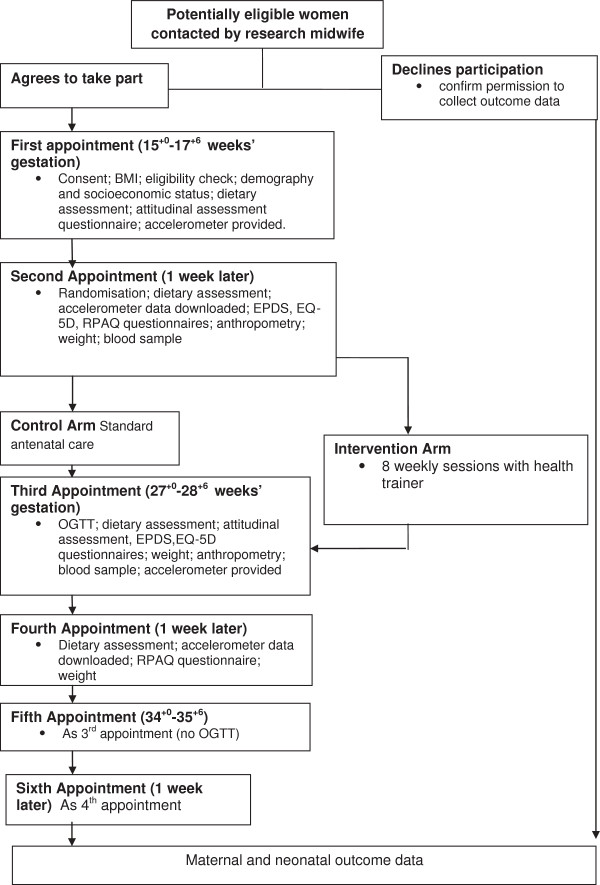
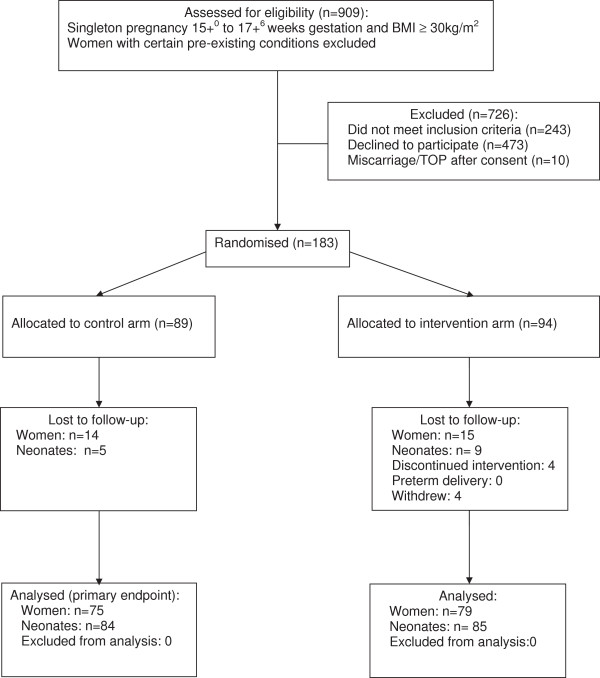
Verification
Claims the paper makes
The claims and statistics of this paper haven’t been checked yet.
Free: it reads the open-access text and checks the first 5 claims that cite a source we can check. Create a free account to check every claim.
Claims other papers make about this one
Each is checked against this paper’s own text: does it say what the citing paper says it does?
The source backs part of the claim, not all of it — or backs it for a different population, condition or comparison.
In the citing paper
“When undertaking qualitative research in feasibility studies for trials, it is common for researchers to undertake a cross-sectional interview study with intervention deliverers and recipients and not to specify explicitly an approach or design [12, 21, 22, 24].”
From Maximising the impact of qualitative research in feasibility studies for randomised controlled trials: guidance for researchers (2015) · cites this paper as [12]
Experimental — accuracy not yet measuredIn the citing paper
“Reporting the impact of the qualitative research on the trial, and potential learning for future trials, in the abstract of any journal article can make it easier for other researchers to learn from the qualitative research findings [12].”
From Maximising the impact of qualitative research in feasibility studies for randomised controlled trials: guidance for researchers (2015) · cites this paper as [12]
In the citing paper
“Electronic journals allowing longer articles, and the use of supplementary tables, can facilitate the inclusion of both more detail on the methods used and a larger number of illustrative data extracts [12].”
From Maximising the impact of qualitative research in feasibility studies for randomised controlled trials: guidance for researchers (2015) · cites this paper as [12]
In the citing paper
“Some researchers simply describe the steps they take within their analysis rather than citing a named approach [12].”
From Maximising the impact of qualitative research in feasibility studies for randomised controlled trials: guidance for researchers (2015) · cites this paper as [12]
In the citing paper
“In practice, sample sizes for qualitative research in feasibility studies are usually small (typically between 5 and 20 individuals [10, 12, 22–24]).”
From Maximising the impact of qualitative research in feasibility studies for randomised controlled trials: guidance for researchers (2015) · cites this paper as [12]
Self-check
Percentages, sums and reported differences re-computed from the paper’s own numbers.
The self-check needs the paper’s full text.
Citations
Cites
EuroQol: a new facility for the measurement of health-related quality of life
(1990) · Health Policy · doi:10.1016/0168-8510(90)90421-9 · Cited by 15,736 · cited 2×
“The EuroQol quality of life (EQ- 5D) questionnaire [22] was used to assess health status, and the Edinburgh Post Natal Depression Score (EPDS) to assess mental health [23].”
BackgroundMethodDetection of Postnatal Depression: Development of the 10-item Edinburgh Postnatal Depression Scale
Cox, J. L., Holden, J. M., & Sagovsky, R. (1987) · British Journal of Psychiatry · doi:10.1192/bjp.150.6.782 · Cited by 14,183
Developing and evaluating complex interventions: the new Medical Research Council guidance
Craig, P., Dieppe, P., Macintyre, S., Michie, S., Nazareth, I., & Petticrew, M. (2008) · BMJ · doi:10.1136/bmj.a1655 · Cited by 10,995 · cited 1×
“Prior to embarking on a large randomised controlled trial (RCT) and in accordance with UK Medical Research Council Guidance for development of a complex intervention [10], we first explored the theoretical basis for an intervention in obese pregnant women [5,6,11,12], leading to development of a novel intervention (Ph…”
MethodCompendium of physical activities: an update of activity codes and MET intensities
AINSWORTH, B. E., HASKELL, W. L., WHITT, M. C., IRWIN, M. L., SWARTZ, A. M., STRATH, S. J., O???BRIEN, W. L., BASSETT, D. R., SCHMITZ, K. H., EMPLAINCOURT, P. O., et al. (2000) · Medicine & Science in Sports & Exercise · doi:10.1097/00005768-200009001-00009 · Cited by 8,497 · cited 1×
“Vigorous activities were those of 6 METs or greater [34] MVPA were combined to give one summary variable.”
BackgroundHealth Promotion by Social Cognitive Means
Bandura, A. (2004) · Health Education & Behavior · doi:10.1177/1090198104263660 · Cited by 7,238 · cited 2×
“Identification of benefits and overcoming barriers to behaviour change, and increasing self-efficacy were also included, and social support facilitated through the group format [17].”
BackgroundMethodInternational Association of Diabetes and Pregnancy Study Groups Consensus Panel (2010) · Diabetes Care · doi:10.2337/dc09-1848 · Cited by 5,390 · cited 2×
“5 mmol/L according to the International Association of the Diabetes and Pregnancy Study Groups (IADPSG) guidelines [25].”
MethodQualitative methods for health research
(2009) · Choice Reviews Online · doi:10.5860/choice.47-0901 · Cited by 4,596
(1997) · doi:10.1097/00005650-199711000-00002 · Cited by 4,544 · cited 1×
“59 is severe problems on all dimensions) [27,28]; and also the visual analogue scale (VAS) of health-related quality of life (range 0 to 100 where 0 is worst imaginable health state).”
BackgroundWeight Gain During Pregnancy: Reexamining the Guidelines
Rasmussen, K. M., & Yaktine, A. L. (2009) · Cited by 4,493
Calibration of the Computer Science and Applications, Inc. accelerometer
FREEDSON, P. S., MELANSON, E., & SIRARD, J. (1998) · Medicine & Science in Sports & Exercise · doi:10.1097/00005768-199805000-00021 · Cited by 3,825 · cited 1×
“Sedentary behaviour was defined as <100 counts per minute (cpm), light activity as 100– 1951 cpm, moderate intensity activity as 1952–5725 cpm and vigorous activity as > 5725 cpm [32].”
Background
Research works printed but not linked: 6
- Royal College of Obstetrics and Gynaecology Exercise in pregnancy. Statement No. 4 2006 Internet: http://www.rcog.org.uk/womens-health/clinical-guidance/exercise-pregnancy (accessed July 16th, 2013)
- Gardosi J Francis A Customised weight centile calculator - GROW - centile v5.15/6.4 Gestational Network 2009 Internet: http://www.gestation.net/birthweight_centiles/online/centile_online_uk.htm (accessed 10th July, 2013)
- Centre for Maternal and Child Enquiries and the Royal College of Obstetricians and Gynaecologists Joint Guideline Management of women with obesity in pregnancy 2010 Internet; http://www.rcog.org.uk/womens-health/clinical-guidance/management-women-obesity-pregnancy (accessed July 10th 2013)
- Department of Health Dietary Reference Values for Food Energy and Nutrients for the United Kingdom. Report on Health and Social Subjects 41 1991 HSMO, London: The Stationary Office 1961974
- Townsend N Bhatnagar P Wickramasinghe K Scarborough P Foster C Rayner M Physical activity statistics 2012 2012 London: British Heart Foundation
- Gatineau M Mathrani S Public Health England. Obesity and Ethnicity Oxford: National Obesity Observatory 2011 Internet: http://www.noo.org.uk/NOO_pub/briefing_papers
Cited by
Items 101–140 of 140
Pandemic of Pregnant Obese Women: Is It Time to Re-Evaluate Antenatal Weight Loss?
Davis, A. M. (2015) · Healthcare · doi:10.3390/healthcare3030733 · Cited by 9
“Little data exists on the effects of weight loss on fetal growth [32].”
BackgroundWattar, B. H. A., Mylrea‐Foley, B., Morgan, C., Moore, A. P., & Thangaratinam, S. (2016) · Current Opinion in Obstetrics & Gynecology · doi:10.1097/gco.0000000000000322 · Cited by 9
Swindle, T., Martinez, A., Børsheim, E., & Andres, A. (2020) · BMJ Open · doi:10.1136/bmjopen-2020-038582 · Cited by 6
Knudsen, S. D. P., Roland, C. B., Alomairah, S. A., Jessen, A. D., Mølsted, S., Clausen, T. D., Løkkegaard, E., Stallknecht, B. M., Bønnelycke, J., Bendix, J. M., et al. (2022) · BMC Public Health · doi:10.1186/s12889-022-14717-1 · Cited by 7
“The process evaluations of the pilot study of Vitamin D and Lifestyle Intervention (DALI) [23] and the UK Pregnancies Better Eating and Activity Trial (UPBEAT) [24] focused on lifestyle interventions including PA to prevent gestational diabetes mellitus among overweight and obese pregnant women.”
BackgroundResultInfluentialBernardo, D. F. S., Sousa, D. P., Ferreira, I. H., Bobadilla-Agouborde, C., Soto-Rodríguez, F. J., & Santos, P. C. (2024) · Women · doi:10.3390/women4020010 · Cited by 8
Jones, I. R., Chandra, P. S., Dazzan, P., & Howard, L. M. (2014) · Cited by 4
Self-citationÇakır, G. S., Bakhsh, M. A., Quotah, O. F., Righton, O., George, C. M., Poston, L., White, S. L., Flynn, A. C., & Bell, Z. (2025) · BMC Pregnancy and Childbirth · doi:10.1186/s12884-025-07854-z · Cited by 4
“…included women from Middle Eastern ( n = 3), South Asian ( n = 5), White European ( n = 6), and Black African/Caribbean ( n = 1) ethnic groups [20] while Poston et al. interviewed women from White ( n = 8), Black ( n = 12), and ‘Other’ ( n = 1) ethnic groups [19] (see additional file 1, table A7).”
InfluentialSelf-citationTargeting pregnancy as a time to treat obesity
Vinter, C. A., & Nohr, E. A. (2015) · Expert Review of Endocrinology & Metabolism · doi:10.1586/17446651.2015.1079484 · Cited by 3
“No significant differences were found for risk of preeclampsia, pregnancy-induced hypertension, gestational diabetes, cesarean section, having a LGA infant, or admission to the neonatal intensive care unit.”
InfluentialEffect of maternal exercise on maternal and foetal health in obese pregnant women
Šćepanović, D., & Hrvatin, I. (2020) · Slovenian Medical Journal · doi:10.6016/zdravvestn.2944 · Cited by 3
“Six articles (42,43,49,50,52,54) included a dietary intervention or some information on healthy eating that aimed at a health gestational weight gain of less than 5 kg that is linked with fewer complications during pregnancy and delivery.”
BackgroundMethodInfluentialDASH Diet and Preeclampsia Prevention: A Literature Review
Baroutis, D., Katsianou, E., Athanasiou, D., Giannakaki, A.-G., Antsaklis, P. G., Theodora, M. K., Daskalakis, G., & Eleftheriades, M. I. (2025) · Nutrients · doi:10.3390/nu17122025 · Cited by 12
“Weight management interventions for overweight and obese women before and during pregnancy represent another important preventive strategy, given the strong association between obesity and preeclampsia risk [84,92,95].”
Muñoz, F. M., Kampmann, B., Stergachis, A. S., Chaudhary, M., Cutland, C., Khalil, A. A., de Gentile, A. S., Jones, C. E., Marshall, H., Sevene, E., et al. (2025) · Vaccine · doi:10.1016/j.vaccine.2025.127513 · Cited by 2
Factors associated with micronutrient intake of low-income overweight or obese young mothers
Chang, M., Lin, C. J., Smyth, J. M., & Wegener, D. T. (2025) · Critical Public Health · doi:10.1080/09581596.2025.2468987 · Cited by 1
“Obesity increases risk for many chronic conditions, such as cardiovascular disease, type 2 diabetes, and cancer (Poston et al., 2013).”
Allotey, J., Coomar, D., Ensor, J., Ogwulu, C. O., Ruiz‐Calvo, G., Monahan, M., Kabeya, V., Mcneill, R., Boath, A., Mahmoud, G., et al. (2026) · Health Technology Assessment · doi:10.3310/gjst1327 · Cited by 1
Self-citationMaternal Obesity and Gestational Weight Gain as Determinants of Long-Term Health
Patel, N., & Poston, L. (2016) · Springer eBooks · doi:10.1007/978-1-4939-6386-7_3 · Cited by 1
Self-citationStriebich, S., Mattern, E., Oganowski, T., Schäfers, R., & Ayerle, G. M. (2021) · BMC Medical Research Methodology · doi:10.1186/s12874-021-01429-0 · Cited by 1
Channon, S., Coulman, E., Cannings-John, R. L., Henley, J., Lau, M., Lugg-Widger, F. V., Strange, H., Davies, F., Sanders, J., Scherf, C., et al. (2023) · Health Technology Assessment · doi:10.3310/nkix8285 · Cited by 1
Heslehurst, N., McParlin, C., Sniehotta, F. F., Rankin, J. M., Crowe, L., & McColl, E. (2024) · Pilot and Feasibility Studies · doi:10.1186/s40814-024-01450-2 · Cited by 1
“…(e.g. advice and support provided relating to weight management), a food frequency questionnaire (FFQ, originally adapted by the UPBEAT Trial team [38, 39]), the Pregnancy Physical Activity Questionnaire (PPAQ) [40] and a validated questionnaire exploring psychosocial measures for understanding…”
MethodHodson, K. K. (2019) · Cited by 1
Hall, J. F., Corepal, R., Crocker, T. F., Lam, N., Burton, L.-J., Birch, K. M., Carter, G., Clarke, D. J., English, C., Farrin, A. J., et al. (2021) · medRxiv · doi:10.1101/2021.05.27.21256673 · Cited by 3
“and 20 studies included only female participants (39, 42, 58, 63, 68, 70, 71, 74, 79, 82, 93, 96, 98, 99, 103, 104, 109, 115, 117, 118).”
BackgroundInfluentialLifestyle Intervention and Prevention of Spontaneous Preterm Delivery in Obese Pregnant Women
Vinter, C. A. (2015) · Springer eBooks · doi:10.1007/978-3-319-16853-1_12
Effect of maternal diet on offspring metabolic programming: Changes induced by carbohydrate quality
Sideratou, T., Bell-Anderson, K. S., Petocz, P., & Miller, J. C. B. (2014) · Journal of Nutrition & Intermediary Metabolism · doi:10.1016/j.jnim.2014.10.121
“Evidence shows that pregnant women and those of reproductive age are often at risk of obesity or already obese, and therefore have an increased risk of adverse pregnancy outcomes (125, 129).”
BackgroundMaternal physical activity: influence on maternal and delivery outcomes
Watson, E. D. (2016)
McEachan, R., Santorelli, G., Bryant, M., Sahota, P., Farrar, D., Small, N., Akhtar, S., Sargent, J., Barber, S., Taylor, N. J., et al. (2016)
Sedentary behaviour in morbidly obese pregnant women
Gómez, F., & Joanna, C. (2018) · ERA
The Effect of Individual Education Program on Gestational Diabetes in IVF Pregnant Women
Samani, L. N., Hosseinkhani, A., Aryaeian, N., Tehraninejad, E. S., Haghani, H., & Chamari, M. (2019) · The Journal of Qazvin University of Medical Sciences · doi:10.32598/jqums.23.1.38
BSc, S. L.-E. (2015) · Wiley eBooks · doi:10.1002/9781119180432.ch3
Striebich, S., Mattern, E., Oganowski, T., Schäfers, R., & Ayerle, G. M. (2021) · Research Square · doi:10.21203/rs.3.rs-331325/v1
(2021) · Wiley eBooks · doi:10.1002/9781119610113.ch13
Smith, D. M., Mills, T. A., & Furber, C. (2017) · Wiley eBooks · doi:10.1002/9781119141150.ch14
Heslehurst, N., McParlin, C., Sniehotta, F. F., Rankin, J., Crowe, L., & McColl, E. (2024) · Figshare · doi:10.6084/m9.figshare.26687312
Heslehurst, N., McParlin, C., Sniehotta, F. F., Rankin, J., Crowe, L., & McColl, E. (2024) · Figshare · doi:10.6084/m9.figshare.25329790
Heslehurst, N., McParlin, C., Sniehotta, F. F., Rankin, J., Crowe, L., & McColl, E. (2024) · Figshare · doi:10.6084/m9.figshare.26687315
Heslehurst, N., McParlin, C., Sniehotta, F. F., Rankin, J., Crowe, L., & McColl, E. (2024) · Figshare · doi:10.6084/m9.figshare.26687307
Heslehurst, N., McParlin, C., Sniehotta, F. F., Rankin, J., Crowe, L., & McColl, E. (2024) · Figshare · doi:10.6084/m9.figshare.26687309
Heslehurst, N., McParlin, C., Sniehotta, F. F., Rankin, J., Crowe, L., & McColl, E. (2024) · Figshare · doi:10.6084/m9.figshare.26687318
Sharp, K. J., Sherar, L. B., Kettle, V. E., Sanders, J. P., & Daley, A. (2023) · Figshare · doi:10.6084/m9.figshare.22613936
Heslehurst, N., McParlin, C., Sniehotta, F. F., Rankin, J., Crowe, L., & McColl, E. (2024) · Figshare · doi:10.6084/m9.figshare.25329616
Trompette, J. (2017) · theses.fr (ABES) · doi:10.70675/60dc0f9bzd40bz49cfzb10az1cfabe2ca2e4 · Cited by 7
Kanwar, A. (2026) · International Journal of Research in Medical Sciences · doi:10.18203/2320-6012.ijrms20262610
Gao, M., Zhang, Y., Liu, Z., Yang, Y., Zhang, Y., Cui, S., Cai, X., & Yu, H. (2026) · Nutrients · doi:10.3390/nu18193303
“In our meta-analysis, seven RCTs employed four theories, namely the Stage Theory of Health Decision Making [15], Control Theory and Social Cognitive Theory [17,18,34], Behavior Change Theories [34], and motivational interviewing [31].”
Metadata
- Authors
- Poston, L., Briley, A. L., Barr, S., Bell, R., Croker, H., Coxon, K., Essex, H. N., Hunt, C., Hayes, L., Howard, L. M., Khazaezadeh, N., Kinnunen, T., Nelson, S. M., Oteng-Ntim, E., Robson, S. C., Sattar, N., Seed, P. T., Wardle, J., Sanders, T. A., & Sandall, J.
- Affiliations
- St Thomas' Hospital (GB)
- King's College London (GB)
- Newcastle University (GB)
- University College London (GB)
- University of York (GB)
- University of Tampere (FI)
- University of Glasgow (GB)
- Corresponding author
- Poston, Lucilla
- ORCID
- Venue
- BMC Pregnancy and Childbirth
- Published
- 2013-07-15
- Volume
- 13
- Issue
- 1
- Pages
- 148-148
- ISSN
- 1471-2393 (ISSN-L)
- PMC
- PMC3718630
- OpenAlex
- W2100658262
- Cited by
- 140
- References
- 63
- Citations by year
- 2026: 3 · 2025: 6 · 2024: 9 · 2023: 5 · 2022: 5 · 2021: 6 · 2020: 9 · 2019: 8 · 2018: 13 · 2017: 19 · 2016: 18 · 2015: 22 · 2014: 17
- FWCI
- 21.26
- Type
- journal article
- Language
- en
- Open access
- gold
- doi.org
- Licence
- cc-by
- creativecommons.org/licenses/by/2.0 (tdm)
- Locations
- BMC Pregnancy and Childbirth (publishedVersion, cc-by)
- Europe PMC (PubMed Central) (publishedVersion, cc-by)
- PubMed Central (publishedVersion, cc-by)
- PubMed (publishedVersion)
- Tampere University Institutional Repository (Tampere University) (publishedVersion)
- CLOK (University of Central Lancashire) (acceptedVersion)
- ENLIGHTEN (Jurnal Bimbingan dan Konseling Islam) (acceptedVersion)
- ANU Open Research (Australian National University) (submittedVersion, cc-by)
- Tampere University Institutional Repository (Tampere University) (submittedVersion)
- UCL Discovery (University College London) (submittedVersion)
- Research Portal (King's College London) (submittedVersion, other-oa)
- Newcastle University ePrints (Newcastle Univesity) (cc-by)
- Funders
- Cancer Research UK (14133)
- National Institute for Health and Care Research (RP-0407-10 452, RP-PG-0407-10452, RTF/01/022)
- Coordenação de Aperfeiçoamento de Pessoal de Nível Superior
- Tommy's (1060508)
- Chief Scientist Office, Scottish Government Health and Social Care Directorate
- Programme Grants for Applied Research (RP‐0407‐10452)
- Topics
- Health Sciences › Medicine › Obstetrics and Gynecology › Gestational Diabetes Research and Management
- Social Sciences › Psychology › Applied Psychology › Behavioral Health and Interventions
- Health Sciences › Health Professions › General Health Professions › Health Policy Implementation Science
- Keywords
- maternal obesity, complex interventions, saturated fat intake, physical activity, behavior change, prenatal care, intervention fidelity, process evaluation, UPBEAT trial
- MeSH terms
- Adolescent, Adult, Behavior Therapy, Diet Therapy, Exercise Therapy, Feasibility Studies, Female, Humans, Motor Activity, Obesity, Pilot Projects, Pregnancy, Pregnancy Complications, Prenatal Care, Body Mass Index, Diabetes, Gestational, Young Adult, Accelerometry
About these checks
Registry, retraction, Cites and statistics results are computed, not judged, with one exception: a printed reference that no index lists is read once by a model before it counts as a citation error. Claims are extracted by a model and kept only when their quote appears verbatim in the text; each cited source is then checked, with a model’s help, for whether it says what the claim relies on. Those verdicts can be wrong — read the claim’s quote and the cited source before relying on one.
Statistics and arithmetic are recomputed, not judged.
Confidence bands are shown only for fields calibrated on our annotated test set. None is calibrated yet, so no band is shown.
What counts as a claim ›How we measure confidence ›How we check this ›
Are you an author, or do you see a problem with this page? Request a review
Data sources
Bibliographic data: Semantic Scholar, OpenAlex, Crossref.
Contains information from the Semantic Scholar Academic Graph Datasets, made available under the ODC Attribution License (ODC-BY 1.0).
Semantic Scholar’s data is described in: Kinney, R., et al. (2023). The Semantic Scholar Open Data Platform. arXiv:2301.10140.
