

The DOI matches its Crossref record; 21 of the 21 references it cites were found in a registry or an index.
Inhibition of the mammalian target of rapamycin (mTOR) in advanced pancreatic cancer: results of two phase II studies
Open accessAbstract
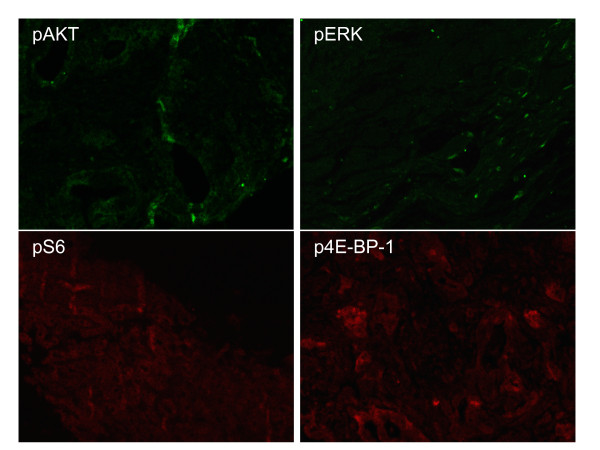
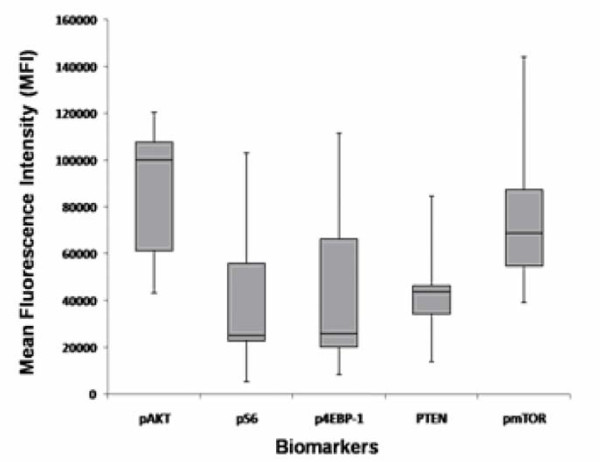
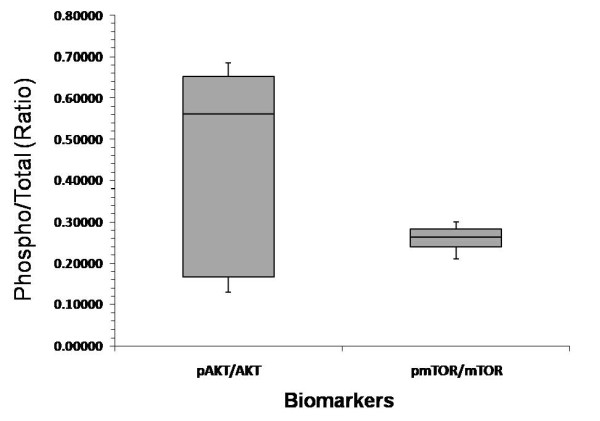
BACKGROUND: The phosphoinositide 3-kinase (PI3K)/Akt pathway is constitutively activated in pancreatic cancer and the mammalian target of rapamycin (mTOR) kinase is an important mediator for its signaling. Our recent in vitro studies suggest that prolonged exposure of pancreatic cancer cells to mTOR inhibitors can promote insulin receptor substrate-PI3K interactions and paradoxically increase Akt phosphorylation and cyclin D1 expression in pancreatic cancer cells (negative feedback loop). The addition of erlotinib to rapamycin can down-regulate rapamycin-stimulated Akt and results in synergistic antitumor activity with erlotinib in preclinical tumor models. METHODS: Two studies prospectively enrolled adult patients with advanced pancreatic cancer, Eastern Cooperative Oncology Group performance status 0-1, adequate hematologic, hepatic and renal parameters and measurable disease. In Study A, temsirolimus was administered intravenously at 25 mg weekly. In Study B, everolimus was administered orally at 30 mg weekly and erlotinib was administered at 150 mg daily. The primary endpoint in both studies was overall survival at 6 months. Secondary endpoints included time to progression, progression-free survival, overall survival, response rate, safety and toxicity. Pretreatment tumor biopsies were analyzed by immunofluorescence and laser scanning cytometry for the expression of pmTOR/mTOR, pAkt/Akt, pErk/Erk, pS6, p4EBP-1 and PTEN. RESULTS: Five patients enrolled in Study A; Two patients died within a month (rapid disease progression and hemorrhagic stroke, respectively). One patient developed dehydration and another developed asthenia. Sixteen patients enrolled in Study B.: 12 males, all ECOG PS = 1. Median cycles = 1 (range 1-2). Grade 4 toxicity: hyponatremia (n = 1), Grade 3: diarrhea (n = 1), cholangitis (n = 3), hyperglycemia (n = 1), fatigue (n = 1). Grade 2: pneumonia (n = 2), dehydration (n = 2), nausea (n = 2), neutropenia (n = 1), mucositis (n = 2) & rash (n = 2). Four patients were hospitalized. Progressive disease occurred in 15 and 1 was non-evaluable. Pretreatment biopsies revealed a higher pAkt/Akt ratio in tumor specimens that in nonmalignant pancreatic tissue. No such trends were noted for the other biomarkers. CONCLUSIONS: Neither study with mTOR inhibitors demonstrated objective responses or disease stability. The negative feedback loop resulting from mTOR inhibition may account for the disease progression and toxicity noted in these studies. Future strategies should aim for a broader targeting of the PI3K pathway in pancreatic cancer. STUDY A: NCT 0075647. STUDY B: NCT00640978.
Overview
The claims and statistics of this paper haven’t been checked yet.
Run the check — free, no account needed. It reads the open-access text and checks the sources it cites.
Integrity signals
Registry
Cites
Statistics
Figures
Verification
Claims the paper makes
The claims and statistics of this paper haven’t been checked yet.
Run the check — free, no account needed. It reads the open-access text and checks the sources it cites.
Claims other papers make about this one
Each is checked against this paper’s own text: does it say what the citing paper says it does?
In the citing paper
“In single agent phase II trials of the mTOR inhibitors temsirolimus and everolimus, very little clinical activity was seen (90, 91).”
From KRAS mutation in pancreatic cancer (2021) · cites this paper as [90]
Self-check
Percentages, sums and reported differences re-computed from the paper’s own numbers.
The self-check needs the paper’s full text.
Citations
Cites
New response evaluation criteria in solid tumours: revised RECIST guideline (version 1.1)
Eisenhauer, E. A., Therasse, P., Bogaerts, J., Schwartz, L. H., Sargent, D., Ford, R., Dancey, J., Arbuck, S., Gwyther, S., Mooney, M., et al. (2009) · European Journal of Cancer · doi:10.1016/j.ejca.2008.10.026 · Cited by 29,534
Burris, H. A., Moore, M. J., Andersen, J., Green, M. R., Rothenberg, M. L., Modiano, M., Cripps, M. C., Portenoy, R. K., Storniolo, A. M., Tarassoff, P. G., et al. (1997) · Journal of Clinical Oncology · doi:10.1200/jco.1997.15.6.2403 · Cited by 5,895
Moore, M. J., Goldstein, D., Hamm, J., Figer, A., Hecht, J. R., Gallinger, S., Au, H. J., Murawa, P., Walde, D., Wolff, R. A., et al. (2007) · Journal of Clinical Oncology · doi:10.1200/jco.2006.07.9525 · Cited by 3,848
Self-citationRapamycin induces feedback activation of Akt signaling through an IGF-1R-dependent mechanism
Wan, X., Harkavy, B., Shen, N., Grohar, P. J., & Helman, L. J. (2006) · Oncogene · doi:10.1038/sj.onc.1209990 · Cited by 761
Tabernero, J., Rojo, F., Calvo, E., Burris, H., Judson, I., Hazell, K., Martinelli, E., Cajal, S. R. Y., Jones, S., Vidal, L., et al. (2008) · Journal of Clinical Oncology · doi:10.1200/jco.2007.14.5482 · Cited by 474
Asano, T., Yao, Y., Zhu, J., Li, D., Abbruzzese, J. L., & Reddy, S. A. G. (2004) · Oncogene · doi:10.1038/sj.onc.1207902 · Cited by 306
Self-citationOral mTOR inhibitor everolimus in patients with gemcitabine-refractory metastatic pancreatic cancer
Wolpin, B. M., Hezel, A. F., Abrams, T., Blaszkowsky, L. S., Meyerhardt, J. A., Chan, J. A., Enzinger, P. C., Allen, B., Clark, J. W., Ryan, D. P., et al. (2009) · Journal of Clinical Oncology · doi:10.1200/jco.2008.18.9514 · Cited by 297
Buck, E. A., Eyzaguirre, A., Brown, E., Petti, F., McCormack, S., Haley, J. D., Iwata, K. K., Gibson, N. W., & Griffin, G. (2006) · Molecular Cancer Therapeutics · doi:10.1158/1535-7163.mct-06-0166 · Cited by 234
Buck, E. A., Eyzaguirre, A., Rosenfeld-Franklin, M., Thomson, S., Mulvihill, M. J., Barr, S. M., Brown, E., O’Connor, M., Yao, Y., Pachter, J. A., et al. (2008) · Cancer Research · doi:10.1158/0008-5472.can-07-6720 · Cited by 211
Li, J., DeFea, K., & Roth, R. A. (1999) · Journal of Biological Chemistry · doi:10.1074/jbc.274.14.9351 · Cited by 196
Cited by
Sorted by citations
Pancreatic Ductal Adenocarcinoma: Current and Evolving Therapies
Adamska, A., Domenichini, A., & Falasca, M. (2017) · International Journal of Molecular Sciences · doi:10.3390/ijms18071338 · Cited by 632
Orth, M., Metzger, P., Gerum, S., Mayerle, J. V., Schneider, G., Belka, C., Schnurr, M., & Lauber, K. (2019) · Radiation Oncology · doi:10.1186/s13014-019-1345-6 · Cited by 523
The utilization of extracellular proteins as nutrients is suppressed by mTORC1
Palm, W., Park, Y., Wright, K., Pavlova, N. N., Tuveson, D. A., & Thompson, C. B. (2015) · Cell · doi:10.1016/j.cell.2015.06.017 · Cited by 457
KRAS mutation in pancreatic cancer
Luo, J. (2021) · Seminars in Oncology · doi:10.1053/j.seminoncol.2021.02.003 · Cited by 360
The Spectrum of Achalasia: Lessons From Studies of Pathophysiology and High-Resolution Manometry
Kahrilas, P. J., & Boeckxstaens, G. E. (2013) · Gastroenterology · doi:10.1053/j.gastro.2013.08.038 · Cited by 236
Duluc, C., Moatassim-Billah, S., Chalabi‐Dchar, M., Perraud, A., Samain, R., Breibach, F., Gayral, M., Cordelier, P., Delisle, M., Bousquet, M., et al. (2015) · EMBO Molecular Medicine · doi:10.15252/emmm.201404346 · Cited by 218
Pancreatic cancer: optimizing treatment options, new, and emerging targeted therapies
Chiorean, E. G., & Coveler, A. L. (2015) · Drug Design Development and Therapy · doi:10.2147/dddt.s60328 · Cited by 217
Autophagy as a therapeutic target in pancreatic cancer
Piffoux, M., Eriau, E., & Cassier, P. A. (2020) · British Journal of Cancer · doi:10.1038/s41416-020-01039-5 · Cited by 189
What We Have Learned About Pancreatic Cancer From Mouse Models
Pérez-Mancera, P. A., Guerra, C. E., Barbacid, M., & Tuveson, D. A. (2012) · Gastroenterology · doi:10.1053/j.gastro.2012.03.002 · Cited by 178
Hu, H.-F., Ye, Z., Qin, Y., Xu, X.-W., Yu, X.-J., Zhuo, Q.-F., & Ji, S.-R. (2021) · Acta Pharmacologica Sinica · doi:10.1038/s41401-020-00584-2 · Cited by 149
The role of hypoxia in pancreatic cancer: a potential therapeutic target?
Erkan, M., Kurtoğlu, M., & Kleeff, J. H. (2015) · Expert Review of Gastroenterology & Hepatology · doi:10.1586/17474124.2016.1117386 · Cited by 157
Targeting PI3K/AKT/mTOR Signaling Pathway in Pancreatic Cancer: From Molecular to Clinical Aspects
Stanciu, S., Radu, F. I., Ștefani, C., Miricescu, D., Stănescu-Spînu, I.-I., Greabu, M., Totan, A., & Jinga, M. (2022) · International Journal of Molecular Sciences · doi:10.3390/ijms231710132 · Cited by 149
Mechanisms of resistance to anti-angiogenesis therapies
Giuliano, S., & Pagès, G. (2013) · Biochimie · doi:10.1016/j.biochi.2013.03.002 · Cited by 147
A review of oral toxicity associated with mTOR inhibitor therapy in cancer patients
Martins, F., de Oliveira, M. A., Wang, Q., Sonis, S. T., Gallottini, M. H. C., George, S., & Treister, N. S. (2013) · Oral Oncology · doi:10.1016/j.oraloncology.2012.11.008 · Cited by 133
Baer, R., Cintas, C., Dufresne, M., Cassant-Sourdy, S., Schönhuber, N., Planque, L., Lulka, H., Couderc, B., Bousquet, C., Garmy-Susini, B., et al. (2014) · Genes & Development · doi:10.1101/gad.249409.114 · Cited by 129
Targeting mTOR dependency in pancreatic cancer
Morran, D. C., Wu, J., Jamieson, N. B., Mrowinska, A., Kalna, G., Karim, S. A., Au, A. Y. M., Scarlett, C. J., Chang, D. K.-F., Pajak, M. Z., et al. (2014) · Gut · doi:10.1136/gutjnl-2013-306202 · Cited by 127
Prospects of targeting PI3K/AKT/mTOR pathway in pancreatic cancer
Mortazavi, M., Moosavi, F., Martini, M., Giovannetti, E., & Firuzi, O. (2022) · Critical Reviews in Oncology/Hematology · doi:10.1016/j.critrevonc.2022.103749 · Cited by 129
Soares, H. P., Ni, Y., Kisfalvi, K., Sinnett‐Smith, J. W., & Rozengurt, E. (2013) · PLoS ONE · doi:10.1371/journal.pone.0057289 · Cited by 127
Targeting cancer cell metabolism in pancreatic adenocarcinoma
Cohen, R., Neuzillet, C., Tijeras‐Raballand, A., Faivre, S. J., Gramont, A. D. E., & Raymond, É. (2015) · Oncotarget · doi:10.18632/oncotarget.4160 · Cited by 119
PTEN deletion prevents ischemic brain injury by activating the mTOR signaling pathway
Shi, G., OuYang, Y. P., Shi, J., Liu, Y., Yuan, W., & Jia, L. S. (2010) · Biochemical and Biophysical Research Communications · doi:10.1016/j.bbrc.2010.12.085 · Cited by 111
State of the art and future directions of pancreatic ductal adenocarcinoma therapy
Neuzillet, C., Tijeras‐Raballand, A., Bourget, P., Cros, J. F., Couvelard, A., Sauvanet, A., Vullierme, M., Tournigand, C., & Hammel, P. R. (2015) · Pharmacology & Therapeutics · doi:10.1016/j.pharmthera.2015.08.006 · Cited by 114
Targeting KRAS in pancreatic cancer: new drugs on the horizon
Bannoura, S. F., Uddin, M. H., Nagasaka, M., Fazili, F., Hallak, M. N. A., Philip, P. A., El‐Rayes, B. F., & Azmi, A. S. (2021) · Cancer and Metastasis Reviews · doi:10.1007/s10555-021-09990-2 · Cited by 112
Kong, B., Wu, W., Cheng, T., Schlitter, A. M., Qian, C., Bruns, P., Jian, Z., Jäger, C., Regel, I., Raulefs, S., et al. (2015) · Gut · doi:10.1136/gutjnl-2014-307616 · Cited by 97
Madhunapantula, S. V., Mosca, P. J., & Robertson, G. P. (2011) · Cancer Biology & Therapy · doi:10.4161/cbt.12.12.18442 · Cited by 96
Nofal, M., Zhang, K., Han, S., & Rabinowitz, J. D. (2017) · Molecular Cell · doi:10.1016/j.molcel.2017.08.011 · Cited by 94
Combating pancreatic cancer with PI3K pathway inhibitors in the era of personalised medicine
Conway, J. R. W., Herrmann, D., Evans, T. J., Morton, J. P., & Timpson, P. (2018) · Gut · doi:10.1136/gutjnl-2018-316822 · Cited by 97
Current therapeutic strategies for advanced pancreatic cancer: A review for clinicians
Spadi, R. (2016) · World Journal of Clinical Oncology · doi:10.5306/wjco.v7.i1.27 · Cited by 90
PORCN inhibition synergizes with PI3K/mTOR inhibition in Wnt-addicted cancers
Zhong, Z., Sepramaniam, S., Chew, X. H., Wood, K. C., Lee, M. A., Madan, B., & Virshup, D. M. (2019) · Oncogene · doi:10.1038/s41388-019-0908-1 · Cited by 86
Targeting PI3K Pathway in Pancreatic Ductal Adenocarcinoma: Rationale and Progress
Mehra, S., Deshpande, N., & Nagathihalli, N. (2021) · Cancers · doi:10.3390/cancers13174434 · Cited by 85
Metabolic complications with the use of mTOR inhibitors for cancer therapy
Sivendran, S., Agarwal, N., Gartrell, B. A., Ying, J., Boucher, K. M., Choueiri, T. K., Sonpavde, G., Oh, W. K., & Galsky, M. D. (2013) · Cancer Treatment Reviews · doi:10.1016/j.ctrv.2013.04.005 · Cited by 85
Fujimura, K., Choi, S., Wyse, M. M., Strnádel, J., Wright, T., & Klemke, R. L. (2015) · Journal of Biological Chemistry · doi:10.1074/jbc.m115.687418 · Cited by 82
Implication of PI3K/Akt pathway in pancreatic cancer: When PI3K isoforms matter?
Baer, R., Cintas, C., Therville, N., & Guillermet‐Guibert, J. (2015) · Advances in Biological Regulation · doi:10.1016/j.jbior.2015.05.001 · Cited by 85
Khalaileh, A., Dreazen, A., Khatib, A., Apel, R., Swisa, A., Kidess-Bassir, N., Maitra, A., Meyuhas, O., Dor, Y., & Zamir, G. A. (2013) · Cancer Research · doi:10.1158/0008-5472.can-12-2014 · Cited by 84
Launay‐Vacher, V., Aapro, M., de Castro, G., Cohen, E. E. W., Deray, G., Dooley, M., Humphreys, B. D., Lichtman, S. M., Rey, J., Scotté, F., et al. (2015) · Annals of Oncology · doi:10.1093/annonc/mdv136 · Cited by 79
Electrolyte disorders associated with the use of anticancer drugs
Liamis, G. L., Filippatos, T. D., & Elisaf, M. (2016) · European Journal of Pharmacology · doi:10.1016/j.ejphar.2016.02.064 · Cited by 79
Seront, E., Pinto, A., Bouzin, C., Bertrand, L., Jp, M., & Féron, O. (2013) · British Journal of Cancer · doi:10.1038/bjc.2013.505 · Cited by 75
Autophagy, Oxidative Stress and Cancer Development
Taucher, E., Mykoliuk, I., Fediuk, M., & Smolle‐Jüttner, F. (2022) · Cancers · doi:10.3390/cancers14071637 · Cited by 75
Liu, Y., Azizian, N. G., Sullivan, D. K., & Li, Y. (2022) · Nature Communications · doi:10.1038/s41467-022-34890-6 · Cited by 68
Walker, E. J. (2014) · World Journal of Gastroenterology · doi:10.3748/wjg.v20.i9.2224 · Cited by 64
Fortunato, F. (2011) · International Journal of Oncology · doi:10.3892/ijo.2011.1025 · Cited by 60
Selective impact of CDK4/6 suppression on patient-derived models of pancreatic cancer
Witkiewicz, A. K., Borja, N. A., Franco, J., Brody, J. R., Yeo, C. J., Mansour, J., Choti, M. A., McCue, P., & Knudsen, E. S. (2015) · Oncotarget · doi:10.18632/oncotarget.3819 · Cited by 56
New Developments in the Molecular Mechanisms of Pancreatic Tumorigenesis
Felsenstein, M., Hruban, R. H., & Wood, L. D. (2017) · Advances in Anatomic Pathology · doi:10.1097/pap.0000000000000172 · Cited by 59
Parkin, A., Man, J., Timpson, P., & Pajic, M. (2019) · FEBS Journal · doi:10.1111/febs.15011 · Cited by 54
Nagrial, A. M., Chin, V. T., Sjoquist, K. M., Pajic, M., Horvath, L. G., Biankin, A. V., & Yip, D. (2015) · Critical Reviews in Oncology/Hematology · doi:10.1016/j.critrevonc.2015.07.007 · Cited by 49
Risk Factors and Therapeutic Targets in Pancreatic Cancer
Wörmann, S. M., & Algül, H. (2013) · Frontiers in Oncology · doi:10.3389/fonc.2013.00282 · Cited by 51
New targeted therapies in pancreatic cancer
Seicean, A. (2015) · World Journal of Gastroenterology · doi:10.3748/wjg.v21.i20.6127 · Cited by 48
Yang, Z., Zhang, L., Ma, A., Liu, L., Li, J., Gu, J., & Liu, Y. (2011) · PLoS ONE · doi:10.1371/journal.pone.0028405 · Cited by 50
Stromal Cell-Derived Factor 1α Mediates Resistance to mTOR-Directed Therapy in Pancreatic Cancer
Weekes, C. D., Song, D., Arcaroli, J. J., Wilson, L. A., Rubio‐Viqueira, B., Cusatis, G., Garrett-Mayer, E. S., Messersmith, W. A., Winn, R. A., & Hidalgo, M. M. (2012) · Neoplasia · doi:10.1593/neo.111810 · Cited by 48
MTOR inhibitor-based combination therapies for pancreatic cancer
Hassan, Z., Schneeweis, C., Wirth, M., Veltkamp, C., Dantes, Z., Feuerecker, B., Ceyhan, G. O., Knauer, S. K., Weichert, W., Schmid, R. M., et al. (2018) · British Journal of Cancer · doi:10.1038/bjc.2017.421 · Cited by 48
Macropinocytosis Renders a Subset of Pancreatic Tumor Cells Resistant to mTOR Inhibition
Michalopoulou, E., Auciello, F. R., Bulusu, V., Strachan, D., Campbell, A. D., Tait-Mulder, J., Karim, S. A., Morton, J. P., Sansom, O. J., & Kamphorst, J. J. (2020) · Cell Reports · doi:10.1016/j.celrep.2020.01.080 · Cited by 50
Gao, H.-L., Wang, W., Yu, X., & Liu, L. (2020) · Experimental Hematology and Oncology · doi:10.1186/s40164-020-00184-0 · Cited by 47
Targeting mTOR in Pancreatic Ductal Adenocarcinoma
Iriana, S., Ahmed, S., Gong, J., Annamalai, A., Tuli, R., & Hendifar, A. E. (2016) · Frontiers in Oncology · doi:10.3389/fonc.2016.00099 · Cited by 48
A phase II trial of temsirolimus in second-line metastatic urothelial cancer
Gerullis, H., Eimer, C., Ecke, T., Georgas, E., Freitas, C., Kastenholz, S., Arndt, C., Heusch, C., & Otto, T. (2012) · Medical Oncology · doi:10.1007/s12032-012-0216-x · Cited by 45
Koustas, E., Trifylli, E.-M., Sarantis, P., Papadopoulos, N., Karapedi, E., Aloizos, G., Damaskos, C., Garmpis, N., Garmpi, A., Papavassiliou, K. A., et al. (2022) · International Journal of Molecular Sciences · doi:10.3390/ijms23126664 · Cited by 43
Inhibition of mTORC2 component RICTOR impairs tumor growth in pancreatic cancer models
Schmidt, K. M., Hellerbrand, C., Ruemmele, P., Michalski, C. W., Kong, B., Kroemer, A., Hackl, C., Schlitt, H. J., Geissler, E. K., & Lang, S. A. (2017) · Oncotarget · doi:10.18632/oncotarget.15524 · Cited by 42
Type 2 Diabetes Mellitus Intersects With Pancreatic Cancer Diagnosis and Development
Duan, X., Wang, W., Pan, Q., & Guo, L. (2021) · Frontiers in Oncology · doi:10.3389/fonc.2021.730038 · Cited by 41
Dual hypoxia-responsive supramolecular complex for cancer target therapy
Guo, J., Li, J., Wang, Z.-H., Liu, Y., Yue, Y., Li, H., Zhao, X., Sun, Y., Ding, Y., Ding, F., et al. (2023) · Nature Communications · doi:10.1038/s41467-023-41388-2 · Cited by 39
Rapamycin Resistance Is Linked to Defective Regulation of Skp2
Totary-Jain, H., Sanoudou, D., Dautriche, C. N., Schneller, H., Zambrana, L., & Marks, A. R. (2012) · Cancer Research · doi:10.1158/0008-5472.can-11-2195 · Cited by 37
Şahin, İ. H., Iacobuzio–Donahue, C. A., & O'Reilly, E. M. (2015) · Expert Opinion on Therapeutic Targets · doi:10.1517/14728222.2016.1094057 · Cited by 39
Diehl, A. C., Hannan, L. M., Zhen, D. B., Coveler, A. L., King, G., Cohen, S. A., Harris, W. P., Shankaran, V., Wong, K. M., Green, S., et al. (2022) · The Oncologist · doi:10.1093/oncolo/oyac179 · Cited by 35
Cancer Stem Cells, EMT, and Developmental Pathway Activation in Pancreatic Tumors
Hindriksen, S., & Bijlsma, M. F. (2012) · Cancers · doi:10.3390/cancers4040989 · Cited by 35
Molecular Targeted Intervention for Pancreatic Cancer
Mohammed, A., Janakiram, N. B., Pant, S., & Rao, C. V. (2015) · Cancers · doi:10.3390/cancers7030850 · Cited by 34
Pancreatic Cancer and Immunotherapy: Resistance Mechanisms and Proposed Solutions
Tan, E. S., & El‐Rayes, B. F. (2018) · Journal of Gastrointestinal Cancer · doi:10.1007/s12029-018-0179-z · Cited by 34
Moving the Needle on Precision Medicine in Pancreatic Cancer
O'Kane, G. M., & Lowery, M. A. (2022) · Journal of Clinical Oncology · doi:10.1200/jco.21.02514 · Cited by 34
The role of metabolic adaptation to nutrient stress in pancreatic cancer
Derle, A., Santis, M. C. D., Gozzelino, L., Ratto, E., & Martini, M. (2018) · Cell Stress · doi:10.15698/cst2018.12.166 · Cited by 33
Molecularly Targeted Therapies in Metastatic Pancreatic Cancer
Zagouri, F., Sergentanis, T. Ν., Chrysikos, D., Zografos, C. G., PAPADIMITRIOU, C. A., Dimopoulos, M. A., Filipits, M., & Bartsch, R. (2013) · Pancreas · doi:10.1097/mpa.0b013e31827aedef · Cited by 30
Advances in Targeted Therapy and Immunotherapy for Pancreatic Cancer
Liu, X., Li, Z., & Wang, Y. (2021) · Advanced Biology · doi:10.1002/adbi.201900236 · Cited by 29
Elevated expression of nuclear receptor-binding SET domain 3 promotes pancreatic cancer cell growth
Sun, Y., Xie, J., Cai, S., Wang, Q., Feng, Z., Li, Y., Lu, J., Chen, W., & Ye, Z. (2021) · Cell Death and Disease · doi:10.1038/s41419-021-04205-6 · Cited by 28
Zhang, Y., Kong, R., Yang, W., Hu, K., Zhao, Z., Li, L., Geng, X., Liu, L., Chen, H., Xiao, P., et al. (2023) · Cancer Letters · doi:10.1016/j.canlet.2023.216288 · Cited by 28
Self-citationFeng, W., Liu, Y., Bellail, A. C., Olson, J. J., Sun, S. Y., Lu, G., Ding, L., Yuan, C., Wang, G., & Hao, C. (2012) · Cancer Letters · doi:10.1016/j.canlet.2012.02.005 · Cited by 28
Pharmacotherapeutic strategies for treating pancreatic cancer: advances and challenges
Diab, M., Azmi, A. S., Mohammad, R. M., & Philip, P. A. (2018) · Expert Opinion on Pharmacotherapy · doi:10.1080/14656566.2018.1561869 · Cited by 28
Genomic alterations in pancreatic cancer and their relevance to therapy
Takai, E., & Yachida, S. (2015) · World Journal of Gastrointestinal Oncology · doi:10.4251/wjgo.v7.i10.250 · Cited by 27
Molecular Targeted Approaches for Treatment of Pancreatic Cancer
Huang, Z. Q., Saluja, A. K., Dudeja, V., Vickers, S. M., & Buchsbaum, D. J. (2011) · Current Pharmaceutical Design · doi:10.2174/138161211796957427 · Cited by 27
Autophagy and the (Pro)renin Receptor
Binger, K. J., & Müller, D. N. (2013) · Frontiers in Endocrinology · doi:10.3389/fendo.2013.00155 · Cited by 27
Pancreatic cancer: Promise for personalised medicine?
Braat, H., Bruno, M. J., Kuipers, E. J., & Peppelenbosch, M. P. (2011) · Cancer Letters · doi:10.1016/j.canlet.2011.11.034 · Cited by 27
Zhang, J., Zhao, F., & Sun, Q. (2017) · Oncology Letters · doi:10.3892/ol.2017.7444 · Cited by 27
mTOR is a promising therapeutical target in a subpopulation of pancreatic adenocarcinoma
Utomo, W. K., Narayanan, V., Biermann, K., van Eijck, C. H. J., Bruno, M. J., Peppelenbosch, M. P., & Braat, H. (2014) · Cancer Letters · doi:10.1016/j.canlet.2014.01.014 · Cited by 27
Neuzillet, C., Rousseau, B., Kocher, H. M., Bourget, P., & Tournigand, C. (2017) · Pharmacology & Therapeutics · doi:10.1016/j.pharmthera.2017.02.028 · Cited by 25
The anti-ovarian cancer activity by WYE-132, a mTORC1/2 dual inhibitor
Zhang, D., Xia, H., Zhang, W., & Fang, B. (2015) · Tumor Biology · doi:10.1007/s13277-015-3922-0 · Cited by 24
Role of autophagy in apoptotic regulation by Akt in pancreatic cancer.
Muilenburg, D. J., Parsons, C. M., Coates, J. M., Virudachalam, S., & Bold, R. J. (2014) · PubMed · Cited by 24
Cohen, F., Bergeron, P., Blackwood, E. R., Bowman, K. K., Chen, H., DiPasquale, A. G., Epler, J., Koehler, M. F. T., Lau, K., Lewis, C. T., et al. (2011) · Journal of Medicinal Chemistry · doi:10.1021/jm200215y · Cited by 23
Islam, M. M., Goertzen, A., Singh, P. K., & Saha, R. (2022) · iScience · doi:10.1016/j.isci.2022.104483 · Cited by 24
Sclafani, F., Iyer, R., Cunningham, D., & Starling, N. (2015) · Critical Reviews in Oncology/Hematology · doi:10.1016/j.critrevonc.2015.03.008 · Cited by 22
Everolimus for the treatment of advanced pancreatic ductal adenocarcinoma (PDAC)
Babiker, H. M., Karass, M., Recio‐Boiles, A., Chandana, S. R., McBride, A., & Mahadevan, D. (2019) · Expert Opinion on Investigational Drugs · doi:10.1080/13543784.2019.1632289 · Cited by 22
Promising new treatments for pancreatic cancer in the era of targeted and immune therapies.
Elaileh, A., Saharia, A., Potter, L. M., Baio, F. E., Ghafel, A. N., Abdelrahim, M., & Heyne, K. (2019) · Europe PMC (PubMed Central) · Cited by 21
Intracellular Ion Channels in Pancreas Cancer
Patel, S. H., Edwards, M. J., & Ahmad, S. A. (2019) · Cellular Physiology and Biochemistry · doi:10.33594/000000193 · Cited by 21
Milton, C. K., Self, A. J., Clarke, P. A., Banerji, U., Piccioni, F., Root, D. E., & Whittaker, S. R. (2020) · Molecular Cancer Therapeutics · doi:10.1158/1535-7163.mct-19-1131 · Cited by 21
Diwakarla, C. S., Hannan, K. M., Hein, N., & Yip, D. (2017) · World Journal of Gastroenterology · doi:10.3748/wjg.v23.i13.2276 · Cited by 21
Effect of dual mTOR inhibitor on TGFβ1-induced fibrosis in primary human urethral scar fibroblasts
Huang, S., Yang, C., Li, M., Wang, B., Chen, H., Fu, D., & Chong, T. (2018) · Biomedicine & Pharmacotherapy · doi:10.1016/j.biopha.2018.07.070 · Cited by 20
In Silico Design and Experimental Validation of Combination Therapy for Pancreatic Cancer
Vundavilli, H., Datta, A. A., Sima, C., Hua, J., Lopes, R., & Bittner, M. L. (2018) · IEEE Transactions on Computational Biology and Bioinformatics · doi:10.1109/tcbb.2018.2872573 · Cited by 21
Bever, K. M., Borazanci, E. H., Thompson, E. A., Durham, J. N., Pinero, K., Jameson, G., Vrana, A., Liu, M., Wilt, C., Wu, A. A., et al. (2020) · Oncotarget · doi:10.18632/oncotarget.27586 · Cited by 19
Gemcitabine and rapamycin-loaded mixed polymeric thermogel for metastatic pancreatic cancer therapy
Kim, S. Y., Jo, M. J., Yoon, M. S., Jin, C. E., Shin, Y. B., Lee, J. M., Shin, H. J., Oh, J. G., Cho, J. M., Kim, H., et al. (2023) · Journal of Controlled Release · doi:10.1016/j.jconrel.2023.07.010 · Cited by 20
Duan, L., Ying, G., Danzer, B., Perez, R. E., Shariat‐Madar, Z., Levenson, V., & Maki, C. G. (2014) · Journal of Biological Chemistry · doi:10.1074/jbc.m114.550038 · Cited by 21
The Antipancreatic Cancer Activity of OSI-027, a Potent and Selective Inhibitor of mTORC1 and mTORC2
Chen, B., Xu, M., Zhang, H., Xu, M., Wang, X.-J., Tang, Q., & Tang, J. (2015) · DNA and Cell Biology · doi:10.1089/dna.2015.2886 · Cited by 19
Anticancer Medications and Sodium Dysmetabolism
Krishnamurthy, A., Bhattacharya, S., Lathia, T. B., Kantroo, V., Kalra, S., & Dutta, D. (2020) · touchREVIEWS in Endocrinology · doi:10.17925/ee.2020.16.2.122 · Cited by 19
Liu, Y., Feng, M., Chen, H., Yang, G., Qiu, J., Zhao, F., Cao, Z., Luo, W., Xiao, J., You, L., et al. (2020) · Cancer Letters · doi:10.1016/j.canlet.2020.05.003 · Cited by 18
Inhibition of the PI3K/AKT/mTOR pathway in pancreatic cancer: is it a worthwhile endeavor?
Jarroudi, O. A., Chibani, H., Brahmi, S. A., & Said, A. (2024) · Therapeutic Advances in Medical Oncology · doi:10.1177/17588359241284911 · Cited by 18
Zhang, J. H., Darman, L., Hassan, M. S., von Holzen, U. W., & Awasthi, N. (2023) · Oncology Reports · doi:10.3892/or.2023.8643 · Cited by 19
Catechol‐O‐methyltransferase, a new target for pancreatic cancer therapy
Wu, W., Wu, Q., Hong, X., Zhou, L., Zhang, J., You, L., Wang, W., Wu, H., Dai, H., & Zhao, Y. (2015) · Cancer Science · doi:10.1111/cas.12648 · Cited by 17
Therapeutic Targeting of Autophagy in Pancreatic Ductal Adenocarcinoma
Raufi, A. G., Liguori, N. R., Carlsen, L., Parker, C., Borrero, L. J. H., Zhang, S., Tian, X., Louie, A. D., Zhou, L., Seyhan, A. A., et al. (2021) · Frontiers in Pharmacology · doi:10.3389/fphar.2021.751568 · Cited by 18
Metadata
- Authors
- Javle, M. M., Shroff, R. T., Xiong, H., Varadhachary, G. A., Fogelman, D., Reddy, S. A., Davis, D., Zhang, Y., Wolff, R. A., & Abbruzzese, J. L.
- Affiliations
- The University of Texas MD Anderson Cancer Center (US)
- Center for Cancer and Blood Disorders (US)
- Corresponding author
- Javle, Milind M
- ORCID
- Venue
- BMC Cancer
- Published
- 2010-07-14
- Volume
- 10
- Issue
- 1
- Pages
- 368-368
- ISSN
- 1471-2407 (ISSN-L)
- PMC
- PMC2910694
- OpenAlex
- W2026890779
- Cited by
- 170
- References
- 21
- Citations by year
- 2026: 3 · 2025: 2 · 2024: 5 · 2023: 7 · 2022: 19 · 2021: 13 · 2020: 12 · 2019: 9 · 2018: 11 · 2017: 10 · 2016: 5 · 2015: 28 · 2014: 12 · 2013: 11 · 2012: 11
- FWCI
- 4.56
- Type
- journal article
- Language
- en
- Open access
- gold
- doi.org
- Licence
- Locations
- BMC Cancer (publishedVersion, cc-by)
- PubMed Central (publishedVersion, cc-by)
- PubMed (publishedVersion)
- DOAJ (DOAJ: Directory of Open Access Journals) (submittedVersion, cc-by-sa)
- Topics
- Life Sciences › Biochemistry, Genetics and Molecular Biology › Molecular Biology › PI3K/AKT/mTOR signaling in cancer
- Health Sciences › Medicine › Oncology › Pancreatic and Hepatic Oncology Research
- Health Sciences › Medicine › Oncology › Advanced Breast Cancer Therapies
- Keywords
- mTOR inhibition, advanced pancreatic cancer, temsirolimus, everolimus, erlotinib, PI3K/Akt signaling, insulin receptor substrate, cyclin D1, drug toxicity, anticancer activity, combination therapy, overall survival, PTEN, rapamycin, EGFR tyrosine kinase
- MeSH terms
- Everolimus, Erlotinib Hydrochloride, Adenocarcinoma, Adult, Aged, Antineoplastic Combined Chemotherapy Protocols, Female, Fluorescent Antibody Technique, Humans, Immunoenzyme Techniques, Immunosuppressive Agents, Male, Middle Aged, Neoplasm Staging, Pancreatic Neoplasms, Phosphorylation, Prognosis, Prospective Studies, Quinazolines, Biomarkers, Tumor, Signal Transduction, Survival Rate, Sirolimus, Protein Kinase Inhibitors, Proto-Oncogene Proteins c-akt, TOR Serine-Threonine Kinases, ErbB Receptors
About these checks
Registry, retraction, Cites and statistics results are computed, not judged, with one exception: a printed reference that no index lists is read once by a model before it counts as a citation error. Claims are extracted by a model and kept only when their quote appears verbatim in the text; each cited source is then checked, with a model’s help, for whether it says what the claim relies on. Those verdicts can be wrong — read the claim’s quote and the cited source before relying on one.
Statistics and arithmetic are recomputed, not judged.
Confidence bands are shown only for fields calibrated on our annotated test set. None is calibrated yet, so no band is shown.
What counts as a claim ›How we measure confidence ›How we check this ›
Are you an author, or do you see a problem with this page? Request a review
