

The DOI matches its Crossref record; 21 of the 21 references it cites were found in a registry or an index.
Inhibition of the mammalian target of rapamycin (mTOR) in advanced pancreatic cancer: results of two phase II studies
Open accessAbstract
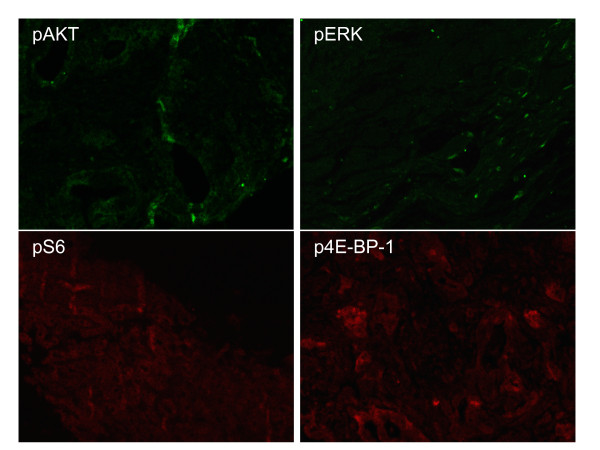
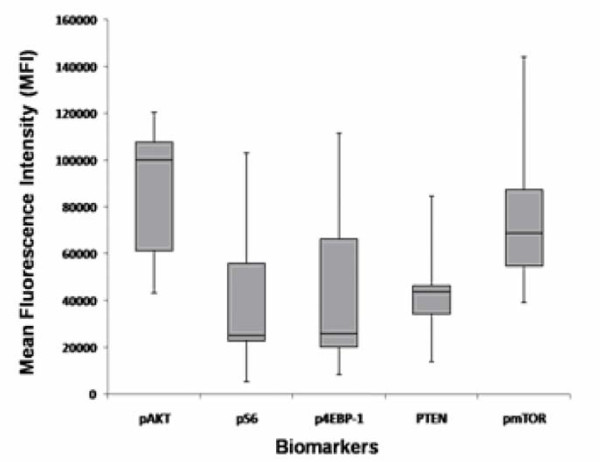
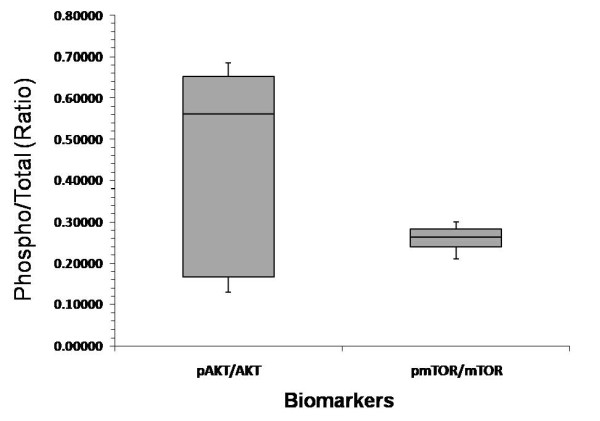
BACKGROUND: The phosphoinositide 3-kinase (PI3K)/Akt pathway is constitutively activated in pancreatic cancer and the mammalian target of rapamycin (mTOR) kinase is an important mediator for its signaling. Our recent in vitro studies suggest that prolonged exposure of pancreatic cancer cells to mTOR inhibitors can promote insulin receptor substrate-PI3K interactions and paradoxically increase Akt phosphorylation and cyclin D1 expression in pancreatic cancer cells (negative feedback loop). The addition of erlotinib to rapamycin can down-regulate rapamycin-stimulated Akt and results in synergistic antitumor activity with erlotinib in preclinical tumor models. METHODS: Two studies prospectively enrolled adult patients with advanced pancreatic cancer, Eastern Cooperative Oncology Group performance status 0-1, adequate hematologic, hepatic and renal parameters and measurable disease. In Study A, temsirolimus was administered intravenously at 25 mg weekly. In Study B, everolimus was administered orally at 30 mg weekly and erlotinib was administered at 150 mg daily. The primary endpoint in both studies was overall survival at 6 months. Secondary endpoints included time to progression, progression-free survival, overall survival, response rate, safety and toxicity. Pretreatment tumor biopsies were analyzed by immunofluorescence and laser scanning cytometry for the expression of pmTOR/mTOR, pAkt/Akt, pErk/Erk, pS6, p4EBP-1 and PTEN. RESULTS: Five patients enrolled in Study A; Two patients died within a month (rapid disease progression and hemorrhagic stroke, respectively). One patient developed dehydration and another developed asthenia. Sixteen patients enrolled in Study B.: 12 males, all ECOG PS = 1. Median cycles = 1 (range 1-2). Grade 4 toxicity: hyponatremia (n = 1), Grade 3: diarrhea (n = 1), cholangitis (n = 3), hyperglycemia (n = 1), fatigue (n = 1). Grade 2: pneumonia (n = 2), dehydration (n = 2), nausea (n = 2), neutropenia (n = 1), mucositis (n = 2) & rash (n = 2). Four patients were hospitalized. Progressive disease occurred in 15 and 1 was non-evaluable. Pretreatment biopsies revealed a higher pAkt/Akt ratio in tumor specimens that in nonmalignant pancreatic tissue. No such trends were noted for the other biomarkers. CONCLUSIONS: Neither study with mTOR inhibitors demonstrated objective responses or disease stability. The negative feedback loop resulting from mTOR inhibition may account for the disease progression and toxicity noted in these studies. Future strategies should aim for a broader targeting of the PI3K pathway in pancreatic cancer. STUDY A: NCT 0075647. STUDY B: NCT00640978.
Overview
The claims and statistics of this paper haven’t been checked yet.
Run the check — free, no account needed. It reads the open-access text and checks the sources it cites.
Integrity signals
Registry
Cites
Statistics
Figures
Verification
Claims the paper makes
The claims and statistics of this paper haven’t been checked yet.
Run the check — free, no account needed. It reads the open-access text and checks the sources it cites.
Claims other papers make about this one
Each is checked against this paper’s own text: does it say what the citing paper says it does?
In the citing paper
“In single agent phase II trials of the mTOR inhibitors temsirolimus and everolimus, very little clinical activity was seen (90, 91).”
From KRAS mutation in pancreatic cancer (2021) · cites this paper as [90]
Self-check
Percentages, sums and reported differences re-computed from the paper’s own numbers.
The self-check needs the paper’s full text.
Citations
Cites
New response evaluation criteria in solid tumours: revised RECIST guideline (version 1.1)
Eisenhauer, E. A., Therasse, P., Bogaerts, J., Schwartz, L. H., Sargent, D., Ford, R., Dancey, J., Arbuck, S., Gwyther, S., Mooney, M., et al. (2009) · European Journal of Cancer · doi:10.1016/j.ejca.2008.10.026 · Cited by 29,534
Burris, H. A., Moore, M. J., Andersen, J., Green, M. R., Rothenberg, M. L., Modiano, M., Cripps, M. C., Portenoy, R. K., Storniolo, A. M., Tarassoff, P. G., et al. (1997) · Journal of Clinical Oncology · doi:10.1200/jco.1997.15.6.2403 · Cited by 5,895
Moore, M. J., Goldstein, D., Hamm, J., Figer, A., Hecht, J. R., Gallinger, S., Au, H. J., Murawa, P., Walde, D., Wolff, R. A., et al. (2007) · Journal of Clinical Oncology · doi:10.1200/jco.2006.07.9525 · Cited by 3,848
Self-citationRapamycin induces feedback activation of Akt signaling through an IGF-1R-dependent mechanism
Wan, X., Harkavy, B., Shen, N., Grohar, P. J., & Helman, L. J. (2006) · Oncogene · doi:10.1038/sj.onc.1209990 · Cited by 761
Tabernero, J., Rojo, F., Calvo, E., Burris, H., Judson, I., Hazell, K., Martinelli, E., Cajal, S. R. Y., Jones, S., Vidal, L., et al. (2008) · Journal of Clinical Oncology · doi:10.1200/jco.2007.14.5482 · Cited by 474
Asano, T., Yao, Y., Zhu, J., Li, D., Abbruzzese, J. L., & Reddy, S. A. G. (2004) · Oncogene · doi:10.1038/sj.onc.1207902 · Cited by 306
Self-citationOral mTOR inhibitor everolimus in patients with gemcitabine-refractory metastatic pancreatic cancer
Wolpin, B. M., Hezel, A. F., Abrams, T., Blaszkowsky, L. S., Meyerhardt, J. A., Chan, J. A., Enzinger, P. C., Allen, B., Clark, J. W., Ryan, D. P., et al. (2009) · Journal of Clinical Oncology · doi:10.1200/jco.2008.18.9514 · Cited by 297
Buck, E. A., Eyzaguirre, A., Brown, E., Petti, F., McCormack, S., Haley, J. D., Iwata, K. K., Gibson, N. W., & Griffin, G. (2006) · Molecular Cancer Therapeutics · doi:10.1158/1535-7163.mct-06-0166 · Cited by 234
Buck, E. A., Eyzaguirre, A., Rosenfeld-Franklin, M., Thomson, S., Mulvihill, M. J., Barr, S. M., Brown, E., O’Connor, M., Yao, Y., Pachter, J. A., et al. (2008) · Cancer Research · doi:10.1158/0008-5472.can-07-6720 · Cited by 211
Li, J., DeFea, K., & Roth, R. A. (1999) · Journal of Biological Chemistry · doi:10.1074/jbc.274.14.9351 · Cited by 196
Cited by
Sorted by citations
Items 101–171 of 171
Chen, Y., Meng, J., Lu, X., Li, X., & Wang, C. (2022) · Cancer Medicine · doi:10.1002/cam4.4932 · Cited by 16
LRRC8A Is a Promising Prognostic Biomarker and Therapeutic Target for Pancreatic Adenocarcinoma
Xu, R., Hu, Y., Xie, Q., Zhang, C., Zhao, Y., Zhang, H., Shi, H., Wang, X., & Shi, C. (2022) · Cancers · doi:10.3390/cancers14225526 · Cited by 16
Khandakar, G. I., Satoh, R., Takasaki, T., Fujitani, K., Tanabe, G., Sakai, K., Nishio, K., & Sugiura, R. (2022) · Cells · doi:10.3390/cells11040702 · Cited by 15
Chen, F., Zhang, Z., Yu, Y., Liu, Q., & Pu, F. (2020) · International Journal of Oncology · doi:10.3892/ijo.2020.5057 · Cited by 17
Shields, M. A., Spaulding, C., Metropulos, A. E., Khalafalla, M. G., Pham, T. D., & Munshi, H. G. (2022) · Cell Reports · doi:10.1016/j.celrep.2022.110441 · Cited by 14
Proteome and secretome analysis of pancreatic cancer cells
Li, X., Liu, H., Dun, M. D., Faulkner, S., Liu, X., Jiang, C. C., & Hondermarck, H. (2022) · PROTEOMICS · doi:10.1002/pmic.202100320 · Cited by 14
Jiménez, D. J., Javed, A., Rubio‐Tomás, T., Seye-Loum, N., & Barceló, C. (2024) · International Journal of Molecular Sciences · doi:10.3390/ijms25052860 · Cited by 14
Profound Reprogramming towards Stemness in Pancreatic Cancer Cells as Adaptation to AKT Inhibition
Arasanz, H., Hernández, C., Bocanegra, A., Chocarro, L., Zuazo, M., Gato, M., Ausín, K., Santamaría, E., Fernández‐Irigoyen, J., Fernández, G., et al. (2020) · Cancers · doi:10.3390/cancers12082181 · Cited by 14
Proteasome regulators in pancreatic cancer
Murugan, N. J., & Voutsadakis, I. A. (2022) · World Journal of Gastrointestinal Oncology · doi:10.4251/wjgo.v14.i1.38 · Cited by 14
The Role of Feedback Loops in Targeted Therapy for Pancreatic Cancer
Gu, W., Shen, H., Xie, L., Zhang, X., & Yang, J. (2022) · Frontiers in Oncology · doi:10.3389/fonc.2022.800140 · Cited by 14
Toward the Goal of Personalized Therapy in Pancreatic Cancer by Targeting the Molecular Phenotype
Yee, N. S. (2012) · Advances in experimental medicine and biology · doi:10.1007/978-1-4614-6176-0_5 · Cited by 15
Novel strategy for oncogenic alteration-induced lipid metabolism reprogramming in pancreatic cancer
Guo, D., Ye, L., Wu, W., Yu, X., & Jin, K. (2023) · Acta Biochimica et Biophysica Sinica · doi:10.3724/abbs.2023045 · Cited by 13
Emerging therapies in pancreas cancer.
Kotowski, A. S., & Ma, W. W. (2011) · PubMed Central · doi:10.3978/j.issn.2078-6891.2011.002 · Cited by 12
Management of Metastatic Pancreatic Adenocarcinoma
Cheema, A. R., & O'Reilly, E. M. (2016) · Surgical Clinics of North America · doi:10.1016/j.suc.2016.07.011 · Cited by 12
Pancreatic Cancer: Recent Progress of Drugs in Clinical Trials
Zhang, Z., Song, J., Xie, C., Pan, J., Lu, W., & Liu, M. (2021) · The AAPS Journal · doi:10.1208/s12248-021-00556-2 · Cited by 12
Li, D., Li, X., Cao, W., Qi, Y., & Yang, X. (2014) · Acta Histochemica · doi:10.1016/j.acthis.2013.12.013 · Cited by 12
Pancreatic adenocarcinoma: molecular drivers and the role of targeted therapy
Al-Share, B. A., Hammad, N., & Diab, M. (2021) · Cancer and Metastasis Reviews · doi:10.1007/s10555-020-09948-w · Cited by 12
The KRAS signaling pathway's impact on the characteristics of pancreatic cancer cells
Chen, M., Chen, M., Fu, Y., & Zhang, J. (2023) · Pathology - Research and Practice · doi:10.1016/j.prp.2023.154603 · Cited by 12
Shin, Y. S., Choi, J., Yoon, M., Yoo, M. K., Shin, D. H., & Lee, J. (2024) · International Journal of Nanomedicine · doi:10.2147/ijn.s468935 · Cited by 11
Onesti, C. E., Romiti, A., Roberto, M., Falcone, R., & Marchetti, P. (2015) · Expert Review of Anticancer Therapy · doi:10.1586/14737140.2015.1081816 · Cited by 11
The Role of Phosphatidylinositol 3-Kinase Signaling Pathways in Pancreatic Cancer
Sun, C., Rosendahl, A. H., Andersson, R. E., Wu, D., & Wang, X. (2011) · Pancreatology · doi:10.1159/000327715 · Cited by 11
Hua, J., Shi, S., Liang, D., Liang, C., Meng, Q., Zhang, B., Ni, Q., Xu, J., & Yu, X. (2018) · OncoTargets and Therapy · doi:10.2147/ott.s166405 · Cited by 11
Management of Pancreatic Cancer and Its Microenvironment: Potential Impact of Nano-Targeting
Perko, N., & Mousa, S. A. (2022) · Cancers · doi:10.3390/cancers14122879 · Cited by 10
Angiogenesis in primary hyperparathyroidism
Segiet, O. A., Michalski, M., Brzozowa-Zasada, M., Piecuch, A., Żaba, M., Helewski, K. J., Gabriel, A., & Wojnicz, R. (2015) · Annals of Diagnostic Pathology · doi:10.1016/j.anndiagpath.2015.01.002 · Cited by 9
Systemic therapy for advanced pancreatic cancer: individualising cytotoxic therapy
Collins, D. C., & Morris, P. G. (2015) · Expert Opinion on Pharmacotherapy · doi:10.1517/14656566.2015.1024654 · Cited by 9
Advanced Pancreatic Cancer: Flourishing Novel Approaches in the Era of Biological Therapy
Chiu, J. W. Y., Wong, H., Leung, R. C.-Y., Pang, R. W. C., Cheung, T. T., Fan, S.-T., Poon, R. T. P., & Yau, T. C. C. (2014) · The Oncologist · doi:10.1634/theoncologist.2012-0131 · Cited by 9
Biomarker-driven and molecularly targeted therapies for pancreatic adenocarcinoma
Zhen, D. B., Coveler, A. L., Zanon, S. M., Reni, M., & Chiorean, E. G. (2018) · Seminars in Oncology · doi:10.1053/j.seminoncol.2018.05.004 · Cited by 9
Uncovering key targets of success for immunotherapy in pancreatic cancer
Pretta, A., Lai, E., Persano, M., Donisi, C., Pinna, G., Cimbro, E., Parrino, A., Spanu, D., Mariani, S., Liscia, N., et al. (2021) · Expert Opinion on Therapeutic Targets · doi:10.1080/14728222.2021.2010044 · Cited by 8
Signalling in pancreatic cancer: from pathways to therapy
Zhou, K., Liu, Y., Yuan, S., Zhou, Z., Ji, P., Huang, Q., Wen, F., & Li, Q. (2023) · Journal of drug targeting · doi:10.1080/1061186x.2023.2274806 · Cited by 8
Chen, E. P., Song, R. S., & Chen, X. (2019) · BMC Bioinformatics · doi:10.1186/s12859-019-3098-5 · Cited by 8
Ruff, S. M., & Pawlik, T. M. (2024) · Frontiers in Bioscience-Landmark · doi:10.31083/j.fbl2903101 · Cited by 7
Autophagy: The convergence point of aging and cancer
Pandey, A., Goswami, A., Jithin, B., & Shukla, S. (2025) · Biochemistry and Biophysics Reports · doi:10.1016/j.bbrep.2025.101986 · Cited by 7
Schweiger, M., Stiegler, P., Puntschart, A., Sereinigg, M., Prenner, G., Wasler, A., & Tscheliessnigg, K. (2012) · Experimental and Clinical Transplantation · doi:10.6002/ect.2011.0156 · Cited by 7
Pancreatic Cancer: Promises and Failures of Target Therapies
Aroldi, F., Bertocchi, P., Rosso, E., Prochilo, T., & Zaniboni, A. (2015) · Reviews on Recent Clinical Trials · doi:10.2174/1574887110666150930122720 · Cited by 7
Reverting chemoresistance of targeted agents by a ultrasoluble dendritic nanocapsule
Hu, Q., Wu, W., Wang, M., Shao, S., Jin, P., Chen, Q., Bai, H., Zhao, X., Huang, J., Wang, J., et al. (2019) · Journal of Controlled Release · doi:10.1016/j.jconrel.2019.11.020 · Cited by 7
Sankarasubramanian, S., Pfohl, U., Regenbrecht, C. R. A., Reinhard, C., & Wedeken, L. (2021) · Frontiers in Cell and Developmental Biology · doi:10.3389/fcell.2021.760705 · Cited by 7
Porcn as a novel therapeutic target in cancer therapy: A review
Raeisi, M., Saberivand, M., Velaei, K., Aghaei, N., Rahimi‐Farsi, N., Kharrati‐Shishavan, H., Hassanzadeh, D., & Mehdizadeh, A. (2022) · Cell Biology International · doi:10.1002/cbin.11882 · Cited by 6
Vitellius, C., Fizanne, L., Ménager-Tabourel, É., Nader, J. S., Baize, N., Laly, M., Lermite, É., Bertrais, S., & Caroli‐Bosc, F. (2018) · Oncotarget · doi:10.18632/oncotarget.25560 · Cited by 6
High Phosphorylation Status of AKT/mTOR Signal in DESI2-Reduced Pancreatic Ductal Adenocarcinoma
Shen, C., Cui, X.-Y., He, Y., Kang, Y., Cheng, Y., Yang, J., & Gou, L. (2014) · Pathology & Oncology Research · doi:10.1007/s12253-014-9817-3 · Cited by 5
Phase II clinical trials on investigational drugs for the treatment of pancreatic cancers
Kim, E. J.-H., Semrad, T. J., & Bold, R. J. (2015) · Expert Opinion on Investigational Drugs · doi:10.1517/13543784.2015.1026963 · Cited by 5
Mécanismes de carcinogenèse des cancers du pancréas : quelles pistes pour la radiosensibilisation ?
Huguet, F., Fernet, M., Monnier, L., Touboul, E., & Favaudon, V. (2011) · Cancer/Radiothérapie · doi:10.1016/j.canrad.2011.04.001 · Cited by 5
Chemotherapy and Targeted Therapy with Management of Related Complications in Pancreatic Cancer
Lee, K. H. (2015) · The Korean Journal of Pancreas and Biliary Tract · doi:10.15279/kpba.2015.20.1.5 · Cited by 4
Nanomedicine Based Approaches to Cancer Diagonsis and Therapy
Roderick, A., Wettig, S. D., & Kaur, T. (2011) · InTech eBooks · doi:10.5772/18304 · Cited by 4
Engin, H., Bilir, C., & Üstündağ, Y. (2012) · Supportive Care in Cancer · doi:10.1007/s00520-012-1640-3 · Cited by 4
The mTOR Signaling Pathway and Regulation of Pancreatic Function
Williams, M. D. S. A. J. A. (2017) · doi:10.3998/panc.2017.08 · Cited by 4
Singh, N. K., Ahmad, F., & Husain, A. (2026) · Pathology - Research and Practice · doi:10.1016/j.prp.2026.156506 · Cited by 2
Lévy, A., Gazzah, Gonzalez, D. B., Bahleda, Ducreux, M. P., Lacroix, & Soria, J. (2013) · OncoTargets and Therapy · doi:10.2147/ott.s38520 · Cited by 2
New Association Between Diabetes Mellitus and Pancreatic Cancer
Bakhtiyari, S., Rezaei, M., Shams, Z., Rasouli, B. S., Amirfard, K. D., Sadrabadi, M. S., Gheysarzadeh, A., & Haghani, K. (2022) · Current Diabetes Reviews · doi:10.2174/1573399818666220118095952 · Cited by 2
A review of clinical trials of chemotherapy for pancreatic cancer
Zhu, H. J. (2012) · Journal of Cancer Research and Experimental Oncology · doi:10.5897/jcreo11.041 · Cited by 2
Genetic Evidence Supporting the Repurposing of mTOR Inhibitors for Reducing BMI
Peng, P., Shen, F., Peng, B., Chen, Z., Zhou, L., Hao, X., & Liu, Y. (2025) · Biomedicines · doi:10.3390/biomedicines13040839 · Cited by 1
Dan, L., Liu, Z., Zhao, Z., Ran, Y., Zhou, J., Li, D., Zhou, R., Su, S., & Yin, Z. (2026) · Naunyn-Schmiedeberg s Archives of Pharmacology · doi:10.1007/s00210-026-05233-9 · Cited by 1
Akinsipe, T., Odewumi, C. O., Latinwo, L. M., Aghimien, O. O., Musa, M. A., IGBINOBA, P. O., Simons, A. L., & Aghimien, M. O. (2026) · Oncology Reviews · doi:10.3389/or.2026.1814540 · Cited by 1
Inokuchi, M., Kato, K., Kojima, K., & Sugihara, K. (2014) · Gastrointestinal Cancer Targets and Therapy · doi:10.2147/gictt.s44255 · Cited by 1
Current and Emerging Therapies in Pancreatic Cancer
Diab, M., & Philip, P. A. (2017) · Springer eBooks · doi:10.1007/978-3-319-58256-6_6 · Cited by 1
The mTOR Signaling Pathway and Regulation of Pancreatic Function (Version 2.0
Williams, M. D. S. A. J. A. (2021) · doi:10.3998/panc.2021.15 · Cited by 1
Neuzillet, C. (2018) · theses.fr (ABES) · doi:10.70675/71b3d021zb0eaz45a4z95a5zdb254dc5bde0 · Cited by 1
Medical Therapy of Pancreatic Cancer: Current Status and Future Targets
Livshin, E., & Michael, M. (2012) · InTech eBooks · doi:10.5772/28900
Erlotinib for advanced pancreatic cancer
Baldo, P., Giacomin, E., Cecco, S., D’Amico, R., Cannizzaro, R., & Balduzzi, S. (2015) · Cochrane Database of Systematic Reviews · doi:10.1002/14651858.cd011463
Examining the Role of Hedgehog Signaling in the Pancreatic Tumor Microenvironment.
Dosch, J. S. (2011) · Deep Blue (University of Michigan)
Use of a preclinical model of pancreas cancer to identify potential candidates for rapalogue therapy
Takeuchi, K. K., & Crawford, H. C. (2014) · Gut · doi:10.1136/gutjnl-2014-307317
Multimodal Therapies for Pancreatic Cancer
Chiblak, S., Lipson, K. E., & Abdollahi, A. (2014) · Elsevier eBooks · doi:10.1016/b978-0-12-408103-1.00003-0
Targeting Oncoproteins for Molecular Cancer Therapy
Allen, J. E., & El‐Deiry, W. S. (2016) · Springer eBooks · doi:10.1007/978-1-59745-458-2_38
Novel Targeted Treatment Approaches in Pancreatic Cancer
Diab, M., Hamid, M. S., Mohammad, R. M., Philip, P. A., & Azmi, A. S. (2019) · Springer eBooks · doi:10.1007/978-3-030-18890-0_27
Arasanz, H. (2020) · Academica-e (Universidad Pública de Navarra) · doi:10.48035/tesis/2454/41091
Alzhrani, R. M. (2020) · Human Biology
Management of Locally Advanced/Metastatic Disease: Medical Oncology
Mizrahi, J. D., & Wolff, R. A. (2022) · Springer eBooks · doi:10.1007/978-3-031-05724-3_9
Self-citationPerspectives on chemotherapy-induced toxicities in pancreatic cancer
Verma, H. K., Sahu, T. A., & Bhaskar, L. V. (2024) · Current Cancer Reports · doi:10.25082/ccr.2023.01.005
Cintas, C. (2017) · theses.fr (ABES) · doi:10.70675/d19569d2z4eaez4a9azae8bz1e155d6b15b3
Metadata
- Authors
- Javle, M. M., Shroff, R. T., Xiong, H., Varadhachary, G. A., Fogelman, D., Reddy, S. A., Davis, D., Zhang, Y., Wolff, R. A., & Abbruzzese, J. L.
- Affiliations
- The University of Texas MD Anderson Cancer Center (US)
- Center for Cancer and Blood Disorders (US)
- Corresponding author
- Javle, Milind M
- ORCID
- Venue
- BMC Cancer
- Published
- 2010-07-14
- Volume
- 10
- Issue
- 1
- Pages
- 368-368
- ISSN
- 1471-2407 (ISSN-L)
- PMC
- PMC2910694
- OpenAlex
- W2026890779
- Cited by
- 170
- References
- 21
- Citations by year
- 2026: 3 · 2025: 2 · 2024: 5 · 2023: 7 · 2022: 19 · 2021: 13 · 2020: 12 · 2019: 9 · 2018: 11 · 2017: 10 · 2016: 5 · 2015: 28 · 2014: 12 · 2013: 11 · 2012: 11
- FWCI
- 4.56
- Type
- journal article
- Language
- en
- Open access
- gold
- doi.org
- Licence
- Locations
- BMC Cancer (publishedVersion, cc-by)
- PubMed Central (publishedVersion, cc-by)
- PubMed (publishedVersion)
- DOAJ (DOAJ: Directory of Open Access Journals) (submittedVersion, cc-by-sa)
- Topics
- Life Sciences › Biochemistry, Genetics and Molecular Biology › Molecular Biology › PI3K/AKT/mTOR signaling in cancer
- Health Sciences › Medicine › Oncology › Pancreatic and Hepatic Oncology Research
- Health Sciences › Medicine › Oncology › Advanced Breast Cancer Therapies
- Keywords
- mTOR inhibition, advanced pancreatic cancer, temsirolimus, everolimus, erlotinib, PI3K/Akt signaling, insulin receptor substrate, cyclin D1, drug toxicity, anticancer activity, combination therapy, overall survival, PTEN, rapamycin, EGFR tyrosine kinase
- MeSH terms
- Everolimus, Erlotinib Hydrochloride, Adenocarcinoma, Adult, Aged, Antineoplastic Combined Chemotherapy Protocols, Female, Fluorescent Antibody Technique, Humans, Immunoenzyme Techniques, Immunosuppressive Agents, Male, Middle Aged, Neoplasm Staging, Pancreatic Neoplasms, Phosphorylation, Prognosis, Prospective Studies, Quinazolines, Biomarkers, Tumor, Signal Transduction, Survival Rate, Sirolimus, Protein Kinase Inhibitors, Proto-Oncogene Proteins c-akt, TOR Serine-Threonine Kinases, ErbB Receptors
About these checks
Registry, retraction, Cites and statistics results are computed, not judged, with one exception: a printed reference that no index lists is read once by a model before it counts as a citation error. Claims are extracted by a model and kept only when their quote appears verbatim in the text; each cited source is then checked, with a model’s help, for whether it says what the claim relies on. Those verdicts can be wrong — read the claim’s quote and the cited source before relying on one.
Statistics and arithmetic are recomputed, not judged.
Confidence bands are shown only for fields calibrated on our annotated test set. None is calibrated yet, so no band is shown.
What counts as a claim ›How we measure confidence ›How we check this ›
Are you an author, or do you see a problem with this page? Request a review
