

The DOI matches its Crossref record; 30 of the 30 references it cites were found in a registry or an index.
Biomarkers of benefit from cetuximab-based therapy in metastatic colorectal cancer: interaction of EGFR ligand expression with RAS/RAF, PIK3CA genotypes
Open accessAbstract
BACKGROUND: More than half of patients with KRAS-wild type advanced colorectal cancer (CRC) fail anti-EGFR monoclonal antibodies. We studied EGFR-axis messenger RNA (mRNA) expression and RAS, RAF, PIK3CA mutations in order to identify additional biomarkers of cetuximab efficacy. METHODS: Previously genotyped (KRAS, NRAS, BRAF, PIK3CA mutations) formalin-fixed paraffin-embedded tumour biopsies of 226 cetuximab-treated CRC patients (1st to 3rd line therapy) were assessed for mRNA expression of epidermal growth factor receptor (EGFR) and its ligands EGF, Transofrming Growth Factor-a (TGFA), Amphiregulin (AREG) and Epiregulin (EREG) with real time quantitative PCR. Mutations were detected in 72 (31.9%) tumours for KRAS, in 6 (2.65%) for BRAF, in 7 (3.1%) for NRAS and in 37 (16.4%) for PIK3CA. RESULTS: Only PIK3CA mutations occasionally coexisted with other gene mutations. In univariate analysis, prognostic significance for survival ( from metastases until death) was seen for BRAF mutations (Hazard Ratio HR 8.1, 95% CI 3.4-19), codon 12-only KRAS mutations (HR 1.62, 95% CI 1.1-2.4), high AREG mRNA expression only in KRAS wild type CRC (HR 0.47, 95% CI 0.3-0.7) and high EREG mRNA expression irrespective of KRAS mutation status (HR 0.45, 95% CI 0.28-0.7). EREG tumoural mRNA expression was significantly associated with a 2.26-fold increased likelihood of objective response to cetuximab therapy (RECIST 1.1). In multivariate analysis, favourable predictive factors were high AREG mRNA in KRAS wild type tumours, high EREG mRNA, low Ephrin A2 receptor mRNA. Cetuximab-treated patients with AREG-low KRAS wild type CRC fared very poorly, their survival being similar to KRAS mutant CRC. Patients with KRAS codon 13 or other non-codon 12 mutations had a median survival (30 months, 95% CI 20-35) similar to that of patients with KRAS wild-type (median survival 29 months, 95% CI 25-35), in contrast to patients with KRAS codon 12 mutations who fared worse (median survival 19 months, 95% CI 15-26). CONCLUSIONS: BRAF and codon 12 KRAS mutations predict for adverse outcome of CRC patients receiving cetuximab. AREG mRNA reflects EGFR signalling in KRAS wild type tumours, predicting for cetuximab efficacy when high and failure when low. EREG may have a prognostic role independent of KRAS mutation.
Overview
The claims and statistics of this paper haven’t been checked yet.
Run the check — free, no account needed. It reads the open-access text and checks the sources it cites.
Integrity signals
Registry
Cites
Statistics
Figures
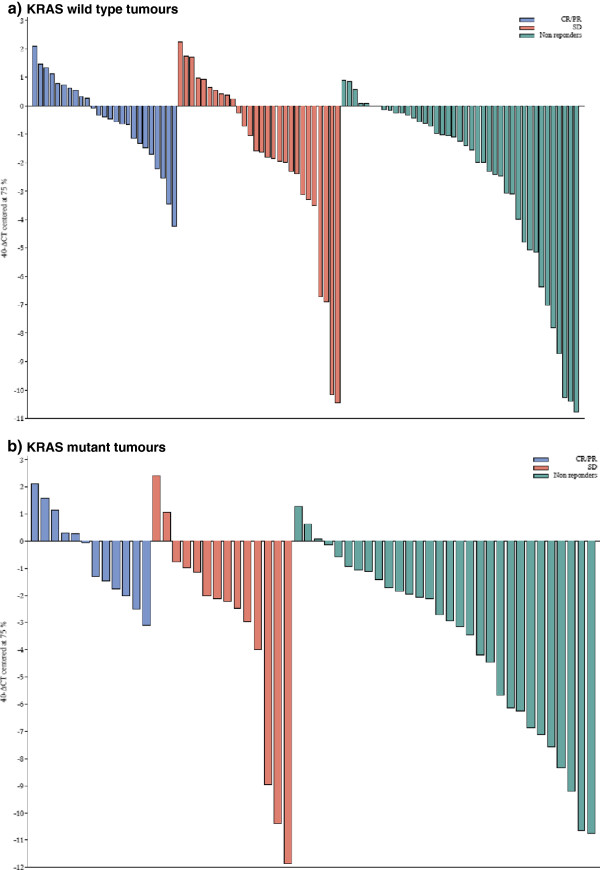
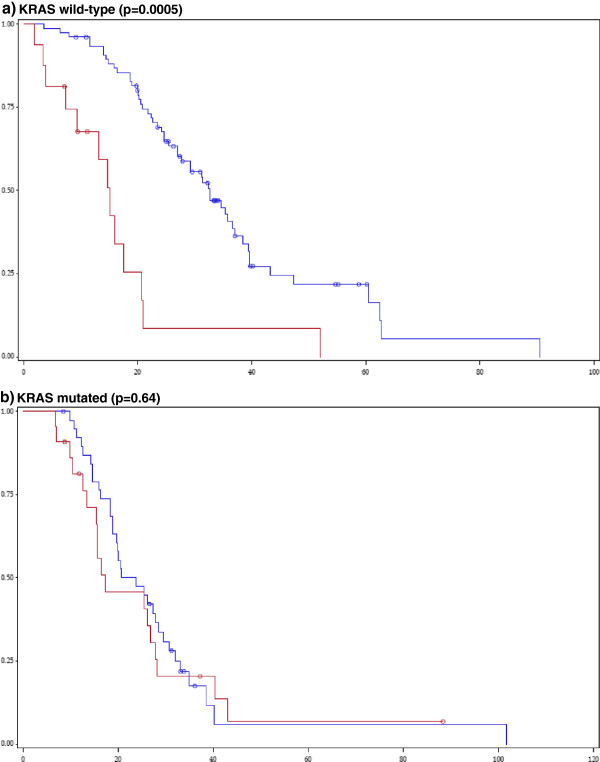
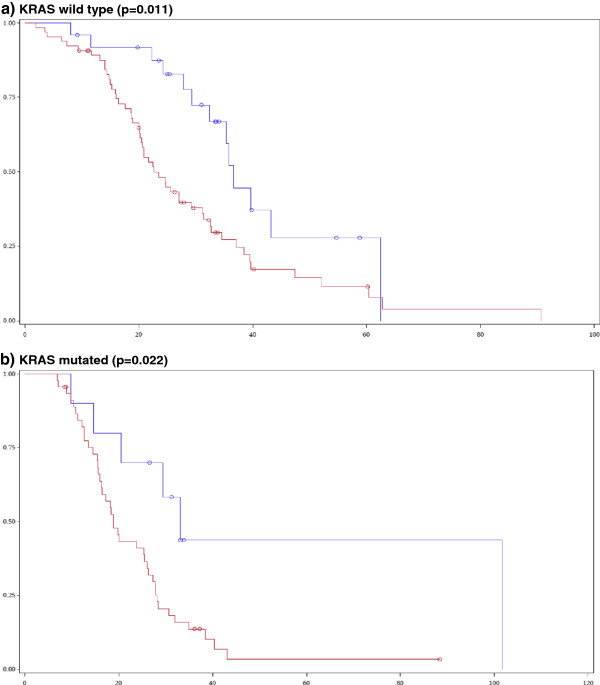
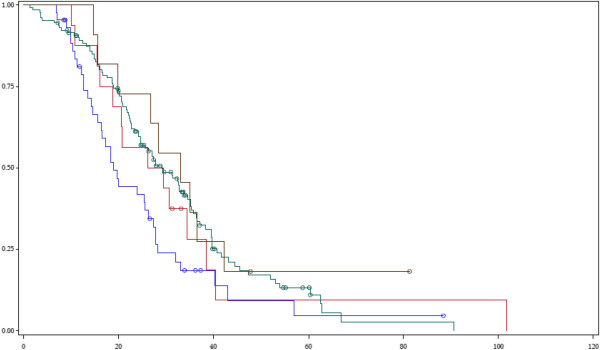
Verification
Claims the paper makes
The claims and statistics of this paper haven’t been checked yet.
Run the check — free, no account needed. It reads the open-access text and checks the sources it cites.
Claims other papers make about this one
Each is checked against this paper’s own text: does it say what the citing paper says it does?
In the citing paper
“while high mRNA levels of either amphiregulin or epiregulin may predict a better response [21, 116-119]”
From Primary and acquired resistance to EGFR-targeted therapies in colorectal cancer: impact on future treatment strategies (2014) · cites this paper as [119]
Self-check
Percentages, sums and reported differences re-computed from the paper’s own numbers.
The self-check needs the paper’s full text.
Citations
Cites
Jemal, A., Siegel, R., Ward, E., Hao, Y., Xu, J., & Thun, M. J. (2009) · CA: A Cancer Journal for Clinicians · doi:10.3322/caac.20006 · Cited by 9,709
Cetuximab and Chemotherapy as Initial Treatment for Metastatic Colorectal Cancer
Van Cutsem, E., Köhne, C.-H., Hitre, E., Zaluski, J., Chang Chien, C.-R., Makhson, A., D'Haens, G., Pintér, T., Lim, R., Bodoky, G., et al. (2009) · New England Journal of Medicine · doi:10.1056/nejmoa0805019 · Cited by 3,877
Self-citationWild-Type KRAS Is Required for Panitumumab Efficacy in Patients With Metastatic Colorectal Cancer
Amado, R. G., Wolf, M., Peeters, M., Van Cutsem, E., Siena, S., Freeman, D. J., Juan, T., Sikorski, R., Suggs, S., Radinsky, R., et al. (2008) · Journal of Clinical Oncology · doi:10.1200/jco.2007.14.7116 · Cited by 3,207
De Roock, W., Claes, B., Bernasconi, D., De Schutter, J., Biesmans, B., Fountzilas, G., Kalogeras, K. T., Kotoula, V., Papamichael, D., Laurent-Puig, P., et al. (2010) · The Lancet Oncology · doi:10.1016/s1470-2045(10)70130-3 · Cited by 2,144
Self-citationVan Cutsem, E., Köhne, C.-H., Láng, I., Folprecht, G., Nowacki, M. P., Cascinu, S., Shchepotin, I., Maurel, J., Cunningham, D., Tejpar, S., et al. (2011) · Journal of Clinical Oncology · doi:10.1200/jco.2010.33.5091 · Cited by 1,882
Self-citationDouillard, J., Siena, S., Cassidy, J., Tabernero, J. M., Burkes, R. L., Barugel, M. E., Humblet, Y., Bodoky, G., Cunningham, D., Jassem, J., et al. (2010) · Journal of Clinical Oncology · doi:10.1200/jco.2009.27.4860 · Cited by 1,829
The Ras-RasGAP Complex: Structural Basis for GTPase Activation and Its Loss in Oncogenic Ras Mutants
Scheffzek, K., Ahmadian, M. R., Kabsch, W., Wiesmüller, L., Lautwein, A., Schmitz, F., & Wittinghofer, A. (1997) · Science · doi:10.1126/science.277.5324.333 · Cited by 1,543
Khambata-Ford, S., Garrett, C. R., Meropol, N. J., Basik, M., Harbison, C. T., Wu, S., Wong, T. W., Huang, X., Takimoto, C. H., Godwin, A. K., et al. (2007) · Journal of Clinical Oncology · doi:10.1200/jco.2006.10.5437 · Cited by 1,125
De Roock, W., Piessevaux, H., De Schutter, J., Janssens, M., De Hertogh, G., Personeni, N., Biesmans, B., Van Laethem, J.-L., Peeters, M., Humblet, Y., et al. (2008) · Annals of Oncology · doi:10.1093/annonc/mdm496 · Cited by 827
Self-citationDe Roock, W., Jonker, D. J., Di Nicolantonio, F., Sartore-Bianchi, A., Tu, D., Siena, S., Lamba, S., Arena, S., Frattini, M., Piessevaux, H., et al. (2010) · JAMA · doi:10.1001/jama.2010.1535 · Cited by 748
Self-citationSartore-Bianchi, A., Martini, M., Molinari, F., Veronese, S., Nichelatti, M., Artale, S., Di Nicolantonio, F., Saletti, P., De Dosso, S., Mazzucchelli, L., et al. (2009) · Cancer Research · doi:10.1158/0008-5472.can-08-2466 · Cited by 739
Roock, W. D., de Vriendt, V., Normanno, N., Ciardiello, F., & Tejpar, S. (2010) · The Lancet Oncology · doi:10.1016/s1470-2045(10)70209-6 · Cited by 626
Self-citationMaximally Selected Chi Square Statistics
Miller, R. G., & Siegmund, D. (1982) · Biometrics · doi:10.2307/2529881 · Cited by 490
Siena, S., Sartore-Bianchi, A., Di Nicolantonio, F., Balfour, J., & Bardelli, A. (2009) · JNCI: Journal of the National Cancer Institute · doi:10.1093/jnci/djp280 · Cited by 429
Perrone, F., Lampis, A., Orsenigo, M., Di Bartolomeo, M., Gevorgyan, A., Losa, M., Frattini, M., Riva, C., Andreola, S., Bajetta, E., et al. (2009) · Annals of Oncology · doi:10.1093/annonc/mdn541 · Cited by 410
Nishino, M., Jagannathan, J. P., Ramaiya, N. H., & den Abbeele, A. D. V. (2010) · American Journal of Roentgenology · doi:10.2214/ajr.09.4110 · Cited by 378
Jacobs, B., De Roock, W., Piessevaux, H., Van Oirbeek, R., Biesmans, B., De Schutter, J., Fieuws, S., Vandesompele, J., Peeters, M., Van Laethem, J.-L., et al. (2009) · Journal of Clinical Oncology · doi:10.1200/jco.2008.21.3744 · Cited by 368
Self-citationPrenen, H., De Schutter, J., Jacobs, B., De Roock, W., Biesmans, B., Claes, B., Lambrechts, D., Van Cutsem, E., & Tejpar, S. (2009) · Clinical Cancer Research · doi:10.1158/1078-0432.ccr-08-2961 · Cited by 291
Self-citationGenomic and Biological Characterization of Exon 4 KRAS Mutations in Human Cancer
Janakiraman, M., Vakiani, E., Zeng, Z., Pratilas, C. A., Taylor, B. S., Chitale, D., Halilovic, E., Wilson, M., Huberman, K., Ricarte Filho, J. C., et al. (2010) · Cancer Research · doi:10.1158/0008-5472.can-10-0192 · Cited by 290
Peeters, M., Douillard, J.-Y., Van Cutsem, E., Siena, S., Zhang, K., Williams, R., & Wiezorek, J. (2013) · Journal of Clinical Oncology · doi:10.1200/jco.2012.45.1492 · Cited by 232
Smith, G. C., Bounds, R., Wolf, H., Steele, R. J., CAREY, F. A., & Wolf, C. R. (2010) · British Journal of Cancer · doi:10.1038/sj.bjc.6605534 · Cited by 176
Shelly, M., Pinkas‐Kramarski, R., Guarino, B. C., Waterman, H., Wang, L.-M., Lyass, L., Alimandi, M., Kuo, A. H., Bacus, S. S., Pierce, J. H., et al. (1998) · Journal of Biological Chemistry · doi:10.1074/jbc.273.17.10496 · Cited by 163
Saridaki, Z., Tzardi, M. N., Papadaki, C., Sfakianaki, M., Pega, F., Kalikaki, A., Tsakalaki, E., Trypaki, M., Messaritakis, I., Stathopoulos, E. N., et al. (2011) · PLoS ONE · doi:10.1371/journal.pone.0015980 · Cited by 131
Baker, J. B., Dutta, D., Watson, D., Maddala, T., Munneke, B., Shak, S., Rowinsky, E. K., Xu, L.-A., Harbison, C. T., Clark, E. A., et al. (2011) · British Journal of Cancer · doi:10.1038/sj.bjc.6606054 · Cited by 110
Sánchez‐Navarro, I., Gámez‐Pozo, A., González-Barón, M., Pinto-Marín, Á., Hardisson, D., López, R., Madero, R., Cejas, P., Mendiola, M., Espinosa, E., et al. (2010) · BioTechniques · doi:10.2144/000113388 · Cited by 65
Koutras, A. K., Kalogeras, K. T., Dimopoulos, M. A., Wirtz, R. M., Dafni, U. G., Briasoulis, E. C., Pectasides, D. G., Gogas, H. J., Christodoulou, C., Aravantinos, G., et al. (2008) · British Journal of Cancer · doi:10.1038/sj.bjc.6604769 · Cited by 61
Self-citationLinardou, H., Briasoulis, E. C., Dahabreh, I. J., Mountzios, G., PAPADIMITRIOU, C. A., Papadopoulos, S., Bafaloukos, D. I., Kosmidis, P., & Murray, S. J. (2010) · Cancer Treatment Reviews · doi:10.1016/j.ctrv.2010.07.008 · Cited by 54
Self-citationModest, D. P., Jung, A., Moosmann, N., Laubender, R. P., Giessen, C. A., Schulz, C. U., Haas, M., Neumann, J. H. L., Boeck, S. H., Kirchner, T., et al. (2011) · International Journal of Cancer · doi:10.1002/ijc.26467 · Cited by 48
Peeters, M., Douillard, J., Cutsem, E. V., Siena, S., Zhang, K., Williams, R., & Wiezorek, J. S. (2011) · European Journal of Cancer · doi:10.1016/s0959-8049(11)70132-0 · Cited by 24
Oliveras‐Ferraros, C., Massaguer, A., Carrión-Salip, D., Vázquez‐Martín, A., Cufí, S., Queralt, B., Martı́n-Castillo, B., Brunet, J., Llorens, R., & Menéndez, J. A. (2010) · Investigational New Drugs · doi:10.1007/s10637-010-9612-2 · Cited by 14
Research works printed but not linked: 1
- Siena S, Sartore-Bianchi A, Di Nicolantonio F, Balfour J, Bardelli A: Biomarkers predicting clinical outcome of epidermal growth factor receptor-targeted therapy in metastatic colorectal cancer. J Natl Cancer Inst. 2009, 101 (19): 1308-1324. 10.1093/jnci/djp280. · DOI · Paper page
Cited by
Sorted by citations
Resistance to anti-EGFR therapy in colorectal cancer: From heterogeneity to convergent evolution
Misale, S., Di Nicolantonio, F., Sartore-Bianchi, A., Siena, S., & Bardelli, A. (2014) · Cancer Discovery · doi:10.1158/2159-8290.cd-14-0462 · Cited by 513
Portrait of the PI3K/AKT pathway in colorectal cancer
Danielsen, S. A., Eide, P. W., Nesbakken, A., Guren, T. K., Leithe, E., & Lothe, R. A. (2014) · Biochimica et Biophysica Acta (BBA) - Reviews on Cancer · doi:10.1016/j.bbcan.2014.09.008 · Cited by 336
Innocenti, F., Ou, F.-S., Qu, X., Zemla, T. J., Niedzwiecki, D., Tam, R., Mahajan, S., Goldberg, R. M., Bertagnolli, M. M., Blanke, C. D., et al. (2019) · Journal of Clinical Oncology · doi:10.1200/jco.18.01798 · Cited by 317
Genetic and epigenetic biomarkers for diagnosis, prognosis and treatment of colorectal cancer
Coppedè, F. (2014) · World Journal of Gastroenterology · doi:10.3748/wjg.v20.i4.943 · Cited by 264
The Role of EREG/EGFR Pathway in Tumor Progression
Cheng, W., Feng, P., Lee, K., Chen, K.-Y., Sun, W.-L., Hiệp, N. V., Luo, C.-S., & Wu, S. (2021) · International Journal of Molecular Sciences · doi:10.3390/ijms222312828 · Cited by 246
Metadata
- Authors
- Pentheroudakis, G., Kotoula, V., De Roock, W., Kouvatseas, G., Papakostas, P., Makatsoris, T., Papamichael, D., Xanthakis, I., Sgouros, J., Televantou, D., Kafiri, G., Tsamandas, A. C., Razis, E., Galani, E., Bafaloukos, D., Efstratiou, I., Bompolaki, I., Pectasides, D., Pavlidis, N., Tejpar, S., & Fountzilas, G.
- Affiliations
- University Hospital of Ioannina (GR)
- Aristotle University of Thessaloniki (GR)
- Hippocration General Hospital (GR)
- University of Patras (GR)
- Bank of Cyprus Oncology Center (CY)
- Hygeia Hospital (GR)
- Metropolitan Hospital (GR)
- Papageorgiou General Hospital (GR)
- Chania General Hospital ”St. George” (GR)
- Ziekenhuis Oost-Limburg (BE)
- Corresponding author
- Pentheroudakis, George
- ORCID
- Venue
- BMC Cancer
- Published
- 2013-02-02
- Volume
- 13
- Issue
- 1
- Pages
- 49-49
- ISSN
- 1471-2407 (ISSN-L)
- PMC
- PMC3599697
- OpenAlex
- W2145310954
- Cited by
- 111
- References
- 30
- Citations by year
- 2026: 1 · 2025: 1 · 2024: 3 · 2023: 11 · 2021: 6 · 2020: 5 · 2019: 11 · 2018: 3 · 2017: 5 · 2016: 15 · 2015: 16 · 2014: 25 · 2013: 9
- FWCI
- 11.59
- Type
- journal article
- Language
- en
- Open access
- gold
- doi.org
- Licence
- Locations
- BMC Cancer (publishedVersion, cc-by)
- Europe PMC (PubMed Central) (publishedVersion, cc-by)
- PubMed Central (publishedVersion, cc-by)
- PubMed (publishedVersion)
- Topics
- Health Sciences › Medicine › Oncology › Colorectal Cancer Treatments and Studies
- Health Sciences › Medicine › Pulmonary and Respiratory Medicine › Lung Cancer Treatments and Mutations
- Health Sciences › Medicine › Oncology › HER2/EGFR in Cancer Research
- Keywords
- cetuximab, metastatic colorectal cancer, EGFR ligands, amphiregulin, epiregulin, PIK3CA mutation, KRAS mutation, BRAF mutation, RAS/RAF pathway, predictive biomarkers, anti-EGFR therapy response, ephrin-A2, epidermal growth factor, transforming growth factor-alpha, survival, objective response
- MeSH terms
- Cetuximab, Adenocarcinoma, Adult, Aged, Aged, 80 and over, Antineoplastic Agents, DNA Mutational Analysis, Epidermal Growth Factor, Female, Genotype, Glycoproteins, Humans, Male, Middle Aged, Genes, ras, Retrospective Studies, RNA, Messenger, Biomarkers, Tumor, Colorectal Neoplasms, Genetic Predisposition to Disease, Intercellular Signaling Peptides and Proteins, Proto-Oncogene Proteins B-raf, Phosphatidylinositol 3-Kinase, Antibodies, Monoclonal, Humanized, ErbB Receptors, EGF Family of Proteins, Amphiregulin, Epiregulin
About these checks
Registry, retraction, Cites and statistics results are computed, not judged, with one exception: a printed reference that no index lists is read once by a model before it counts as a citation error. Claims are extracted by a model and kept only when their quote appears verbatim in the text; each cited source is then checked, with a model’s help, for whether it says what the claim relies on. Those verdicts can be wrong — read the claim’s quote and the cited source before relying on one.
Statistics and arithmetic are recomputed, not judged.
Confidence bands are shown only for fields calibrated on our annotated test set. None is calibrated yet, so no band is shown.
What counts as a claim ›How we measure confidence ›How we check this ›
Are you an author, or do you see a problem with this page? Request a review
