

Differences between patients' and clinicians' report of sleep disturbance: a field study in mental health care in Norway
Open accessThe DOI matches its Crossref record; 31 of the 31 references it cites were found in a registry or an index.
Abstract
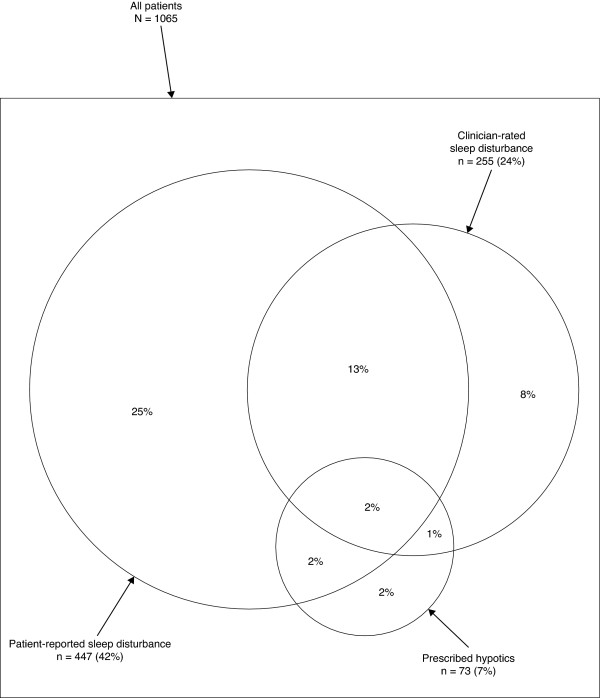
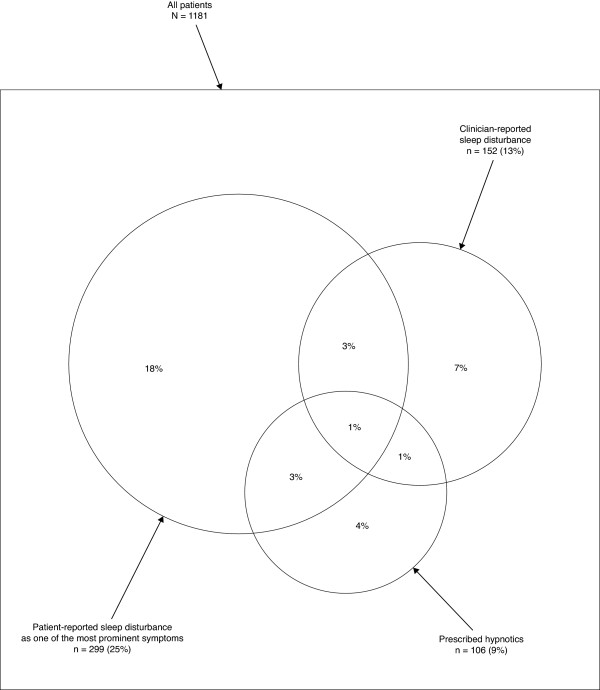
BACKGROUND: The aims of the study was to assess the prevalence of diagnosed insomnia and the agreement between patient- and clinician-reported sleep disturbance and use of prescribed hypnotic medication in patients in treatment for mental disorders. METHODS: We used three cross-sectional, multicenter data-sets from 2002, 2005, and 2008. Data-set 1 included diagnostic codes from 93% of all patients receiving treatment in mental health care in Norway (N = 40261). Data-sets 2 (N = 1065) and 3 (N = 1181) included diagnostic codes, patient- and clinician-reported sleep disturbance, and use of prescribed hypnotic medication from patients in 8 mental health care centers covering 10% of the Norwegian population. RESULTS: 34 patients in data-set 1 and none in data-sets 2 and 3 had a diagnosis of insomnia as a primary or comorbid diagnosis. In data-sets 2 and 3, 42% and 40% of the patients reported sleep disturbance, whereas 24% and 13% had clinician-reported sleep disturbance, and 7% and 9% used hypnotics. Patients and clinicians agreed in 29% and 15% of the cases where the patient or the clinician or both had reported sleep disturbance. Positive predictive value (PPV) of clinicians' evaluations of patient sleep disturbance was 62% and 53%. When the patient reported sleep disturbance as one of their most prominent problems PPV was 36% and 37%. Of the patients who received hypnotic medication, 23% and 29% had neither patient nor clinician-rated sleep disturbance. CONCLUSION: When patients meet the criteria for a mental disorder, insomnia is almost never diagnosed, and sleep disturbance is imprecisely recognized relative to the patients' experience of sleep disturbance.
Overview
The claims and statistics of this paper haven’t been checked yet.
Free: it reads the open-access text and checks the first 5 claims that cite a source we can check. Create a free account to check every claim.
Integrity signals
Registry
Cites
Statistics
Figures
Verification
Claims the paper makes
The claims and statistics of this paper haven’t been checked yet.
Free: it reads the open-access text and checks the first 5 claims that cite a source we can check. Create a free account to check every claim.
Self-check
Percentages, sums and reported differences re-computed from the paper’s own numbers.
The self-check needs the paper’s full text.
Citations
Cites
Epidemiology of insomnia: what we know and what we still need to learn
Ohayon, M. M. (2002) · Sleep Medicine Reviews · doi:10.1053/smrv.2002.0186 · Cited by 3,743 · cited 2×
“Patient report of sleep disturbance was higher than what is found in the general population using similar measures [19], but in agreement with other studies from patients with mental disorders [13].”
BackgroundResultEpidemiologic study of sleep disturbances and psychiatric disorders. An opportunity for prevention?
Ford, D. E. (1989) · JAMA · doi:10.1001/jama.262.11.1479 · Cited by 2,440
Epidemiologic Study of Sleep Disturbances and Psychiatric Disorders: An Opportunity for Prevention?
Ford, D. E. (1989) · JAMA · doi:10.1001/jama.1989.03430110069030 · Cited by 2,252
Strand, B. H., Dalgard, O. S., Tambs, K., & Rognerud, M. (2003) · Nordic Journal of Psychiatry · doi:10.1080/08039480310000932 · Cited by 1,304 · cited 1×
“Both are short versions of the SCL90-R and the Norwegian translations have satisfactory validity and reliability [16].”
BackgroundHealth of the Nation Outcome Scales (HoNOS): Research and development
Wing, J. K., Beevor, A. S., Curtis, R. H., Park, S. G. B., Hadden, J., & Burns, A. (1998) · British Journal of Psychiatry · doi:10.1192/bjp.172.1.11 · Cited by 1,203 · cited 1×
“The HoNOS is a 12-item instrument measuring behavior, impairment, symptoms and social functioning for patients with mental disorders [17].”
MethodAncoli‐Israel, S., & Roth, T. G. (1999) · PubMed · Cited by 776
Sleep disturbance as transdiagnostic: Consideration of neurobiological mechanisms
Harvey, A. G., Murray, G., Chandler, R. A., & Soehner, A. (2011) · Clinical Psychology Review · doi:10.1016/j.cpr.2010.04.003 · Cited by 609
National Trends in Psychotropic Medication Polypharmacy in Office-Based Psychiatry
Mojtabai, R., & Olfson, M. (2010) · Archives of General Psychiatry · doi:10.1001/archgenpsychiatry.2009.175 · Cited by 479 · cited 1×
“Hypnotic medication was, relative to previous studies [24,25], seldom prescribed to the patients in the current study.”
ResultResidual symptoms in depressed patients who respond acutely to fluoxetine
Nierenberg, A. A., Keefe, B. R., Leslie, V. C., Alpert, J. E., Pava, J. A., Worthington, J. J., Rosenbaum, J. F., & Fava, M. (1999) · The Journal of Clinical Psychiatry · doi:10.4088/jcp.v60n0403 · Cited by 470 · cited 2×
“Moreover, 40%-70% of patients successfully treated for depression still experience sleep disturbance after treatment [3,5], and these patients may be at a higher risk of relapses into new episodes [6].”
BackgroundNierenberg, A. A., Husain, M. M., Trivedi, M. H., Fava, M., Warden, D., Wisniewski, S. R., Miyahara, S., & Rush, A. J. (2010) · Psychological Medicine · doi:10.1017/s0033291709006011 · Cited by 458 · cited 1×
“Moreover, 40%-70% of patients successfully treated for depression still experience sleep disturbance after treatment [3,5], and these patients may be at a higher risk of relapses into new episodes [6].”
BackgroundImpact of Generalized Social Anxiety Disorder in Managed Care
Katzelnick, D. J., Kobak, K. A., DeLeire, T., Henk, H. J., Greist, J. H., Davidson, J. R. T., Schneier, F. R., Stein, M. B., & Helstad, C. P. (2001) · American Journal of Psychiatry · doi:10.1176/appi.ajp.158.12.1999 · Cited by 262 · cited 1×
“However, our findings are in line with two previous studies where large discrepancies between findings from epidemiological studies and diagnostic practice in clinical settings have been reported [21,22].”
ResultDiagnosis and Treatment of Chronic Insomnia: A Review
Benca, R. M. (2005) · Psychiatric Services · doi:10.1176/appi.ps.56.3.332 · Cited by 251 · cited 1×
“But although many may share the impression that insomnia is under-recognized by clinicians [7,8], the actual data available from medical practice is limited and ambiguous.”
BackgroundSleep and circadian functioning: critical mechanisms in the mood disorders?
Harvey, A. G. (2011) · Annual Review of Clinical Psychology · doi:10.1146/annurev-clinpsy-032210-104550 · Cited by 237
Leger, D., & Poursain, B. (2005) · Current Medical Research and Opinion · doi:10.1185/030079905x65637 · Cited by 207
Prevalence of Insomnia in the Adult Norwegian Population
(2001) · Sleep · doi:10.1093/sleep/24.7.771 · Cited by 194 · cited 2×
“The diagnostic findings are at odds with findings from epidemiological studies where the prevalence has been reported to be about 100 times higher [18-20].”
BackgroundPhysician Education in Sleep and Sleep Disorders: A National Survey of U.S. Medical Schools
Rosen, R. C., Rosekind, M., Rosevear, C., Cole, W. E., & Dement, W. C. (1993) · Sleep · doi:10.1093/sleep/16.3.249 · Cited by 185 · cited 1×
“Physician training in the recognition of sleep specific symptoms has been reported to be minimal [26].”
BackgroundSleep problems and suicidality in the National Comorbidity Survey Replication
Wojnar, M., Ilgen, M. A., Wojnar, J., McCammon, R. J., Valenstein, M., & Brower, K. J. (2009) · Journal of Psychiatric Research · doi:10.1016/j.jpsychires.2008.07.006 · Cited by 169 · cited 1×
“In patients with depression, sleep disturbance predicts poorer treatment outcome and is associated with more suicide attempts [3,4].”
Background(1997) · American Journal of Psychiatry · doi:10.1176/ajp.154.7.958 · Cited by 143 · cited 1×
“Moreover, 40%-70% of patients successfully treated for depression still experience sleep disturbance after treatment [3,5], and these patients may be at a higher risk of relapses into new episodes [6].”
BackgroundMorin, C. M., & Ware, J. C. (1996) · Applied and Preventive Psychology · doi:10.1016/s0962-1849(96)80013-8 · Cited by 136
Fireman, B., Koran, L. M., Leventhal, J. L., & Jacobson, A. (2001) · American Journal of Psychiatry · doi:10.1176/appi.ajp.158.11.1904 · Cited by 135 · cited 1×
“However, our findings are in line with two previous studies where large discrepancies between findings from epidemiological studies and diagnostic practice in clinical settings have been reported [21,22].”
ResultSleep history is neglected diagnostic information: Challenges for primary care physicians
Haponik, E. F., FRYE, A. W., RICHARDS, B. F., Wymer, A., Hinds, A., Pearce, K. A., McCall, W. V., & KONEN, J. C. (1996) · Journal of General Internal Medicine · doi:10.1007/bf02598994 · Cited by 130 · cited 1×
“Moreover, doctors seldom ask about sleep in clinical interviews [28], and patients with sleep disturbance infrequently report this to their clinicians [29,30].”
BackgroundFailure of physician documentation of sleep complaints in hospitalized patients.
Meissner, H.-H., Riemer, A., Santiago, S. M., Stein, M., Goldman, M., & Williams, A. J. (1998) · Europe PMC (PubMed Central) · Cited by 107
Clinical psychology training in sleep and sleep disorders
Meltzer, L. J., Phillips, C., & Mindell, J. A. (2009) · Journal of Clinical Psychology · doi:10.1002/jclp.20545 · Cited by 80 · cited 1×
“Similarly, a survey of 212 directors of graduate and internship programs of clinical psychology revealed that only 6% of the programs offered courses in sleep and most reported that their institution was ineffective in providing sleep education [27].”
BackgroundSIVERTSEN, B., NORDHUS, I. H., BJORVATN, B., & PALLESEN, S. (2010) · Journal of Sleep Research · doi:10.1111/j.1365-2869.2009.00769.x · Cited by 66 · cited 1×
“Two studies have confirmed that sleep is seldom documented in medical charts in general hospitals [9] or on general medical services [10], whereas a recent large-scale study concluded that sleep disturbance is adequately recognized by general practitioners [11].”
BackgroundSleep disorders on a psychiatric consultation service
(1984) · American Journal of Psychiatry · doi:10.1176/ajp.141.4.582 · Cited by 64 · cited 2×
“sleep disturbance is clinically recognized in patients with mental disorders [12].”
BackgroundShapiro, C. M. (1994) · Medical Entomology and Zoology · Cited by 60
The DSM-V Sleep-Wake Disorders Nosology: An Update and an Invitation to the Sleep Community
Reynolds, C. F., & Redline, S. (2010) · Sleep · doi:10.1093/sleep/33.1.10 · Cited by 55
ABC of sleep disorders. Impact and epidemiology of sleep disorders.
Shapiro, C. M., & Dement, W. C. (1993) · BMJ · doi:10.1136/bmj.306.6892.1604 · Cited by 52 · cited 1×
“But although many may share the impression that insomnia is under-recognized by clinicians [7,8], the actual data available from medical practice is limited and ambiguous.”
BackgroundPrevalence of insomnia in various psychiatric diagnostic categories
OKUJI, Y., MATSUURA, M., KAWASAKI, N., KOMETANI, S., SHIMOYAMA, T., SATO, M., OGA, K., & ABE, K. (2002) · Psychiatry and Clinical Neurosciences · doi:10.1046/j.1440-1819.2002.01012.x · Cited by 48 · cited 1×
“Hypnotic medication was, relative to previous studies [24,25], seldom prescribed to the patients in the current study.”
ResultJohnson, E. J., & Goldstein, D. (2003) · Science · doi:10.1126/science.1091721 · Cited by 35
Sleep Histories Are Seldom Documented on a General Medical Service
Namen, A. M., LANDRY, S. H., Case, D., McCall, W. V., Dunagan, D. P., & Haponik, E. F. (2001) · Southern Medical Journal · doi:10.1097/00007611-200194090-00008 · Cited by 30
Research works printed but not linked: 1
- World Health Organization The ICD-10 Classification of Mental and Behavioural Disorders, Clinical Description and Diagnostic Guidelines 1992 Oslo: Gyldendal Akademisk Forlag
Cited by
The Sleep Condition Indicator: reference values derived from a sample of 200 000 adults
Espie, C. A., Farias Machado, P., Carl, J. R., Kyle, S. D., Cape, J., Siriwardena, A. N., & Luik, A. I. (2018) · Journal of Sleep Research · doi:10.1111/jsr.12643 · Cited by 74
“The positive predictive value of clinicians’ evaluations of patients sleep disturbance (i.e. the probability that subjects clinically diagnosed truly have insomnia disorder) has been reported to be as low as 53% (Kallestad et al., 2011).”
BackgroundFaulkner, S., & Bee, P. (2016) · PLoS ONE · doi:10.1371/journal.pone.0163486 · Cited by 77
Bjorvatn, B., Jernelöv, S., & Pallesen, S. (2021) · Frontiers in Psychology · doi:10.3389/fpsyg.2021.639198 · Cited by 63
Hysing, M., Heradstveit, O., Harvey, A. G., Nilsen, S. A., Bøe, T., & Sivertsen, B. (2020) · European Child & Adolescent Psychiatry · doi:10.1007/s00787-020-01676-4 · Cited by 56
Impact of sleep disturbance on patients in treatment for mental disorders
Kallestad, H., Hansen, B., Langsrud, K., Ruud, T., Morken, G., Stiles, T. C., & Gråwe, R. W. (2012) · BMC Psychiatry · doi:10.1186/1471-244x-12-179 · Cited by 40
“This distinction can have consequences for choice of treatment for these patients [1] and sleep disturbance is poorly recognized when patients have a mental disorder [6,7].”
BackgroundSelf-citation
Metadata
- Authors
- Kallestad, H., Hansen, B., Langsrud, K., Ruud, T., Morken, G., Stiles, T. C., & Gråwe, R. W.
- Affiliations
- St Olav's University Hospital (NO)
- Norwegian University of Science and Technology (NO)
- University of Oslo (NO)
- Corresponding author
- Kallestad, Håvard
- ORCID
- Venue
- BMC Psychiatry
- Published
- 2011-11-23
- Volume
- 11
- Issue
- 1
- Pages
- 186-186
- ISSN
- 1471-244X (ISSN-L)
- PMC
- PMC3231868
- OpenAlex
- W2061589990
- Semantic Scholar
- 5674ab3ba985fd268c72a268d15007a1aea2dd99
- Cited by
- 19
- References
- 31
- Citations by year
- 2025: 1 · 2023: 3 · 2021: 3 · 2020: 4 · 2019: 1 · 2018: 1 · 2017: 2 · 2016: 1 · 2014: 1 · 2013: 1 · 2012: 1
- FWCI
- 1.23
- Type
- journal article
- Language
- en
- Open access
- gold
- doi.org
- Licence
- Locations
- BMC Psychiatry (publishedVersion, cc-by)
- Europe PMC (PubMed Central) (publishedVersion, cc-by)
- PubMed Central (publishedVersion, cc-by)
- PubMed (publishedVersion)
- DOAJ (DOAJ: Directory of Open Access Journals) (submittedVersion, cc-by-sa)
- NORA - Norwegian Open Research Archives (submittedVersion, cc-by)
- Topics
- Social Sciences › Psychology › Experimental and Cognitive Psychology › Sleep and related disorders
- Health Sciences › Medicine › Physiology (medical) › Obstructive Sleep Apnea Research
- Social Sciences › Psychology › Experimental and Cognitive Psychology › Anxiety, Depression, Psychometrics, Treatment, Cognitive Processes
- Keywords
- sleep disorders, insomnia, patient-reported outcomes, clinician-reported outcomes, hypnotic medication use, mental illness, mental health services, positive predictive value
- MeSH terms
- Adolescent, Adult, Aged, Aged, 80 and over, Mental Disorders, Cross-Sectional Studies, Female, Humans, Hypnotics and Sedatives, Male, Mental Health, Middle Aged, Norway, Predictive Value of Tests, Sleep Wake Disorders, Comorbidity, Incidence, Prevalence, Self Report
About these checks
Registry, retraction, Cites and statistics results are computed, not judged, with one exception: a printed reference that no index lists is read once by a model before it counts as a citation error. Claims are extracted by a model and kept only when their quote appears verbatim in the text; each cited source is then checked, with a model’s help, for whether it says what the claim relies on. Those verdicts can be wrong — read the claim’s quote and the cited source before relying on one.
Statistics and arithmetic are recomputed, not judged.
Confidence bands are shown only for fields calibrated on our annotated test set. None is calibrated yet, so no band is shown.
What counts as a claim ›How we measure confidence ›How we check this ›
Are you an author, or do you see a problem with this page? Request a review
Data sources
Bibliographic data: Semantic Scholar, OpenAlex, Crossref.
Contains information from the Semantic Scholar Academic Graph Datasets, made available under the ODC Attribution License (ODC-BY 1.0).
Semantic Scholar’s data is described in: Kinney, R., et al. (2023). The Semantic Scholar Open Data Platform. arXiv:2301.10140.
