

Suicide and unintentional poisoning mortality trends in the United States, 1987-2006: two unrelated phenomena?
Open accessThe DOI matches its Crossref record; 55 of the 55 references it cites were found in a registry or an index.
Abstract
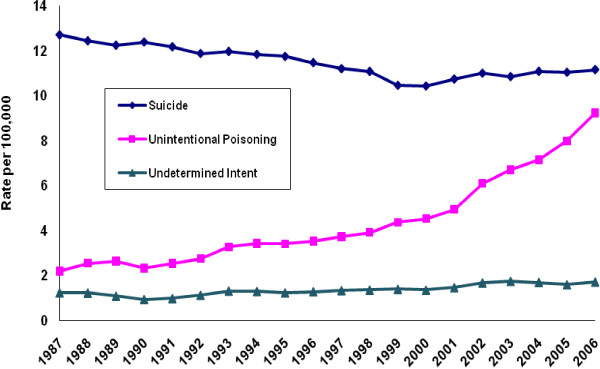
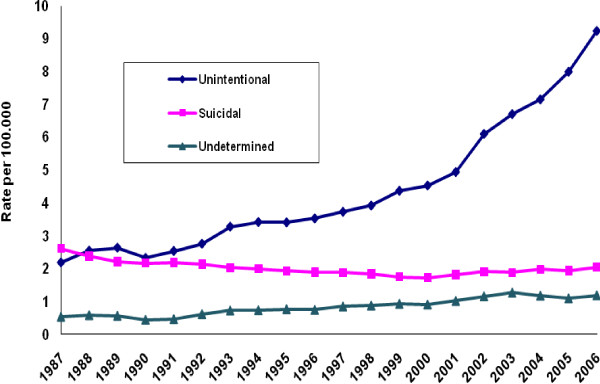
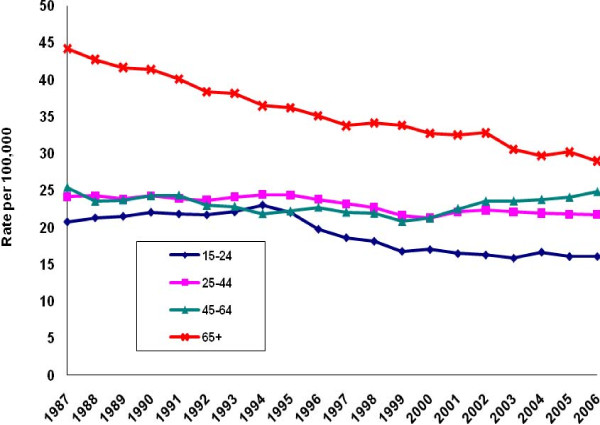
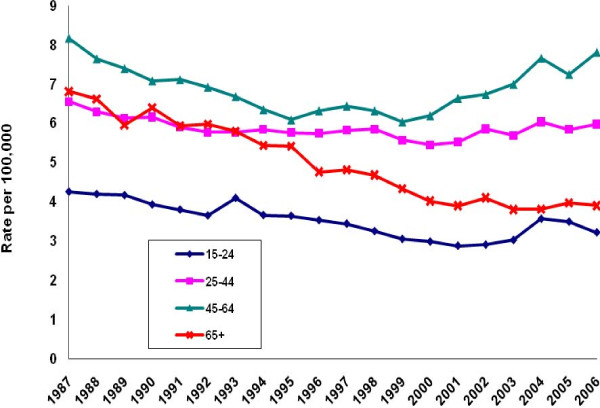
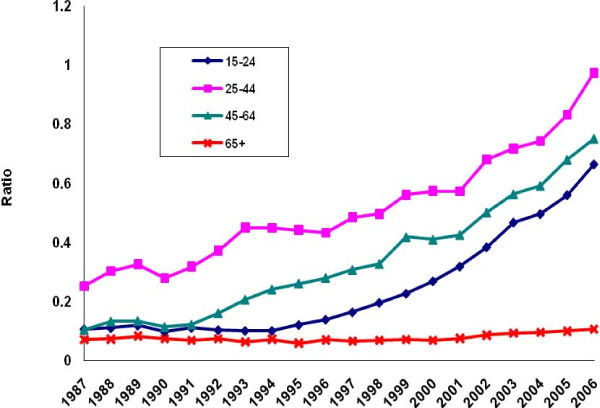
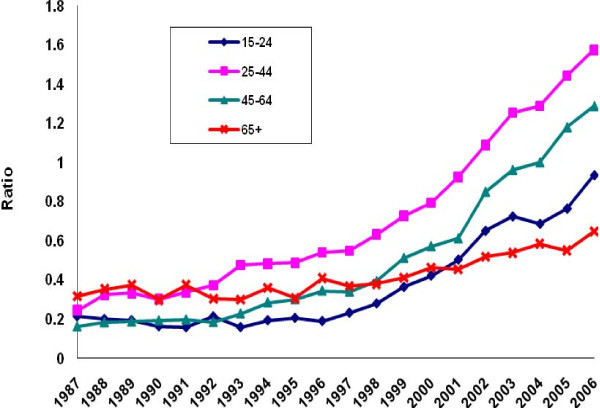
BACKGROUND: Two counter trends in injury mortality have been separately reported in the US in recent times - a declining suicide rate and a rapidly rising unintentional poisoning mortality rate. Poisoning suicides are especially difficult to detect, and injury of undetermined intent is the underlying cause-of-death category most likely to reflect this difficulty. We compare suicide and poisoning mortality trends over two decades in a preliminary assessment of their independence and implications for suicide misclassification. METHODS: Description of overall and gender- and age-specific trends using national mortality data from WISQARS, the Web-based Injury Statistics Query and Reporting System, maintained by the Centers for Disease Control and Prevention (CDC). Subjects were the 936,633 residents dying in the 50 states and the District of Columbia between 1987 and 2006 whose underlying cause of death was classified as suicide, unintentional poisoning, or injury mortality of undetermined intent. RESULTS: The official US suicide rate declined 18% between 1987 and 2000, from 12.71 to 10.43 deaths per 100,000 population. It then increased to 11.15 deaths per 100,000 by 2006, a 7% rise. By contrast to these much smaller rate changes for suicide, the unintentional poisoning mortality rate rose more than fourfold between 1987 and 2006, from 2.19 to 9.22 deaths per 100,000. Only the population aged 65 years and older showed a sustained decline in the suicide rate over the entire observation period. Consistently highest in gender-age comparisons, the elderly male rate declined by 35%. The elderly female rate declined by 43%. Unlike rate trends for the non-elderly, both declines appeared independent of corresponding mortality trends for unintentional poisoning and poisoning of undetermined intent. The elderly also deviated from younger counterparts by having a smaller proportion of their injury deaths of undetermined intent classified as poisoning. Poisoning manifested as a less common method of suicide for this group than other decedents, except for those aged 15-24 years. Although remaining low, the undetermined poisoning mortality rate increased over the observation period. CONCLUSIONS: The official decline in the suicide rate between 1987 and 2000 may have been a partial artifact of misclassification of non-elderly suicides within unintentional poisoning mortality. We recommend in-depth national, regional, and local population-based research investigations of the poisoning-suicide nexus, and endorse calls for widening the scope of the definition of suicide and evaluation of its risk factors.
Overview
The claims and statistics of this paper haven’t been checked yet.
Free: it reads the open-access text and checks the first 5 claims that cite a source we can check. Create a free account to check every claim.
Integrity signals
Registry
Cites
Statistics
Figures
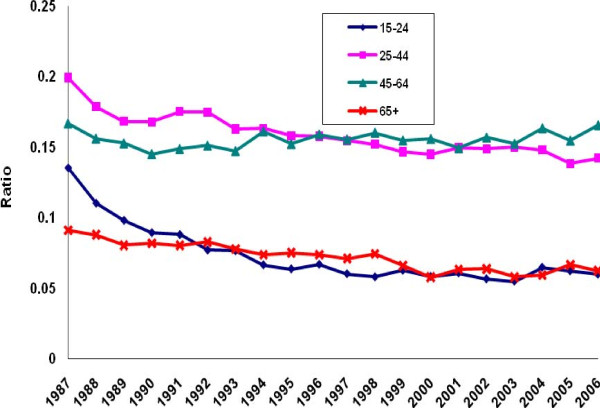
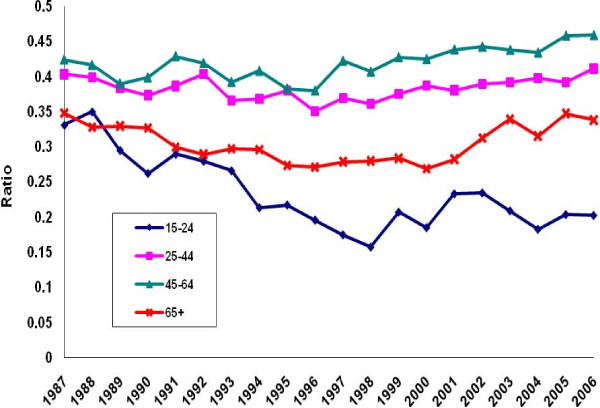
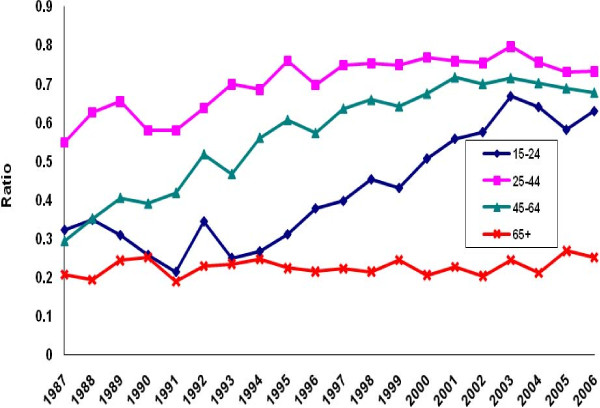
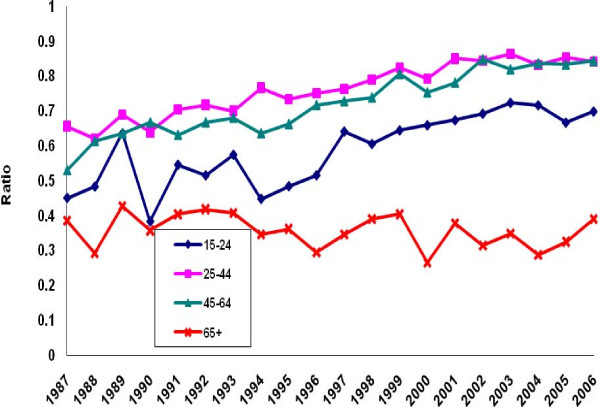
Verification
Claims the paper makes
The claims and statistics of this paper haven’t been checked yet.
Free: it reads the open-access text and checks the first 5 claims that cite a source we can check. Create a free account to check every claim.
Claims other papers make about this one
Each is checked against this paper’s own text: does it say what the citing paper says it does?
In the citing paper
“This age range was selected because ascertaining the intent to selfharm among children younger than 10 years is difficult, 16 and suicide rates were higher in 2017 than in 1999 among individuals between 10 and 74 years of age but not among those 75 years or older. 2”
From Trends in the Incidence and Lethality of Suicidal Acts in the United States, 2006 to 2015 (2020) · cites this paper as [16]
Self-check
Percentages, sums and reported differences re-computed from the paper’s own numbers.
The self-check needs the paper’s full text.
Citations
Cites
Suicide as an outcome for mental disorders: A meta-analysis
Harris, E. C., & Barraclough, B. (1997) · British Journal of Psychiatry · doi:10.1192/bjp.170.3.205 · Cited by 2,589 · cited 2×
“While substance use disorders are strong determinants of suicide [20-22], they also diminish the likelihood of a suicide ruling or diagnosis [23-25].”
Reducing Suicide--A National Imperative
(2002) · PsycEXTRA Dataset · doi:10.1037/e719942007-001 · Cited by 902
Patterns of abuse among unintentional pharmaceutical overdose fatalities
Hall, A. J. (2008) · JAMA · doi:10.1001/jama.2008.802 · Cited by 815 · cited 1×
“On the other hand, a stronger and more persistent increasing trend in the unintentional poisoning mortality rate has focused attention on the epidemic of fatal prescription and recreational drug overdoses [4-6].”
Wilcox, H. C., Conner, K. R., & Caine, E. D. (2004) · Drug and Alcohol Dependence · doi:10.1016/j.drugalcdep.2004.08.003 · Cited by 720 · cited 2×
“While substance use disorders are strong determinants of suicide [20-22], they also diminish the likelihood of a suicide ruling or diagnosis [23-25].”
Increasing deaths from opioid analgesics in the United States
Paulozzi, L. J., Budnitz, D. S., & Xi, Y. (2006) · Pharmacoepidemiology and Drug Safety · doi:10.1002/pds.1276 · Cited by 696 · cited 2×
“Media reporting might also be implicated in the epidemic of opioid mortality [39], and prescription drug diversion is becoming a core issue [38,40].”
Stone, M., Laughren, T., Jones, M. L., Levenson, M., Holland, P. C., Hughes, A., Hammad, T. A., Temple, R., & Rochester, G. (2009) · BMJ · doi:10.1136/bmj.b2880 · Cited by 609 · cited 1×
“With controversial benefit for youth and the youngest adults, prescribed use of SSRIs alone, for example, seems neutral on suicidal behavior and protects against suicidal ideation in adults ages 25-64 [42].”
National Trends in Psychotropic Medication Polypharmacy in Office-Based Psychiatry
Mojtabai, R., & Olfson, M. (2010) · Archives of General Psychiatry · doi:10.1001/archgenpsychiatry.2009.175 · Cited by 479 · cited 1×
“Complicating evaluation of decedent intent, and etiologic understanding of suicide, are the competing beneficial and harmful exposures which characterize the rapid rise of psychotropic medication [41].”
National Strategy for Suicide Prevention: Goals and Objectives for Action: (415652005-001)
US Department of Health and Human Services; Substance Abuse and Mental Health Services Administration (2001) · PsycEXTRA Dataset · doi:10.1037/e415652005-001 · Cited by 459
National Strategy for Suicide Prevention: Goals and Objectives for Action
Satcher, D. S. (2003) · Cited by 392
Gunnell, D., Saperia, J., & Ashby, D. (2005) · BMJ · doi:10.1136/bmj.330.7488.385 · Cited by 387
Research works printed but not linked: 1
- World Health Organization International Statistical Classification of Diseases and Related Health Problems, Ninth Revision (ICD-9) 1979 Geneva: WHO
Cited by
Suicide rates in China from 2002 to 2011: an update
Wang, C.-W., Chan, C. L. W., & Yip, P. S. F. (2014) · Social Psychiatry and Psychiatric Epidemiology · doi:10.1007/s00127-013-0789-5 · Cited by 279
Leading Causes of Unintentional and Intentional Injury Mortality: United States, 2000–2009
Rockett, I. R. H., Regier, M. D., Kapusta, N. D., Coben, J. H., Miller, T. R., Hanzlick, R. L., Todd, K. H., Sattin, R. W., Kennedy, L. W., Kleinig, J., et al. (2012) · American Journal of Public Health · doi:10.2105/ajph.2012.300960 · Cited by 229
Self-citationPain and suicidality: Insights from reward and addiction neuroscience
Elman, I., Borsook, D., & Volkow, N. D. (2013) · Progress in Neurobiology · doi:10.1016/j.pneurobio.2013.06.003 · Cited by 219
Declining Autopsy Rates and Suicide Misclassification: A Cross-national Analysis of 35 Countries
Kapusta, N. D. (2011) · Archives of General Psychiatry · doi:10.1001/archgenpsychiatry.2011.66 · Cited by 169
Self-citationRockett, I. R. H., Caine, E. D., Connery, H. S., D’Onofrio, G., Gunnell, D. J., Miller, T. R., Nolte, K. B., Kaplan, M. S., Kapusta, N. D., Lilly, C. L., et al. (2018) · PLOS ONE · doi:10.1371/journal.pone.0190200 · Cited by 164
“Although large, this rise may be a serious underestimate due to increasing misclassification of intoxication suicides [2], a trend detected in other countries [3,4].”
ResultSelf-citationStone, D. M., Holland, K. M., Bartholow, B., E. Logan, J., LiKamWa McIntosh, W., Trudeau, A., & Rockett, I. R. H. (2017) · American Journal of Public Health · doi:10.2105/ajph.2017.303863 · Cited by 155
Self-citationMaternal drug-related death and suicide are leading causes of postpartum death in California
Goldman-Mellor, S. J., & Margerison, C. E. (2019) · American Journal of Obstetrics and Gynecology · doi:10.1016/j.ajog.2019.05.045 · Cited by 173
Depression, Chronic Pain, and Suicide by Overdose: On the Edge
Cheatle, M. D. (2011) · Pain Medicine · doi:10.1111/j.1526-4637.2011.01131.x · Cited by 142
Suicide Misclassification in an International Context: Revisitation and Update
Rockett, I. R. H., Kapusta, N. D., & Bhandari, R. (2011) · Suicidology online · Cited by 132
Self-citationLucas, M., O’Reilly, E. J., Pan, A., Mirzaei, F., Willett, W. C., Okereke, O. I., & Ascherio, A. (2014) · The World Journal of Biological Psychiatry · doi:10.3109/15622975.2013.795243 · Cited by 103
Hoffmire, C. A., Kemp, J. E., & Bossarte, R. M. (2015) · Psychiatric Services · doi:10.1176/appi.ps.201400031 · Cited by 97
“Such misclassification likely differs by age and gender (29).”
BackgroundSuicide or undetermined intent? A register-based study of signs of misclassification
Björkenstam, C., Johansson, L.-A., Nordström, P., Thiblin, I., Fugelstad, A., Hallqvist, J., & Ljung, R. (2014) · Population Health Metrics · doi:10.1186/1478-7954-12-11 · Cited by 91
“According to an American study the recent official US decline in suicide rates was to some extent due to an artifact of misclassifying nonelderly suicides as unintentional poisonings [14].”
BackgroundSuicide in Brazil, 2004-2010: the importance of small counties
Marín‐Léon, L., de Oliveira, H. B., & Botega, N. J. (2012) · Revista Panamericana de Salud Pública · doi:10.1590/s1020-49892012001100005 · Cited by 98
A Global Perspective on Religious Participation and Suicide
Hsieh, N. (2017) · Journal of Health and Social Behavior · doi:10.1177/0022146517715896 · Cited by 87
“, suicide) may be misclassified as other causes of death, specifically, external causes with undetermined intent, unintentional poisoning, and unintentional drowning (O’Carroll 1989; Rockett et al. 2010; Rockett and Thomas 1999; Värnik et al. 2010).”
BackgroundInfluentialTrends in the Incidence and Lethality of Suicidal Acts in the United States, 2006 to 2015
Wang, J., Sumner, S. A., Simon, T. R., Crosby, A. E., Annor, F. B., Gaylor, E., Xu, L., & Holland, K. M. (2020) · JAMA Psychiatry · doi:10.1001/jamapsychiatry.2020.0596 · Cited by 78
Confronting Death From Drug Self-Intoxication (DDSI): Prevention Through a Better Definition
Rockett, I. R. H., Smith, G. S., Caine, E. D., Kapusta, N. D., Hanzlick, R. L., Larkin, G. L., Naylor, C. P. E., Nolte, K. B., Miller, T. R., Putnam, S. L., et al. (2014) · American Journal of Public Health · doi:10.2105/ajph.2014.302244 · Cited by 73
Self-citationRockett, I. R. H., Hobbs, G. R., Wu, D., Jia, H., Nolte, K. B., Smith, G. S., Putnam, S. L., & Caine, E. D. (2015) · PLoS ONE · doi:10.1371/journal.pone.0135296 · Cited by 67
“US mortality rates for both total suicide and lethal drug intoxication, in the combined suicide, undetermined, and accident manners-of-death component, have burgeoned during the opening years of the 21st century [1,4,8].”
BackgroundSelf-citationYamauchi, T., Inagaki, M., Yonemoto, N., Iwasaki, M., Inoue, M., Akechi, T., Iso, H., Tsugane, S., & on behalf of the JPHC Study Group (2014) · Psycho-Oncology · doi:10.1002/pon.3529 · Cited by 57
Suicide and drug‐related mortality following occupational injury
Applebaum, K. M., Asfaw, A., O’Leary, P., Busey, A. H., Tripodis, Y., & Boden, L. I. (2019) · American Journal of Industrial Medicine · doi:10.1002/ajim.23021 · Cited by 57
Rockett, I. R. H., Kapusta, N. D., & Coben, J. H. (2014) · JAMA Psychiatry · doi:10.1001/jamapsychiatry.2013.3738 · Cited by 50
Self-citationSuicide and accidental deaths among patients with non‐metastatic prostate cancer
Dalela, D., Krishna, N., Okwara, J., Preston, M. A., Abdollah, F., Choueiri, T. K., Reznor, G., Sammon, J. D., Schmid, M., Kibel, A. S., et al. (2016) · BJU International · doi:10.1111/bju.13257 · Cited by 48
Changes in age patterns of suicide in Australia, the United States, Japan and Hong Kong
Snowdon, J. A., Phillips, J. A., Zhong, B., Yamauchi, T., Chiu, H. F. K., & Conwell, Y. (2017) · Journal of Affective Disorders · doi:10.1016/j.jad.2017.01.007 · Cited by 50
Forty years of increasing suicide mortality in Poland: Undercounting amidst a hanging epidemic?
Höfer, P., Rockett, I. R. H., Värnik, P., Etzersdorfer, E., & Kapusta, N. D. (2012) · BMC Public Health · doi:10.1186/1471-2458-12-644 · Cited by 52
Self-citationChanges in Overall and Firearm Veteran Suicide Rates by Gender, 2001–2010
McCarten, J. M., Hoffmire, C. A., & Bossarte, R. M. (2015) · American Journal of Preventive Medicine · doi:10.1016/j.amepre.2014.10.013 · Cited by 40
Characteristics of self-inflicted drug overdose deaths in North Carolina
Austin, A. E., Proescholdbell, S., Creppage, K. E., & Asbun, A. (2017) · Drug and Alcohol Dependence · doi:10.1016/j.drugalcdep.2017.09.014 · Cited by 37
Suicide in Canada: Is Poisoning Misclassification an Issue?
Skinner, R., McFaull, S. R., Rhodes, A. E., Bowes, M., & Rockett, I. R. H. (2016) · The Canadian Journal of Psychiatry · doi:10.1177/0706743716639918 · Cited by 40
“In particular, Rockett et al.(12) examined the countertrends of a declining suicide rate and an increasing unintentional poisoning mortality rate in the United States between 1987 and 2006 and concluded that misclassification may have contributed to changes in the suicide rate.”
BackgroundInfluentialSelf-citationUnrecognised self-injury mortality (SIM) trends among racial/ethnic minorities and women in the USA
Rockett, I. R. H., Caine, E. D., Connery, H. S., Nolte, K. B., Nestadt, P. S., Nelson, L. S., & Jia, H. (2019) · Injury Prevention · doi:10.1136/injuryprev-2019-043371 · Cited by 38
Self-citationPesticide use and fatal injury among farmers in the Agricultural Health Study
Waggoner, J. K., Henneberger, P. K., Kullman, G. J., Umbach, D. M., Kamel, F., Freeman, L. E. B., Alavanja, M. C. R., Sandler, D. P., & Hoppin, J. A. (2012) · International Archives of Occupational and Environmental Health · doi:10.1007/s00420-012-0752-x · Cited by 33
“Machinery is often responsible for fatal injury (Richardson et al. 1997; Solomon 2002; Voaklander et al. 1999).”
BackgroundED use by older adults attempting suicide
Carter, M., & Reymann, M. R. (2014) · The American Journal of Emergency Medicine · doi:10.1016/j.ajem.2014.02.003 · Cited by 33
Sex Differences in Suicides Among Children and Youth: The Potential Impact of Misclassification
Rhodes, A. E., Khan, S., Boyle, M. H., Wekerle, C., Goodman, D., Tonmyr, L., Bethell, J., Leslie, B., & Manion, I. G. (2012) · Canadian Journal of Public Health · doi:10.1007/bf03403815 · Cited by 27
Effect of Washington State and Colorado's cannabis legalization on death by suicides
Doucette, M. L., Borrup, K. T., Lapidus, G. D., Whitehill, J. M., McCourt, A. D., & Crifasi, C. K. (2021) · Preventive Medicine · doi:10.1016/j.ypmed.2021.106548 · Cited by 29
Desemprego e suicídio na população brasileira em um cenário de crise do capitalismo
Barreto, A. Â. M., & de Souza, L. E. P. F. (2021) · Ciência & Saúde Coletiva · doi:10.1590/1413-812320212612.14672021 · Cited by 26
Filho, A. M. S., Cortez-Escalante, J. J., & França, E. B. (2016) · Ciência & Saúde Coletiva · doi:10.1590/1413-812320152112.13682015 · Cited by 40
Cha, E. S., Chang, S., & Lee, W. J. (2015) · Injury Prevention · doi:10.1136/injuryprev-2015-041781 · Cited by 24
Kurisu, K., Fujimori, M., Harashima, S., Akechi, T., Matsuda, T., Saika, K., Yoshiuchi, K., Miyashiro, I., & Uchitomi, Y. (2022) · Cancer Medicine · doi:10.1002/cam4.5122 · Cited by 25
Chung, S. S., & Joung, K. H. (2012) · The Journal of School Nursing · doi:10.1177/1059840512446704 · Cited by 30
“Even though the mortality rate of suicide is higher among middle and older adults in America (Rockett et al., 2010) and Korea (Inoue, Tanii, Nata, Fujita, & Ono, 2009), our results with youth in these countries highlight the need of the attention to younger adolescents’ suicidal trends.”
BackgroundMeda, N., Angelozzi, L., Poletto, M., Patane’, A., Zammarrelli, J., Slongo, I., Sambataro, F., & Leo, D. D. (2025) · Frontiers in Psychiatry · doi:10.3389/fpsyt.2025.1609580 · Cited by 36
Divergence In Recent Trends In Deaths From Intentional And Unintentional Poisoning
Hempstead, K., & Phillips, J. A. (2019) · Health Affairs · doi:10.1377/hlthaff.2018.05186 · Cited by 24
Harashima, S., Fujimori, M., Akechi, T., Matsuda, T., Saika, K., Hasegawa, T., Inoue, K., Yoshiuchi, K., Miyashiro, I., Uchitomi, Y., et al. (2021) · Japanese Journal of Clinical Oncology · doi:10.1093/jjco/hyab001 · Cited by 23
Ten-year evolution of suicide rates and economic indicators in large Brazilian urban centers
Asevedo, E. D. M., Ziebold, C., Diniz, E., Gadelha, A., & Mari, J. D. J. (2018) · Current Opinion in Psychiatry · doi:10.1097/yco.0000000000000412 · Cited by 21
Fatalities and hospitalisations due to acute poisoning among N ew Z ealand adults
Peiris-John, R. J., Kool, B., & Ameratunga, S. N. (2013) · Internal Medicine Journal · doi:10.1111/imj.12364 · Cited by 19
Sex‐Specific Risk Profiles for Suicide Among Persons with Substance Use Disorders in Denmark
Adams, R. S., Jiang, T., Rosellini, A. J., Horváth–Puhó, E., Street, A. E., Keyes, K. M., Cerdá, M., Lash, T. L., Sørensen, H. T., & Gradus, J. L. (2021) · Addiction · doi:10.1111/add.15455 · Cited by 20
Hoffmire, C. A., & Bossarte, R. M. (2014) · Injury Prevention · doi:10.1136/injuryprev-2013-041029 · Cited by 21
Utility of Cardiac Troponin to Predict Drug Overdose Mortality
Manini, A. F., Stimmel, B., Hoffman, R. S., & Vlahov, D. (2015) · Cardiovascular Toxicology · doi:10.1007/s12012-015-9345-8 · Cited by 18
“, younger) patients represent a higher-risk age group for drug-related fatality based on historical data [18].”
Unanticipated Changes in Drug Overdose Death Rates in Canada During the Opioid Crisis
Snowdon, J. A., & Choi, N. G. (2022) · International Journal of Mental Health and Addiction · doi:10.1007/s11469-022-00932-9 · Cited by 19
“Substance use disorders are recognized as strong determinants of suicide, but it is also found that they diminish the likelihood of a suicide ruling (Rockett et al., 2010).”
Suicide and Accidental Death Among Women With Primary Ovarian Cancer: A Population-Based Study
Chen, Y., Yu, K., Zhu, Q., Tang, W., Chen, D., Xue, L., Zhang, J., Zhou, S., Dai, J., Jin, Y., et al. (2022) · Frontiers in Medicine · doi:10.3389/fmed.2022.833965 · Cited by 17
“The hitherto unknown suicidal deaths may be misclassified as death from accidental or unintentional injury (2, 3).”
BackgroundHuguet, N., McFarland, B. H., & Kaplan, M. S. (2014) · Archives of Suicide Research · doi:10.1080/13811118.2014.915275 · Cited by 16
Is suicide underreported? Evidence from Japan
Matsubayashi, T., & Ueda, M. (2021) · Social Psychiatry and Psychiatric Epidemiology · doi:10.1007/s00127-021-02188-5 · Cited by 13
Spain’s suicide statistics: do we believe them?
Snowdon, J. A. (2020) · Social Psychiatry and Psychiatric Epidemiology · doi:10.1007/s00127-020-01948-z · Cited by 16
Fatal Intoxications in a Forensic Autopsy Material from Epirus, Greece, During the Period 1998–2010
Boumba, V. A., Georgiadis, M., Mirescu, N., & Vougiouklakis, T. (2013) · Journal of Forensic Sciences · doi:10.1111/1556-4029.12014 · Cited by 11
Firearm suicide mortality among emergency department patients with physical health problems
Goldman-Mellor, S. J., Hall, C., Cerdá, M., & Bhat, H. (2020) · Annals of Epidemiology · doi:10.1016/j.annepidem.2020.09.007 · Cited by 11
Estimates of suicide mortality in women residents in northeast brazilian states from 1996 to 2018
Dantas, E. S. O., Farias, Y. M. F., Resende, E. B., Silva, G. W. D. S., da Silva, P. G., & Meira, K. C. (2021) · Ciência & Saúde Coletiva · doi:10.1590/1413-812320212610.29552020 · Cited by 9
The influence of the age-period-cohort effects on male suicide in Brazil from 1980 to 2019
Rodrigues, W. T. D. S., Simões, T. C., Magnago, C., Dantas, E. S. O., Guimarães, R. M., de Jesus, J. C., Fernandes, S. M. B. D. A., & Meira, K. C. (2023) · PLoS ONE · doi:10.1371/journal.pone.0284224 · Cited by 9
Choi, N. G., Marti, C. N., DiNitto, D. M., & Choi, B. Y. (2019) · Archives of Suicide Research · doi:10.1080/13811118.2019.1592042 · Cited by 9
Eide, D., Skurtveit, S. O., Clausen, T., Hesse, M., Mravčík, V., Nechanská, B., Rolová, G., Thylstrup, B., Tjagvad, C., Seid, A. K., et al. (2023) · European Addiction Research · doi:10.1159/000530822 · Cited by 9
Toxico-vigilance – An inevitable prerequisite to keep a watch on toxins around you
Sharma, S., Dewan, A., & Singh, G. (2016) · Journal of Forensic and Legal Medicine · doi:10.1016/j.jflm.2016.11.005 · Cited by 8
Self-harm hospitalised morbidity and mortality risk using a matched population-based cohort design
Mitchell, R. J., & Cameron, C. M. (2017) · Australian & New Zealand Journal of Psychiatry · doi:10.1177/0004867417717797 · Cited by 9
“A prior study of poisoning-related mortality has suggested creating a category of ‘death from drug self-intoxication’ (DDSI) to try to establish better enumeration of all poisoning deaths, regardless of intent (Rockett et al., 2010).”
BackgroundExploring coronial determination of intent for poisoning-related deaths in Australia, 2001–2013
Churruca, K., & Mitchell, R. (2018) · BMC Public Health · doi:10.1186/s12889-017-4633-9 · Cited by 6
“Furthermore, an association has been established between the decline in the suicide rate and the large increase in unintentional poisonings from 1987 to 2006, which suggests some potential suicides are being classified as unintentional deaths [14].”
BackgroundResultInfluentialKing, T. L., Disney, G., Sutherland, G. A., Kavanagh, A. M., Spittal, M. J., & Simons, K. (2022) · The Lancet Regional Health - Western Pacific · doi:10.1016/j.lanwpc.2022.100614 · Cited by 8
Causes of death among U.S. Veterans with a prior nonfatal opioid overdose
Warfield, S. C., Karras, E., Lilly, C. L., Brumage, M. R., & Bossarte, R. M. (2021) · Drug and Alcohol Dependence · doi:10.1016/j.drugalcdep.2020.108484 · Cited by 7
Karnecki, K., Steiner, J., Guest, P. C., Krzyżanowska, M., Mańkowski, D., Gos, T., & Kaliszan, M. (2021) · Forensic Science International Reports · doi:10.1016/j.fsir.2021.100219 · Cited by 6
Mortality following non‐fatal suicide attempts by Veterans in Veterans Health Administration care
Hein, T. C., Cooper, S. A., & McCarthy, J. F. (2021) · Suicide and Life-Threatening Behavior · doi:10.1111/sltb.12811 · Cited by 6
Adviento, B. A., Regan, E. A., Make, B. J., Han, M. K., Foreman, M. G., Iyer, A. S., Bhatt, S. P., Kim, V., Bon, J. M., Soler, X., et al. (2022) · CHEST Journal · doi:10.1016/j.chest.2022.09.022 · Cited by 8
Decrease in suicide rates in Brazil during the COVID-19 pandemic
Filho, S. C., Rocha, T., Caetano, S. L., Mari, J. D. J., Borschmann, R., & Asevedo, E. D. M. (2023) · Psychiatry Research · doi:10.1016/j.psychres.2023.115443 · Cited by 12
Harashima, S., Fujimori, M., Akechi, T., Matsuda, T., Saika, K., Hasegawa, T., Inoue, K., Yoshiuchi, K., Miyashiro, I., Uchitomi, Y., et al. (2019) · BMJ Open · doi:10.1136/bmjopen-2019-030681 · Cited by 5
Gunnarsdottir, O. S., & Rafnsson, V. (2020) · BMJ Open · doi:10.1136/bmjopen-2019-034590 · Cited by 4
Flores, J. P., Desjardins, M. M., Kitchen, C., Belouali, A., Kharrazi, H. H. K., Wilcox, H. C., & Nestadt, P. S. (2025) · Crisis · doi:10.1027/0227-5910/a001033 · Cited by 4
Migraine and the Risk of Suicide
Aly, Z., Rosen, N. L., & Evans, R. W. (2016) · Headache The Journal of Head and Face Pain · doi:10.1111/head.12815 · Cited by 5
Jia, T., Tynelius, P., & Rasmussen, F. E. (2015) · International Journal of Obesity · doi:10.1038/ijo.2015.239 · Cited by 5
Sujan, A. C., O’Reilly, L. M., Rickert, M. E., Larsson, H., Lichtenstein, P., Öberg, A. S., & D'Onofrio, B. M. (2021) · Behavior Genetics · doi:10.1007/s10519-021-10091-7 · Cited by 5
Classification of suicidal behavior calls in emergency medical services: a systematic review
Ramos-Martín, J., Contreras-Peñalver, M. Á., & Moreno‐Küstner, B. (2023) · International Journal of Emergency Medicine · doi:10.1186/s12245-023-00504-1 · Cited by 7
Yamauchi, T., Shimazaki, T., Takeshima, T., Iwadate, K., & Suka, M. (2025) · Social Science & Medicine · doi:10.1016/j.socscimed.2025.118136 · Cited by 3
Brown, R. M., & Brown, S. L. (2012) · Oxford University Press eBooks · doi:10.1093/oxfordhb/9780199738403.013.0009 · Cited by 3
Hidden suicides: focus on England and Wales – comparison with other nations
Snowdon, J. A. (2025) · The British Journal of Psychiatry · doi:10.1192/bjp.2025.20 · Cited by 2
Recognising inaccuracies in Australian suicide and ‘hidden suicide’ data
Snowdon, J. A. (2024) · Australasian Psychiatry · doi:10.1177/10398562241245548 · Cited by 2
Mercado, M. C., Stone, D. M., Kokubun, C. W., Trudeau, A.-R. T., Gaylor, E. M., Holland, K. M., & Bartholow, B. N. (2021) · Academic Forensic Pathology · doi:10.1177/19253621211022464 · Cited by 3
Porter, M. A., Lilli, A. N. C., & Schellinger, C. N. (2019) · Journal of Public Health Management and Practice · doi:10.1097/phh.0000000000001018 · Cited by 4
“Manner of death may also be misidentified (eg, a self-inflicted intentional injury death may be misclassified as an unintentional injury death).(33,34) Evidence that this may occur among AI/ANs has been noted in Minnesota.”
BackgroundRE: “TRENDS IN ‘DEATHS OF DESPAIR’ AMONG WORKING-AGED WHITE AND BLACK AMERICANS, 1990–2017”
Eiffert, S., Li, C. X., Anthony, K. M., & Poole, C. (2021) · American Journal of Epidemiology · doi:10.1093/aje/kwab256 · Cited by 2
Mortalidade por suicídio em adolescentes, adultos e idosos, nas regiões do Brasil, entre 1996 e 2016
Confortin, S. C., de Andrade, S. R., Ferreira, A., Schmitt, M. D., Meneghini, V., & Barbosa, A. R. (2021) · Saúde em Redes · doi:10.18310/2446-4813.2021v7n1p115-130 · Cited by 3
Swoboda, M. M. M., Bartova, L., Dremel, M., Rabl, U., Laggner, A. N., & Frey, R. (2022) · Frontiers in Psychiatry · doi:10.3389/fpsyt.2022.825546 · Cited by 1
Manzo, K. (2015) · The Research Repository @ WVU (West Virginia University) · doi:10.33915/etd.6161 · Cited by 1
“vulnerable to differential misclassification according to decedent race/ethnicity (68).”
BackgroundCharacteristics and patterns of opioid-related overdoses among veterans
Warfield, S. C. (2019) · The Research Repository @ WVU (West Virginia University) · doi:10.33915/etd.3902 · Cited by 2
Suicide, Violence, and Other Forms of Injury
Logan, J. E., & Mercy, J. A. (2019) · Oxford University Press eBooks · doi:10.1093/oso/9780190933692.003.0025
Sarraf, M. A., Menie, M. A. W. O., & Feltham, C. (2019) · Springer eBooks · doi:10.1007/978-3-030-32984-6_5
Girault, C., & Trias‐Llimós, S. (2025) · Injury Prevention · doi:10.1136/ip-2025-045634
“26 In the USA, unintentional poisoning mortality has been increasing since the mid-1980s, 27 and the mortality rate increased by 128% from 2000 to 2009.”
Ramos-Martín, J., Contreras-Peñalver, M. Á., & Moreno‐Küstner, B. (2024) · Figshare · doi:10.6084/m9.figshare.26582808
Leveau, C. M. (2026) · Injury Prevention · doi:10.1136/ip-2026-046184
Mesquita, E. M., da Conceição, V., & Gusmão, R. (2026) · medRxiv · doi:10.64898/2026.07.16.26358214
Metadata
- Authors
- Rockett, I. R., Hobbs, G., De Leo, D., Stack, S., Frost, J. L., Ducatman, A. M., Kapusta, N. D., & Walker, R. L.
- Affiliations
- West Virginia University (US)
- Wayne State University (US)
- Medical University of Vienna (AT)
- University of Georgia (US)
- Corresponding author
- Rockett, Ian RH
- Venue
- BMC Public Health
- Published
- 2010-11-17
- Volume
- 10
- Issue
- 1
- Pages
- 705-705
- ISSN
- 1471-2458 (ISSN-L)
- PMC
- PMC3091585
- OpenAlex
- W2150771581
- Cited by
- 88
- References
- 55
- Citations by year
- 2026: 1 · 2025: 6 · 2024: 2 · 2023: 4 · 2022: 6 · 2021: 13 · 2020: 4 · 2019: 10 · 2018: 2 · 2017: 6 · 2016: 4 · 2015: 8 · 2014: 7 · 2013: 4 · 2012: 8
- FWCI
- 5.25
- Type
- journal article
- Language
- en
- Open access
- gold
- doi.org
- Licence
- cc-by
- creativecommons.org/licenses/by/2.0 (tdm)
- Locations
- BMC Public Health (publishedVersion, cc-by)
- PubMed Central (publishedVersion, cc-by)
- PubMed (publishedVersion)
- Human Biology (submittedVersion)
- The Research Repository @ WVU (West Virginia University) (submittedVersion, cc-by)
- DOAJ (DOAJ: Directory of Open Access Journals) (submittedVersion)
- Griffith Research Online (submittedVersion, cc-by)
- Funders
- Centers for Disease Control and Prevention (5 R49 CE001170)
- Topics
- Social Sciences › Psychology › Clinical Psychology › Suicide and Self-Harm Studies
- Social Sciences › Sociology and Political Science › Homicide, Infanticide, and Child Abuse
- Health Sciences › Medicine › Emergency Medicine › Poisoning and overdose treatments
- Keywords
- suicide mortality, mortality trends, young adults, older women, older men
- MeSH terms
- Adolescent, Adult, Female, Humans, Male, Middle Aged, Mortality, Poisoning, Suicide, United States, Databases, Factual, Young Adult
About these checks
Registry, retraction, Cites and statistics results are computed, not judged, with one exception: a printed reference that no index lists is read once by a model before it counts as a citation error. Claims are extracted by a model and kept only when their quote appears verbatim in the text; each cited source is then checked, with a model’s help, for whether it says what the claim relies on. Those verdicts can be wrong — read the claim’s quote and the cited source before relying on one.
Statistics and arithmetic are recomputed, not judged.
Confidence bands are shown only for fields calibrated on our annotated test set. None is calibrated yet, so no band is shown.
What counts as a claim ›How we measure confidence ›How we check this ›
Are you an author, or do you see a problem with this page? Request a review
Data sources
Bibliographic data: Semantic Scholar, OpenAlex, Crossref.
Contains information from the Semantic Scholar Academic Graph Datasets, made available under the ODC Attribution License (ODC-BY 1.0).
Semantic Scholar’s data is described in: Kinney, R., et al. (2023). The Semantic Scholar Open Data Platform. arXiv:2301.10140.
