

The DOI matches its Crossref record; 18 of the 18 references it cites were found in a registry or an index.
Diarrhea incidence in low- and middle-income countries in 1990 and 2010: a systematic review
Open accessAbstract
BACKGROUND: Diarrhea is recognized as a leading cause of morbidity and mortality among children under 5 years of age in low- and middle-income countries yet updated estimates of diarrhea incidence by age for these countries are greatly needed. We conducted a systematic literature review to identify cohort studies that sought to quantify diarrhea incidence among any age group of children 0-59 mo of age. METHODS: We used the Expectation-Maximization algorithm as a part of a two-stage regression model to handle diverse age data and overall incidence rate variation by study to generate country specific incidence rates for low- and middle-income countries for 1990 and 2010. We then calculated regional incidence rates and uncertainty ranges using the bootstrap method, and estimated the total number of episodes for children 0-59 mo of age in 1990 and 2010. RESULTS: We estimate that incidence has declined from 3.4 episodes/child year in 1990 to 2.9 episodes/child year in 2010. As was the case previously, incidence rates are highest among infants 6-11 mo of age; 4.5 episodes/child year in 2010. Among these 139 countries there were nearly 1.9 billion episodes of childhood diarrhea in 1990 and nearly 1.7 billion episodes in 2010. CONCLUSIONS: Although our results indicate that diarrhea incidence rates may be declining slightly, the total burden on the health of each child due to multiple episodes per year is tremendous and additional funds are needed to improve both prevention and treatment practices in low- and middle-income countries.
Overview
The claims and statistics of this paper haven’t been checked yet.
Run the check — free, no account needed. It reads the open-access text and checks the sources it cites.
Integrity signals
Registry
Cites
Statistics
Figures
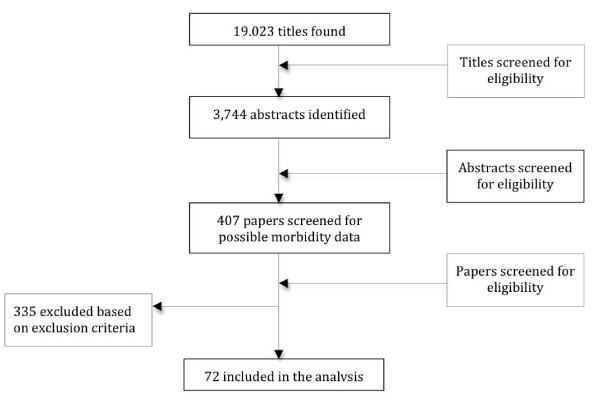
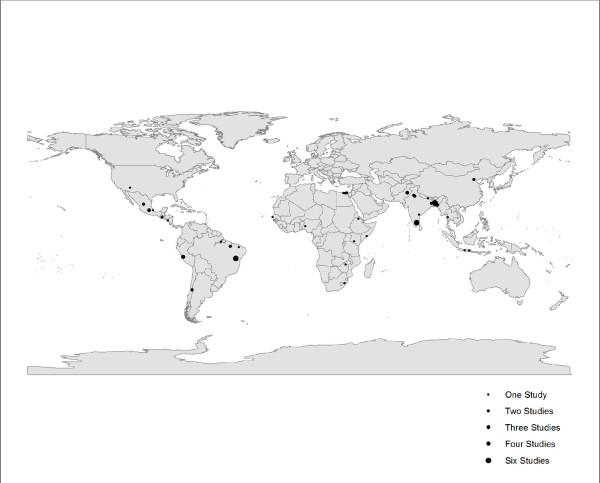
Verification
Claims the paper makes
The claims and statistics of this paper haven’t been checked yet.
Run the check — free, no account needed. It reads the open-access text and checks the sources it cites.
Claims other papers make about this one
Each is checked against this paper’s own text: does it say what the citing paper says it does?
In the citing paper
“Diarrhoea incidence peaks at age 6–11 months and then decreases with age;8 proportionate mortality is highest from age 0–11 months, the ages at which the risk of disease and severe disease also peak.”
From Global burden of childhood pneumonia and diarrhoea (2013) · cites this paper as [8]
Self-check
Percentages, sums and reported differences re-computed from the paper’s own numbers.
The self-check needs the paper’s full text.
Citations
Cites
Maximum Likelihood from Incomplete Data Via the EM Algorithm
Dempster, A. P., Laird, N. M., & Rubin, D. B. (1977) · Journal of the Royal Statistical Society Series B: Statistical Methodology · doi:10.1111/j.2517-6161.1977.tb01600.x · Cited by 50,444
Global, regional, and national causes of child mortality in 2008: a systematic analysis
Black, R. E., Cousens, S. N., Johnson, H. L., Lawn, J. E., Rudan, I., Bassani, D. G., Jha, P., Campbell, H. J., Walker, C. L. F., Cibulskis, R. E., et al. (2010) · The Lancet · doi:10.1016/s0140-6736(10)60549-1 · Cited by 3,062
Self-citationThe global burden of diarrhoeal disease, as estimated from studies published between 1992 and 2000.
Kosek, M. N., Bern, C., & Guerrant, R. L. (2003) · Europe PMC (PubMed Central) · Cited by 1,617
Snyder, J. D., & MERSON, M. H. (1982) · PubMed · Cited by 858
The magnitude of the global problem of diarrhoeal disease: a ten-year update.
Bern, C., Martines, J., Zoysa, I. D., & Glass, R. I. (1992) · Europe PMC (PubMed Central) · Cited by 773
Breastfeeding and the risk for diarrhea morbidity and mortality
Lamberti, L. M., Walker, C. L. F., Noiman, A., Victora, C. G., & Black, R. E. (2011) · BMC Public Health · doi:10.1186/1471-2458-11-s3-s15 · Cited by 660
Self-citationMulti-country analysis of the effects of diarrhoea on childhood stunting
Checkley, W., Buckley, G., Gilman, R. H., Assis, A. M., Guerrant, R. L., Morris, S. S., Mølbak, K., Valentiner-Branth, P., Lanata, C. F., Black, R. E., et al. (2008) · International Journal of Epidemiology · doi:10.1093/ije/dyn099 · Cited by 653
Self-citationMaximum Likelihood Estimation from Incomplete Data
Hartley, H. O. (1958) · Biometrics · doi:10.2307/2527783 · Cited by 602
Beston, G. H. (1992) · Cited by 570
Preventive Zinc Supplementation among Infants, Preschoolers, and Older Prepubertal Children
Brown, K. H., Peerson, J. M., Baker, S. K., & Hess, S. Y. (2009) · Food and Nutrition Bulletin · doi:10.1177/15648265090301s103 · Cited by 309
Cited by
Sorted by citations
Kotloff, K. L., Nataro, J. P., Blackwelder, W. C., Nasrin, D., Farag, T. H., Panchalingam, S., Wu, Y., Sow, S. O., Sur, D., Breiman, R. F., et al. (2013) · The Lancet · doi:10.1016/s0140-6736(13)60844-2 · Cited by 3,560
Global burden of childhood pneumonia and diarrhoea
Walker, C. L. F., Rudan, I., Liu, L., Nair, H., Theodoratou, E., Bhutta, Z. A., O'Brien, K. L., Campbell, H., & Black, R. E. (2013) · The Lancet · doi:10.1016/s0140-6736(13)60222-6 · Cited by 2,356
Self-citationTroeger, C., Blacker, B. F., Khalil, I. A., Rao, P. C., Cao, S., Zimsen, S. R. M., Albertson, S. B., Stanaway, J. D., Deshpande, A., Zegeye, A., et al. (2018) · The Lancet Infectious Diseases · doi:10.1016/s1473-3099(18)30362-1 · Cited by 1,557
Rose, C., Parker, A., Jefferson, B., & Cartmell, E. (2015) · Critical Reviews in Environmental Science and Technology · doi:10.1080/10643389.2014.1000761 · Cited by 1,301
Global prevalence of norovirus in cases of gastroenteritis: a systematic review and meta-analysis
Ahmed, S. M., Hall, A. J., Robinson, A. E., Verhoef, L., Premkumar, P., Parashar, U. D., Koopmans, M., & Lopman, B. A. (2014) · The Lancet Infectious Diseases · doi:10.1016/s1473-3099(14)70767-4 · Cited by 1,115
Metadata
- Authors
- Fischer Walker, C. L., Perin, J., Aryee, M. J., Boschi-Pinto, C., & Black, R. E.
- Affiliations
- Johns Hopkins University (US)
- World Health Organization (CH)
- Venue
- BMC Public Health
- Published
- 2012-03-21
- Volume
- 12
- Issue
- 1
- Pages
- 220-220
- ISSN
- 1471-2458 (ISSN-L)
- PMC
- PMC3323412
- OpenAlex
- W2096394008
- Cited by
- 471
- References
- 17
- Citations by year
- 2026: 8 · 2025: 14 · 2024: 14 · 2023: 21 · 2022: 34 · 2021: 27 · 2020: 30 · 2019: 48 · 2018: 37 · 2017: 50 · 2016: 51 · 2015: 55 · 2014: 33 · 2013: 40 · 2012: 9
- FWCI
- 5.34
- Type
- journal article
- Language
- en
- Open access
- gold
- doi.org
- Licence
- Locations
- BMC Public Health (publishedVersion, cc-by)
- PubMed Central (publishedVersion, cc-by)
- PubMed (publishedVersion)
- DOAJ (DOAJ: Directory of Open Access Journals) (submittedVersion, cc-by-sa)
- Topics
- Health Sciences › Nursing › Nutrition and Dietetics › Child Nutrition and Water Access
- Health Sciences › Medicine › Infectious Diseases › Viral gastroenteritis research and epidemiology
- Health Sciences › Medicine › Pediatrics, Perinatology and Child Health › Global Maternal and Child Health
- Keywords
- childhood diarrhea, diarrhea incidence, low- and middle-income countries, children under five, infant diarrhea, global burden of disease, age-specific incidence, cohort studies
- MeSH terms
- Adolescent, Adult, Child, Child, Preschool, Developing Countries, Diarrhea, Female, Humans, Infant, Infant, Newborn, Male, Middle Aged, Global Health, Cohort Studies, Incidence, Cost of Illness
About these checks
Registry, retraction, Cites and statistics results are computed, not judged, with one exception: a printed reference that no index lists is read once by a model before it counts as a citation error. Claims are extracted by a model and kept only when their quote appears verbatim in the text; each cited source is then checked, with a model’s help, for whether it says what the claim relies on. Those verdicts can be wrong — read the claim’s quote and the cited source before relying on one.
Statistics and arithmetic are recomputed, not judged.
Confidence bands are shown only for fields calibrated on our annotated test set. None is calibrated yet, so no band is shown.
What counts as a claim ›How we measure confidence ›How we check this ›
Are you an author, or do you see a problem with this page? Request a review
