

Impact of social integration on metabolic functions: evidence from a nationally representative longitudinal study of US older adults
Open accessThe DOI matches its Crossref record; 47 of the 47 references it cites were found in a registry or an index.
Abstract
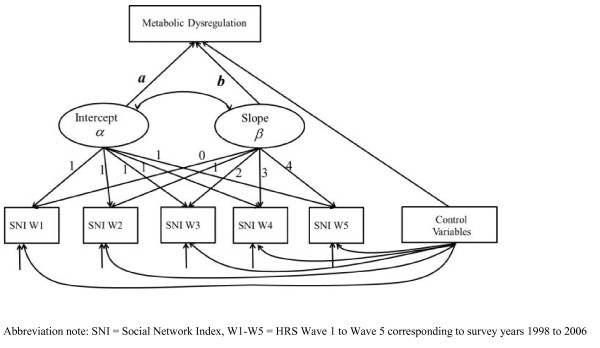
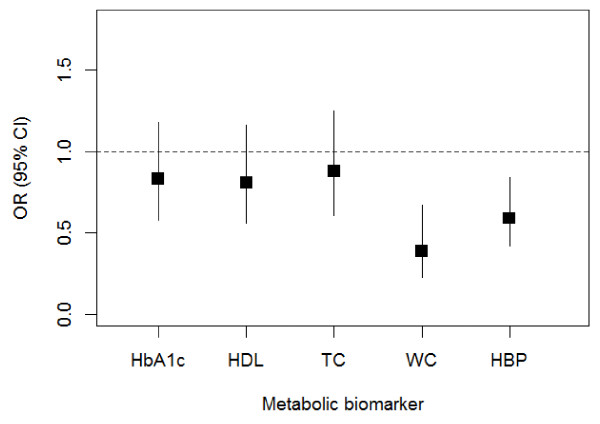
BACKGROUND: Metabolic functions may operate as important biophysiological mechanisms through which social relationships affect health. It is unclear how social embeddedness or the lack thereof is related to risk of metabolic dysregulation. To fill this gap we tested the effects of social integration on metabolic functions over time in a nationally representative sample of older adults in the United States and examined population heterogeneity in the effects. METHODS: Using longitudinal data from 4,323 adults aged over 50 years in the Health and Retirement Study and latent growth curve models, we estimated the trajectories of social integration spanning five waves, 1998-2006, in relation to biomarkers of energy metabolism in 2006. We assessed social integration using a summary index of the number of social ties across five domains. We examined six biomarkers, including total cholesterol, high-density lipoprotein cholesterol, glycosylated hemoglobin, waist circumference, and systolic and diastolic blood pressure, and the summary index of the overall burden of metabolic dysregulation. RESULTS: High social integration predicted significantly lower risks of both individual and overall metabolic dysregulation. Specifically, adjusting for age, sex, race, and body mass index, having four to five social ties reduced the risks of abdominal obesity by 61% (odds ratio [OR] [95% confidence interval {CI}] = 0.39 [0.23, 0.67], p = .007), hypertension by 41% (OR [95% CI] = 0.59 [0.42, 0.84], p = .021), and the overall metabolic dysregulation by 46% (OR [95% CI] = 0.54 [0.40, 0.72], p < .001). The OR for the overall burden remained significant when adjusting for social, behavioral, and illness factors. In addition, stably high social integration had more potent metabolic impacts over time than changes therein. Such effects were consistent across subpopulations and more salient for the younger old (those under age 65), males, whites, and the socioeconomically disadvantaged. CONCLUSIONS: This study addressed important challenges in previous research linking social integration to metabolic health by clarifying the nature and direction of the relationship as it applies to different objectively measured markers and population subgroups. It suggests additional psychosocial and biological pathways to consider in future research on the contributions of social deficits to disease etiology and old-age mortality.
Overview
The claims and statistics of this paper haven’t been checked yet.
Free: it reads the open-access text and checks the first 5 claims that cite a source we can check. Create a free account to check every claim.
Integrity signals
Registry
Cites
Statistics
Figures
Verification
Claims the paper makes
The claims and statistics of this paper haven’t been checked yet.
Free: it reads the open-access text and checks the first 5 claims that cite a source we can check. Create a free account to check every claim.
Claims other papers make about this one
Each is checked against this paper’s own text: does it say what the citing paper says it does?
In the citing paper
“Previous nonexperimental studies using observational data from human subjects tentatively support this proposition by documenting associations between social relationship measures such as social integration and support with biomarkers of inflammation (5,8,18), metabolic syndrome (18,19), and cumulative dysregulation indicated by allostatic load (20).”
From Social relationships and physiological determinants of longevity across the human life span (2016) · cites this paper as [19]
Self-check
Percentages, sums and reported differences re-computed from the paper’s own numbers.
The self-check needs the paper’s full text.
Citations
Cites
Grundy, S. M., Bilheimer, D. W., Chait, A., Clark, L. T., Denke, M. A., Havel, R. J., Hazzard, W. R., Hulley, S. B., Hunninghake, D. B., Kreisberg, R. A., et al. (1993) · JAMA · doi:10.1001/jama.269.23.3015 · Cited by 27,947
Alberti, K. G. M. M., Eckel, R. H., Grundy, S. M., Zimmet, P. Z., Cleeman, J. I., Donato, K. A., Fruchart, J.-C., James, W. P. T., Loria, C. M., & Smith, S. C. (2009) · Circulation · doi:10.1161/circulationaha.109.192644 · Cited by 14,860
Social Relationships and Mortality Risk: A Meta-analytic Review
Holt-Lunstad, J., Smith, T. B., & Layton, J. B. (2010) · PLoS Medicine · doi:10.1371/journal.pmed.1000316 · Cited by 7,272 · cited 1×
“Meta-analyses also suggest that the magnitude of such associations is comparable with that of smoking cessation and exceeds those of many other known risk factors of mortality, such as obesity or physical inactivity [11].”
ResultSocial Relationships and Health
House, J. S., Landis, K. R., & Umberson, D. (1988) · Science · doi:10.1126/science.3399889 · Cited by 7,073 · cited 1×
“Background It has long been believed that the degree to which an individual is embedded in social relations is influential for his or her health and well-being [1-3].”
BackgroundSocial support as a moderator of life stress
Cobb, S. (1976) · Psychosomatic Medicine · doi:10.1097/00006842-197609000-00003 · Cited by 6,936
Ford, E. S., Giles, W. H., & Dietz, W. H. (2002) · JAMA · doi:10.1001/jama.287.3.356 · Cited by 6,698
BERKMAN, L. F., & SYME, S. L. (1979) · American Journal of Epidemiology · doi:10.1093/oxfordjournals.aje.a112674 · Cited by 5,341
From social integration to health: durkheim in the new millennium
Berkman, L. F., Glass, T., Brissette, I., & Seeman, T. E. (2000) · Social Science & Medicine · doi:10.1016/s0277-9536(00)00065-4 · Cited by 4,821
Biobehavioral responses to stress in females: Tend-and-befriend, not fight-or-flight.
Taylor, S. E., Klein, L. C., Lewis, B. P., Gruenewald, T. L., Gurung, R. A. R., & Updegraff, J. A. (2000) · Psychological Review · doi:10.1037/0033-295x.107.3.411 · Cited by 3,308 · cited 1×
“The larger residual effect of social integration for males, after the adjustment of an array of social and behavioral factors, is consistent with a previous study that found greater male inflammatory response to social isolation in US adults [14] and may reflect sex-specific stress reactivity patterns that evolved as…”
ResultUchino, B. N., Cacioppo, J. T., & Kiecolt-Glaser, J. K. (1996) · Psychological Bulletin · doi:10.1037/0033-2909.119.3.488 · Cited by 2,727 · cited 1×
“Social isolation, or the lack of social integration and support, has been increasingly related to physiological functioning in general [12] and metabolic disorders in particular, including higher blood pressure (BP) [20], higher waist to hip ratio [21], glucose intolerance [22], lipid abnormalities, and higher prevale…”
BackgroundSocial isolation, loneliness, and all-cause mortality in older men and women
Steptoe, A., Shankar, A., Demakakos, P., & Wardle, J. (2013) · Proceedings of the National Academy of Sciences · doi:10.1073/pnas.1219686110 · Cited by 2,503 · cited 6×
“Third, the finding that the metabolic influence of social connections cannot be completely explained by social and health behaviors included in the study or other psychosocial processes in previous studies mentioned above [7,10] suggests that social connections exert an independent effect that needs further explanatio…”
BackgroundInfluentialYudkin, J. S., Stehouwer, C. D. A., Emeis, J. J., & Coppack, S. W. (1999) · Arteriosclerosis, Thrombosis, and Vascular Biology · doi:10.1161/01.atv.19.4.972 · Cited by 2,465 · cited 1×
“Increased physiological stress response due to a paucity of social ties, as indicated by increased sympathetic nervous system activities, prolonged activation of the hypothalamic-pituitary-adrenal axis, and increased inflammation, plays an important role in the development and exacerbation of hypertension [28] and is…”
BackgroundHandbook of Multivariate Experimental Psychology
(1988) · Springer eBooks · doi:10.1007/978-1-4613-0893-5 · Cited by 1,956
Malik, S., Wong, N. D., Franklin, S. S., Kamath, T. V., L’Italien, G. J., Pio, J. R., & Williams, G. R. (2004) · Circulation · doi:10.1161/01.cir.0000140677.20606.0e · Cited by 1,848
Allostatic load as a marker of cumulative biological risk: MacArthur studies of successful aging
Seeman, T. E., McEwen, B. S., Rowe, J. W., & Singer, B. H. (2001) · Proceedings of the National Academy of Sciences · doi:10.1073/pnas.081072698 · Cited by 1,385 · cited 2×
“Increased physiological stress response due to a paucity of social ties, as indicated by increased sympathetic nervous system activities, prolonged activation of the hypothalamic-pituitary-adrenal axis, and increased inflammation, plays an important role in the development and exacerbation of hypertension [28] and is…”
BackgroundSocial Relationships and Health Behavior Across the Life Course
Umberson, D., Crosnoe, R., & Reczek, C. (2010) · Annual Review of Sociology · doi:10.1146/annurev-soc-070308-120011 · Cited by 1,226 · cited 1×
“In addition to addressing the existing gaps summarized above, this study of older adults facilitates the understanding of the relationship of social factors to aging-related disease, because certain social life events, such as loss of social ties, are more prevalent in late life [33], and the elderly may be more vulne…”
BackgroundCorrelation of Glucose Regulation and Hemoglobin AIcin Diabetes Mellitus
Koenig, R. J., Peterson, C. M., Jones, R. L., Saudek, C., Lehrman, M., & Cerami, A. (1976) · New England Journal of Medicine · doi:10.1056/nejm197608192950804 · Cited by 1,175
Maier, S. F., & Watkins, L. R. (1998) · Psychological Review · doi:10.1037/0033-295x.105.1.83 · Cited by 1,130 · cited 1×
“The possibility of a reverse causation cannot be ruled out, because physiological stress response, part of the pathogenesis of metabolic disorders, can increase such illness behaviors as withdrawal from social interactions [32].”
BackgroundSOCIAL SUPPORT AND MORTALITY IN AN ELDERLY COMMUNITY POPULATION1
BLAZER, D. G. (1982) · American Journal of Epidemiology · doi:10.1093/oxfordjournals.aje.a113351 · Cited by 1,013
Social Isolation and Health, with an Emphasis on Underlying Mechanisms
Cacioppo, J. T., & Hawkley, L. C. (2003) · Perspectives in Biology and Medicine · doi:10.1353/pbm.2003.0049 · Cited by 887
Dynamic but Structural Equation Modeling of Repeated Measures Data
McArdle, J. J. (1988) · Handbook of Multivariate Experimental Psychology · doi:10.1007/978-1-4613-0893-5_17 · Cited by 643
Social Isolation and Health, with an Emphasis on Underlying Mechanisms
Cacioppo, J. T., & Hawkley, L. C. (2003) · Perspectives in biology and medicine · doi:10.1353/pbm.2003.0063 · Cited by 624
Seeman, T. E., Crimmins, E., Huang, M.-H., Singer, B., Bucur, A., Gruenewald, T., Berkman, L. F., & Reuben, D. B. (2004) · Social Science & Medicine · doi:10.1016/s0277-9536(03)00402-7 · Cited by 521 · cited 1×
“The same rationale was employed in previous research that suggested that those on medications that actually succeed in lowering BP or cholesterol had lowered levels of these parameters and hence less physiological dysregulation [37].”
MethodFord, E. S. (2004) · Atherosclerosis · doi:10.1016/j.atherosclerosis.2003.12.022 · Cited by 501
Eng, P. M., Rimm, E. B., Fitzmaurice, G., & Kawachi, I. (2002) · American Journal of Epidemiology · doi:10.1093/aje/155.8.700 · Cited by 492 · cited 1×
“Much evidence has accrued in recent research on the strong associations between social integration and a variety of morbidity and mortality outcomes, such as coronary heart disease [4], malignancies [5], memory loss [6], overall mortality [7], and mortality from vascular diseases [8,9] and cancer [10].”
BackgroundLoneliness is a unique predictor of age-related differences in systolic blood pressure.
Hawkley, L. C., Masi, C. M., Berry, J. D., & Cacioppo, J. T. (2006) · Psychology and Aging · doi:10.1037/0882-7974.21.1.152 · Cited by 488 · cited 1×
“Increased physiological stress response due to a paucity of social ties, as indicated by increased sympathetic nervous system activities, prolonged activation of the hypothalamic-pituitary-adrenal axis, and increased inflammation, plays an important role in the development and exacerbation of hypertension [28] and is…”
BackgroundA Path Model of Chronic Stress, the Metabolic Syndrome, and Coronary Heart Disease
Vitaliano, P. P., Scanlan, J. M., Zhang, J., Savage, M. V., Hirsch, I. B., & Siegler, I. C. (2002) · Psychosomatic Medicine · doi:10.1097/00006842-200205000-00006 · Cited by 481
Ertel, K. A., Glymour, M. M., & Berkman, L. F. (2008) · American Journal of Public Health · doi:10.2105/ajph.2007.113654 · Cited by 395
Lack of social support and incidence of coronary heart disease in middle-aged Swedish men.
Orth-Gomér, K., Rosengren, A., & Wilhelmsen, L. (1993) · Psychosomatic Medicine · doi:10.1097/00006842-199301000-00007 · Cited by 383
Social Isolation and Adult Mortality: The Role of Chronic Inflammation and Sex Differences
Yang, Y. C., McClintock, M. K., Kozloski, M., & Li, T. (2013) · Journal of Health and Social Behavior · doi:10.1177/0022146513485244 · Cited by 222 · cited 5×
“Third, the finding that the metabolic influence of social connections cannot be completely explained by social and health behaviors included in the study or other psychosocial processes in previous studies mentioned above [7,10] suggests that social connections exert an independent effect that needs further explanatio…”
BackgroundResultInfluentialSelf-citationHypercortisolemic depression is associated with the metabolic syndrome in late-life
Vogelzangs, N., Suthers, K., Ferrucci, L., Simonsick, E. M., Ble, A., Schrager, M., Bandinelli, S., Lauretani, F., Giannelli, S. V., & Penninx, B. W. (2007) · Psychoneuroendocrinology · doi:10.1016/j.psyneuen.2006.11.009 · Cited by 218
Socioeconomic Status, Structural and Functional Measures of Social Support, and Mortality
Stringhini, S., Berkman, L., Dugravot, A., Ferrie, J. E., Marmot, M., Kivimaki, M., & Singh-Manoux, A. (2012) · American Journal of Epidemiology · doi:10.1093/aje/kwr461 · Cited by 206 · cited 3×
“Much evidence has accrued in recent research on the strong associations between social integration and a variety of morbidity and mortality outcomes, such as coronary heart disease [4], malignancies [5], memory loss [6], overall mortality [7], and mortality from vascular diseases [8,9] and cancer [10].”
BackgroundWing, R. R., Matthews, K. A., Kuller, L. H., Meilahn, E. N., & Plantinga, P. (1991) · Arteriosclerosis and Thrombosis: A Journal of Vascular Biology · doi:10.1161/01.atv.11.5.1250 · Cited by 203
Yang, Y., & Kozloski, M. (2011) · The Journals of Gerontology: Series A · doi:10.1093/gerona/glr003 · Cited by 202 · cited 1×
“And the existence or clustering of multiple risk factors for a given individual may present distinct metabolic challenges [42].”
BackgroundSelf-citationHypothalamic Origin of the Metabolic Syndrome X
BJÖRNTORP, P., & ROSMOND, R. (1999) · Annals of the New York Academy of Sciences · doi:10.1111/j.1749-6632.1999.tb07803.x · Cited by 196
The Biology of Human Longevity: Inflammation, Nutrition, and Aging in the Evolution of Lifespans
Finch, C. E. (2007) · LA Referencia (Red Federada de Repositorios Institucionales de Publicaciones Científicas) · Cited by 194
Modeling Intraindividual Variability With Repeated Measures Data: Methods and Applications
(2013) · Psychology Press eBooks · doi:10.4324/9781410604477 · Cited by 184
Sex, Gender, Genetics, and Health
Short, S. E., Yang, Y. C., & Jenkins, T. M. (2013) · American Journal of Public Health · doi:10.2105/ajph.2013.301229 · Cited by 148
Self-citationRWing, R., AMatthews, K., HKuller, L., NMeilahn, E., & PPlantinga (1991) · Arteriosclerosis and Thrombosis A Journal of Vascular Biology · Cited by 107
Ofstedal, M. B., Weir, D., & Chen, K.-T. (. (2011) · doi:10.7826/isr-um.06.585031.001.05.0025.2011 · Cited by 80
Social Relations and the Metabolic Syndrome in Middle-Aged Swedish Women
Horsten, M., Mittleman, M. A., Wamala, S. P., Schenck-Gustafsson, K., & Orth-Gomér, K. (1999) · European Journal of Cardiovascular Risk · doi:10.1177/204748739900600606 · Cited by 64
Structural Equation Modeling of Repeated Measures Data: Latent Curve Analysis
Hershberger, S. L., & Moskowitz, D. S. (2013) · Psychology Press eBooks · doi:10.4324/9781410604477-8 · Cited by 57
Ikeda, A., Kawachi, I. I., Iso, H., Inoue, M., Tsugane, S., & JPHC Study Group (2009) · Journal of Epidemiology & Community Health · doi:10.1136/jech.2009.090613 · Cited by 46
Penwell, L. M., & Larkin, K. T. (2010) · Health Psychology Review · doi:10.1080/17437190903427546 · Cited by 39 · cited 1×
“Much evidence has accrued in recent research on the strong associations between social integration and a variety of morbidity and mortality outcomes, such as coronary heart disease [4], malignancies [5], memory loss [6], overall mortality [7], and mortality from vascular diseases [8,9] and cancer [10].”
BackgroundChange of Sex Gaps in Total and Cause-Specific Mortality Over the Life Span in the United States
Yang, Y., & Kozloski, M. (2012) · Annals of Epidemiology · doi:10.1016/j.annepidem.2011.06.006 · Cited by 38
Self-citationPopulation heterogeneity in the impact of body weight on mortality
Zheng, H., & Yang, Y. (2012) · Social Science & Medicine · doi:10.1016/j.socscimed.2012.05.013 · Cited by 17
Self-citationStress coping and social support in glucose tolerance abnormality
Fukunishi, I., Akimoto, M., Horikawa, N., Shirasaka, K., & Yamazaki, T. (1998) · Journal of Psychosomatic Research · doi:10.1016/s0022-3999(98)00029-4 · Cited by 16
Research works printed but not linked: 2
- Crimmins E Faul J Kim JK Guyer H Langa K Ofstedal MB HRS documentation report: documentation of biomarkers in the 2006 and 2008 health and retirement study 2013
- Hobbs F Stoops N Demographic trends in the 20th century 2002 Washington, DC: U.S. Government Printing Office
Cited by
Social relationships and physiological determinants of longevity across the human life span
Yang, Y. C., Boen, C., Gerken, K., Li, T., Schorpp, K., & Harris, K. M. (2016) · Proceedings of the National Academy of Sciences · doi:10.1073/pnas.1511085112 · Cited by 751
Self-citationShiovitz‐Ezra, S., & Parag, O. (2018) · Aging & Mental Health · doi:10.1080/13607863.2018.1488942 · Cited by 246
Psychosocial Risk Factors for Hypertension: an Update of the Literature
Cuffee, Y., Ogedegbe, C., Williams, N. J., Ogedegbe, G., & Schoenthaler, A. (2014) · Current Hypertension Reports · doi:10.1007/s11906-014-0483-3 · Cited by 182
“A high level of social integration, defined as having four to five social ties across five domains of social activities (marital status; contact with parents, children, and neighbors; and volunteer activities) was associated with a 41 % decreased odds of developing elevated BP among participants in the Health and Reti…”
Gender and Social Isolation across the Life Course
Umberson, D., Lin, Z., & Cha, H. (2022) · Journal of Health and Social Behavior · doi:10.1177/00221465221109634 · Cited by 164
Religious and Spiritual Coping and Risk of Incident Hypertension in the Black Women's Health Study
Cozier, Y. C., Yu, J., Wise, L. A., VanderWeele, T. J., Balboni, T. A., Argentieri, M. A., Rosenberg, L. A., Palmer, J. R., & Shields, A. E. (2018) · Annals of Behavioral Medicine · doi:10.1093/abm/kay001 · Cited by 130
Metadata
- Authors
- Yang, Y. C., Li, T., & Ji, Y.
- Affiliations
- UNC Lineberger Comprehensive Cancer Center (US)
- Renmin University of China (CN)
- University of North Carolina at Chapel Hill (US)
- Corresponding author
- Yang, Yang Claire
- Venue
- BMC Public Health
- Published
- 2013-12
- Volume
- 13
- Issue
- 1
- Pages
- 1210-1210
- ISSN
- 1471-2458 (ISSN-L)
- PMC
- PMC3923581
- OpenAlex
- W2172279151
- Cited by
- 68
- References
- 46
- Citations by year
- 2026: 4 · 2025: 3 · 2024: 8 · 2023: 9 · 2022: 7 · 2021: 6 · 2020: 2 · 2019: 7 · 2018: 9 · 2017: 3 · 2016: 4 · 2015: 3 · 2014: 1
- FWCI
- 3.04
- Type
- journal article
- Language
- en
- Open access
- gold
- doi.org
- Licence
- Locations
- BMC Public Health (publishedVersion, cc-by)
- Europe PMC (PubMed Central) (publishedVersion, cc-by)
- PubMed Central (publishedVersion, cc-by)
- PubMed (publishedVersion)
- Carolina Digital Repository (University of North Carolina at Chapel Hill) (submittedVersion)
- UNC Libraries
- Funders
- National Institutes of Health (2r24hd050924-06)
- University of North Carolina at Chapel Hill (R24 HD050924)
- National Institute on Aging (K01AG036745)
- Lineberger Comprehensive Cancer Center, University of North Carolina at Chapel Hill
- Eunice Kennedy Shriver National Institute of Child Health and Human Development (R24 HD-050924)
- Carolina Population Center, University of North Carolina at Chapel Hill (R24HD050924, HD050924)
- Topics
- Social Sciences › Health › Health disparities and outcomes
- Health Sciences › Medicine › Endocrinology, Diabetes and Metabolism › Diabetes, Cardiovascular Risks, and Lipoproteins
- Health Sciences › Medicine › Endocrinology, Diabetes and Metabolism › Adipokines, Inflammation, and Metabolic Diseases
- Keywords
- social integration, social ties, metabolic dysfunction, older adults, abdominal obesity, hypertension, social embeddedness, population heterogeneity, social relationships and health, socioeconomic deprivation, Health and Retirement Study, latent growth curve models, young-old, sex differences, racial differences, cholesterol, HbA1c, waist circumference, blood pressure
- MeSH terms
- Aged, Blood Pressure, Cholesterol, Energy Metabolism, Female, Glycated Hemoglobin, Humans, Interpersonal Relations, Cholesterol, HDL, Longitudinal Studies, Male, Metabolic Diseases, Middle Aged, Risk Factors, United States, Biomarkers, Risk Assessment, Waist Circumference
About these checks
Registry, retraction, Cites and statistics results are computed, not judged, with one exception: a printed reference that no index lists is read once by a model before it counts as a citation error. Claims are extracted by a model and kept only when their quote appears verbatim in the text; each cited source is then checked, with a model’s help, for whether it says what the claim relies on. Those verdicts can be wrong — read the claim’s quote and the cited source before relying on one.
Statistics and arithmetic are recomputed, not judged.
Confidence bands are shown only for fields calibrated on our annotated test set. None is calibrated yet, so no band is shown.
What counts as a claim ›How we measure confidence ›How we check this ›
Are you an author, or do you see a problem with this page? Request a review
Data sources
Bibliographic data: Semantic Scholar, OpenAlex, Crossref.
Contains information from the Semantic Scholar Academic Graph Datasets, made available under the ODC Attribution License (ODC-BY 1.0).
Semantic Scholar’s data is described in: Kinney, R., et al. (2023). The Semantic Scholar Open Data Platform. arXiv:2301.10140.
