

Exploring the association between short/long preceding birth intervals and child mortality: using reference birth interval children of the same mother as comparison
Open accessThe DOI matches its Crossref record; 16 of the 16 references it cites were found in a registry or an index.
Abstract
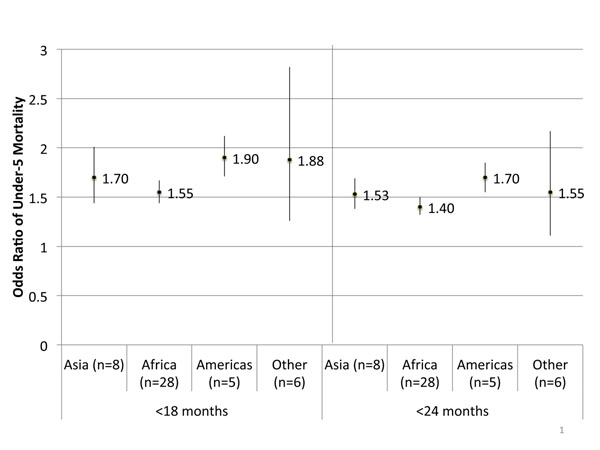
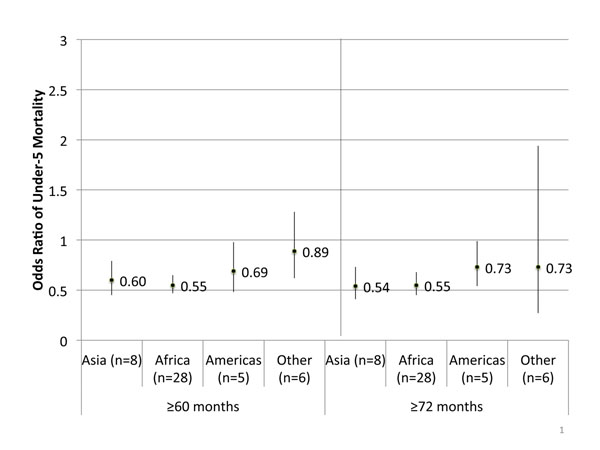
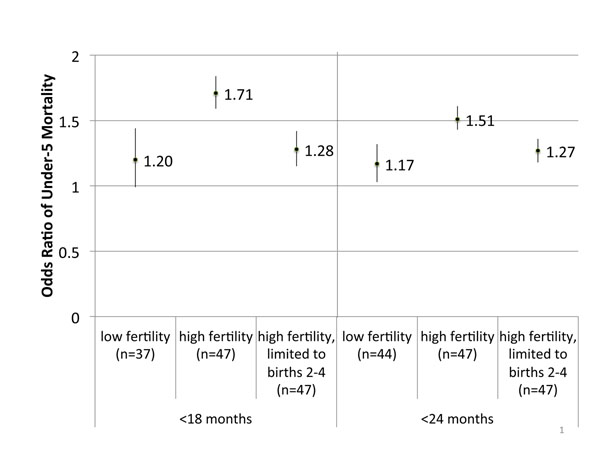
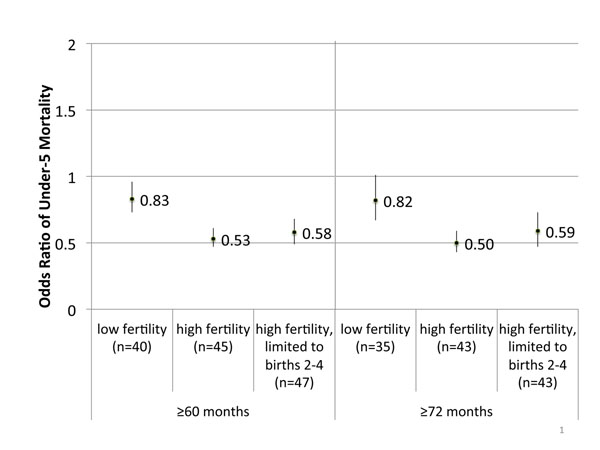
BACKGROUND: This study used data from recent Demographic and Health Surveys (DHS) to examine the impact of short or long preceding birth intervals on neonatal and under-five mortality. In order to minimize the effect of selection issues, we examined child mortality outcomes of the same mother, comparing short or long interval births against births with what had previously been considered optimal intervals. METHODS: We analyzed 47 DHS datasets from low- and middle-income countries. For each dataset, we compared neonatal and under-five mortality of short preceding interval births (<18 months, <24 months) to reference interval births (24-<60 months) of a mother, using conditional logistic regression matching on the mother. We also conducted the same matched analysis for long (≥ 60 months, ≥ 72 months) preceding interval births. These associations were then meta-analyzed. We also stratified the analyses by mothers' completed fertility (fertility at end of reproductive period) to assess whether maternal characteristics highly correlated with completed fertility modify the association between birth interval and child mortality. RESULTS: Children with shorter preceding intervals had increased odds of both neonatal (<24 months, OR: 1.61, 95% CI: 1.52-1.70) and under-five mortality (<24 months, OR: 1.48, 95% CI: 1.40-1.56). When the associations were stratified by the mothers' completed fertility, the impact of short intervals was greatly reduced or eliminated for low fertility mothers. In contrast, mortality associations became stronger for children of high fertility mothers. However, when the births of high fertility mothers were limited to birth orders 2-4, the associations were comparable to those of low fertility mothers. Longer preceding birth intervals had lower odds of mortality than reference intervals (i.e. under-5 mortality for ≥ 60 months, OR 0.59, 95% CI: 0.52-0.67). This effect was also mediated by mothers' completed fertility; there was a strong protective effect of longer birth intervals for the high fertility mothers but not for low fertility mothers. CONCLUSIONS: These analyses reproduced findings reported in previous literature that shorter birth intervals are associated with higher child mortality. However the negative impact of short birth intervals may only occur in high parity births. Reproductive health interventions that seek to lengthen birth intervals may have larger impact by targeting women with high parity. This finding is consistent with the concept of maternal depletion as the underlying cause of increased adverse child outcomes associated with shorter birth intervals.
Overview
The claims and statistics of this paper haven’t been checked yet.
Free: it reads the open-access text and checks the first 5 claims that cite a source we can check. Create a free account to check every claim.
Integrity signals
Registry
Cites
Statistics
Figures
Verification
Claims the paper makes
The claims and statistics of this paper haven’t been checked yet.
Free: it reads the open-access text and checks the first 5 claims that cite a source we can check. Create a free account to check every claim.
Claims other papers make about this one
Each is checked against this paper’s own text: does it say what the citing paper says it does?
In the citing paper
“In a review of seven studies (N = 1,140,210), short intervals between pregnancies bore an increased risk for any ASD (OR 1.90, 95% CI 1.16–3.09) with the association strongest for core autistic disorder (OR 2.62, 95% CI 1.53–4.50) [158].”
From The contribution of environmental exposure to the etiology of autism spectrum disorder (2019) · cites this paper as [158]
Self-check
Percentages, sums and reported differences re-computed from the paper’s own numbers.
The self-check needs the paper’s full text.
Citations
Cites
Birth Spacing and Risk of Adverse Perinatal Outcomes: A Meta-analysis
Conde-Agudelo, A., Rosas-Bermúdez, A., & Kafury-Goeta, A. C. (2006) · JAMA · doi:10.1001/jama.295.15.1809 · Cited by 1,103
Birth Spacing and Risk of Adverse Perinatal Outcomes: A Meta-Analysis
&NA; (2007) · Survey of Anesthesiology · doi:10.1097/01.sa.0000267038.80927.32 · Cited by 670
Rutstein, S. O. (2005) · International Journal of Gynecology & Obstetrics · doi:10.1016/j.ijgo.2004.11.012 · Cited by 665
When to use the odds ratio or the relative risk?
Schmidt, C. O., & Kohlmann, T. (2008) · International Journal of Public Health · doi:10.1007/s00038-008-7068-3 · Cited by 427 · cited 1×
“Furthermore, odds ratios tend to report larger magnitude associations than relative risks, a more easily interpretable measure of association.[14] While we do not expect the effect sizes to differ widely because of the rarity of the mortality outcomes, even the statistically significant associations that remained may…”
BackgroundA new definition of maternal depletion syndrome.
Winkvist, A., Rasmussen, K. M., & Habicht, J. P. (1992) · American Journal of Public Health · doi:10.2105/ajph.82.5.691 · Cited by 324
Davanzo, J., Hale, L., Razzaque, A., & Rahman, M. (2008) · Population Studies · doi:10.1080/00324720802022089 · Cited by 178 · cited 1×
“Short and long preceding birth intervals, or time between a birth and the subsequent birth, have previously been linked to adverse child outcomes [1-5].”
BackgroundEffect of interpregnancy interval on adverse perinatal outcomes — a national study
Grisaru-Granovsky, S., Gordon, E.-S., Haklai, Z., Samueloff, A., & Schimmel, M. M. (2009) · Contraception · doi:10.1016/j.contraception.2009.06.006 · Cited by 163 · cited 1×
“Short and long preceding birth intervals, or time between a birth and the subsequent birth, have previously been linked to adverse child outcomes [1-5].”
BackgroundBirth Intervals and Perinatal Health: An Investigation of Three Hypotheses
Miller, J. E. (1991) · Family Planning Perspectives · doi:10.2307/2135451 · Cited by 129 · cited 2×
“These findings seem to be consistent with the theory that maternal depletion is responsible for the higher mortality risks associated with short birth spacing.[6,7] Low fertility mothers may have better nutritional status and access to care, hence short birth intervals may not deplete the mother’s nutritional resource…”
BackgroundResultEffect of the interval between pregnancies on perinatal outcomes among white and black women
Zhu, B., Haines, K. M., Le, T., McGrath-Miller, K., & Boulton, M. L. (2001) · American Journal of Obstetrics and Gynecology · doi:10.1067/mob.2001.118307 · Cited by 122 · cited 1×
“For long intervals, a woman’s reproductive capacity may decline and return to the primiparous state if birth intervals are overly long [8].”
Background
Cited by
Stillbirths: rates, risk factors, and acceleration towards 2030
Lawn, J. E., Blencowe, H., Waiswa, P., Amouzou, A., Mathers, C., Hogan, D., Flenady, V., Frøen, J. F., Qureshi, Z. U., Calderwood, C., et al. (2016) · The Lancet · doi:10.1016/s0140-6736(15)00837-5 · Cited by 1,778
The contribution of environmental exposure to the etiology of autism spectrum disorder
Bölte, S., Girdler, S., & Marschik, P. B. (2019) · Cellular and Molecular Life Sciences · doi:10.1007/s00018-018-2988-4 · Cited by 509
Adding It Up: Investing in Sexual and Reproductive Health 2019
Guttmacher Institute, Sully, E. A., Biddlecom, A., Darroch, J. E., Riley, T., Ashford, L. S., Lince-Deroche, N., Firestein, L., & Murro, R. (2020) · doi:10.1363/2020.31593 · Cited by 412
International Journal of Collaborative Research on Internal Medicine & Public Health
Valdivia, J. R. M. (2021) · Journal of Womens Health Issues and Care · Cited by 300
Heller, C., Balls-Berry, J. E., Nery, J. D., Erwin, P. J., Littleton, D., Kim, M., & Kuo, W. P. (2014) · Contemporary Clinical Trials · doi:10.1016/j.cct.2014.08.004 · Cited by 290
Adding it up: The costs and benefits of investing in sexual and reproductive health 2014.
Singh, S. D., Darroch, J. E., & Ashford, L. S. (2014) · Cited by 373
Moore, Z., Pfitzer, A., Gubin, R., Charurat, E., Elliott, L., & Croft, T. (2015) · Contraception · doi:10.1016/j.contraception.2015.03.007 · Cited by 211
“The benefits of family planning accrue to women themselves [5], their offspring [6] [7] [8] and society [9].”
BackgroundWhen and Where Birth Spacing Matters for Child Survival: An International Comparison Using the DHS
Molitoris, J., Barclay, K. J., & Kolk, M. (2019) · Demography · doi:10.1007/s13524-019-00798-y · Cited by 139
“Whenwe compared regions in terms of the percentage change in infant mortality associated with increasing birth intervals from 12 to 24 months in length, the smallest relative improvements in mortality were seen in the populations of Western, Middle, and Eastern Africa.”
BackgroundResultInfluentialChakraborty, N. M., Fry, K., Behl, R., & Longfield, K. (2016) · Global Health Science and Practice · doi:10.9745/ghsp-d-15-00384 · Cited by 153
Sartorius, B. K. D., & Sartorius, K. (2014) · Population Health Metrics · doi:10.1186/s12963-014-0029-6 · Cited by 125
Zhang, A., Franklin, C., Currin-McCulloch, J. A., Park, S., & Kim, J. (2017) · Journal of Behavioral Medicine · doi:10.1007/s10865-017-9888-1 · Cited by 148
Pfitzer, A., Mackenzie, D., Blanchard, H., Hyjazi, Y., Kumar, S., Kassa, S. L., Marinduque, B., Mateo, M. G., Mukarugwiro, B., Ngabo, F., et al. (2015) · International Journal of Gynecology & Obstetrics · doi:10.1016/j.ijgo.2015.03.008 · Cited by 95
Prenatal and Infancy Nurse Home Visiting Effects on Mothers: 18-Year Follow-up of a Randomized Trial
Olds, D. L., Kitzman, H., Anson, E., Smith, J. A., Knudtson, M. D., Miller, T., Cole, R., Hopfer, C., & Conti, G. (2019) · Pediatrics · doi:10.1542/peds.2018-3889 · Cited by 90
Dulli, L., Eichleay, M. A., Rademacher, K. H., Sortijas, S., & Nsengiyumva, T. (2016) · Global Health Science and Practice · doi:10.9745/ghsp-d-15-00291 · Cited by 83
The Metabolic Ghetto: An Evolutionary Perspective on Nutrition, Power Relations and Chronic Disease
Wells, J. C. K. (2016) · Cambridge University Press eBooks · doi:10.1017/cbo9780511972959 · Cited by 76
Dehingia, N., Dixit, A., Averbach, S., Choudhry, V., Dey, A., Chandurkar, D., Nanda, P., Silverman, J. G., & Raj, A. (2019) · Reproductive Health · doi:10.1186/s12978-019-0844-0 · Cited by 84
“Improving the use of modern contraceptives has potential to reduce unintended pregnancy and short inter-pregnancy intervals, which in turn can lead to reduction in adverse health consequences for mothers and infants [2, 3].”
BackgroundAsif, M. F., Pervaiz, Z., Afridi, J. R., Safdar, R., Abid, G., & Lassi, Z. S. (2022) · BMC Pediatrics · doi:10.1186/s12887-021-03076-2 · Cited by 70
Bitew, F. H., Nyarko, S. H., Potter, L. B., & Sparks, C. S. (2020) · Genus · doi:10.1186/s41118-020-00106-2 · Cited by 75
Moucheraud, C., Owen, H., Singh, N., Ng, C., Requejo, J. H., Lawn, J. E., & Berman, P. (2016) · BMC Public Health · doi:10.1186/s12889-016-3401-6 · Cited by 70
Chou, V. B., Friberg, I. K., Christian, M., Walker, N., & Perry, H. B. (2017) · Journal of Global Health · doi:10.7189/jogh.07.020401 · Cited by 53
Self-citationNjuguna, C. K., Jambai, A., Chimbaru, A., Nordström, A., Conteh, R., Latt, A., O-Tipo, S., Musoke, R., Githuku, J. N., Yoti, Z., et al. (2019) · BMC Public Health · doi:10.1186/s12889-019-6636-1 · Cited by 62
Lu, C., & Montague, B. (2015) · Early Childhood Education Journal · doi:10.1007/s10643-015-0730-5 · Cited by 91
Stover, J., & Winfrey, W. L. (2017) · BMC Public Health · doi:10.1186/s12889-017-4740-7 · Cited by 56
Damtie, Y., Kefale, B., Yalew, M., Arefaynie, M., & Adane, B. (2021) · PLoS ONE · doi:10.1371/journal.pone.0246348 · Cited by 55
Islam, M. Z., Billah, M. A., Islam, M. M., Rahman, M., & Khan, M. N. (2022) · Journal of Global Health · doi:10.7189/jogh.12.04070 · Cited by 59
Perin, J., & Walker, N. (2015) · Global Health Action · doi:10.3402/gha.v8.29724 · Cited by 51
“# 2015 Jamie Perin and Neff Walker.”
MethodInfluentialSelf-citationDagnew, G. W., Asresie, M. B., Fekadu, G. A., & Gelaw, Y. M. (2020) · BMC Public Health · doi:10.1186/s12889-020-08802-6 · Cited by 53
Pradhan, E., Canning, D., Shah, I., Puri, M. C., Pearson, E., Thapa, K., Bajracharya, L., Maharjan, M., Maharjan, D. C., Bajracharya, L., et al. (2019) · Reproductive Health · doi:10.1186/s12978-019-0738-1 · Cited by 50
on behalf of the MenSS Trial Group, Webster, R., Michie, S., Estcourt, C. S., Gerressu, M., & Bailey, J. (2015) · Translational Behavioral Medicine · doi:10.1007/s13142-015-0338-8 · Cited by 53
A New Look at Care in Pregnancy: Simple, Effective Interventions for Neglected Populations
Hodgins, S., Tielsch, J. M., Rankin, K., Robinson, A. B., Kearns, A. D., & Caglia, J. M. (2016) · PLoS ONE · doi:10.1371/journal.pone.0160562 · Cited by 51
“In another review published at the same time[335] meta-analysis was done based on 47 DHS surveys with results similar overall to the review above.”
MethodLiu, A., Ho, F. K. W., Chan, L. K., Ng, J. Y., Li, S. L., Chan, G., Leung, T. F., & Ip, P. (2017) · Journal of Paediatrics and Child Health · doi:10.1111/jpc.13693 · Cited by 42
Nisha, M. K., Alam, A., Islam, M. T., Huda, T. M., & Raynes‐Greenow, C. H. (2019) · BMJ Open · doi:10.1136/bmjopen-2018-024392 · Cited by 44
“95) compared with the birth interval of 24 to <60 months.(23) The inconsistency in findings could be attributed to methodological differences in both the reference category (36–59 vs 24 to <60 months) of the main exposure variable and the difference in the outcome variable (early neonatal mortality vs neonatal mortali…”
BackgroundResultTesfaye, B., Atique, S., Elias, N., Dibaba, L., Syed-Abdul, S., & Kebede, M. M. (2016) · Computer Methods and Programs in Biomedicine · doi:10.1016/j.cmpb.2016.11.013 · Cited by 40
The Infertility Trap: The Fertility Costs of Group-Living in Mammalian Social Evolution
Dunbar, R., & Shultz, S. (2021) · Frontiers in Ecology and Evolution · doi:10.3389/fevo.2021.634664 · Cited by 48
Swaminathan, A., Fell, D. B., Regan, A. K., WALKER, M. C., & Corsi, D. J. (2019) · The Lancet Global Health · doi:10.1016/s2214-109x(19)30458-9 · Cited by 38
Nausheen, S., Bhura, M., Hackett, K. M., Hussain, I., Shaikh, Z., Rizvi, A., Ansari, U., Canning, D., Shah, I., & Soofi, S. B. (2021) · BMJ Open · doi:10.1136/bmjopen-2020-043786 · Cited by 34
Shifti, D. M., Chojenta, C., Holliday, E. G., & Loxton, D. J. (2021) · BMJ Open · doi:10.1136/bmjopen-2020-047892 · Cited by 45
Islam, M., Usman, M., Mahmood, A., Abbasi, A. A., & Song, O.-Y. (2020) · International Journal of Distributed Sensor Networks · doi:10.1177/1550147720928897 · Cited by 33
Overview and Introduction to Autism Spectrum Disorder (ASD)
Al-Dewik, N. I. E., Al‐Jurf, R., Styles, M., Tahtamouni, S., Al‐Sharshani, D., Alsharshani, M., Ahmad, A. I., Khattab, A., Rifai, H. A., & Qoronfleh, M. W. (2020) · Advances in neurobiology · doi:10.1007/978-3-030-30402-7_1 · Cited by 45
Srivastava, S., Upadhyay, S. K., Chauhan, S., & Alagarajan, M. (2021) · BMC Public Health · doi:10.1186/s12889-021-11569-z · Cited by 37
“For high-fertility moms, nutritional status and access to treatment may be impacted from the outset [14, 15].”
BackgroundGetaneh, T., Nigussie, A. A., Hiyaru, T., & Fenta, S. L. (2021) · Scientific Reports · doi:10.1038/s41598-021-93613-x · Cited by 36
Demsash, A. W., Chereka, A. A., Walle, A. D., Kassie, S. Y., Bekele, F., & Bekana, T. (2023) · PLoS ONE · doi:10.1371/journal.pone.0288867 · Cited by 33
“This finding was in line with studies done in Ethiopia [14], and similar resource-limited settings [90,91].”
Burden of Reproductive Ill-Health
Ezeh, A., Bankole, A., Cleland, J., García‐Moreno, C., Temmerman, M., & Ziraba, A. K. (2016) · World Bank, Washington, DC eBooks · doi:10.1596/978-1-4648-0348-2_ch2 · Cited by 34
“…and older siblings, ensuring an interval of at least two years between births would reduce infant mortality by 10 percent and early childhood deaths by 20 percent (Cleland and others 2012; Cohen and others 2012; Hobcraft, McDonald, and Rutstein 1985; Kozuki and Walker 2013; Kozuki and others 2013).”
BackgroundHigher offspring mortality with short interbirth intervals in free-ranging rhesus macaques
Lee, D. S., Ruiz-Lambides, A. V., & Higham, J. P. (2019) · Proceedings of the National Academy of Sciences · doi:10.1073/pnas.1817148116 · Cited by 32
“Such improved understanding of mechanisms could help resolve, at least in part, the ongoing debate in the human literature on the extent to which the birth interval has a direct influence on offspring mortality (3, 33, 83, 84).”
BackgroundTamir, T. T. (2024) · Scientific Reports · doi:10.1038/s41598-024-61867-w · Cited by 36
“Consistent with previous findings, the neonates with shorter preceding birth intervals had increased odds of neonatal mortality compared to neonates with long birth interval 49–51 .”
ResultTesema, G. A., Teshale, A. B., & Tessema, Z. T. (2021) · Archives of Public Health · doi:10.1186/s13690-021-00727-9 · Cited by 34
“This was consistent with prior findings reported in developing countries [30, 71], the possible explanation could be due to the reason that mothers having shorter preceding birth intervals are less able to provide nourishment for the fetus because her body has less time to recuperate from the previous pregnancy.”
ResultStradford, L., van Poppel, F. W. A., & Lumey, L. H. (2016) · The History of the Family · doi:10.1080/1081602x.2016.1230510 · Cited by 35
“Confounding by family size is also seen for child mortality, in the apparent association between high parity and child mortality (Kozuki & Walker, 2013).”
New evidence about effects of reproductive variables on child mortality in sub-Saharan Africa
Kravdal, Ø. (2018) · Population Studies · doi:10.1080/00324728.2018.1439180 · Cited by 28
“We could also consider estimating sibling fixed effects mortality models to control for unobserved factors shared by siblings (as done, for example, by Kozuki and Walker (2013) in their analysis of effects of the birth interval length).”
BackgroundThapa, J., Budhathoki, S. S., Gurung, R., Paudel, P., Jha, B., Ghimire, A., Wrammert, J., & Ashish, K. C. (2019) · Maternal and Child Health Journal · doi:10.1007/s10995-019-02828-y · Cited by 26
Nicolson, G., Hayes, C. B., & Darker, C. D. (2019) · BMC Public Health · doi:10.1186/s12889-019-7447-0 · Cited by 30
Pfitzer, A., Lathrop, E., Bodenheimer, A., RamaRao, S., Christofield, M., MacDonald, P., Arnold, B., Bhatnagar, N., Mielke, E., & Mikulich, M. (2020) · Global Health Science and Practice · doi:10.9745/ghsp-d-20-00263 · Cited by 24
Under-five mortality and social determinants in africa: a systematic review
Avelino, I. C., Van-Dúnem, J., & Varandas, L. (2025) · European Journal of Pediatrics · doi:10.1007/s00431-024-05966-w · Cited by 40
Stone, N., Graham, C. A., Anstee, S., Brown, K., Newby, K. V., & Ingham, R. (2018) · Pilot and Feasibility Studies · doi:10.1186/s40814-018-0257-9 · Cited by 22
Riswick, T. (2018) · The History of the Family · doi:10.1080/1081602x.2018.1532310 · Cited by 33
“In addition, they may also reflect availability and experience in caregiving (Conde-Agudelo, Rosas-Bermúdez, Castano, & Norton, 2012; Engelen & Wolf, 2011; Kozuki & Walker, 2013; Winkvist, Rasmussen, & Habicht, 1992).”
BackgroundAklil, M. B., Anteneh, K. T., Debele, T. Z., & Temesgan, W. Z. (2022) · PLoS ONE · doi:10.1371/journal.pone.0272612 · Cited by 23
“This is due to an increment of foliate depletion, low birth weight, malnourishment, small for gestational age, suboptimal breastfeeding due to pregnancy overlap, sibling competition, and preterm delivery [4,7,8,15].”
BackgroundDey, A., Averbach, S., Dixit, A., Chakraverty, A., Dehingia, N., Chandurkar, D., Singh, K., Choudhry, V., Silverman, J. G., & Raj, A. (2021) · PLoS ONE · doi:10.1371/journal.pone.0239565 · Cited by 26
“These findings highlight the value of investing in filling the HR gaps and training of providers to provide comprehensive contraceptive counselling, as it has potential to positively affect the health of mothers and infants by increasing the pregnancy intervals and reducing unintended pregnancies [7, 8].”
BackgroundSociodemographic correlates of fecal immunotesting for colorectal cancer screening
Crouse, A. L., Sadrzadeh, S. M. H., de Koning, L., & Naugler, C. T. (2014) · Clinical Biochemistry · doi:10.1016/j.clinbiochem.2014.12.004 · Cited by 22
Pörtner, C. C. (2021) · Demography · doi:10.1215/00703370-9580703 · Cited by 33
Preference for boys and length of birth intervals in Pakistan
Javed, R., & Mughal, M. (2020) · Research in Economics · doi:10.1016/j.rie.2020.04.001 · Cited by 20
Saraswati, C. M., Judge, M. A., Weeda, L. J. Z., Prata, N., Bassat, Q., Souëf, P. N. L., & Bradshaw, C. J. A. (2024) · Frontiers in Public Health · doi:10.3389/fpubh.2024.1339933 · Cited by 29
Bergman, E., Löyttyniemi, E., Myllyntausta, S., Rautava, P. T., & Korhonen, P. E. (2020) · BMJ Open · doi:10.1136/bmjopen-2019-035544 · Cited by 29
Hackett, K. M., Huber‐Krum, S., Francis, J. M., Senderowicz, L., Pearson, E., Siril, H. N., Ulenga, N. K., & Shah, I. (2020) · Global Health Science and Practice · doi:10.9745/ghsp-d-19-00365 · Cited by 22
Jealousy and the Terrible Twos
Hart, S. (2022) · Evolutionary psychology · doi:10.1007/978-3-030-76000-7_15 · Cited by 18
Mekonnen, B. D., Gelagay, A. A., & Lakew, A. M. (2021) · Open Access Journal of Contraception · doi:10.2147/oajc.s290337 · Cited by 18
Socioeconomic determinants of child mortality: Evidence from Pakistan Demographic and Health Survey
Khan, R. E. A., Bari, K., & Raza, M. A. (2019) · Business Review · doi:10.54784/1990-6587.1029 · Cited by 17
Tesema, G. A., Teshale, A. B., Yeshaw, Y., Angaw, D. A., & Lakew, A. M. (2023) · BMJ Open · doi:10.1136/bmjopen-2022-062149 · Cited by 19
Heterogeneous Effects of Birth Spacing on Neonatal Mortality Risks in Bangladesh
Molitoris, J. (2018) · Studies in Family Planning · doi:10.1111/sifp.12048 · Cited by 17
“…(Cleland and Sathar 1984; Hobcraft, McDonald, and Rutstein 1985; Palloni and Millman 1986; Millman and Cooksey 1987; Pebley, Hermalin, and Knodel 1991; Boerma and Bicego 1992; Curtis, Dia-mond, and McDonald 1993; Rutstein 2005; Kozuki and Walker 2013; Mahande and Obure 2016; Molitoris 2017).”
BackgroundDesmond, C., Erzse, A., Watt, K., Ward, K. A., Newell, M., Hofman, K. J., & on behalf of the INPreP group (2021) · PLOS Global Public Health · doi:10.1371/journal.pgph.0000021 · Cited by 19
Demsash, A. W. (2023) · Informatics in Medicine Unlocked · doi:10.1016/j.imu.2023.101298 · Cited by 22
Modelling stillbirth mortality reduction with the Lives Saved Tool
Blencowe, H. K., Chou, V. B., Lawn, J. E., & Bhutta, Z. A. (2017) · BMC Public Health · doi:10.1186/s12889-017-4742-5 · Cited by 18
“Short inter-pregnancy intervals are associated with poor perinatal outcomes, however the effect on stillbirths has yet to be quantified [73].”
Backgroundfor the Projahnmo Study Group in Bangladesh, Nonyane, B. A. S., Norton, M. H., Begum, N., Shah, R., Mitra, D. K., Darmstadt, G. L., & Baqui, A. H. (2019) · BMC Pregnancy and Childbirth · doi:10.1186/s12884-019-2203-0 · Cited by 16
“Most of the studies in the literature have investigated the effect of intervals defined as inter-pregnancy or inter-birth depending on the available data [2, 5, 9, 10, 14, 28, 42, 43].”
BackgroundKokko, R.-L., Hänninen, K., & Törrönen, M. (2020) · Journal of Psychosocial Rehabilitation and Mental Health · doi:10.1007/s40737-020-00189-2 · Cited by 22
Proximate and socio-economic determinants of under-five mortality in Benin, 2017/2018
Yaya, S., Ahinkorah, B. O., Ameyaw, E. K., Seidu, A., Darteh, E. K. M., & Adjei, N. K. (2020) · BMJ Global Health · doi:10.1136/bmjgh-2020-002761 · Cited by 22
Hamon, J. K., Krishnaratne, S., Hoyt, J., Kambanje, M., Pryor, S., & Webster, J. (2020) · BMC Health Services Research · doi:10.1186/s12913-020-05571-1 · Cited by 20
Addressing Stillbirth in India Must Include Men
Roberts, L., Montgomery, S., Ganesh, G., Kaur, H. P., & Singh, R. (2017) · Issues in Mental Health Nursing · doi:10.1080/01612840.2017.1294220 · Cited by 14
“…the male dominance and son preference of Indian society may actually be counterproductive to fertility expectations and particularly in the quest for sons as the pressure to ‘get’ a son often results in lack of sufficient spacing, which is related to poor birth outcomes (Kozuki & Walker, 2013).”
BackgroundTam, Y., & Pearson, L. (2017) · BMC Public Health · doi:10.1186/s12889-017-4736-3 · Cited by 15
Thiongo, M. N., Gichangi, P., Waithaka, M., TSUI, A. O., Zimmerman, L. A., Radloff, S. R., Temmerman, M., & Ahmed, S. (2022) · BMC Public Health · doi:10.1186/s12889-022-12623-0 · Cited by 15
“avoiding unintended pregnancies and abortions and reduction of mother to child transmission of HIV, accrue to women themselves, their offspring [3], and society [4–6].”
BackgroundTesema, G. A., Seifu, B. L., Tessema, Z. T., Worku, M. G., & Teshale, A. B. (2022) · Archives of Public Health · doi:10.1186/s13690-022-00955-7 · Cited by 13
“This might be due to shorter birth interval that has been significantly correlated with maternal depletion, sibling competition, and infection transmission [75, 76].”
BackgroundFactors associated with short birth interval among reproductive-age women in East Africa
Tesema, G. A., Wolde, M., Tamirat, K. S., Worku, M. G., Fente, B. M., Tsega, S. S., Tadesse, A., & Teshale, A. B. (2023) · Women s Health · doi:10.1177/17455057231209879 · Cited by 16
Roble, A. K., Osman, M. O., Ibrahim, A. M., Wedajo, G. T., & Usman, S. A. (2021) · SAGE Open Medicine · doi:10.1177/20503121211067870 · Cited by 16
Koroma, A., Kamara, H. I., Moses, F., Bah, M., Turay, M., Kandeh, A., Kandeh, S., Allieu, H., Kargbo, A., Macauley, A., et al. (2021) · Health Science Reports · doi:10.1002/hsr2.297 · Cited by 8
“Babies born less than 2 years after a prior birth are more likely than those born after a longer interval to be premature or of low birth weight.(10) The infant mortality rate is 117 per 1000 live births when the interval is less than 2 years, compared with 64 when spaced 2-3 years apart and 47 when four or more years…”
BackgroundKahsay, A. H., Abebe, H. T., Gebretsadik, L. G., & Tekle, T. H. (2019) · Research Square · doi:10.21203/rs.2.14357/v1 · Cited by 12
Asif, M. F., Ishtiaq, S., Abbasi, N. I., Tahir, I., Abid, G., & Lassi, Z. S. (2023) · Children · doi:10.3390/children10040710 · Cited by 19
“Additionally, the findings indicated that birth intervals affect infant mortality [37,38].”
BackgroundFactors Associated with Inadequate Birth Intervals in the BRISA Birth Cohort, Brazil
Barbosa, R. L., Alves, M. T. S. S. D. B. E., Nathasje, I. F., das Chagas, D. C., Simões, V. M. F., & da Silva, L. C. (2020) · Revista Brasileira Ginecologia e Obstetrícia · doi:10.1055/s-0040-1701463 · Cited by 11
Bocquier, P., Ginsburg, C., Menashe‐Oren, A., Compaoré, Y., & Collinson, M. (2021) · Demography · doi:10.1215/00703370-9429499 · Cited by 12
Akinyemi, J. O., Bolajoko, I., & Gbadebo, B. M. (2018) · Journal of Health Population and Nutrition · doi:10.1186/s41043-018-0154-0 · Cited by 12
“It could also trigger more birth for women who have not completed their desired family size [19, 20].”
BackgroundLiu, N., Li, P., Wang, J., Chen, D., Sun, W., & Zhang, W. (2019) · Family Practice · doi:10.1093/fampra/cmz009 · Cited by 10
Viral Venereal Diseases of the Skin
Karagounis, T. K., & Pomeranz, M. K. (2021) · American Journal of Clinical Dermatology · doi:10.1007/s40257-021-00606-7 · Cited by 10
Odimegwu, C. O., Olamijuwon, E. O., Chisumpa, V. H., Akinyemi, J. O., Singini, M. G., & Somefun, O. D. (2020) · BMC Pregnancy and Childbirth · doi:10.1186/s12884-020-2850-1 · Cited by 10
Stone, L., Puri, M. C., Guo, M., & Shah, I. (2021) · Reproductive Health · doi:10.1186/s12978-021-01099-7 · Cited by 9
Seidu, A., Hagan, J. E., Budu, E., Aboagye, R. G., Okyere, J., Sakyi, B., Adu, C., & Ahinkorah, B. O. (2023) · BMJ Open · doi:10.1136/bmjopen-2022-066543 · Cited by 15
Gobena, M. G., & Kassie, M. Z. (2024) · PLoS ONE · doi:10.1371/journal.pone.0306635 · Cited by 10
Uddin, F., Mim, S. A., Haque, M. A., Tariquajjaman, M., Jabeen, I., Latif, M. B., Sumi, A.-U.-H., Aarshe, F., Hossain, M. H., Nabi, S., et al. (2024) · BMC Public Health · doi:10.1186/s12889-024-20426-8 · Cited by 11
“Moreover, a meta-analysis [57–60], of 47 low-and middle-income countries (LMICs) confirmed that shorter birth intervals were associated with higher odds of neonatal and U5 mortality than longer birth intervals.”
Tam, Y., Huicho, L., Huayanay-Espinoza, C. A., & Restrepo–Méndez, M. C. (2016) · BMC Public Health · doi:10.1186/s12889-016-3668-7 · Cited by 12
Thagard, A. S., Napolitano, P. G., & Bryant, A. (2018) · Current Women s Health Reviews · doi:10.2174/1573404813666170323154244 · Cited by 9
“study populations [6, 19-27] and the remaining were not relevant to the clinical question.”
BackgroundDittus, W. P. J., & Baker, A. (2023) · American Journal of Primatology · doi:10.1002/ajp.23584 · Cited by 13
Nicosia, N., Shier, V., & Datar, A. (2016) · Journal of Adolescent Health · doi:10.1016/j.jadohealth.2016.04.018 · Cited by 9
Short birth interval in the Asia-Pacific region: A systematic review and meta-analysis
Abate, K. H., Chojenta, C., Khan, M. N., Shifti, D. M., & Harris, M. L. (2024) · Journal of Global Health · doi:10.7189/jogh.14.04072 · Cited by 11
Wealth-based disparities in the prevalence of short birth interval in India: insights from NFHS-5
Singh, A., Singh, S., Chakrabarty, M., Singh, S., & Tripathi, P. (2024) · Population Health Metrics · doi:10.1186/s12963-024-00334-0 · Cited by 7
Shifti, D. M., Chojenta, C., Abate, K. H., & Harris, M. L. (2023) · BMJ Open · doi:10.1136/bmjopen-2023-076908 · Cited by 7
Metadata
- Authors
- Kozuki, N., & Walker, N.
- Affiliations
- Johns Hopkins University (US)
- Corresponding author
- Kozuki, Naoko
- Venue
- BMC Public Health
- Published
- 2013
- Volume
- 13
- Issue
- Suppl 3
- Pages
- S6
- ISSN
- 1471-2458 (ISSN-L)
- PMC
- PMC3847658
- OpenAlex
- W2117337843
- Semantic Scholar
- bb716fb6971fb65b0b1e7b46f665b43291700438
- Cited by
- 168
- References
- 16
- Citations by year
- 2026: 9 · 2025: 3 · 2024: 18 · 2023: 13 · 2022: 10 · 2021: 31 · 2020: 21 · 2019: 18 · 2018: 8 · 2017: 10 · 2016: 13 · 2015: 7 · 2014: 7
- Type
- conference abstract
- Language
- en
- Open access
- gold
- doi.org
- Licence
- cc-by
- Locations
- BMC Public Health (publishedVersion, cc-by)
- Europe PMC (PubMed Central) (publishedVersion, cc-by)
- PubMed Central (publishedVersion, cc-by)
- PubMed (publishedVersion)
- Funders
- Bill and Melinda Gates Foundation
- Topics
- Health Sciences › Medicine › Pediatrics, Perinatology and Child Health › Global Maternal and Child Health
- Health Sciences › Medicine › Public Health, Environmental and Occupational Health › Reproductive Health and Contraception
- Health Sciences › Medicine › Pediatrics, Perinatology and Child Health › Maternal and Neonatal Healthcare
- Keywords
- birth interval, child mortality, neonatal mortality, under-five mortality, completed fertility, parity, reproductive health interventions, low- and middle-income countries, Demographic and Health Surveys, birth order, maternal health, child health, maternal health service utilization
- MeSH terms
- Birth Intervals, Demography, Developing Countries, Female, Health Status Indicators, Health Surveys, Humans, Infant, Infant Mortality, Male, Mothers, Pregnancy, Reference Values, Risk Factors, Socioeconomic Factors, Reproductive Health
About these checks
Registry, retraction, Cites and statistics results are computed, not judged, with one exception: a printed reference that no index lists is read once by a model before it counts as a citation error. Claims are extracted by a model and kept only when their quote appears verbatim in the text; each cited source is then checked, with a model’s help, for whether it says what the claim relies on. Those verdicts can be wrong — read the claim’s quote and the cited source before relying on one.
Statistics and arithmetic are recomputed, not judged.
Confidence bands are shown only for fields calibrated on our annotated test set. None is calibrated yet, so no band is shown.
What counts as a claim ›How we measure confidence ›How we check this ›
Are you an author, or do you see a problem with this page? Request a review
Data sources
Bibliographic data: Semantic Scholar, OpenAlex, Crossref.
Contains information from the Semantic Scholar Academic Graph Datasets, made available under the ODC Attribution License (ODC-BY 1.0).
Semantic Scholar’s data is described in: Kinney, R., et al. (2023). The Semantic Scholar Open Data Platform. arXiv:2301.10140.
