

Exploring the association between short/long preceding birth intervals and child mortality: using reference birth interval children of the same mother as comparison
Open accessThe DOI matches its Crossref record; 16 of the 16 references it cites were found in a registry or an index.
Abstract
BACKGROUND: This study used data from recent Demographic and Health Surveys (DHS) to examine the impact of short or long preceding birth intervals on neonatal and under-five mortality. In order to minimize the effect of selection issues, we examined child mortality outcomes of the same mother, comparing short or long interval births against births with what had previously been considered optimal intervals. METHODS: We analyzed 47 DHS datasets from low- and middle-income countries. For each dataset, we compared neonatal and under-five mortality of short preceding interval births (<18 months, <24 months) to reference interval births (24-<60 months) of a mother, using conditional logistic regression matching on the mother. We also conducted the same matched analysis for long (≥ 60 months, ≥ 72 months) preceding interval births. These associations were then meta-analyzed. We also stratified the analyses by mothers' completed fertility (fertility at end of reproductive period) to assess whether maternal characteristics highly correlated with completed fertility modify the association between birth interval and child mortality. RESULTS: Children with shorter preceding intervals had increased odds of both neonatal (<24 months, OR: 1.61, 95% CI: 1.52-1.70) and under-five mortality (<24 months, OR: 1.48, 95% CI: 1.40-1.56). When the associations were stratified by the mothers' completed fertility, the impact of short intervals was greatly reduced or eliminated for low fertility mothers. In contrast, mortality associations became stronger for children of high fertility mothers. However, when the births of high fertility mothers were limited to birth orders 2-4, the associations were comparable to those of low fertility mothers. Longer preceding birth intervals had lower odds of mortality than reference intervals (i.e. under-5 mortality for ≥ 60 months, OR 0.59, 95% CI: 0.52-0.67). This effect was also mediated by mothers' completed fertility; there was a strong protective effect of longer birth intervals for the high fertility mothers but not for low fertility mothers. CONCLUSIONS: These analyses reproduced findings reported in previous literature that shorter birth intervals are associated with higher child mortality. However the negative impact of short birth intervals may only occur in high parity births. Reproductive health interventions that seek to lengthen birth intervals may have larger impact by targeting women with high parity. This finding is consistent with the concept of maternal depletion as the underlying cause of increased adverse child outcomes associated with shorter birth intervals.
Overview
The claims and statistics of this paper haven’t been checked yet.
Free: it reads the open-access text and checks the first 5 claims that cite a source we can check. Create a free account to check every claim.
Integrity signals
Registry
Cites
Statistics
Figures
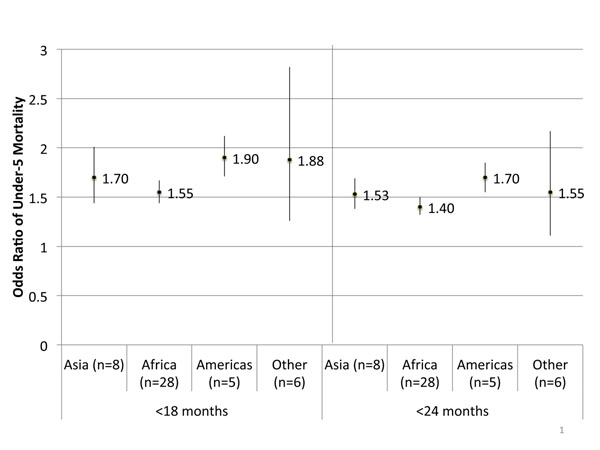
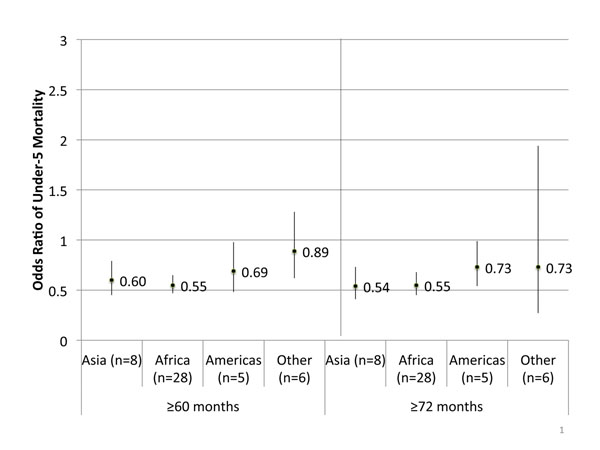
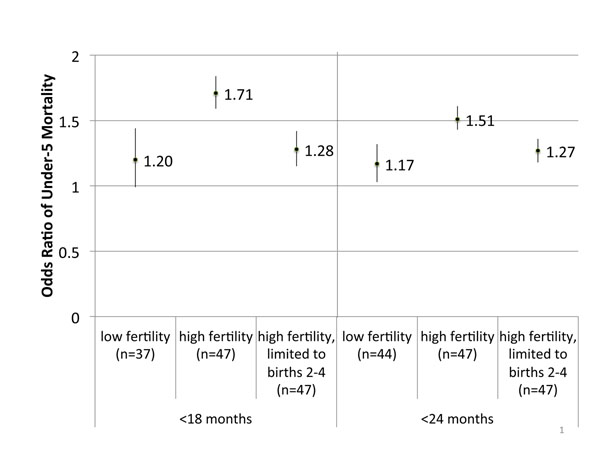
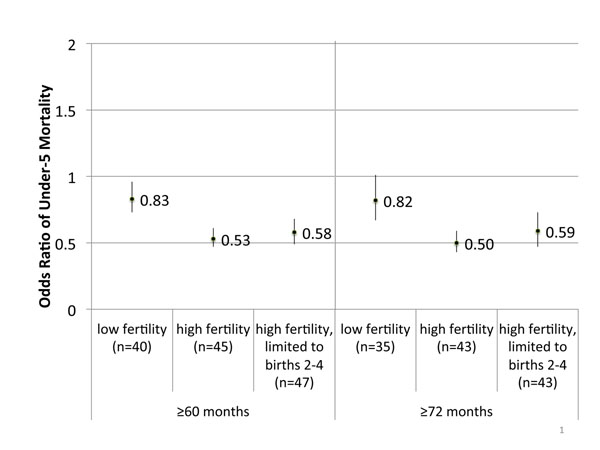
Verification
Claims the paper makes
The claims and statistics of this paper haven’t been checked yet.
Free: it reads the open-access text and checks the first 5 claims that cite a source we can check. Create a free account to check every claim.
Claims other papers make about this one
Each is checked against this paper’s own text: does it say what the citing paper says it does?
In the citing paper
“In a review of seven studies (N = 1,140,210), short intervals between pregnancies bore an increased risk for any ASD (OR 1.90, 95% CI 1.16–3.09) with the association strongest for core autistic disorder (OR 2.62, 95% CI 1.53–4.50) [158].”
From The contribution of environmental exposure to the etiology of autism spectrum disorder (2019) · cites this paper as [158]
Self-check
Percentages, sums and reported differences re-computed from the paper’s own numbers.
The self-check needs the paper’s full text.
Citations
Cites
Birth Spacing and Risk of Adverse Perinatal Outcomes: A Meta-analysis
Conde-Agudelo, A., Rosas-Bermúdez, A., & Kafury-Goeta, A. C. (2006) · JAMA · doi:10.1001/jama.295.15.1809 · Cited by 1,103
Birth Spacing and Risk of Adverse Perinatal Outcomes: A Meta-Analysis
&NA; (2007) · Survey of Anesthesiology · doi:10.1097/01.sa.0000267038.80927.32 · Cited by 670
Rutstein, S. O. (2005) · International Journal of Gynecology & Obstetrics · doi:10.1016/j.ijgo.2004.11.012 · Cited by 665
When to use the odds ratio or the relative risk?
Schmidt, C. O., & Kohlmann, T. (2008) · International Journal of Public Health · doi:10.1007/s00038-008-7068-3 · Cited by 427 · cited 1×
“Furthermore, odds ratios tend to report larger magnitude associations than relative risks, a more easily interpretable measure of association.[14] While we do not expect the effect sizes to differ widely because of the rarity of the mortality outcomes, even the statistically significant associations that remained may…”
BackgroundA new definition of maternal depletion syndrome.
Winkvist, A., Rasmussen, K. M., & Habicht, J. P. (1992) · American Journal of Public Health · doi:10.2105/ajph.82.5.691 · Cited by 324
Davanzo, J., Hale, L., Razzaque, A., & Rahman, M. (2008) · Population Studies · doi:10.1080/00324720802022089 · Cited by 178 · cited 1×
“Short and long preceding birth intervals, or time between a birth and the subsequent birth, have previously been linked to adverse child outcomes [1-5].”
BackgroundEffect of interpregnancy interval on adverse perinatal outcomes — a national study
Grisaru-Granovsky, S., Gordon, E.-S., Haklai, Z., Samueloff, A., & Schimmel, M. M. (2009) · Contraception · doi:10.1016/j.contraception.2009.06.006 · Cited by 163 · cited 1×
“Short and long preceding birth intervals, or time between a birth and the subsequent birth, have previously been linked to adverse child outcomes [1-5].”
BackgroundBirth Intervals and Perinatal Health: An Investigation of Three Hypotheses
Miller, J. E. (1991) · Family Planning Perspectives · doi:10.2307/2135451 · Cited by 129 · cited 2×
“These findings seem to be consistent with the theory that maternal depletion is responsible for the higher mortality risks associated with short birth spacing.[6,7] Low fertility mothers may have better nutritional status and access to care, hence short birth intervals may not deplete the mother’s nutritional resource…”
BackgroundResultEffect of the interval between pregnancies on perinatal outcomes among white and black women
Zhu, B., Haines, K. M., Le, T., McGrath-Miller, K., & Boulton, M. L. (2001) · American Journal of Obstetrics and Gynecology · doi:10.1067/mob.2001.118307 · Cited by 122 · cited 1×
“For long intervals, a woman’s reproductive capacity may decline and return to the primiparous state if birth intervals are overly long [8].”
Background
Cited by
Items 101–168 of 168
Predictive model and determinants of odds of neonates dying within 28 days of life in Ghana
Takramah, W. K., & Aheto, J. M. K. (2021) · Health Science Reports · doi:10.1002/hsr2.248 · Cited by 8
“The results of the current study agreed with the findings of previous studies.(23,36) A shorter birth interval or even a preceding birth interval of 47 months or less are key predictors of neonatal mortality.”
ResultLaelago, T. (2019) · Epidemiology International Journal · doi:10.23880/eij-16000119 · Cited by 7
“Systematic review done on low and middle income countries displayed that longer preceding birth intervals had lower odds of mortality than lesser preceding birth interval [14].”
Seifu, B. L., Asebe, H. A., Fente, B. M., Melkam, M., Asmare, Z. A., Asnake, A. A., Bezie, M. M., & Negussie, Y. M. (2025) · Frontiers in Public Health · doi:10.3389/fpubh.2025.1512392 · Cited by 6
Nonyane, B. A. S., & Chimbalanga, E. (2018) · Journal of Global Health · doi:10.7189/jogh.08.020419 · Cited by 6
Determinants of neonatal, post-neonatal and child mortality in Afghanistan using frailty models
Forde, I. A., & Tripathi, V. (2021) · Pediatric Research · doi:10.1038/s41390-021-01527-1 · Cited by 6
Nutritional and Reproductive Risk Factors for Small for Gestational Age and Preterm Births
Kozuki, N., Lee, A. C., Black, R. E., & Katz, J. (2015) · Nestlé Nutrition Institute Workshop series · doi:10.1159/000365799 · Cited by 8
Self-citationTessema, G. A., Håberg, S. E., Pereira, G. F., & Magnus, M. C. (2022) · BJOG An International Journal of Obstetrics & Gynaecology · doi:10.1111/1471-0528.17223 · Cited by 5
Okyere, J., Dadzie, L. K., Agbaglo, E., Arthur-Holmes, F., Aboagye, R. G., Seidu, A., & Ahinkorah, B. O. (2023) · Archives of Sexual Behavior · doi:10.1007/s10508-023-02713-4 · Cited by 7
“This coding was informed by literature that used DHS datasets (Aychiluhm et al., 2020; Kozuki & Walker, 2013).”
Zhang, J., Li, H., Wei, B., He, R., Zhu, B., Zhang, N., & Mao, Y. (2024) · BMC Pregnancy and Childbirth · doi:10.1186/s12884-024-06437-8 · Cited by 7
“For example, place of delivery [17], birth interval [18], breastfeeding [19], and behavioral habits during pregnancy [20] (e.g., smoking and drinking) can affect the child’s health.”
BackgroundReducing stunting and underweight through mother’s birth spacing: evidence from Ghana
Essilfie, G., Kofinti, R. E., & Asmah, E. E. (2024) · BMC Pregnancy and Childbirth · doi:10.1186/s12884-024-06824-1 · Cited by 5
Demissie, K. A., Belachew, T. B., Dellie, E., Tiruneh, M. G., Jejaw, M., Worku, N., Teshale, G., Geberu, D. M., Addis, B., Tafere, T. Z., et al. (2024) · BMC Public Health · doi:10.1186/s12889-024-20471-3 · Cited by 5
“Benefits of family planning include reducing maternal death, reducing unwanted pregnancy and postponing pregnancy, preventing abortions, and lowering the risk of HIV transmission from mother to child [5, 6].”
Yıldırım, H., & Aylaz, R. (2021) · Perspectives In Psychiatric Care · doi:10.1111/ppc.12784 · Cited by 6
Perceptions of social capital and sexual behaviour among youth in South Africa
Odimegwu, C. O., Wet, N. D., & Somefun, O. D. (2017) · Journal of Child and Adolescent Mental Health · doi:10.2989/17280583.2017.1388246 · Cited by 5
Health inequality in Britain before 1750
Kendall, E. J., Brown, A., Doran, T., Gowland, R. L., & Cookson, R. (2021) · SSM - Population Health · doi:10.1016/j.ssmph.2021.100957 · Cited by 8
Interpregnancy interval and adverse birth outcomes: a population-based cohort study of twins
Dhamrait, G. K., O’Donnell, M., Christian, H. E., Taylor, C. L., & Pereira, G. F. (2024) · BMC Pregnancy and Childbirth · doi:10.1186/s12884-023-06119-x · Cited by 3
“…those who wait for longer intervals, even after adjustment for For example, pregnancies with longer IPIs may suffer from reduced fecundability; [37] therefore, associations between long IPIs and adverse birth outcomes in twins may be further compounded by the use of assisted reproductive…”
BackgroundTerefe, B., & Chekole, B. (2024) · BMC Nutrition · doi:10.1186/s40795-024-00888-0 · Cited by 3
“Mothers who have had numerous children may have accumulated more expertise and information about child nutrition over time [34].”
BackgroundAn evolutionary perspective on social inequality and health disparities
Wells, J. C. K. (2023) · Evolution Medicine and Public Health · doi:10.1093/emph/eoad026 · Cited by 9
“However, successive offspring can create maternal energy-debt, placing mothers at unique risk of undernutrition (‘maternal depletion’) [84].”
BackgroundDevakumar, D., Hallal, P. C., Horta, B. L., Barros, F. C., & Wells, J. C. K. (2016) · PLoS ONE · doi:10.1371/journal.pone.0149054 · Cited by 3
“[23] Other evidence has shown that the greatest risk for low birthweight is with shorter intervals (OR 1.”
BackgroundWilson, E., Hazel, E., Park, L., Carter, E. D., Moulton, L. H., Heidkamp, R. A., & Perin, J. (2020) · International Journal of Health Geographics · doi:10.1186/s12942-020-0198-4 · Cited by 3
Pasternak, H., Sheiner, E., Goldbart, A. D., & Wainstock, T. (2020) · Pediatric Pulmonology · doi:10.1002/ppul.25240 · Cited by 4
“Short intervals may be correlated with poor socioeconomic status, lack of access to health care services, low education, and other factors associated with adverse child outcomes.(18) However, although expected, OSAS rates were lowest among the short IPI group.”
BackgroundInfluentialMultilevel zero inflated and hurdle models for under five-child mortality in Indonesia
Wijaya, M. Y. (2023) · Asian Journal of Social Health and Behavior · doi:10.4103/shb.shb_252_23 · Cited by 3
Ndaninginan, L. L., Mlay, P. S., Gaffur, R., Nggada, B. J., & Mahande, M. J. (2020) · Acta Scientific Women s Health · doi:10.31080/aswh.2020.02.0161 · Cited by 2
Islam, M. Z., Rahman, M. M., Khan, M. N., & Islam, M. M. (2021) · Research Square · doi:10.21203/rs.3.rs-596077/v1 · Cited by 2
Puri, M. C., Guo, M., Stone, L., & Shah, I. (2023) · PLOS Global Public Health · doi:10.1371/journal.pgph.0001665 · Cited by 1
Eustis-Guthrie, S., Williamson, B., Alhassan, M. A., Abako, A. S., Issah, A., Fist, C., & Gálvez, S. M. (2026) · Reproductive Health · doi:10.1186/s12978-025-02263-z · Cited by 1
“Kozuki and Walker’s analysis of Demographic and Health Service (DHS) data across 47 countries suggests an 18% increase in neonatal mortality and a 21% increase in child mortality from short-spaced births [14].”
Mohamoud, J. H., Warsame, Z. A., Ibrahim, M. M., Adam, M. H., Mohamed, A. M. S., Hersi, S. A., Asowe, H. A., Garba, B., Dirie, N. I., Hassan, J., et al. (2026) · Journal of Epidemiology and Global Health · doi:10.1007/s44197-026-00544-9 · Cited by 1
Özgören, A. A., & Ergöçmen, B. (2021) · Biodemography and Social Biology · doi:10.1080/19485565.2020.1821596 · Cited by 1
“Birth order (Mishra et al. 2018) and preceding birth interval (Kozuki and Walker 2013) are important determinants of infant and child mortality and morbidity.”
BackgroundBirth spacing among Ethiopian women between 2000 and 2016: trends and predictors
Bishwajit, G., Etowa, J. B., Anik, A. I., & Etowa, E. B. (2022) · Journal of Obstetrics and Gynecological Investigations · doi:10.5114/jogi.2022.116557 · Cited by 1
“The birth interval was classified as short (< 24 months) and optimal (≥ 25 months) as per WHO guidelines [18].”
MethodMaxwell, O., Chuku, N., Ananaba, A., Diallo, R., Sadiq, F. U., Sambo, E. N., Kolade, O., Oyekanmi, T., Olaosebikan, K., & Serrano, O. (2023) · International Journal of Medical and Health Sciences Research · doi:10.18488/9.v10i1.3303 · Cited by 2
Evaluating Global Health Impact and Increasing Access to Essential Medicines
Hassoun, N. (2021) · Cambridge University Press eBooks · doi:10.1017/9781108692137.034 · Cited by 1
Nosocomial outbreaks: A review of governmental reporting systems
Maciel, A. L. P., Braga, R. B. D. S., Madalosso, G., & Padoveze, M. C. (2021) · American Journal of Infection Control · doi:10.1016/j.ajic.2021.11.011 · Cited by 1
Chellai, F. (2021) · European Review of Applied Sociology · doi:10.2478/eras-2021-0009 · Cited by 1
Jaafar, S. K. (2022) · Pakistan Journal of Medical and Health Sciences · doi:10.53350/pjmhs22168453 · Cited by 1
Ngaboyeka, G. A., Malembaka, E. B., Lyabayungu, P., Makali, S. L., Cikomola, A., Kahasha, P. M., Ntambwe, A., & Bisimwa, G. B. (2021) · Research Square · doi:10.21203/rs.3.rs-136731/v1 · Cited by 1
Bitew, F. H., Nyarko, S. H., Potter, L. B., & Sparks, C. S. (2020) · Research Square · doi:10.21203/rs.2.13113/v2 · Cited by 2
Family Planning in Romania: A Cross-sectional Study ofKnowledge, Practice and Attitudes
Rada, C. (2014) · International journal of collaborative research on internal medicine & public health · Cited by 2
Moore, Z., Pfitzer, A., Gubin, R., Charurat, E., Elliott, L., & Croft, T. N. (2015)
Tesfaye, B., Atique, S., Elias, N., Dibaba, L., Syed-Abdul, S., & Kebede, M. M. (2016) · Computer Methods and Programs in Biomedicine · doi:10.1016/j.cmpb.2016.10.010
Perin, J., Amouzou, A., & Walker, N. (2017) · BMC Public Health · doi:10.1186/s12889-017-4741-6 · Cited by 1
Self-citationSetting up a family planning and reproductive health programme
Goodhart, C., Lankester, T., & Thomas, C. (2019) · Oxford University Press eBooks · doi:10.1093/med/9780198806653.003.0018
Factores asociados a la desigualdad de la mortalidad infantil en las localidades de Bogotá, 2013
Romero, A., & Cilia, D. (2017)
IUDs: Maternity Nurses’ Practices of Infection Control Measures
Rashed, A. B., Amer, N. A., & Ali, Z. A. (2020) · Saudi Journal of Nursing and Health Care · doi:10.36348/sjnhc.2020.v03i11.008
Bitew, F. H., Nyarko, S. H., Potter, L. B., & Sparks, C. S. (2019) · Research Square · doi:10.21203/rs.2.13113/v1 · Cited by 1
Factors Determining Birth Intervals: A Multilevel Mixed Effect Parametric Survival Approach
Adeniyi, O. I., Olonijolu, I. R., & Akinrefon, A. A. (2021) · Nigerian Journal of Basic and Applied Sciences · doi:10.4314/njbas.v28i2.4
“…bleeding disorders in the women and low birth weight, pre-term birth, small-for-gestational age, stunting growth in the babies (Kozuki et al., 2013; Kozuki and Walker, 2013; Fotso et al., 2013; Adekanmbi et al., 2012; Davanzo et al., 2008; Conde-Agudelo et al., 2006; Conde-Agudelo et al.,…”
BackgroundZeng, M. J., Chen, R., He, J., Liang, D., Zhao, X., Lian, T., Yin, M., Ma, X., Luo, X., Pan, X., et al. (2021) · Research Square · doi:10.21203/rs.3.rs-827641/v1
Zeng, M. J., Chen, R., He, J., Liang, D., Zhao, X., Lian, T., Yin, M., Ma, X., Luo, X., Pan, X., et al. (2022) · Research Square · doi:10.21203/rs.3.rs-827641/v2
Disparities in Child Survival in Ethiopia: Evidence From Nationally Represented DataPreprint
Feng, C. X., Geda, N. R., Whiting, S. J., Janzen, B. L., Lepnurm, R., & Henry, C. J. (2020) · Research Square · doi:10.21203/rs.3.rs-43682/v1
Bitew, F. H., Nyarko, S. H., Potter, L. B., & Sparks, C. S. (2020) · Research Square · doi:10.21203/rs.2.13113/v3 · Cited by 1
Factors Influencing Mortality Under the Age of Five in Ethiopia
Gagabo, S. Y. (2024) · World Journal of Public Health · doi:10.11648/j.wjph.20240901.13
McCauley, E. (2024) · Demography · doi:10.1215/00703370-11164302
Eustis-Guthrie, S., Williamson, B., Awal, A. M., Abako, A. S., Issah, A. R., Fist, C., & Gálvez, S. M. (2024) · Research Square · doi:10.21203/rs.3.rs-4818121/v1
Hanupriyan, V., Valarmathi, S., Sundar, J. S., Kalpana, S., Paul, A. A., Nazarali, B., & Srinivas, G. (2024) · International Journal of Community Medicine and Public Health · doi:10.18203/2394-6040.ijcmph20244080
Alhassan, A. S., & Mubarik, A. (2025) · Science Journal of Public Health · doi:10.11648/j.sjph.20251305.16
Zhang, J., Li, H., Wei, B., He, R., Zhu, B., Zhang, N., & Mao, Y. (2024) · Figshare · doi:10.6084/m9.figshare.26713067
Stone, L., Puri, M. C., Guo, M., & Shah, I. (2021) · Figshare · doi:10.6084/m9.figshare.14052645
Stone, L., Puri, M. C., Guo, M., & Shah, I. (2021) · Figshare · doi:10.6084/m9.figshare.14052639
Dhamrait, G. K., O’Donnell, M., Christian, H. E., Taylor, C. L., & Pereira, G. F. (2024) · Figshare · doi:10.6084/m9.figshare.25124083
Dhamrait, G. K., O’Donnell, M., Christian, H. E., Taylor, C. L., & Pereira, G. F. (2024) · Figshare · doi:10.6084/m9.figshare.25123948
Essays on Son Preference in Pakistan
Javed, M. R. (2019) · theses.fr (ABES) · doi:10.70675/6a988a27z2fabz45f9z9121zc5346bc2661c
Niyomahoro, N., & Gbadamosi, M. (2026) · International Journal of Women s Health · doi:10.2147/ijwh.s590844
“Previous studies suggest that the association of parity may operate through pathways such as birth spacing and maternal nutrition depletion.”
Petersen, R. M., Patterson, S. K., Widdig, A., Turcotte, C. M., Antón, S. C., Williams, S. A., Romero, A. N., Bauman, S. E., Ruiz-Lambides, A. V., Montague, M. J., et al. (2026) · Proceedings of the National Academy of Sciences · doi:10.1073/pnas.2524909123 · Cited by 2
Essome, H., Ngalame, A. N., Boten, M., Fofungtum, M., Mendoua, F., Motah, R. K., Bilkissou, M., Mangala, F. N., Ofakem, I., Tocky, L. O. E., et al. (2026) · Open Journal of Obstetrics and Gynecology · doi:10.4236/ojog.2026.165074
Oyom, G. O., Byagamy, J. P., Aloka, B., & Bakesiima, R. (2026) · Research Square · doi:10.21203/rs.3.rs-10203821/v1
Muhumuza, H. (2026) · Research Square · doi:10.21203/rs.3.rs-10174350/v1
Mekonen, H., Ahmed, A. F., Yeshiwas, A. G., Bayeh, G. M., Tsega, T. D., Tsega, S. S., Gebeyehu, A. A., Ejigu, A. G., Yigzaw, Z. A., Temesgen, A., et al. (2026) · BMJ Public Health · doi:10.1136/bmjph-2024-002472
Kafaiya, C. B., Kilima, S. P., Mayige, M. T., & Mashoto, K. O. (2026) · Frontiers in Global Women s Health · doi:10.3389/fgwh.2026.1875076
Metadata
- Authors
- Kozuki, N., & Walker, N.
- Affiliations
- Johns Hopkins University (US)
- Corresponding author
- Kozuki, Naoko
- Venue
- BMC Public Health
- Published
- 2013
- Volume
- 13
- Issue
- Suppl 3
- Pages
- S6
- ISSN
- 1471-2458 (ISSN-L)
- PMC
- PMC3847658
- OpenAlex
- W2117337843
- Semantic Scholar
- bb716fb6971fb65b0b1e7b46f665b43291700438
- Cited by
- 168
- References
- 16
- Citations by year
- 2026: 9 · 2025: 3 · 2024: 18 · 2023: 13 · 2022: 10 · 2021: 31 · 2020: 21 · 2019: 18 · 2018: 8 · 2017: 10 · 2016: 13 · 2015: 7 · 2014: 7
- Type
- conference abstract
- Language
- en
- Open access
- gold
- doi.org
- Licence
- cc-by
- Locations
- BMC Public Health (publishedVersion, cc-by)
- Europe PMC (PubMed Central) (publishedVersion, cc-by)
- PubMed Central (publishedVersion, cc-by)
- PubMed (publishedVersion)
- Funders
- Bill and Melinda Gates Foundation
- Topics
- Health Sciences › Medicine › Pediatrics, Perinatology and Child Health › Global Maternal and Child Health
- Health Sciences › Medicine › Public Health, Environmental and Occupational Health › Reproductive Health and Contraception
- Health Sciences › Medicine › Pediatrics, Perinatology and Child Health › Maternal and Neonatal Healthcare
- Keywords
- birth interval, child mortality, neonatal mortality, under-five mortality, completed fertility, parity, reproductive health interventions, low- and middle-income countries, Demographic and Health Surveys, birth order, maternal health, child health, maternal health service utilization
- MeSH terms
- Birth Intervals, Demography, Developing Countries, Female, Health Status Indicators, Health Surveys, Humans, Infant, Infant Mortality, Male, Mothers, Pregnancy, Reference Values, Risk Factors, Socioeconomic Factors, Reproductive Health
About these checks
Registry, retraction, Cites and statistics results are computed, not judged, with one exception: a printed reference that no index lists is read once by a model before it counts as a citation error. Claims are extracted by a model and kept only when their quote appears verbatim in the text; each cited source is then checked, with a model’s help, for whether it says what the claim relies on. Those verdicts can be wrong — read the claim’s quote and the cited source before relying on one.
Statistics and arithmetic are recomputed, not judged.
Confidence bands are shown only for fields calibrated on our annotated test set. None is calibrated yet, so no band is shown.
What counts as a claim ›How we measure confidence ›How we check this ›
Are you an author, or do you see a problem with this page? Request a review
Data sources
Bibliographic data: Semantic Scholar, OpenAlex, Crossref.
Contains information from the Semantic Scholar Academic Graph Datasets, made available under the ODC Attribution License (ODC-BY 1.0).
Semantic Scholar’s data is described in: Kinney, R., et al. (2023). The Semantic Scholar Open Data Platform. arXiv:2301.10140.
