

Risk factors for low birthweight in the public-hospitals at Peshawar, NWFP-Pakistan
Open accessThe DOI matches its Crossref record; 54 of the 55 references it cites were found in a registry or an index.
Abstract
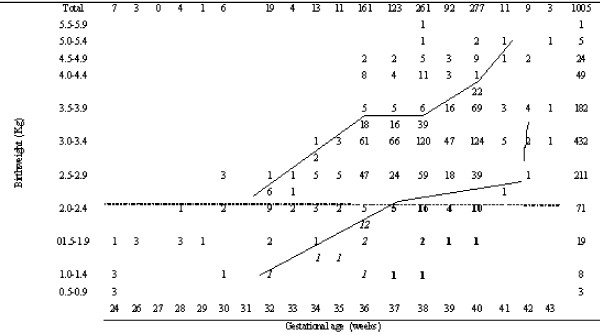
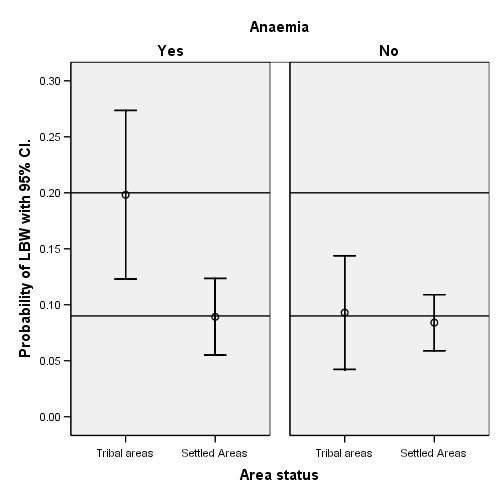
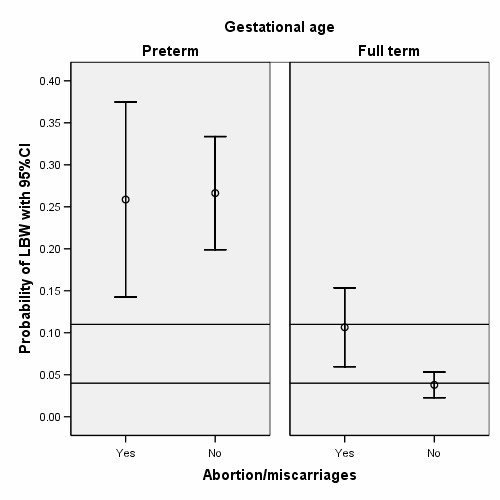
BACKGROUND: Low birthweight is a widely used indicator of newborn health. This study investigates the association of birthweight <2.5 kg (LBW) with a wide range of factors related to geo-demographics, maternal health and pregnancy history in public hospitals at Peshawar, North West Frontier Province (NWFP) Pakistan. It is noted that that Low birthweight may arise for two different reasons, one related to gestational age and the other corresponding to births that are small for gestational age (SGA). METHODS: Data on geo-demographics, maternal health indicators, pregnancy history and outcome scores for newborn babies and their families (n = 1039) were collected prospectively between August and November 2003 in a cross-sectional survey of four public hospitals in Peshawar, NWFP-Pakistan. Crude and adjusted odds ratios were used to investigate the factors affecting incidence of LBW, by multivariate logistic regression. Gestational age was included as an explanatory variable therefore the additional covariates identified by model selection are expected to account for SGA. RESULTS: The main geo-demographic risk factors for SGA identified in this study, controlling for gestational age of less than 37 weeks, are maternal age, nationality and consanguinity. Presentation with anaemia and the history of previous abortion/miscarriage were also found to be significant independent factors. The adjusted odds ratio for gestational age showed the largest effect in explaining the incidence of LBW. The next highest odds ratio was for maternal age below 20 years. The explanatory model included two pairwise interactions, for which the predicted incidence figures for LBW show an increase among the Tribal area with presentation of anaemia, and among full term babies with their mothers having a previous history of abortion/miscarriage. CONCLUSION: In addition to gestational age, specific factors related to geo-demographics (maternal age, consanguinity and nationality), maternal health (anaemia) and pregnancy history (abortion/miscarriage) were significantly associated with the incidence of LBW observed at the four hospitals surveyed in Peshawar. These results indicate that cultural factors can adversely affect the incidence of SGA in this area of Pakistan.
Overview
The claims and statistics of this paper haven’t been checked yet.
Free: it reads the open-access text and checks the first 5 claims that cite a source we can check. Create a free account to check every claim.
Integrity signals
Registry
Cites
Statistics
Figures
Verification
Claims the paper makes
The claims and statistics of this paper haven’t been checked yet.
Free: it reads the open-access text and checks the first 5 claims that cite a source we can check. Create a free account to check every claim.
Claims other papers make about this one
Each is checked against this paper’s own text: does it say what the citing paper says it does?
The check wasn’t confident either way, so it gives no verdict — never disputed.
In the citing paper
“However, none of these studies have considered maternal stress or cortisol in relation to preterm birth.”
From The association between parity, infant gender, higher level of paternal education and preterm birth in Pakistan: a cohort study (2011) · cites this paper as [22]
Experimental — accuracy not yet measured
Self-check
Percentages, sums and reported differences re-computed from the paper’s own numbers.
The self-check needs the paper’s full text.
Citations
Cites
A simulation study of the number of events per variable in logistic regression analysis
Peduzzi, P., Concato, J., Kemper, E., Holford, T. R., & Feinstein, A. R. (1996) · Journal of Clinical Epidemiology · doi:10.1016/s0895-4356(96)00236-3 · Cited by 9,655 · cited 1×
“This ratio of events per variable is on the threshold of acceptability for the size of the pool of covariates prior to initiating the variable selection process, as recommended in the literature [22].”
MethodBulletin of the World Health Organization
van der Sande, M. A. B., Walraven, G. E. L., Milligan, P. J., BANYA, W. A. S., CEESAY, S. M., Nyan, O. A., & McAdam, K. P. W. J. (2001) · Bulletin of the World Health Organization · Cited by 7,097
(2000) · Cited by 2,832
Allison, P. D. (1998) · Cited by 1,788
Logistic Regression: A Self-Learning Text.
Selvin, S., & Kleinbaum, D. G. (1996) · Journal of the American Statistical Association · doi:10.2307/2291427 · Cited by 1,619
Bulletin of the World Health Organization
(2006) · Bulletin of the World Health Organization · doi:10.2471/blt.00.00000 · Cited by 1,602
Fetal growth and perinatal viability in California.
Williams, R. L., Creasy, R. K., Cunningham, G. C., Hawes, W. E., Norris, F. D., & Tashiro, M. (1982) · PubMed · Cited by 807
Risk factors for low birth weight: a review
Valero de Bernabé, J., Soriano, T., Albaladejo, R., Juarranz, M., Calle, M. E., Martı́nez, D., & Domı́nguez-Rojas, V. (2004) · European Journal of Obstetrics & Gynecology and Reproductive Biology · doi:10.1016/j.ejogrb.2004.03.007 · Cited by 640
The Epidemiology of Adverse Pregnancy Outcomes: An Overview
Kramer, M. S. (2003) · The Journal of Nutrition · doi:10.1093/jn/133.5.1592s · Cited by 545
FIELD, A. (2005). Discovering Statistics Using SPSS. London: SAGE Publications
Ros, E. X. R. (2006) · Anuario de Psicología/The UB Journal of Psychology · Cited by 442
Research works printed but not linked: 4
- Payne RW Harding SA Murray DA Soutar DM Baird DB Welham SJ Kane AF Gilmour AR Thompson R Webster R Wilson GT The Guide to GenStat Release 8, Part 2: Statistics 2005 VSN International Oxfor
- PIHS Pakistan Integrated House Hold Survey. Federal Bureau of Statistics, Pakistan 2002
- Population Council Research on Unwanted Pregnancies and Post-abortion Complications in Pakistan 2004 Accessed July 07, 2006
- Hussain M Ashraf M Noorani K Alleged reasons and complications of induced Abortion J Surg Pakistan 2004 9 18 21
Cited by
Cutland, C. L., Lackritz, E. M., Mallett-Moore, T., Bardají, A., Chandrasekaran, R., Lahariya, C., Nisar, M. I., Tapia, M. D., Pathirana, J., Kochhar, S., et al. (2017) · Vaccine · doi:10.1016/j.vaccine.2017.01.049 · Cited by 459
“Neonates with low birth weight have a >20 times greater risk of dying than neonates with birth weight of >2500 g [8,9].”
BackgroundINDO AMERICAN JOURNAL OF PHARMACEUTICAL SCIENCES
Baru, P. C. R. (2014) · ADVANCED SCIENCES INDEX · Cited by 236
Sher, N. M., Nazli, R., Zafar, H., & Fatima, S. (2021) · Pakistan Journal of Medical Sciences · doi:10.12669/pjms.38.1.4396 · Cited by 187
Assefa, N., Berhane, Y., & Worku, A. (2012) · PLoS ONE · doi:10.1371/journal.pone.0039957 · Cited by 160
Low Birth Weight at Term and Its Determinants in a Tertiary Hospital of Nepal: A Case-Control Study
Sharma, S. R., Giri, S., Timalsina, U., Bhandari, S. S., Basyal, B., Wagle, K., & Shrestha, L. (2015) · PLoS ONE · doi:10.1371/journal.pone.0123962 · Cited by 133
A Case Control Study on Risk Factors Associated with Low Birth Weight Babies in Eastern Nepal
Bhaskar, R. K., Deo, K. K., Neupane, U., Bhaskar, S. C., Yadav, B. K., Pokharel, H. P., & Pokharel, P. K. (2015) · International Journal of Pediatrics · doi:10.1155/2015/807373 · Cited by 128
Dahlui, M., Azahar, N., Oche, O. M., & Aziz, N. A. (2016) · Global Health Action · doi:10.3402/gha.v9.28822 · Cited by 139
“Paternal factors such as level of education (11), age (30), and employment (31) were also significantly linked to the incidence of LBW.”
Determinants of low birth weight in India: An investigation from the National Family Health Survey
Khan, N., Mozumdar, A., & Kaur, S. (2019) · American Journal of Human Biology · doi:10.1002/ajhb.23355 · Cited by 96
Incidence and correlates of low birth weight at a referral hospital in Northwest Ethiopia.
Zeleke, B. M., Zelalem, M., & Mohammed, N. (2012) · PubMed Central · doi:10.11604/pamj.2012.12.4.1284 · Cited by 139
Frequency and risk factors of low birth weight in term pregnancy
Khan, A., Nasrullah, F. D., & Jaleel, R. (2016) · Pakistan Journal of Medical Sciences · doi:10.12669/pjms.321.8120 · Cited by 82
Induced Abortions and Unintended Pregnancies in Pakistan
Sathar, Z. A., Singh, S. D., Rashida, G., Shah, Z., & Niazi, R. (2014) · Studies in Family Planning · doi:10.1111/j.1728-4465.2014.00004.x · Cited by 114
“Lack of appropriate postabortion care can lead to lifelong morbidity, contribute to maternal mortality, and adversely affect the health of future children (Dhillon et al. 2004; Badshah et al. 2008; Rahman, DaVanzo, and Razzaque 2010; Shaikh et al. 2010; Ahman and Shah 2011; WHO 2011).”
BackgroundErenel, H., Mathyk, B. A., Şal, V., Ayhan, I., Karataş, S., & Bebek, A. K. (2016) · Archives of Gynecology and Obstetrics · doi:10.1007/s00404-016-4188-5 · Cited by 92
“Studies from Finland [11] and Pakistan [12] suggest migrant women from Afghanistan, Iraq, and Iran could have higher risks of adverse neonatal outcomes than those born in resettlement countries.”
Khanal, V., Zhao, Y., & Sauer, K. (2014) · Archives of Public Health · doi:10.1186/2049-3258-72-4 · Cited by 88
“Badshah S, Mason L, McKelvie K, Payne R, Lisboa PJG: Risk factors for low birthweight in the public-hospitals at Peshawar, NWFP-Pakistan.”
BackgroundResultInfluentialLow birth weight and macrosomia in Tigray, Northern Ethiopia: who are the mothers at risk?
Mengesha, H. G., Wuneh, A. D., Sahle, B. W., & Selvakumar, D. L. (2017) · BMC Pediatrics · doi:10.1186/s12887-017-0901-1 · Cited by 66
Factors affecting low birth weight at four central hospitals in vientiane, Lao PDR.
Louangpradith, V., Yoshida, Y., Harun‐Or‐Rashid, M., & Sakamoto, J. (2010) · PubMed Central · doi:10.18999/nagjms.72.1-2.51 · Cited by 60
Khanal, V., Sauer, K., Karkee, R., & Zhao, Y. (2014) · BMC Pregnancy and Childbirth · doi:10.1186/1471-2393-14-32 · Cited by 73
“It has been reported as a risk factor for LBW in Pakistan [20], India [12] and Indonesia [32].”
BackgroundScreening for developmental delay among children attending a rural community welfare clinic in Ghana
Bello, A. I., Quartey, J., & Appiah, L. A. (2013) · BMC Pediatrics · doi:10.1186/1471-2431-13-119 · Cited by 55
Jammeh, A., Sundby, J., & Vangen, S. (2011) · Open Journal of Obstetrics and Gynecology · doi:10.4236/ojog.2011.13017 · Cited by 67
“Every year it is estimated that 18 million LBW babies are born globally, making up nearly 16% of all live births [3].”
BackgroundTeklehaimanot, N. (2014) · International Journal of Nutrition and Food Sciences · doi:10.11648/j.ijnfs.20140306.21 · Cited by 48
Mejdoubi, J., van den Heijkant, S., Struijf, E., van Leerdam, F., HiraSing, R., & Crijnen, A. (2011) · BMC Public Health · doi:10.1186/1471-2458-11-823 · Cited by 47
“For example, women of low SES use substances during pregnancy more frequently than other women, and maternal substance use during pregnancy contributes to premature birth and low birth weight and is strongly associated with morbidity and mortality of the newborn as well as in childhood [2-6].”
BackgroundYilgwan, C. S., Utoo, T., & Hyacinth, H. (2012) · Nigerian Medical Journal · doi:10.4103/0300-1652.107553 · Cited by 51
Maternal health and pregnancy outcomes among women of refugee background from Asian countries.
Gibson-Helm, M., Boyle, J., Cheng, I.-H., East, C., Knight, M., & Teede, H. (2015) · International Journal of Gynecology & Obstetrics · doi:10.1016/j.ijgo.2014.10.036 · Cited by 44
“The South Asian HSCs identified were Afghanistan and Bhutan; the non-HSCs were Bangladesh, India, the Maldives, Nepal, Pakistan, and Sri Lanka.”
BackgroundShaikh, K., Premji, S. S., Rose, M. S., Kazi, A., Khowaja, S., & Tough, S. (2011) · BMC Pregnancy and Childbirth · doi:10.1186/1471-2393-11-88 · Cited by 42
“Studies undertaken in South Asia have examined the contribution of maternal factors like maternal education, age, parity, birth interval, and antenatal visit on preterm birth [22-24].”
Gill, S. V., May-Benson, T. A., Teasdale, A., & Munsell, E. G. S. (2013) · BMC Pediatrics · doi:10.1186/1471-2431-13-29 · Cited by 43
“Background Infants’ weight at birth is a strong predictor of neonatal health outcomes such as chances of survival, risk of medical complications, and timing for the achievement of development milestones [1].”
BackgroundDesta, M., Tadese, M., Kassie, B., & Gedefaw, M. (2019) · BMC Research Notes · doi:10.1186/s13104-019-4155-x · Cited by 52
Hailemichael, H. T., Debelew, G. T., Alema, H. B., Weldu, M. G., & Misgina, K. H. (2020) · BMC Pediatrics · doi:10.1186/s12887-019-1835-6 · Cited by 46
Maternal Risk Factors Associated with Low Birth Weight in Indonesia
Siramaneerat, I., Agushybana, F., & Meebunmak, Y. (2018) · The Open Public Health Journal · doi:10.2174/1874944501811010376 · Cited by 42
“According to many researchers found mothers with anemia have a higher incidence of LBW than mothers with anemia [20, 30, 31].”
BackgroundFetal Weight Estimation via Ultrasound Using Machine Learning
Feng, M. G., Wan, L., Li, Z., Qing, L., & Qi, X. (2019) · IEEE Access · doi:10.1109/access.2019.2925803 · Cited by 50
“INTRODUCTION Fetal weight is an essential factor to predict the short and long-term health consequences [1].”
BackgroundGosselink, M. E., van Buren, M. C., Kooiman, J., Groen, H., Ganzevoort, W., van Hamersvelt, H. W., van der Heijden, O. W. H., van de Wetering, J., & Lely, A. T. (2022) · Kidney International · doi:10.1016/j.kint.2022.06.006 · Cited by 52
Bansal, P. B., Garg, S., & Upadhyay, H. P. (2018) · Asian Journal of Medical Sciences · doi:10.3126/ajms.v10i1.21665 · Cited by 39
Dake, S. K., Demissie, T., & Yohannes, B. (2018) · BMC Pregnancy and Childbirth · doi:10.1186/s12884-018-1789-y · Cited by 36
Mehare, T., & Sharew, Y. (2020) · International Journal of Pediatrics · doi:10.1155/2020/8394578 · Cited by 36
“Birth weight has emerged as the pointer of infant wellbeing and the fundamental focus of infant health policy [4].”
BackgroundDeterminants of Low Birth Weight in Malawi: Bayesian Geo-Additive Modelling
Ngwira, A., & Stanley, C. C. (2015) · PLoS ONE · doi:10.1371/journal.pone.0130057 · Cited by 40
“For instance, our study did not take into account the effect of histories of maternal health and pregnancy (previous abortion/miscarriage) which was found to be significantly associated with the incidence of low birth weight by [22].”
BackgroundMaternal Socioeconomic and Nutritional Determinants of Low Birth Weight in Urban area of Bangladesh
Matin, A., Azimul, S., Rahman, A. M., Shamianaz, S., Shabnam, J., & Islam, T. (2008) · Journal of Dhaka Medical College · doi:10.3329/jdmc.v17i2.6588 · Cited by 43
Thapa, P., Poudyal, A. K., Poudel, R., Upadhyaya, D. P., Timalsina, A., Bhandari, R., Baral, J., Bhandari, R., Joshi, P. C., Thapa, P., et al. (2022) · PLOS Global Public Health · doi:10.1371/journal.pgph.0001220 · Cited by 46
Maternal risk factors for low birth weight babies in Lagos, Nigeria
Awoleke, J. O. (2011) · Archives of Gynecology and Obstetrics · doi:10.1007/s00404-011-1885-y · Cited by 30
“For example, the cost per birth of a LBW baby was estimated to be about $15,000 compared with $1,900 per birth of a baby with birth weight of at least 2,500 g! [3, 9] In the light of these sequelae of being born too small, it can be seen that preventive measures would be pertinent and profitable.”
BackgroundResultInfluentialLaopaiboon, M., Lumbiganon, P., Rattanakanokchai, S., Chaiwong, W., Souza, J. P., Vogel, J. P., Mori, R., & Gülmezoglu, A. M. (2019) · BMC Pediatrics · doi:10.1186/s12887-019-1546-z · Cited by 30
Iltaf, G., Shahid, B., & Khan, M. I. (2017) · Pakistan Journal of Medical Sciences · doi:10.12669/pjms.333.12413 · Cited by 30
Haftu, A. (2017) · Biomedical Journal of Scientific & Technical Research · doi:10.26717/bjstr.2017.01.000619 · Cited by 38
“The result of this study will serves as a baseline for other wide studies as well as for planning health intervention to improve the wellbeing of children and women [14-19].”
Berhane, M., Workineh, N., Girma, T., Lim, R., Lee, K. J., Nguyen, C. D., Neal, E. F. G., & Russell, F. M. (2019) · Ethiopian Journal of Health Sciences · doi:10.4314/ejhs.v29i6.4 · Cited by 36
Toru, T., & Anmut, W. (2020) · International Journal of Pediatrics · doi:10.1155/2020/5841963 · Cited by 25
“Globally, neonatal mortality is 20 times more likely for LBW newborns when compared to normal weight newborns (2,500 gm-4,000 gm) and it increases sharply as birth weight (BW) decreases [6].”
BackgroundNeural Networks for Partially Linear Quantile Regression
Zhong, Q., & Wang, J.-L. (2023) · Journal of Business and Economic Statistics · doi:10.1080/07350015.2023.2208183 · Cited by 40
“It is well documented that low birth weight is associated with several short-term and long-term consequences, such as high risk of mortality (Badshah et al. 2008) and impaired language development (Zerbeto, Cortelo, and C Filho 2015).”
BackgroundÇam, H. H., Harunoğulları, M., & Polat, Y. (2020) · African Health Sciences · doi:10.4314/ahs.v20i2.22 · Cited by 30
Developmental delay among children under two years of age in slums of Burdwan Municipality
Gupta, S., Shrivastava, P., Samsuzzaman, M., Banerjee, N., & Das, D. (2021) · Journal of Family Medicine and Primary Care · doi:10.4103/jfmpc.jfmpc_1926_20 · Cited by 21
Sathi, N. J., Ahammed, B., Alam, K., Hashmi, R., Lee, K. Y., & Keramat, S. A. (2022) · SSM - Population Health · doi:10.1016/j.ssmph.2022.101248 · Cited by 31
“Independent variables Existing literature greatly helped in the inclusion of probable LBW factors for the current study (Badshah et al., 2008; Dharmalingam et al., 2009; Gupta et al., 2019; Khan et al., 2018; Long et al., 2012; Mberu et al., 2016; Mishra et al., 2021; Tessema et al., 2021).”
BackgroundChaudhary, N., Yadav, S. N., Kalra, S. K., Pathak, S., Gupta, B. K., Shrestha, S., Patel, M., Satia, I., Sadhra, S. S., Bolton, C. E., et al. (2021) · Health Science Reports · doi:10.1002/hsr2.250 · Cited by 17
Liyew, A. M., Sisay, M. M., & Muche, A. A. (2021) · BMJ Paediatrics Open · doi:10.1136/bmjpo-2020-000968 · Cited by 21
Beyene, G. M., Azale, T., Gelaye, K. A., & Ayele, T. A. (2021) · Archives of Public Health · doi:10.1186/s13690-021-00643-y · Cited by 24
“Among these adverse effects, low birth weight is the prominent cause of neonatal, infant, childhood morbidity, mortality, and developmental impairments worldwide [24, 25].”
BackgroundMuy bajo y extremo bajo peso al nacer
Castro-Delgado, Ó. E., Salas-Delgado, Í., Argoty, F. A., Delgado‐Noguera, M., & Calvache, J. A. (2016) · Pediatría · doi:10.1016/j.rcpe.2016.02.002 · Cited by 60
“1998-1999 MBPN Uruguay 408 Control prenatal inadecuado OR = 3,0 IC (3,8-5,0) Trastorno hipertensivo del embarazo OR = 7,3 IC (5,1-10,6) Hemorragia anteparto OR:7,5 IC (5,0-11,1) Antecedentes de trabajo de parto prematuro OR = 15,9 IC (12,1-21,0)”
BackgroundPrediction Model for Low Birth Weight and its Validation
Singh, A., Arya, S., Chellani, H. K., Aggarwal, K. C., & Pandey, R. M. (2013) · The Indian Journal of Pediatrics · doi:10.1007/s12098-013-1161-1 · Cited by 19
Below normal birth weight in the Northwest part of Ethiopia
Dessie, W. K., Assimamaw, N. T., & Endalamaw, A. (2018) · BMC Research Notes · doi:10.1186/s13104-018-3723-9 · Cited by 21
“The social and economic [12], maternal and infant-related factors of LBW are identified from other previous studies [12, 13].”
ResultThe frequency of pulmonary hypertension in newborn with intrauterine growth restriction
Abbas, G., Shah, S., Hanif, M., Shah, A., Rehman, A. U., Tahir, S., Nayab, K., & Asghar, A. (2020) · Scientific Reports · doi:10.1038/s41598-020-65065-2 · Cited by 23
The Consequences of the Tajikistani Civil War for Abortion and Miscarriage
O’Brien, M. L. (2020) · Population Research and Policy Review · doi:10.1007/s11113-020-09624-5 · Cited by 21
Elaabsi, M., Loukid, M., & Lamtali, S. (2022) · PLoS ONE · doi:10.1371/journal.pone.0269832 · Cited by 23
Prevalence of Preterm Birth in Pakistan: A Systematic Review and Meta-Analysis
Hanif, A., Ashraf, T., Waheed, K., Sajid, M. R., Güler, N., & Pervaiz, M. K. (2017) · Annals of King Edward Medical University · doi:10.21649/akemu.v23i2.1615 · Cited by 28
Relationship between consanguinity and depression in a south Indian population
Rao, T. S., Prabhakar, A. K., Rao, K. S. J., Sambamurthy, K., Asha, M., Ram, D., & Nanda, A. (2009) · Indian Journal of Psychiatry · doi:10.4103/0019-5545.44906 · Cited by 17
Lalys, L., Pineau, J., & Guihard-Costa, A.-M. (2010) · Early Human Development · doi:10.1016/j.earlhumdev.2010.07.014 · Cited by 16
ASSOCIATION OF MATERNAL PERIODONTITIS WITH LOW BIRTH WEIGHT IN NEWBORNS IN A TERTIARY CARE HOSPITAL.
Khan, N. S., Ashraf, R. N., Noor, S., Mahmood-ur-Rahman, Mashhadi, S. F., Rashid, Z., Sajjad, F., Nazar, A. F., Nazar, H. S., & Syed, R. (2016) · PubMed · Cited by 14
Abdulkader, Z. M., Rahman, S. U., & Nimeri, N. (2013) · Qatar medical journal · doi:10.5339/qmj.2012.2.10 · Cited by 14
Uphoff, E., Pickett, K. E., Crouch, S., Small, N., & Wright, J. (2015) · Ethnicity and Health · doi:10.1080/13557858.2015.1047742 · Cited by 13
“…of SES (maternal education, employment status of the father, receiving means-tested benefits, and self-reported financial situation) and area deprivation (Table 1; Badshah et al. 2008; Shami et al. 1991; Margetts et al. 2002; Pearl, Braveman, and Abrams 2001; Pattenden, Dolk, and Vrijheid 1999).”
BackgroundMaternal risk factors in Afghan-refugees compared to Pakistani mothers in Peshawar, NWFP Pakistan.
Badshah, S., Mason, L., McKelvie, K., Payne, R. W., & Lisboa, P. J. G. (2011) · PubMed · Cited by 18
Self-citationPrevalence and risk factors for low birth weight in Ardabil, Iran.
Mirzarahimi, M., Hazrati, S., Hadi, P. A., & Alijahan, R. (2013) · Iranian journal of neonatology · doi:10.22038/ijn.2013.690 · Cited by 13
Prevalence and determinants of low birth weight: a case-control study in marrakesh (morocco).
Elkhoudri, N., & Baali, A. (2015) · PubMed Central · Cited by 13
Factors Associated with Low Birth Weight of Children Among Employed Mothers in Pakistan
Jafree, S. R., Zakar, R., & Zakar, M. Z. (2015) · Maternal and Child Health Journal · doi:10.1007/s10995-015-1708-z · Cited by 14
“On the basis of literature review for incidence of child birth weight in EMPW [23–30], thirteen independent variables were included in the analysis: (1) received prenatal care from unskilled healthcare provider (e.”
MethodRisk factors of low birth weight at three hospitals in Khartoum State, Sudan.
Saeed, O. A. M., Ahmed, H. A., Ibrahim, A., Mahmood, E. A. A., & Abdu-Allah, T. O. A. (2014) · Europe PMC (PubMed Central) · Cited by 12
Sangi, R., Ahsan, A. K., Khan, A. T., Aziz, S. N., Afroze, M., Jamro, S., Haque, T., Zaidi, Z. A., & Tebha, S. S. (2021) · Cureus · doi:10.7759/cureus.17621 · Cited by 11
“Local data suggested the prevalence of LBW to be between 5% and 23% [8,9].”
Empirical analysis of factors associated with neonatal length of stay in Sunyani, Ghana
Atinuke, A., Shola, A., & Mark, G. (2015) · Journal of Public Health and Epidemiology · doi:10.5897/jphe2014.0679 · Cited by 11
“There has been a steady decrease in postpartum LOS and a review of literature on effect of this decrease on mothers and neonates shows no detrimental effects on maternal morbidity (for normal deliveries) but an increase in neonatal mortality and morbidity (Sareer et al., 2008; Shah et al., 2012).”
BackgroundH, D. A. M. (2014) · Journal of Nutrition & Food Sciences · doi:10.4172/2155-9600.1000278 · Cited by 12
“Every year it is estimated that 18 million LBW babies are born globally making up nearly 16% of all live births [3].”
BackgroundMesa, S. L. R., Estrada, A., González, L., Agudelo‐Suárez, A. A., & Ronda, E. (2010) · PubMed · Cited by 11
Al‐Hinai, M., Al-Muqbali, M., Al-Moqbali, A., Gowri, V., & Al-Maniri, A. (2013) · Sultan Qaboos University medical journal · doi:10.12816/0003260 · Cited by 12
Association of Maternal Factors with Low Birth Weight in Selected Hospitals of Nepal.
Shakya, K., Shrestha, N., Kisiju, P., & Onta, S. R. (2015) · Journal of Nepal Health Research Council · doi:10.33314/jnhrc.v0i0.635 · Cited by 11
Spatial quantile regression with application to high and low child birth weight in Malawi
Ngwira, A. (2019) · BMC Public Health · doi:10.1186/s12889-019-7949-9 · Cited by 15
Nafissi, S., Ansari‐Lari, M., & Saadat, M. (2009) · Journal of Biosocial Science · doi:10.1017/s0021932009990393 · Cited by 11
“Our present result is not in concordance with reports of some investigators who reported a significant decrease in the mean birth weight of newborns of consanguineous parents (Sibert et al., 1979; Kulkarni & Kurian, 1990; Al-Awadi & Amin, 1992; Dawodu et al., 1996; Mumtaz et al., 2007; Badshah et al., 2008).”
BackgroundResultInfluentialNutritional and health status of Afghan refugee women living in Punjab: A cross‐sectional study
Fatima, M., Nosheen, F., Afzaal, M., Islam, F., Noreen, R., Imran, A., & Ali, Y. A. (2023) · Food Science & Nutrition · doi:10.1002/fsn3.3267 · Cited by 12
Tariqujjaman, M., Tanha, A. F., Rahman, M., Karmakar, G., Mahfuz, M., Hasan, M. M., Rahman, A. E., Ahmed, A., Arifeen, S. E., Ahmed, T., et al. (2024) · Journal of Global Health · doi:10.7189/jogh.14.04209 · Cited by 10
Khazaei, Z., Bagheri, M., Goodarzi, E., Moayed, L., Abadi, N. E., Bechashk, S. M., Mohseni, S., Safizadeh, M., Behseresht, M., & Naghibzadeh‐Tahami, A. (2021) · International Journal of Preventive Medicine · doi:10.4103/ijpvm.ijpvm_300_20 · Cited by 9
Determinants of low birth weight in rural Bangladesh
Kader, M., & Tripathi, N. (2013) · International Journal of Reproduction Contraception Obstetrics and Gynecology · doi:10.5455/2320-1770.ijrcog20130604 · Cited by 9
Shibre, G., & Tamire, M. (2020) · BMC Pregnancy and Childbirth · doi:10.1186/s12884-020-03313-z · Cited by 9
Public Health Impact of Legal Termination of Pregnancy in the US: 40 Years Later
Thorp, J. M. (2012) · Scientifica · doi:10.6064/2012/980812 · Cited by 9
Low Birth Weight and Adverse Perinatal Outcomes
Desta, M. (2020) · IntechOpen eBooks · doi:10.5772/intechopen.89049 · Cited by 12
Belete, N. K., Belete, A. G., Assefa, D. T., Sorrie, M. B., & Yihune, M. (2025) · PLoS ONE · doi:10.1371/journal.pone.0325450 · Cited by 20
Khazaei, Z., Moradi, G., Zokaeii, M., & Goodarzi, E. (2021) · Journal of preventive medicine and hygiene · doi:10.15167/2421-4248/jpmh2021.62.2.1635 · Cited by 19
“However,, these results are not consistent with the research of Sharma et al. in Nepal [27] as well as the studies of Feresu et al. [19] and Badshah et al.[20] which declare that there is no significant relationship between the history of mothers and the birth of children with LBW in the case and control groups.”
BackgroundInfluentialBeddek, F., & Demmouche, A. E. (2013) · Pan African Medical Journal · doi:10.11604/pamj.2013.16.72.3127 · Cited by 8
“Badshah S, Mason L, McKelvie K, Payne R, Lisboa PJ. Risk factors for low birthweight in the public-hospitals at Peshawar, NWFP-Pakistan.”
BackgroundThe prevalence and related factors of low birth weight
Safari, M., Samiee, A., Salehi, F., Ahmadi, S. N., & Ahmadi, S. S. (2016) · International journal of epidemiologic research · Cited by 8
Carvalho, S. S., Coelho, J. M. F., Soares, D. Â. B., & Mariola, E. (2016) · Ciência & Saúde · doi:10.15448/1983-652x.2016.2.21947 · Cited by 7
Sen, J. (2018) · Journal of Life Sciences · doi:10.31901/24566306.2018/10.01.207 · Cited by 7
Rafei, R. E., Abbas, H. A., Alameddine, H., Bizri, A. A., Melki, I., & Yunis, K. A. (2017) · Maternal and Child Health Journal · doi:10.1007/s10995-017-2362-4 · Cited by 7
Predictors of Low Birth Weight Infants in the North West Province of Iran: a Case-control Study
Karamzad, N., Safiri, S., Amiri, S., Syedi, N., Ebrahimi‐Mameghani, M., Moosazadeh, M., Qorbani, M., & Abbasi-Ghahramanloo, A. (2016) · DOAJ (DOAJ: Directory of Open Access Journals) · doi:10.22038/ijp.2016.6949 · Cited by 6
Study of Some Sociodemographic Factors in Teenage Pregnancy
Nessa, K., Zebunnesa, M., Bari, N., & Saleh, A. (2014) · Chattagram Maa-O-Shishu Hospital Medical College Journal · doi:10.3329/cmoshmcj.v13i3.21017 · Cited by 5
Lalys, L., Grangé, G., & Pineau, J. (2012) · Journal de gynécologie, obstétrique et biologie de la reproduction. Supplément/Journal de gynécologie obstétrique et biologie de la reproduction · doi:10.1016/j.jgyn.2012.05.011 · Cited by 7
Low Birth Weight in Sidi Bel Abbes Region (West of Algeria): Retrospective Study of 10008 Deliveries
A, B. A. G. (2014) · Journal of Blood Disorders & Transfusion · doi:10.4172/2155-9864.1000210 · Cited by 6
“Similar results have been reported [17-19] and a study in Pakistan [3], that the age is not sufficiently elucidated [20,21].”
BackgroundResultThe Association of Periodontal Disease with Low Birth Weight Infants: A Case Control Study
Hussain, V., Waseem, A., Husain, I., Waseem, U., Shahbaz, M., & Qureshi, F. (2023) · Maternal and Child Health Journal · doi:10.1007/s10995-023-03620-9 · Cited by 6
“Later in life, these infants have an increased risk of developing cardiovascular and other non-communicable diseases (Badshah et al., 2008).”
BackgroundEbadi, F., Ghashghaee, A., Bragazzi, N. L., Martini, M., Sepehrian, R., Ghaemmohamadi, M. S., Shahri, S. S. S., Behzadifar, M., Aryankhesal, A., & Behzadifar, M. (2018) · Medical Journal of the Islamic Republic of Iran · doi:10.14196/mjiri.32.13 · Cited by 5
Belal, S. K. M., Alzahrani, A. K., Alsulaimani, A. A., & Afeefy, A. A. (2018) · Translational Research in Anatomy · doi:10.1016/j.tria.2018.11.003 · Cited by 5
Kayastha, P., & Manandhar, S. R. (2019) · Medical Journal of Shree Birendra Hospital · doi:10.3126/mjsbh.v18i2.22202 · Cited by 5
Tuncer, S. F., TİMUR, B., Yalvaç, S., & Mollamahmutoğlu, L. (2019) · Journal of Turkish Society of Obstetric and Gynecology · doi:10.4274/tjod.galenos.2019.98752 · Cited by 5
Factors affecting the outcome of neonates with anorectal malformation in a developing country
Nisar, M. U., Iqbal, A., Javed, N., Sikander, S., Burki, S. A., & Chaudhry, M. A. (2021) · Journal of Pediatric and Adolescent Surgery · doi:10.46831/jpas.v1i2.30 · Cited by 5
“Pakistan has one of the highest prevalence of LBW ranging from 19% in urban areas to 32% in rural areas.[9] In our study 36.”
BackgroundNutritional Risk Factors of Low Birth Weight Among poor Rural Mothers from Maharashtra, India.
Rao, S. R. (2017) · Journal of Nutritional Health & Food Science · doi:10.15226/jnhfs.2017.001104 · Cited by 4
Sughra, M., Fatima, F., Marrium, M., & Abbas, K. (2018) · International Journal of Reproduction Contraception Obstetrics and Gynecology · doi:10.18203/2320-1770.ijrcog20182505 · Cited by 4
“One of the leading causes among them is the poor economic circumstances leading to malnutrition, unhygienic condition, low health seeing behavior and lower expenditure on maternal health.(5-7)”
BackgroundMondal, N. (2018) · Journal of Life Sciences · doi:10.31901/24566306.2018/10.01.209 · Cited by 4
Metadata
- Authors
- Badshah, S., Mason, L., McKelvie, K., Payne, R., & Lisboa, P. J.
- Affiliations
- Islamia College University (PK)
- Liverpool John Moores University (GB)
- Rothamsted Research (GB)
- Corresponding author
- Badshah, Sareer
- ORCID
- Lisboa, Paulo JG
- Venue
- BMC Public Health
- Published
- 2008-06-04
- Volume
- 8
- Issue
- 1
- Pages
- 197-197
- ISSN
- 1471-2458 (ISSN-L)
- PMC
- PMC2435119
- OpenAlex
- W2013598291
- Semantic Scholar
- 4512961f680c44b97aede3dd57fcfd786f8d3fb3
- Cited by
- 184
- References
- 55
- Citations by year
- 2026: 3 · 2025: 6 · 2024: 12 · 2023: 13 · 2022: 11 · 2021: 13 · 2020: 12 · 2019: 12 · 2018: 29 · 2017: 10 · 2016: 10 · 2015: 10 · 2014: 13 · 2013: 10 · 2012: 8
- FWCI
- 6.45
- Type
- journal article
- Language
- en
- Open access
- gold
- doi.org
- Licence
- cc-by
- creativecommons.org/licenses/by/2.0 (tdm)
- Locations
- BMC Public Health (publishedVersion, cc-by)
- PubMed Central (publishedVersion, cc-by)
- PubMed (publishedVersion)
- DOAJ (DOAJ: Directory of Open Access Journals) (submittedVersion)
- Greater South Information System
- Topics
- Health Sciences › Medicine › Pediatrics, Perinatology and Child Health › Maternal and Neonatal Healthcare
- Health Sciences › Medicine › Pediatrics, Perinatology and Child Health › Global Maternal and Child Health
- Health Sciences › Medicine › Obstetrics and Gynecology › Maternal and Perinatal Health Interventions
- Keywords
- low birth weight, small for gestational age, risk factors, gestational age, maternal age, consanguinity, maternal nationality, anemia in pregnancy, pregnancy history, tribal population, cultural factors, Peshawar
- MeSH terms
- Abortion, Spontaneous, Adult, Birth Weight, Female, Gestational Age, Health Status Indicators, Hospitals, Public, Humans, Infant, Low Birth Weight, Infant, Newborn, Infant, Small for Gestational Age, Pakistan, Pregnancy, Pregnancy Complications, Prospective Studies, Surveys and Questionnaires, Residence Characteristics, Risk Factors, Socioeconomic Factors, Prevalence, Multivariate Analysis, Logistic Models
About these checks
Registry, retraction, Cites and statistics results are computed, not judged, with one exception: a printed reference that no index lists is read once by a model before it counts as a citation error. Claims are extracted by a model and kept only when their quote appears verbatim in the text; each cited source is then checked, with a model’s help, for whether it says what the claim relies on. Those verdicts can be wrong — read the claim’s quote and the cited source before relying on one.
Statistics and arithmetic are recomputed, not judged.
Confidence bands are shown only for fields calibrated on our annotated test set. None is calibrated yet, so no band is shown.
What counts as a claim ›How we measure confidence ›How we check this ›
Are you an author, or do you see a problem with this page? Request a review
Data sources
Bibliographic data: Semantic Scholar, OpenAlex, Crossref.
Contains information from the Semantic Scholar Academic Graph Datasets, made available under the ODC Attribution License (ODC-BY 1.0).
Semantic Scholar’s data is described in: Kinney, R., et al. (2023). The Semantic Scholar Open Data Platform. arXiv:2301.10140.
