

The Edinburgh Postnatal Depression Scale: translation and validation for a Greek sample
Open accessThe DOI matches its Crossref record; 45 of the 47 references it cites were found in a registry or an index.
Abstract
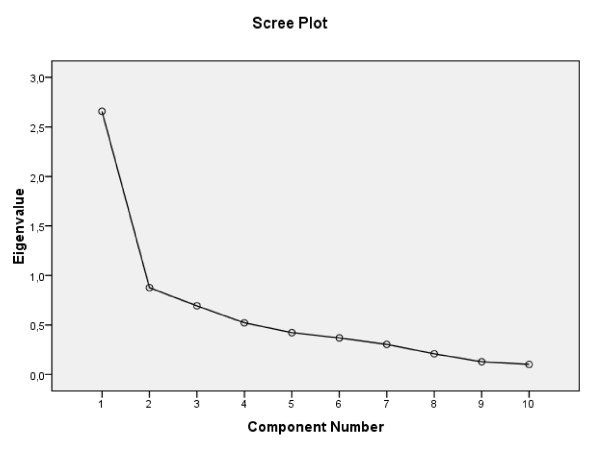
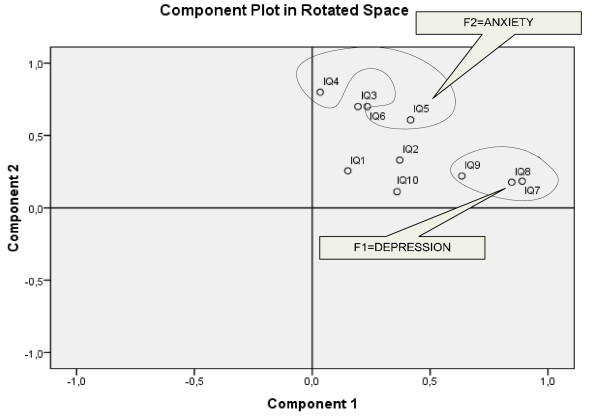
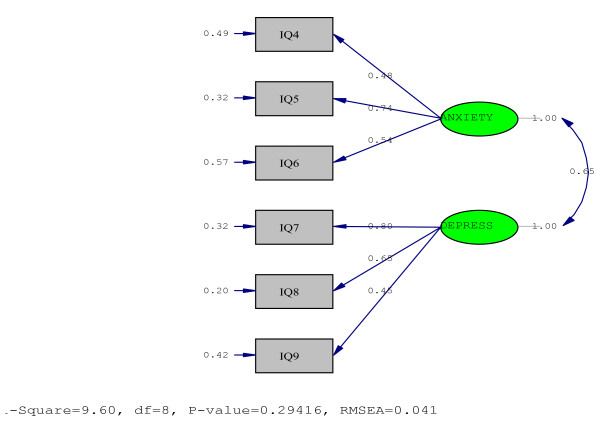
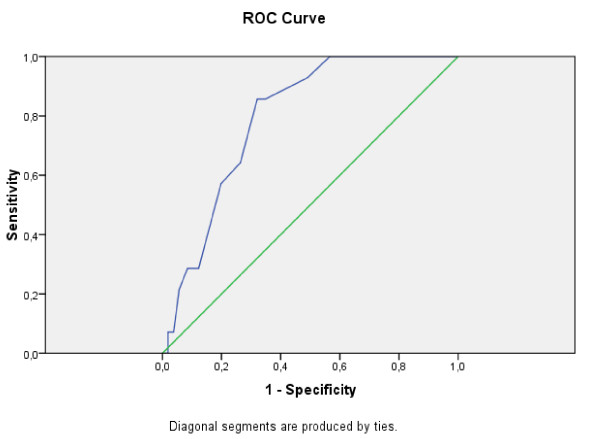
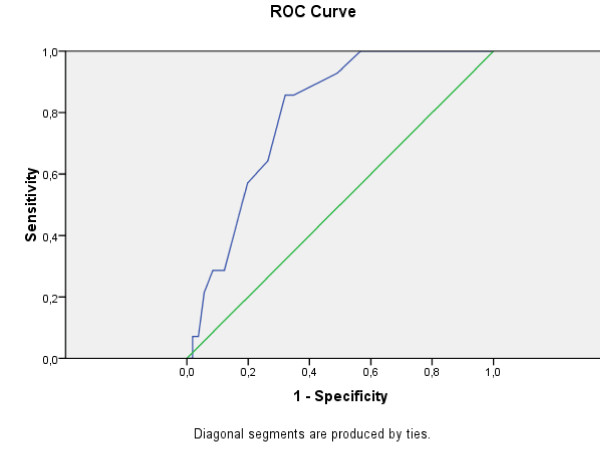
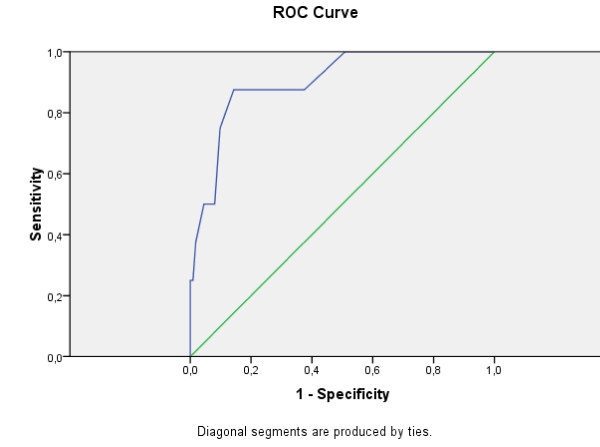
BACKGROUND: Edinburgh Postnatal Depression Scale (EPDS) is an important screening instrument that is used routinely with mothers during the postpartum period for early identification of postnatal depression. The purpose of this study was to validate the Greek version of EPDS along with sensitivity, specificity and predictive values. METHODS: 120 mothers within 12 weeks postpartum were recruited from the perinatal care registers of the Maternity Departments of 4 Hospitals of Heraklion municipality, Greece. EPDS and Beck Depression Inventory-II (BDI-II) surveys were administered in random order to the mothers. Each mother was diagnosed with depression according to the validated Greek version of BDI-II. The psychometric measurements that were performed included: two independent samples t-tests, One-way analysis of variance (ANOVA), reliability coefficients, Explanatory factor analysis using a Varimax rotation and Principal Components Method. Confirmatory analysis -known as structural equation modelling- of principal components was conducted by LISREL (Linear Structural Relations). A receiver operating characteristic (ROC) analysis was carried out to evaluate the global functioning of the scale. RESULTS: 8 (6.7%) of the mothers were diagnosed with major postnatal depression, 14 (11.7%) with moderate and 38 (31.7%) with mild depression on the basis of BDI-II scores. The internal consistency of the EPDS Greek version -using Chronbach's alpha coefficient- was found 0.804 and that of Guttman split-half coefficient 0.742. Our findings confirm the multidimensionality of EPDS, demonstrating a two-factor structure which contained subscales reflecting depressive symptoms and anxiety. The Confirmatory Factor analysis demonstrated that the two factor model offered a very good fit to our data. The area under ROC curve AUC was found 0.7470 and the logistic estimate for the threshold score of 8/9 fitted the model sensitivity at 76.7% and model specificity at 68.3%. CONCLUSION: Our data confirm the validity of the Greek version of the EPDS in identifying postnatal depression. The Greek EPDS scale could be used as a useful instrument in both clinical practice and research.
Overview
The claims and statistics of this paper haven’t been checked yet.
Free: it reads the open-access text and checks the first 5 claims that cite a source we can check. Create a free account to check every claim.
Integrity signals
Registry
Cites
Statistics
Figures
Verification
Claims the paper makes
The claims and statistics of this paper haven’t been checked yet.
Free: it reads the open-access text and checks the first 5 claims that cite a source we can check. Create a free account to check every claim.
Self-check
Percentages, sums and reported differences re-computed from the paper’s own numbers.
The self-check needs the paper’s full text.
Citations
Cites
Hu, L., & Bentler, P. M. (1999) · Structural Equation Modeling A Multidisciplinary Journal · doi:10.1080/10705519909540118 · Cited by 108,788
Tabachnick, B. G., & Fidell, L. S. (1983) · Cited by 80,058
An inventory for measuring depression
BECK, A. T. (1961) · Archives of General Psychiatry · doi:10.1001/archpsyc.1961.01710120031004 · Cited by 38,032 · cited 1×
“The recent revision of the BDI was used [19].”
MethodDetection of Postnatal Depression: Development of the 10-item Edinburgh Postnatal Depression Scale
Cox, J. L., Holden, J. M., & Sagovsky, R. (1987) · British Journal of Psychiatry · doi:10.1192/bjp.150.6.782 · Cited by 14,183
The application of electronic computers to factor analysis
Kaiser, H. F. (1960) · Educational and Psychological Measurement · doi:10.1177/001316446002000116 · Cited by 12,459 · cited 1×
“7 criteria: (a) eigenvalue >1 [21]; (b) variables should load > 0.”
Multivariate Statistical Methods
(2008) · Encyclopedia of Public Health · doi:10.1007/978-1-4020-5614-7_2263 · Cited by 5,580
Rates and risk of postpartum depression – a meta-analysis
O'hara, M. W., & Swain, A. M. (1996) · International Review of Psychiatry · doi:10.3109/09540269609037816 · Cited by 3,116 · cited 3×
“Since the profound effect of untreated postnatal depression is well documented [1-3,5,6], in clinical settings, identification of postnatal depression can be improved by increasing awareness and skills of health professionals in screening through the use of specific questionnaires, like EPDS.”
BackgroundResultMultivariate Statistical Methods.
Clarke, G. M., & Morrison, D. F. (1977) · Journal of the Royal Statistical Society. Series A (General) · doi:10.2307/2344930 · Cited by 2,165
The Validation of the Edinburgh Post-natal Depression Scale on a Community Sample
Murray, L., & Carothers, A. D. (1990) · British Journal of Psychiatry · doi:10.1192/bjp.157.2.288 · Cited by 885
A Controlled Study of the Onset, Duration and Prevalence of Postnatal Depression
Cox, J. L., Murray, D., & Chapman, G. (1993) · British Journal of Psychiatry · doi:10.1192/bjp.163.1.27 · Cited by 765
Lee, D. T. S., Yip, S. K., Chiu, H. F. K., Leung, T. Y. S., Chan, K. P. M., Chau, I. O. L., Leung, H. C. M., & Chung, T. K. H. (1998) · British Journal of Psychiatry · doi:10.1192/bjp.172.5.433 · Cited by 578 · cited 1×
“6%) was more appropriate in an Italian population [29], a cut-off score of 9/10 was appropriate for screening Chinese population (sensitivity 82%, specificity 86% PPV 44%) [40] and a cut-score of 9 was appropriate for Japanese population, giving a sensitivity of 75% and a specificity of 93% [41].”
BackgroundThe effects of postpartum depression on child development: A meta-analysis
Beck, C. T. (1998) · Archives of Psychiatric Nursing · doi:10.1016/s0883-9417(98)80004-6 · Cited by 558 · cited 1×
“Use of the Beck Depression Inventory (BDI) [6,7] and BDI-II with postpartum samples has been reported in the literature as well correlated with EPDS [3,5] and other instruments used to screen for postnatal depression like Postpartum Depression Screening Scale (PDSS) [3].”
MethodThe Effects of Postpartum Depression on Maternal-Infant Interaction: A Meta-Analysis
BECK, C. T. (1995) · Nursing Research · doi:10.1097/00006199-199509000-00007 · Cited by 467 · cited 2×
“Use of the Beck Depression Inventory (BDI) [6, 7] and BDI-II with postpartum samples has been reported in the literature as well correlated with EPDS [3,5] and other instruments used to screen for postnatal depression like Postpartum Depression Screening Scale (PDSS) [3].”
Postpartum Depression Screening Scale: Development and Psychometric Testing
Beck, C. T., & Gable, R. K. (2000) · Nursing Research · doi:10.1097/00006199-200009000-00006 · Cited by 406 · cited 3×
“Since the profound effect of untreated postnatal depression is well documented [1-3,5,6], in clinical settings, identification of postnatal depression can be improved by increasing awareness and skills of health professionals in screening through the use of specific questionnaires, like EPDS.”
BackgroundMethodThe Edinburgh Postnatal Depression Scale: Validation for an Australian Sample
Boyce, P., Stubbs, J., & Todd, A. (1993) · Australian & New Zealand Journal of Psychiatry · doi:10.3109/00048679309075805 · Cited by 378 · cited 2×
“Boyce P, Stubbs J, Todd A: The Edinburgh Postnatal Depression Scale: Validation for an Australian sample.”
BackgroundGuedeney, N., & Fermanian, J. (1998) · European Psychiatry · doi:10.1016/s0924-9338(98)80023-0 · Cited by 342
An international study exploring levels of postpartum depressive symptomatology
Affonso, D. D., De, A. K., Horowitz, J. A., & Mayberry, L. J. (2000) · Journal of Psychosomatic Research · doi:10.1016/s0022-3999(00)00176-8 · Cited by 327 · cited 5×
“It has been observed through many validation studies that there is cultural variation in the expression of depressive symptoms during the postnatal period [8, 9, 10] that may result in differences in the psychometric characteristics of the EPDS [5, 8, 10] and differences in screening procedures.”
InfluentialThe Edinburgh Postnatal Depression Scale: Validation for an Italian sample
Benvenuti, P. (1999) · Journal of Affective Disorders · doi:10.1016/s0165-0327(98)00102-5 · Cited by 300 · cited 3×
“Cronbach standardised alpha and Guttman Split-half for the Greek EPDS were found similar to those reported by Cox in the first validation study (0.87) [4], by Pop et al in the Dutch validation study (0.82) [25] and Benvenuti et al in the Italian validation study (0.78) [ 29 ].”
ResultInfluentialThe Edinburgh Postnatal Depression Scale: validation on a Swedish community sample
Wickberg, B., & Hwang, C. P. (1996) · Acta Psychiatrica Scandinavica · doi:10.1111/j.1600-0447.1996.tb09845.x · Cited by 292 · cited 3×
“Department of Statistics, University of Uppsala, Sweden; 1986.”
BackgroundCharacteristics of the Edinburgh post natal depression scale in The Netherlands
Pop, V. J., Komproe, I. H., & van Son, M. J. (1992) · Journal of Affective Disorders · doi:10.1016/0165-0327(92)90041-4 · Cited by 286
Epidemiology in public health practice
(2010) · Wageningen Academic Publishers eBooks · doi:10.3920/978-90-8686-140-8 · Cited by 285
Adouard, F., Glangeaud-Freudenthal, N. M. C., & Golse, B. (2005) · Archives of Women’s Mental Health · doi:10.1007/s00737-005-0077-9 · Cited by 285 · cited 1×
“It has been observed through many validation studies that there is cultural variation in the expression of depressive symptoms during the postnatal period [8, 9, 10] that may result in differences in the psychometric characteristics of the EPDS [5, 8, 10] and differences in screening procedures.”
Areias, M. E. G., Kumar, R., Barros, H., & Figueiredo, E. (1996) · British Journal of Psychiatry · doi:10.1192/bjp.169.1.30 · Cited by 276 · cited 1×
“It has already been validated in many countries such as The Netherlands [25], Portugal [ 26 ], Sweden [27], and Australia [28] and has shown remarkable stability and comparability.”
The Behavior Of Number-Of-Factors Rules With Simulated Data
Hakstian, A. R., Rogers, W. T., & Cattell, R. B. (1982) · Multivariate Behavioral Research · doi:10.1207/s15327906mbr1702_3 · Cited by 248 · cited 1×
“Additionally, a Confirmatory analysis –also called structural equation modelling- of principal components was conducted by LISREL (Linear Structural Relations) to confirm the scale items principally load on to that factor and correlate weakly with other factors, to assess tests for significance of factor loadings and…”
Does the Edinburgh Postnatal Depression Scale measure anxiety?
Brouwers, E. P. M., van Baar, A. L., & Pop, V. J. M. (2001) · Journal of Psychosomatic Research · doi:10.1016/s0022-3999(01)00245-8 · Cited by 234 · cited 3×
“Our findings confirm the multidimensionality of EPDS, demonstrating a twofactor structure with similar loadings, while recent studies have demonstrated postnatal significant differences in item-factor loadings characteristics [30-34,36].”
ResultPostnatal depression across countries and cultures: a qualitative study
Oates, M. R., Cox, J. L., Neema, S., Asten, P., Glangeaud-Freudenthal, N., Figueiredo, B., Gorman, L. L., Hacking, S., Hirst, E., Kammerer, M. H., et al. (2004) · British Journal of Psychiatry · doi:10.1192/bjp.184.46.s10 · Cited by 219 · cited 1×
“It has been observed through many validation studies that there is cultural variation in the expression of depressive symptoms during the postnatal period [8, 9, 10] that may result in differences in the psychometric characteristics of the EPDS [5, 8, 10] and differences in screening procedures.”
Hendry, C. (2003) · Nurse Researcher · doi:10.7748/nr.10.2.81.s11 · Cited by 211
Mood changes during pregnancy and the postpartum period: development of a biopsychosocial model
Ross, L. E., Sellers, E. M., Gilbert Evans, S. E., & Romach, M. K. (2004) · Acta Psychiatrica Scandinavica · doi:10.1111/j.1600-0047.2004.00296.x · Cited by 144 · cited 3×
“Our findings confirm the multidimensionality of EPDS, demonstrating a twofactor structure with similar loadings, while recent studies have demonstrated postnatal significant differences in item-factor loadings characteristics [30-34,36].”
ResultJomeen, J., & Martin, C. R. (2005) · Journal of Reproductive and Infant Psychology · doi:10.1080/02646830500129297 · Cited by 141 · cited 4×
“Our findings confirm the multidimensionality of EPDS, demonstrating a twofactor structure with similar loadings, while recent studies have demonstrated postnatal significant differences in item-factor loadings characteristics [30-34,36].”
BackgroundResultInfluentialA Psychiatric Epidemiological Study of Postpartum Chinese Women
Lee, D. T. S., Yip, A. S. K., Chiu, H. F. K., Leung, T. Y. S., & Chung, T. K. H. (2001) · American Journal of Psychiatry · doi:10.1176/appi.ajp.158.2.220 · Cited by 124
Lloyd‐Williams, M., Friedman, T., & Rudd, N. (2000) · Journal of Pain and Symptom Management · doi:10.1016/s0885-3924(00)00182-2 · Cited by 96 · cited 1×
“Since Cox et al suggested that EPDS has one dimensional aspect [4], a number of studies that have examined its structure, have found the EPDS to be multidimensional and that it can be distinguish at two factors; however, significant variation has been observed between the item factor loadings between studies [25,30-36…”
ResultA 6-month study of postpartum depression and related factors in Athens Greece
Gonidakis, F., Rabavilas, A. D., Varsou, E., Kreatsas, G., & Christodoulou, G. N. (2008) · Comprehensive Psychiatry · doi:10.1016/j.comppsych.2007.05.018 · Cited by 88 · cited 1×
“5% at the end of the first month after delivery [11].”
BackgroundEpidemiology for Public Health Practice
Ellis‐Stoll, C. C. (1997) · AORN Journal · doi:10.1016/s0001-2092(06)62875-5 · Cited by 81
Screening for postnatal depression in women of non-English speaking background
Barnett, B., Matthey, S., & Gyaneshwar, R. (1999) · Archives of Women s Mental Health · doi:10.1007/s007370050038 · Cited by 72 · cited 1×
“It has been observed through many validation studies that there is cultural variation in the expression of depressive symptoms during the postnatal period [8-10] that may result in differences in the psychometric characteristics of the EPDS [5,8,10] and differences in screening procedures.”
BackgroundResearch methods in health: investigating health and health services. 2nd edition
Bowling, A. (2002) · ePrints Soton (University of Southampton) · Cited by 68
A public health role in perinatal mental health: Are midwives ready?
Ross-Davie, M., Elliott, S., Sarkar, A., & Green, L. (2006) · British Journal of Midwifery · doi:10.12968/bjom.2006.14.6.21181 · Cited by 64 · cited 1×
“4 health role of community midwives in detection and initial assessment of perinatal mental disorder [13, 14, 15].”
BackgroundJOMEEN, J., & MARTIN, C. R. (2007) · Journal of Psychiatric and Mental Health Nursing · doi:10.1111/j.1365-2850.2007.01084.x · Cited by 62 · cited 4×
“Our findings confirm the multidimensionality of EPDS, demonstrating a twofactor structure with similar loadings, while recent studies have demonstrated postnatal significant differences in item-factor loadings characteristics [30-34,36].”
BackgroundResultInfluentialRelation between Edinburgh Postnatal Depression Scale scores at 2-3 days and 4-6 weeks postpartum
Chabrol, H., & Teissedre, F. (2004) · Journal of Reproductive and Infant Psychology · doi:10.1080/02646830310001643067 · Cited by 57
Getting ready for birth: impending fatherhood
Wöckel, A., Schfer, E., Beggel, A., & Abou‐Dakn, M. (2007) · British Journal of Midwifery · doi:10.12968/bjom.2007.15.6.23673 · Cited by 42
Creating an Integrated Health Care System in Greece: A Primary Care Perspective
Souliotis, K. N., & Lionis, C. D. (2004) · Journal of Medical Systems · doi:10.1023/b:joms.0000044966.76675.28 · Cited by 41 · cited 1×
“More specifically, efforts have been undertaken in Greece in screening by community health professionals in order to meet the women's health needs, as a potential benchmark of establishing an effective primary care system [16].”
BackgroundSelf-citationSelf-esteem and mental health during early pregnancy
Jomeen, J., & Martin, C. R. (2004) · Clinical Effectiveness in Nursing · doi:10.1016/j.cein.2004.09.001 · Cited by 33 · cited 4×
“Our findings confirm the multidimensionality of EPDS, demonstrating a twofactor structure with similar loadings, while recent studies have demonstrated postnatal significant differences in item-factor loadings characteristics [30-34,36].”
BackgroundResultInfluentialCreating an Integrated Health Care System in Greece: A Primary Care Perspective
Souliotis, K. N., & Lionis, C. D. (2005) · Journal of Medical Systems · doi:10.1007/s10916-005-3006-6 · Cited by 27
Self-citationDetection and initial assessment of mental disorder: the midwife's role
Elliott, S. A., Ross–Davie, M., Sarkar, A., & Green, L. (2007) · British Journal of Midwifery · doi:10.12968/bjom.2007.15.12.27791 · Cited by 20
Planning and implementing mental health training
Ross–Davie, M., Elliott, S. A., & Green, L. (2007) · British Journal of Midwifery · doi:10.12968/bjom.2007.15.4.23393 · Cited by 13 · cited 1×
“4 health role of community midwives in detection and initial assessment of perinatal mental disorder [13, 14, 15].”
Background(2006) · Allyn & Bacon, Inc. eBooks
Research works printed but not linked: 4
- Bowling A Research Methods in Health: Investigating health and health services 2002 2 Maidenhead England: Open University Press
- Beck AT Steer RA Brown GK BDI-II manual 1996 San Antonio: The Psychological Corporation
- Jiireskog KG Sorbom D LISREL VI: analysis of linear structural relationships by maximum likelihood, instrumental variables, and least squares methods 1986 Department of Statistics, University of Uppsala, Sweden
- Okano T Murata M Masuji F Tamaki R Nomura J Miyaoka H Kitamura K Validation and reliability of a Japanese version of the EPDS Arch Psychiatr Diagn Clin Eval 1996 7 525 533
Cited by
Koutra, K., Chatzi, L., Bagkeris, M., Vassilaki, M., Bitsios, P., & Kogevinas, M. (2013) · Social Psychiatry and Psychiatric Epidemiology · doi:10.1007/s00127-012-0636-0 · Cited by 224
“One Greek study has shown that an EPDS cutoff score of 11/12 may be an effective screening for minor depression postnatally in a small (n = 81) and non-representative Greek sample [24], while another one has shown that a cutoff score of 8/9 may be an effective screening for self-reported depressive symptoms postnatall…”
BackgroundSelf-citationThe Impact of Antenatal Depression on Perinatal Outcomes in Australian Women
Eastwood, J., Ogbo, F. A., Hendry, A., Noble, J., Page, A., & for the Early Years Research Group (EYRG) (2017) · PLOS ONE · doi:10.1371/journal.pone.0169907 · Cited by 199
Chatzi, L., Melaki, V., Sarri, K., Apostolaki, I., Roumeliotaki, T., Georgiou, V., Vassilaki, M., Koutis, A., Bitsios, P., & Kogevinas, M. (2011) · Public Health Nutrition · doi:10.1017/s1368980010003629 · Cited by 148
“The Greek version of the scale was validated in 2008((7)).”
MethodResultSelf-citationLau, Y., Wang, Y., Yin, L., Chan, K. S., & Guo, X. (2010) · International Journal of Nursing Studies · doi:10.1016/j.ijnurstu.2010.02.005 · Cited by 151
“has identified a two-factor model (Jomeen and Martin, 2005; Vivilaki et al., 2009), a three-factor model (Chabrol and Teissedre, 2004; Ross et al.”
MethodCohort Profile: The Mother-Child Cohort in Crete, Greece (Rhea Study)
Chatzi, L., Leventakou, V., Vafeiadi, M., Koutra, K., Roumeliotaki, T., Chalkiadaki, G., Karachaliou, M., Daraki, V., Kyriklaki, A., Kampouri, M., et al. (2017) · International Journal of Epidemiology · doi:10.1093/ije/dyx084 · Cited by 134
“We assessed maternal mental health (anxiety, depressive symptoms and personality characteristics) during pregnancy and postpartum (8–10 weeks after delivery) with the use of self-administered questionnaires, and maternal cognition with the use of Raven’s Standard Progressive Matrices.(18,19) Finally, we measured micro…”
MethodSelf-citation
Metadata
- Authors
- Vivilaki, V. G., Dafermos, V., Kogevinas, M., Bitsios, P., & Lionis, C.
- Affiliations
- University of Crete (GR)
- Corresponding author
- Vivilaki, Victoria G
- Venue
- BMC Public Health
- Published
- 2009-09-09
- Volume
- 9
- Issue
- 1
- Pages
- 329-329
- ISSN
- 1471-2458 (ISSN-L)
- PMC
- PMC2748079
- OpenAlex
- W2138936061
- Cited by
- 100
- References
- 47
- Citations by year
- 2026: 7 · 2025: 7 · 2024: 4 · 2023: 8 · 2022: 7 · 2021: 11 · 2020: 7 · 2019: 4 · 2018: 2 · 2017: 6 · 2016: 7 · 2015: 5 · 2014: 6 · 2013: 4 · 2012: 5
- FWCI
- 4.68
- Type
- journal article
- Language
- en
- Open access
- gold
- doi.org
- Licence
- cc-by
- creativecommons.org/licenses/by/2.0 (tdm)
- Locations
- BMC Public Health (publishedVersion, cc-by)
- PubMed Central (publishedVersion, cc-by)
- PubMed (publishedVersion)
- DOAJ (DOAJ: Directory of Open Access Journals) (submittedVersion)
- Funders
- University of Crete
- Topics
- Health Sciences › Medicine › Public Health, Environmental and Occupational Health › Maternal Mental Health During Pregnancy and Postpartum
- Social Sciences › Psychology › Experimental and Cognitive Psychology › Anxiety, Depression, Psychometrics, Treatment, Cognitive Processes
- Social Sciences › Decision Sciences › Management Science and Operations Research › Psychometric Methodologies and Testing
- Keywords
- Edinburgh Postnatal Depression Scale, postpartum depression, Greek translation, psychometric validation, screening tool, Beck Depression Inventory-II, internal consistency, factor structure, diagnostic accuracy, postpartum women, anxiety symptoms
- MeSH terms
- Analysis of Variance, Female, Greece, Humans, Pilot Projects, Psychometrics, Sensitivity and Specificity, Depression, Postpartum
About these checks
Registry, retraction, Cites and statistics results are computed, not judged, with one exception: a printed reference that no index lists is read once by a model before it counts as a citation error. Claims are extracted by a model and kept only when their quote appears verbatim in the text; each cited source is then checked, with a model’s help, for whether it says what the claim relies on. Those verdicts can be wrong — read the claim’s quote and the cited source before relying on one.
Statistics and arithmetic are recomputed, not judged.
Confidence bands are shown only for fields calibrated on our annotated test set. None is calibrated yet, so no band is shown.
What counts as a claim ›How we measure confidence ›How we check this ›
Are you an author, or do you see a problem with this page? Request a review
Data sources
Bibliographic data: Semantic Scholar, OpenAlex, Crossref.
Contains information from the Semantic Scholar Academic Graph Datasets, made available under the ODC Attribution License (ODC-BY 1.0).
Semantic Scholar’s data is described in: Kinney, R., et al. (2023). The Semantic Scholar Open Data Platform. arXiv:2301.10140.
