

Reduced thoracolumbar fascia shear strain in human chronic low back pain
Open accessThe DOI matches its Crossref record; 31 of the 32 references it cites were found in a registry or an index.
Abstract
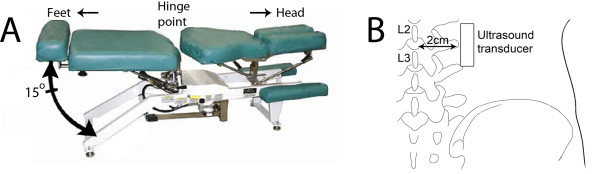
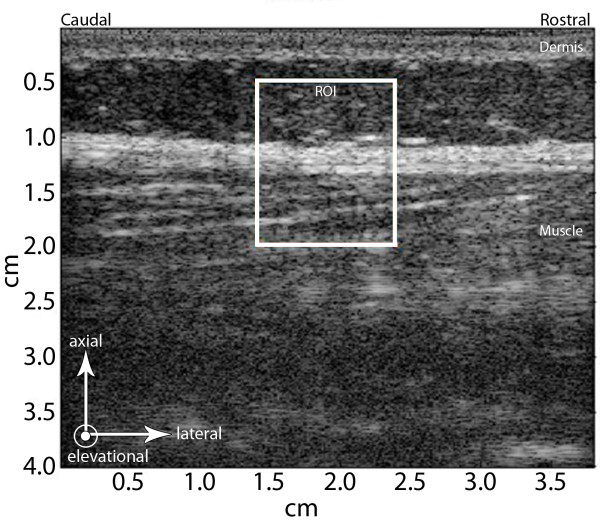
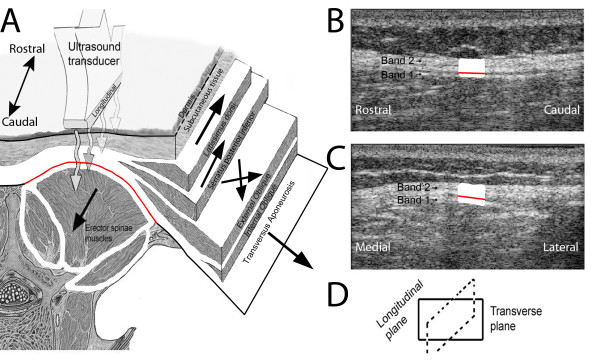
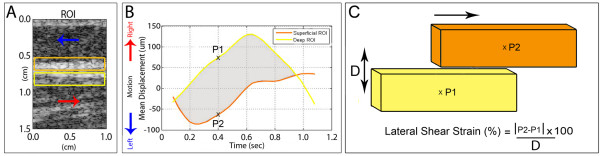
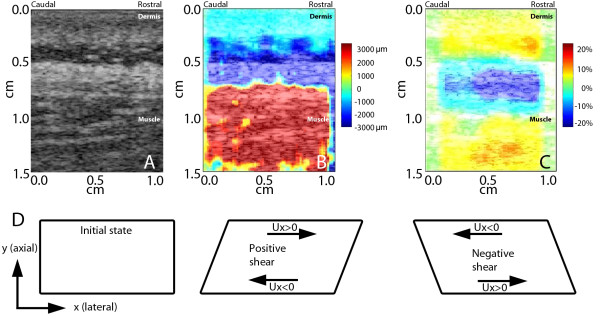
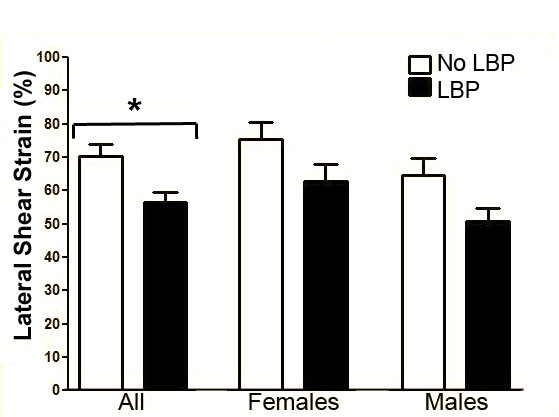
BACKGROUND: The role played by the thoracolumbar fascia in chronic low back pain (LBP) is poorly understood. The thoracolumbar fascia is composed of dense connective tissue layers separated by layers of loose connective tissue that normally allow the dense layers to glide past one another during trunk motion. The goal of this study was to quantify shear plane motion within the thoracolumbar fascia using ultrasound elasticity imaging in human subjects with and without chronic low back pain (LBP). METHODS: We tested 121 human subjects, 50 without LBP and 71 with LBP of greater than 12 months duration. In each subject, an ultrasound cine-recording was acquired on the right and left sides of the back during passive trunk flexion using a motorized articulated table with the hinge point of the table at L4-5 and the ultrasound probe located longitudinally 2 cm lateral to the midline at the level of the L2-3 interspace. Tissue displacement within the thoracolumbar fascia was calculated using cross correlation techniques and shear strain was derived from this displacement data. Additional measures included standard range of motion and physical performance evaluations as well as ultrasound measurement of perimuscular connective tissue thickness and echogenicity. RESULTS: Thoracolumbar fascia shear strain was reduced in the LBP group compared with the No-LBP group (56.4% ± 3.1% vs. 70.2% ± 3.6% respectively, p < .01). There was no evidence that this difference was sex-specific (group by sex interaction p = .09), although overall, males had significantly lower shear strain than females (p = .02). Significant correlations were found in male subjects between thoracolumbar fascia shear strain and the following variables: perimuscular connective tissue thickness (r = -0.45, p <.001), echogenicity (r = -0.28, p < .05), trunk flexion range of motion (r = 0.36, p < .01), trunk extension range of motion (r = 0.41, p < .01), repeated forward bend task duration (r = -0.54, p < .0001) and repeated sit-to-stand task duration (r = -0.45, p < .001). CONCLUSION: Thoracolumbar fascia shear strain was ~20% lower in human subjects with chronic low back pain. This reduction of shear plane motion may be due to abnormal trunk movement patterns and/or intrinsic connective tissue pathology. There appears to be some sex-related differences in thoracolumbar fascia shear strain that may also play a role in altered connective tissue function.
Overview
The claims and statistics of this paper haven’t been checked yet.
Free: it reads the open-access text and checks the first 5 claims that cite a source we can check. Create a free account to check every claim.
Integrity signals
Registry
Cites
Statistics
Figures
Verification
Claims the paper makes
The claims and statistics of this paper haven’t been checked yet.
Free: it reads the open-access text and checks the first 5 claims that cite a source we can check. Create a free account to check every claim.
Claims other papers make about this one
Each is checked against this paper’s own text: does it say what the citing paper says it does?
The cited source says what the claim attributes to it.
In the citing paper
“An example of this was demonstrated in human subjects with chronic low-back pain who were shown to have reduced shear strain within layers of the thoracolumbar fascia compared with control subjects without low-back pain [3].”
From Fascia Mobility, Proprioception, and Myofascial Pain. (2021) · cites this paper as [3]
The cited source says what the claim attributes to it.
In the citing paper
“Fascial planes are separated by planes of “loose” connective tissue that allows the fasciae to glide past one another [1,3].”
From Fascia Mobility, Proprioception, and Myofascial Pain. (2021) · cites this paper as [3]
Self-check
Percentages, sums and reported differences re-computed from the paper’s own numbers.
The self-check needs the paper’s full text.
Citations
Cites
The short-form McGill pain questionnaire
Melzack, R. (1987) · Pain · doi:10.1016/0304-3959(87)91074-8 · Cited by 4,368
Oswestry Low Back Pain Disability Questionnaire
(2007) · Encyclopedia of Pain · doi:10.1007/978-3-540-29805-2_3023 · Cited by 3,954
A short questionnaire for the measurement of habitual physical activity in epidemiological studies
Baecke, J., Burema, J., & Frijters, J. (1982) · The American Journal of Clinical Nutrition · doi:10.1093/ajcn/36.5.936 · Cited by 3,945 · cited 1×
“In addition, both groups completed the Baecke physical activity level questionnaire [11].”
MethodElastography: A quantitative method for imaging the elasticity of biological tissues
Ophir, J. (1991) · Ultrasonic Imaging · doi:10.1016/0161-7346(91)90079-w · Cited by 3,776 · cited 1×
“Tissue displacements between successive ultrasound frames were estimated from the “raw” ultrasonic radio frequency (RF) data using cross-correlation techniques [14,15] with a 1 mm window incremented with a 90% overlap.”
MethodGrading the severity of chronic pain
Von Korff, M., Ormel, J., Keefe, F. J., & Dworkin, S. F. (1992) · Pain · doi:10.1016/0304-3959(92)90154-4 · Cited by 3,022
Measuring Functioning and Well-Being: The Medical Outcomes Study Approach
Stewart, A., & Ware, J. (1992) · doi:10.7249/cb361 · Cited by 2,689 · cited 1×
“The Medical Outcomes Survey (MOS) was used as a general health, physical and mental quality of life measure for all subjects, with higher scores correlating with better health [13].”
MethodKonofagou, E., & Ophir, J. (1998) · Ultrasound in Medicine & Biology · doi:10.1016/s0301-5629(98)00109-4 · Cited by 444 · cited 1×
“Tissue displacements between successive ultrasound frames were estimated from the “raw” ultrasonic radio frequency (RF) data using cross-correlation techniques [14,15] with a 1 mm window incremented with a 90% overlap.”
MethodSelf-citationA hypothesis of chronic back pain: ligament subfailure injuries lead to muscle control dysfunction
Panjabi, M. M. (2006) · European Spine Journal · doi:10.1007/s00586-005-0925-3 · Cited by 423
Studying the Natural History of Back Pain
Korff, M. V. (1994) · Spine · doi:10.1097/00007632-199409151-00005 · Cited by 405
MacDonald, D., Moseley, L. G., & Hodges, P. W. (2009) · Pain · doi:10.1016/j.pain.2008.12.002 · Cited by 368 · cited 1×
“Given that the dense connective tissue layers within the thoracolumbar fascia are aponeuroses connected to dorsal and ventral trunk muscles, one plausible explanation for our findings is that reduced shear strain results from impaired neuromuscular control and recruitment patterns of these muscles during trunk movemen…”
BackgroundSimmonds, M. J., Olson, S. L., Jones, S., Hussein, T., Lee, C. E., Novy, D., & Radwan, H. (1998) · Spine · doi:10.1097/00007632-199811150-00011 · Cited by 368 · cited 1×
“We used the double inclinometer technique for measurement of lumbar flexion [17], extension and lateral flexion [18] ROM.”
MethodThe fascia of the limbs and back – a review
Benjamin, M. (2009) · Journal of Anatomy · doi:10.1111/j.1469-7580.2008.01011.x · Cited by 345 · cited 1×
“An important feature of this complex fascial structure is that it is composed of several layers of dense connective tissue separated by layers of “loose” areolar connective tissue that allow adjacent dense layers to glide past one another [2].”
BackgroundLangevin, H. M., & Sherman, K. J. (2007) · Medical Hypotheses · doi:10.1016/j.mehy.2006.06.033 · Cited by 291 · cited 1×
“Applying this technique to more caudal low back segments, as well as other body regions where restricted mobility between adjacent connective tissue planes may be present, could potentially contribute to a more general understanding of the role of connective tissue in chronic pain pathophysiology [23].”
MethodSelf-citationChanges in the mechanical properties of the trunk in low back pain may be associated with recurrence
Hodges, P., van den Hoorn, W., Dawson, A., & Cholewicki, J. (2009) · Journal of Biomechanics · doi:10.1016/j.jbiomech.2008.10.001 · Cited by 242 · cited 1×
“Given that the dense connective tissue layers within the thoracolumbar fascia are aponeuroses connected to dorsal and ventral trunk muscles, one plausible explanation for our findings is that reduced shear strain results from impaired neuromuscular control and recruitment patterns of these muscles during trunk movemen…”
BackgroundImmobility effects on synovial joints. The pathomechanics of joint contracture1
Akeson, W. H., Amiel, D., & Woo, S. L.-Y. (1980) · Biorheology · doi:10.3233/bir-1980-171-212 · Cited by 234 · cited 1×
“Alternatively, the altered muscle recruitment patterns could lead to altered forces being transferred to the connective tissues, which could cause remodeling as can occur in other types of connective tissues such as ligaments and joint capsules [27-33].”
BackgroundLangevin, H. M., Stevens-Tuttle, D., Fox, J. R., Badger, G. J., Bouffard, N. A., Krag, M. H., Wu, J., & Henry, S. M. (2009) · BMC Musculoskeletal Disorders · doi:10.1186/1471-2474-10-151 · Cited by 231 · cited 1×
“In our prior report [22], we did not have evidence that this difference was sexspecific, although we had observed a greater difference between LBP and No-LBP in males.”
Self-citationConnective tissue response to immobility
Woo, S. L., Matthews, J. V., Akeson, W. H., Amiel, D., & Richard Convery, F. (1975) · Arthritis & Rheumatism · doi:10.1002/art.1780180311 · Cited by 201
WILLIAMS, P. E., Catanese, T., Lucey, E. G., & Goldspink, G. (1988) · PubMed · Cited by 191
Quantification of Lumbar Function
Keeley, J., Mayer, T. G., Cox, R., Gatchel, R. J., SMITH, J., & Mooney, V. (1986) · Spine · doi:10.1097/00007632-198601000-00009 · Cited by 124 · cited 1×
“3 degrees for trunk extension [19].”
Harris‐Hayes, M., Sahrmann, S. A., & Dillen, L. R. V. (2009) · Journal of Sport Rehabilitation · doi:10.1123/jsr.18.1.60 · Cited by 124
Theoretical Quality Assessment of Myocardial Elastography with In Vivo Validation
Lee, W.-N., Ingrassia, C. M., Fung-Kee-Fung, S., Costa, K. D., Holmes, J. W., & Konofagou, E. E. (2007) · IEEE Transactions on Ultrasonics Ferroelectrics and Frequency Control · doi:10.1109/tuffc.2007.528 · Cited by 119 · cited 1×
“Cumulative lateral shear strain maps were further generated by outputting the off-diagonal component in the Lagrangian finite strain tensor, which is obtained based on the displacement gradient [16].”
MethodSelf-citationJacobs, J. V., Henry, S. M., & Nagle, K. J. (2009) · Behavioral Neuroscience · doi:10.1037/a0014479 · Cited by 92 · cited 1×
“Given that the dense connective tissue layers within the thoracolumbar fascia are aponeuroses connected to dorsal and ventral trunk muscles, one plausible explanation for our findings is that reduced shear strain results from impaired neuromuscular control and recruitment patterns of these muscles during trunk movemen…”
BackgroundSelf-citationMyofascial Low Back Pain: A Review
Malanga, G. A., & Colon, E. J. C. (2010) · Physical Medicine and Rehabilitation Clinics of North America · doi:10.1016/j.pmr.2010.07.003 · Cited by 87
Dorsal horn neurons having input from low back structures in rats
Taguchi, T., Hoheisel, U., & Mense, S. (2008) · Pain · doi:10.1016/j.pain.2007.11.015 · Cited by 82 · cited 1×
“Although the thoracolumbar fascia has been the subject of recent attention as a potential pain-generating structure in the back [3-6], its role in low back pain (LBP) pathophysiology is poorly understood.”
BackgroundFritz, J. M., & Piva, S. R. (2003) · Spine · doi:10.1097/01.brs.0000067270.50897.db · Cited by 63 · cited 2×
“We used the double inclinometer technique for measurement of lumbar flexion [17], extension and lateral flexion [18] ROM.”
BackgroundMethodModifications of Bone and Connective Tissue after Orthostatic Bedrest
Uebelhart, D., Bernard, J.-C., Hartmann, D. J., Moro, L., Roth, M., Uebelhart, B., Réhailia, M., Mauco, G., Schmitt, D., Alexandre, C., et al. (2000) · Osteoporosis International · doi:10.1007/s001980050007 · Cited by 60 · cited 1×
“Alternatively, the altered muscle recruitment patterns could lead to altered forces being transferred to the connective tissues, which could cause remodeling as can occur in other types of connective tissues such as ligaments and joint capsules [27-33].”
BackgroundGatton, M. L., Pearcy, M. J., Pettet, G. J., & Evans, J. H. (2010) · Journal of Biomechanics · doi:10.1016/j.jbiomech.2010.06.022 · Cited by 56 · cited 1×
“The thoracolumbar fascia plays an important role in transferring forces among trunk muscles and the spine [1].”
BackgroundLetter to the Editor concerning
Nolte, K. B., & Zumwalt, R. (2001) · Pathology - Research and Practice · doi:10.1078/0344-0338-00173 · Cited by 51
Effect of immobilization on collagen synthesis in rat skeletal muscles
Savolainen, J., Väänänen, K., Vihko, V., Puranen, J., & Takala, T. (1987) · American Journal of Physiology-Regulatory, Integrative and Comparative Physiology · doi:10.1152/ajpregu.1987.252.5.r883 · Cited by 46
Schleip, R., Vleeming, A., Lehmann‐Horn, F., & Klingler, W. (2007) · European Spine Journal · doi:10.1007/s00586-006-0298-2 · Cited by 44
Scholtes, S. A., & Dillen, L. R. V. (2007) · Journal of Orthopaedic and Sports Physical Therapy · doi:10.2519/jospt.2007.2610 · Cited by 39 · cited 1×
“The latter explanation is supported by previous reports of specific lumbopelvic movement impairment in males with low back pain [20,21].”
Research works printed but not linked: 4
- Miller RP Kori SH Todd DD The tampa scale. Unpublished report Tampa, FL 1991
- Langevin HM Stevens-Tuttle D Fox JR Badger GJ Bouffard NA Krag MH Wu J Henry SM Ultrasound evidence of altered lumbar connective tissue structure in human subjects with chronic low back pain BMC Musculoskelet Disord 2009 10 151 10.1186/1471-2474-10-151 19958536 PMC2796643 · DOI · Paper page
- Tillman LJ Cummings GS Currier DP, Nelson RM Biologic mechanisms of connective tissue mutability Dynamics of human biologic tissues contemporary perspectives in rehabilitation 1992 F.A. Davis, Philadelphia
- Cummings GS Tillman LJ Currier DP, Nelson RM Remodeling of dense connective tissue in normal adult tissues Dynamics of human biologic tissues contemporary perspectives in rehabilitation 1992 F.A. Davis, Philadelphia
Cited by
The thoracolumbar fascia: anatomy, function and clinical considerations
Willard, F. H., Vleeming, A., Schuenke, M. D., Danneels, L., & Schleip, R. (2012) · Journal of Anatomy · doi:10.1111/j.1469-7580.2012.01511.x · Cited by 627
“While this model considered paraspinal connective tissues, other authors suggested that the PLF should also be involved as a candidate for similar microinjuries (Schleip et al. 2007; Langevin et al. 2011).”
BackgroundResultEffectiveness of myofascial release: Systematic review of randomized controlled trials
Ajimsha, M. S., Al-Mudahka, N. R., & Al-Madzhar, J. A. (2015) · Journal of Bodywork and Movement Therapies · doi:10.1016/j.jbmt.2014.06.001 · Cited by 308
“Authors such as Day et al. (2009); Stecco et al. (2013) and Langevin et al. (2011) and colleagues, have suggested that connective tissue could become tighter/denser in overuse syndromes, or after traumatic injuries, but it is unclear if this is due to an alteration of collagen fiber composition, of…”
BackgroundFascial components of the myofascial pain syndrome
Stecco, A., Gesi, M., Stecco, C., & Stern, R. (2013) · Current Pain and Headache Reports · doi:10.1007/s11916-013-0352-9 · Cited by 270
“Only recently some authors [2–6] have suggested that connective tissue could become tighter in overuse syndromes or after traumatic injuries, but it is unclear if this is due to an alteration of collagen fiber composition, of fibroblasts, or of ground substance.”
BackgroundZügel, M., Maganaris, C. N., Wilke, J., Jurkat-Rott, K., Klingler, W., Wearing, S. C., Findley, T., Barbe, M. F., Steinacker, J. M., Vleeming, A., et al. (2018) · British Journal of Sports Medicine · doi:10.1136/bjsports-2018-099308 · Cited by 222
Painful Connections: Densification Versus Fibrosis of Fascia
Pavan, P. G., Stecco, A., Stern, R., & Stecco, C. (2014) · Current Pain and Headache Reports · doi:10.1007/s11916-014-0441-4 · Cited by 188
Metadata
- Authors
- Langevin, H. M., Fox, J. R., Koptiuch, C., Badger, G. J., Greenan- Naumann, A. C., Bouffard, N. A., Konofagou, E. E., Lee, W.-N., Triano, J. J., & Henry, S. M.
- Affiliations
- University of Vermont (US)
- Columbia University (US)
- Canadian Memorial Chiropractic College (CA)
- Venue
- BMC Musculoskeletal Disorders
- Published
- 2011-09-19
- Volume
- 12
- Issue
- 1
- Pages
- 203-203
- ISSN
- 1471-2474 (ISSN-L)
- PMC
- PMC3189915
- OpenAlex
- W2043941665
- Cited by
- 383
- References
- 32
- Citations by year
- 2026: 47 · 2025: 36 · 2024: 41 · 2023: 34 · 2022: 33 · 2021: 34 · 2020: 36 · 2019: 22 · 2018: 17 · 2017: 16 · 2016: 21 · 2015: 18 · 2014: 20 · 2013: 6 · 2012: 2
- FWCI
- 4.30
- Type
- journal article
- Language
- en
- Open access
- gold
- doi.org
- Licence
- Locations
- BMC Musculoskeletal Disorders (publishedVersion, cc-by)
- Europe PMC (PubMed Central) (publishedVersion, cc-by)
- PubMed Central (publishedVersion, cc-by)
- PubMed (publishedVersion)
- DOAJ (DOAJ: Directory of Open Access Journals) (submittedVersion, cc-by-sa)
- The HKU Scholars Hub (University of Hong Kong) (submittedVersion)
- Funders
- University of Vermont (RR00109)
- National Institutes of Health (5r21at004059-02, RR-00109, MO1 RR00109)
- National Center for Complementary and Alternative Medicine
- National Center for Research Resources (MO1RR00109, M01RR000109)
- National Center for Complementary and Integrative Health (R01AT003479, R21 AT004059)
- Topics
- Health Sciences › Health Professions › Physical Therapy, Sports Therapy and Rehabilitation › Myofascial pain diagnosis and treatment
- Health Sciences › Medicine › Radiology, Nuclear Medicine and Imaging › Ultrasound Imaging and Elastography
- Health Sciences › Health Professions › Physical Therapy, Sports Therapy and Rehabilitation › Musculoskeletal pain and rehabilitation
- Keywords
- chronic low back pain, thoracolumbar fascia, shear strain, ultrasound elastography, trunk range of motion, sit-to-stand performance, sex differences, trunk flexion, trunk extension, sit-to-stand
- MeSH terms
- Adult, Chronic Disease, Fascia, Female, Humans, Lumbar Vertebrae, Male, Middle Aged, Motor Activity, Sprains and Strains, Thoracic Vertebrae, Ultrasonography, Range of Motion, Articular, Weight-Bearing, Low Back Pain, Shear Strength
About these checks
Registry, retraction, Cites and statistics results are computed, not judged, with one exception: a printed reference that no index lists is read once by a model before it counts as a citation error. Claims are extracted by a model and kept only when their quote appears verbatim in the text; each cited source is then checked, with a model’s help, for whether it says what the claim relies on. Those verdicts can be wrong — read the claim’s quote and the cited source before relying on one.
Statistics and arithmetic are recomputed, not judged.
Confidence bands are shown only for fields calibrated on our annotated test set. None is calibrated yet, so no band is shown.
What counts as a claim ›How we measure confidence ›How we check this ›
Are you an author, or do you see a problem with this page? Request a review
Data sources
Bibliographic data: Semantic Scholar, OpenAlex, Crossref.
Contains information from the Semantic Scholar Academic Graph Datasets, made available under the ODC Attribution License (ODC-BY 1.0).
Semantic Scholar’s data is described in: Kinney, R., et al. (2023). The Semantic Scholar Open Data Platform. arXiv:2301.10140.
