

Routes to improving the reliability of low level DNA analysis using real-time PCR
Open accessThe DOI matches its Crossref record; 24 of the 24 references it cites were found in a registry or an index.
Abstract
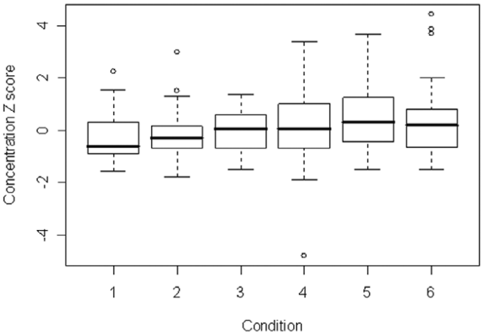
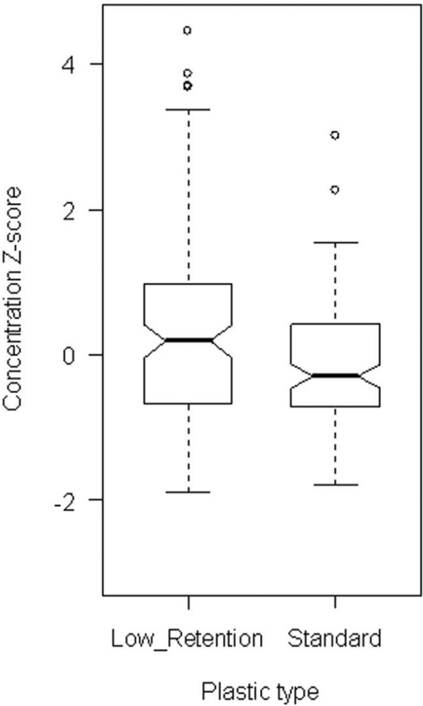
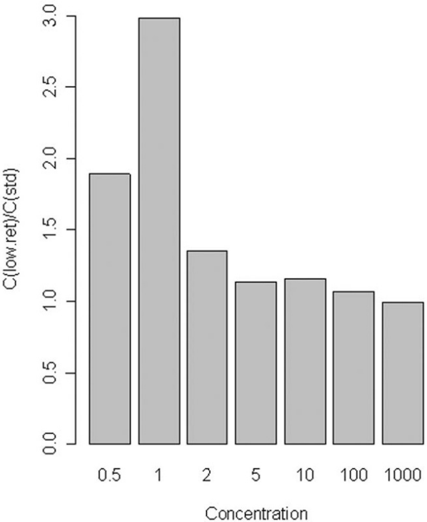
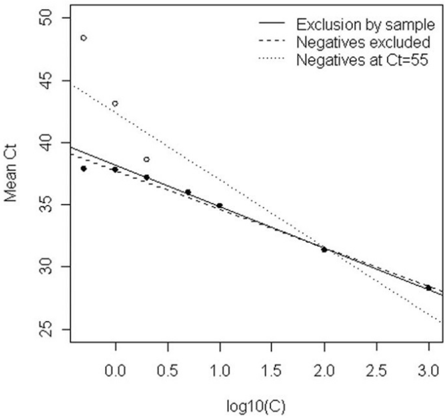
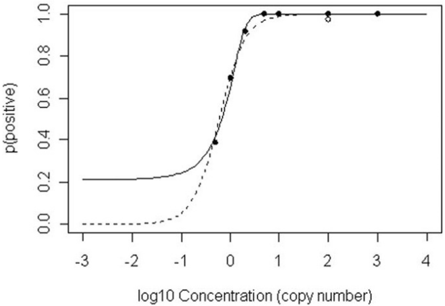
Background: Accurate quantification of DNA using quantitative real-time PCR at low levels is increasingly important for clinical, environmental and forensic applications. At low concentration levels (here referring to under 100 target copies) DNA quantification is sensitive to losses during preparation, and suffers from appreciable valid non-detection rates for sampling reasons. This paper reports studies on a real-time quantitative PCR assay targeting a region of the human SRY gene over a concentration range of 0.5 to 1000 target copies. The effects of different sample preparation and calibration methods on quantitative accuracy were investigated. Results: At very low target concentrations of 0.5–10 genome equivalents (g.e.) eliminating any replicates within each DNA standard concentration with no measurable signal (non-detects) compromised calibration. Improved calibration could be achieved by eliminating all calibration replicates for any calibration standard concentration with non-detects ('elimination by sample'). Test samples also showed positive bias if non-detects were removed prior to averaging; less biased results were obtained by converting to concentration, including non-detects as zero concentration, and averaging all values. Tube plastic proved to have a strongly significant effect on DNA quantitation at low levels ( p = 1.8 × 10 -4 ). At low concentrations (under 10 g.e.), results for assays prepared in standard plastic were reduced by about 50% compared to the low-retention plastic. Preparation solution (carrier DNA or stabiliser) was not found to have a significant effect in this study. Detection probabilities were calculated using logistic regression. Logistic regression over large concentration ranges proved sensitive to non-detected replicate reactions due to amplification failure at high concentrations; the effect could be reduced by regression against log (concentration) or, better, by eliminating invalid responses. Conclusion: Use of low-retention plastic tubes is advised for quantification of DNA solutions at levels below 100 g.e. For low-level calibration using linear least squares, it is better to eliminate the entire replicate group for any standard that shows non-detects reasonably attributable to sampling effects than to either eliminate non-detects or to assign arbitrary high Ct values. In calculating concentrations for low-level test samples with non-detects, concentrations should be calculated for each replicate, zero concentration assigned to non-detects, and all resulting concentration values averaged. Logistic regression is a useful method of estimating detection probability at low DNA concentrations.
Overview
The claims and statistics of this paper haven’t been checked yet.
Free: it reads the open-access text and checks the first 5 claims that cite a source we can check. Create a free account to check every claim.
Integrity signals
Registry
Cites
Statistics
Figures
Verification
Claims the paper makes
The claims and statistics of this paper haven’t been checked yet.
Free: it reads the open-access text and checks the first 5 claims that cite a source we can check. Create a free account to check every claim.
Claims other papers make about this one
Each is checked against this paper’s own text: does it say what the citing paper says it does?
The source backs part of the claim, not all of it — or backs it for a different population, condition or comparison.
In the citing paper
“The necessity for ensuring quality-assurance measures for qPCR and RT-qPCR assays is well recognized (25,44,(75)(76)(77)(78)(79)(80)(81)(82)(83)(84)(85)(86).”
From The MIQE guidelines: minimum information for publication of quantitative real-time PCR experiments (2009) · cites this paper as [25]
Experimental — accuracy not yet measured
Self-check
Percentages, sums and reported differences re-computed from the paper’s own numbers.
The self-check needs the paper’s full text.
Citations
Cites
R: A Language and Environment for Statistical Computing
R Core Team (2025) · doi:10.32614/r.manuals · Cited by 352,181
Huber, P. J. (1981) · Wiley Series in Probability and Statistics · doi:10.1002/0471725250 · Cited by 7,066
Lo, Y. M. D., Tein, M. S. C., Lau, T. K., Haines, C. J., Leung, T. N., Poon, P. M. K., Wainscoat, J. S., Johnson, P. J., Chang, A. M. Z., & Hjelm, N. M. (1998) · The American Journal of Human Genetics · doi:10.1086/301800 · Cited by 1,653 · cited 1×
“Clinically there is growing interest in quantifying levels of circulating nucleic acids for a range of applications including diagnosis and monitoring of cancer patients [5], prognosis for victims of trauma [6] and non-invasive prenatal diagnosis [7].”
BackgroundPeirson, S. N. (2003) · Nucleic Acids Research · doi:10.1093/nar/gng073 · Cited by 843 · cited 1×
“Dilution protocols involved in constructing standard curves are recognised as contributing to reduced reliability at low template concentrations [13,14] and there are several causes for this.”
BackgroundA method for the absolute quantification of cDNA using real-time PCR
Whelan, J. A., Russell, N. B., & Whelan, M. A. (2003) · Journal of Immunological Methods · doi:10.1016/s0022-1759(03)00223-0 · Cited by 783 · cited 3×
“The stock DNA was also measured on an ND-1000 spectrophotometer (NanoDrop Technologies) to verify the PicoGreen® value.”
MethodSinger, V. L., Jones, L. J., Yue, S. T., & Haugland, R. P. (1997) · Analytical Biochemistry · doi:10.1006/abio.1997.2177 · Cited by 778 · cited 3×
“The stock DNA was also measured on an ND-1000 spectrophotometer (NanoDrop Technologies) to verify the PicoGreen® value.”
MethodPrognostic Use of Circulating Plasma Nucleic Acid Concentrations in Patients with Acute Stroke
Rainer, T. H., Wong, L. K. S., Lam, W., Yuen, E., Lam, N. Y. L., Metreweli, C., & Lo, Y. M. D. (2003) · Clinical Chemistry · doi:10.1373/49.4.562 · Cited by 288 · cited 1×
“Background Accurate measurement of DNA using quantitative realtime PCR (Q-PCR) techniques is fundamental to many molecular tests with clinical [1], environmental [2], and forensic applications [3].”
MethodRobust statistics–how not to reject outliers. Part 1. Basic concepts
(1989) · The Analyst · doi:10.1039/an9891401693 · Cited by 229
Alonso, A. (2004) · Forensic Science International · doi:10.1016/j.forsciint.2003.10.008 · Cited by 204 · cited 1×
“Background Accurate measurement of DNA using quantitative realtime PCR (Q-PCR) techniques is fundamental to many molecular tests with clinical [1], environmental [2], and forensic applications [3].”
MethodTime Course of Early and Late Changes in Plasma DNA in Trauma Patients
Lam, N. Y. L., Rainer, T. H., Chan, L. Y. S., Joynt, G. M., & Lo, Y. M. D. (2003) · Clinical Chemistry · doi:10.1373/49.8.1286 · Cited by 182 · cited 1×
“Clinically there is growing interest in quantifying levels of circulating nucleic acids for a range of applications including diagnosis and monitoring of cancer patients [5], prognosis for victims of trauma [6] and non-invasive prenatal diagnosis [7].”
Background
Cited by
Items 201–230 of 230
Taberlet, P., Bonin, A., Zinger, L., & Coissac, É. (2018) · Oxford University Press eBooks · doi:10.1093/oso/9780198767220.003.0011
Taberlet, P., Bonin, A., Zinger, L., & Coissac, É. (2018) · Oxford University Press eBooks · doi:10.1093/oso/9780198767220.003.0016
Evaluation of novel mitochondrial DNA panels for forensic uses
Wai, K. T. (2018) · UTS ePRESS (University of Technology Sydney)
Valsecchi, E., Coppola, E., Pires, R., Parmegiani, A., Casiraghi, M., Galli, P., & Bruno, A. (2022) · doi:10.22541/au.164865062.20769761/v1
Taberlet, P., Bonin, A., Zinger, L., & Coissac, É. (2018) · Oxford University Press eBooks · doi:10.1093/oso/9780198767220.003.0004
Taberlet, P., Bonin, A., Zinger, L., & Coissac, É. (2018) · Oxford University Press eBooks · doi:10.1093/oso/9780198767220.003.0012
Taberlet, P., Bonin, A., Zinger, L., & Coissac, É. (2018) · Oxford University Press eBooks · doi:10.1093/oso/9780198767220.003.0005
Taberlet, P., Bonin, A., Zinger, L., & Coissac, É. (2018) · Oxford University Press eBooks · doi:10.1093/oso/9780198767220.005.0002
(2018) · Oxford University Press eBooks · doi:10.1093/oso/9780198767220.002.0003
(2018) · Oxford University Press eBooks · doi:10.1093/oso/9780198767220.002.0004
Sornchai, P. (2019) · Thai Agricultural Research Journal · doi:10.14456/thaidoa-agres.2019.19
Thammakijjawat, P., Sornchai, P., Assawamongkolsiri, T., & Sanvittayakul, P. (2019) · Thai Agricultural Research Journal · doi:10.14456/thaidoa-agres.2019.1
Boas práticas e garantia da qualidade em laboratório de biologia molecular: revisão da literatura
Cunha, S. D. (2023) · Institutional Repository of the Federal Technological University of Paraná (RIUT) (Federal University of Technology – Paraná)
Oral Human Papillomavirus (HPV) Prevalence and Abundance in the UK Young Adult Population
Whitton, A. F. (2021) · University of Derby Online Research Archive. (University of Derby)
Environmental DNA is an Effective Method to Monitor Species in Various Freshwater Habitats
Mullen, K. (2020) · ScholarWorks (Central Washington University)
Plate, K. (2023) · ThinkTech (Texas Tech University)
Investigation of Human Papillomavirus Types in Breast Cancer Samples From Ardabil Province, Iran
Hamdollahzadeh, S., Feizi, I., Azghani, P., Hosseinzadeh, S., & Karami, C. (2026) · Indian Journal of Gynecologic Oncology · doi:10.1007/s40944-026-01106-4
Amplification Efficiency of Quantitative PCR Reactions is Improved by Addition of Non-Target DNA
Reardon, C. L., & Manter, D. K. (2026) · Microbial Ecology · doi:10.1007/s00248-026-02719-0
“It is well recognized that differences in amplification effi - ciency between standards and samples can have a large effect on quantification [ 8, 10, 16].”
InfluentialSmith, E. L., Jin, Y., Miller, M. R., Frost, K., Ulaszek, J., Nemser, S. M., Goodman, L. B., Uhlig, S., Schlierf, A., Hettwer, K., et al. (2026) · Food and Environmental Virology · doi:10.1007/s12560-026-09699-x
“…to both measurement variability of the RT-PCR assays themselves and sampling inconsistencies; the lower the amount of genetic material in the extracted sample, the higher the likelihood that the volume input into rRT-PCR does not actually contain the target (Ki et al., 2021; Ellison et al., 2006 ).”
Environmental DNA and RNA detection using CRISPR-Cas13
楊, 積. (2024) · Institutional Repositories DataBase (IRDB) · doi:10.15083/0002013188
Villacorta‐Rath, C., Hoskin, C. J., & Burrows, D. (2026) · Conservation Science and Practice · doi:10.1111/csp2.70338
“…very low DNA copy numbers in our samples (Laporte et al., 2020; Schumer et al., 2019) due to the rarity of the frogs, large distances between the source and sampling of DNA, and large water volumes in the catchments, and hence inconsistency in detection across replicates (Ellison et al., 2006).”
Weise, A. M., Guerin, A. J., Benjamin, C., Plourde, M.-A., LeBlanc, F., Kingsbury, S., Drouin, A., Arsenault, S., Côté, G., Crites, C.-O. L., et al. (2026) · Canadian Journal of Fisheries and Aquatic Sciences · doi:10.1139/cjfas-2026-0030
Liao, Y., Szeto, B. C.-F., Zhao, H., Lin, H., Chen, G., Zhou, G., Mo, J., Tan, A. L. S., Wang, J., & Ip, J. C. (2026) · bioRxiv (Cold Spring Harbor Laboratory) · doi:10.64898/2026.07.20.739478
琵琶湖産スジエビの生活史多型に関した生態的特性及び遺伝的構造の解明
鄔, 倩. (2019) · Institutional Repositories DataBase (IRDB)
pan, C., Zhang, S., Huang, H., Yan, L., Pei, Y., Zhao, W., Li, H., Li, J., & Li, M. (2026) · Biology · doi:10.3390/biology15201842
“At concentrations near the analytical detection limit, independent water replicates and multiple reactions per extract would improve assessment of repeatability and reduce uncertainty associated with false-positive and false-negative classifications [42,56].”
Vrinda, P. K., Lal, D. M., Jha, S., Dash, B., Joseph, S., & Nair, T. M. B. (2026) · Fisheries Management and Ecology · doi:10.1111/fme.70114
Sharma, D., Dutta, U., Rattan, D., Kaur, U., Inoue, S., Hamano, S., Jain, R., Sandha, K. S., Sehgal, R., & Lakshmi, P. V. M. (2026) · Frontiers in Parasitology · doi:10.3389/fpara.2026.1937802
Heinonen, R.-M. (2026) · UEF eRepo (University of Eastern Finland)
FAIRsharing Team (2015) · FAIRsharing.org · doi:10.25504/fairsharing.mxz4jy
Silence of the Hams: Analysis of Ligatures Recovered from Buried Porcine Cadavers
Dhotre, D. (n.d.) · Murdoch University Research Portal
Metadata
- Authors
- Ellison, S. L., English, C. A., Burns, M. J., & Keer, J. T.
- Affiliations
- LGC (GB)
- Corresponding author
- Ellison, Stephen LR
- Venue
- BMC Biotechnology
- Published
- 2006-07-06
- Volume
- 6
- Issue
- 1
- Pages
- 33-33
- ISSN
- 1472-6750 (ISSN-L)
- OpenAlex
- W2146069457
- Cited by
- 207
- References
- 24
- Citations by year
- 2026: 10 · 2025: 13 · 2024: 9 · 2023: 10 · 2022: 17 · 2021: 15 · 2020: 10 · 2019: 15 · 2018: 40 · 2017: 10 · 2016: 12 · 2015: 5 · 2014: 8 · 2013: 8 · 2012: 7
- FWCI
- 1.63
- Type
- journal article
- Language
- en
- Open access
- gold
- doi.org
- Licence
- cc-by
- Locations
- BMC Biotechnology (publishedVersion, cc-by)
- Europe PMC (PubMed Central) (publishedVersion, cc-by)
- PubMed (publishedVersion)
- DOAJ (DOAJ: Directory of Open Access Journals) (submittedVersion, cc-by-sa)
- Topics
- Life Sciences › Biochemistry, Genetics and Molecular Biology › Molecular Biology › Molecular Biology Techniques and Applications
- Health Sciences › Health Professions › Medical Laboratory Technology › Clinical Laboratory Practices and Quality Control
- Life Sciences › Biochemistry, Genetics and Molecular Biology › Genetics › Genetic diversity and population structure
- Keywords
- real-time quantitative PCR, SRY gene, detection probability, logistic regression, sample preparation, forensic DNA analysis
- MeSH terms
- Base Sequence, Computer Simulation, Computer Systems, Microchemistry, Models, Genetic, Molecular Sequence Data, Quality Control, Sensitivity and Specificity, Specimen Handling, Reproducibility of Results, Artifacts, Sequence Analysis, DNA, Reverse Transcriptase Polymerase Chain Reaction, Oligonucleotide Array Sequence Analysis
About these checks
Registry, retraction, Cites and statistics results are computed, not judged, with one exception: a printed reference that no index lists is read once by a model before it counts as a citation error. Claims are extracted by a model and kept only when their quote appears verbatim in the text; each cited source is then checked, with a model’s help, for whether it says what the claim relies on. Those verdicts can be wrong — read the claim’s quote and the cited source before relying on one.
Statistics and arithmetic are recomputed, not judged.
Confidence bands are shown only for fields calibrated on our annotated test set. None is calibrated yet, so no band is shown.
What counts as a claim ›How we measure confidence ›How we check this ›
Are you an author, or do you see a problem with this page? Request a review
Data sources
Bibliographic data: Semantic Scholar, OpenAlex, Crossref.
Contains information from the Semantic Scholar Academic Graph Datasets, made available under the ODC Attribution License (ODC-BY 1.0).
Semantic Scholar’s data is described in: Kinney, R., et al. (2023). The Semantic Scholar Open Data Platform. arXiv:2301.10140.
