

European Adrenal Insufficiency Registry (EU-AIR): a comparative observational study of glucocorticoid replacement therapy
Open accessThe DOI matches its Crossref record; 32 of the 32 references it cites were found in a registry or an index.
Abstract
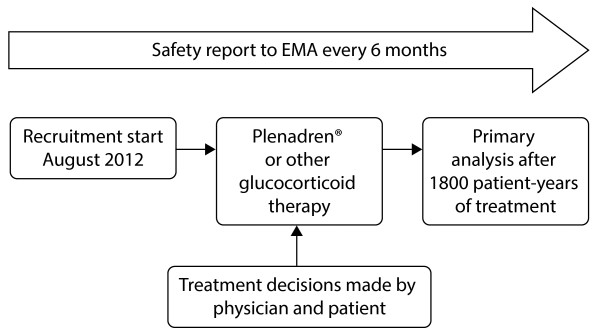
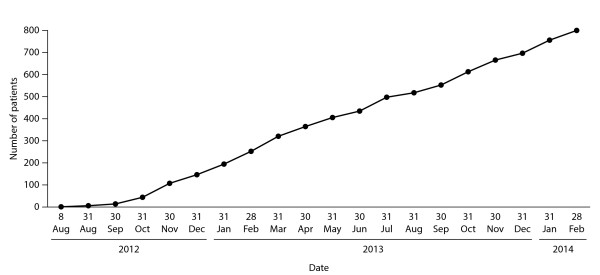
Background: Increased morbidity and mortality associated with conventional glucocorticoid replacement therapy for primary adrenal insufficiency (primary AI; estimated prevalence 93–140/million), secondary AI (estimated prevalence, 150–280/million, respectively) or congenital adrenal hyperplasia (estimated prevalence, approximately 65/million) may be due to the inability of typical glucocorticoid treatment regimens to reproduce the normal circadian profile of plasma cortisol. A once-daily modified-release formulation of hydrocortisone has been developed to provide a plasma cortisol profile that better mimics the daytime endogenous profile of cortisol. Here, we describe the protocol for the European Adrenal Insufficiency Registry (EU-AIR), an observational study to assess the long-term safety of modified-release hydrocortisone compared with conventional glucocorticoid replacement therapies in routine clinical practice (ClinicalTrials.gov identifier: NCT01661387). Methods: Patients enrolled in EU-AIR have primary or secondary AI and are receiving either modified-release or conventional glucocorticoid replacement therapy. The primary endpoints of EU-AIR are the incidence of intercurrent illness, adrenal crisis and serious adverse events (SAEs), as well as the duration of SAEs and dose changes related to SAEs. Data relating to morbidity, mortality, adverse drug reactions, dosing and concomitant therapies will be collected. Patient diaries will record illness-related dose changes between visits. All decisions concerning medical care are made by the registry physician and patient. Enrolment is targeted at achieving 3600 patient-years of treatment (1800 patient-years per group) for the primary analysis, which is focused on determining the non-inferiority of once-daily modified-release replacement therapy compared with conventional glucocorticoid therapy. Results: Recruitment began in August 2012 and, as of March 2014, 801 patients have been enrolled. Fifteen centres are participating in Germany, the UK and Sweden, with recruitment soon to be initiated in the Netherlands. Conclusions: EU-AIR will provide a unique opportunity not only to collect long-term safety data on a modified-release preparation of glucocorticoid but also to evaluate baseline data on conventional glucocorticoid replacement. Such data should help to improve the treatment of AI.
Overview
The claims and statistics of this paper haven’t been checked yet.
Free: it reads the open-access text and checks the first 5 claims that cite a source we can check. Create a free account to check every claim.
Integrity signals
Registry
Cites
Statistics
Figures
Verification
Claims the paper makes
The claims and statistics of this paper haven’t been checked yet.
Free: it reads the open-access text and checks the first 5 claims that cite a source we can check. Create a free account to check every claim.
Claims other papers make about this one
Each is checked against this paper’s own text: does it say what the citing paper says it does?
The check wasn’t confident either way, so it gives no verdict — never disputed.
In the citing paper
“Many patients with CH have undetectable TSH levels on presentation, and almost all CH patients adequately treated with L-T4 to maintain serum fT4 levels in the mid-to high-normal range will have undetectable TSH levels (75,80,127,129).”
From Hormonal Replacement in Hypopituitarism in Adults: An Endocrine Society Clinical Practice Guideline (2016) · cites this paper as [127]
Experimental — accuracy not yet measured
Self-check
Percentages, sums and reported differences re-computed from the paper’s own numbers.
The self-check needs the paper’s full text.
Citations
Cites
Premature mortality due to cardiovascular disease in hypopituitarism
Rosén, T., & Bengtsson, B.-Å. (1990) · The Lancet · doi:10.1016/0140-6736(90)91812-o · Cited by 1,402 · cited 1×
“17:1 for hypopituitarism [9-13].”
Association between premature mortality and hypopituitarism
Tomlinson, J., Holden, N., Hills, R., Wheatley, K., Clayton, R., Bates, A., Sheppard, M., & Stewart, P. (2001) · The Lancet · doi:10.1016/s0140-6736(00)04006-x · Cited by 1,006 · cited 1×
“17:1 for hypopituitarism [9-13].”
Arlt, W., & Allolio, B. (2003) · The Lancet · doi:10.1016/s0140-6736(03)13492-7 · Cited by 819
Taking Glucocorticoids by Prescription Is Associated with Subsequent Cardiovascular Disease
Wei, L., MacDonald, T. M., & Walker, B. R. (2004) · Annals of Internal Medicine · doi:10.7326/0003-4819-141-10-200411160-00007 · Cited by 730 · cited 1×
“Conventional glucocorticoid replacement therapy has also been associated with reduced bone mineral density [17], depending on the dose [18], as well as with unfavourable metabolic effects [19] and an increased risk of cardiovascular disease [20].”
BackgroundIncreased cerebrovascular mortality in patients with hypopituitarism
Bülow, B., Hagmar, L., Mikoczy, Z., Nordström, C., & Erfurth, E. M. (1997) · Clinical Endocrinology · doi:10.1046/j.1365-2265.1997.d01-1749.x · Cited by 542 · cited 1×
“17:1 for hypopituitarism [9-13].”
Premature Mortality in Patients with Addison’s Disease: A Population-Based Study
Bergthorsdottir, R., Leonsson-Zachrisson, M., Odén, A., & Johannsson, G. (2006) · The Journal of Clinical Endocrinology & Metabolism · doi:10.1210/jc.2006-0076 · Cited by 490 · cited 1×
“of cortisol over a 24-hour period [5,6], and life-expectancy compared with the general population remains reduced [7,8], with a standardized mortality ratio of 2.”
BackgroundThe effect of hypopituitarism on life expectancy.
Bates, A. S., Van't Hoff, W., Jones, P. J., & Clayton, R. N. (1996) · The Journal of Clinical Endocrinology & Metabolism · doi:10.1210/jcem.81.3.8772595 · Cited by 475 · cited 1×
“17:1 for hypopituitarism [9-13].”
Hahner, S., Loeffler, M., Bleicken, B., Drechsler, C., Milovanovic, D., Fassnacht, M., Ventz, M., Quinkler, M., & Allolio, B. (2010) · European Journal of Endocrinology · doi:10.1530/eje-09-0884 · Cited by 346 · cited 1×
“3 adrenal crises per 100 patient-years [15].”
Self-citationJohannsson, G., Nilsson, A. G., Bergthorsdottir, R., Burman, P., Dahlqvist, P., Ekman, B., Engström, B. E., Olsson, T., Ragnarsson, O., Ryberg, M., et al. (2012) · The Journal of Clinical Endocrinology & Metabolism · doi:10.1210/jc.2011-1926 · Cited by 329 · cited 4×
“Results of a prospective randomized trial have shown that once-daily treatment with modified-release hydrocortisone provides a sustained serum cortisol concentration for the first 4 hours after the morning dose, followed by a steady reduction, which more closely approximates to the physiological plasma profile than is…”
BackgroundInfluentialSelf-citationFilipsson, H., Monson, J. P., Koltowska-Häggström, M., Mattsson, A., & Johannsson, G. (2006) · The Journal of Clinical Endocrinology & Metabolism · doi:10.1210/jc.2006-0524 · Cited by 321 · cited 1×
“Conventional glucocorticoid replacement therapy has also been associated with reduced bone mineral density [17], depending on the dose [18], as well as with unfavourable metabolic effects [19] and an increased risk of cardiovascular disease [20].”
BackgroundHahner, S., Loeffler, M., Fassnacht, M., Weismann, D., Koschker, A.-C., Quinkler, M., Decker, O., Arlt, W., & Allolio, B. (2007) · The Journal of Clinical Endocrinology & Metabolism · doi:10.1210/jc.2007-0685 · Cited by 282 · cited 1×
“Moreover, suboptimal glucocorticoid replacement and the associated morbidities may contribute to a poor quality of life, characterized by negative alterations in physical activity and social, work and family life [5,21-23].”
BackgroundSelf-citationBensing, S., Brandt, L., Tabaroj, F., Sjöberg, O., Nilsson, B., Ekbom, A., Blomqvist, P., & Kämpe, O. (2008) · Clinical Endocrinology · doi:10.1111/j.1365-2265.2008.03340.x · Cited by 242 · cited 1×
“17:1 for hypopituitarism [9-13].”
Neonatal screening for congenital adrenal hyperplasia
White, P. C. (2009) · Nature Reviews Endocrinology · doi:10.1038/nrendo.2009.148 · Cited by 240
Burman, P., Mattsson, A. F., Johannsson, G., Höybye, C., Holmer, H., Dahlqvist, P., Berinder, K., Engström, B. E., Ekman, B., Erfurth, E. M., et al. (2013) · The Journal of Clinical Endocrinology & Metabolism · doi:10.1210/jc.2012-4059 · Cited by 184 · cited 1×
“In addition, a recent report has indicated that hypocortisolism during acute stress causes deaths among adult patients with pituitary insufficiency [16].”
BackgroundSelf-citationJohannsson, G., Bergthorsdottir, R., Nilsson, A. G., Lennernas, H., Hedner, T., & Skrtic, S. (2009) · European Journal of Endocrinology · doi:10.1530/eje-09-0170 · Cited by 173 · cited 2×
“Although it does not replicate a complete 24-hour physiological cortisol profile (notably, it does not accurately mimic the early morning cortisol peak [25]), modified-release hydrocortisone represents a significant step towards achieving a diurnal plasma profile more similar to the normal circadian pattern than is po…”
BackgroundGlucocorticoid replacement therapy and pharmacogenetics in Addison's disease: effects on bone
Løvås, K., Gjesdal, C. G., Christensen, M., Wolff, A. B., Almås, B., Svartberg, J., Fougner, K. J., Syversen, U., Bollerslev, J., Falch, J. A., et al. (2009) · European Journal of Endocrinology · doi:10.1530/eje-08-0880 · Cited by 163 · cited 1×
“Conventional glucocorticoid replacement therapy has also been associated with reduced bone mineral density [17], depending on the dose [18], as well as with unfavourable metabolic effects [19] and an increased risk of cardiovascular disease [20].”
BackgroundBleicken, B., Hahner, S., Loeffler, M., Ventz, M., Decker, O., Allolio, B., & Quinkler, M. (2010) · Clinical Endocrinology · doi:10.1111/j.1365-2265.2009.03596.x · Cited by 148 · cited 1×
“Moreover, suboptimal glucocorticoid replacement and the associated morbidities may contribute to a poor quality of life, characterized by negative alterations in physical activity and social, work and family life [5,21-23].”
BackgroundSelf-citationKoetz, K. R., Ventz, M., Diederich, S., & Quinkler, M. (2012) · The Journal of Clinical Endocrinology & Metabolism · doi:10.1210/jc.2011-2036 · Cited by 139 · cited 1×
“Conventional glucocorticoid replacement therapy has also been associated with reduced bone mineral density [17], depending on the dose [18], as well as with unfavourable metabolic effects [19] and an increased risk of cardiovascular disease [20].”
BackgroundSelf-citationInadequacies of glucocorticoid replacement and improvements by physiological circadian therapy
Debono, M., Ross, R. J., & Newell-Price, J. (2009) · European Journal of Endocrinology · doi:10.1530/eje-08-0874 · Cited by 135 · cited 1×
“The extent to which RCT data are representative of outcomes obtained in routine clinical practice may be particularly pertinent in the case of AI, given the complexity of the conventional dosing regimen, patient self-adjustment of the dose, compliance issues with prescribed treatment regimens and the difficulties asso…”
BackgroundNeonatal screening for congenital adrenal hyperplasia
van der Kamp, H., & Wit, J. (2004) · European Journal of Endocrinology · doi:10.1530/eje.0.151u071 · Cited by 128
Long-term mortality in the United States cohort of pituitary-derived growth hormone recipients
Mills, J. L., Schonberger, L. B., Wysowski, D. K., Brown, P., Durako, S. J., Cox, C., Kong, F., & Fradkin, J. E. (2004) · The Journal of Pediatrics · doi:10.1016/j.jpeds.2003.12.036 · Cited by 118 · cited 1×
“of cortisol over a 24-hour period [5,6], and life-expectancy compared with the general population remains reduced [7,8], with a standardized mortality ratio of 2.”
BackgroundForss, M., Batcheller, G., Skrtic, S., & Johannsson, G. (2012) · BMC Endocrine Disorders · doi:10.1186/1472-6823-12-8 · Cited by 109 · cited 2×
“Moreover, suboptimal glucocorticoid replacement and the associated morbidities may contribute to a poor quality of life, characterized by negative alterations in physical activity and social, work and family life [5,21-23].”
BackgroundBleicken, B., Hahner, S., Loeffler, M., Ventz, M., Allolio, B., & Quinkler, M. (2008) · European Journal of Endocrinology · doi:10.1530/eje-08-0578 · Cited by 101 · cited 1×
“Moreover, suboptimal glucocorticoid replacement and the associated morbidities may contribute to a poor quality of life, characterized by negative alterations in physical activity and social, work and family life [5,21-23].”
BackgroundSelf-citationAdrenal Insufficiency in Critically Ill Patients
SHENKER, Y., & SKATRUD, J. B. (2001) · American Journal of Respiratory and Critical Care Medicine · doi:10.1164/ajrccm.163.7.2012022 · Cited by 96
Growth Hormone Therapy in Pediatrics - 20 Years of KIGS
(2007) · KARGER eBooks · doi:10.1159/isbn.978-3-318-01447-1 · Cited by 89
Addressing the issue of channeling bias in observational studies with propensity scores analysis
Lobo, F. S., Wagner, S., Gross, C. R., & Schommer, J. C. (2006) · Research in Social and Administrative Pharmacy · doi:10.1016/j.sapharm.2005.12.001 · Cited by 83 · cited 1×
“Although observational studies lack the robustness of RCTs and may include uncontrolled confounding variables [26], they can nevertheless yield important data to complement the results from RCTs (e.”
ResultDeficits in the Management of Patients With Adrenocortical Carcinoma in Germany
Johanssen, S., Hahner, S., Saeger, W., Quinkler, M., Beuschlein, F., Dralle, H., Haaf, M., Kroiss, M., Jurowich, C., Langer, P., et al. (2010) · Deutsches Ärzteblatt international · doi:10.3238/arztebl.2010.0885 · Cited by 59 · cited 1×
“in patients with adrenocortical cancer [32] or primary hyperaldosteronism [33]).”
BackgroundSelf-citationThe Diagnosis and Treatment of Primary Hyperaldosteronism in Germany
Schirpenbach, C., Segmiller, F., Diederich, S., Hahner, S., Lorenz, R., Rump, L. C., Seufert, J., Quinkler, M., Bidlingmaier, M., Beuschlein, F., et al. (2009) · Deutsches Ärzteblatt international · doi:10.3238/arztebl.2009.0305 · Cited by 54 · cited 1×
“in patients with adrenocortical cancer [32] or primary hyperaldosteronism [33]).”
BackgroundSelf-citationWhat is the best long‐term management strategy for patients with primary adrenal insufficiency?
Quinkler, M., & Hahner, S. (2012) · Clinical Endocrinology · doi:10.1111/j.1365-2265.2011.04103.x · Cited by 50
Self-citationObservational Studies in the Era of Randomized Trials
Castillo, R. C., Scharfstein, D. O., & MacKenzie, E. J. (2012) · Journal of Bone and Joint Surgery · doi:10.2106/jbjs.l.00242 · Cited by 36 · cited 1×
“in the study of rare outcomes, risk factors and side effects) and provide valuable information on long-term outcomes in routine clinical practice [27].”
BackgroundSchneider, H. J., Klotsche, J., Wïttchen, H., Stalla, G. K., Schopohl, J., Kann, P. H., Kreitschmann‐Andermahr, I., Wallaschofski, H., & on behalf of the German KIMS board and of the DETECT study (2011) · Clinical Endocrinology · doi:10.1111/j.1365-2265.2011.04137.x · Cited by 35 · cited 1×
“For example, it was shown that 2 years of GH replacement therapy reduced the risk of cardiovascular events by 50%, and that male sex and high total cholesterol were potential predictors of this response [30].”
BackgroundClarke, J. T. R., Giugliani, R., Sunder–Plassmann, G., Elliot, P. M., Pintos‐Morell, G., Hernberg‐Ståhl, E., Malmenäs, M., & Beck, M. (2011) · Value in Health · doi:10.1016/j.jval.2011.05.002 · Cited by 17
Research works printed but not linked: 1
- ViroPharma SPRL Plenadren 5 mg Modified-Release Tablets: Summary of Product Characteristics 2011
Cited by
Hormonal Replacement in Hypopituitarism in Adults: An Endocrine Society Clinical Practice Guideline
Fleseriu, M., Hashim, I. A., Karavitaki, N., Melmed, S., Murad, M. H., Salvatori, R., & Samuels, M. H. (2016) · The Journal of Clinical Endocrinology & Metabolism · doi:10.1210/jc.2016-2118 · Cited by 945
Some of the Factors Involved in Male Infertility: A Prospective Review
Babakhanzadeh, E., Nazari, M., Ghasemifar, S., & Khodadadian, A. (2020) · International Journal of General Medicine · doi:10.2147/ijgm.s241099 · Cited by 314
“Conversely, elevated concentrations of LH and FSH are associated with low concentrations of testosterone, leading to defects in spermatogenesis.(101,102) Therefore, using high doses of testosterone and estrogen can be a viable treatment option because it suppresses the production of LH and FSH.”
BackgroundSmolensky, M. H., Hermida, R. C., Reinberg, A., Sackett-Lundeen, L., & Portaluppi, F. (2016) · Chronobiology International · doi:10.1080/07420528.2016.1184678 · Cited by 197
“, 2006) as well as thrice daily unequal morning, afternoon and evening (Debono & Ross, 2013) and once daily bedtime-dosed dual-release (combination immediate-release and extended-release) oral tablet schedules (Chan & Debono, 2010; Debono et al., 2009; Ekman et al., 2014; Johannsson et al., 2009; Quinkler et al., 2015…”
BackgroundInfluentialJung, C., Greco, S., Nguyen, H. H., Ho, J. T., Lewis, J. G., Torpy, D. J., & Inder, W. J. (2014) · BMC Endocrine Disorders · doi:10.1186/1472-6823-14-91 · Cited by 114
Quinkler, M., Ekman, B., Zhang, P., Isidori, A. M., Murray, R. D., & on behalf of the EU‐AIR Investigators (2018) · Clinical Endocrinology · doi:10.1111/cen.13609 · Cited by 71
Self-citation
Metadata
- Authors
- Ekman, B., Fitts, D., Marelli, C., Murray, R. D., Quinkler, M., & Zelissen, P. M.
- Affiliations
- Linköping University (SE)
- Leeds Teaching Hospitals NHS Trust (GB)
- Charité – Universitätsmedizin Berlin (DE)
- University Medical Center Utrecht (NL)
- Corresponding author
- Fitts, David
- Venue
- BMC Endocrine Disorders
- Published
- 2014-05-09
- Volume
- 14
- Issue
- 1
- Pages
- 40-40
- ISSN
- 1472-6823 (ISSN-L)
- PMC
- PMC4049497
- OpenAlex
- W2067842378
- Semantic Scholar
- e530dc1266fee58aa8d1a035fadec33eb885afe0
- Cited by
- 31
- References
- 32
- Citations by year
- 2026: 1 · 2025: 1 · 2023: 1 · 2022: 5 · 2021: 6 · 2020: 1 · 2019: 2 · 2018: 2 · 2017: 4 · 2016: 6 · 2015: 1 · 2014: 1
- FWCI
- 3.22
- Type
- journal article
- Language
- en
- Open access
- gold
- doi.org
- Licence
- Locations
- BMC Endocrine Disorders (publishedVersion, cc-by)
- PubMed Central (publishedVersion, cc-by)
- PubMed (publishedVersion)
- DiVA (Linkoping University) (submittedVersion, other-oa)
- Funders
- Viropharma
- Topics
- Health Sciences › Medicine › Endocrinology, Diabetes and Metabolism › Adrenal Hormones and Disorders
- Life Sciences › Neuroscience › Behavioral Neuroscience › Stress Responses and Cortisol
- Health Sciences › Medicine › Endocrinology, Diabetes and Metabolism › Hormonal Regulation and Hypertension
- Keywords
- Addison's disease, secondary adrenal insufficiency, congenital adrenal hyperplasia, glucocorticoid replacement therapy, modified-release hydrocortisone, adrenal crisis, serious adverse events, non-inferiority, long-term treatment safety, patient registry
- MeSH terms
- Adolescent, Adrenal Insufficiency, Adrenal Hyperplasia, Congenital, Adult, Aged, Aged, 80 and over, Child, Circadian Rhythm, Europe, Female, Follow-Up Studies, Glucocorticoids, Humans, Hydrocortisone, Male, Middle Aged, Morbidity, Prognosis, Hormone Replacement Therapy, Young Adult
About these checks
Registry, retraction, Cites and statistics results are computed, not judged, with one exception: a printed reference that no index lists is read once by a model before it counts as a citation error. Claims are extracted by a model and kept only when their quote appears verbatim in the text; each cited source is then checked, with a model’s help, for whether it says what the claim relies on. Those verdicts can be wrong — read the claim’s quote and the cited source before relying on one.
Statistics and arithmetic are recomputed, not judged.
Confidence bands are shown only for fields calibrated on our annotated test set. None is calibrated yet, so no band is shown.
What counts as a claim ›How we measure confidence ›How we check this ›
Are you an author, or do you see a problem with this page? Request a review
Data sources
Bibliographic data: Semantic Scholar, OpenAlex, Crossref.
Contains information from the Semantic Scholar Academic Graph Datasets, made available under the ODC Attribution License (ODC-BY 1.0).
Semantic Scholar’s data is described in: Kinney, R., et al. (2023). The Semantic Scholar Open Data Platform. arXiv:2301.10140.
