

Development of the Community Midwifery Education initiative and its influence on women’s health and empowerment in Afghanistan: a case study
Open accessThe DOI matches its Crossref record; 34 of the 36 references it cites were found in a registry or an index.
Abstract
BACKGROUND: Political transition in Afghanistan enabled reconstruction of the destroyed health system. Maternal health was prioritised due to political will and historically high mortality. However, severe shortages of skilled birth attendants--particularly in rural areas--hampered safe motherhood initiatives. The Community Midwifery Education (CME) programme began training rural midwives in 2002, scaling-up nationally in 2005. METHODS: This case study analyses CME development and implementation to help determine successes and challenges. Data were collected through documentary review and key informant interviews. Content analysis was informed by Walt and Gilson's policy triangle framework. RESULTS: The CME programme has contributed to consistently positive indicators, including up to a 1273/100,000 reduction in maternal mortality ratios, up to a 28% increase in skilled deliveries, and a six-fold increase in qualified midwives since 2002. Begun as a small pilot, CME has gained support of international donors, the Afghan government, and civil society. CONCLUSION: CME is considered by stakeholders to be a positive model for promoting women's education, employment, and health. However, its future is threatened by insecurity, corruption, lack of regulation, and funding uncertainties. Strategic planning and resource mobilisation are required for it to achieve its potential of transforming maternal healthcare in Afghanistan.
Overview
The claims and statistics of this paper haven’t been checked yet.
Free: it reads the open-access text and checks the first 5 claims that cite a source we can check. Create a free account to check every claim.
Integrity signals
Registry
Cites
Statistics
Figures
Verification
Claims the paper makes
The claims and statistics of this paper haven’t been checked yet.
Free: it reads the open-access text and checks the first 5 claims that cite a source we can check. Create a free account to check every claim.
Claims other papers make about this one
Each is checked against this paper’s own text: does it say what the citing paper says it does?
The source backs part of the claim, not all of it — or backs it for a different population, condition or comparison.
In the citing paper
“Speakman et al. [47] discuss the consistently positive contribution the Community Midwifery Education programme in Afghanistan has had on the reduction of maternal mortality and the increase in skilled attendance at birth.”
From The role and scope of practice of midwives in humanitarian settings: a systematic review and content analysis (2019) · cites this paper as [47]
Experimental — accuracy not yet measuredThe source backs part of the claim, not all of it — or backs it for a different population, condition or comparison.
In the citing paper
“Importantly, midwives called for clarification of the scope of practice for nurses and midwives [47].”
From The role and scope of practice of midwives in humanitarian settings: a systematic review and content analysis (2019) · cites this paper as [47]
Experimental — accuracy not yet measuredThe source backs part of the claim, not all of it — or backs it for a different population, condition or comparison.
In the citing paper
“Midwives reported that doctors in Afghanistan often failed to acknowledge the skills of qualified midwives and discouraged them from performing some tasks [47].”
From The role and scope of practice of midwives in humanitarian settings: a systematic review and content analysis (2019) · cites this paper as [47]
Experimental — accuracy not yet measuredThe cited source says what the claim attributes to it.
In the citing paper
“Ten studies employed qualitative methods [42–50] and two were each based on quantitative [51, 52] or mixed methodologies [53, 54].”
From The role and scope of practice of midwives in humanitarian settings: a systematic review and content analysis (2019) · cites this paper as [47]
The cited source says what the claim attributes to it.
In the citing paper
“Speakman et al. [47] and Turkmani et al. [54] characterise the relationship between midwives and doctors by a lack of recognition and an infringement on midwives’ self-perceived scope of practice.”
From The role and scope of practice of midwives in humanitarian settings: a systematic review and content analysis (2019) · cites this paper as [47]
1 more claim about this paper
Create a free account to see every claim other papers make about this one.
Self-check
Percentages, sums and reported differences re-computed from the paper’s own numbers.
The self-check needs the paper’s full text.
Citations
Cites
Three Approaches to Qualitative Content Analysis
Hsieh, H.-F., & Shannon, S. E. (2005) · Qualitative Health Research · doi:10.1177/1049732305276687 · Cited by 44,601 · cited 1×
“Qualitative content analysis was used to derive thematic categories from documents and transcripts [19].”
MethodBulletin of the World Health Organization
van der Sande, M. A. B., Walraven, G. E. L., Milligan, P. J., BANYA, W. A. S., CEESAY, S. M., Nyan, O. A., & McAdam, K. P. W. J. (2001) · Bulletin of the World Health Organization · Cited by 7,097
Hogan, M. C., Foreman, K. J., Naghavi, M., Ahn, S. Y., Wang, M., Makela, S. M., Lopez, A. D., Lozano, R., & Murray, C. J. (2010) · The Lancet · doi:10.1016/s0140-6736(10)60518-1 · Cited by 2,194
Strategies for reducing maternal mortality: getting on with what works
Campbell, O. M., & Graham, W. J. (2006) · The Lancet · doi:10.1016/s0140-6736(06)69381-1 · Cited by 1,785
Bulletin of the World Health Organization
(2006) · Bulletin of the World Health Organization · doi:10.2471/blt.00.00000 · Cited by 1,602
Renfrew, M. J., McFadden, A., Bastos, M. H., Campbell, J., Channon, A. A., Cheung, N. F., Silva, D. R. A. D., Downe, S., Kennedy, H. P., Malata, A., et al. (2014) · The Lancet · doi:10.1016/s0140-6736(14)60789-3 · Cited by 1,297 · cited 1×
“Maternal health experts agree that a key factor in maternal deaths is delivery without assistance from a skilled birth attendant (SBA; Box 1) [12-14].”
Background'Doing' health policy analysis: methodological and conceptual reflections and challenges
Walt, G., Shiffman, J., Schneider, H., Murray, S. F., Brugha, R., & Gilson, L. (2008) · Health Policy and Planning · doi:10.1093/heapol/czn024 · Cited by 889 · cited 1×
“” [18], making this the earliest opportunity to assess CME development and implementation.”
Improvement of maternal and newborn health through midwifery
ten Hoope-Bender, P., de Bernis, L., Campbell, J., Downe, S., Fauveau, V., Fogstad, H., Homer, C. S. E., Kennedy, H. P., Matthews, Z., McFadden, A., et al. (2014) · The Lancet · doi:10.1016/s0140-6736(14)60930-2 · Cited by 435 · cited 1×
“3 and contraception used by 19% of reproductive age women [37,52], increased family planning coverage is an important means of improving maternal health to which community midwives could contribute [53].”
BackgroundBuse, K., Mays, N., & Walt, G. (2005) · Cited by 409
Hogan, M. C., Foreman, K. J., Naghavi, M., Ahn, S. Y., Wang, M., Makela, S. M., Lopez, A. D., Lozano, R., & Murray, C. J. (2011) · Obstetric Anesthesia Digest · doi:10.1097/01.aoa.0000397097.96320.28 · Cited by 387
Bartlett, L. A., Mawji, S., Whitehead, S., Crouse, C., Dalil, S., Ionete, D., & Salama, P. (2005) · The Lancet · doi:10.1016/s0140-6736(05)71044-8 · Cited by 220
Fullerton, J. T., Thompson, J. E., & Severino, R. (2011) · Midwifery · doi:10.1016/j.midw.2011.03.005 · Cited by 175
The state of the world's midwifery: a universal pathway, a woman's right to health
ten Hoope‐Bender, P., Homer, C., Matthews, Z., Nove, A., Sochas, L., Campbell, J., & deBernis, L. (2014) · ePrints Soton (University of Southampton) · Cited by 143
Contracting out health services in fragile states
Palmer, N., Strong, L., Wali, A., & Sondorp, E. (2006) · BMJ · doi:10.1136/bmj.332.7543.718 · Cited by 141 · cited 1×
“9 births per woman [11].”
Self-citationThe reliability and validity of the SF-8 with a conflict-affected population in northern Uganda
Roberts, B., Browne, J., Ocaka, K., Oyok, T., & Sondorp, E. (2008) · Health and Quality of Life Outcomes · doi:10.1186/1477-7525-6-108 · Cited by 73 · cited 1×
“By the end of 2011, the number of new midwives trained under either CME or IHS initiatives was 4,369 recruited (including in training), 3,268 graduated, and 2,721 deployed [39].”
BackgroundSelf-citationTurkmani, S., Currie, S., Mungia, J., Assefi, N., Javed Rahmanzai, A., Azfar, P., & Bartlett, L. (2013) · Midwifery · doi:10.1016/j.midw.2013.06.015 · Cited by 71 · cited 3×
“Lack of free midwifery care would increase inequities, as healthcare usage is already highest among wealthier urban women and costs have been cited as a reason not to use health facilities [21, 31].”
BackgroundAfghanistan Mortality Survey 2010
MoPH, Afghanistan, Macro, I., & Emro (2011) · Cited by 69
Smith, J. M., Currie, S., Azfar, P., & Rahmanzai, A. J. (2008) · Public Health · doi:10.1016/j.puhe.2008.03.009 · Cited by 56 · cited 5×
“From 1972, the Intermediate Medical Education Institute in Kabul - renamed The Institute of Health Sciences (IHS) in 2004 - began training health technicians, including midwives [5].”
InfluentialMaternal Mortality in Herat Province, Afghanistan, in 2002: An Indicator of Women's Human Rights
Amowitz, L. L., Reis, C., & Iacopino, V. (2002) · JAMA · doi:10.1001/jama.288.10.1284 · Cited by 54 · cited 9×
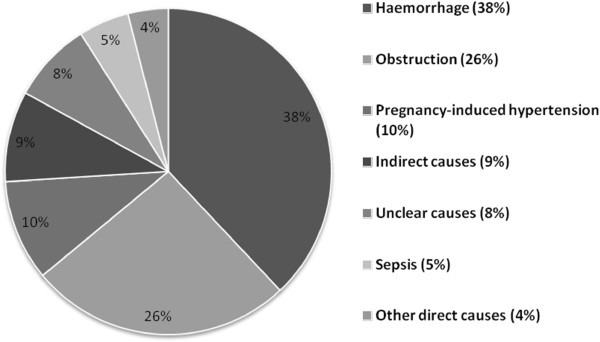
“Most women had no delivery care apart from unskilled traditional birth attendants (TBAs; Table 1) and relied on Figure 1 Causes of maternal mortality in Afghanistan (1999–2002). traditional medicine or ‘unani tibb’ [10].”
InfluentialMedical Interventions following Natural Disasters: Missing out on Chronic Medical Needs
Chan, E., & Sondorp, E. (2007) · Asia Pacific Journal of Public Health · doi:10.1177/101053950701901s08 · Cited by 49
Self-citationZainullah, P., Ansari, N., Yari, K., Azimi, M., Turkmani, S., Azfar, P., LeFevre, A., Mungia, J., Gubin, R., Kim, Y.-M., et al. (2014) · Midwifery · doi:10.1016/j.midw.2013.10.026 · Cited by 37 · cited 3×
“It costs US$9000-10,000 annually per CME midwife trained with additional funding needed for deployment [38, 46].”
BackgroundHoward, N., Ahmad, S., Jones, C. O. H., & Rowland, M. (2010) · Malaria Journal · doi:10.1186/1475-2875-9-7 · Cited by 35 · cited 1×
“province (KI6), and operational qualitative research [25], showed severe shortages of midwives and high reported maternal mortality.”
BackgroundSelf-citationHoward, N., Woodward, A., Patel, D., Ahmad, S., Oddy, L., ter Veen, A., Atta, N., Sondorp, E., & Roberts, B. (2014) · BMC Health Services Research · doi:10.1186/1472-6963-14-359 · Cited by 30 · cited 3×
“In 2002, due largely to non-functional public infrastructure and grave health needs after decades of conflict and neglect, Afghanistan was an early adopter of governmentled healthcare provision through a basic package of health services (BPHS) contracted to non-state providers [23].”
BackgroundInfluentialSelf-citationPublic health, emergencies and the humanitarian impulse.
Sondorp, E., & Bornemisza, O. (2005) · PubMed · Cited by 24
Self-citationHealth Policy in Afghanistan: two years of rapid change. A review of the process from 2001 to 2003
Strong, L., Wali, A., & Sondorp, E. (2005) · Cited by 22
Self-citationMarvi, K., & Howard, N. (2013) · BMJ Open · doi:10.1136/bmjopen-2013-003279 · Cited by 16
Self-citationThe state of the world's midwifery 2011: Delivering health, saving lives
ten Hoope‐Bender, P., Campbell, J., Fauveau, V., & Matthews, Z. (2011) · International Journal of Gynecology & Obstetrics · doi:10.1016/j.ijgo.2011.06.002 · Cited by 14
Humanitarian aid: some political realities
Brennan, R. J., & Sondorp, E. (2006) · BMJ · doi:10.1136/bmj.39002.408808.80 · Cited by 12 · cited 1×
“Training length - IHS training lasted two academic years, while CME was initially eighteen months continuous “to accelerate deployment to needy communities” [43].”
BackgroundSelf-citationHealth and money in Afghanistan
Ahmad, K. (2004) · The Lancet · doi:10.1016/s0140-6736(04)17208-5 · Cited by 8 · cited 1×
“However, the focus of aid has changed since 2002, with increasing gaps in provision [51].”
BackgroundBloom, J. D., & Sondorp, E. (2006) · Medicine Conflict & Survival · doi:10.1080/13623690600621070 · Cited by 7 · cited 1×
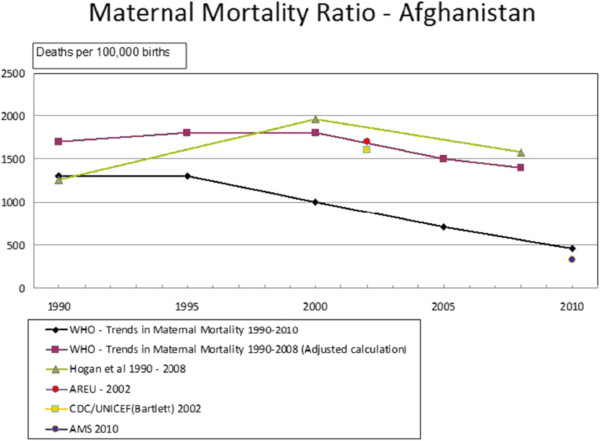
“Afghanistan has a revised MDG5 target of a 50% MMR reduction from 1,600/100,000 in 2002 to 800/ 100,000 in 2015 [33,34].”
Self-citationRoberts, B., Morgan, O. W., Sultani, M. G., Nyasulu, P. S., Rwebangila, S., Sondorp, E., Chandramohan, D., & Checchi, F. (2011) · PLoS ONE · doi:10.1371/journal.pone.0025175 · Cited by 6 · cited 1×
“8 million [8] and just 8% of women delivered with the assistance of a skilled birth attendant [5, 9].”
BackgroundSelf-citationMedical education in Afghanistan.
MacFadyen, D. R. (1978) · PubMed · Cited by 4
Afghanistan: Land of Conflict and Beauty
Griffiths, J. (2001) · Cited by 3
Research works printed but not linked: 22
- Strong L Wali A Sondorp E Health Policy in Afghanistan: two years of rapid change London School of Hygiene & Tropical Medicine 2005 8 9
- WHO, UNICEF, UNFPA, World Bank Trends in Maternal Mortality 1990-2008: Estimates developed by WHO, UNICEF, UNFPA and The World Bank 2010 Geneva: World Health Organization
- MSH, HANDS, MSH/E Afghanistan National Health Resources Assessment 2002 Accession/Record Number 7250/6321. Kabul: Management Sciences for Health, Management Sciences for Health/Europe, Health and Development Services (HANDS), MoPH
- Index Mundi Historical data graphs per year 2012 2014 http://www.indexmundi.com
- ICM ICM international definition of the midwife 2011 http://www.internationalmidwives.org: International Confederation of Midwives
- OECD/DAC Fragile states 2013: Resource flows and trends in a shifting world 2012 Paris: OECD/DAC International Network on Conflict and Fragility (INCAF)
- Williams C A quiet general fights for her nation LA Times 2001
- AREU The public health system in Afghanistan (May-June 2002) 2002 Kabul: Afghanistan Research and Evaluation Unit
- Dalil S Fritzler M Ionete D McIntosh N O'Heir J Stephenson P Assessment of Services and Human Resources Needs for the development of the Safe Motherhood Initiative in Afghanistan 2003 Kabul: UNICEF
- MoPH National reproductive health strategy for Afghanistan 2003–2005 2003 Kabul: Transitional Islamic Government of Afghanistan
- USAID/REACH, HNTPO, UNICEF, Jhpiego Guidance document for implementation of community midwifery education In Afghanistan 2003 Kabul: MoPH
- HNTPO HNI community midwifery training. Final report on the pilot project implemented at Ghani Khel, Nangahar Province (15 June 2002–30 April 2004) 2004 Jalalabad: HNTPO internal document
- Afghanistan National Development Strategy Directorate, Ministry of Finance Afghanistan Millennium Development Goals Report 2010 2010 Kabul: Islamic Republic of Afghanistan
- Hill K Gains in Afghan Health: Too Good to be True? 2012 Washington DC: Presentation at Center for Global Development, June 4
- UNFPA Maternal health thematic fund annual report 2011 2012 14
- MoPH/IHS Curriculum for community midwifery education 2009 3 Kabul: Institute of Health Sciences
- USAID, Jhpiego Evaluation of the pre-service midwifery education program in Afghanistan 2011 Kabul: Health Services Support Project, USAID
- Labelle H Billions down the Afghan Hole New York Times 2012
- Nasuti MJ America’s “Phantom Aid” to Afghanistan 2009 Kabul: Kabul Press KabulPress.org
- Jhpiego Economic costs of supporting midwifery schools in Afghanistan Evaluation of the Pre-Service Midwifery Education Program in Afghanistan: Cost Analysis 2009
- WHO, UNICEF Afghanistan Health Data - 2012 profile and accountability report. Countdown to 2015, Maternal Newborn & Child Survival 2011 WHO, UNICEF, The Lancet http://www.countdown2015mnch.org
- MoPH Public health strategy Afghanistan National Development Strategy 1387–1391 (2008–2013) 2007 Kabul: Ministry of Public Health
Cited by
Community health workers in humanitarian settings: Scoping review
Miller, N. P., Ardestani, F. B., Dini, H. S., Shafique, F., & Zunong, N. (2020) · Journal of Global Health · doi:10.7189/jogh.10.020602 · Cited by 72
Training for impact: the socio-economic impact of a fit for purpose health workforce on communities
Pálsdóttir, B., Barry, J., Bruno, A., Barr, H., Clithero-Eridon, A. R., Cobb, N. M., Maeseneer, J. D., Kiguli-Malwadde, E., Neusy, A., Reeves, S., et al. (2016) · Human Resources for Health · doi:10.1186/s12960-016-0143-6 · Cited by 82
Douedari, Y., & Howard, N. (2019) · International Journal of Health Policy and Management · doi:10.15171/ijhpm.2018.132 · Cited by 62
Self-citationBeek, K., McFadden, A., & Dawson, A. (2019) · Human Resources for Health · doi:10.1186/s12960-018-0341-5 · Cited by 58
“[47] discuss the consistently positive contribution the Community Midwifery Education programme in Afghanistan has had on the reduction of maternal mortality and the increase in skilled attendance at birth.”
BackgroundInfluentialMiyake, S., Speakman, E. M., Currie, S., & Howard, N. (2017) · Health Policy and Planning · doi:10.1093/heapol/czw093 · Cited by 46
“Curricula Curricula in Afghanistan (Speakman et al. 2014; Zainullah et al. 2014), Somalia (Miyake 2015a) and Yemen (MCHIP 2012; MOPHP 2012), adopted and standardized ICM essential competencies for basic midwifery practice (ICM 2013).”
InfluentialSelf-citation
Metadata
- Authors
- Speakman, E. M., Shafi, A., Sondorp, E., Atta, N., & Howard, N.
- Affiliations
- London School of Hygiene & Tropical Medicine (GB)
- Royal Tropical Institute (NL)
- Kabul University of Medical Sciences Abu Ali Ibn Sina (AF)
- Corresponding author
- Speakman, Elizabeth M
- Venue
- BMC Women's Health
- Published
- 2014-09-15
- Volume
- 14
- Issue
- 1
- Pages
- 111-111
- ISSN
- 1472-6874 (ISSN-L)
- PMC
- PMC4237830
- OpenAlex
- W1980191488
- Cited by
- 36
- References
- 36
- Citations by year
- 2026: 5 · 2025: 1 · 2024: 2 · 2023: 4 · 2022: 3 · 2021: 7 · 2020: 2 · 2019: 2 · 2018: 2 · 2016: 2 · 2015: 5 · 2014: 1
- FWCI
- 2.51
- Type
- journal article
- Language
- en
- Open access
- gold
- doi.org
- Locations
- BMC Women s Health (publishedVersion)
- Europe PMC (PubMed Central) (publishedVersion, cc-by)
- PubMed Central (publishedVersion, cc-by)
- PubMed (publishedVersion)
- Discovery Research Portal (University of Dundee) (acceptedVersion, cc-by)
- Research Output (Edinburgh Napier University) (submittedVersion, cc-by)
- Edinburgh Napier Research Repository (Edinburgh Napier University) (submittedVersion, cc-by)
- LSHTM Research Online (London School of Hygiene and Tropical Medicine) (submittedVersion, cc-by)
- Topics
- Health Sciences › Medicine › Pediatrics, Perinatology and Child Health › Global Maternal and Child Health
- Health Sciences › Medicine › Public Health, Environmental and Occupational Health › Global Health Workforce Issues
- Health Sciences › Medicine › Public Health, Environmental and Occupational Health › Global Health and Surgery
- Keywords
- midwifery education, skilled birth attendants, maternal health, maternal mortality, rural health workforce, women's empowerment, women's health, health system reconstruction, Afghanistan, policy triangle framework, health program implementation, resource mobilization
- MeSH terms
- Afghanistan, Female, Health Workforce, Humans, Infant Care, Infant, Newborn, Maternal Health Services, Maternal Mortality, Midwifery, Postnatal Care, Power, Psychological, Pregnancy, Prenatal Care, Women's Health, Program Development, Delivery, Obstetric, Reproductive Health
About these checks
Registry, retraction, Cites and statistics results are computed, not judged, with one exception: a printed reference that no index lists is read once by a model before it counts as a citation error. Claims are extracted by a model and kept only when their quote appears verbatim in the text; each cited source is then checked, with a model’s help, for whether it says what the claim relies on. Those verdicts can be wrong — read the claim’s quote and the cited source before relying on one.
Statistics and arithmetic are recomputed, not judged.
Confidence bands are shown only for fields calibrated on our annotated test set. None is calibrated yet, so no band is shown.
What counts as a claim ›How we measure confidence ›How we check this ›
Are you an author, or do you see a problem with this page? Request a review
Data sources
Bibliographic data: Semantic Scholar, OpenAlex, Crossref.
Contains information from the Semantic Scholar Academic Graph Datasets, made available under the ODC Attribution License (ODC-BY 1.0).
Semantic Scholar’s data is described in: Kinney, R., et al. (2023). The Semantic Scholar Open Data Platform. arXiv:2301.10140.
