

The DOI matches its Crossref record; 36 of the 36 references it cites were found in a registry or an index.
Depression and decision-making capacity for treatment or research: a systematic review
Open accessAbstract
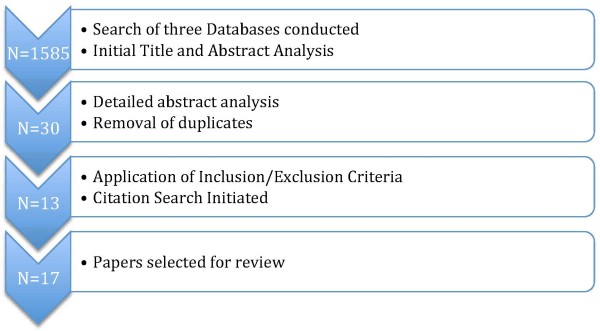
Background: Psychiatric disorders can pose problems in the assessment of decision-making capacity (DMC). This is so particularly where psychopathology is seen as the extreme end of a dimension that includes normality. Depression is an example of such a psychiatric disorder. Four abilities ( understanding , appreciating , reasoning and ability to express a choice ) are commonly assessed when determining DMC in psychiatry and uncertainty exists about the extent to which depression impacts capacity to make treatment or research participation decisions. Methods: A systematic review of the medical ethical and empirical literature concerning depression and DMC was conducted. Medline, EMBASE and PsycInfo databases were searched for studies of depression and consent and DMC. Empirical studies and papers containing ethical analysis were extracted and analysed. Results: 17 publications were identified. The clinical ethics studies highlighted appreciation of information as the ability that can be impaired in depression, indicating that emotional factors can impact on DMC. The empirical studies reporting decision-making ability scores also highlighted impairment of appreciation but without evidence of strong impact. Measurement problems, however, looked likely. The frequency of clinical judgements of lack of DMC in people with depression varied greatly according to acuity of illness and whether judgements are structured or unstructured. Conclusions: Depression can impair DMC especially if severe. Most evidence indicates appreciation as the ability primarily impaired by depressive illness. Understanding and measuring the appreciation ability in depression remains a problem in need of further research.
Overview
The claims and statistics of this paper haven’t been checked yet.
Run the check — free, no account needed. It reads the open-access text and checks the sources it cites.
Integrity signals
Registry
Cites
Statistics
Figures
Verification
Claims the paper makes
The claims and statistics of this paper haven’t been checked yet.
Run the check — free, no account needed. It reads the open-access text and checks the sources it cites.
Claims other papers make about this one
Each is checked against this paper’s own text: does it say what the citing paper says it does?
The cited source says what the claim attributes to it.
In the citing paper
“Assessing mental capacity in a life-or-death decision is never straightforward, but it is particularly complex in patients with psychiatric illnesses, which can impair decision making capacity (27, 40).”
From Assisted death in eating disorders: a systematic review of cases and clinical rationales (2024) · cites this paper as [40]
In the citing paper
“Decision-making and learning impairments are core characteristics of a wide range of psychiatric disorders — such as major depressive disorder (MDD), obsessive–compulsive disorder (OCD), and schizophrenia — and are linked to their specific symptoms.1–9”
From Investigating disorder-specific and transdiagnostic alterations in model-based and model-free decision-making (2024) · cites this paper as [5]
In the citing paper
“The authors of the MacArthur Treatment Competence Study, for instance, conclude that being diagnosed with even a severe mental illness like schizophrenia does not preclude a patient from being competent [8].”
From Is the exclusion of psychiatric patients from access to physician-assisted suicide discriminatory? (2019) · cites this paper as [8]
Self-check
Percentages, sums and reported differences re-computed from the paper’s own numbers.
The self-check needs the paper’s full text.
Citations
Cites
Assessing Competence to Consent to Treatment: A Guide for Physicians and Other Health Prefessionals
Grisso, T., & Appelbaum, P. S. (1998) · doi:10.1093/oso/9780195103724.001.0001 · Cited by 823
Assessing Competence to Consent to Treatment: A Guide for Physicians and Other Health Professionals
Grisso, T., & Appelbaum, P. S. (1998) · DigitalGeorgetown (Georgetown University Library) · Cited by 572
Deciding for Others: The Ethics of Surrogate Decision Making
Buchanan, A. E., & Brock, D. W. (1990) · doi:10.1017/cbo9781139171946 · Cited by 516
Competency to Consent to Research: A Psychiatric Overview
Appelbaum, P. S. (1982) · Archives of General Psychiatry · doi:10.1001/archpsyc.1982.04290080061009 · Cited by 287
Competence of Depressed Patients for Consent to Research
Appelbaum, P. S., Grisso, T., Frank, E., O’Donnell, S., & Kupfer, D. J. (1999) · American Journal of Psychiatry · doi:10.1176/ajp.156.9.1380 · Cited by 279
Comparison of standards for assessing patients' capacities to make treatment decisions
Grisso, T., & Appelbaum, P. S. (1995) · American Journal of Psychiatry · doi:10.1176/ajp.152.7.1033 · Cited by 250
Silverstone, P. H., & Salsali, M. (2003) · Annals of General Hospital Psychiatry · doi:10.1186/1475-2832-2-2 · Cited by 232
Buchanan, A. E., & Brock, D. W. (1986) · Milbank Quarterly · doi:10.2307/3349960 · Cited by 209
Depression, competence, and the right to refuse lifesaving medical treatment
Sullivan, M. D., & Youngner, S. J. (1994) · American Journal of Psychiatry · doi:10.1176/ajp.151.7.971 · Cited by 180
Owen, G. S., Richardson, G., David, A. S., Szmukler, G., Hayward, P., & Hotopf, M. (2008) · BMJ · doi:10.1136/bmj.39580.546597.be · Cited by 172
Self-citationCompetence of mentally ill patients: a comparative empirical study
VOLLMANN, J., BAUER, A., DANKER-HOPFE, H., & HELMCHEN, H. (2003) · Psychological Medicine · doi:10.1017/s0033291703008389 · Cited by 159
Caring about risks: are severely depressed patients competent to consent to research
Elliott, C. (1997) · Archives of General Psychiatry · doi:10.1001/archpsyc.1997.01830140021003 · Cited by 137
Reliability of mental capacity assessments in psychiatric in-patients
Cairns, R., Maddock, C., Buchanan, A., David, A. S., Hayward, P., Richardson, G., Szmukler, G., & Hotopf, M. (2005) · British Journal of Psychiatry · doi:10.1192/bjp.187.4.372 · Cited by 135
Self-citationA Philosophical Disease: Bioethics, Culture and Identity
Elliott, C. (1999) · DigitalGeorgetown (Georgetown University Library) · Cited by 116
Breden, T. M., & Vollmann, J. (2004) · Health Care Analysis · doi:10.1007/s10728-004-6635-x · Cited by 111
Mental capacity, diagnosis and insight in psychiatric in-patients: A cross-sectional study
Owen, G. S., David, A. S., Richardson, G., Szmukler, G., Hayward, P., & Hotopf, M. (2009) · Psychological Medicine · doi:10.1017/s0033291708004637 · Cited by 99
Self-citationDetermining when impairment constitutes incapacity for informed consent in schizophrenia research
Kim, S. Y. H., Appelbaum, P. S., Swan, J., Stroup, T. S., McEvoy, J. P., Goff, D. C., Jeste, D. V., Lamberti, J. S., Leibovici, A., & Caine, E. D. (2007) · British Journal of Psychiatry · doi:10.1192/bjp.bp.106.033324 · Cited by 84
Dworkin, G., Buchanan, A. E., & Brock, D. W. (1991) · The Philosophical Quarterly · doi:10.2307/2219802 · Cited by 84
Constructing competence: formulating standards of legal competence to make medical decisions.
Berg, J. W., Appelbaum, P. S., & Grisso, T. (1996) · PubMed · Cited by 80
The Psychometric Properties of the Competency Interview Schedule
Bean, G., Nishisato, S., Rector, N. A., & Glancy, G. (1994) · The Canadian Journal of Psychiatry · doi:10.1177/070674379403900804 · Cited by 79
Depression and competence to refuse psychiatric treatment
Rudnick, A. (2002) · Journal of Medical Ethics · doi:10.1136/jme.28.3.151 · Cited by 78
Decisional Capacity of Severely Depressed Patients Requiring Electroconvulsive Therapy
Lapid, M. I., Rummans, T. A., Poole, K. L., Pankratz, V. S., Maurer, M. S., Rasmussen, K. G., Philbrick, K. L., & Appelbaum, P. S. (2003) · Journal of Ect · doi:10.1097/00124509-200306000-00002 · Cited by 78
Mental Capacity and Decisional Autonomy: An Interdisciplinary Challenge
Owen, G. S., Freyenhagen, F., Richardson, G., & Hotopf, M. H. (2009) · Inquiry · doi:10.1080/00201740802661502 · Cited by 78
Self-citationWHEN CONCRETIZED EMOTION‐BELIEF COMPLEXES DERAIL DECISION‐MAKING CAPACITY
Halpern, J. (2010) · Bioethics · doi:10.1111/j.1467-8519.2010.01817.x · Cited by 60
Depression, possibilities, and competence: A phenomenological perspective
Meynen, G. (2011) · Metamedicine · doi:10.1007/s11017-010-9171-8 · Cited by 57
Depressed patients’ perceptions of depression treatment decision‐making
Simón, D., Loh, A., Wills, C. E., & Härter, M. C. (2006) · Health Expectations · doi:10.1111/j.1369-7625.2006.00424.x · Cited by 56
(2004) · PubMed · Cited by 56
Decision‐making needs of patients with depression: a descriptive study
Stacey, D., Menard, P., Gaboury, I., Jacobsen, M. J., Sharif, F., RITCHIE, L., & Bunn, H. (2008) · Journal of Psychiatric and Mental Health Nursing · doi:10.1111/j.1365-2850.2007.01224.x · Cited by 41
The Assessment of Competence to Make a Treatment Decision: An Empirical Approach
Bean, G., Nishisato, S., Rector, N. A., & Glancy, G. (1996) · The Canadian Journal of Psychiatry · doi:10.1177/070674379604100205 · Cited by 41
Appreciating Anorexia: Decisional Capacity and the Role of Values
Grisso, T., & Appelbaum, P. S. (2006) · Philosophy, psychiatry & psychology · doi:10.1353/ppp.2007.0030 · Cited by 40
Owen, G. S., Ster, I. C., David, A. S., Szmukler, G., Hayward, P., Richardson, G., & Hotopf, M. (2011) · Psychological Medicine · doi:10.1017/s0033291710000383 · Cited by 24
Self-citationValues and limits of the MacArthur Treatment Competence Study.
Grisso, T., & Appelbaum, P. S. (1996) · Psychology Public Policy and Law · doi:10.1037//1076-8971.2.1.167 · Cited by 22
Decision-Making as a Broader Concept
Tan, J. O. A., Stewart, A., & Hope, T. (2009) · Philosophy, psychiatry & psychology · doi:10.1353/ppp.0.0263 · Cited by 21
Depression and the right to die
Leeman, C. P. (1999) · General Hospital Psychiatry · doi:10.1016/s0163-8343(98)00069-3 · Cited by 21
Values and limits of the MacArthur Treatment Competence Study.
Grisso, T., & Appelbaum, P. S. (1996) · Psychology Public Policy and Law · doi:10.1037/1076-8971.2.1.167 · Cited by 16
Does Depression Invalidate Competence? Consultants' Ethical, Psychiatric, and Legal Considerations
Young, E. W. D., Corby, J. C., & Johnson, R. (1993) · Cambridge Quarterly of Healthcare Ethics · doi:10.1017/s0963180100004540 · Cited by 13
Research works printed but not linked: 1
- Mental Capacity Act Chapter 9. 2005, London: The Stationary Office
Cited by
Sorted by citations
Autonomy, Rationality, and Contemporary Bioethics
Pugh, J. (2020) · doi:10.1093/oso/9780198858584.001.0001 · Cited by 144
Work-life balance of UK construction workers: relationship with mental health
Kotera, Y., Green, P., & Sheffield, D. (2019) · Construction Management and Economics · doi:10.1080/01446193.2019.1625417 · Cited by 142
Tuffrey-Wijne, I., Curfs, L., Finlay, I., & Hollins, S. (2018) · BMC Medical Ethics · doi:10.1186/s12910-018-0257-6 · Cited by 97
Digital Psychiatry: Risks and Opportunities for Public Health and Wellbeing
Burr, C., Morley, J., Taddeo, M., & Floridi, L. (2020) · IEEE Transactions on Technology and Society · doi:10.1109/tts.2020.2977059 · Cited by 85
Patient-Centered Care for Patients with Depression or Anxiety Disorder: An Integrative Review
de Pinho, L. G., Lopes, M. J., Correia, T., Sampaio, F., do Arco, H. M. D. S. L. R., Mendes, A. Q., Marques, M. D. C., & da Fonseca, C. J. V. (2021) · Journal of Personalized Medicine · doi:10.3390/jpm11080776 · Cited by 88
Metadata
- Authors
- Hindmarch, T., Hotopf, M., & Owen, G. S.
- Affiliations
- King's College London (GB)
- Corresponding author
- Owen, Gareth S
- Venue
- BMC Medical Ethics
- Published
- 2013-12
- Volume
- 14
- Issue
- 1
- Pages
- 54-54
- ISSN
- 1472-6939 (ISSN-L)
- PMC
- PMC4029430
- OpenAlex
- W2092850387
- Cited by
- 178
- References
- 36
- Citations by year
- 2026: 6 · 2025: 16 · 2024: 20 · 2023: 13 · 2022: 15 · 2021: 12 · 2020: 30 · 2019: 14 · 2018: 14 · 2017: 15 · 2016: 12 · 2015: 9 · 2014: 1 · 2013: 1
- FWCI
- 1.12
- Type
- journal article
- Language
- en
- Open access
- gold
- doi.org
- Licence
- Locations
- BMC Medical Ethics (publishedVersion, cc-by)
- Europe PMC (PubMed Central) (publishedVersion, cc-by)
- PubMed Central (publishedVersion, cc-by)
- PubMed (publishedVersion)
- Research Portal (King's College London) (publishedVersion, other-oa)
- Funders
- Wellcome Trust (097683)
- Topics
- Social Sciences › Psychology › Clinical Psychology › Healthcare Decision-Making and Restraints
- Health Sciences › Medicine › Public Health, Environmental and Occupational Health › Ethics in Clinical Research
- Health Sciences › Medicine › Public Health, Environmental and Occupational Health › Ethics and bioethics in healthcare
- Keywords
- depression, decision-making capacity, informed consent, understanding, reasoning, research participation, treatment decision-making, clinical ethics, severe depression
- MeSH terms
- Decision Making, Depression, Depressive Disorder, Humans, Informed Consent, Judgment, Patient Participation, Mental Competency, Comprehension, Uncertainty
About these checks
Registry, retraction, Cites and statistics results are computed, not judged, with one exception: a printed reference that no index lists is read once by a model before it counts as a citation error. Claims are extracted by a model and kept only when their quote appears verbatim in the text; each cited source is then checked, with a model’s help, for whether it says what the claim relies on. Those verdicts can be wrong — read the claim’s quote and the cited source before relying on one.
Statistics and arithmetic are recomputed, not judged.
Confidence bands are shown only for fields calibrated on our annotated test set. None is calibrated yet, so no band is shown.
What counts as a claim ›How we measure confidence ›How we check this ›
Are you an author, or do you see a problem with this page? Request a review
