

Establishing a web-based integrated surveillance system for early detection of infectious disease epidemic in rural China: a field experimental study
Open accessThe DOI matches its Crossref record; 31 of the 32 references it cites were found in a registry or an index.
Abstract
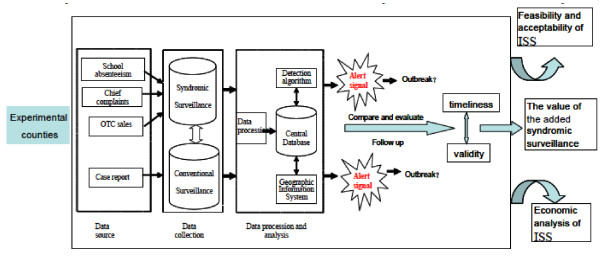
BACKGROUND: A crucial goal of infectious disease surveillance is the early detection of epidemics, which is essential for disease control. In China, the current surveillance system is based on confirmed case reports. In rural China, it is not practical for health units to perform laboratory tests to confirm disease and people are more likely to get 'old' and emerging infectious diseases due to poor living conditions and closer contacts with wild animals and poultry. Syndromic surveillance, which collects non-specific syndromes before diagnosis, has great advantages in promoting the early detection of epidemics and reducing the necessities of disease confirmation. It will be especially effective for surveillance in resource poor settings. METHODS/DESIGN: This is a field experimental study. The experimental tool is an innovative electronic surveillance system, combining syndromic surveillance with the existing case report surveillance in four selected counties in China. In the added syndromic surveillance, three types of data are collected including patients' major symptoms from health clinics, pharmaceutical sales from pharmacies and absenteeism information from primary school. In order to evaluate the early warning capability of the new added syndromic surveillance, the timelines and validity of the alert signals will be analyzed in comparison with the traditional case reporting system. The acceptability, feasibility and economic evaluation of the whole integrated surveillance system will be conducted in a before and after study design. DISCUSSIONS: Although syndromic surveillance system has mostly been established in developed areas, there are opportunities and advantages of developing it in rural China. The project will contribute to knowledge, experience and evidence on the establishment of an integrated surveillance system, which aims to provide early warning of disease epidemics in developing countries.
Overview
The claims and statistics of this paper haven’t been checked yet.
Free: it reads the open-access text and checks the first 5 claims that cite a source we can check. Create a free account to check every claim.
Integrity signals
Registry
Cites
Statistics
Figures
Verification
Claims the paper makes
The claims and statistics of this paper haven’t been checked yet.
Free: it reads the open-access text and checks the first 5 claims that cite a source we can check. Create a free account to check every claim.
Claims other papers make about this one
Each is checked against this paper’s own text: does it say what the citing paper says it does?
In the citing paper
“There have been a number of recent proposals to establish an integrated surveillance system, using a ‘syndromic surveillance’ approach to complement traditional case report surveillance in rural China [42, 43].”
From Beyond pilotitis: taking digital health interventions to the national level in China and Uganda (2017) · cites this paper as [43]
Self-check
Percentages, sums and reported differences re-computed from the paper’s own numbers.
The self-check needs the paper’s full text.
Citations
Cites
Emergence and control of infectious diseases in China
Wang, L., Wang, Y., Jin, S., Wu, Z., Chin, D. P., Koplan, J. P., & Wilson, M. E. (2008) · The Lancet · doi:10.1016/s0140-6736(08)61365-3 · Cited by 390 · cited 6×
“In 2008, when the earthquake occurred in Sichuan which caused CISDCP paralyzed for several days, a cellular phone reporting programme was initiated emergently by China CDC for infectious disease reporting [34].”
BackgroundInfluentialSyndromic Surveillance in Public Health Practice, New York City
Heffernan, R., Mostashari, F., Das, D., Karpati, A., Kulldorff, M., & Weiss, D. (2004) · Emerging Infectious Diseases · doi:10.3201/eid1005.030646 · Cited by 355 · cited 1×
“Their value in early notification of outbreaks has been confirmed in these studies [6,11-13,15-19].”
ResultLombardo, J., Burkom, H., Elbert, E., Magruder, S., Lewis, S. H., Loschen, W., Sari, J., Sniegoski, C., Wojcik, R., & Pavlin, J. (2003) · Journal of Urban Health · doi:10.1007/pl00022313 · Cited by 241
Syndromic Surveillance and Bioterrorism-related Epidemics
Buehler, J. W., Berkelman, R. L., Hartley, D. M., & Peters, C. J. (2003) · Emerging Infectious Diseases · doi:10.3201/eid0910.030231 · Cited by 223
Overview on SARS in Asia and the World
LAM, W., ZHONG, N., & TAN, W. (2003) · Respirology · doi:10.1046/j.1440-1843.2003.00516.x · Cited by 179 · cited 1×
“It was reported there were 5327 cases and 349 deaths in China by the end of 2003 [1].”
BackgroundDahlberg, K. M., Waern, M., & Runeson, B. (2008) · BMC Public Health · doi:10.1186/1471-2458-8-8 · Cited by 148
Self-treatment of malaria in rural communities, Butajira, southern Ethiopia.
Deressa, W. A., Ali, A. O., & Enqusellassie, F. (2003) · Europe PMC (PubMed Central) · Cited by 145
Syndromic Surveillance: Adapting Innovations to Developing Settings
Chretien, J.-P., Burkom, H. S., Sedyaningsih, E. R., Larasati, R. P., Lescano, A. G., Mundaca, C. C., Blazes, D. L., Munayco, C. V., Coberly, J. S., Ashar, R. J., et al. (2008) · PLoS Medicine · doi:10.1371/journal.pmed.0050072 · Cited by 109
Yang, C., Yang, J., Luo, X., & Gong, P. (2009) · Bulletin of the World Health Organization · doi:10.2471/blt.08.060905 · Cited by 107 · cited 1×
“In 2008, when the earthquake occurred in Sichuan which caused CISDCP paralyzed for several days, a cellular phone reporting programme was initiated emergently by China CDC for infectious disease reporting [34].”
Background
Research works printed but not linked: 5
- 10. James W Richard SJ overhage M Framework for evaluating public health surveillance systems for early detection of outbreaks MMWR 2004 53 1 11 15129191
- 20. MoH Regulations on Public Health Emergency 2003 China
- 21. NPC Law on the prevention and control of infectious diseases 2004 China
- 22. MoH Acute infectious disease prevention and control strategies 2007 China
- 25. Zu BC Yang HC Duan TL [Investigation and Analysis on a German Measles Outbreak in Academy] Zhonghua Liu Xing Bing Xue Za Zhi 2005 26 71 72
Cited by
Beyond pilotitis: taking digital health interventions to the national level in China and Uganda
Huang, F., Blaschke, S., & Lucas, H. (2017) · Globalization and Health · doi:10.1186/s12992-017-0275-z · Cited by 182
“There have been a number of recent proposals to establish an integrated surveillance system, using a ‘syndromic surveillance’ approach to complement traditional case report surveillance in rural China [42, 43].”
BackgroundChoi, J., Cho, Y., Shim, E., & Woo, H. (2016) · BMC Public Health · doi:10.1186/s12889-016-3893-0 · Cited by 140
“Web-based reporting and surveillance systems first originated to strengthen global capacity for disease surveillance [20].”
BackgroundChinese health care system and clinical epidemiology
Sun, Y., Gregersen, H. N., & Yuan, W. (2017) · Clinical Epidemiology · doi:10.2147/clep.s106258 · Cited by 100
“In January 2004, a real-time, case-specific, and web-based disease surveillance system was set up.(33,35,36) The system monitors 37 communicable diseases and included death reports from April 2004.”
Space-Time Clustering Characteristics of Tuberculosis in China, 2005-2011
Zhao, F., Cheng, S., He, G., Huang, F., Zhang, H., Xu, B., Murimwa, T. C., Cheng, J., Hu, D., & Wang, L. (2013) · PLoS ONE · doi:10.1371/journal.pone.0083605 · Cited by 72
“Currently this daily web based surveillance system covers 37 notifiable infectious diseases including TB and web-based reporting has been achieved in almost all the counties in China[15,16].”
BackgroundSelf-citationDing, Y., Smith, H. J. J., Fei, Y., Xu, B., Nie, S., Yan, W., Diwan, V. K., Sauerborn, R., & Dong, H. (2012) · Bulletin of the World Health Organization · doi:10.2471/blt.12.109447 · Cited by 56
Self-citationOptimizing sentinel surveillance in temporal network epidemiology
Bai, Y., Yang, B. X., Lin, L., Herrera, J. L., Du, Z., & Holme, P. (2017) · Scientific Reports · doi:10.1038/s41598-017-03868-6 · Cited by 47
Geospatial characteristics of measles transmission in China during 2005−2014
Yang, W., Wen, L., Li, S., Chen, K., Zhang, W., & Shaman, J. L. (2017) · PLoS Computational Biology · doi:10.1371/journal.pcbi.1005474 · Cited by 45
Interplay between environment, agriculture and infectious diseases of poverty: Case studies in China
Yang, G.-J., Utzinger, J., & Zhou, X. (2013) · Acta Tropica · doi:10.1016/j.actatropica.2013.07.009 · Cited by 40
ISS-An Electronic Syndromic Surveillance System for Infectious Disease in Rural China
Yan, W., Palm, L., Lu, X. B., Nie, S., Xu, B., Zhao, Q., Tao, T., Cheng, L., Tan, L., Dong, H., et al. (2013) · PLoS ONE · doi:10.1371/journal.pone.0062749 · Cited by 37
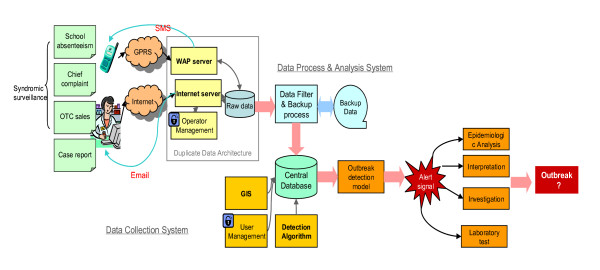
“An example of interface for health center data report is shown in Figure 2, and more detailed description of these data sources can be found in a published study protocol [19].”
BackgroundSelf-citationDai, Y., & Wang, J. (2020) · PLoS neglected tropical diseases · doi:10.1371/journal.pntd.0008758 · Cited by 28
“In China, the current surveillance system is based on confirmed case reports.[16] It is not practical for health units to perform laboratory tests to confirm a novel infectious disease.”
BackgroundEarly warning of some notifiable infectious diseases in China by the artificial neural network
Guo, Z., He, K., & Xiao, D. (2020) · Royal Society Open Science · doi:10.1098/rsos.191420 · Cited by 24
“Since the 2003 SARS outbreak, a web-based, daily infectious disease confirmed case surveillance system, which covered 37 notifiable infectious diseases, was instituted in April 2004 in China [1] .”
BackgroundSpatial Modeling of the Black Death in S weden
Skog, L., & Hauska, H. (2013) · Transactions in GIS · doi:10.1111/j.1467-9671.2012.01369.x · Cited by 21
“One example is presented by Yan et al. (2012). Epidemiologists also want to learn from the past to better prepare for future outbreaks.”
BackgroundNia, Z. M., Seyyed-Kalantari, L., Goitom, M., Garcia, B. R. M., Ahmadi, A., Asgary, A., Orbinski, J., Wu, J., & Kong, J. D. (2025) · Artificial Intelligence in Medicine · doi:10.1016/j.artmed.2025.103076 · Cited by 17
Zhou, H., Zhang, S., Zhang, W., Wang, F., Zhong, Y., Gu, L., Qu, Z., & Tian, D. (2015) · BMC Public Health · doi:10.1186/s12889-015-1540-9 · Cited by 17
“However, the outbreak and epidemic of Severe Acute Respiratory Syndrome (SARS) in 2003 exposed the real weakness of China’s public health system [8].”
BackgroundAshton, R. A., Kefyalew, T., Batisso, E., Awano, T., Kebede, Z., Tesfaye, G., Mesele, T., Chibsa, S., Reithinger, R., & BROOKER, S. J. (2015) · BMC Public Health · doi:10.1186/s12889-015-2680-7 · Cited by 16
“Presentation of six months’ pilot data, no validation of data from surveillance system against other sources [11, 43]”
BackgroundCheng, C. K. Y., Channarith, H., & Cowling, B. J. (2013) · PLoS ONE · doi:10.1371/journal.pone.0076859 · Cited by 15
Almayahi, Z. K., Alswaidi, F., & Alzahrani, A. G. (2021) · Journal of the Egyptian Public Health Association · doi:10.1186/s42506-021-00074-1 · Cited by 12
Ding, Y., Sauerborn, R., Xu, B., Shaofa, N., Yan, W., Diwan, V. K., & Dong, H. (2015) · BMC Public Health · doi:10.1186/s12889-015-2475-x · Cited by 12
“All data collectors in Jiangxi Province were trained collectively by researchers from one university, and those in Hubei were trained by researchers from another universities More information on the ISSC project can be found in other studies [20, 21].”
MethodSelf-citationHuang, F. J., Li, S.-G., Tian, P., Guo, X.-R., Xia, Z., Zhou, S., Zhou, H., & Zhou, X. (2021) · Scientific Reports · doi:10.1038/s41598-021-93734-3 · Cited by 10
Fan, Y., Wang, Y., Jiang, H., Yang, W., Yu, M., Yan, W., Diwan, V. K., Xu, B., Dong, H., Palm, L., et al. (2014) · PLoS ONE · doi:10.1371/journal.pone.0112255 · Cited by 10
“Further details of the ISS may be found in previous studies [24,25].”
ResultSelf-citationLi, Z., Lin, S., Rui, J., Bai, Y., Deng, B., Chen, Q., Zhu, Y., Luo, L., Yu, S., Liu, W., et al. (2022) · Frontiers in Public Health · doi:10.3389/fpubh.2022.813860 · Cited by 9
SCM: a practical tool to implement hospital-based syndromic surveillance
Ye, C., Li, Z., Fu, Y., Lan, Y., Zhu, W., Zhou, D., Zhang, H., Lai, S., Buckeridge, D. L., Sun, Q., et al. (2016) · BMC Research Notes · doi:10.1186/s13104-016-2098-z · Cited by 8
Tan, L., Cheng, L., Yan, W., Zhang, J., Xu, B., Diwan, V. K., Dong, H., Palm, L., Wu, Y., Long, L., et al. (2014) · Public Health · doi:10.1016/j.puhe.2014.06.004 · Cited by 8
Self-citationChen, L., Gao, H., Zhang, J., Xu, C., Lu, S., Pan, Y., Thilakavathy, K., Zhao, S., Xiong, C., & Sun, Z. (2026) · BMC Infectious Diseases · doi:10.1186/s12879-025-12386-0 · Cited by 6
“Regional variation in surveillance capacity, healthcare access, and compliance with NPIs across Yunnan may constrain the generalizability of our findings [39, 40].”
Hiển, N. T., Buehler, J. W., & Kimball, A. M. (2021) · doi:10.1093/med/9780198816805.003.0042 · Cited by 6
Wu, Y., Li, Z. J., Yu, S., Chen, L., Wang, J. C., Qin, Y., Song, Y. D., George, F. G., Dong, X. P., Wang, L. P., et al. (2020) · PubMed Central · doi:10.3967/bes2020.057 · Cited by 5
System Requirements for Delivery of Telemedicine Services
Kornak, J. (2015) · Springer eBooks · doi:10.1007/978-3-319-22285-1_9 · Cited by 5
Ding, Y., Fei, Y., Xu, B., Yang, J., Yan, W., Diwan, V. K., Sauerborn, R., & Dong, H. (2015) · BMC Health Services Research · doi:10.1186/s12913-015-0965-2 · Cited by 4
“More information can be found in other studies [2, 7].”
BackgroundMethodResultSelf-citationUnveiling dengue fever prevention and control strategy in Ethiopia: a policy landscape analysis
Sisay, C., Worku, N., Awoke, T., & Alemu, K. (2025) · Pan African Medical Journal · doi:10.11604/pamj.2025.51.42.47457 · Cited by 3
“In contrast, countries endemic to dengue, such as China [37] and Brazil [38], are implementing online multi-level disease surveillance networks at both national and local levels, allowing for real-time collection and analysis of dengue case data and entomological data.”
Surveillance of infectious diseases spreading on time-varying multiplex networks
Hu, J., Zheng, H., Cai, Y., Kong, Y.-X., Wang, Y., Sun, G., Lv, J., & Liu, Q.-H. (2025) · Infectious Disease Modelling · doi:10.1016/j.idm.2025.10.008 · Cited by 3
“…spread of infectious disease and avoid these effects, an accurate and early detection of disease transmission is essential, driving the development of innovative technologies and methods for epidemic surveillance (Chunara et al., 2013; Khuwaja et al., 2011; Sullivan et al., 2010; Yan et al., 2012).”
Strategies for controlling communicable diseases in Afghanistan: a realist review
Hayat, E., Dargahi, H., Jaafaripooyan, E., Neyazi, N., & Mosadeghrad, A. M. (2025) · BMC Public Health · doi:10.1186/s12889-025-23844-4 · Cited by 3
Song, X., Zhao, Q., Tao, T., Zhou, C., Diwan, V. K., & Xu, B. (2018) · Epidemiology and Infection · doi:10.1017/s095026881800136x · Cited by 3
“The ISSC project was launched in Jiangxi and Hubei provinces in China in 2010 [22, 23].”
BackgroundSelf-citationComputer-aided Big Healthcare Data (BHD) Analytics
Shaikh, T. A., & Ali, R. (2020) · Emerald Group Publishing Limited eBooks · doi:10.1108/978-1-83909-099-820201010 · Cited by 3
Narayan, K. A., & Nayak, M. S. D. P. (2020) · National Journal of Community Medicine · doi:10.5455/njcm.20201005061045 · Cited by 2
Buehler, J. W., & Kimball, A. M. (2015) · doi:10.1093/med/9780199661756.003.0122 · Cited by 2
Mattingly, W. A. (2019) · Journal of Refugee & Global Health · doi:10.18297/rgh/vol2/iss2/6 · Cited by 1
“These included systems optimized for use in limited resource environments[8-11], developing countries[12-18], and rural settings of developed countries[19].”
BackgroundBhattarai, A. K. (2015) · UWSpace (University of Waterloo) · Cited by 1
Li, M., Zhang, Z., Ren, H., Fan, Y., Song, W., Fan, L., Quan, D., Gao, J., Chen, L., & Qiu, L. (2021) · Research Square · doi:10.21203/rs.3.rs-259121/v1 · Cited by 1
“The SARS, in uenza and the COVID-19 all showed the necessity and urgency of establishing the infectious disease early warning system[25, 26].”
BackgroundApplying Zero-inflated Mixed Model to School Absenteeism Surveillance in Rural China
Song, X., Tao, T., Zhao, Q., Yang, F., Palm, L., Diwan, V. K., Yuan, H., & Xu, B. (2013) · Online Journal of Public Health Informatics · doi:10.5210/ojphi.v5i1.4421
Self-citationModeling Spatial Heterogeneity with Excess Zeroes from School Absenteeism dSata
Song, X., Zhao, Q., Zhou, C., Tao, T., Palm, L., Diwan, V. K., Yuan, H., & Xu, B. (2015) · Online Journal of Public Health Informatics · doi:10.5210/ojphi.v7i1.5827
Self-citationLi, M., Zhang, Z., Ren, H., Fan, Y., Song, W., Fan, L., Quan, D., Gao, J., Chen, L. M., & Li, Q. (2021) · Research Square · doi:10.21203/rs.3.rs-259121/v2
Roselle, G. A. (2016) · Cambridge University Press eBooks · doi:10.1017/cbo9781139629317.016
Xia, C., Rong, T., & Wang, B. (2026) · Frontiers in Oncology · doi:10.3389/fonc.2026.1678700
“This numerical instability points to a deeper underlying cause: the “ Small Population Bias ” compounded by a scarcity of robust drug surveillance data (47, 48).”
González, L. E. G. (2016) · Universidad Industrial de Santander
Metadata
- Authors
- Yan, W.-R., Nie, S.-F., Xu, B., Dong, H.-J., Palm, L., & Diwan, V. K.
- Affiliations
- Fudan University (CN)
- Future Position X (SE)
- Karolinska Institutet (SE)
- Venue
- BMC Medical Informatics and Decision Making
- Published
- 2012-02-03
- Volume
- 12
- Issue
- 1
- Pages
- 4-4
- ISSN
- 1472-6947 (ISSN-L)
- PMC
- PMC3395861
- OpenAlex
- W2018882396
- Cited by
- 40
- References
- 32
- Citations by year
- 2026: 2 · 2025: 3 · 2022: 1 · 2021: 3 · 2020: 5 · 2019: 1 · 2018: 1 · 2017: 4 · 2016: 3 · 2015: 8 · 2014: 2 · 2013: 6 · 2012: 1
- FWCI
- 4.06
- Type
- journal article
- Language
- en
- Open access
- gold
- doi.org
- Licence
- cc-by
- creativecommons.org/licenses/by/2.0 (tdm)
- Locations
- BMC Medical Informatics and Decision Making (publishedVersion, cc-by)
- Europe PMC (PubMed Central) (publishedVersion, cc-by)
- PubMed Central (publishedVersion, cc-by)
- PubMed (publishedVersion)
- DOAJ (DOAJ: Directory of Open Access Journals) (submittedVersion, cc-by-sa)
- Funders
- European Commission (241900)
- Topics
- Health Sciences › Medicine › Epidemiology › Data-Driven Disease Surveillance
- Life Sciences › Pharmacology, Toxicology and Pharmaceutics › Toxicology › Pharmacovigilance and Adverse Drug Reactions
- Health Sciences › Medicine › Public Health, Environmental and Occupational Health › Global Health and Epidemiology
- Keywords
- syndromic surveillance, infectious disease surveillance, early epidemic detection, web-based monitoring, integrated surveillance systems, pharmaceutical sales data, school absenteeism, rural China, emerging infectious diseases, resource-limited settings, early warning
- MeSH terms
- China, Communicable Diseases, Humans, Population Surveillance, Internet, Public Health Informatics, Early Diagnosis, Epidemics
About these checks
Registry, retraction, Cites and statistics results are computed, not judged, with one exception: a printed reference that no index lists is read once by a model before it counts as a citation error. Claims are extracted by a model and kept only when their quote appears verbatim in the text; each cited source is then checked, with a model’s help, for whether it says what the claim relies on. Those verdicts can be wrong — read the claim’s quote and the cited source before relying on one.
Statistics and arithmetic are recomputed, not judged.
Confidence bands are shown only for fields calibrated on our annotated test set. None is calibrated yet, so no band is shown.
What counts as a claim ›How we measure confidence ›How we check this ›
Are you an author, or do you see a problem with this page? Request a review
Data sources
Bibliographic data: Semantic Scholar, OpenAlex, Crossref.
Contains information from the Semantic Scholar Academic Graph Datasets, made available under the ODC Attribution License (ODC-BY 1.0).
Semantic Scholar’s data is described in: Kinney, R., et al. (2023). The Semantic Scholar Open Data Platform. arXiv:2301.10140.
