

The DOI matches its Crossref record; 22 of the 23 references it cites were found in a registry or an index.
Public health communications and alert fatigue
Open accessAbstract
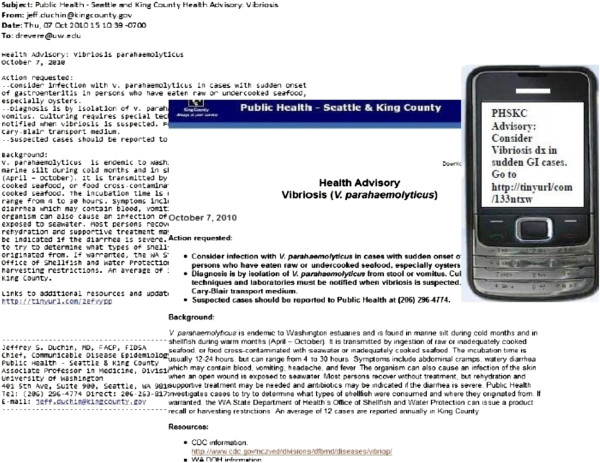
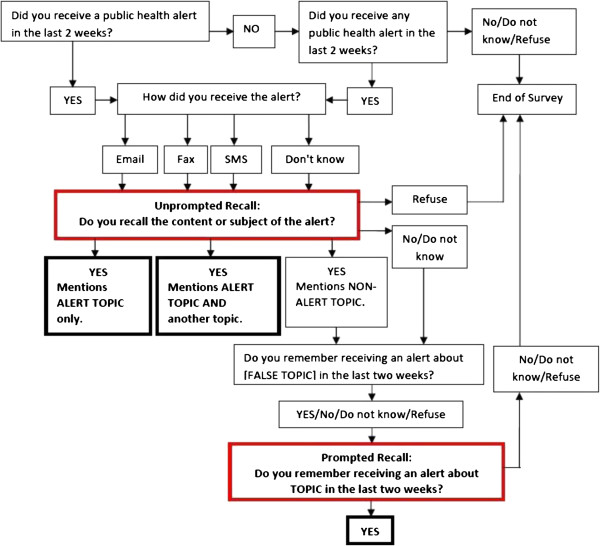
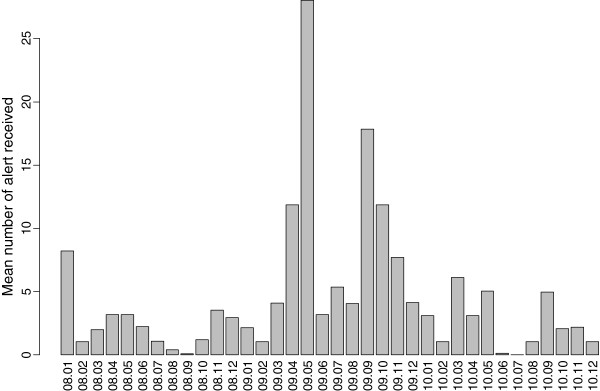
BACKGROUND: Health care providers play a significant role in large scale health emergency planning, detection, response, recovery and communication with the public. The effectiveness of health care providers in emergency preparedness and response roles depends, in part, on public health agencies communicating information in a way that maximizes the likelihood that the message is delivered, received, deemed credible and, when appropriate, acted on. However, during an emergency, health care providers can become inundated with alerts and advisories through numerous national, state, local and professional communication channels. We conducted an alert fatigue study as a sub-study of a larger randomized controlled trial which aimed to identify the most effective methods of communicating public health messages between public health agencies and providers. We report an analysis of the effects of public health message volume/frequency on recall of specific message content and effect of rate of message communications on health care provider alert fatigue. METHODS: Health care providers enrolled in the larger study (n=528) were randomized to receive public health messages via email, fax, short message service (SMS or cell phone text messaging) or to a control group that did not receive messages. For 12 months, study messages based on real events of public health significance were sent quarterly with follow-up telephone interviews regarding message receipt and topic recall conducted 5-10 days after the message delivery date. During a pandemic when numerous messages are sent, alert fatigue may impact ability to recall whether a specific message has been received due to the "noise" created by the higher number of messages. To determine the impact of "noise" when study messages were sent, we compared health care provider recall of the study message topic to the number of local public health messages sent to health care providers. RESULTS: We calculated the mean number of messages that each provider received from local public health during the time period around each study message and provider recall of study message content. We found that recall rates were inversely proportional to the mean number of messages received per week: Every increase of one local public health message per week resulted in a statistically significant 41.2% decrease (p < 0.01), 95% CI [0.39, .87] in the odds of recalling the content of the study message. CONCLUSIONS: To our knowledge, this is the first study to document the effects of alert fatigue on health care providers' recall of information. Our results suggest that information delivered too frequently and/or repetitively through numerous communication channels may have a negative effect on the ability of health care providers to effectively recall emergency information. Keeping health care providers and other first-line responders informed during an emergency is critical. Better coordination between organizations disseminating alerts, advisories and other messages may improve the ability of health care providers to recall public health emergency messages, potentially impacting effective response to public health emergency messages.
Overview
The claims and statistics of this paper haven’t been checked yet.
Run the check — free, no account needed. It reads the open-access text and checks the sources it cites.
Integrity signals
Registry
Cites
Statistics
Figures
Verification
Claims the paper makes
The claims and statistics of this paper haven’t been checked yet.
Run the check — free, no account needed. It reads the open-access text and checks the sources it cites.
Claims other papers make about this one
Each is checked against this paper’s own text: does it say what the citing paper says it does?
The cited source says what the claim attributes to it.
In the citing paper
“Baseman and colleagues demonstrated that for each 1-message-per-week increase, the odds of recalling message content dropped by 41% [22].”
From Effects of workload, work complexity, and repeated alerts on alert fatigue in a clinical decision support system (2017) · cites this paper as [22]
Self-check
Percentages, sums and reported differences re-computed from the paper’s own numbers.
The self-check needs the paper’s full text.
Citations
Cites
Bates, D. W., Kuperman, G. J., Wang, S., Gandhi, T., Kittler, A., Volk, L., Spurr, C., Khorasani, R., Tanasijevic, M., & Middleton, B. (2003) · Journal of the American Medical Informatics Association · doi:10.1197/jamia.m1370 · Cited by 1,346
Overriding of Drug Safety Alerts in Computerized Physician Order Entry
van der Sijs, H., Aarts, J., Vulto, A., & Berg, M. (2006) · Journal of the American Medical Informatics Association · doi:10.1197/jamia.m1809 · Cited by 1,117
Bioterrorism-Related Inhalational Anthrax: The First 10 Cases Reported in the United States
Jernigan, J. A., Stephens, D. S., Ashford, D. A., Omeñaca, C., Topiel, M. S., Galbraith, M., Tapper, M. L., Fisk, T. L., Zaki, S. R., Popović, T., et al. (2001) · Emerging infectious diseases · doi:10.3201/eid0706.010604 · Cited by 995
Physicians' Decisions to Override Computerized Drug Alerts in Primary Care
Weingart, S. N., Toth, M., Sands, D. Z., Aronson, M. D., Davis, R. B., & Phillips, R. S. (2003) · Archives of Internal Medicine · doi:10.1001/archinte.163.21.2625 · Cited by 487
Some unintended consequences of clinical decision support systems.
Ash, J. S., Sittig, D. F., Campbell, E. M., Guappone, K. P., & Dykstra, R. H. (2007) · PubMed Central · Cited by 298
Schedlbauer, A., Prasad, V., Mulvaney, C., Phansalkar, S., Stanton, W., Bates, D. W., & Avery, A. J. (2009) · Journal of the American Medical Informatics Association · doi:10.1197/jamia.m2910 · Cited by 262
Information Chaos in Primary Care: Implications for Physician Performance and Patient Safety
Beasley, J. W., Wetterneck, T. B., Temte, J. L., Lapin, J. A., Smith, P. D., Rivera-Rodriguez, A. J., & Karsh, B.-T. (2011) · The Journal of the American Board of Family Medicine · doi:10.3122/jabfm.2011.06.100255 · Cited by 241
Phansalkar, S., Edworthy, J., Hellier, E., Seger, D. L., Schedlbauer, A., Avery, A. J., & Bates, D. W. (2010) · Journal of the American Medical Informatics Association · doi:10.1136/jamia.2010.005264 · Cited by 226
The Pediatrician and Disaster Preparedness
Markenson, D. S., & REYNOLDS, S. L. (2006) · PEDIATRICS · doi:10.1542/peds.2005-2752 · Cited by 152
Lessons Learned during Dengue Outbreaks in the United States, 2001–2011
Adalja, A. A., Sell, T. K., Bouri, N., & Franco, C. (2012) · Emerging infectious diseases · doi:10.3201/eid1804.110968 · Cited by 125
Research works printed but not linked: 1
- U.S. Census Bureau: State and County QuickFacts: Population Estimates, Counties. 2011, U.S: Census Bureau
Cited by
Sorted by citations
with the HITEC Investigators, Ancker, J. S., Edwards, A., Nosal, S., Hauser, D., Mauer, E., & Kaushal, R. (2017) · BMC Medical Informatics and Decision Making · doi:10.1186/s12911-017-0430-8 · Cited by 709
“Examples of quantitative research supporting the overload explanation include studies finding that override rates decreased overall after irrelevant alerts were discontinued [21], that ability to remember alerts declined as number of different alerts rose [22], and that inappropriate overrides were associated with num…”
BackgroundMessage fatigue: Conceptual definition, operationalization, and correlates
So, J., Kim, S., & Cohen, H. (2016) · Communication Monographs · doi:10.1080/03637751.2016.1250429 · Cited by 219
Kim, S., & So, J. (2017) · Journal of Health Communication · doi:10.1080/10810730.2017.1414900 · Cited by 164
Muench, F. J., & Baumel, A. (2017) · Journal of Medical Internet Research · doi:10.2196/jmir.7463 · Cited by 148
Kisa, S., & Kisa, A. (2024) · Journal of Medical Internet Research · doi:10.2196/56931 · Cited by 132
Kane‐Gill, S. L., O’Connor, M. F., Rothschild, J. M., Selby, N. M., McLean, B. A., Bonafide, C. P., Cvach, M. M., Hu, X., Konkani, A., Pelter, M. M., et al. (2017) · Critical Care Medicine · doi:10.1097/ccm.0000000000002580 · Cited by 121
Williams, S. N., Armitage, C. J., Tampe, T., & Dienes, K. (2021) · PLoS ONE · doi:10.1371/journal.pone.0258781 · Cited by 106
Olakotan, O. O., & Mohd Yusof, M. (2021) · Health Informatics Journal · doi:10.1177/14604582211007536 · Cited by 101
Scalley, B., Spicer, T., Jian, L., Xiao, J., Nairn, J. R., Robertson, A. G., & Weeramanthri, T. S. (2015) · Australian and New Zealand Journal of Public Health · doi:10.1111/1753-6405.12421 · Cited by 95
Messaging Fatigue and Desensitisation to Information During Pandemic
Koh, P. K.-K., Chan, L. L., & Tan, E. (2020) · Archives of Medical Research · doi:10.1016/j.arcmed.2020.06.014 · Cited by 75
Olakotan, O. O., & Yusof, M. M. (2020) · Journal of Biomedical Informatics · doi:10.1016/j.jbi.2020.103453 · Cited by 77
Guan, M., Li, Y., Scoles, J. D., & Zhu, Y. (2022) · Health Communication · doi:10.1080/10410236.2021.2023385 · Cited by 70
Policy recommendations to increase urban heat stress resilience
Hatvani-Kovacs, G., Bush, J., Sharifi, E., & Boland, J. W. (2018) · Urban Climate · doi:10.1016/j.uclim.2018.05.001 · Cited by 68
The development of disaster preparedness education for public: a scoping review
Guo, L., Fang, M., Liu, L., Chong, H., Zeng, W., & Hu, X. (2025) · BMC Public Health · doi:10.1186/s12889-025-21664-0 · Cited by 85
Wireless Emergency Alert messages: Influences on protective action behaviour
Kim, G., Martel, A., Eisenman, D. P., Prelip, M. L., Arevian, A. C., Johnson, K. L., & Glik, D. C. (2019) · Journal of Contingencies and Crisis Management · doi:10.1111/1468-5973.12278 · Cited by 50
Lin, L. K., McCloud, R. F., Bigman, C. A., & Viswanath, K. (2016) · Journal of Public Health · doi:10.1093/pubmed/fdw028 · Cited by 46
Fatigued by Ongoing News Issues? How Repeated Exposure to the Same News Issue Affects the Audience
Gurr, G., & Metag, J. (2021) · Mass Communication & Society · doi:10.1080/15205436.2021.1956543 · Cited by 34
Househ, M. S. (2014) · Health Informatics Journal · doi:10.1177/1460458214540908 · Cited by 35
Utility of Electronic Medical Record Alerts to Prevent Drug Nephrotoxicity
Martin, M. C., & Wilson, F. P. (2018) · Clinical Journal of the American Society of Nephrology · doi:10.2215/cjn.13841217 · Cited by 33
Joos, O., Silva, R., Amouzou, A., Moulton, L. H., Perin, J., Bryce, J., & Mullany, L. C. (2016) · PLoS ONE · doi:10.1371/journal.pone.0145238 · Cited by 34
Liu, Y., Hoppe, B. O., & Convertino, M. (2018) · Risk Analysis · doi:10.1111/risa.12998 · Cited by 31
Ford, K. L., West, A. B., Bucher, A., & Osborn, C. Y. (2022) · Frontiers in Digital Health · doi:10.3389/fdgth.2022.831093 · Cited by 30
Reynolds‐Tylus, T., Lukacena, K. M., & Truban, O. (2020) · Health Communication · doi:10.1080/10410236.2020.1794551 · Cited by 32
Skulmowski, A., & Standl, B. (2021) · Human Behavior and Emerging Technologies · doi:10.1002/hbe2.260 · Cited by 30
Hagedorn, P. A., Kirkendall, E. S., Spooner, S. A., & Mohan, V. (2019) · Applied Clinical Informatics · doi:10.1055/s-0039-1692401 · Cited by 25
Ahmad, T., Yamamoto, Y., Biswas, A., Ghazi, L., Martin, M. C., Simonov, M., Hsiao, A., Kashyap, N., Velazquez, E. J., Desai, N. R., et al. (2021) · JACC Heart Failure · doi:10.1016/j.jchf.2021.03.006 · Cited by 26
Velloza, J., Ngure, K., Kiptinness, C., Quame-Amaglo, J., Thuo, N. B., Dew, K. N., Kimani, M., Gakuo, S., Unger, J. A., Kolko, B. E., et al. (2019) · mHealth · doi:10.21037/mhealth.2019.01.04 · Cited by 22
Myers, N. (2021) · World Medical & Health Policy · doi:10.1002/wmh3.428 · Cited by 24
Mitigating Alert Fatigue in Cloud Monitoring Systems: A Machine Learning Perspective
Voutsas, F., Violos, J., & Leivadeas, A. (2024) · Computer Networks · doi:10.1016/j.comnet.2024.110543 · Cited by 23
Steiner, J. F., Zeng, C. X., Comer, A. C., Barrow, J. C., Langer, J. N., Steffen, D. A., & Steiner, C. (2021) · JAMA Network Open · doi:10.1001/jamanetworkopen.2021.3479 · Cited by 21
Mutter, M., Martin, M. C., Yamamoto, Y., Biswas, A., Etropolski, B., Feldman, H. I., Garg, A. X., Gourlie, N. M., Latham, S. R., Lin, H., et al. (2019) · BMJ Open · doi:10.1136/bmjopen-2018-025117 · Cited by 22
Nekorchuk, D. M., Gebrehiwot, T., Lake, M. W., Awoke, W., Mihretie, A., & Wimberly, M. C. (2021) · BMC Public Health · doi:10.1186/s12889-021-10850-5 · Cited by 22
Wong, D. J., Jones, E. S., & Rubin, G. J. (2017) · Journal of Contingencies and Crisis Management · doi:10.1111/1468-5973.12185 · Cited by 22
Hahm, Y., & Yoon, H. (2021) · Environmental Research Letters · doi:10.1088/1748-9326/ac002f · Cited by 21
Green, M. A., Musi, E., Rowe, F., Charles, D., Darlington‐Pollock, F., Kypridemos, C., Morse, A. P., Rossini, P., Tulloch, J. S. P., Davies, A. D., et al. (2021) · Big Data & Society · doi:10.1177/20539517211013869 · Cited by 22
Jiang, C., Whitmore-Sisco, L., Gaur, A. H., & Adderson, E. E. (2017) · Vaccine · doi:10.1016/j.vaccine.2017.11.071 · Cited by 19
Jesuthasan, J., Low, M., & Ong, T. (2022) · Frontiers in Digital Health · doi:10.3389/fdgth.2022.846375 · Cited by 21
Mowbray, F., Mills, F., Symons, C., Amlôt, R., & Rubin, G. J. (2023) · Journal of Contingencies and Crisis Management · doi:10.1111/1468-5973.12499 · Cited by 18
for the HVTN 915 study team, Dietrich, J. J., Lazarus, E. M., Andrasik, M. P., Hornschuh, S., Otwombe, K. N., Morgan, C. A., Isaacs, A., Huang, Y., Laher, F., et al. (2018) · AIDS and Behavior · doi:10.1007/s10461-018-2080-y · Cited by 18
Correa, T., Fierro, C., Marcela Reyes, J., Taillie, L. S., Carpentier, F. R. D., & Corvalán, C. (2022) · International Journal of Environmental Research and Public Health · doi:10.3390/ijerph19084547 · Cited by 18
The COVID‐19 information pandemic: how have we managed the surge?
Kearsley, R., & Duffy, C. C. (2020) · Anaesthesia · doi:10.1111/anae.15121 · Cited by 18
Glatman‐Freedman, A., Bromberg, M., Ram, A., Lutski, M., Bassal, R., Michailevich, O., Saban, M., Frankental, D., Dichtiar, R., Kruglikov-Moldavsky, A., et al. (2020) · Israel Journal of Health Policy Research · doi:10.1186/s13584-020-00433-x · Cited by 17
Message Fatigue and COVID-19 Vaccine Booster Uptake in the United States
Zhao, X., Kadono, M., Kranzler, E. C., Pavisic, I., Miles, S., Maher, M., Strausser, L., Cai, X., & Hoffman, L. (2023) · Journal of Health Communication · doi:10.1080/10810730.2023.2282036 · Cited by 16
Ghazi, L., Desai, N. R., Simonov, M., Yamamoto, Y., O’Connor, K. D., Riello, R. J., Huang, J., Olufade, T. O., MCDERMOTT, J. J., Inzucchi, S. E., et al. (2021) · American Heart Journal · doi:10.1016/j.ahj.2021.11.010 · Cited by 17
Perry, L. T., Bhasale, A. L., Fabbri, A., Lexchin, J., Puil, L. J., Joarder, M., & Mintzes, B. J. (2020) · Pharmacoepidemiology and Drug Safety · doi:10.1002/pds.5072 · Cited by 15
Tang, K. T. J., Lin, C., Wang, Z., Pang, S. W., Wong, T.-W., Yu, I. T. S., Fung, W. W. Y., Hossain, M. S., & Lau, A. K. H. (2024) · Atmospheric Environment · doi:10.1016/j.atmosenv.2024.120473 · Cited by 15
Allopurinol‐induced severe cutaneous adverse drug reactions: Risk minimization measures in Malaysia
Panickar, R., Wo, W. K., Ali, N. M., Tang, M. M., Ramanathan, G., Kamarulzaman, A., & Aziz, Z. (2020) · Pharmacoepidemiology and Drug Safety · doi:10.1002/pds.5033 · Cited by 14
Khan, Y., Sanford, S., Sider, D., Moore, K. M., Garber, G. E., de Villa, E., & Schwartz, B. (2017) · BMC Health Services Research · doi:10.1186/s12913-017-2220-5 · Cited by 14
Messaging and mobilization: Rebel groups, social media communication, and audience engagement
Bestvater, S. E., & Loyle, C. E. (2023) · Journal of Peace Research · doi:10.1177/00223433231201448 · Cited by 12
Inclusive Crisis Communication in a Pandemic Context: A Rapid Review
Hannes, K., Thyssen, P., Bengough, T., Dawson, S., Paque, K., Talboom, S., Tuand, K., Vandendriessche, T., van de Veerdonk, W., Wopereis, D., et al. (2024) · International Journal of Environmental Research and Public Health · doi:10.3390/ijerph21091216 · Cited by 12
Hot of Not: Physiological versus Meteorological Heatwaves—Support for a Mean Temperature Threshold
Luther, M., Gardiner, F. W., Hansen, C., & Caldicott, D. G. E. (2016) · International Journal of Environmental Research and Public Health · doi:10.3390/ijerph13080753 · Cited by 12
Machine Learning Approaches to Identify Thresholds in a Heat-Health Warning System Context
Masselot, P., Chebana, F., Campagna, C., Lavigne, É., Ouarda, T. B. M. J., & Gosselin, P. (2021) · Journal of the Royal Statistical Society Series A (Statistics in Society) · doi:10.1111/rssa.12745 · Cited by 12
Baseman, J. G., Debra Revere, A., Painter, I. S., Oberle, M. W., Duchin, J. S., Thiede, H., Nett, R. J., MacEachern, D., & Stergachis, A. S. (2015) · Disaster Medicine and Public Health Preparedness · doi:10.1017/dmp.2015.139 · Cited by 11
Self-citationLehnert, J. D., Shevach, A., Walker, S., Wang, R., FitzGerald, T. J., & Graitcer, S. B. (2018) · Human Vaccines & Immunotherapeutics · doi:10.1080/21645515.2018.1440162 · Cited by 10
Health-Care Provider Preferences for Time-Sensitive Communications from Public Health Agencies
Debra Revere, A., Painter, I. S., Oberle, M. W., & Baseman, J. G. (2014) · Public Health Reports · doi:10.1177/00333549141296s410 · Cited by 10
Self-citationHooimeyer, A., Bhasale, A. L., Perry, L. T., Fabbri, A., Mohammad, A., McEwin, E. J., & Mintzes, B. J. (2020) · Pharmacology Research & Perspectives · doi:10.1002/prp2.680 · Cited by 9
Engaging Patients: Models for Patient- and Family-centered Care in Radiology
Kadom, N., Zafar, H. M., Cook, T. S., Greene, A. M., & Durand, D. J. (2018) · Radiographics · doi:10.1148/rg.2018180018 · Cited by 9
Impact of message fatigue in information-disease coupled dynamics on temporal simplicial networks
You, X., Fan, X., Ma, Y., Liu, Z., & Zhang, R. (2024) · Applied Mathematics and Computation · doi:10.1016/j.amc.2024.128879 · Cited by 8
Lim, D. W., Ho, H. J. A., Lee, L. T., Chow, A. L., & Kyaw, W. M. (2019) · Human Vaccines & Immunotherapeutics · doi:10.1080/21645515.2019.1688037 · Cited by 8
Coastal emergency managers’ risk perception and decision making for the Tonga distant tsunami
Moore, A., Jean, C., Korfmacher, M., Vickery, J., Bostrom, A., & Errett, N. A. (2024) · International Journal of Disaster Risk Reduction · doi:10.1016/j.ijdrr.2024.104560 · Cited by 7
Lamanna, C., & Byrne, L. (2019) · Pan African Medical Journal · doi:10.11604/pamj.2019.33.50.16318 · Cited by 7
Lethal Heat and Humidity Events
Zhou, S., Wu, Y. Y., Liu, Y., Gao, Y. F., Yu, P., Xu, R., Chen, G., Ye, T., Yu, W., Añel, J. A., et al. (2025) · Annual Review of Environment and Resources · doi:10.1146/annurev-environ-111523-102139 · Cited by 6
Patient Centered Identification, Attribution, and Ranking of Adverse Drug Events
Banerjee, R., Ramakrishnan, I. V., Henry, M. C., & Perciavalle, M. (2015) · IEEE International Conference on Healthcare Informatics (ICHI) · doi:10.1109/ichi.2015.8 · Cited by 6
Hutchinson, C. L., Curtis, K. A., McCloughen, A., Fethney, J., Wiseman, G., & Hutchinson, L. (2021) · International Emergency Nursing · doi:10.1016/j.ienj.2021.101125 · Cited by 6
Parkinson, T., Bhangar, S., Chan, W. R., Chen, W., Gilligan, B., Kramer, T., Li, J., Miller, C. C., Oaks, L., Thind, M. P. S., et al. (2026) · Building and Environment · doi:10.1016/j.buildenv.2026.114737 · Cited by 4
Rothpletz‐Puglia, P., & Mena, M. (2021) · Internet Journal of Allied Health Sciences and Practice · doi:10.46743/1540-580x/2021.2031 · Cited by 4
Do Perceived Message Effectiveness Ratings Change in Response to Repeated Message Exposures?
Jang, Y., Brewer, N. T., Gottfredson, N. C., Hall, M. G., & Noar, S. M. (2025) · Health Communication · doi:10.1080/10410236.2025.2466115 · Cited by 5
Wende, M. E., Kaczynski, A. T., Bernhart, J. A., Dunn, C. G., & Wilcox, S. (2020) · International Journal of Environmental Research and Public Health · doi:10.3390/ijerph17103598 · Cited by 2
Moloney, K., Lamprea-Montealegre, J. A., Isaksen, T. B., Kennedy, M. J., Archer, M., Contreras, C., Iyaz, D., Randazza, J. M., Silva, J., & Errett, N. A. (2024) · PLoS ONE · doi:10.1371/journal.pone.0296851 · Cited by 3
Schnorr, C. D., Roberts, K. W., Payano, E. C., Guzmán, P. M., Aubin, M. D. S., Lozier, M., Garnier, S., Dumas, D., McDavid, K., Paulino, C. J. T., et al. (2024) · PLOS Water · doi:10.1371/journal.pwat.0000231 · Cited by 3
Islam, K., Sopory, P., & Seeger, M. W. (2024) · Journal of Contingencies and Crisis Management · doi:10.1111/1468-5973.12609 · Cited by 3
Brackstone, K., Denny, J., Hansen, A. C., Trautwein, M. L., Badri, E., Cheran, A., Toal, R., Tertyshnyi, S., Asgedom, A. A., Mokhallalati, A., et al. (2026) · Disaster Medicine and Public Health Preparedness · doi:10.1017/dmp.2026.10340 · Cited by 2
Kong, J. Y., Bharadwaj, S. S., Chinnadurai, A., & Ho, S. (2021) · Frontiers in Pediatrics · doi:10.3389/fped.2021.785524 · Cited by 2
Landesman’s Public Health Management of Disasters: The Practice Guide, 4th edition
Landesman, L. Y., & Burke, R. V. (2017) · American Public Health Association eBooks · doi:10.2105/9780875532806 · Cited by 2
Seeking Information from the VA During Natural Disasters
Lukowsky, L. R., Der‐Martirosian, C., & Dobalian, A. (2018) · Hospital Topics · doi:10.1080/00185868.2018.1521251 · Cited by 2
Bea, S., Jeon, H., Yoon, D., Choi, A., Lee, H., & Shin, J. (2021) · Korean Journal of Clinical Pharmacy · doi:10.24304/kjcp.2021.31.2.104 · Cited by 2
Shahhat, S., Hanumanthappa, N., Chung, Y. T., Beck, J., Koul, R., Bashir, B., Cooke, A. L., Dubey, A., Butler, J., Nashed, M., et al. (2022) · Current Oncology · doi:10.3390/curroncol29070404 · Cited by 2
Hsu, Y.-H., Cheng, C. E., Ko, P., Tang, C.-P., Huang, C., & Tseng, C. (2025) · BMC Gastroenterology · doi:10.1186/s12876-025-03894-z · Cited by 1
Dietsch, S., Kiehntopf, M., & Betz, B. B. (2026) · The Journal of Applied Laboratory Medicine · doi:10.1093/jalm/jfag009 · Cited by 1
Communication Between Infectious Disease Physicians and US State and Local Public Health Agencies
Santibanez, S. S., Polgreen, P. M., Beekmann, S. E., Cairns, C. P., FILICE, G. A., Layton, M., & Hughes, J. M. (2016) · Public Health Reports · doi:10.1177/0033354916660083 · Cited by 1
Myers, N. (2020) · Journal of Homeland Security and Emergency Management · doi:10.1515/jhsem-2018-0048 · Cited by 1
New Approaches for Improved Service Delivery in Rural Settings
Dipeolu, I. O. (2022) · IntechOpen eBooks · doi:10.5772/intechopen.101705 · Cited by 1
Bakuri, A. Z., & Antwi‐Berko, D. (2022) · Frontiers in Health Services · doi:10.3389/frhs.2022.824591 · Cited by 1
Nezami, B. T., Valle, C. G., Brinson, A., Espeland, M. A., Wing, R. R., & Tate, D. F. (2021) · Obesity · doi:10.1002/oby.23123 · Cited by 1
Improving Resident Satisfaction with Post-Hospitalization Follow-up at Mayo Clinic FloridaPreprint
Melody, M. E., Espinosa, S. M., Mareth, K. F., Gardner, L. B., Heckman, A. J., Mechtler, A. G., Killebrew, S. R., Dudgeon, M., White, R. O., & Speicher, L. L. (2020) · doi:10.22541/au.158921583.30982457 · Cited by 1
Behavior Watersheds: Examining the Geospatial Distribution and Impact of Behavior Change Programs
Mazur-Stommen, S., & Farley, K. (2014)
Anderson, T. (2014) · NCSU Libraries Repository (North Carolina State University Libraries)
Shahhat, S., Hanumanthappa, N., Chung, Y. T., Beck, J., Koul, R., Bashir, B., Cooke, A. L., Dubey, A., Butler, J., Nashed, M., et al. (2021) · Research Square · doi:10.21203/rs.3.rs-956240/v1
Appendix CC. References and Readings
(2017) · American Public Health Association eBooks · doi:10.2105/9780875532806appcc
Gicquelais, R. E., Conway, C. J., Vjorn, O., Genz, A., Kirk, G. D., & Westergaard, R. P. (2024) · doi:10.2196/preprints.59953
Side Effect: Vaccination Fatigue
Berube, D. M. (2024) · Risk, systems and decisions · doi:10.1007/978-3-031-74062-6_18
Gicquelais, R. E., Conway, C. J., Vjorn, O., Genz, A., Kirk, G. D., & Westergaard, R. P. (2025) · JMIR Formative Research · doi:10.2196/59953
Hu, A. T., Brauer, M. D., Lavigne, É., & Henderson, S. B. (2025) · medRxiv · doi:10.1101/2025.09.05.25333794
Humanitarian Perspectives on Civilian Shelter Guidance in Armed Conflict Zones: A Qualitative StudyPreprint
Brackstone, K., Denny, J., Hansen, A. C., Trautwein, M. L., Badri, E., Cheran, A., Toal, R., Tertyshnyi, S. V., Asgedom, A. A., Mokhallalati, A., et al. (2025) · medRxiv · doi:10.1101/2025.11.06.25339465
Glatman‐Freedman, A., Bromberg, M., Ram, A., Lutski, M., Bassal, R., Michailevich, O., Saban, M., Frankental, D., Dichtiar, R., Kruglikov-Moldavsky, A., et al. (2020) · Figshare · doi:10.6084/m9.figshare.13324192
Glatman‐Freedman, A., Bromberg, M., Ram, A., Lutski, M., Bassal, R., Michailevich, O., Saban, M., Frankental, D., Dichtiar, R., Kruglikov-Moldavsky, A., et al. (2020) · Figshare · doi:10.6084/m9.figshare.13324189
Glatman‐Freedman, A., Bromberg, M., Ram, A., Lutski, M., Bassal, R., Michailevich, O., Saban, M., Frankental, D., Dichtiar, R., Kruglikov-Moldavsky, A., et al. (2020) · Figshare · doi:10.6084/m9.figshare.13324186
Nekorchuk, D. M., Gebrehiwot, T., Lake, M., Awoke, W., Mihretie, A., & Wimberly, M. C. (2021) · Figshare · doi:10.6084/m9.figshare.14479969
Metadata
- Authors
- Baseman, J. G., Revere, D., Painter, I., Toyoji, M., Thiede, H., & Duchin, J.
- Affiliations
- University of Washington (US)
- Public Health – Seattle & King County (US)
- Corresponding author
- Baseman, Janet G
- Venue
- BMC Health Services Research
- Published
- 2013-08-05
- Volume
- 13
- Issue
- 1
- Pages
- 295-295
- ISSN
- 1472-6963 (ISSN-L)
- PMC
- PMC3751004
- OpenAlex
- W2089648885
- Cited by
- 105
- References
- 22
- Citations by year
- 2026: 7 · 2025: 7 · 2024: 11 · 2023: 3 · 2022: 7 · 2021: 19 · 2020: 15 · 2019: 6 · 2018: 8 · 2017: 9 · 2016: 6 · 2015: 3 · 2014: 4
- FWCI
- 12.83
- Type
- journal article
- Language
- en
- Open access
- gold
- doi.org
- Licence
- Locations
- BMC Health Services Research (publishedVersion, cc-by)
- Europe PMC (PubMed Central) (publishedVersion, cc-by)
- PubMed Central (publishedVersion, cc-by)
- PubMed (publishedVersion)
- Funders
- University of Washington
- Centers for Disease Control and Prevention (5P01TP000297)
- Office of Public Health Preparedness and Response
- Topics
- Social Sciences › Communication › Public Relations and Crisis Communication
- Health Sciences › Health Professions › Emergency Medical Services › Disaster Response and Management
- Health Sciences › Medicine › Public Health, Environmental and Occupational Health › Public Health Policies and Education
- Keywords
- alarm fatigue, public health communication, healthcare workers, message recall, message frequency, message volume, disaster preparedness, emergency response, public health alerts, text messaging, email, fax, pandemic communication, information overload, message credibility, message tailoring, message framing, message timing, message repetition
- MeSH terms
- Adult, Communication, Disasters, Mental Fatigue, Female, Health Personnel, Humans, Male, Middle Aged, Public Health, Mental Recall, Washington, Confidence Intervals, Electronic Mail, Qualitative Research, Text Messaging
About these checks
Registry, retraction, Cites and statistics results are computed, not judged, with one exception: a printed reference that no index lists is read once by a model before it counts as a citation error. Claims are extracted by a model and kept only when their quote appears verbatim in the text; each cited source is then checked, with a model’s help, for whether it says what the claim relies on. Those verdicts can be wrong — read the claim’s quote and the cited source before relying on one.
Statistics and arithmetic are recomputed, not judged.
Confidence bands are shown only for fields calibrated on our annotated test set. None is calibrated yet, so no band is shown.
What counts as a claim ›How we measure confidence ›How we check this ›
Are you an author, or do you see a problem with this page? Request a review
