

Biting by Anopheles funestus in broad daylight after use of long-lasting insecticidal nets: a new challenge to malaria elimination
Open accessThe DOI matches its Crossref record; 43 of the 43 references it cites were found in a registry or an index.
Abstract
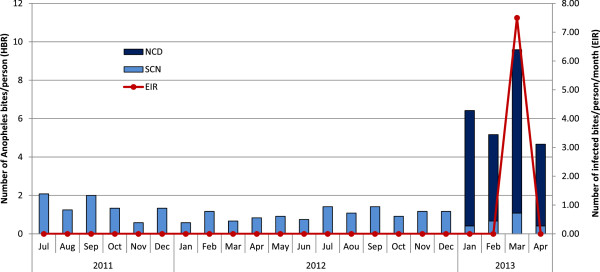
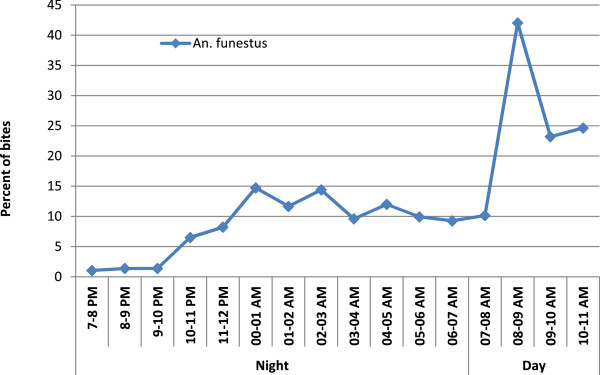
BACKGROUND: Malaria control is mainly based on indoor residual spraying and insecticide-treated bed nets. The efficacy of these tools depends on the behaviour of mosquitoes, which varies by species. With resistance to insecticides, mosquitoes adapt their behaviour to ensure their survival and reproduction. The aim of this study was to assess the biting behaviour of Anopheles funestus after the implementation of long-lasting insecticidal nets (LLINs). METHODS: A study was conducted in Dielmo, a rural Senegalese village, after a second massive deployment of LLINs in July 2011. Adult mosquitoes were collected by human landing catch and by pyrethrum spray catch monthly between July 2011 and April 2013. Anophelines were identified by stereomicroscope and sub-species by PCR. The presence of circumsporozoite protein of Plasmodium falciparum and the blood meal origin were detected by ELISA. RESULTS: Anopheles funestus showed a behavioural change in biting activity after introduction of LLINs, remaining anthropophilic and endophilic, while adopting diurnal feeding, essentially on humans. Six times more An. funestus were captured in broad daylight than at night. Only one infected mosquito was found during day capture. The mean of day CSP rate was 1.28% while no positive An. funestus was found in night captures. CONCLUSION: Mosquito behaviour is an essential component for assessing vectorial capacity to transmit malaria. The emergence of new behavioural patterns of mosquitoes may significantly increase the risk for malaria transmission and represents a new challenge for malaria control. Additional vector control strategies are, therefore, necessary.
Overview
The claims and statistics of this paper haven’t been checked yet.
Free: it reads the open-access text and checks the first 5 claims that cite a source we can check. Create a free account to check every claim.
Integrity signals
Registry
Cites
Statistics
Figures
Verification
Claims the paper makes
The claims and statistics of this paper haven’t been checked yet.
Free: it reads the open-access text and checks the first 5 claims that cite a source we can check. Create a free account to check every claim.
Claims other papers make about this one
Each is checked against this paper’s own text: does it say what the citing paper says it does?
The source backs part of the claim, not all of it — or backs it for a different population, condition or comparison.
In the citing paper
“Indeed, in recent years, several studies have shown that increasing LLIN coverage can lead to a change in vector bite behaviour and have a strong impact on the distribution, diversity of vectors and the level of malaria transmission (Riehle et al. 2011; Moiroux et al. 2012; Sougoufara et al. 2014).”
From Resting and feeding behaviour of malaria vectors, in two areas of high long-lasting insecticidal nets coverage in Côte d'Ivoire (2024) · cites this paper as Sougoufara et al. 2014
Experimental — accuracy not yet measured
Self-check
Percentages, sums and reported differences re-computed from the paper’s own numbers.
The self-check needs the paper’s full text.
Citations
Cites
1 retracted
Ndiath, M. O., Sougoufara, S., Gaye, A., Mazenot, C., Konate, L., Faye, O., Sokhna, C., & Trape, J.-F. (2012) · PLoS ONE · doi:10.1371/journal.pone.0031943 · Cited by 47
Self-citationRetractedDarwin, C., Burndy Library, Darwin, C., Edmonds & Remnants, & Henry Sotheran Ltd. (1859) · J. Murray eBooks · doi:10.5962/bhl.title.59991 · Cited by 6,984
Weltgesundheitsorganisation (2005) · Cited by 3,799
Darwin, C. (1860) · J. Murray eBooks · doi:10.1037/14088-000 · Cited by 2,021
Insecticide-treated bed nets and curtains for preventing malaria
Lengeler, C. (2004) · Cochrane Database of Systematic Reviews · doi:10.1002/14651858.cd000363.pub2 · Cited by 1,700
Ranson, H., N’Guessan, R., Lines, J., Moiroux, N., Nkuni, Z., & Corbel, V. (2011) · Trends in Parasitology · doi:10.1016/j.pt.2010.08.004 · Cited by 1,142 · cited 1×
“Many studies show that the effectiveness of these tools has been compromised by the emergence of kdr insecticide resistance, physiological and metabolic resistance of the vectors to insecticides [7-9].”
Background(2021) · Encyclopedia of Evolutionary Psychological Science · doi:10.1007/978-3-319-19650-3_303511 · Cited by 863
Russell, T. L., Govella, N. J., Azizi, S., Drakeley, C. J., Kachur, S. P., & Killeen, G. F. (2011) · Malaria Journal · doi:10.1186/1475-2875-10-80 · Cited by 698 · cited 2×
“Furthermore, in Tanzania, Russell and al [13] in 2011 reported a nocturnal activity of An.”
BackgroundTrape, J.-F., Rogier, C., Konate, L., Diagne, N., Bouganali, H., Canque, B., Legros, F., Badji, A., Ndiaye, G., Ndiaye, P., et al. (1994) · The American Journal of Tropical Medicine and Hygiene · doi:10.4269/ajtmh.1994.51.123 · Cited by 413 · cited 2×
“Studies of the relations between the host and the malaria vector have been conducted since 1990 in Dielmo [23-26], a village of 400 inhabitants located 280 km southeast of Dakar near the Nema River, which results in Anopheles larval proliferation all year round.”
BackgroundSelf-citationMosquito behavior and vector control
Pates, H., & Curtis, C. (2005) · Annual Review of Entomology · doi:10.1146/annurev.ento.50.071803.130439 · Cited by 403
Research works printed but not linked: 3
- Gillies MT, De Meillon D: The Anophelinae of Africa South of the Sahara. Publ South Afri Inst Med Res 1968, 54:343.
- Dossou YJ, Diarrassouba S, Doannio J, Darriet E, Carneval P: Biting indoor cycle of Anopheles gambiae s.s, and malaria transmission in the Bouake Area (Côte d'Ivoire). Its importance in the use of impregnated bednet. Bull Soc Pathol Exot 1999, 92:198-200.
- Gillies MT, Coetzee M: A supplement to the Anophelinae of Africa South of the Sahara, 2nd edn. Publ South Afri Inst Med Res 1987, 55:143.
Cited by
Characterizing, controlling and eliminating residual malaria transmission
Killeen, G. F. (2014) · Malaria Journal · doi:10.1186/1475-2875-13-330 · Cited by 506
Mosquito feeding behavior and how it influences residual malaria transmission across Africa
Sherrard-Smith, E., Skarp, J. E., Beale, A. D., Fornadel, C., Norris, L. C., Moore, S. J., Mihreteab, S., Charlwood, J. D., Bhatt, S., Winskill, P., et al. (2019) · Proceedings of the National Academy of Sciences · doi:10.1073/pnas.1820646116 · Cited by 308
Changes in Malaria Epidemiology in Africa and New Challenges for Elimination
Nkumama, I. N., O’Meara, W. P., & Osier, F. H. A. (2017) · Trends in Parasitology · doi:10.1016/j.pt.2016.11.006 · Cited by 286
“Reports of malaria vectors adapting their behavior by feeding earlier, feeding outdoors, and resting outdoors after feeding indoors, are accumulating (for example [82–85]; for an excellent review see [86]).”
Brady, O. J., Godfray, H. C. J., Tatem, A. J., Gething, P. W., Cohen, J. M., McKenzie, F. E., Perkins, T. A., Reiner, R. C., Tusting, L. S., Sinka, M. E., et al. (2016) · Transactions of The Royal Society of Tropical Medicine and Hygiene · doi:10.1093/trstmh/trv113 · Cited by 245
Yahouédo, G. A., Chandre, F., Rossignol, M., Ginibre, C., Balabanidou, V., Mendez, N. G. A., Pigeon, O., Vontas, J., & Cornelie, S. (2017) · Scientific Reports · doi:10.1038/s41598-017-11357-z · Cited by 203
Sougoufara, S., Ottih, E. C., & Tripet, F. (2020) · Parasites & Vectors · doi:10.1186/s13071-020-04170-7 · Cited by 187
“Another study in Ethiopia reported early evening activity by An. arabiensis with a peak activity between 19 and 20 h after the introduction of ITNs [25].”
BackgroundInfluentialSelf-citationLwetoijera, D. W., Harris, C., Kiware, S. S., Dongus, S., Devine, G. J., McCall, P. J., & Majambere, S. (2014) · Malaria Journal · doi:10.1186/1475-2875-13-331 · Cited by 175
“The other probable cause for the observed increase in An. funestus population in this study area, which requires further investigation, might be a shift of An. funestus to outdoor and early evening and daytime biting behaviours, which increase their chances to survive and reproduce by feeding on unprotected humans, as…”
BackgroundKaindoa, E. W., Matowo, N. S., Ngowo, H. S., Mkandawile, G., Mmbando, A., Finda, M., & Okumu, F. O. (2017) · PLOS ONE · doi:10.1371/journal.pone.0177807 · Cited by 188
Killeen, G. F., Govella, N. J., Lwetoijera, D. W., & Okumu, F. O. (2016) · Malaria Journal · doi:10.1186/s12936-016-1280-z · Cited by 166
Cooke, M., Kahindi, S. C., Oriango, R. M., Owaga, C., Ayoma, E., Mabuka, D. P., Nyangau, D., Abel, L., Atieno, E., Awuor, S., et al. (2015) · Malaria Journal · doi:10.1186/s12936-015-0766-4 · Cited by 164
“In Benin, An. funestus s.l. populations exhibited increased exophagy and a shift in feeding times after LLIN introduction and demonstrated a shift to diurnal feeding in a recent study in Senegal [50, 51].”
BackgroundBayoh, M. N., Walker, E. D., Kosgei, J., Ombok, M., Olang, G. B., Githeko, A. K., Killeen, G. F., Otieno, P., Desai, M., Lobo, N. F., et al. (2014) · Parasites & Vectors · doi:10.1186/1756-3305-7-380 · Cited by 138
“In Benin, 26% of bites occurred after 6 h [15], while in Senegal a second peak of biting was observed between 8 h a d 9 h with biting observed up until 11 h [16].”
BackgroundTraore, M. M., Junnila, A., Traore, S. F., Doumbia, S., Revay, E. E., Kravchenko, V. D., Schlein, Y., Arheart, K. L., Gergely, P., Xue, R., et al. (2020) · Malaria Journal · doi:10.1186/s12936-020-3132-0 · Cited by 138
Implicating Cryptic and Novel Anophelines as Malaria Vectors in Africa
Stevenson, J. C., & Norris, D. E. (2016) · Insects · doi:10.3390/insects8010001 · Cited by 126
“were caught by human landing catch indoors and outdoors after sunrise to 11:00 in the morning as vector control coverage increased, although the small sample size limits how generalizable these results may be [80].”
BackgroundElimination, T. M. R. C. P. O. T. F. M. (2017) · PLoS Medicine · doi:10.1371/journal.pmed.1002455 · Cited by 146
Review of Issues on Residual Malaria Transmission
Carnevale, P., & Manguin, S. (2021) · The Journal of Infectious Diseases · doi:10.1093/infdis/jiab084 · Cited by 137
“funestus presented an indoor peak at 0100–0300 and an outdoor peak at 0200–0500 [48], while in Dielmo increasing aggressiveness was observed between 0700 and 1100, corresponding to the time when people are not under LLINs but are instead involved in early household and farming activities [47].”
BackgroundThe evolutionary ecology of circadian rhythms in infection
Westwood, M. L., O’Donnell, A. J., de Bekker, C., Lively, C. M., Zuk, M., & Reece, S. E. (2019) · Nature Ecology & Evolution · doi:10.1038/s41559-019-0831-4 · Cited by 114
Human-biting activities of Anopheles species in south-central Ethiopia
Kenea, O., Balkew, M., Tekie, H., Gebre-Michael, T., Deressa, W., Loha, E., Lindtjørn, B., & Overgaard, H. J. (2016) · Parasites & Vectors · doi:10.1186/s13071-016-1813-x · Cited by 109
“A high proportion of parous An. arabiensis were collected during night times, when the local people are usually indoors and potentially protected by IRS and LLINs.”
BackgroundInfluentialSangbakembi-Ngounou, C., Costantini, C., Longo-Pendy, N. M., Ngoagouni, C., Akone‐Ella, O., Rahola, N., Cornélie, S., Kengne, P., Nakouné, E. R., Komas, N. P. J., et al. (2022) · Proceedings of the National Academy of Sciences · doi:10.1073/pnas.2104282119 · Cited by 121
Killeen, G. F., Kiware, S. S., Okumu, F. O., Sinka, M. E., Moyes, C. L., Massey, N. C., Gething, P. W., Marshall, J. M., Chaccour, C. J., & Tusting, L. S. (2017) · BMJ Global Health · doi:10.1136/bmjgh-2016-000198 · Cited by 106
“with insecticide-treated clothing or vapour-phase insecticides(20) will probably be required to eliminate transmission by vectors belonging to the left hand side of figure 2 or the middle,(2) 16 and there are even concerns about some to the right.(47) 48 Conversely, improved”
A Review of Mosquitoes Associated with Rift Valley Fever Virus in Madagascar
Tantely, M. L., Boyer, S., & Fontenille, D. (2015) · American Journal of Tropical Medicine and Hygiene · doi:10.4269/ajtmh.14-0421 · Cited by 98
Abong’o, B., Gimnig, J. E., Torr, S. J., Longman, B., Omoke, D., Muchoki, M., ter Kuile, F., Ochomo, E., Munga, S., Samuels, A. M., et al. (2020) · Scientific Reports · doi:10.1038/s41598-020-61350-2 · Cited by 100
Increasing outdoor host-seeking in Anopheles gambiae over 6 years of vector control on Bioko Island
Meyers, J. I., Pathikonda, S., Popkin-Hall, Z. R., Medeiros, M. C., Fuseini, G., Matias, A., Garcia, G., Overgaard, H. J., Kulkarni, V., Reddy, V. P., et al. (2016) · Malaria Journal · doi:10.1186/s12936-016-1286-6 · Cited by 93
“On Bioko Island, the proportion caught outdoors in paired HLC catches has now reached over 80 % in some locations: this is higher than other recent reports of outdoor feeding proportions in response to IRS or LLINs [10–15].”
BackgroundResultResting and feeding preferences of Anopheles stephensi in an urban setting, perennial for malaria
Thomas, S., Ravishankaran, S., Justin, N. A. J. A., Asokan, A., Mathai, M. T., Valecha, N., Montgomery, J., Thomas, M. B., & Eapen, A. (2017) · Malaria Journal · doi:10.1186/s12936-017-1764-5 · Cited by 88
“This might be due to the incomplete knowledge of resting preferences [23, 24], which means the current study probably underestimates the density of infectious mosquitoes.”
BackgroundBlood meal-induced inhibition of vector-borne disease by transgenic microbiota
Shane, J. L., Grogan, C., Cwalina, C., & Lampe, D. J. (2018) · Nature Communications · doi:10.1038/s41467-018-06580-9 · Cited by 86
Rice volatiles lure gravid malaria mosquitoes, Anopheles arabiensis
Wondwosen, B., Birgersson, G., Seyoum, E., Tekie, H., Torto, B., Fillinger, U., Hill, S. R., & Ignell, R. (2016) · Scientific Reports · doi:10.1038/srep37930 · Cited by 87
Eave tubes for malaria control in Africa: an introduction
Knols, B. G. J., Farenhorst, M., Andriessen, R., Snetselaar, J., Suer, R. A., Osinga, A. J., Knols, J. M. H., Deschietere, J., Ng’habi, K. R., Lyimo, I. N., et al. (2016) · Malaria Journal · doi:10.1186/s12936-016-1452-x · Cited by 81
Huijben, S., & Paaijmans, K. P. (2018) · Evolutionary Applications · doi:10.1111/eva.12530 · Cited by 53
“A fourth option is to combine two (or more) insecticide- based interventions with different modes of action, such as IRS in combination with LLINs (Kleinschmidt et al., 2009; World Health Organization, 2014), adulticiding with larviciding (Koella, Lynch, Thomas, & Read, 2009), LLINs with attractive toxic sugar baits (…”
BackgroundInfluentialMassebo, F., Balkew, M., Gebre-Michael, T., & Lindtjørn, B. (2015) · Parasites & Vectors · doi:10.1186/s13071-015-1264-9 · Cited by 82
“Those mosquitoes biting in the early hours of the night might be less affected by the indoor based interventions and more likely bite humans [36].”
BackgroundMsugupakulya, B. J., Urio, N. H., Jumanne, M., Ngowo, H. S., Selvaraj, P., Okumu, F. O., & Wilson, A. L. (2023) · Parasites & Vectors · doi:10.1186/s13071-023-06019-1 · Cited by 86
“In addition, An. funestus tends to rest in areas that are out of reach of indoor interventions [104], and tends to seek blood meals in the early morning or evening when humans are unprotected [11, 14].”
BackgroundDerua, Y. A., Kahindi, S. C., Mosha, F. W., Kweka, E. J., Atieli, H. E., Wang, X., Zhou, G., Lee, M., Githeko, A. K., & Yan, G. (2018) · Ecology and Evolution · doi:10.1002/ece3.4250 · Cited by 74
“As an adaptation to the insecticidal pressure, malaria vectors have moreover been observed to change their biting and resting behavior (Moiroux et al., 2012; Sougoufara, Doucouré, Sembéne, Harry, & Sokhna, 2017; Sougoufara et al., 2014).”
BackgroundThe impact of stopping and starting indoor residual spraying on malaria burden in Uganda
Namuganga, J. F., Epstein, A., Nankabirwa, J. I., Mpimbaza, A., Kiggundu, M., Sserwanga, A., Kapisi, J., Arinaitwe, E., Gonahasa, S., Opigo, J., et al. (2021) · Nature Communications · doi:10.1038/s41467-021-22896-5 · Cited by 90
Sanou, A., Nelli, L., Guelbeogo, M. W., Cissé, F., Tapsoba, M., Ouédraogo, P., Sagnon, N., Ranson, H., Matthiopoulos, J., & Ferguson, H. M. (2021) · Scientific Reports · doi:10.1038/s41598-021-96759-w · Cited by 84
Pooda, S. H., Rayaissé, J.-B., Hien, D. F. D. S., Léfèvre, T., Yerbanga, R. S., Bengaly, Z., Dabiré, R. K., Bélem, A. M. G., Sidibé, I., Solano, P., et al. (2015) · Malaria Journal · doi:10.1186/s12936-015-1001-z · Cited by 80
“This mode of action is distinct compared to current (and candidate) insecticides for IRS application (pyrethroids, organochlorines, organophosphates, and carbamates) and LLIN treatment (pyrethroids), making ivermectin administration a promising tool for integrated vector control and insecticide resistance management i…”
BackgroundInfluentialEngineering the control of mosquito-borne infectious diseases
Gabrieli, P., Smidler, A. L., & Catteruccia, F. (2014) · Genome biology · doi:10.1186/s13059-014-0535-7 · Cited by 85
Braack, L., Hunt, R. H., Koekemoer, L. L., Gericke, A., Munhenga, G., Haddow, A. D., Becker, P., Okia, M., Kimera, I., & Coetzee, M. (2015) · Parasites & Vectors · doi:10.1186/s13071-015-0677-9 · Cited by 80
“However, challenges, especially in Africa, associated with increasing vector resistance to current-generation insecticides [5,7-9], shifting vector behaviour towards increased outdoor biting thus avoiding insecticide-treated surfaces [10-14], and shortfalls in funding [5] collectively mean that a plateau in the declin…”
BackgroundMoreno, M., Saavedra, M. P., Bickersmith, S. A., Lainhart, W., Tong, C., Alava, F., Vinetz, J. M., & Conn, J. E. (2015) · Malaria Journal · doi:10.1186/s12936-015-0804-2 · Cited by 70
“darlingi driven by LLINs, there are recent examples of such behaviour in Senegal for Anopheles funestus [45] and in the Solomon Islands for Anopheles farauti [46].”
BackgroundVantaux, A., Ouattarra, I., Léfèvre, T., & Dabiré, R. K. (2016) · Parasites & Vectors · doi:10.1186/s13071-016-1514-5 · Cited by 72
“In addition, the emergence and spread of insecticide resistance [2–5], as well as behavioral changes [6–8] threaten current malaria vector control programs.”
BackgroundSheppard, A. D., Rund, S. S. C., George, G. F., Clark, E., Acri, D. J., & Duffield, G. E. (2017) · Parasites & Vectors · doi:10.1186/s13071-017-2196-3 · Cited by 66
Pinda, P. G., Eichenberger, C., Ngowo, H. S., Msaky, D., Abbasi, S., Kihonda, J., Bwanaly, H., & Okumu, F. O. (2020) · Malaria Journal · doi:10.1186/s12936-020-03483-3 · Cited by 67
Andreazza, F., de Oliveira, E. E., & Martins, G. F. (2021) · Insects · doi:10.3390/insects12100917 · Cited by 71
Kahamba, N. F., Finda, M. F., Ngowo, H. S., Msugupakulya, B. J., Baldini, F., Koekemoer, L. L., Ferguson, H. M., & Okumu, F. O. (2022) · Malaria Journal · doi:10.1186/s12936-022-04198-3 · Cited by 67
“Anopheles funestus is usually highly endophilic (refers to a tendency of indoor resting) and anthropophilic (refers to a tendency of feeding on humans), giving rise to its high vectorial capacity amongst African vectors [21].”
BackgroundMaliti, D. F., Govella, N. J., Killeen, G. F., Mirzai, N., Johnson, P., Kreppel, K. S., & Ferguson, H. M. (2015) · Malaria Journal · doi:10.1186/s12936-015-1025-4 · Cited by 62
Govella, N. J., Ogoma, S. B., Paliga, J. M., Chaki, P., & Killeen, G. F. (2015) · Parasites & Vectors · doi:10.1186/s13071-015-0937-8 · Cited by 63
Ndiath, M. O., Cailleau, A., Diédhiou, S. M., Gaye, A., Boudin, C., Richard, V., & Trape, J. (2014) · Malaria Journal · doi:10.1186/1475-2875-13-340 · Cited by 57
“Previous studies have shown that the kdr frequency in Anopheles populations in Dielmo can reach 47% [12,33] and may increase significantly after inter-generational crosses.”
BackgroundSelf-citationField Evaluation of a Push-Pull System to Reduce Malaria Transmission
Menger, D. J., Omusula, P., Holdinga, M., Homan, T., Carreira, A. S., Vandendaele, P., Derycke, J.-L., Mweresa, C. K., Mukabana, W. R., van Loon, J. J. A., et al. (2015) · PLOS ONE · doi:10.1371/journal.pone.0123415 · Cited by 53
Russell, T. L., Beebe, N. W., Bugoro, H., Apairamo, A., Chow, W. K., Cooper, R. D., Collins, F. H., Lobo, N. F., & Burkot, T. R. (2016) · Malaria Journal · doi:10.1186/s12936-016-1195-8 · Cited by 61
Kahindi, S. C., Muriu, S., Derua, Y. A., Wang, X., Zhou, G., Lee, M., MWANGANGI, J. M., Atieli, H., Githeko, A. K., & Yan, G. (2018) · Parasites & Vectors · doi:10.1186/s13071-018-3009-z · Cited by 54
Mathania, M. M., Kimera, S. I., & Silayo, R. S. (2016) · Malaria Journal · doi:10.1186/s12936-016-1332-4 · Cited by 55
Govella, N. J., Maliti, D. F., Mlwale, A. T., Masalu, J. P., Mirzai, N., Johnson, P., Ferguson, H. M., & Killeen, G. F. (2016) · Malaria Journal · doi:10.1186/s12936-016-1513-1 · Cited by 55
Abong’o, B., Yu, X., Donnelly, M. J., Geier, M., Gibson, G., Gimnig, J. E., ter Kuile, F. O., Lobo, N. F., Ochomo, E., Munga, S., et al. (2018) · Parasites & Vectors · doi:10.1186/s13071-018-3099-7 · Cited by 53
Obala, A. A., Mangeni, J. N., Platt, A. C., Aswa, D., Abel, L., Namae, J., & O’Meara, W. P. (2015) · PLoS ONE · doi:10.1371/journal.pone.0132778 · Cited by 57
“Other studies have attributed reduced ITN efficacy to outdoor biting or early biting by malaria vectors[40, 41] and human behavioral risk factors not solely related to use of ITNs while sleeping [42].”
BackgroundScreening for an ivermectin slow-release formulation suitable for malaria vector control
Chaccour, C., Barrio, Á. I., Gil-Royo, A. G., Martínez‐Urbistondo, D., Slater, H., Hammann, F., & del Pozo, J. L. (2015) · Malaria Journal · doi:10.1186/s12936-015-0618-2 · Cited by 53
“crepuscular activity in areas with good ITN coverage [12,13], vector biodiversity and environmental change [14].”
Sougoufara, S., Harry, M., Doucouré, S., Sembène, P. M., & SOKHNA, C. (2016) · Medical and Veterinary Entomology · doi:10.1111/mve.12171 · Cited by 58
“However, studies on how tools like LLINs are linked to changes in feeding and resting behaviours or to changes in biting time of Anopheles mosquitoes (Yohannes & Boelee, 2012; Sougoufara et al., 2014) shed light on the heterogeneity of Anopheles vectors in Africa and on how readily these species can adapt to control m…”
BackgroundSelf-citationHighly Efficient Site-Specific Mutagenesis in Malaria Mosquitoes Using CRISPR
Li, M., Akbari, O. S., & White, B. J. (2018) · G3 Genes Genomes Genetics · doi:10.1534/g3.117.1134 · Cited by 50
Mapua, S. A., Hape, E. E., Kihonda, J., Bwanary, H., Kifungo, K., Kilalangongono, M., Kaindoa, E. W., Ngowo, H. S., & Okumu, F. O. (2022) · Parasite Epidemiology and Control · doi:10.1016/j.parepi.2022.e00264 · Cited by 43
Stevenson, J. C., Simubali, L., Mbambara, S., Musonda, M., Mweetwa, S., Mudenda, T., Pringle, J. C., Jones, C. M., & Norris, D. E. (2016) · Journal of Medical Entomology · doi:10.1093/jme/tjw091 · Cited by 49
“…Bayoh et al. 2010), or have demonstrated changes in the foraging behavior of existing primary vectors, resulting in biting time shifts, and outdoor feeding and resting (Reddy et al. 2011, Russell et al. 2011, Moiroux et al. 2012, Yohannes and Boelee 2012, Sougoufara et al. 2014, Cooke et al. 2015).”
BackgroundOdero, J. I., Abong’o, B., Moshi, V., Ekodir, S. M., Harvey, S. A., Ochomo, E., Gimnig, J. E., Achee, N. L., Grieco, J. P., Oria, P. A., et al. (2024) · Malaria Journal · doi:10.1186/s12936-024-04893-3 · Cited by 47
“Given reports of day-biting An. funestus in other regions [11, 41], additional studies are recommended to assess the daytime risk to malaria vectors.”
BackgroundBites before and after bedtime can carry a high risk of human malaria infection
Milali, M. P., Sikulu-Lord, M. T., & Govella, N. J. (2017) · Malaria Journal · doi:10.1186/s12936-017-1740-0 · Cited by 48
Derua, Y. A., Alifrangis, M., Magesa, S., Kisinza, W. N., & Simonsen, P. E. (2015) · Malaria Journal · doi:10.1186/s12936-015-0616-4 · Cited by 45
“funestus group are known to exhibit species replacement and change in biting behaviour when confronted with insecticide-based interventions [22-26].”
Mawejje, H. D., Kilama, M., Kigozi, S. P., Musiime, A. K., Kamya, M. R., Lines, J., Lindsay, S. W., Smith, D. L., Dorsey, G., Donnelly, M. J., et al. (2021) · Malaria Journal · doi:10.1186/s12936-021-03675-5 · Cited by 48
Msellemu, D. F., Namango, H., Mwakalinga, V. M., Ntamatungiro, A. J., Mlacha, Y. P., Mtema, Z. J., Kiware, S. S., Lobo, N. F., Majambere, S., Dongus, S., et al. (2016) · Malaria Journal · doi:10.1186/s12936-016-1340-4 · Cited by 43
Spatio-temporal distribution of mosquitoes and risk of malaria infection in Rwanda
Hakizimana, E., Karema, C., Munyakanage, D., Githure, J. I., Mazarati, J. B., Tongren, J. E., Takken, W., Binagwaho, A., & Koenraadt, C. J. M. (2018) · Acta Tropica · doi:10.1016/j.actatropica.2018.02.012 · Cited by 42
Wat’senga, F., Manzambi, E. Z., Lunkula, A., Mulumbu, R., Mampangulu, T., Lobo, N. F., Hendershot, A. L., Fornadel, C. M., Jacob, D., Niang, M., et al. (2018) · Malaria Journal · doi:10.1186/s12936-018-2285-6 · Cited by 44
“funestus in Benin and Senegal following LLIN universal coverage campaigns [34, 35].”
BackgroundTime-of-day of blood-feeding: effects on mosquito life history and malaria transmission
O’Donnell, A. J., Rund, S. S. C., & Reece, S. E. (2019) · Parasites & Vectors · doi:10.1186/s13071-019-3513-9 · Cited by 44
Owuor, K. O., Machani, M. G., Mukabana, W. R., Munga, S., Yan, G., Ochomo, E., & Afrane, Y. A. (2021) · PLoS ONE · doi:10.1371/journal.pone.0240771 · Cited by 55
Is outdoor vector control needed for malaria elimination? An individual-based modelling study
Zhu, L., Müller, G. C., Marshall, J. M., Arheart, K. L., Qualls, W. A., Hlaing, W. M., Schlein, Y., Traore, S. F., Doumbia, S., & Beier, J. C. (2017) · Malaria Journal · doi:10.1186/s12936-017-1920-y · Cited by 40
Ndo, C., Kopya, E., Donbou, M. A., Njiokou, F., Awono‐Ambene, P., & Wondji, C. S. (2018) · Parasites & Vectors · doi:10.1186/s13071-018-2759-y · Cited by 39
“This vector adopted early diurnal feeding and exophagic behaviour with the proportion of mosquitoes biting outdoor increasing to 26% [7, 8].”
BackgroundNdiath, M. O., Mazenot, C., Sokhna, C., & Trape, J.-F. (2014) · PLoS ONE · doi:10.1371/journal.pone.0097700 · Cited by 37
“funestus in Dielmo did not present kdr mutation but rather behavioural changes on biting hours with peaks of maximum aggressiveness in broad daylight between 07:00 and 11:00 AM [19].”
Self-citationRetractedSwarms of the malaria vector Anopheles funestus in Tanzania
Kaindoa, E. W., Ngowo, H. S., Limwagu, A. J., Tchouakui, M., Hape, E. E., Abbasi, S., Kihonda, J., Mmbando, A. S., Njalambaha, R. M., Mkandawile, G., et al. (2019) · Malaria Journal · doi:10.1186/s12936-019-2660-y · Cited by 42
“funestus resistance to pyrethroids: Malawi [15, 16], Mozambique [17, 18], South Africa [19], Zambia [20, 21], Zimbabwe [21], Cameroon [22, 23] and Senegal [24], a situation that compromises effectiveness of current vector control options [25], and perpetuates residual transmission even in communities where bed net cov…”
Makungu, C., Stephen, S., Kumburu, S., Govella, N. J., Dongus, S., Hildon, Z. J., Killeen, G. F., & Jones, C. O. H. (2017) · Malaria Journal · doi:10.1186/s12936-017-2056-9 · Cited by 41
Evolution of Resistance to Insecticide in Disease Vectors
Labbé, P., David, J., Alout, H., Milesi, P., Djogbénou, L., Pasteur, N., & Weill, M. (2017) · Elsevier eBooks · doi:10.1016/b978-0-12-799942-5.00014-7 · Cited by 46
Forson, A. O., Hinne, I. A., Dhikrullahi, S. B., Sraku, I. K., Mohammed, A. R., Attah, S. K., & Afrane, Y. A. (2022) · Parasites & Vectors · doi:10.1186/s13071-022-05355-y · Cited by 35
“For instance, following the introduction of LLINs, there have been reports of a shift in the biting behavior of Anopheles gambiae and Anopheles funestus in Kenya [7, 18] and Anopheles funestus in Benin and Senegal [19, 20].”
BackgroundOmondi, S., Kosgei, J. J., Musula, G., Muchoki, M., Abong’o, B., Agumba, S., Ogwang, C., McDermott, D. P., Donnelly, M. J., Staedke, S. G., et al. (2023) · Malaria Journal · doi:10.1186/s12936-023-04806-w · Cited by 39
“Several studies have reported changes in Anopheles vector biting behaviour, with changing preference towards early evening and late morning biting when people are often not under the protection of their bed nets [40–43].”
BackgroundCircadian and daily rhythms of disease vector mosquitoes
Duffield, G. E. (2024) · Current Opinion in Insect Science · doi:10.1016/j.cois.2024.101179 · Cited by 45
Doucoure, S., Thiaw, O., Wotodjo, A. N., Bouganali, C., Diagne, N., Parola, P., & Sokhna, C. (2020) · Malaria Journal · doi:10.1186/s12936-020-03302-9 · Cited by 35
Self-citationShady business: understanding the spatial ecology of exophilic Anopheles mosquitoes
Debebe, Y., Hill, S. R., Tekie, H., Ignell, R., & Hopkins, R. J. (2018) · Malaria Journal · doi:10.1186/s12936-018-2499-7 · Cited by 34
Mapua, S. A., Finda, M. F., Nambunga, I. H., Msugupakulya, B. J., Ukio, K., Chaki, P., Tripet, F., Kelly, A. H., Christofides, N. J., Lezaun, J., et al. (2021) · Malaria Journal · doi:10.1186/s12936-021-03661-x · Cited by 33
Russell, T. L., Beebe, N. W., Bugoro, H., Apairamo, A., Collins, F. H., Cooper, R. D., Lobo, N. F., & Burkot, T. R. (2016) · Malaria Journal · doi:10.1186/s12936-016-1194-9 · Cited by 32
“funestus in Tanzania [39], Benin [40] and Senegal [41] as well as An.”
BackgroundWangrawa, D. W., Odero, J. O., Baldini, F., Okumu, F. O., & Badolo, A. (2024) · Medical and Veterinary Entomology · doi:10.1111/mve.12706 · Cited by 34
“…on An. funestus are mainly focused on the biology (Guelbeogo et al., 2014), genomics (Crawford et al., 2010; Guelbeogo et al., 2009; Samb et al., 2012; Sharakhov et al., 2004), ecology and malaria transmission (Adja et al., 2011; Dadzie et al., 2013; Ndiath et al., 2012; Sougoufara et al., 2014).”
BackgroundFerreira, C. P., Poloni, S., Azevedo, F., Greenhalgh, D., & Massad, E. (2017) · Malaria Journal · doi:10.1186/s12936-017-2014-6 · Cited by 31
Conn, J. E., Norris, D. E., Donnelly, M. J., Beebe, N. W., Burkot, T. R., Coulibaly, M. B., Chery, L., Eapen, A. K., Keven, J. B., Kilama, M., et al. (2015) · American Journal of Tropical Medicine and Hygiene · doi:10.4269/ajtmh.15-0009 · Cited by 31
“Longlasting insecticidal nets (LLINs) and indoor residual spraying (IRS) and have been the mainstays of malaria control and have had a major impact on reducing global malaria, particu- larly where vectors are primarily endophagic (indoor biting), endophilic (indoor resting), and anthropophilic.6 As such, the goal of g…”
BackgroundInfluentialAndronescu, L. R., Buchwald, A. G., Coalson, J. E., Cohee, L. M., Bauleni, A., Walldorf, J. A., Kandangwe, C., Mzilahowa, T., Taylor, T. E., Mathanga, D. P., et al. (2019) · Malaria Journal · doi:10.1186/s12936-019-2930-8 · Cited by 31
“Previous studies have demonstrated that even when ITNs are used, individuals may still be exposed to mosquito bites in the early evening before the nets are used [42, 43].”
BackgroundGul, D., Rodríguez-Rodríguez, D., Nate, E., Auwan, A., Salib, M., Lorry, L., Keven, J. B., Katusele, M., Rosado, J., Hofmann, N., et al. (2021) · Scientific Reports · doi:10.1038/s41598-021-95959-8 · Cited by 34
Insecticides and Insecticide Resistance
Ndiath, M. O. (2019) · Methods in molecular biology · doi:10.1007/978-1-4939-9550-9_18 · Cited by 38
Self-citationHost circadian clocks do not set the schedule for the within-host replication of malaria parasites
O’Donnell, A. J., Prior, K. F., & Reece, S. E. (2020) · Proceedings of the Royal Society B Biological Sciences · doi:10.1098/rspb.2020.0347 · Cited by 28
“Furthermore, reports that several mosquito populations are shifting 60 the timing of their blood foraging behaviour to evade insecticide-treated bed nets [17-19], suggest the 61 interaction between parasite and vector rhythms could have complex consequences for disease 62”
BackgroundZhu, L., Marshall, J. M., Qualls, W. A., Schlein, Y., McManus, J. W., Arheart, K. L., Hlaing, W. M., Traore, S. F., Doumbia, S., Müller, G. C., et al. (2015) · Malaria Journal · doi:10.1186/s12936-015-1012-9 · Cited by 30
Sougoufara, S., Thiaw, O. T., Cailleau, A., Diagne, N., Harry, M., Bouganali, C., Sembène, P. M., Doucouré, S., & Sokhna, C. (2018) · American Journal of Tropical Medicine and Hygiene · doi:10.4269/ajtmh.17-0009 · Cited by 29
Self-citationA previously unreported potential malaria vector in a dry ecology of Kenya
Ogola, E. O., Chepkorir, E., Sang, R. C., & Tchouassi, D. P. (2019) · Parasites & Vectors · doi:10.1186/s13071-019-3332-z · Cited by 27
“funestus in West Africa; however, this was attributed to the scaling-up of universal coverage with long-lasting insecticidal nets [17].”
Duffield, G. E., Acri, D. J., George, G. F., Sheppard, A. D., Beebe, N. W., Ritchie, S. A., & Burkot, T. R. (2019) · Parasites & Vectors · doi:10.1186/s13071-018-3271-0 · Cited by 31
Population genetics of Anopheles funestus, the African malaria vector, Kenya
Ogola, E. O., Odero, J. O., MWANGANGI, J. M., Masiga, D. K., & Tchouassi, D. P. (2019) · Parasites & Vectors · doi:10.1186/s13071-018-3252-3 · Cited by 28
“These include a shift toward diurnal [12] and outdoor feeding [13] habits, and development of multiple insecticide resistance mechanisms [14].”
Blood Meal Sources of Anopheles spp. in Malaria Endemic Areas of Honduras
Escobar, D., Ascencio, K., Ortiz, A., Palma, A., Sanchez, A. L., & Fontecha, G. A. (2020) · Insects · doi:10.3390/insects11070450 · Cited by 27
“, the ability of a vector to transmit a pathogen) is defined by the sum of several factors, such as anthropophilic behavior [9], intrinsic mortality [10], indoor resting [11], biting hours [12], length of the gonotrophic cycle, and the gonotrophic discordance [13].”
BackgroundKessler, A., van Eijk, A. M., Jamir, L., Walton, C., Carlton, J. M., & Albert, S. (2018) · Malaria Journal · doi:10.1186/s12936-018-2563-3 · Cited by 25
Odero, J. O., Nambunga, I. H., Wangrawa, D. W., Badolo, A., Weetman, D., Koekemoer, L. L., Ferguson, H. M., Okumu, F. O., & Baldini, F. (2023) · Malaria Journal · doi:10.1186/s12936-023-04662-8 · Cited by 29
“is shifting resting and feeding behaviour to the outdoors [5] and sometimes during daytime in some settings as an adaptation to indoor interventions [6].”
BackgroundSougoufara, S., Sokhna, C., Diagne, N., Doucouré, S., Sembène, P. M., & Harry, M. (2017) · Malaria Journal · doi:10.1186/s12936-017-1992-8 · Cited by 24
Self-citationRyan, S. J., Lippi, C. A., Boersch‐Supan, P. H., Heydari, N., Silva, M., Adrian, J., Noblecilla, L. F., Ayala, E. B., Encalada, M. D., Larsen, D. A., et al. (2017) · Malaria Journal · doi:10.1186/s12936-017-2121-4 · Cited by 25
Lekweiry, K. M., Salem, M. S. O. A., Cotteaux-Lautard, C., Jarjaval, F., Marin-Jauffre, A., Bogreau, H., Basco, L. K., Briolant, S., Boukhary, A. O. M. S., Brahim, K. O., et al. (2016) · Parasites & Vectors · doi:10.1186/s13071-016-1543-0 · Cited by 22
“Although malaria prevalence is decreasing in west Africa, the success of malaria control in many countries is threatened by the spread of insecticide resistance (pyrethroids, DDT and also carbamates) as well by the behaviour modification of the main malaria vectors [10–12].”
BackgroundKala-Chouakeu, N. A., Tchuinkam, T., Bamou, R., Bindamu, M. M., Talipouo, A., Kopya, E., Awono‐Ambene, P., & Antonio‐Nkondjio, C. (2023) · Malaria Journal · doi:10.1186/s12936-023-04544-z · Cited by 25
“) despite displaying high endophilic and endophagic behavior can become exophilic or exophagic in response to the use of impregnated mosquito nets [17].”
BackgroundImpact of different mosquito collection methods on indicators of Anopheles malaria vectors in Uganda
Mawejje, H. D., Rwatooro, J. A., Kyagamba, P., Kamya, M. R., Rosenthal, P. J., Lines, J., Dorsey, G., & Staedke, S. G. (2022) · Malaria Journal · doi:10.1186/s12936-022-04413-1 · Cited by 21
Paaijmans, K. P., & Huijben, S. (2020) · Malaria Journal · doi:10.1186/s12936-020-3151-x · Cited by 22
Oruni, A., Tchouakui, M., Tagne, C. S. D., Hearn, J., Kayondo, J., & Wondji, C. S. (2024) · Scientific Reports · doi:10.1038/s41598-024-83689-6 · Cited by 23
“…lifespan, tendency to take multiple blood meals, and behaviours such as breeding throughout the year 61 , resting indoors and biting in the early morning 62,63 , enhanced its survival and chances to be highly and efficiently infected with Plasmodium parasites hence driving transmission of malaria.”
Metadata
- Authors
- Sougoufara, S., Diédhiou, S. M., Doucouré, S., Diagne, N., Sembène, P. M., Harry, M., Trape, J.-F., Sokhna, C., & Ndiath, M. O.
- Affiliations
- Centre National de la Recherche Scientifique (FR)
- Cheikh Anta Diop University (SN)
- Université Paris-Sud (FR)
- Institut de Recherche pour le Développement (SN)
- Institut Pasteur de Bangui (CF)
- Corresponding author
- Ndiath, Mamadou Ousmane
- ORCID
- Venue
- Malaria Journal
- Published
- 2014-03-28
- Volume
- 13
- Issue
- 1
- Pages
- 125-125
- ISSN
- 1475-2875 (ISSN-L)
- PMC
- PMC3973838
- OpenAlex
- W1997390882
- Cited by
- 245
- References
- 43
- Citations by year
- 2026: 9 · 2025: 13 · 2024: 22 · 2023: 34 · 2022: 19 · 2021: 30 · 2020: 12 · 2019: 19 · 2018: 20 · 2017: 19 · 2016: 21 · 2015: 20 · 2014: 7
- FWCI
- 22.12
- Type
- journal article
- Language
- en
- Open access
- gold
- doi.org
- Licence
- cc-by
- Locations
- Malaria Journal (publishedVersion, cc-by)
- Europe PMC (PubMed Central) (publishedVersion, cc-by)
- PubMed Central (publishedVersion, cc-by)
- PubMed (publishedVersion)
- Keele Research Repository (Keele University) (submittedVersion, cc-by)
- Funders
- Institut de Recherche pour le Développement
- Topics
- Health Sciences › Medicine › Public Health, Environmental and Occupational Health › Malaria Research and Control
- Health Sciences › Medicine › Public Health, Environmental and Occupational Health › Mosquito-borne diseases and control
- Life Sciences › Immunology and Microbiology › Parasitology › Bird parasitology and diseases
- Keywords
- Anopheles funestus, long-lasting insecticidal nets, mosquito biting behavior, diurnal feeding, malaria vector control, malaria elimination, vectorial capacity, Plasmodium falciparum, circumsporozoite protein, insecticide resistance, Dielmo
- MeSH terms
- Animals, Anopheles, Circadian Rhythm, Female, Humans, Insect Bites and Stings, Insect Vectors, Insecticides, Malaria, Mosquito Control, Population Dynamics, Seasons, Senegal, Insecticide-Treated Bednets
About these checks
Registry, retraction, Cites and statistics results are computed, not judged, with one exception: a printed reference that no index lists is read once by a model before it counts as a citation error. Claims are extracted by a model and kept only when their quote appears verbatim in the text; each cited source is then checked, with a model’s help, for whether it says what the claim relies on. Those verdicts can be wrong — read the claim’s quote and the cited source before relying on one.
Statistics and arithmetic are recomputed, not judged.
Confidence bands are shown only for fields calibrated on our annotated test set. None is calibrated yet, so no band is shown.
What counts as a claim ›How we measure confidence ›How we check this ›
Are you an author, or do you see a problem with this page? Request a review
Data sources
Bibliographic data: Semantic Scholar, OpenAlex, Crossref.
Contains information from the Semantic Scholar Academic Graph Datasets, made available under the ODC Attribution License (ODC-BY 1.0).
Semantic Scholar’s data is described in: Kinney, R., et al. (2023). The Semantic Scholar Open Data Platform. arXiv:2301.10140.
