

The DOI matches its Crossref record; 142 of the 143 references it cites were found in a registry or an index.
Characterizing, controlling and eliminating residual malaria transmission
Open accessAbstract
Long-lasting insecticidal nets (LLINs) and indoor residual spraying (IRS) interventions can reduce malaria transmission by targeting mosquitoes when they feed upon sleeping humans and/or rest inside houses, livestock shelters or other man-made structures. However, many malaria vector species can maintain robust transmission, despite high coverage of LLINs/IRS containing insecticides to which they are physiologically fully susceptible, because they exhibit one or more behaviours that define the biological limits of achievable impact with these interventions: (1) Natural or insecticide-induced avoidance of contact with treated surfaces within houses and early exit from them, thus minimizing exposure hazard of vectors which feed indoors upon humans; (2) Feeding upon humans when they are active and unprotected outdoors, thereby attenuating personal protection and any consequent community-wide suppression of transmission; (3) Feeding upon animals, thus minimizing contact with insecticides targeted at humans or houses; (4) Resting outdoors, away from insecticide-treated surfaces of nets, walls and roofs. Residual malaria transmission is, therefore, defined as all forms of transmission that can persist after achieving full universal coverage with effective LLINs and/or IRS containing active ingredients to which local vector populations are fully susceptible. Residual transmission is sufficiently intense across most of the tropics to render malaria elimination infeasible without new or improved vector control methods. Many novel or improved vector control strategies to address residual transmission are emerging that either: (1) Enhance control of adult vectors that enter houses to feed and/or rest by killing, repelling or excluding them; (2) Kill or repel adult mosquitoes when they attack people outdoors; (3) Kill adult mosquitoes when they attack livestock; (4) Kill adult mosquitoes when they feed upon sugar or; (5) Kill immature mosquitoes in aquatic habitats. To date, none of these options has sufficient supporting evidence to justify full-scale programmatic implementation. Concerted investment in their rigorous selection, development and evaluation is required over the coming decade to enable control and, ultimately, elimination of residual malaria transmission. In the meantime, national programmes may assess options for addressing residual transmission under programmatic conditions through pilot studies with strong monitoring, evaluation and operational research components, similar to the Onchocerciasis Control Programme.
Overview
The claims and statistics of this paper haven’t been checked yet.
Run the check — free, no account needed. It reads the open-access text and checks the sources it cites.
Integrity signals
Registry
Cites
Statistics
Figures

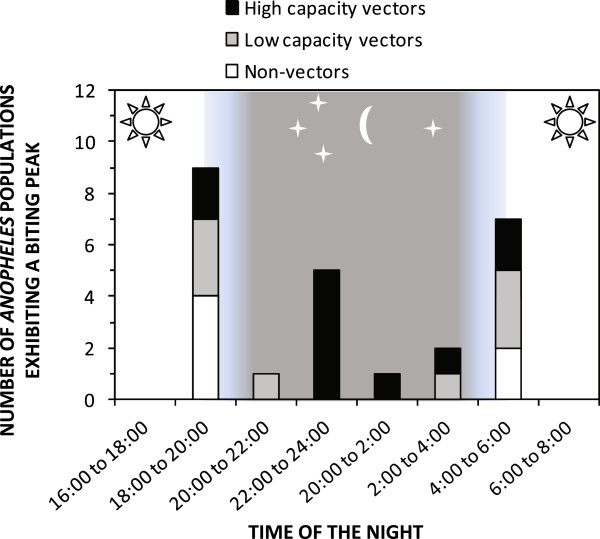
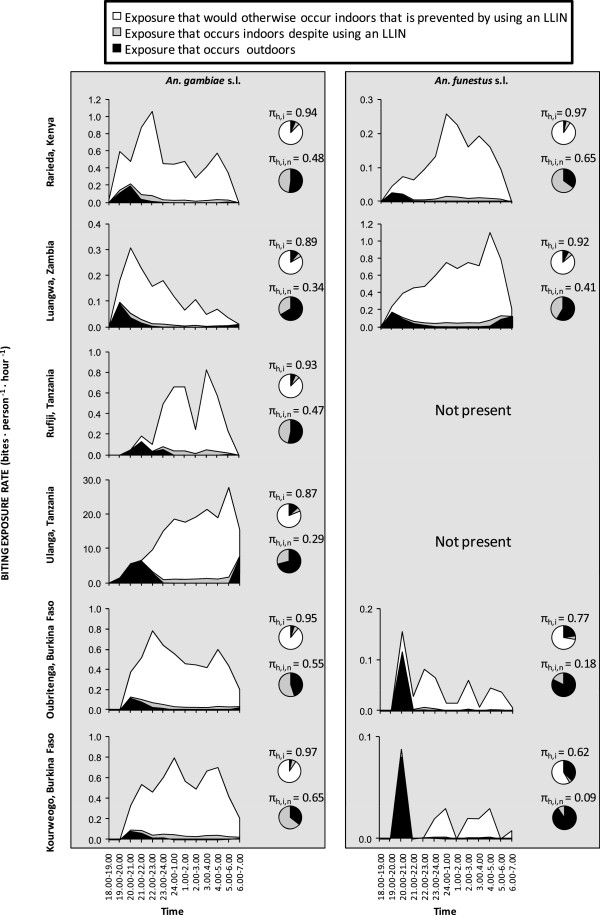
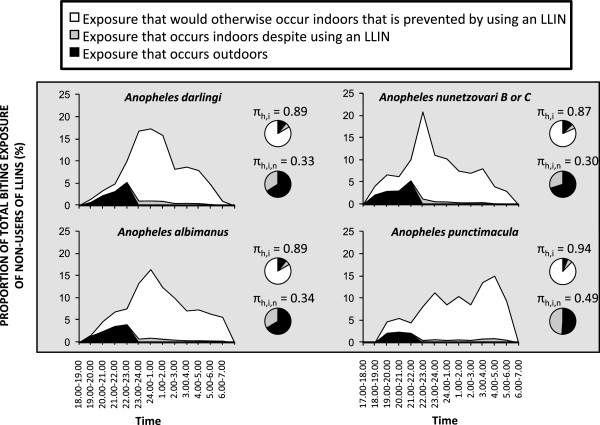
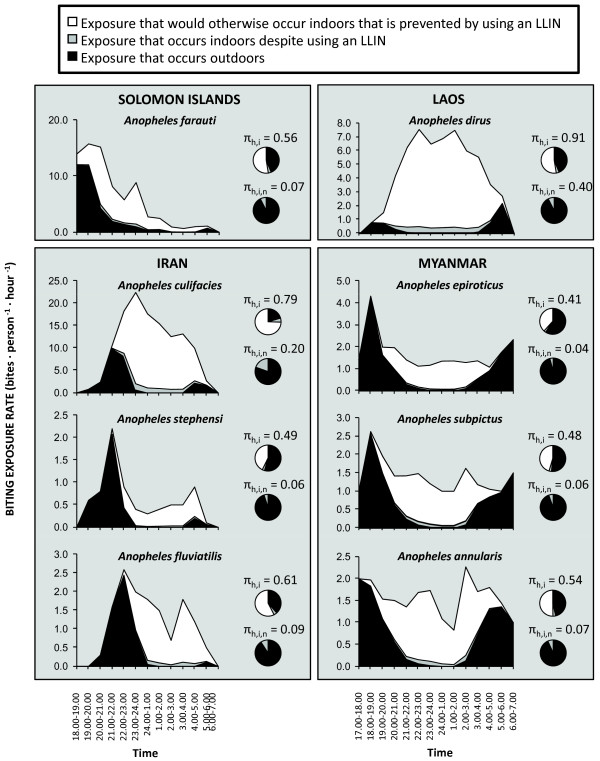
Verification
Claims the paper makes
The claims and statistics of this paper haven’t been checked yet.
Run the check — free, no account needed. It reads the open-access text and checks the sources it cites.
Claims other papers make about this one
Each is checked against this paper’s own text: does it say what the citing paper says it does?
The source backs part of the claim, not all of it — or backs it for a different population, condition or comparison.
In the citing paper
“Nevertheless despite the proof of principle of their potential efficacy, the randomized control trials showing the benefit to use them at community scale are scarce [49], and their ecological scope of the application does not seem to be global.”
From Mapping insecticide resistance in Anopheles gambiae (s.l.) from Côte d'Ivoire (2018) · cites this paper as [49]
Experimental — accuracy not yet measured
Self-check
Percentages, sums and reported differences re-computed from the paper’s own numbers.
The self-check needs the paper’s full text.
Citations
Cites
Insecticide-treated bed nets and curtains for preventing malaria
Lengeler, C. (2004) · Cochrane Database of Systematic Reviews · doi:10.1002/14651858.cd000363.pub2 · Cited by 1,700
Ranson, H., N’Guessan, R., Lines, J., Moiroux, N., Nkuni, Z., & Corbel, V. (2011) · Trends in Parasitology · doi:10.1016/j.pt.2010.08.004 · Cited by 1,142
Silver, J. B. (2007) · Springer eBooks · doi:10.1007/978-1-4020-6666-5 · Cited by 1,005
A supplement to the Anophelinae of Africa south of the Sahara (Afrotropical Region).
Gillies, M. T., & Coetzee, M. (1987) · IHI Repository · Cited by 812
A global map of dominant malaria vectors
Sinka, M. E., Bangs, M. J., Manguin, S., Rubio-Palis, Y., Chareonviriyaphap, T., Coetzee, M., Mbogo, C. M., Hemingway, J., Patil, A. P., Temperley, W. H., et al. (2012) · Parasites & Vectors · doi:10.1186/1756-3305-5-69 · Cited by 792
Habicht, J. (1999) · International Journal of Epidemiology · doi:10.1093/ije/28.1.10 · Cited by 729
Mosquito Sugar Feeding and Reproductive Energetics
Foster, W. A. (1995) · Annual Review of Entomology · doi:10.1146/annurev.en.40.010195.002303 · Cited by 709
Russell, T. L., Govella, N. J., Azizi, S., Drakeley, C. J., Kachur, S. P., & Killeen, G. F. (2011) · Malaria Journal · doi:10.1186/1475-2875-10-80 · Cited by 698
Self-citationA GLOBAL INDEX REPRESENTING THE STABILITY OF MALARIA TRANSMISSION
Kiszewski, A. E., Mellinger, A. D., Spielman, A., Malaney, P. N., Sachs, S. E., & Sachs, J. D. (2004) · American Journal of Tropical Medicine and Hygiene · doi:10.4269/ajtmh.2004.70.486 · Cited by 664
Griffin, J. T., Hollingsworth, T. D., Okell, L. C., Churcher, T. S., White, M., Hinsley, W., Bousema, T., Drakeley, C. J., Ferguson, N. M., Basáñez, M.-G., et al. (2010) · PLoS Medicine · doi:10.1371/journal.pmed.1000324 · Cited by 595
Research works printed but not linked: 7
- WHO Global Malaria Control Programme: Global plan for insecticide resistance management in malaria vectors (GPIRM). 2012, Geneva: World Health Organization, 130-
- WHO: Guidelines for efficacy testing of spatial repellents. 2013, Geneva: World Health Organization
- WHO: Larval source management-A supplementary measure for malaria vector control: An Operational Manual. 2013, Geneva: World Health Organization
- WHO: Guidance note on capacity building in malaria entomology and vector control. 2013, Geneva: Global Malaria Programme, World Health Organization, 3-
- WHO: World Malaria Report 2013. 2013, Geneva: World Health Organization
- WHO: Global Strategic Framework for Integrated Vector Management. 2004, Geneva: World Health Organization
- WHO: Guidelines for testing mosquito adulticides for indoor residual spraying and treatment of mosquito nets. 2006, Geneva, Switzerland: World Health Organization
Cited by
Sorted by citations
Items 401–498 of 498
Maharaj, R., Lakan, V., & Maharaj, K. (2022) · Research Square · doi:10.21203/rs.3.rs-1557057/v1
Residual Malaria Among Migrant Workers in Myanmar: Why Still Persistent and How to Eliminate?Preprint
Nyunt, M. H., Aye, K. M., Naing, S. T., Mon, A. S., Htwe, M. M., Win, S. M. K., Thwe, W. M., Thi, A., & Kyaw, M. P. (2020) · doi:10.21203/rs.3.rs-100620/v1
Maharaj, R., Lakan, V., & Maharaj, K. (2020) · Research Square · doi:10.21203/rs.3.rs-52165/v1
Arifin, S. M. N., Madey, G. R., & Collins, F. H. (2016) · Wiley eBooks · doi:10.1002/9781118964385.refs
Sanou, R., Maïga, H., Sow, B. B. D., Ouema, A., Millogo, A. A., Bayili, K., Hien, A. S., Sawadogo, S. P., Millogo, S. A., Bélem, A. M. G., et al. (2023) · Research Square · doi:10.21203/rs.3.rs-2432364/v1
Spatially explicit sampling frameworks to identify regions of increased mosquito abundancePreprint
Kemei, B. J., Ochomo, E., Ombok, M., Midega, J. T., Lucas, E. R., Donnelly, M. J., Sedda, L., & McDermott, D. P. (2023) · bioRxiv (Cold Spring Harbor Laboratory) · doi:10.1101/2023.11.21.568008
Helmi, N. M. (2024) · Journal of Vector Borne Diseases · doi:10.4103/0972-9062.393977
Denz, A., Njoroge, M. M., Tambwe, M. M., Kamber, L., Cavelan, A., Smith, T. A., van Loon, J. J. A., Hiscox, A., Saddler, A., Fillinger, U., et al. (2024) · medRxiv · doi:10.1101/2024.01.29.24301958
Marcombe, S., Maithaviphet, S., Reyburn, R., Kunlaya, K., Silavong, K., Hongvanthong, B., Vanisaveth, V., Sengsavath, V., Banouvong, V., Chindavongsa, K., et al. (2023) · Figshare · doi:10.6084/m9.figshare.24417578
Emerging Global Population Health Risks: From Epidemiological Perspectives
(2024) · Frontiers research topics · doi:10.3389/978-2-8325-5352-7
The effects of landscape on malaria vectors of the neotropics
Lainhart, W. (2015) · Scholars Archive - University at Albany (University at Albany, State University of New York) · doi:10.54014/g7eh-mfbx
Malaria prevention in the age of climate change: A community survey in rural Senegal
Sherman, A. C. L., Matthews, J. D., & Aligne, C. A. (2025) · PLoS ONE · doi:10.1371/journal.pone.0313456
Harvey, S. A., Ekodir, S. M., Baker, L., Odero, J. I., Ekisa, M., Ikapesi, J. K. A., Tsang, S. W., Casella, A., McCoy, K. D., Passaniti, A., et al. (2026) · American Journal of Tropical Medicine and Hygiene · doi:10.4269/ajtmh.25-0413
Neelakantan, A., Srikanth, V. S., John, B. M., & Prabhakar, S. (2025) · Medical Journal of Dr D Y Patil Vidyapeeth · doi:10.4103/mjdrdypu.mjdrdypu_525_25
Elias, S., & Massebo, F. (2023) · Research Square · doi:10.21203/rs.3.rs-3328089/v1
Sumruayphol, S., Chaiphongpachara, T., Samung, Y., Ruangsittichai, J., Cui, L., Zhong, D., Sattabongkot, J., & Sriwichai, P. (2020) · Figshare · doi:10.6084/m9.figshare.13226042
Stanton, M. C., Kalonde, P. K., Zembere, K., Spaans, R. H., & Jones, C. M. (2021) · Figshare · doi:10.6084/m9.figshare.14707759
Stanton, M. C., Kalonde, P. K., Zembere, K., Spaans, R. H., & Jones, C. M. (2021) · Figshare · doi:10.6084/m9.figshare.14707753
Coleman, S., Yihdego, Y. Y.-E., Gyamfi, F., Kolyada, L., Tongren, J. E., Zigirumugabe, S., Dery, D. B., Badu, K., Obiri‐Danso, K., Boakye, D., et al. (2024) · Figshare · doi:10.6084/m9.figshare.26598251
Stanton, M. C., Kalonde, P. K., Zembere, K., Spaans, R. H., & Jones, C. M. (2021) · Figshare · doi:10.6084/m9.figshare.14707750
Stanton, M. C., Kalonde, P. K., Zembere, K., Spaans, R. H., & Jones, C. M. (2021) · Figshare · doi:10.6084/m9.figshare.14707768
Coleman, S., Yihdego, Y. Y.-E., Gyamfi, F., Kolyada, L., Tongren, J. E., Zigirumugabe, S., Dery, D. B., Badu, K., Obiri‐Danso, K., Boakye, D., et al. (2024) · Figshare · doi:10.6084/m9.figshare.26598248
Govella, N. J., Johnson, P. C. D., Killeen, G. F., & Ferguson, H. M. (2023) · Figshare · doi:10.6084/m9.figshare.23972829
Self-citationAl‐Amin, H. M., Rodriguez, I., Phru, C. S., Khan, W. A., Haque, R., Nahlen, B. L., Burton, T. A., Alam, M. S., & Lobo, N. F. (2023) · Figshare · doi:10.6084/m9.figshare.23304838
Stanton, M. C., Kalonde, P. K., Zembere, K., Spaans, R. H., & Jones, C. M. (2021) · Figshare · doi:10.6084/m9.figshare.14707756
Marcombe, S., Maithaviphet, S., Bobichon, J., Phommavan, N., Nambanya, S., Corbel, V., & Brey, P. T. (2020) · Figshare · doi:10.6084/m9.figshare.13212211
Tizifa, T. A., Kabaghe, A. N., McCann, R. S., Gowelo, S., Malenga, T., Nkhata, R. M., Chapeta, Y., Nkhono, W., Kadama, A., Takken, W., et al. (2024) · Figshare · doi:10.6084/m9.figshare.26701414
Abossie, A., Demissew, A., Getachew, H., Tsegaye, A., Degefa, T., Habtamu, K., Zhong, D., Wang, X., Lee, M.-C., Zhou, G., et al. (2024) · Figshare · doi:10.6084/m9.figshare.26677712
Abossie, A., Demissew, A., Getachew, H., Tsegaye, A., Degefa, T., Habtamu, K., Zhong, D., Wang, X., Lee, M.-C., Zhou, G., et al. (2024) · Figshare · doi:10.6084/m9.figshare.25157407
Ngowo, H. S., Hape, E. E., Matthiopoulos, J., Ferguson, H. M., & Okumu, F. O. (2021) · Figshare · doi:10.6084/m9.figshare.14211509
Phiri, M. D., McCann, R. S., Kabaghe, A. N., van den Berg, H., Malenga, T., Gowelo, S., Tizifa, T. A., Takken, W., van Vugt, M., Phiri, K. S., et al. (2021) · Figshare · doi:10.6084/m9.figshare.14776603
Orondo, P. W., Nyanjom, S. G., Atieli, H., Githure, J., Ondeto, B. M., Ochwedo, K. O., Omondi, C. J., Kazura, J. W., Lee, M.-C., Zhou, G., et al. (2021) · Figshare · doi:10.6084/m9.figshare.14853477
Permana, D. H., Zubaidah, S., Syahrani, L., Asih, P. B. S., Syafruddin, D., Rozi, I. E., Hidayati, A. P. N., Kosasih, S., Dewayanti, F. K., Rachmawati, N., et al. (2022) · Figshare · doi:10.6084/m9.figshare.20000078
McCann, R. S., Kabaghe, A. N., Moraga, P., Gowelo, S., Mburu, M. M., Tizifa, T. A., Chipeta, M. G., Nkhono, W., Pasquale, A. D., Maire, N., et al. (2021) · Figshare · doi:10.6084/m9.figshare.14650839
Denz, A., Njoroge, M. M., Tambwe, M. M., Champagne, C., Okumu, F., van Loon, J. J. A., Hiscox, A., Saddler, A., Fillinger, U., Moore, S. J., et al. (2021) · Figshare · doi:10.6084/m9.figshare.13619893
Stanton, M. C., Kalonde, P. K., Zembere, K., Spaans, R. H., & Jones, C. M. (2021) · Figshare · doi:10.6084/m9.figshare.14707774
Tizifa, T. A., Kabaghe, A. N., McCann, R. S., Gowelo, S., Malenga, T., Nkhata, R. M., Chapeta, Y., Nkhono, W., Kadama, A., Takken, W., et al. (2024) · Figshare · doi:10.6084/m9.figshare.26701426
Natchema S. Fonkou, B., Tchouakui, M., Menze, B. D., Mugenzi, L. M. J., Fofie, D., Nguiffo-Nguete, D., Lucia, N., Tombi, J., & Wondji, C. S. (2023) · Figshare · doi:10.6084/m9.figshare.24452418
Arnzen, A., Wagman, J., Chishya, C., Orange, E., Eisele, T. P., Yukich, J. O., Ashton, R. A., Chanda, J., Sakala, J., Chanda, B., et al. (2024) · Figshare · doi:10.6084/m9.figshare.25854704
Govella, N. J., Johnson, P. C. D., Killeen, G. F., & Ferguson, H. M. (2023) · Figshare · doi:10.6084/m9.figshare.23972826
Self-citationAbossie, A., Demissew, A., Getachew, H., Tsegaye, A., Degefa, T., Habtamu, K., Zhong, D., Wang, X., Lee, M.-C., Zhou, G., et al. (2024) · Figshare · doi:10.6084/m9.figshare.25157807
Govella, N. J., Johnson, P. C. D., Killeen, G. F., & Ferguson, H. M. (2023) · Figshare · doi:10.6084/m9.figshare.23972823
Self-citationGebhardt, M. E., Krizek, R. S., Coetzee, M., Koekemoer, L. L., Dahan-Moss, Y., Mbewe, D., Lupiya, J. S., Muleba, M., Stevenson, J. C., Moss, W. J., et al. (2022) · Figshare · doi:10.6084/m9.figshare.20222533
Phiri, M. D., McCann, R. S., Kabaghe, A. N., van den Berg, H., Malenga, T., Gowelo, S., Tizifa, T. A., Takken, W., van Vugt, M., Phiri, K. S., et al. (2021) · Figshare · doi:10.6084/m9.figshare.14776597
Martin, J. A., Hendershot, A. L., Portilla, I. A. S., English, D. J., Woodruff, M., Vera-Arias, C. A., Salazar-Costa, B. E., Bustillos, J. J., Saénz, F. E., Ocaña-Mayorga, S., et al. (2020) · Figshare · doi:10.6084/m9.figshare.13047326
Sumruayphol, S., Chaiphongpachara, T., Samung, Y., Ruangsittichai, J., Cui, L., Zhong, D., Sattabongkot, J., & Sriwichai, P. (2020) · Figshare · doi:10.6084/m9.figshare.13226051
Orondo, P. W., Nyanjom, S. G., Atieli, H., Githure, J. I., Ondeto, B. M., Ochwedo, K. O., Omondi, C. J., Kazura, J. W., Lee, M.-C., Zhou, G., et al. (2021) · Figshare · doi:10.6084/m9.figshare.14853483
Tizifa, T. A., Kabaghe, A. N., McCann, R. S., Gowelo, S., Malenga, T., Nkhata, R. M., Chapeta, Y., Nkhono, W., Kadama, A., Takken, W., et al. (2024) · Figshare · doi:10.6084/m9.figshare.26701417
Phiri, M. D., McCann, R. S., Kabaghe, A. N., van den Berg, H., Malenga, T., Gowelo, S., Tizifa, T. A., Takken, W., van Vugt, M., Phiri, K. S., et al. (2021) · Figshare · doi:10.6084/m9.figshare.14776591
Tizifa, T. A., Kabaghe, A. N., McCann, R. S., Gowelo, S., Malenga, T., Nkhata, R. M., Chapeta, Y., Nkhono, W., Kadama, A., Takken, W., et al. (2024) · Figshare · doi:10.6084/m9.figshare.25530450
Ngowo, H. S., Limwagu, A. J., Ferguson, H. M., Matthiopoulos, J., Okumu, F. O., & Nelli, L. (2022) · Figshare · doi:10.6084/m9.figshare.20508710
Gleave, K., Guy, A., Mechan, F., Emery, M., Murphy, A., Voloshin, V., Towers, C. E., Towers, D. P., Ranson, H., Foster, G. M., et al. (2023) · Figshare · doi:10.6084/m9.figshare.22681086
Perugini, E., Guelbeogo, W. M., Guglielmo, F., Poggi, C., Gabrieli, E., Ranson, H., della Torre, A., & Pombi, M. (2023) · Figshare · doi:10.6084/m9.figshare.22624544
Perugini, E., Guelbeogo, W. M., Guglielmo, F., Poggi, C., Gabrieli, E., Ranson, H., della Torre, A., & Pombi, M. (2023) · Figshare · doi:10.6084/m9.figshare.22624547
Cansado-Utrilla, C., Jeffries, C. L., Kristan, M., Brugman, V. A., Heard, P., Camara, G., Sylla, M., Béavogui, A. H., Messenger, L. A., Irish, S. R., et al. (2020) · Figshare · doi:10.6084/m9.figshare.12028398
Tizifa, T. A., Kabaghe, A. N., McCann, R. S., Gowelo, S., Malenga, T., Nkhata, R. M., Chapeta, Y., Nkhono, W., Kadama, A., Takken, W., et al. (2024) · Figshare · doi:10.6084/m9.figshare.26701432
Orondo, P. W., Nyanjom, S. G., Atieli, H., Githure, J., Ondeto, B. M., Ochwedo, K. O., Omondi, C. J., Kazura, J. W., Lee, M.-C., Zhou, G., et al. (2021) · Figshare · doi:10.6084/m9.figshare.14853486
Orondo, P. W., Nyanjom, S. G., Atieli, H., Githure, J., Ondeto, B. M., Ochwedo, K. O., Omondi, C. J., Kazura, J. W., Lee, M.-C., Zhou, G., et al. (2021) · Figshare · doi:10.6084/m9.figshare.14853474
Phiri, M. D., McCann, R. S., Kabaghe, A. N., van den Berg, H., Malenga, T., Gowelo, S., Tizifa, T. A., Takken, W., van Vugt, M., Phiri, K. S., et al. (2021) · Figshare · doi:10.6084/m9.figshare.14776594
Govella, N. J., Johnson, P. C. D., Killeen, G. F., & Ferguson, H. M. (2023) · Figshare · doi:10.6084/m9.figshare.23972820
Self-citationTizifa, T. A., Kabaghe, A. N., McCann, R. S., Gowelo, S., Malenga, T., Nkhata, R. M., Chapeta, Y., Nkhono, W., Kadama, A., Takken, W., et al. (2024) · Figshare · doi:10.6084/m9.figshare.26701411
Abong’o, B., Gimnig, J. E., Longman, B., Odongo, T., Wekesa, C. N., Webwile, A., Oloo, B., Nduta, M., Muchoki, M., Omoke, D., et al. (2021) · Figshare · doi:10.6084/m9.figshare.14775646
Arnzen, A., Wagman, J., Chishya, C., Orange, E., Eisele, T. P., Yukich, J. O., Ashton, R. A., Chanda, J., Sakala, J., Chanda, B., et al. (2024) · Figshare · doi:10.6084/m9.figshare.25854625
Marcombe, S., Maithaviphet, S., Bobichon, J., Phommavan, N., Nambanya, S., Corbel, V., & Brey, P. T. (2020) · Figshare · doi:10.6084/m9.figshare.13212202
Stanton, M. C., Kalonde, P. K., Zembere, K., Spaans, R. H., & Jones, C. M. (2021) · Figshare · doi:10.6084/m9.figshare.14707765
Permana, D. H., Zubaidah, S., Syahrani, L., Asih, P. B. S., Syafruddin, D., Rozi, I. E., Hidayati, A. P. N., Kosasih, S., Dewayanti, F. K., Rachmawati, N., et al. (2022) · Figshare · doi:10.6084/m9.figshare.20000075
Tizifa, T. A., Kabaghe, A. N., McCann, R. S., Gowelo, S., Malenga, T., Nkhata, R. M., Chapeta, Y., Nkhono, W., Kadama, A., Takken, W., et al. (2024) · Figshare · doi:10.6084/m9.figshare.26701420
Stanton, M. C., Kalonde, P. K., Zembere, K., Spaans, R. H., & Jones, C. M. (2021) · Figshare · doi:10.6084/m9.figshare.14707762
Perugini, E., Guelbeogo, W. M., Guglielmo, F., Poggi, C., Gabrieli, E., Ranson, H., della Torre, A., & Pombi, M. (2023) · Figshare · doi:10.6084/m9.figshare.22624541
Soumare, H. M., Dabira, E. D., Camara, M. M., Jadama, L., Gaye, P. M., Kanteh, S., Jawara, E. A., Njie, A. K., Sanneh, F., Ndiath, M. O., et al. (2022) · Figshare · doi:10.6084/m9.figshare.21582709
Tizifa, T. A., Kabaghe, A. N., McCann, R. S., Gowelo, S., Malenga, T., Nkhata, R. M., Chapeta, Y., Nkhono, W., Kadama, A., Takken, W., et al. (2024) · Figshare · doi:10.6084/m9.figshare.26701423
Marcombe, S., Maithaviphet, S., Bobichon, J., Phommavan, N., Nambanya, S., Corbel, V., & Brey, P. T. (2020) · Figshare · doi:10.6084/m9.figshare.13212205
Hast, M. A., Mharakurwa, S., Shields, T. M., Lubinda, J., Searle, K. M., Gwanzura, L., Munyati, S., & Moss, W. J. (2023) · Figshare · doi:10.6084/m9.figshare.22601576
Marcombe, S., Maithaviphet, S., Bobichon, J., Phommavan, N., Nambanya, S., Corbel, V., & Brey, P. T. (2020) · Figshare · doi:10.6084/m9.figshare.13212217
Cansado-Utrilla, C., Jeffries, C. L., Kristan, M., Brugman, V. A., Heard, P., Camara, G., Sylla, M., Béavogui, A. H., Messenger, L. A., Irish, S. R., et al. (2020) · Figshare · doi:10.6084/m9.figshare.12028392
Permana, D. H., Zubaidah, S., Syahrani, L., Asih, P. B. S., Syafruddin, D., Rozi, I. E., Hidayati, A. P. N., Kosasih, S., Dewayanti, F. K., Rachmawati, N., et al. (2022) · Figshare · doi:10.6084/m9.figshare.20000072
Zhou, G., Githure, J. I., Lee, M.-C., Zhong, D., Wang, X., Atieli, H., Githeko, A. K., Kazura, J. W., & Yan, G. (2024) · Figshare · doi:10.6084/m9.figshare.26692516
Orondo, P. W., Nyanjom, S. G., Atieli, H., Githure, J., Ondeto, B. M., Ochwedo, K. O., Omondi, C. J., Kazura, J. W., Lee, M.-C., Zhou, G., et al. (2021) · Figshare · doi:10.6084/m9.figshare.14853489
Killeen, G. F., Monroe, A. C., & Govella, N. J. (2021) · Figshare · doi:10.6084/m9.figshare.15102801
Self-citationPhiri, M. D., McCann, R. S., Kabaghe, A. N., van den Berg, H., Malenga, T., Gowelo, S., Tizifa, T. A., Takken, W., van Vugt, M., Phiri, K. S., et al. (2021) · Figshare · doi:10.6084/m9.figshare.14776600
Orondo, P. W., Nyanjom, S. G., Atieli, H., Githure, J., Ondeto, B. M., Ochwedo, K. O., Omondi, C. J., Kazura, J. W., Lee, M.-C., Zhou, G., et al. (2021) · Figshare · doi:10.6084/m9.figshare.14853480
Stanton, M. C., Kalonde, P. K., Zembere, K., Spaans, R. H., & Jones, C. M. (2021) · Figshare · doi:10.6084/m9.figshare.14707771
Tizifa, T. A., Kabaghe, A. N., McCann, R. S., Gowelo, S., Malenga, T., Nkhata, R. M., Chapeta, Y., Nkhono, W., Kadama, A., Takken, W., et al. (2024) · Figshare · doi:10.6084/m9.figshare.25530214
Wagman, J., Chanda, B., Chanda, J., Saili, K., Orange, E., Mambo, P., Muyabe, R., Kaniki, T., Mwenya, M., Ng’andu, M., et al. (2024) · Figshare · doi:10.6084/m9.figshare.26333204
Matsuda, I., Manin, B. O., Yahiro, T., Lambut, P., Tangah, J., Huffman, M. A., Bernard, H., Kumar, V. S., & Chua, T. H. (2026) · PLoS neglected tropical diseases · doi:10.1371/journal.pntd.0014849
Opiyo, M., Oppong, S. K., Vajda, É. A., Lobo, N. F., Tatarsky, A., & Thomsen, E. K. (2026) · medRxiv · doi:10.64898/2026.05.12.26352987
Chinula, D., Mumba, K., Zulu, R., Ndhlovu, K., Kavishe, D. R., Hobbs, N. P., Kiware, S. S., Reed, T., Hamainza, B., & Killeen, G. F. (2026) · Medical and Veterinary Entomology · doi:10.1111/mve.70080
Self-citationMalaria Prevalence in Children Under Five and Pregnant Women in Hong LGA
Atinga, A., Galaya, T., Emmanuel, W. B., Benson, O., Thomas, B. W., & Kaduna, B. A. (2026) · Trends in Biological Sciences · doi:10.21124/tbs.2026.219.227
Changes in malaria vector bionomics in Timor Leste between 2009 and 2016; a longitudinal study
Yapabandara, A. M. G. M., Mota, M. D. R. D. F., Sarmento, R., Bosco, J. D., Gusmão, M., Kahagallage, M. P. C., Munasinghe, T. U., & Wickremasinghe, A. R. (2026) · Malaria Journal · doi:10.1186/s12936-026-05966-1
Gutiérrez, A. S., Otuko, R., Xie, K., Omondi, I., Kariukiu, M., Ruiz-Castillo, P., Wanjiku, C., Brazeal, A., Ngama, M., Onyango, T., et al. (2026) · BMJ Global Health · doi:10.1136/bmjgh-2025-022607
Bello, A. B., Hassan, A. A., & Popoola, K. O. (2026) · Discover Public Health · doi:10.1186/s12982-026-02637-z
Saeung, M., Jupatanakul, N., Jampeesri, N., Lertlumnaphakul, W., Nobleza, J. A., Kim, D.-Y., Phuanukoonnon, S., Manguin, S., & Chareonviriyaphap, T. (2026) · Journal of Medical Entomology · doi:10.1093/jme/tjag148
Narpon, Q., Toto, J.-C., Lucarz, E., Santos, M. A. D., Ingles, A., Girault, C., Besnard, P., Cabinda, A. M., Martins, J. F., Poinsignon, A., et al. (2026) · bioRxiv (Cold Spring Harbor Laboratory) · doi:10.64898/2026.09.14.751460
Bikoy, E. N., Nwane, P. B., Ekoko, W. E., Enama, S. E., Chadou, M. P., Alenou, L. D., Mandeng, S. E., Niamsi-Emalio, Y., Kamgno, J., & Etang, J. (2026) · Frontiers in Public Health · doi:10.3389/fpubh.2026.1870575
Yeshanew, S., Kendie, F. A., Atenafu, G., & Nibret, E. (2026) · Research Square · doi:10.21203/rs.3.rs-10946928/v1
Cheng, N. I., Dibbasey, M., Chu, C. E., Ndang, N. H., Amambua-Ngwa, B. N., Baah, C. A., Ntui, V. N., Adu, G. A., Owusu, D., Naabil, D. T., et al. (2026) · Research Square · doi:10.21203/rs.3.rs-11052787/v1
Metadata
- Authors
- Killeen, G. F.
- Affiliations
- Ifakara Health Institute (TZ)
- Corresponding author
- Killeen, Gerry F
- Venue
- Malaria Journal
- Published
- 2014-08-23
- Volume
- 13
- Issue
- 1
- Pages
- 330-330
- ISSN
- 1475-2875 (ISSN-L)
- PMC
- PMC4159526
- OpenAlex
- W2152400766
- Cited by
- 506
- References
- 143
- Citations by year
- 2026: 16 · 2025: 22 · 2024: 51 · 2023: 44 · 2022: 41 · 2021: 70 · 2020: 70 · 2019: 41 · 2018: 41 · 2017: 46 · 2016: 36 · 2015: 28
- FWCI
- 5.72
- Type
- journal article
- Language
- en
- Open access
- gold
- doi.org
- Licence
- cc-by
- Locations
- Malaria Journal (publishedVersion, cc-by)
- PubMed Central (publishedVersion, cc-by)
- PubMed (publishedVersion)
- LSTM Online Archive (Liverpool School of Tropical Medicine) (acceptedVersion)
- Funders
- World Health Organization
- Topics
- Health Sciences › Medicine › Public Health, Environmental and Occupational Health › Malaria Research and Control
- Health Sciences › Medicine › Public Health, Environmental and Occupational Health › Mosquito-borne diseases and control
- Health Sciences › Medicine › Public Health, Environmental and Occupational Health › Dengue and Mosquito Control Research
- Keywords
- residual malaria transmission, malaria vector control, long-lasting insecticidal nets, indoor residual spraying, vector behavior, vector control, malaria elimination, larval source management, pilot study
- MeSH terms
- Animals, Humans, Insect Vectors, Malaria, Mosquito Control, Culicidae, Disease Transmission, Infectious
About these checks
Registry, retraction, Cites and statistics results are computed, not judged, with one exception: a printed reference that no index lists is read once by a model before it counts as a citation error. Claims are extracted by a model and kept only when their quote appears verbatim in the text; each cited source is then checked, with a model’s help, for whether it says what the claim relies on. Those verdicts can be wrong — read the claim’s quote and the cited source before relying on one.
Statistics and arithmetic are recomputed, not judged.
Confidence bands are shown only for fields calibrated on our annotated test set. None is calibrated yet, so no band is shown.
What counts as a claim ›How we measure confidence ›How we check this ›
Are you an author, or do you see a problem with this page? Request a review
