

The DOI matches its Crossref record; 142 of the 143 references it cites were found in a registry or an index.
Characterizing, controlling and eliminating residual malaria transmission
Open accessAbstract
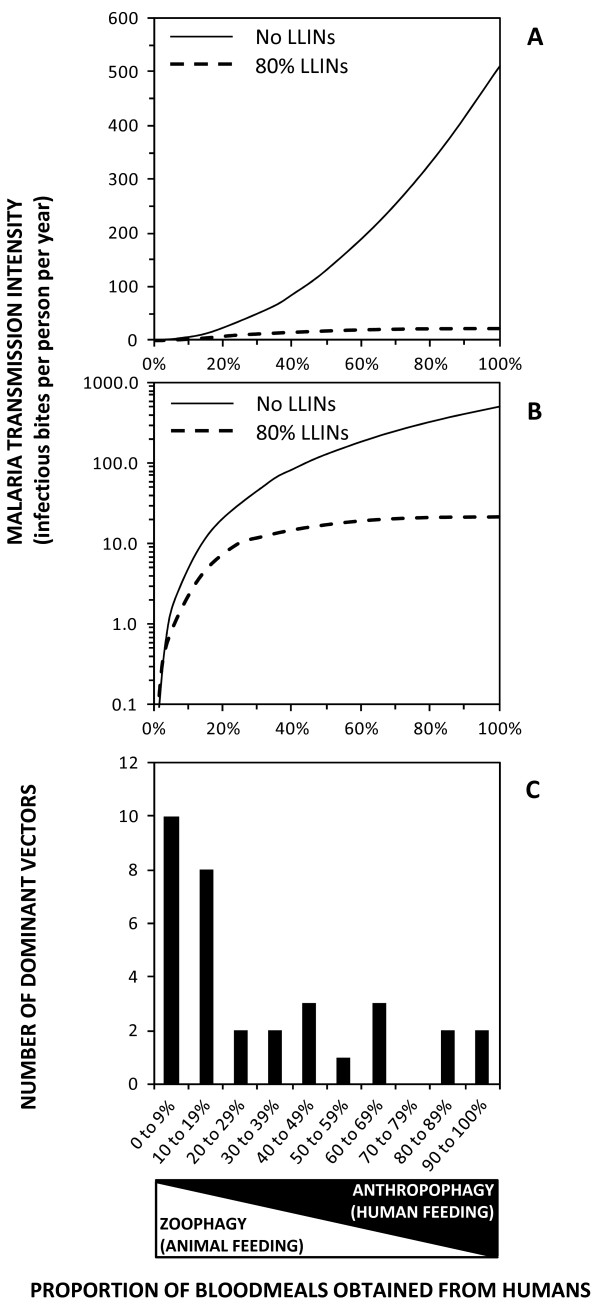
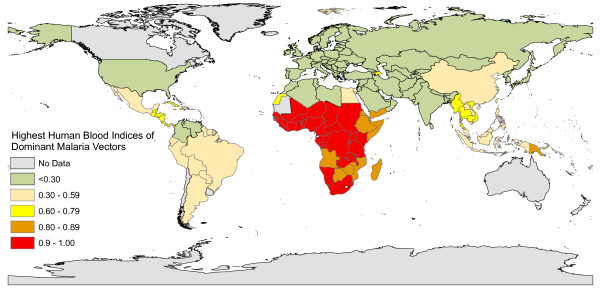
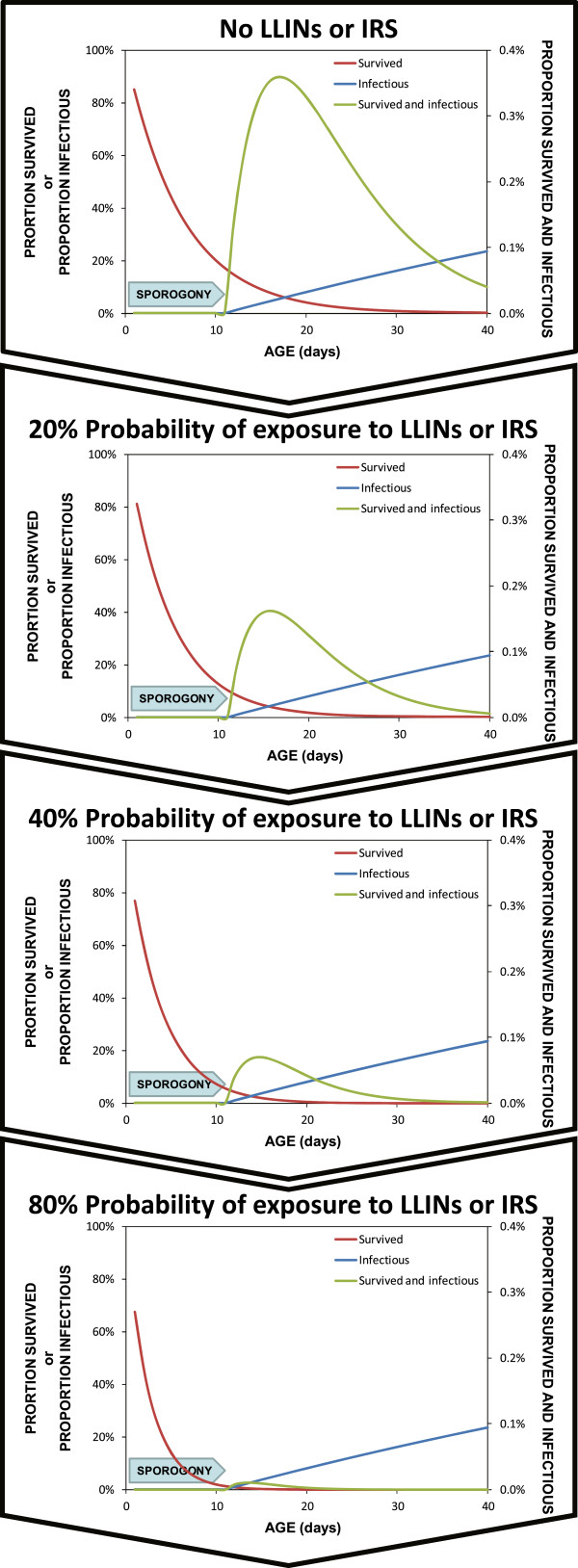
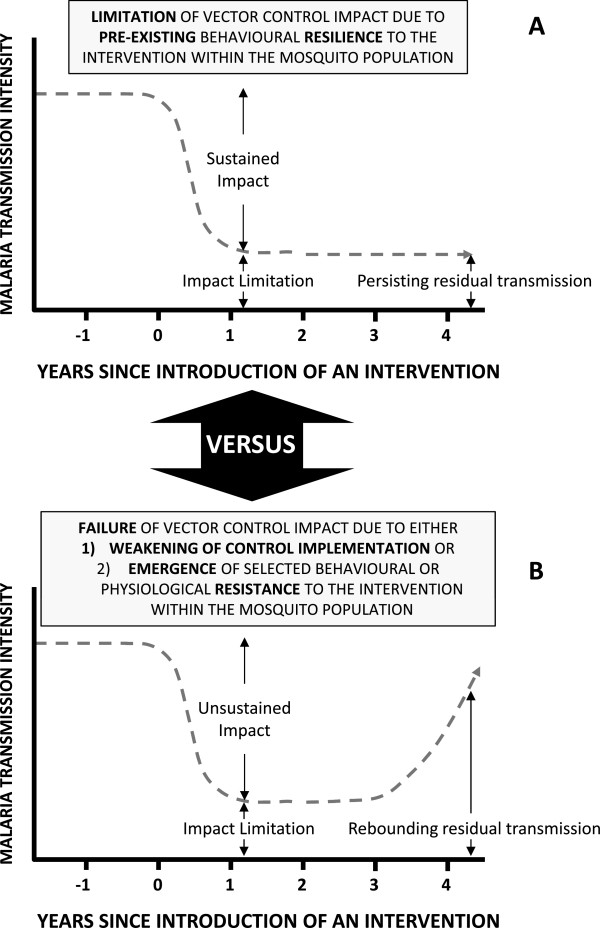
Long-lasting insecticidal nets (LLINs) and indoor residual spraying (IRS) interventions can reduce malaria transmission by targeting mosquitoes when they feed upon sleeping humans and/or rest inside houses, livestock shelters or other man-made structures. However, many malaria vector species can maintain robust transmission, despite high coverage of LLINs/IRS containing insecticides to which they are physiologically fully susceptible, because they exhibit one or more behaviours that define the biological limits of achievable impact with these interventions: (1) Natural or insecticide-induced avoidance of contact with treated surfaces within houses and early exit from them, thus minimizing exposure hazard of vectors which feed indoors upon humans; (2) Feeding upon humans when they are active and unprotected outdoors, thereby attenuating personal protection and any consequent community-wide suppression of transmission; (3) Feeding upon animals, thus minimizing contact with insecticides targeted at humans or houses; (4) Resting outdoors, away from insecticide-treated surfaces of nets, walls and roofs. Residual malaria transmission is, therefore, defined as all forms of transmission that can persist after achieving full universal coverage with effective LLINs and/or IRS containing active ingredients to which local vector populations are fully susceptible. Residual transmission is sufficiently intense across most of the tropics to render malaria elimination infeasible without new or improved vector control methods. Many novel or improved vector control strategies to address residual transmission are emerging that either: (1) Enhance control of adult vectors that enter houses to feed and/or rest by killing, repelling or excluding them; (2) Kill or repel adult mosquitoes when they attack people outdoors; (3) Kill adult mosquitoes when they attack livestock; (4) Kill adult mosquitoes when they feed upon sugar or; (5) Kill immature mosquitoes in aquatic habitats. To date, none of these options has sufficient supporting evidence to justify full-scale programmatic implementation. Concerted investment in their rigorous selection, development and evaluation is required over the coming decade to enable control and, ultimately, elimination of residual malaria transmission. In the meantime, national programmes may assess options for addressing residual transmission under programmatic conditions through pilot studies with strong monitoring, evaluation and operational research components, similar to the Onchocerciasis Control Programme.
Overview
The claims and statistics of this paper haven’t been checked yet.
Run the check — free, no account needed. It reads the open-access text and checks the sources it cites.
Integrity signals
Registry
Cites
Statistics
Figures

Verification
Claims the paper makes
The claims and statistics of this paper haven’t been checked yet.
Run the check — free, no account needed. It reads the open-access text and checks the sources it cites.
Claims other papers make about this one
Each is checked against this paper’s own text: does it say what the citing paper says it does?
The source backs part of the claim, not all of it — or backs it for a different population, condition or comparison.
In the citing paper
“Nevertheless despite the proof of principle of their potential efficacy, the randomized control trials showing the benefit to use them at community scale are scarce [49], and their ecological scope of the application does not seem to be global.”
From Mapping insecticide resistance in Anopheles gambiae (s.l.) from Côte d'Ivoire (2018) · cites this paper as [49]
Experimental — accuracy not yet measured
Self-check
Percentages, sums and reported differences re-computed from the paper’s own numbers.
The self-check needs the paper’s full text.
Citations
Cites
Insecticide-treated bed nets and curtains for preventing malaria
Lengeler, C. (2004) · Cochrane Database of Systematic Reviews · doi:10.1002/14651858.cd000363.pub2 · Cited by 1,700
Ranson, H., N’Guessan, R., Lines, J., Moiroux, N., Nkuni, Z., & Corbel, V. (2011) · Trends in Parasitology · doi:10.1016/j.pt.2010.08.004 · Cited by 1,142
Silver, J. B. (2007) · Springer eBooks · doi:10.1007/978-1-4020-6666-5 · Cited by 1,005
A supplement to the Anophelinae of Africa south of the Sahara (Afrotropical Region).
Gillies, M. T., & Coetzee, M. (1987) · IHI Repository · Cited by 812
A global map of dominant malaria vectors
Sinka, M. E., Bangs, M. J., Manguin, S., Rubio-Palis, Y., Chareonviriyaphap, T., Coetzee, M., Mbogo, C. M., Hemingway, J., Patil, A. P., Temperley, W. H., et al. (2012) · Parasites & Vectors · doi:10.1186/1756-3305-5-69 · Cited by 792
Habicht, J. (1999) · International Journal of Epidemiology · doi:10.1093/ije/28.1.10 · Cited by 729
Mosquito Sugar Feeding and Reproductive Energetics
Foster, W. A. (1995) · Annual Review of Entomology · doi:10.1146/annurev.en.40.010195.002303 · Cited by 709
Russell, T. L., Govella, N. J., Azizi, S., Drakeley, C. J., Kachur, S. P., & Killeen, G. F. (2011) · Malaria Journal · doi:10.1186/1475-2875-10-80 · Cited by 698
Self-citationA GLOBAL INDEX REPRESENTING THE STABILITY OF MALARIA TRANSMISSION
Kiszewski, A. E., Mellinger, A. D., Spielman, A., Malaney, P. N., Sachs, S. E., & Sachs, J. D. (2004) · American Journal of Tropical Medicine and Hygiene · doi:10.4269/ajtmh.2004.70.486 · Cited by 664
Griffin, J. T., Hollingsworth, T. D., Okell, L. C., Churcher, T. S., White, M., Hinsley, W., Bousema, T., Drakeley, C. J., Ferguson, N. M., Basáñez, M.-G., et al. (2010) · PLoS Medicine · doi:10.1371/journal.pmed.1000324 · Cited by 595
Research works printed but not linked: 7
- WHO Global Malaria Control Programme: Global plan for insecticide resistance management in malaria vectors (GPIRM). 2012, Geneva: World Health Organization, 130-
- WHO: Guidelines for efficacy testing of spatial repellents. 2013, Geneva: World Health Organization
- WHO: Larval source management-A supplementary measure for malaria vector control: An Operational Manual. 2013, Geneva: World Health Organization
- WHO: Guidance note on capacity building in malaria entomology and vector control. 2013, Geneva: Global Malaria Programme, World Health Organization, 3-
- WHO: World Malaria Report 2013. 2013, Geneva: World Health Organization
- WHO: Global Strategic Framework for Integrated Vector Management. 2004, Geneva: World Health Organization
- WHO: Guidelines for testing mosquito adulticides for indoor residual spraying and treatment of mosquito nets. 2006, Geneva, Switzerland: World Health Organization
Cited by
Sorted by citations
The importance of vector control for the control and elimination of vector-borne diseases
Wilson, A. L., Courtenay, O., Kelly‐Hope, L. A., Scott, T. W., Takken, W., Torr, S. J., & Lindsay, S. W. (2020) · PLoS neglected tropical diseases · doi:10.1371/journal.pntd.0007831 · Cited by 936
Global Epidemiology of Plasmodium vivax
Howes, R. E., Battle, K. E., Mendis, K., Smith, D. L., Cibulskis, R. E., Baird, J. K., & Hay, S. I. (2016) · American Journal of Tropical Medicine and Hygiene · doi:10.4269/ajtmh.16-0141 · Cited by 425
Vector biology meets disease control: using basic research to fight vector-borne diseases
Shaw, W. R., & Catteruccia, F. (2018) · Nature Microbiology · doi:10.1038/s41564-018-0214-7 · Cited by 338
Current vector control challenges in the fight against malaria
Benelli, G., & Beier, J. C. (2017) · Acta Tropica · doi:10.1016/j.actatropica.2017.06.028 · Cited by 324
Churcher, T. S., Lissenden, N., Griffin, J. T., Worrall, E., & Ranson, H. (2016) · eLife · doi:10.7554/elife.16090 · Cited by 312
Mosquito feeding behavior and how it influences residual malaria transmission across Africa
Sherrard-Smith, E., Skarp, J. E., Beale, A. D., Fornadel, C. M., Norris, L. C., Moore, S., Mihreteab, S., Charlwood, J. D., Bhatt, S., Winskill, P., et al. (2019) · Proceedings of the National Academy of Sciences · doi:10.1073/pnas.1820646116 · Cited by 310
Hemingway, J., Shretta, R., Wells, T. N. C., Bell, D., DJIMDÉ, A. A., Achee, N. L., & Gao, Q. (2016) · PLoS Biology · doi:10.1371/journal.pbio.1002380 · Cited by 296
ŞENGÜL, M. Ş., & Canpolat, E. (2022) · Insects · doi:10.3390/insects13020162 · Cited by 289
Brady, O. J., Godfray, H. C. J., Tatem, A. J., Gething, P. W., Cohen, J. M., McKenzie, F. E., Perkins, T. A., Reiner, R. C., Tusting, L. S., Sinka, M. E., et al. (2016) · Transactions of the Royal Society of Tropical Medicine and Hygiene · doi:10.1093/trstmh/trv113 · Cited by 241
Homan, T., Maire, N., Hiscox, A., Pasquale, A. D., Kiche, I., Onoka, K., Mweresa, C. K., Mukabana, W. R., Ross, A. J., Smith, T. A., et al. (2016) · Malaria Journal · doi:10.1186/s12936-015-1044-1 · Cited by 195
Wiebe, A., Longbottom, J., Gleave, K., Shearer, F. M., Sinka, M. E., Massey, N. C., Cameron, E., Bhatt, S., Gething, P. W., Hemingway, J., et al. (2017) · Malaria Journal · doi:10.1186/s12936-017-1734-y · Cited by 160
Killeen, G. F., Govella, N. J., Lwetoijera, D. W., & Okumu, F. O. (2016) · Malaria Journal · doi:10.1186/s12936-016-1280-z · Cited by 157
Self-citationDeveloping an expanded vector control toolbox for malaria elimination
Killeen, G. F., Tatarsky, A., Diabate, A., Chaccour, C. J., Marshall, J. M., Okumu, F. O., Brunner, S., Newby, G., Williams, Y. A., Malone, D., et al. (2017) · BMJ Global Health · doi:10.1136/bmjgh-2016-000211 · Cited by 149
Self-citationLobo, N. F., Laurent, B. S., Sikaala, C., Hamainza, B., Chanda, J., Chinula, D., Krishnankutty, S. M., Mueller, J. D., Deason, N. A., Hoang, Q. T., et al. (2015) · Scientific Reports · doi:10.1038/srep17952 · Cited by 151
Monroe, A., Asamoah, O., Lam, Y., Koenker, H., Psychas, P., Lynch, M., Ricotta, E., Hornston, S., Berman, A., & Harvey, S. A. (2015) · Malaria Journal · doi:10.1186/s12936-015-0543-4 · Cited by 140
High-accuracy detection of malaria vector larval habitats using drone-based multispectral imagery
Carrasco-Escobar, G., Manrique, E., Ruiz-Cabrejos, J., Saavedra, M., Alava, F., Bickersmith, S., Prussing, C., Vinetz, J. M., Conn, J. E., Moreno, M., et al. (2019) · PLOS Neglected Tropical Diseases · doi:10.1371/journal.pntd.0007105 · Cited by 126
Brady, O. J., Slater, H., Pemberton-Ross, P. J., Wenger, E. A., Maude, R. J., Ghani, A. C., Penny, M. A., Gerardin, J., White, L. J., Chitnis, N., et al. (2017) · The Lancet Global Health · doi:10.1016/s2214-109x(17)30220-6 · Cited by 126
Foy, B. D., Alout, H., Seaman, J. A., Rao, S., Magalhães, T., Wade, M., Parikh, S., Soma, D. D., Sagna, A. B., Fournet, F., et al. (2019) · The Lancet · doi:10.1016/s0140-6736(18)32321-3 · Cited by 125
Varo, R., Chaccour, C., & Bassat, Q. (2020) · Medicina Clínica · doi:10.1016/j.medcli.2020.05.010 · Cited by 125
Controlling mosquitoes with semiochemicals: a review
Wooding, M., Naudé, Y., Rohwer, E. R., & Bouwer, M. C. (2020) · Parasites & Vectors · doi:10.1186/s13071-020-3960-3 · Cited by 124
Kreppel, K. S., Viana, M., Main, B. J., Johnson, P. C. D., Govella, N. J., Lee, Y., Maliti, D., Meza, F. C., Lanzaro, G. C., & Ferguson, H. M. (2020) · Scientific Reports · doi:10.1038/s41598-020-71187-4 · Cited by 124
Traore, M. M., Junnila, A., Traore, S. F., Doumbia, S., Revay, E. E., Kravchenko, V. D., Schlein, Y., Arheart, K. L., Gergely, P., Xue, R., et al. (2020) · Malaria Journal · doi:10.1186/s12936-020-3132-0 · Cited by 125
Thomsen, E. K., Koimbu, G., Pulford, J., Jamea-Maiasa, S., Ura, Y., Keven, J. B., Siba, P. M., Müeller, I., Hetzel, M. W., & Reimer, L. J. (2016) · The Journal of Infectious Diseases · doi:10.1093/infdis/jiw615 · Cited by 122
Monroe, A. C., Moore, S., Koenker, H. M., Lynch, M. C., & Ricotta, E. (2019) · Malaria Journal · doi:10.1186/s12936-019-2638-9 · Cited by 122
Homan, T., Hiscox, A., Mweresa, C. K., Masiga, D., Mukabana, W. R., Oria, P., Maire, N., Pasquale, A. D., Silkey, M., Alaii, J., et al. (2016) · The Lancet · doi:10.1016/s0140-6736(16)30445-7 · Cited by 119
Implicating Cryptic and Novel Anophelines as Malaria Vectors in Africa
Stevenson, J. C., & Norris, D. E. (2016) · Insects · doi:10.3390/insects8010001 · Cited by 119
Elimination, T. M. R. C. P. O. T. F. M. (2017) · PLoS Medicine · doi:10.1371/journal.pmed.1002455 · Cited by 119
Review of Issues on Residual Malaria Transmission
Carnevale, P., & Manguin, S. (2021) · The Journal of Infectious Diseases · doi:10.1093/infdis/jiab084 · Cited by 119
Chaccour, C., Hammann, F., & Rabinovich, N. R. (2017) · Malaria Journal · doi:10.1186/s12936-017-1801-4 · Cited by 117
Modelling the potential of genetic control of malaria mosquitoes at national scale
North, A. R., Burt, A., & Godfray, H. C. J. (2019) · BMC Biology · doi:10.1186/s12915-019-0645-5 · Cited by 113
Sangbakembi-Ngounou, C., Costantini, C., Longo-Pendy, N. M., Ngoagouni, C., Akone‐Ella, O., Rahola, N., Cornélie, S., Kengne, P., Nakouné, E. R., Komas, N. P. J., et al. (2022) · Proceedings of the National Academy of Sciences · doi:10.1073/pnas.2104282119 · Cited by 106
Ibrahim, S. S., Riveron, J. M., Stott-Marshall, R. J., Irving, H., & Wondji, C. S. (2015) · Insect Biochemistry and Molecular Biology · doi:10.1016/j.ibmb.2015.10.015 · Cited by 107
Killeen, G. F., Kiware, S. S., Okumu, F. O., Sinka, M. E., Moyes, C. L., Massey, N. C., Gething, P. W., Marshall, J. M., Chaccour, C., & Tusting, L. S. (2017) · BMJ Global Health · doi:10.1136/bmjgh-2016-000198 · Cited by 101
Self-citationAhorlu, C., Adongo, P. B., Koenker, H. M., Zigirumugabe, S., Sika-Bright, S., Koka, E., Tabong, P. T., Piccinini, D., Segbaya, S., Olapeju, B., et al. (2019) · Malaria Journal · doi:10.1186/s12936-019-3051-0 · Cited by 100
Mapping insecticide resistance in Anopheles gambiae (s.l.) from Côte d'Ivoire
Camara, S., Koffi, A. A., Ahoua Alou, L. P., Koffi, K., Kabran, J.-P. K., Koné, A., Koffi, M. F., N’Guessan, R., & Pennetier, C. (2018) · Parasites & Vectors · doi:10.1186/s13071-017-2546-1 · Cited by 99
Gryseels, C., Durnez, L., Gerrets, R. P., Uk, S., Suon, S., Set, S., Phoeuk, P., Sluydts, V., Heng, S., Sochantha, T., et al. (2015) · Malaria Journal · doi:10.1186/s12936-015-0689-0 · Cited by 95
Anopheles stephensi in Africa requires a more integrated response
Mnzava, A., Monroe, A. C., & Okumu, F. (2022) · Malaria Journal · doi:10.1186/s12936-022-04197-4 · Cited by 95
Malaria Elimination and Eradication
Shretta, R., Liu, J. X., Cotter, C., Cohen, J. M., Dolenz, C., Makomva, K., Newby, G., Ménard, D., Phillips, A. A., Tatarsky, A., et al. (2017) · World Bank, Washington, DC eBooks · doi:10.1596/978-1-4648-0524-0_ch12 · Cited by 95
Increasing outdoor host-seeking in Anopheles gambiae over 6 years of vector control on Bioko Island
Meyers, J. I., Pathikonda, S., Popkin-Hall, Z. R., Medeiros, M. C. I., Fuseini, G., Matías, A., García, G. A., Overgaard, H. J., Kulkarni, V., Reddy, V. P., et al. (2016) · Malaria Journal · doi:10.1186/s12936-016-1286-6 · Cited by 91
Gryseels, C., Uk, S., Sluydts, V., Durnez, L., Phoeuk, P., Suon, S., Set, S., Heng, S., Sovannaroth, S., Gerrets, R. P., et al. (2015) · Scientific Reports · doi:10.1038/srep16847 · Cited by 90
Barnard, K., Jeanrenaud, A. C. S. N., Brooke, B. D., & Oliver, S. V. (2019) · Scientific Reports · doi:10.1038/s41598-019-45499-z · Cited by 89
Edwards, H. M., Sriwichai, P., Kirabittir, K., Sattabongkot, J., Chavez, I., & Hii, J. (2019) · Malaria Journal · doi:10.1186/s12936-019-2852-5 · Cited by 91
Stanton, M. C., Kalonde, P., Zembere, K., Hoek Spaans, R., & Jones, C. M. (2021) · Malaria Journal · doi:10.1186/s12936-021-03759-2 · Cited by 84
Methods and indicators for measuring patterns of human exposure to malaria vectors
Monroe, A. C., Moore, S., Okumu, F. O., Kiware, S. S., Lobo, N. F., Koenker, H. M., Sherrard-Smith, E., Gimnig, J. E., & Killeen, G. F. (2020) · Malaria Journal · doi:10.1186/s12936-020-03271-z · Cited by 84
Self-citationKnowledge of prevention, cause, symptom and practices of malaria among women in Burkina Faso
Yaya, S., Bishwajit, G., Ekholuenetale, M., Shah, V., Kadio, B., & Udenigwe, O. (2017) · PLoS ONE · doi:10.1371/journal.pone.0180508 · Cited by 83
Eave tubes for malaria control in Africa: an introduction
Knols, B. G. J., Farenhorst, M., Andriessen, R., Snetselaar, J., Suer, R. A., Osinga, A. J., Knols, J. M. H., Deschietere, J., Ng’habi, K. R., Lyimo, I. N., et al. (2016) · Malaria Journal · doi:10.1186/s12936-016-1452-x · Cited by 81
Mwesigwa, J., Achan, J., Tanna, G. L. D., Affara, M., Jawara, M., Worwui, A. K., Hamid‐Adiamoh, M., Kanuteh, F., Ceesay, S., Bousema, T., et al. (2017) · PLoS ONE · doi:10.1371/journal.pone.0187059 · Cited by 79
Monroe, A. C., Mihayo, K., Okumu, F. O., Finda, M. F., Moore, S., Koenker, H. M., Lynch, M. C., Haji, K. A., Abbas, F., Ali, A., et al. (2019) · Malaria Journal · doi:10.1186/s12936-019-2855-2 · Cited by 76
McCann, R. S., Kabaghe, A. N., Moraga, P., Gowelo, S., Mburu, M. M., Tizifa, T. A., Chipeta, M. G., Nkhono, W., Pasquale, A. D., Maire, N., et al. (2021) · Malaria Journal · doi:10.1186/s12936-021-03769-0 · Cited by 76
Massebo, F., Balkew, M., Gebre-Michael, T., & Lindtjørn, B. (2015) · Parasites & Vectors · doi:10.1186/s13071-015-1264-9 · Cited by 76
Killeen, G. F., Marshall, J. M., Kiware, S. S., South, A., Tusting, L. S., Chaki, P., & Govella, N. J. (2017) · BMJ Global Health · doi:10.1136/bmjgh-2016-000212 · Cited by 75
Self-citationMsugupakulya, B. J., Urio, N. H., Jumanne, M., Ngowo, H. S., Selvaraj, P., Okumu, F. O., & Wilson, A. L. (2023) · Parasites & Vectors · doi:10.1186/s13071-023-06019-1 · Cited by 75
Expanding the Vector Control Toolbox for Malaria Elimination: A Systematic Review of the Evidence
Williams, Y. A., Tusting, L. S., Hocini, S., Graves, P. M., Killeen, G. F., Kleinschmidt, I., Okumu, F. O., Feachem, R. G., Tatarsky, A., & Gosling, R. D. (2018) · Advances in Parasitology/Advances in parasitology · doi:10.1016/bs.apar.2018.01.003 · Cited by 74
Self-citationLindh, J. M., Okal, M. N., Herrera-Varela, M., Borg‐Karlson, A., Torto, B., Lindsay, S. W., & Fillinger, U. (2015) · Malaria Journal · doi:10.1186/s12936-015-0636-0 · Cited by 75
WHO Malaria Policy Advisory Committee and Secretariat (2015) · Malaria Journal · doi:10.1186/s12936-015-0623-5 · Cited by 72
Galatas, B., Saúte, F., Martí-Soler, H., Guinovart, C., Nhamússua, L., Simone, W., Munguambe, H., Hamido, C., Montañà, J., Muguande, O., et al. (2020) · PLoS Medicine · doi:10.1371/journal.pmed.1003227 · Cited by 72
Chaccour, C., Ng’habi, K. R., Abizanda, G., Barrio, Á. I., Aldaz, A., Okumu, F. O., Slater, H., del Pozo, J. L., & Killeen, G. F. (2018) · Parasites & Vectors · doi:10.1186/s13071-018-2872-y · Cited by 72
Self-citationPooda, S. H., Rayaissé, J.-B., Hien, D. F. D. S., Léfèvre, T., Yerbanga, R. S., Bengaly, Z., Dabiré, R. K., Bélem, A. M. G., Sidibé, I., Solano, P., et al. (2015) · Malaria Journal · doi:10.1186/s12936-015-1001-z · Cited by 72
Wanjala, C. L., Mbugi, J. P., Ototo, E. N., Machani, M. G., Afrane, Y. A., Atieli, H., Zhou, G., Githeko, A. K., & Yan, G. (2015) · Emerging infectious diseases · doi:10.3201/eid2112.150814 · Cited by 69
Getawen, S. K., Ashine, T., Massebo, F., Woldeyes, D., & Lindtjørn, B. (2018) · Acta Tropica · doi:10.1016/j.actatropica.2018.02.009 · Cited by 68
Lyimo, I. N., Kessy, S. T., Mbina, K. F., Daraja, A. A., & Mnyone, L. L. (2017) · Malaria Journal · doi:10.1186/s12936-017-1885-x · Cited by 68
Larviciding to prevent malaria transmission
Choi, L., Majambere, S., & Wilson, A. L. (2019) · Cochrane Database of Systematic Reviews · doi:10.1002/14651858.cd012736.pub2 · Cited by 68
Guyant, P., Corbel, V., Guerin, P. J., Lautissier, A., Nosten, F. H., Boyer, S., Coosemans, M., Dondorp, A. M., Sinou, V., Yeung, S., et al. (2015) · Malaria Journal · doi:10.1186/s12936-015-0802-4 · Cited by 69
Sinka, M. E., Golding, N., Massey, N. C., Wiebe, A., Huang, Z., Hay, S. I., & Moyes, C. L. (2016) · Malaria Journal · doi:10.1186/s12936-016-1187-8 · Cited by 66
Bamou, R., Mbakop, L. R., Kopya, E., Ndo, C., Awono-Ambene, P., Tchuinkam, T., Rono, M. K., Mwangangi, J., & Antonio-Nkondjio, C. (2018) · Parasites & Vectors · doi:10.1186/s13071-018-3049-4 · Cited by 65
Harnessing Integrated Vector Management for Enhanced Disease Prevention
Chanda, E., Ameneshewa, B., Bagayoko, M. M., Govere, J. M., & MacDonald, M. B. (2016) · Trends in Parasitology · doi:10.1016/j.pt.2016.09.006 · Cited by 65
Gari, T., & Lindtjørn, B. (2018) · Malaria Journal · doi:10.1186/s12936-018-2607-8 · Cited by 63
What Africa can do to accelerate and sustain progress against malaria
Okumu, F. O., Gyapong, M., Casamitjana, N., Castro, M. C., Itoe, M. A., Okonofua, F. E., & Tanner, M. (2022) · PLOS Global Public Health · doi:10.1371/journal.pgph.0000262 · Cited by 63
Kahamba, N. F., Finda, M. F., Ngowo, H. S., Msugupakulya, B. J., Baldini, F., Koekemoer, L. L., Ferguson, H. M., & Okumu, F. O. (2022) · Malaria Journal · doi:10.1186/s12936-022-04198-3 · Cited by 61
Killeen, G. F., Masalu, J. P., Chinula, D., Fotakis, E. A., Kavishe, D. R., Malone, D. J., & Okumu, F. O. (2017) · Emerging infectious diseases · doi:10.3201/eid2305.160662 · Cited by 63
Self-citationVariation in host preferences of malaria mosquitoes is mediated by skin bacterial volatiles
Busula, A. O., Takken, W., de Boer, J. G., Mukabana, W. R., & Verhulst, N. O. (2017) · Medical and Veterinary Entomology · doi:10.1111/mve.12242 · Cited by 60
Variations in household microclimate affect outdoor-biting behaviour of malaria vectors
Ngowo, H. S., Kaindoa, E. W., Matthiopoulos, J., Ferguson, H. M., & Okumu, F. O. (2017) · Wellcome Open Research · doi:10.12688/wellcomeopenres.12928.1 · Cited by 62
Oladimeji, K. E., Tsoka-Gwegweni, J. M., Ojewole, E. B., & Yunga, S. T. (2019) · Malaria Journal · doi:10.1186/s12936-019-2706-1 · Cited by 59
Gryseels, C., Grietens, K. P., Dierickx, S., Xuan, X. N., Uk, S., Bannister-Tyrrell, M., Trienekens, S. C. M., Ribera, J. M., Hausmann-Muela, S., Gerrets, R. P., et al. (2015) · American Journal of Tropical Medicine and Hygiene · doi:10.4269/ajtmh.15-0259 · Cited by 58
Msellemu, D. F., Shemdoe, A., Makungu, C., Mlacha, Y. P., Kannady, K., Dongus, S., Killeen, G. F., & Dillip, A. (2017) · Malaria Journal · doi:10.1186/s12936-017-2067-6 · Cited by 58
Self-citationAttractive targeted sugar bait phase III trials in Kenya, Mali, and Zambia
Attractive Targeted Sugar Bait Phase III Trial Group, Eisele, T. P., Kleinschmidt, I., Sarrassat, S., ter Kuile, F. O., Miller, J., Chanda, J., Silumbe, K., Samuels, A. M., Janssen, J., et al. (2022) · Trials · doi:10.1186/s13063-022-06555-8 · Cited by 57
Chicken volatiles repel host-seeking malaria mosquitoes
Jaleta, K. T., Hill, S. R., Birgersson, G., Tekie, H., & Ignell, R. (2016) · Malaria Journal · doi:10.1186/s12936-016-1386-3 · Cited by 56
Masalu, J. P., Finda, M. F., Okumu, F. O., Minja, E. G., Mmbando, A. S., Sikulu-Lord, M. T., & Ogoma, S. B. (2017) · Parasites & Vectors · doi:10.1186/s13071-017-2132-6 · Cited by 57
Lidar reveals activity anomaly of malaria vectors during pan-African eclipse
Brydegaard, M. S., Jansson, S., Malmqvist, E., Mlacha, Y. P., Gebru, A. K., Okumu, F. O., Killeen, G. F., & Kirkeby, C. (2020) · Science Advances · doi:10.1126/sciadv.aay5487 · Cited by 56
Self-citationGovella, N. J., Ogoma, S. B., Paliga, J. M., Chaki, P., & Killeen, G. F. (2015) · Parasites & Vectors · doi:10.1186/s13071-015-0937-8 · Cited by 55
Self-citationRisk and Control of Mosquito-Borne Diseases in Southeast Asian Rubber Plantations
Tangena, J.-A. A., Thammavong, P., Wilson, A. L., Brey, P. T., & Lindsay, S. W. (2016) · Trends in Parasitology · doi:10.1016/j.pt.2016.01.009 · Cited by 56
Chaccour, C., & Killeen, G. F. (2016) · Malaria Journal · doi:10.1186/s12936-015-1063-y · Cited by 54
Self-citationAbraham, M., Massebo, F., & Lindtjørn, B. (2017) · Parasite Epidemiology and Control · doi:10.1016/j.parepi.2017.04.003 · Cited by 54
Anopheles ecology, genetics and malaria transmission in northern Cambodia
Vantaux, A., Riehle, M. M., Piv, E., Farley, E. J., Chy, S., Kim, S., Corbett, A. G., Fehrman, R. L., Pepey, A., Eiglmeier, K., et al. (2021) · Scientific Reports · doi:10.1038/s41598-021-85628-1 · Cited by 54
A global bionomic database for the dominant vectors of human malaria
Massey, N. C., Garrod, G., Wiebe, A., Henry, A. J., Huang, Z., Moyes, C. L., & Sinka, M. E. (2016) · Scientific Data · doi:10.1038/sdata.2016.14 · Cited by 53
Bamou, R., Rono, M. K., Degefa, T., Midega, J. T., Mbogo, C. M., Ingosi, P., Kamau, A., Ambelu, A., Birhanu, Z., Tushune, K., et al. (2020) · The Journal of Infectious Diseases · doi:10.1093/infdis/jiaa774 · Cited by 50
Mathania, M. M., Kimera, S. I., & Silayo, R. S. (2016) · Malaria Journal · doi:10.1186/s12936-016-1332-4 · Cited by 50
Govella, N. J., Maliti, D. F., Mlwale, A. T., Masalu, J. P., Mirzai, N., Johnson, P., Ferguson, H. M., & Killeen, G. F. (2016) · Malaria Journal · doi:10.1186/s12936-016-1513-1 · Cited by 50
Self-citationMachani, M. G., Ochomo, E., Amimo, F., Kosgei, J. J., Munga, S., Zhou, G., Githeko, A. K., Yan, G., & Afrane, Y. A. (2020) · PLoS ONE · doi:10.1371/journal.pone.0224718 · Cited by 50
Connolly, J. B., Mumford, J. D., Fuchs, S., Turner, G., Beech, C., North, A. R., & Burt, A. (2021) · Malaria Journal · doi:10.1186/s12936-021-03674-6 · Cited by 50
Ngowo, H. S., Hape, E. E., Matthiopoulos, J., Ferguson, H. M., & Okumu, F. O. (2021) · Malaria Journal · doi:10.1186/s12936-021-03677-3 · Cited by 49
Muema, J. M., Bargul, J. L., Njeru, S. N., Onyango, J. O., & Imbahale, S. S. (2017) · Parasites & Vectors · doi:10.1186/s13071-017-2122-8 · Cited by 49
The influence of feeding behaviour and temperature on the capacity of mosquitoes to transmit malaria
Suh, E., Grossman, M. K., Waite, J. L., Dennington, N. L., Sherrard-Smith, E., Churcher, T. S., & Thomas, M. B. (2020) · Nature Ecology & Evolution · doi:10.1038/s41559-020-1182-x · Cited by 50
Rahi, M., & Sharma, A. K. (2022) · The Lancet Regional Health - Southeast Asia · doi:10.1016/j.lansea.2022.04.005 · Cited by 48
A bibliometric analysis of literature on malaria vector resistance: (1996 – 2015)
Sweileh, W. M., Sawalha, A. F., Al‐Jabi, S. W., Zyoud, S. H., Shraim, N. Y., & AbuTaha, A. S. (2016) · Globalization and Health · doi:10.1186/s12992-016-0214-4 · Cited by 47
Insecticide resistance in malaria vectors along the Thailand-Myanmar border
Chaumeau, V., Cerqueira, D., Zadrozny, J., Kittiphanakun, P., Andolina, C., Chareonviriyaphap, T., Nosten, F. H., & Corbel, V. (2017) · Parasites & Vectors · doi:10.1186/s13071-017-2102-z · Cited by 47
Host attraction and biting behaviour of Anopheles mosquitoes in South Halmahera, Indonesia
Laurent, B. S., Burton, T. A., Zubaidah, S., Miller, H. C., Asih, P. B. S., Baharuddin, A., Kosasih, S., Shinta, S., Firman, S., Hawley, W. A., et al. (2017) · Malaria Journal · doi:10.1186/s12936-017-1950-5 · Cited by 47
Kiware, S. S., Chitnis, N., Tatarsky, A., Wu, S. L., C., H. M. S., Gosling, R. D., Smith, D. L., & Marshall, J. M. (2017) · PLoS ONE · doi:10.1371/journal.pone.0187680 · Cited by 48
Oliver, S. V., & Brooke, B. D. (2018) · PLoS ONE · doi:10.1371/journal.pone.0192551 · Cited by 49
Eave Screening and Push-Pull Tactics to Reduce House Entry by Vectors of Malaria
Menger, D. J., Omusula, P., Wouters, K., Oketch, C., Carreira, A. S., Durka, M., Derycke, J.-L., Loy, D. E., Hahn, B. H., Mukabana, W. R., et al. (2016) · The American Society of Tropical Medicine and Hygiene · doi:10.4269/ajtmh.15-0632 · Cited by 46
Metadata
- Authors
- Killeen, G. F.
- Affiliations
- Ifakara Health Institute (TZ)
- Corresponding author
- Killeen, Gerry F
- Venue
- Malaria Journal
- Published
- 2014-08-23
- Volume
- 13
- Issue
- 1
- Pages
- 330-330
- ISSN
- 1475-2875 (ISSN-L)
- PMC
- PMC4159526
- OpenAlex
- W2152400766
- Cited by
- 506
- References
- 143
- Citations by year
- 2026: 16 · 2025: 22 · 2024: 51 · 2023: 44 · 2022: 41 · 2021: 70 · 2020: 70 · 2019: 41 · 2018: 41 · 2017: 46 · 2016: 36 · 2015: 28
- FWCI
- 5.72
- Type
- journal article
- Language
- en
- Open access
- gold
- doi.org
- Licence
- cc-by
- Locations
- Malaria Journal (publishedVersion, cc-by)
- PubMed Central (publishedVersion, cc-by)
- PubMed (publishedVersion)
- LSTM Online Archive (Liverpool School of Tropical Medicine) (acceptedVersion)
- Funders
- World Health Organization
- Topics
- Health Sciences › Medicine › Public Health, Environmental and Occupational Health › Malaria Research and Control
- Health Sciences › Medicine › Public Health, Environmental and Occupational Health › Mosquito-borne diseases and control
- Health Sciences › Medicine › Public Health, Environmental and Occupational Health › Dengue and Mosquito Control Research
- Keywords
- residual malaria transmission, malaria vector control, long-lasting insecticidal nets, indoor residual spraying, vector behavior, vector control, malaria elimination, larval source management, pilot study
- MeSH terms
- Animals, Humans, Insect Vectors, Malaria, Mosquito Control, Culicidae, Disease Transmission, Infectious
About these checks
Registry, retraction, Cites and statistics results are computed, not judged, with one exception: a printed reference that no index lists is read once by a model before it counts as a citation error. Claims are extracted by a model and kept only when their quote appears verbatim in the text; each cited source is then checked, with a model’s help, for whether it says what the claim relies on. Those verdicts can be wrong — read the claim’s quote and the cited source before relying on one.
Statistics and arithmetic are recomputed, not judged.
Confidence bands are shown only for fields calibrated on our annotated test set. None is calibrated yet, so no band is shown.
What counts as a claim ›How we measure confidence ›How we check this ›
Are you an author, or do you see a problem with this page? Request a review
