

Nonlinear heart rate variability features for real-life stress detection. Case study: students under stress due to university examination.
Open accessThe DOI matches its Crossref record; 53 of the 53 references it cites were found in a registry or an index.
Abstract
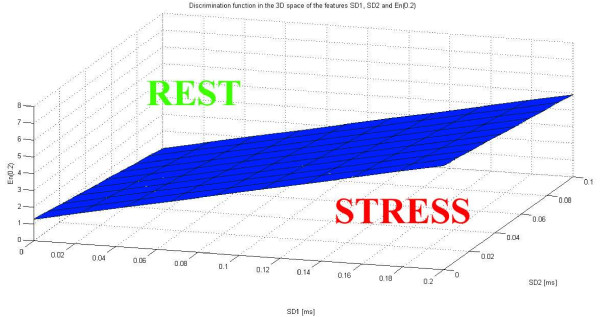
BACKGROUND: This study investigates the variations of Heart Rate Variability (HRV) due to a real-life stressor and proposes a classifier based on nonlinear features of HRV for automatic stress detection. METHODS: 42 students volunteered to participate to the study about HRV and stress. For each student, two recordings were performed: one during an on-going university examination, assumed as a real-life stressor, and one after holidays. Nonlinear analysis of HRV was performed by using Poincaré Plot, Approximate Entropy, Correlation dimension, Detrended Fluctuation Analysis, Recurrence Plot. For statistical comparison, we adopted the Wilcoxon Signed Rank test and for development of a classifier we adopted the Linear Discriminant Analysis (LDA). RESULTS: Almost all HRV features measuring heart rate complexity were significantly decreased in the stress session. LDA generated a simple classifier based on the two Poincaré Plot parameters and Approximate Entropy, which enables stress detection with a total classification accuracy, a sensitivity and a specificity rate of 90%, 86%, and 95% respectively. CONCLUSIONS: The results of the current study suggest that nonlinear HRV analysis using short term ECG recording could be effective in automatically detecting real-life stress condition, such as a university examination.
Overview
The claims and statistics of this paper haven’t been checked yet.
Free: it reads the open-access text and checks the first 5 claims that cite a source we can check. Create a free account to check every claim.
Integrity signals
Registry
Cites
Statistics
Figures
Verification
Claims the paper makes
The claims and statistics of this paper haven’t been checked yet.
Free: it reads the open-access text and checks the first 5 claims that cite a source we can check. Create a free account to check every claim.
Self-check
Percentages, sums and reported differences re-computed from the paper’s own numbers.
The self-check needs the paper’s full text.
Citations
Cites
Heart Rate Variability: Standards of Measurement, Physiological Interpretation, and Clinical Use
Electrophysiology, T. F. O. T. E. S. O. C. T. N. A. (1996) · Circulation · doi:10.1161/01.cir.93.5.1043 · Cited by 17,159
Heart rate variability: Standards of measurement, physiological interpretation, and clinical use
Malik, M., Bigger, J. T., Camm, A. J., Kleiger, R. E., Malliani, A., Moss, A. J., & Schwartz, P. J. (1996) · European Heart Journal · doi:10.1093/oxfordjournals.eurheartj.a014868 · Cited by 15,289 · cited 2×
“HRV is a non-invasive measure reflecting the variation over time of the period between consecutive heartbeats (RR intervals) [3] and has been proved to be a reliable marker of ANS activity [3].”
Goldberger, A. L., Amaral, L. A. N., Glass, L., Hausdorff, J. M., Ivanov, P. C., Mark, R. G., Mietus, J. E., Moody, G. B., Peng, C.-K., & Stanley, H. E. (2000) · Circulation · doi:10.1161/01.cir.101.23.e215 · Cited by 14,809
Physiological time-series analysis using approximate entropy and sample entropy
Richman, J. S., & Moorman, J. R. (2000) · American Journal of Physiology-Heart and Circulatory Physiology · doi:10.1152/ajpheart.2000.278.6.h2039 · Cited by 7,880 · cited 13×
“LDA generated a simple classifier based on the two Poincaré Plot parameters and Approximate Entropy, which enables stress detection with a total classification accuracy, a sensitivity and a specificity rate of 90%, 86%, and 95% respectively.”
BackgroundMethodInfluentialA systematic analysis of performance measures for classification tasks
Sokolova, M., & Lapalme, G. (2009) · Information Processing & Management · doi:10.1016/j.ipm.2009.03.002 · Cited by 7,515 · cited 1×
“In order to evaluate the classifier, we computed the common measures for binary classification performance measurement [34] using the formulae reported in Table 2, considering positive to the test those records classified as under stress.”
MethodStatistical pattern recognition: a review
Jain, A. K., Duin, P. W., & Mao, J. (2000) · IEEE Transactions on Pattern Analysis and Machine Intelligence · doi:10.1109/34.824819 · Cited by 6,767 · cited 2×
“To estimate the performance measures we adopted a 10-fold cross-validation scheme [35].”
MethodApproximate entropy as a measure of system complexity.
Pincus, S. M. (1991) · Proceedings of the National Academy of Sciences · doi:10.1073/pnas.88.6.2297 · Cited by 5,811 · cited 1×
“2*SDNN) [29,30] and to the findings of recent studies [28,31] which suggested choosing the value of r which maximizes the entropy (r = rmax) and proposed a formula for automatic selection of the value r (r = rchon).”
BackgroundQuantification of scaling exponents and crossover phenomena in nonstationary heartbeat time series
Peng, C.-K., Havlin, S., Stanley, H. E., & Goldberger, A. L. (1995) · Chaos: An Interdisciplinary Journal of Nonlinear Science · doi:10.1063/1.166141 · Cited by 3,855 · cited 3×
“Nonlinear properties of HRV were analyzed by the following methods: Poincaré Plot [19,20], Approximate Entropy [21], Correlation Dimension [22], Detrended Fluctuation Analysis [23,24], and Recurrence Plot [25-27].”
MethodHeart rate variability: A review
Rajendra Acharya, U., Paul Joseph, K., Kannathal, N., Lim, C. M., & Suri, J. S. (2006) · Medical & Biological Engineering & Computing · doi:10.1007/s11517-006-0119-0 · Cited by 2,820 · cited 1×
“2), En(rchon), which have been widely used complexity measures for HRV [37].”
Method
Cited by
Laborde, S., Mosley, E., & Thayer, J. F. (2017) · Frontiers in Psychology · doi:10.3389/fpsyg.2017.00213 · Cited by 2,336
“As research results suggest, Poincaré plots can be seen as indicators of vagal activity and reduced cardiac vagal control which are associated not only with physiological but also with psychological strain and stress (Collins and Karasek, 2010; Melillo et al., 2011).”
BackgroundReview on Psychological Stress Detection Using Biosignals
Giannakakis, G., Grigoriadis, D., Giannakaki, K., Simantiraki, O., Roniotis, A., & Tsiknakis, M. (2022) · IEEE Transactions on Affective Computing · doi:10.1109/taffc.2019.2927337 · Cited by 764
“…33 subjects men 24.06 MIST EDA, ECG, RSP LDA, SVM 82.80% Hosseini et al. (2011) [173] 15 subjects men 20-24 IAPS pictures EEG, BVP, EDA, HRV, RR SVM, ENN 84.60% Melillo et al. (2011) [211] 42 subjects Ongoing university ex- amination non linear HRV LDA 90.00% Sumitra et al (2011) [234] 15…”
BackgroundInfluentialCastaldo, R., Melillo, P., Bracale, U., Caserta, M., Triassi, M., & Pecchia, L. (2015) · Biomedical Signal Processing and Control · doi:10.1016/j.bspc.2015.02.012 · Cited by 535
“Melillo 2011[5] 42/Non-linear 5 non-parametric statistical tests (Wilcoxon signed rank test) 10.”
BackgroundMethodInfluentialSelf-citationAlberdi, A., Aztiria, A., & Basarab, A. (2016) · Journal of Biomedical Informatics · doi:10.1016/j.jbi.2015.11.007 · Cited by 473
Emotion recognition using wireless signals
Zhao, M., Adib, F., & Katabi, D. (2016) · Proceedings of the 22nd Annual International Conference on Mobile Computing and Networking · doi:10.1145/2973750.2973762 · Cited by 461
“There is a large literature on extracting such features from both audiovisual and physiological measurements [44, 43, 29].”
BackgroundMonitoring stress with a wrist device using context
Gjoreski, M., Luštrek, M., Gams, M., & Gjoreski, H. (2017) · Journal of Biomedical Informatics · doi:10.1016/j.jbi.2017.08.006 · Cited by 352
“, a laboratory [8,17], office [16], car (analysis while driving) [10], bed (analysis while sleeping) [11], and call center [15].”
BackgroundTowards Measuring Stress with Smartphones and Wearable Devices During Workday and Sleep
Muaremi, A., Arnrich, B., & Tröster, G. (2013) · BioNanoScience · doi:10.1007/s12668-013-0089-2 · Cited by 302
“In [39], the HRV features are evaluated during emotional visual elicitation, and in [26], the HRV features of students under stress due to university examination are investigated.”
MethodCastaldo, R., Montesinos, L., Melillo, P., James, C., & Pecchia, L. (2019) · BMC Medical Informatics and Decision Making · doi:10.1186/s12911-019-0742-y · Cited by 246
Self-citationMelillo, P., De Luca, N., Bracale, M., & Pecchia, L. (2013) · IEEE Journal of Biomedical and Health Informatics · doi:10.1109/jbhi.2013.2244902 · Cited by 204
“Moreover, nonlinear [44], [45] and/or point process time-frequency [46] analysis could provide additional useful measures for automatic classification.”
MethodSelf-citationMelillo, P., Izzo, R., Orrico, A., Scala, P., Attanasio, M., Mirra, M., De Luca, N., & Pecchia, L. (2015) · PLOS ONE · doi:10.1371/journal.pone.0118504 · Cited by 190
“Further details about the methods could be found elsewhere[18, 42].”
MethodSelf-citationMental Workload Alters Heart Rate Variability, Lowering Non-linear Dynamics
Delliaux, S., Delaforge, A., Deharo, J.-C., & Chaumet, G. (2019) · Frontiers in Physiology · doi:10.3389/fphys.2019.00565 · Cited by 169
Halbig, A., & Latoschik, M. E. (2021) · Frontiers in Virtual Reality · doi:10.3389/frvir.2021.694567 · Cited by 163
Cho, D., Ham, J., Oh, J., Park, J., Kim, S., Lee, N.-K., & Lee, B. (2017) · Sensors · doi:10.3390/s17102435 · Cited by 162
Nonlinear Methods Most Applied to Heart-Rate Time Series: A Review
Henriques, T., Ribeiro, M., Teixeira, A., Castro, L., Antunes, L., & Costa-Santos, C. (2020) · Entropy · doi:10.3390/e22030309 · Cited by 158
“Stress [39] [39,41] [39] [39] [39] Sleep [57,81] [81] [65] [81] [81] [81] [109] Diabetes [119] Sepsis [128] Epilepsy [42] Infants [103,124, 125] [124]”
BackgroundMethodHeart Rate Variability (HRV) Analysis: A Methodology for Organizational Neuroscience
Massaro, S., & Pecchia, L. (2016) · Organizational Research Methods · doi:10.1177/1094428116681072 · Cited by 194
“Toward this end, we refer readers to the related empirical works by Brennan et al. (2001) and Melillo, Bracale, and Pecchia (2011) to further appreciate the sensitivity of HRV indexes.”
MethodSelf-citationHeart rate variability metrics for fine-grained stress level assessment
Pereira, T., Almeida, P. R., Cunha, J. P. S., & Aguiar, A. (2017) · Computer Methods and Programs in Biomedicine · doi:10.1016/j.cmpb.2017.06.018 · Cited by 175
Brunoni, A. R., Kemp, A. H., Dantas, E. M., Goulart, A. C., Nunes, M. A., Boggio, P. S., Mill, J. G., Lotufo, P. A., Fregni, F., & Benseñor, I. M. (2013) · International Journal of Neuropsychopharmacology · doi:10.1017/s1461145713000497 · Cited by 150
“…plots, nonlinear measures that might be sensitive in detecting HRV differences between groups (Kemp et al., 2010) and decreased during stress (Melillo et al., 2011), and the symbolic measures 0 and 2 V, since it was experimentally shown that sympathetic activation increases 0 V and decreases…”
BackgroundKeep the Stress Away with SoDA: Stress Detection and Alleviation System
Akmandor, A. O., & Jha, N. K. (2017) · IEEE Transactions on Multi-Scale Computing Systems · doi:10.1109/tmscs.2017.2703613 · Cited by 152
“Yes 81.0 - Respiration, GSR, Memory Search, Electromyogram Mirror Tracing, Stroop Color Test, Public Speech [61] 42 ECG Verbal University -”
BackgroundMethodInfluentialSelvaraj, J., Murugappan, M., Khairunizam, W., & Yaacob, S. (2013) · BioMedical Engineering OnLine · doi:10.1186/1475-925x-12-44 · Cited by 152
“Records with ratio less than 90% were excluded from further processing [17].”
BackgroundComplexity and time asymmetry of heart rate variability are altered in acute mental stress
Visnovcova, Z., Mestanik, M., Javorka, M., Mokra, D., Gala, M., Jurko, A., Calkovska, A., & Tonhajzerova, I. (2014) · Physiological Measurement · doi:10.1088/0967-3334/35/7/1319 · Cited by 122
State Anxiety and Nonlinear Dynamics of Heart Rate Variability in Students
Da, D., Владимировна, С. Е., & Dimitriev, A. D. (2016) · PLoS ONE · doi:10.1371/journal.pone.0146131 · Cited by 142
“Some studies utilized the Poincaré plot in the case of university examinations [43], mental effort [44], and anxiety disorders [35], but the utility of irreversibility indexes and complex correlation measure for anxiety research have not been well defined.”
BackgroundMethodResultInfluentialA multimodal sensor dataset for continuous stress detection of nurses in a hospital
Hosseini, S., Gottumukkala, R. N., Katragadda, S., Bhupatiraju, R. T., Ashkar, Z. M., Borst, C. W., & Cochran, K. (2022) · Scientific Data · doi:10.1038/s41597-022-01361-y · Cited by 166
Kovács, L., Jurkovich, V., Bakony, M., Szenci, O., Póti, P., & Tőzsér, J. (2014) · Animal · doi:10.1017/s1751731113002140 · Cited by 119
“Non-linear measures differ from the conventional HRV methods as they are not designed to assess the magnitude of variability but rather the quality, scaling and correlation properties of the HR dynamics (Cervantes et al., 2009; Melillo et al., 2011).”
BackgroundHe, J., Li, K., Liao, X., Zhang, P., & Jiang, N. (2019) · IEEE Access · doi:10.1109/access.2019.2907076 · Cited by 114
“[13], were commonly used in the literature.”
Stress Detection Using Low Cost Heart Rate Sensors
Salai, M., Vassányi, I., & Kósa, I. (2016) · Journal of Healthcare Engineering · doi:10.1155/2016/5136705 · Cited by 129
“…can say that we achieved higher identification rate than the algorithm in [43] and a worse result than [48] or [45] and around 15% worse compared to [44, 47] but we used only time-domain features for stress identification instead of frequency-domain features or using nonlinear analysis which are…”
BackgroundMethodInfluentialLarradet, F., Niewiadomski, R., Barresi, G., Caldwell, D. G., & Mattos, L. S. (2020) · Frontiers in Psychology · doi:10.3389/fpsyg.2020.01111 · Cited by 135
“This kind of study can either be ambulatory (Healey et al., 2010) where people are able to move freely, or static where people experience real-life emotions but constrained to a specific location [e.g., a desk in a workplace (McDuff et al., 2012) or during an exam (Melillo et al., 2011)].”
BackgroundMethodDetection of mental stress due to oral academic examination via ultra-short-term HRV analysis
Castaldo, R., Xu, W., Melillo, P., Pecchia, L., Santamaria, L., & James, C. (2016) · Annual International Conference of the IEEE Engineering in Medicine and Biology Society (EMBC) · doi:10.1109/embc.2016.7591557 · Cited by 103
Self-citationMultilevel mental stress detection using ultra-short pulse rate variability series
Zubair, M., & Yoon, C. (2019) · Biomedical Signal Processing and Control · doi:10.1016/j.bspc.2019.101736 · Cited by 114
Nonlinear Analysis of Heart Rate Variability: A Comprehensive Review
de Godoy, M. F. (2016) · Journal of Cardiology and Therapy · doi:10.17554/j.issn.2309-6861.2016.03.101-4 · Cited by 115
DETECTION OF HUMAN STRESS USING SHORT-TERM ECG AND HRV SIGNALS
Karthikeyan, P., Murugappan, M., & Yaacob, S. (2013) · Journal of Mechanics in Medicine and Biology · doi:10.1142/s0219519413500383 · Cited by 111
Electrodermal Activity Based Pre-surgery Stress Detection Using a Wrist Wearable
Anusha, A. S., Sukumaran, P., Sarveswaran, V., Surees Kumar, S., Shyam, A., Akl, T. J., Preejith, S. P., & Sivaprakasam, M. (2019) · IEEE Journal of Biomedical and Health Informatics · doi:10.1109/jbhi.2019.2893222 · Cited by 107
“∗∗ Best Result indicates the maximum accuracy [11], [12], [15]–[21] or the correlation coefficient [13], [14] as the case may be.”
BackgroundHeart Rate Variability as an Indicator of Chronic Stress Caused by Lameness in Dairy Cows
Kovács, L., Kézér, F. L., Jurkovich, V., Kulcsár-Huszenicza, M., & Tőzsér, J. (2015) · PLOS ONE · doi:10.1371/journal.pone.0134792 · Cited by 83
“In line with our results, Correlation Dimension was lower in patients with cardiac disorders [78] or with chronic mental stress disorder [79].”
ResultByun, S., Kim, A. Y., Jang, E. H., Kim, S., Choi, K. W., Yu, H. Y., & Jeon, H. J. (2019) · Technology and Health Care · doi:10.3233/thc-199037 · Cited by 90
“These results suggest that the entropy features used in the present study could 328 reflect changes in the balance between sympathetic and parasympathetic cardiac modulation during our 329 experimental protocol, as demonstrated by a previous study [76].”
ResultHeart Rate Variability in Sport Performance: Do Time of Day and Chronotype Play A Role?
Vitale, J. A., Bonato, M., Torre, A. L., & Banfi, G. (2019) · Journal of Clinical Medicine · doi:10.3390/jcm8050723 · Cited by 78
“Despite the higher computational complexity required, these approaches have recently proven superior in quantifying and mapping non-linear and chaotic ANS activities, as well as in correlating HRV signals to precise psychological states of research subjects [50].”
BackgroundTeckenberg-Jansson, P., Turunen, S., Pölkki, T., Lauri-Haikala, M.-J., Lipsanen, J., Henelius, A., Aitokallio-Tallberg, A., Pakarinen, S., Leinikka, M., & Huotilainen, M. (2019) · Nordic Journal of Music Therapy · doi:10.1080/08098131.2018.1546223 · Cited by 66
A Mobile Sensing Approach to Stress Detection and Memory Activation for Public Bus Drivers
Rodrigues, J. G. P., Kaiseler, M., Aguiar, A., Cunha, J. P. S., & Barros, J. (2015) · IEEE Transactions on Intelligent Transportation Systems · doi:10.1109/tits.2015.2445314 · Cited by 86
“[22], while time-domain and frequency-domain features ex103 tracted from HRV have been validated multiple times as stress 104 indicators in the last decades [13], [14], [23].”
BackgroundGreater rewards in videogames lead to more presence, enjoyment and effort
Johnson, D., Klarkowski, M., Vella, K., Phillips, C., McEwan, M., & Watling, C. N. (2018) · Computers in Human Behavior · doi:10.1016/j.chb.2018.05.025 · Cited by 62
Melillo, P., Orrico, A., Scala, P., Crispino, F., & Pecchia, L. (2015) · Journal of Medical Systems · doi:10.1007/s10916-015-0294-3 · Cited by 69
“More details about nonlinear HRVanalysis were reported elsewhere [10, 29].”
BackgroundSelf-citationDeschodt‐Arsac, V., Lalanne, R., Spiluttini, B., Bertin, C., & Arsac, L. M. (2018) · PLoS ONE · doi:10.1371/journal.pone.0201388 · Cited by 101
Pattern Recognition of Cognitive Load Using EEG and ECG Signals
Xiong, R., Kong, F., Yang, X., Liu, G., & Wen, W. (2020) · Sensors · doi:10.3390/s20185122 · Cited by 74
Persiani, S. G. L., Kobaş, B., Koth, S. C., & Auer, T. (2021) · Energies · doi:10.3390/en14010232 · Cited by 79
“There are no real-world studies on IEQ parameters so far; however, experiments focusing on mental stress using HRV data exist with varying success rates [226,227].”
BackgroundJiménez-Mijangos, L. P., Rodríguez-Arce, J., Martínez-Méndez, R., & Lagos, J. J. R. (2022) · Education and Information Technologies · doi:10.1007/s10639-022-11324-w · Cited by 106
“Consequently, some authors have developed electronic diagnostic platforms that help experts identify stress and anxiety states in subjects in a quantifiable way, from a biological and psychological perspective, thus reducing subjectivity (García et al., 2016; Melillo et al., 2011; Rodríguez et al., 2020).”
BackgroundNew Methods for Stress Assessment and Monitoring at the Workplace
Carneiro, D. R., Nováis, P., Augusto, J. C., & Payne, N. (2017) · IEEE Transactions on Affective Computing · doi:10.1109/taffc.2017.2699633 · Cited by 78
“students during exams, stress in drivers) [65], [66].”
Effect of Person-specific Biometrics in Improving Generic Stress Predictive Models
Nkurikiyeyezu, K. N., Yokokubo, A., & Lopez, G. F. (2020) · Sensors and Materials · doi:10.18494/sam.2020.2650 · Cited by 77
Szakonyi, B., Vassányi, I., Schumacher, E., & Kósa, I. (2021) · BioMedical Engineering OnLine · doi:10.1186/s12938-021-00911-6 · Cited by 67
Monitoring the impact of stress on the sleep patterns of pilgrims using wearable sensors
Muaremi, A., Bexheti, A., Gravenhorst, F., Arnrich, B., & Troster, G. (2014) · IEEE-EMBS International Conference on Biomedical and Health Informatics (BHI) · doi:10.1109/bhi.2014.6864335 · Cited by 60
“In [14], GSR is used to recognize stress in call centers and in [15], stressed students are investigated during university examinations using HRV measures.”
MethodKoenig, N., Seeck, A., Eckstein, J., Mainka, A., Huebner, T., Voss, A., & Weber, S. (2016) · Telemedicine and e-Health · doi:10.1089/tmj.2015.0212 · Cited by 60
“…and inflection points of the pulse curve; B, measuring the pulse wave peak; and C, determining foot point of the pulse curve, assessment: R +++ ( ‡ 0.9), R ++ (0.8–0.9), R + (0.7–0.8), R - ( < 0 et al. 25 showed that nearly all HRV parameters measured by students at their examinations were reduced.”
InfluentialAristizabal, S., Byun, K., Wood, N. G., Mullan, A. F., Porter, P., Campanella, C., Jamrozik, A., Nenadic, I., & Bauer, B. A. (2021) · IEEE Access · doi:10.1109/access.2021.3097038 · Cited by 79
“Previous studies have demonstrated the potential for wearable data streams of measures such as EDA, HR, and HRV to detect acute stress events using machine learning methods [51], [56], [57], [109].”
BackgroundMachine Learning Approaches to Automatic Stress Detection: A Review
Elzeiny, S., & Qaraqe, M. (2018) · IEEE/ACS International Conference on Computer Systems and Applications (AICCSA) · doi:10.1109/aiccsa.2018.8612825 · Cited by 71
A convolutional neural network based approach to QRS detection
Sarlija, M., Jurisic, F., & Popovic, S. (2017) · Proceedings of the 10th International Symposium on Image and Signal Processing and Analysis · doi:10.1109/ispa.2017.8073581 · Cited by 56
“Improvements in quality of automatic heartbeat detection are important for features that greatly benefit from accurate heartbeat localization, like measures derived from heart rate variability [1].”
BackgroundChae, H., Kwon, H., Kim, Y.-K., Won, Y., Kim, D., Park, H., Kim, S., & Gandla, S. (2019) · ACS Applied Materials & Interfaces · doi:10.1021/acsami.9b06363 · Cited by 56
Lin, Q., Li, T., Shakeel, P. M., & Samuel, R. D. J. (2021) · Journal of Ambient Intelligence and Humanized Computing · doi:10.1007/s12652-020-02650-3 · Cited by 54
“Melillo et al. (2011)suggest an automated stress detection classification based on error Heart Rate Variability apps.”
MethodRetractedReducing Stress with Yoga: A Systematic Review Based on Multimodal Biosignals
Khajuria, A., Kumar, A., Joshi, D., & Kumaran, S. S. (2023) · International Journal of Yoga · doi:10.4103/ijoy.ijoy_218_23 · Cited by 85
“[68] investigated the influence of stress on HRV parameters in real‑life scenarios.”
BackgroundBarbic, F., Minonzio, M., Cairo, B., Shiffer, D., Dipasquale, A., Cerina, L., Vatteroni, A., Urechie, V., Verzeletti, P., Badilini, F., et al. (2019) · Physiological Measurement · doi:10.1088/1361-6579/ab1816 · Cited by 60
“Previous studies highlighted that central influences attending mental activation, similar to that associated with the lectures of the current study, may result in non-linear dynamics of HRV (Melillo et al 2011, Dimitriev et al 2016).”
MethodResultWearable technology and ECG processing for fall risk assessment, prevention and detection
Melillo, P., Castaldo, R., Sannino, G., Orrico, A., Pietro, G. D., & Pecchia, L. (2015) · Annual International Conference of the IEEE Engineering in Medicine and Biology Society (EMBC) · doi:10.1109/embc.2015.7320186 · Cited by 61
Self-citationStress and Heart Rate Variability during University Final Examination among Lebanese Students
Hammoud, S., Karam, R., Mourad, R., Saad, I., & Kurdi, M. (2018) · Behavioral Sciences · doi:10.3390/bs9010003 · Cited by 52
Toward soft real-time stress detection using wrist-worn devices for human workspaces
Khowaja, S. A., Prabono, A. G., Setiawan, F., Yahya, B. N., & Lee, S. (2020) · Soft Computing · doi:10.1007/s00500-020-05338-0 · Cited by 60
Heart rate variability and target organ damage in hypertensive patients
Melillo, P., Izzo, R., LUCA, N. D., & Pecchia, L. (2012) · BMC Cardiovascular Disorders · doi:10.1186/1471-2261-12-105 · Cited by 56
“In future studies, additional HRV measures, derived from nonlinear [43] and/or point process time-frequency [44] analysis, could be selected either in short-term recordings under standardised conditions [45] or in long-term continuous monitoring [46].”
BackgroundSelf-citationJavorka, M., Czippelová, B., Turianiková, Z., Lazarova, Z., Tonhajzerová, I., & Faes, L. (2016) · Medical & Biological Engineering & Computing · doi:10.1007/s11517-016-1492-y · Cited by 50
“This result is also consistent with previous observations of altered heart rate variability [24, 36] and altered cardiorespiratory coupling [41] during mental stress detected by measures sensitive to nonlinear dynamics.”
ResultDoody, C. B., Robertson, L., Cox, K. M., Bogue, J., Egan, J., & Sarma, K. M. (2021) · Cochrane Database of Systematic Reviews · doi:10.1002/14651858.cd013242.pub2 · Cited by 85
AI-Enabled Smart Wristband Providing Real-Time Vital Signs and Stress Monitoring
Mitro, N., Argyri, K. D., Pavlopoulos, L., Kosyvas, D., Karagiannidis, L., Kostovasili, M., Misichroni, F. D., Ouzounoglou, E., & Amditis, A. (2023) · Sensors · doi:10.3390/s23052821 · Cited by 59
Cheema, A. K., & Singh, M. (2019) · Biomedical Signal Processing and Control · doi:10.1016/j.bspc.2018.12.028 · Cited by 52
McDonald, A. D., Sasangohar, F., Jatav, A., & Rao, A. H. (2019) · IISE Transactions on Healthcare Systems Engineering · doi:10.1080/24725579.2019.1583703 · Cited by 49
“Previous research has indicated that statistical features (Boonnithi et al ., 2011), spectral features (Zheng et al ., 2016), and nonlinear features (Melillo et al ., 2011) are all valid approaches for feature generation in this context.”
BackgroundNon-intrusive Human Vital Sign Detection Using mmWave Sensing Technologies: A Review
Wu, Y., Ni, H., Mao, C., Han, J., & Xu, W. (2023) · ACM Transactions on Sensor Networks · doi:10.1145/3627161 · Cited by 65
“Due to the valuable information HRV provides about the autonomic nervous system and heart health, it is used for diagnosing cardiovascular diseases[20], emotion recognition[7], and stress assessment[21], among other applications.”
BackgroundGradl, S., Wirth, M., Richer, R., Rohleder, N., & Eskofier, B. M. (2019) · International Conference on Pervasive Computing Technologies for Healthcare · doi:10.1145/3329189.3329233 · Cited by 55
Seipäjärvi, S. M., Tuomola, A., Juurakko, J., Rottensteiner, M., Rissanen, A.-P. E., Kurkela, J. L. O., Kujala, U. M., Laukkanen, J. A., & Wikgren, J. (2022) · Physiological Measurement · doi:10.1088/1361-6579/ac6b7c · Cited by 47
“R intervals, RMSSD) offers a practical tool to record physiological signals of stress (Taelman et al 2009,Melillo et al 2011).”
MethodRecognition of stress levels among students with wearable sensors
Hasanbasic, A., Spahic, M., Bosnjic, D., adzic, H. H., Mesic, V., & Jahic, O. (2019) · International Symposium INFOTEH-JAHORINA (INFOTEH) · doi:10.1109/infoteh.2019.8717754 · Cited by 51
“In [9], authors have measured ECG signal of students during the relaxing period and verbal examination.”
BackgroundCapturing and quantifying emotional distress in the built environment
Yadav, M., Chaspari, T., Kim, J., & Ahn, C. R. (2018) · doi:10.1145/3279963.3279967 · Cited by 46
“A large body of research has examined the association between physiological signals and physical and emotional distress [1] [12] [19] [21-23] [26] given pre-determined stimuli (e.”
BackgroundMatlab-based tool for ECG and HRV analysis
Mali, B. Č., Žulj, S., Magjarević, R., Miklavčič, D., & Jarm, T. (2014) · Biomedical Signal Processing and Control · doi:10.1016/j.bspc.2014.01.011 · Cited by 49
A Biological Signal-Based Stress Monitoring Framework for Children Using Wearable Devices
Choi, Y., Jeon, Y.-M., Wang, L., & Kim, K. (2017) · Sensors · doi:10.3390/s17091936 · Cited by 44
“Biological signals include brainwave [10], electrodermal signal [8–11], and heart rate [6,7].”
BackgroundWei, J., Hong, L., Wu, S. J., Zheng, P. P., Fu, G., & Lee, K. (2018) · Frontiers in Psychology · doi:10.3389/fpsyg.2018.00098 · Cited by 57
“, when the same students return from a vacation) (Melillo et al., 2011; Castaldo et al., 2016).”
BackgroundMethodInfluentialSample Entropy of the Heart Rate Reflects Properties of the System Organization of Behaviour
Bakhchina, A. V., Arutyunova, K. R., Созинов, А. А., Demidovskij, A. V., & Alexandrov, Y. (2018) · Entropy · doi:10.3390/e20060449 · Cited by 70
“The decrease in heart rate irregularity during public speaking shown in our study is in line with similar results obtained for examination stress [48] and hemorrhagic shock [49].”
ResultBrisinda, D., Venuti, A., Cataldi, C., Efremov, K., Intorno, E., & Fenici, R. (2014) · Journal of Police and Criminal Psychology · doi:10.1007/s11896-014-9142-5 · Cited by 49
“This finding confirms that reduction in heart rate complexity during a high-stress condition may reflect lower adaptability and fitness of the cardiac pacemaker (Melillo et al., 2011; Schubert et al., 2009).”
BackgroundMethodInfluentialAcute stress recovery through listening to Melomics relaxing music: A randomized controlled trial
de la Torre‐Luque, A., Caparrós-González, R. A., Bastard, T., Vico, F. J., & Buela‐Casal, G. (2016) · Nordic Journal of Music Therapy · doi:10.1080/08098131.2015.1131186 · Cited by 63
Schmid, W., Fan, Y., Chi, T., Golanov, E. V., Regnier‐Golanov, A., Austerman, R. J., Podell, K., Cherukuri, P., Bentley, T. B., Steele, C. T., et al. (2021) · Journal of Neural Engineering · doi:10.1088/1741-2552/ac1982 · Cited by 49
“[219] Melillo P, Bracale M and Pecchia L 2011 Nonlinear heart”
BackgroundMethodMental fatigue detection using a wearable commodity device and machine learning
Goumopoulos, C., & Potha, N. (2022) · Journal of Ambient Intelligence and Humanized Computing · doi:10.1007/s12652-021-03674-z · Cited by 51
“N intervals, was used to quantify the data reliability (Melillo et al. 2011b).”
MethodRemote detection of mental workload changes using cardiac parameters assessed with a low-cost webcam
Bousefsaf, F., Maaoui, C., & Pruski, A. (2014) · Computers in Biology and Medicine · doi:10.1016/j.compbiomed.2014.07.014 · Cited by 50
Fall Prediction in Hypertensive Patients via Short-Term HRV Analysis
Castaldo, R., Melillo, P., Izzo, R., LUCA, N. D., & Pecchia, L. (2016) · IEEE Journal of Biomedical and Health Informatics · doi:10.1109/jbhi.2016.2543960 · Cited by 45
Self-citationUnsupervised Learning for Mental Stress Detection
Huysmans, D., Smets, E., Raedt, W. D., Hoof, C. A. V., Bogaerts, K., Diest, I. V., & Helić, D. (2018) · International Joint Conference on Biomedical Engineering Systems and Technologies (BIOSTEC) · doi:10.5220/0006541100260035 · Cited by 53
“Other research focuses on stress reactions using HRV: Vrijkotte et al. (2000), Hjortskov et al. (2004), Melillo et al. (2011) and Taelman et al. (2009).”
BackgroundSadeghi, M., McDonald, A. D., & Sasangohar, F. (2022) · PLoS ONE · doi:10.1371/journal.pone.0267749 · Cited by 54
Comparison of Machine Learning Methods for the Arterial Hypertension Diagnostics
Kublanov, V., Dolganov, A. Y., Belo, D., & Gamboa, H. F. S. (2017) · Applied Bionics and Biomechanics · doi:10.1155/2017/5985479 · Cited by 41
Cheema, A. K., & Singh, M. (2019) · Applied Soft Computing · doi:10.1016/j.asoc.2019.01.006 · Cited by 42
Emotion Recognition in Human Computer Interaction Systems
Mikuckas, A., Mikuckienė, I., Venčkauskas, A., Kazanavičius, E., Lukas, R., & Plauska, I. (2014) · Elektronika ir Elektrotechnika · doi:10.5755/j01.eee.20.10.8878 · Cited by 43
Bolea, J., Pueyo, E., Orini, M., & Bailón, R. (2016) · Frontiers in Physiology · doi:10.3389/fphys.2016.00501 · Cited by 37
“Because the reliability of the HRV analysis can be compromised by low sampling frequency of ECG recordings (Merri et al., 1990), the ECGs belonging to BPC and Fantasia database were interpolated by cubic splines to a frequency of 1080 and 1000 Hz, respectively.”
AUTOMATIC HUMAN STRESS DETECTION BASED ON WEBCAM PHOTOPLETHYSMOGRAPHIC SIGNALS
Maaoui, C., Bousefsaf, F., & Pruski, A. (2015) · Journal of Mechanics in Medicine and Biology · doi:10.1142/s0219519416500391 · Cited by 43
“[18] analyzed HRV signal extracted from ECG and extracted nonlinear measures which vary in subject under stress due to university examination.”
MethodTanev, G., Saadi, D. B., Hoppe, K., & Sorensen, H. B. D. (2014) · 2014 36th Annual International Conference of the IEEE Engineering in Medicine and Biology Society · doi:10.1109/embc.2014.6944349 · Cited by 36
Liu, I., Ni, S., & Peng, K. (2020) · Telemedicine Journal and e-Health · doi:10.1089/tmj.2019.0283 · Cited by 44
Stress assessment by means of heart rate derived from functional near-infrared spectroscopy
Hakimi, N., & Setarehdan, S. K. (2018) · Journal of Biomedical Optics · doi:10.1117/1.jbo.23.11.115001 · Cited by 41
Stress Severity Detection in College Students Using Emotional Pulse Signals and Deep Learning
Li, M., Li, J., Chen, Y., & Hu, B. (2025) · IEEE Transactions on Affective Computing · doi:10.1109/taffc.2025.3547753 · Cited by 42
“[24]involvednonlinearanalysisofHRVusingfeatures suchasapproximateentropyandcorrelationdimension,with LDAbeingemployedforstressdetection.”
Evaluation of Mental Stress and Heart Rate Variability Derived from Wrist-Based Photoplethysmography
Chen, C., Li, C.-H., Tsai, C.-W., & Deng, X. (2019) · IEEE Eurasia Conference on Biomedical Engineering, Healthcare and Sustainability (ECBIOS) · doi:10.1109/ecbios.2019.8807835 · Cited by 38
“Typical non-linear domain features are SD1, SD2, and En (0.2) [7].”
InfluentialRecurrence Quantification Analysis of Heart Rate During Mental Arithmetic Stress in Young Females
Da, D., Владимировна, С. Е., Dimitriev, A. D., & Karpenko, Y. (2020) · Frontiers in Physiology · doi:10.3389/fphys.2020.00040 · Cited by 35
Stress recovery at home: Effects of the indoor visual and auditory stimuli in buildings
Liu, G., Zou, J., Qiao, M., Zhu, H., Yang, Y., Guan, H., & Hu, S. (2023) · Building and Environment · doi:10.1016/j.buildenv.2023.110752 · Cited by 38
Poddar, M. G., Birajdar, A. C., Virmani, J., & Kriti, N. A. (2019) · Elsevier eBooks · doi:10.1016/b978-0-12-816086-2.00005-9 · Cited by 39
Health-Radio: Towards Contactless Myocardial Infarction Detection Using Radio Signals
Zhang, J., Wu, Y. L., Chen, Y., & Chen, T. (2020) · IEEE Transactions on Mobile Computing · doi:10.1109/tmc.2020.3012681 · Cited by 36
The persistent effect of acute psychosocial stress on heart rate variability
Mohammadi, A., Emamgoli, A., Shirinkalam, M., Meftahi, G. H., Yagoobi, K., & Hatef, B. (2019) · The Egyptian Heart Journal · doi:10.1186/s43044-019-0009-z · Cited by 38
“According to previous results, the dynamics of biological signals also has a complex and chaotic pattern [15] and the non-linear analysis of biological signals can be considered as a highly reliable measurement [23].”
BackgroundContinuous monitoring of stress on smartphone using heart rate variability
Mayya, S., Jilla, V., Tiwari, V. N., Nayak, M. M., & Narayanan, R. (2015) · IEEE International Conference on Bioinformatics and Bioengineering (BIBE) · doi:10.1109/bibe.2015.7367627 · Cited by 35
“[8] to differentiate between stressful (during university examination) and relaxed (during holidays) states.”
BackgroundPupillometric analysis for assessment of gene therapy in Leber Congenital Amaurosis patients
Melillo, P., Pecchia, L., Testa, F., Rossi, S., Bennett, J., & Simonelli, F. (2012) · BioMedical Engineering OnLine · doi:10.1186/1475-925x-11-40 · Cited by 38
“An interesting further development could extend to using pupillometric data as a measure of the ANS activity, for instance in conjunction with the Heart Rate Variability, another non-invasive marker of the ANS activity, widely investigated by the authors (PM and LP) both in healthy subjects [31] and in patients [32-34…”
MethodSelf-citationCastaldo, R., Montesinos, L., Melillo, P., Massaro, S., & Pecchia, L. (2017) · World Congress on Medical Physics and Biomedical Engineering, September 7 - 12, 2009, Munich, Germany · doi:10.1007/978-981-10-5122-7_161 · Cited by 31
Self-citationZeng, C., Zhang, J., Su, Y., Li, S., Wang, Z., Li, Q., & Wang, W. (2024) · Sensors · doi:10.3390/s24134316 · Cited by 39
“Frequency domain HRV markers, such as the power in the high-frequency (HF) and low-frequency (LF) bands, provide information on parasympathetic and sympathetic activity, respectively [6,7].”
BackgroundZhao, L., Niu, X., Wang, L., Niu, J., Zhu, X., & Dai, Z. (2023) · IEEE Sensors Journal · doi:10.1109/jsen.2023.3314718 · Cited by 34
“These experiments include public speech [27], [28], [29], academic examination [3], [4], [15], surgery [30], [31], cold pressor test [9], [27], [32], driving [33], playing game with different levels of speed and difficulty [34], as well as watching stressed and nonstressed film clips [35].”
Metadata
- Authors
- Melillo, P., Bracale, M., & Pecchia, L.
- Affiliations
- University of Naples Federico II (IT)
- Corresponding author
- Melillo, Paolo
- Venue
- BioMedical Engineering OnLine
- Published
- 2011
- Volume
- 10
- Issue
- 1
- Pages
- 96
- ISSN
- 1475-925X (ISSN-L)
- PMC
- PMC3305918
- OpenAlex
- W2167928942
- Cited by
- 328
- References
- 53
- Citations by year
- 2026: 11 · 2025: 18 · 2024: 24 · 2023: 29 · 2022: 25 · 2021: 24 · 2020: 25 · 2019: 41 · 2018: 21 · 2017: 24 · 2016: 29 · 2015: 22 · 2014: 16 · 2013: 15 · 2012: 4
- FWCI
- 7.67
- Type
- journal article
- Language
- en
- Open access
- gold
- doi.org
- Licence
- cc-by
- Locations
- BioMedical Engineering OnLine (publishedVersion, cc-by)
- PubMed Central (publishedVersion, cc-by)
- PubMed (publishedVersion)
- Warwick Research Archive Portal (University of Warwick) (acceptedVersion)
- Archivio Istituzionale della Ricerca - Università degli Studi della Campania "Luigi Vanvitelli" (submittedVersion, cc-by-nc-nd)
- DOAJ (DOAJ: Directory of Open Access Journals) (submittedVersion, cc-by-sa)
- Topics
- Health Sciences › Medicine › Cardiology and Cardiovascular Medicine › Heart Rate Variability and Autonomic Control
- Physical Sciences › Computer Science › Artificial Intelligence › Emotion and Mood Recognition
- Physical Sciences › Engineering › Biomedical Engineering › Non-Invasive Vital Sign Monitoring
- Keywords
- heart rate variability, stress detection, nonlinear HRV features, Poincaré plot, approximate entropy, correlation dimension, detrended fluctuation analysis, recurrence plots, heart rate complexity, student stress
- MeSH terms
- Educational Measurement, Heart Rate, Humans, Stress, Psychological, Students, Universities, Nonlinear Dynamics
About these checks
Registry, retraction, Cites and statistics results are computed, not judged, with one exception: a printed reference that no index lists is read once by a model before it counts as a citation error. Claims are extracted by a model and kept only when their quote appears verbatim in the text; each cited source is then checked, with a model’s help, for whether it says what the claim relies on. Those verdicts can be wrong — read the claim’s quote and the cited source before relying on one.
Statistics and arithmetic are recomputed, not judged.
Confidence bands are shown only for fields calibrated on our annotated test set. None is calibrated yet, so no band is shown.
What counts as a claim ›How we measure confidence ›How we check this ›
Are you an author, or do you see a problem with this page? Request a review
Data sources
Bibliographic data: Semantic Scholar, OpenAlex, Crossref.
Contains information from the Semantic Scholar Academic Graph Datasets, made available under the ODC Attribution License (ODC-BY 1.0).
Semantic Scholar’s data is described in: Kinney, R., et al. (2023). The Semantic Scholar Open Data Platform. arXiv:2301.10140.
