

Nonlinear heart rate variability features for real-life stress detection. Case study: students under stress due to university examination.
Open accessThe DOI matches its Crossref record; 53 of the 53 references it cites were found in a registry or an index.
Abstract
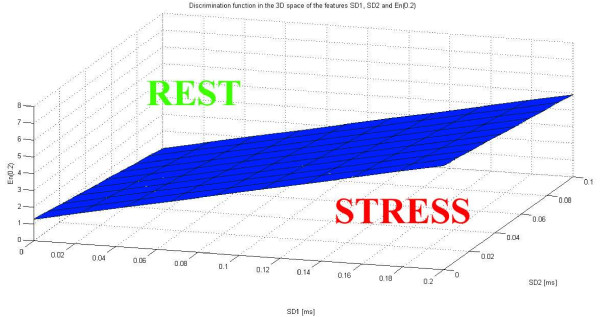
BACKGROUND: This study investigates the variations of Heart Rate Variability (HRV) due to a real-life stressor and proposes a classifier based on nonlinear features of HRV for automatic stress detection. METHODS: 42 students volunteered to participate to the study about HRV and stress. For each student, two recordings were performed: one during an on-going university examination, assumed as a real-life stressor, and one after holidays. Nonlinear analysis of HRV was performed by using Poincaré Plot, Approximate Entropy, Correlation dimension, Detrended Fluctuation Analysis, Recurrence Plot. For statistical comparison, we adopted the Wilcoxon Signed Rank test and for development of a classifier we adopted the Linear Discriminant Analysis (LDA). RESULTS: Almost all HRV features measuring heart rate complexity were significantly decreased in the stress session. LDA generated a simple classifier based on the two Poincaré Plot parameters and Approximate Entropy, which enables stress detection with a total classification accuracy, a sensitivity and a specificity rate of 90%, 86%, and 95% respectively. CONCLUSIONS: The results of the current study suggest that nonlinear HRV analysis using short term ECG recording could be effective in automatically detecting real-life stress condition, such as a university examination.
Overview
The claims and statistics of this paper haven’t been checked yet.
Free: it reads the open-access text and checks the first 5 claims that cite a source we can check. Create a free account to check every claim.
Integrity signals
Registry
Cites
Statistics
Figures
Verification
Claims the paper makes
The claims and statistics of this paper haven’t been checked yet.
Free: it reads the open-access text and checks the first 5 claims that cite a source we can check. Create a free account to check every claim.
Self-check
Percentages, sums and reported differences re-computed from the paper’s own numbers.
The self-check needs the paper’s full text.
Citations
Cites
Heart Rate Variability: Standards of Measurement, Physiological Interpretation, and Clinical Use
Electrophysiology, T. F. O. T. E. S. O. C. T. N. A. (1996) · Circulation · doi:10.1161/01.cir.93.5.1043 · Cited by 17,159
Heart rate variability: Standards of measurement, physiological interpretation, and clinical use
Malik, M., Bigger, J. T., Camm, A. J., Kleiger, R. E., Malliani, A., Moss, A. J., & Schwartz, P. J. (1996) · European Heart Journal · doi:10.1093/oxfordjournals.eurheartj.a014868 · Cited by 15,289 · cited 2×
“HRV is a non-invasive measure reflecting the variation over time of the period between consecutive heartbeats (RR intervals) [3] and has been proved to be a reliable marker of ANS activity [3].”
Goldberger, A. L., Amaral, L. A. N., Glass, L., Hausdorff, J. M., Ivanov, P. C., Mark, R. G., Mietus, J. E., Moody, G. B., Peng, C.-K., & Stanley, H. E. (2000) · Circulation · doi:10.1161/01.cir.101.23.e215 · Cited by 14,809
Physiological time-series analysis using approximate entropy and sample entropy
Richman, J. S., & Moorman, J. R. (2000) · American Journal of Physiology-Heart and Circulatory Physiology · doi:10.1152/ajpheart.2000.278.6.h2039 · Cited by 7,880 · cited 13×
“LDA generated a simple classifier based on the two Poincaré Plot parameters and Approximate Entropy, which enables stress detection with a total classification accuracy, a sensitivity and a specificity rate of 90%, 86%, and 95% respectively.”
BackgroundMethodInfluentialA systematic analysis of performance measures for classification tasks
Sokolova, M., & Lapalme, G. (2009) · Information Processing & Management · doi:10.1016/j.ipm.2009.03.002 · Cited by 7,515 · cited 1×
“In order to evaluate the classifier, we computed the common measures for binary classification performance measurement [34] using the formulae reported in Table 2, considering positive to the test those records classified as under stress.”
MethodStatistical pattern recognition: a review
Jain, A. K., Duin, P. W., & Mao, J. (2000) · IEEE Transactions on Pattern Analysis and Machine Intelligence · doi:10.1109/34.824819 · Cited by 6,767 · cited 2×
“To estimate the performance measures we adopted a 10-fold cross-validation scheme [35].”
MethodApproximate entropy as a measure of system complexity.
Pincus, S. M. (1991) · Proceedings of the National Academy of Sciences · doi:10.1073/pnas.88.6.2297 · Cited by 5,811 · cited 1×
“2*SDNN) [29,30] and to the findings of recent studies [28,31] which suggested choosing the value of r which maximizes the entropy (r = rmax) and proposed a formula for automatic selection of the value r (r = rchon).”
BackgroundQuantification of scaling exponents and crossover phenomena in nonstationary heartbeat time series
Peng, C.-K., Havlin, S., Stanley, H. E., & Goldberger, A. L. (1995) · Chaos: An Interdisciplinary Journal of Nonlinear Science · doi:10.1063/1.166141 · Cited by 3,855 · cited 3×
“Nonlinear properties of HRV were analyzed by the following methods: Poincaré Plot [19,20], Approximate Entropy [21], Correlation Dimension [22], Detrended Fluctuation Analysis [23,24], and Recurrence Plot [25-27].”
MethodHeart rate variability: A review
Rajendra Acharya, U., Paul Joseph, K., Kannathal, N., Lim, C. M., & Suri, J. S. (2006) · Medical & Biological Engineering & Computing · doi:10.1007/s11517-006-0119-0 · Cited by 2,820 · cited 1×
“2), En(rchon), which have been widely used complexity measures for HRV [37].”
Method
Cited by
Items 101–200 of 328
Kim, H. J., Park, Y., & Lee, J. (2024) · Educational Psychology Review · doi:10.1007/s10648-024-09878-x · Cited by 46
“…on learner emotions have investigated the association between HRV and stress, anxiety, panic disorder, depression, emotion, empathy, burnout, and social competence (Dimitriev et al., 2008; Hammoud et al., 2018; Huhn et al., 2018; Melillo et al., 2011; Scrimin et al., 2018; Tharion et al., 2009).”
Multi-Sensor Based State Prediction for Personal Mobility Vehicles
Abdur-Rahim, J., Morales, Y., Gupta, P., Umata, I., Watanabe, A., Even, J., Suyama, T., & Ishii, S. (2016) · PLoS ONE · doi:10.1371/journal.pone.0162593 · Cited by 29
HRV-based Stress Level Assessment Using Very Short Recordings
Jobbágy, Á., Majnár, M., Tóth, L. K., & Nagy, P. (2017) · Periodica Polytechnica Electrical Engineering and Computer Science · doi:10.3311/ppee.10075 · Cited by 29
Ham, J., Cho, D., Oh, J., & Lee, B. (2017) · Annual International Conference of the IEEE Engineering in Medicine and Biology Society (EMBC) · doi:10.1109/embc.2017.8037730 · Cited by 31
“Therefore, many previous studies have used HRV for mental stress estimation [10-13].”
ResultPimentel, G., Rodrigues, S., Silva, P. A., Vilarinho, A., Vaz, R. M., & Cunha, J. P. S. (2019) · International Journal of Medical Informatics · doi:10.1016/j.ijmedinf.2019.05.028 · Cited by 31
Zeng, C., Wang, W., Chen, C., Zhang, C., & Cheng, B. (2020) · International Journal of Environmental Research and Public Health · doi:10.3390/ijerph17228499 · Cited by 33
“Several factors, such as smoking [15], stress [16], and anxiety [17], could alter HRV measures.”
BackgroundHoshi, R. A., Vanderlei, L. C. M., de Godoy, M. F., Bastos, F. D. N., Netto, J., & Pastre, C. M. (2016) · Clinical Physiology and Functional Imaging · doi:10.1111/cpf.12339 · Cited by 32
“Moreover, this method shows the autonomic complexity loss promoted by exercise (Melillo et al., 2011), with slow and gradual restoration during recovery, as also verified by Casties et al.”
MethodRecognition of Real-Scene Stress in Examination with Heart Rate Features
Zhang, J., Wen, W., Huang, F., & Liu, G. (2017) · International Conference on Intelligent Human-Machine Systems and Cybernetics · doi:10.1109/ihmsc.2017.13 · Cited by 29
“In [9], more nonlinear measures of the heart rate variability of 42 students were analyzed to reveal the influence of examination-elicited stress on the heartbeat dynamics, and almost all HRV features measuring heart rate complexity were significantly decreased in the stress session.”
BackgroundTakakura, I. T., Hoshi, R. A., dos Santos, M. A., Pivatelli, F. C., Nóbrega, J. H., Guedes, D. L., Nogueira, V. F., Frota, T. Q., Castelo, G. C., & de Godoy, M. F. (2017) · Brazilian Journal of Cardiovascular Surgery · doi:10.21470/1678-9741-2016-0035 · Cited by 32
“Melillo et al.[30] studied HRV in 42 students under stress (during an oral test) and after a vacation period, with electrocardiogram recording for 5 minutes.”
MethodKim, H.-G., Song, S., Cho, B. H., & Jang, D. P. (2024) · PLoS ONE · doi:10.1371/journal.pone.0305864 · Cited by 33
“Commonly used physiological signals in stress detection methodologies include heart rate (HR) (HR) [5], heart rate variability (HRV) [6–8], galvanic skin response (GSR) [9], voice [10], respiration rate (RR) [11], and electroencephalogram (EEG) [12–14].”
BackgroundAutomatic Selection of Webcam Photoplethysmographic Pixels Based on Lightness Criteria
Bousefsaf, F., Maaoui, C., & Pruski, A. (2017) · Journal of Medical and Biological Engineering · doi:10.1007/s40846-017-0229-1 · Cited by 29
Brugnera, A., Zarbo, C., Tarvainen, M. P., Carlucci, S., Tasca, G. A., Adorni, R., Auteri, A., & Compare, A. (2019) · Applied Psychophysiology and Biofeedback · doi:10.1007/s10484-019-09437-z · Cited by 38
Mohíno-Herranz, I., Gil‐Pita, R., Rosa-Zurera, M., & Seoane, F. (2019) · Sensors · doi:10.3390/s19245524 · Cited by 32
A Critical Review of Multimodal-multisensor Analytics for Anxiety Assessment
Senaratne, H., Oviatt, S. L., Ellis, K., & Melvin, G. A. (2022) · ACM Transactions on Computing for Healthcare · doi:10.1145/3556980 · Cited by 41
“For example, age is negatively correlated with HR [153]; comorbid depression results in cumulative effects on HRV [35]; some HRV features are more pronounced for stress than anxiety [124]; entropy measures are also indicative of stress [147]; antidepressants reduce variations in HRV [153, 226]; and posture and speakin…”
BackgroundVariabilité de la fréquence cardiaque : un marqueur de risque cardiométabolique en santé publique
Marsac, J. (2013) · Bulletin de l Académie Nationale de Médecine · doi:10.1016/s0001-4079(19)31635-8 · Cited by 46
Humans interacting with multi-robot systems: a natural affect-based approach
Villani, V., Capelli, B., Secchi, C., Fantuzzi, C., & Sabattini, L. (2019) · Autonomous Robots · doi:10.1007/s10514-019-09889-6 · Cited by 30
“…stress, in general terms, and cognitive processing in particular, influence HRV (Bernardi et al. 2000; Luque-Casado et al. 2013; Acharya et al. 2006; Castaldo et al. 2015, 2016; Kulic and Croft 2007; Hoover et al. 2012; Melillo et al. 2011; Gohara et al. 1996; Rani et al. 2002; Thayer et al. 2012).”
BackgroundAdaptive Spectro-Temporal Filtering for Electrocardiogram Signal Enhancement
Tobón, D. P., & Falk, T. H. (2016) · IEEE Journal of Biomedical and Health Informatics · doi:10.1109/jbhi.2016.2638120 · Cited by 27
“tions, including but not limited to athlete endurance monitoring [10], stress detection [11], heart failure detection [12], and sleep disorder monitoring [13].”
BackgroundData Analysis for Emotion Classification Based on Bio-Information in Self-Driving Vehicles
Kim, T.-Y., Ko, H., & Kim, S.-H. (2020) · Journal of Advanced Transportation · doi:10.1155/2020/8167295 · Cited by 30
How Reliable Are Ultra-Short-Term HRV Measurements during Cognitively Demanding Tasks?
Bernardes, A., Couceiro, R., Medeiros, J., Henriques, J. M. O., Teixeira, C., Simões, M. A., Duraes, J. A., Barbosa, R., Madeira, H., & Carvalho, P. (2022) · Sensors · doi:10.3390/s22176528 · Cited by 35
Schwartz, M., Desbrosses, K., Theurel, J., & Mornieux, G. (2022) · European Journal of Applied Physiology · doi:10.1007/s00421-022-05034-x · Cited by 31
Moridani, M. K., Setarehdan, S. K., Nasrabadi, A. M., & Hajinasrollah, E. (2015) · Europe PMC (PubMed Central) · Cited by 25
Neuro-Fuzzy Physiological Computing to Assess Stress Levels in Virtual Reality Therapy
Tartarisco, G., Carbonaro, N., Tonacci, A., Bernava, G. M., Arnao, A. A., Crifaci, G., Cipresso, P., Riva, G., Gaggioli, A., Rossi, D. D., et al. (2015) · Interacting with Computers · doi:10.1093/iwc/iwv010 · Cited by 29
Schneider, F., Martin, J., Hapfelmeier, A., Jordan, D., Schneider, G. H., & Schulz, C. M. (2017) · PLoS ONE · doi:10.1371/journal.pone.0188635 · Cited by 28
Short-term HRV in young adults for momentary assessment of acute mental stress
Chen, Y., Zhang, L., Zhang, B., & Zhan, C. A. (2019) · Biomedical Signal Processing and Control · doi:10.1016/j.bspc.2019.101746 · Cited by 30
A Multimodal Non-Intrusive Stress Monitoring From the Pleasure-Arousal Emotional Dimensions
Dahmane, M., Alam, J., St-Charles, P.-L., Lalonde, M., Heffner, K., & Foucher, S. (2020) · IEEE Transactions on Affective Computing · doi:10.1109/taffc.2020.2988455 · Cited by 29
Heart Rate Variability Analysis and Performance during a Repeated Mental Workload Task
Castaldo, R., Montesinos, L., Wan, T. S., Serban, A., Massaro, S., & Pecchia, L. (2017) · World Congress on Medical Physics and Biomedical Engineering, September 7 - 12, 2009, Munich, Germany · doi:10.1007/978-981-10-5122-7_18 · Cited by 24
Self-citationLee, K. F. A., Gan, W., & Christopoulos, G. I. (2021) · Sensors · doi:10.3390/s21113843 · Cited by 27
“By contrast, non-linear analysis purports to quantify the dynamic nature of HRV and thus provides a more accurate representation of the complex interactions amongst various autonomic mechanisms underlying the cardiovascular system [60,62,63].”
BackgroundRojo, A., & Korpal, P. (2021) · Linguistica Antverpiensia New Series – Themes in Translation Studies · doi:10.52034/lanstts.v19i0.533 · Cited by 27
“Poincaré plots are also claimed to be indicators of vagal activity and reduced cardiac vagal control associated not only with physiological, but also with psychological strain and stress (Melillo et al., 2011).”
BackgroundDhaouadi, S., & Khelifa, M. M. B. (2020) · International Conference on Advanced Technologies for Signal and Image Processing · doi:10.1109/atsip49331.2020.9231666 · Cited by 28
“• ECG signal: Following the overactivity of the sympathetic autonomic nervous system under stress, heart rate increases and time interval between two heart beats over a period of time is no longer stable, more precisely between each peak of R wave of the QRS complex; this variability is mainly influenced by breathing…”
BackgroundStress Detection in Seniors Using Biosensors and Psychometric Tests
Goumopoulos, C., & Menti, E. (2019) · Procedia Computer Science · doi:10.1016/j.procs.2019.05.022 · Cited by 21
Khaliulin, I., Fleishman, A. N., Shumeiko, N. I., Korablina, T. V., Petrovskiy, S. A., Ascione, R., & Suleiman, M. S. (2019) · Neurobiology of Stress · doi:10.1016/j.ynstr.2019.100189 · Cited by 25
Gellisch, M., Wolf, O. T., Minkley, N., Kirchner, W. H., Brüne, M., & Brand‐Saberi, B. (2022) · Anatomical Sciences Education · doi:10.1002/ase.2213 · Cited by 29
“…context described was costly and particularly complex because of Covid- 19 restrictions, the sample size can be considered adequate— and even bigger than those of similar studies investigating stress parameters in academic settings (Weekes et al., 2006; Melillo et al., 2011; Stetler & Guinn, 2020).”
BackgroundMelillo, P., Formisano, C., Bracale, U. M., & Pecchia, L. (2013) · World Congress on Medical Physics and Biomedical Engineering, September 7 - 12, 2009, Munich, Germany · doi:10.1007/978-3-642-29305-4_126 · Cited by 22
Self-citationKovács, L., Kézér, F. L., Ruff, F., & Szenci, O. (2015) · Physiology & Behavior · doi:10.1016/j.physbeh.2015.11.031 · Cited by 23
“Nonlinear techniques are derived from the chaos theory and the nonlinear system theory [33] and are designed to assess the quality of the R–R time series [34].”
Multi-Scale Heart Beat Entropy Measures for Mental Workload Assessment of Ambulant Users
Tiwari, A., Albuquerque, I., Parent, M., Gagnon, J.-F., Lafond, D., Tremblay, S., & Falk, T. H. (2019) · Entropy · doi:10.3390/e21080783 · Cited by 20
Stress Detection via Sensor Translation
Samyoun, S., Mondol, A. S., & Stankovic, J. A. (2020) · International Conference on Distributed Computing in Smart Systems and the Internet of Things (DCOSS-IoT) · doi:10.1109/dcoss49796.2020.00017 · Cited by 26
“Authors in [25] studied the effect of heart-rate related features in stress detection.”
BackgroundSilva, I. O., Silva, V. A., Cunha, R. M., & Foster, C. (2018) · PLoS ONE · doi:10.1371/journal.pone.0209834 · Cited by 39
Acute Mental Stress Detection via Ultra-short term HRV Analysis
Castaldo, R., Melillo, P., & Pecchia, L. (2015) · World Congress on Medical Physics and Biomedical Engineering, September 7 - 12, 2009, Munich, Germany · doi:10.1007/978-3-319-19387-8_260 · Cited by 21
Self-citationAugmenting Co-Located Social Play with Biofeedback: An Interactional Approach
D'Souza, A., Ploderer, B., Klarkowski, M., & Wyeth, P. A. (2018) · Annual Symposium on Computer-Human Interaction in Play · doi:10.1145/3242671.3242679 · Cited by 22
“As with skin conductance, heart rate is primarily a measure of arousal, with increases in heart rate typically associated with stressful, anxiety-inducing, or surprising events [1, 27].”
BackgroundDetecting Metabolic Thresholds from Nonlinear Analysis of Heart Rate Time Series: A Review
Zimatore, G., Gallotta, M. C., Campanella, M., Skarzynski, P. H., Maulucci, G., Serantoni, C., Spirito, M. D., Curzi, D., Guidetti, L., Baldari, C., et al. (2022) · International Journal of Environmental Research and Public Health · doi:10.3390/ijerph191912719 · Cited by 22
“These are approximate entropy (ApEn) [50,51] and sample entropy (SampEn) [38].”
BackgroundGiordano, F. C., Mitrotti, A., Losurdo, A., Esposito, F., Granata, A. R. M., Pesino, A., Rossini, M., Natale, P., Dileo, V., Fiorentino, M., et al. (2023) · Clinical Kidney Journal · doi:10.1093/ckj/sfad246 · Cited by 18
“Higher significant values of SD1 and SD2 were observed in MT compared with CG patients ( P .01 and P 0.02, respectively ) , confirming that patients treated with MT were more relaxed [ 40 ] ( Table 2 ) .”
ResultInfluentialStressing the dressing: Assessing stress during wound care in real-time using wearable sensors
Parvaneh, S., Grewal, G. S., Grewal, E., Menzies, R. A., Talal, T. K., Armstrong, D. G., STERNBERG, E. M., & Najafi, B. (2014) · Wound Medicine · doi:10.1016/j.wndm.2014.01.003 · Cited by 21
Heart rate variability analysis during head-up tilt test predicts nitroglycerine-induced syncope
Efremov, K., Brisinda, D., Venuti, A., Iantorno, E., Cataldi, C., Fioravanti, F., & Fenici, R. (2014) · Open Heart · doi:10.1136/openhrt-2014-000063 · Cited by 20
Ribeiro, R. T., & Cunha, J. P. S. (2018) · Biomedical Signal Processing and Control · doi:10.1016/j.bspc.2018.06.006 · Cited by 21
Analysis of drivers’ mental workload in V-shaped undersea tunnels based on heart rate variability
Pan, F., Yan, L., Zhang, L., Jiang, Z., Yang, J., & Luan, S. (2024) · Biomedical Signal Processing and Control · doi:10.1016/j.bspc.2024.106359 · Cited by 17
Automatic classifier based on heart rate variability to identify fallers among hypertensive subjects
Melillo, P., Jović, A., LUCA, N. D., & Pecchia, L. (2015) · Healthcare Technology Letters · doi:10.1049/htl.2015.0012 · Cited by 17
Self-citationMonitor and understand pilgrims: data collection using smartphones and wearable devices
Muaremi, A., Seiter, J., Tröster, G., & Bexheti, A. (2013) · ACM International Joint Conference on Pervasive and Ubiquitous Computing (UbiComp) · doi:10.1145/2494091.2495989 · Cited by 19
“In [9], GSR is used to detect stress in call centers and in [11], students under stress due to university examination are investigated using HRV measures.”
MethodSadowska, D., Sacewicz, T., Rębiś, K., Kowalski, T., & Krzepota, J. (2023) · Applied Sciences · doi:10.3390/app132011526 · Cited by 20
Alessa, F. M., Alhaag, M. H., Al-Harkan, I. M., Nasr, M. M., Kaid, H., & Hammami, N. (2023) · Applied Sciences · doi:10.3390/app14010363 · Cited by 19
“Furthermore, the present study’s results provide a foundation for the appropriate application of this technology in industrial sectors across the globe.”
Stress management with HRV following AI, semantic ontology, genetic algorithm and tree explainer
Chatterjee, A., Riegler, M. A., Ganesh, K., & Halvorsen, P. (2025) · Scientific Reports · doi:10.1038/s41598-025-87510-w · Cited by 19
Shifts in the light-dark cycle increase unpredictability of the cardiovascular system
Molčan, Ľ., & Zeman, M. (2017) · Autonomic Neuroscience · doi:10.1016/j.autneu.2017.07.006 · Cited by 16
Importance of Individual Differences in Physiological-Based Stress Recognition Models
Nkurikiyeyezu, K. N., Yokokubo, A., & Lopez, G. F. (2019) · International Conference on Intelligent Environments (IE) · doi:10.1109/ie.2019.00006 · Cited by 15
“During the experiment, the researchers recorded the subjects’ computer usage patterns, their facial expressions, their body postures, their electrocardiography (ECG) and their electrodermal activity (EDA).”
BackgroundInfluentialLahens, N. F., Rahman, M., Cohen, J. B., Cohen, D. L., Chen, J., Weir, M. R., Feldman, H. I., Grant, G. R., Townsend, R. R., Skarke, C., et al. (2022) · Digital Health · doi:10.1177/20552076221107903 · Cited by 17
Pervasive Persuasion for Stress Self-Regulation
Wang, Y., Fischer, N., & Bry, F. (2019) · IEEE International Conference on Pervasive Computing and Communications Workshops (PerCom Workshops) · doi:10.1109/percomw.2019.8730850 · Cited by 19
“Many studies [17]–[20] have been devoted to specifying and investigating various HRV-based computed stress models referring to heart rate changes over time or to changes in heart rate frequencies.”
BackgroundMartin, J., Schneider, F., Kowalewskij, A., Jordan, D., Hapfelmeier, A., Kochs, E. F., Wagner, K. J., & Schulz, C. M. (2016) · British Journal of Anaesthesia · doi:10.1093/bja/aew342 · Cited by 15
Choi, J., Lee, J. S., Ryu, M., Hwang, G., Hwang, G., & Lee, S. J. (2022) · IEEE International Symposium on Medical Measurements and Applications (MeMeA) · doi:10.1109/memea54994.2022.9856417 · Cited by 14
“[24] proposes the Poincaré plot, which is a nonlinear graphical method that represents the correlation between adjacent RR intervals.”
MethodSimon, L., Rab, S. L., Goldstein, P., Magal, N., & Admon, R. (2022) · Psychoneuroendocrinology · doi:10.1016/j.psyneuen.2022.105925 · Cited by 18
Fast Multilevel Mental Stress Identification From Bispectrum-Based Heart Rate Variability Feature
He, J., & Jiang, N. (2023) · IEEE Transactions on Industrial Informatics · doi:10.1109/tii.2023.3262248 · Cited by 15
“The three nonlinear features were selected for the relatively high performance compared to other nonlinear features reported in [24].”
BackgroundMethodTime, Frequency & Complexity Analysis for Recognizing Panic States from Physiologic Time-Series
Rubin, J., Abreu, R., Ahern, S., Eldardiry, H., & Bobrow, D. G. (2016) · International Conference on Pervasive Computing Technologies for Healthcare · doi:10.4108/eai.16-5-2016.2263292 · Cited by 14
“Traditional time and frequency domain HRV analysis, together with complexity/nonlinear analysis has been performed for both within-group and between-group comparisons for other pathologic states, including depression [12], stress [16], heart disease [8, 22] and schizophrenia [1].”
BackgroundMethodStress Detection During Motor Activity: Comparing Neurophysiological Indices in Older Adults
Karthikeyan, R., McDonald, A. D., & Mehta, R. K. (2022) · IEEE Transactions on Affective Computing · doi:10.1109/taffc.2022.3148234 · Cited by 16
“Groups have successfully used unobtrusive indicators such as heart rate variability (HR/V) [27], electrodermal activity (EDA) [28], and facial affect [29] with stress detection accuracy ranging between 80 95%.”
MethodShort term Heart Rate Variability to predict blood pressure drops due to standing: a pilot study
Sannino, G., Melillo, P., Stranges, S., Pietro, G. D., & Pecchia, L. (2015) · BMC Medical Informatics and Decision Making · doi:10.1186/1472-6947-15-s3-s2 · Cited by 16
“Further details about the methodological conventions adopted are described in the three open access papers [12-14]”
MethodSelf-citationMonitor Pilgrims: Prayer Activity Recognition using Wearable Sensors
Muaremi, A., Seiter, J., Gravenhorst, F., Bexheti, A., Bert Arnrich, A., & Tröster, G. (2013) · International Conference on Body Area Networks · doi:10.4108/icst.bodynets.2013.253685 · Cited by 13
Li, J., Wang, M., Zhang, F., Liu, G., & Wen, W. (2023) · IEEE Transactions on Affective Computing · doi:10.1109/taffc.2023.3326747 · Cited by 14
“Previous researches usually analyze heart rate variability (HRV) to reveal theautonomicnervousresponseofacutestressandchronicstress [8].”
BackgroundMelillo, P., Jović, A., LUCA, N. D., Morgan, S. P., & Pecchia, L. (2014) · World Congress on Medical Physics and Biomedical Engineering, September 7 - 12, 2009, Munich, Germany · doi:10.1007/978-3-319-11128-5_11 · Cited by 15
“Approximate entropy measures the complexity or irregularity of the RR series [21] as described in [26, 27], with the values of parameters r and m, respectively 2 and 20% of SDNN, chosen according to [28].”
BackgroundMethodSelf-citationKublanov, V., & Dolganov, A. Y. (2019) · Applied Soft Computing · doi:10.1016/j.asoc.2019.01.032 · Cited by 12
Roy, B. L., Aufauvre-Poupon, C., Ferragu, A., Vannier, A., Martin‐Krumm, C., & Trousselard, M. (2022) · Acta Astronautica · doi:10.1016/j.actaastro.2022.12.014 · Cited by 12
Feature selection for stress level classification into a physiologycal signals set
Jimenez-Limas, M. A., Ramírez-Fuentes, C. A., Tovar-Corona, B., & Jiménez, L. I. G. (2018) · International Conference on Electrical Engineering, Computing Science and Automatic Control (CCE) · doi:10.1109/iceee.2018.8533968 · Cited by 12
Patanè, A., & Kwiatkowska, M. (2019) · Lecture notes in computer science · doi:10.1007/978-3-030-13709-0_1 · Cited by 19
“[4] extracted 13 HRV features, and applied exhaustive feature selection procedure and linear discriminant analysis.”
MethodGonzalez, J. R. R., Jetelina, K., Bishopp, S. A., Livingston, M., Perez, R. A., & Gabriel, K. (2019) · Policing: An International Journal · doi:10.1108/pijpsm-12-2018-0184 · Cited by 13
Positive Technology for Helping People Cope with Stress
Villani, D., Cipresso, P., Gaggioli, A., & Riva, G. (2016) · Advances in psychology, mental health, and behavioral studies (APMHBS) book series · doi:10.4018/978-1-4666-9986-1.ch014 · Cited by 14
Melillo, P., Scala, P., Crispino, F., & Pecchia, L. (2014) · Lecture notes in computer science · doi:10.1007/978-3-319-13105-4_24 · Cited by 12
Self-citationCipresso, P., Serino, S., Borghesi, F., Tartarisco, G., Riva, G., Pioggia, G., & Gaggioli, A. (2021) · ACTA IMEKO · doi:10.21014/acta_imeko.v10i4.1183 · Cited by 12
“[16] compared within-subject variations of shortterm HRV measures using short term ECG recording in students undergoing university examination.”
BackgroundLarsson, C. E., Cabassut, V., Peretout, P., Marlière, S., Vautrin, E., Piliero, N., Salvat, M., Riou, L. M., Vanzetto, G., Vilotitch, A., et al. (2023) · The American Journal of Cardiology · doi:10.1016/j.amjcard.2023.07.130 · Cited by 13
Analysis of Heart Rate Variability in Response to Serious Games in Elderly People
Hou, C.-J., Chen, Y.-T., Capilayan, M., Lin, Y.-S., Huang, M., & Huang, J.-J. (2021) · Sensors · doi:10.3390/s21196549 · Cited by 13
“Decreased values of complexity can be associated with stress [35].”
BackgroundGeorge, R., Jose, R., Meenakshy, K., Jarin, T., & Kumar, S. S. (2022) · Journal of Intelligent & Fuzzy Systems · doi:10.3233/jifs-221588 · Cited by 14
Nursing students’ perceived anxiety and heart rate variability in mock skill competency assessment
Wong, C. L., Chien, W. T., Waye, M. M. Y., Szeto, M. W. C., & Li, H. (2023) · PLoS ONE · doi:10.1371/journal.pone.0293509 · Cited by 14
Wesolowski, E., Ahmed, Z., & Pietro, V. D. (2024) · Frontiers in Neurology · doi:10.3389/fneur.2023.1285937 · Cited by 13
“Other conditional variables include anxiety levels, stress, and emotional states (21, 51, 52).”
BackgroundRegression I. Experimental approaches to regression
Alexandrov, Y., Feldman, B. M., Svarnik, О. E., Игорьевна, З. И., Kolbeneva, M. G., Arutyunova, K. R., Krylov, A., & Bulava, A. (2020) · Journal of Analytical Psychology · doi:10.1111/1468-5922.12580 · Cited by 11
Modeling of Child Stress-State Identification Based on Biometric Information in Mobile Environment
Kim, T.-Y., Měsíček, L., & Kim, S.-H. (2021) · Mobile Information Systems · doi:10.1155/2021/5531770 · Cited by 10
“[9] Voice, GSR DT, SVM, K-means Kurniawan et al.”
BackgroundCasas, D. G., Barbé, A. D., García, E. M., Jiménez, J. P. C., & Gálvez-Nieto, J. L. (2022) · The British Journal of Social Work · doi:10.1093/bjsw/bcac074 · Cited by 11
Influence of Competition Day on Cognitive Control and HRV in Young Male Gymnasts
Sartor, F., Capuzzoni, S., Rospo, G., Torre, A. L., Vailati, F., & Vailati, E. (2016) · The Journal of Strength and Conditioning Research · doi:10.1519/jsc.0000000000001652 · Cited by 17
“Nonlinear HRV features have been shown to be able to detect real-life stress conditions (26).”
BackgroundJhen, R., Wang, P.-C., Chang, Y., Kao, J., Wu, E. C.-H., & Shiao, C. (2024) · Biomedicines · doi:10.3390/biomedicines12071547 · Cited by 11
“During the transformation to the non-linear model, the introduced methods may incorporate approximate entropy, Poincare plots (a type of recurrence plots named after Henri Poincar é ), recurrence plots, detrended fluctuation analysis (DFA), or the correlation dimension [10].”
MethodSannino, G., Melillo, P., Pietro, G. D., Stranges, S., & Pecchia, L. (2014) · Lecture notes in computer science · doi:10.1007/978-3-319-13105-4_26 · Cited by 9
Self-citationNatural interaction based on affective robotics for multi-robot systems
Villani, V., Sabattini, L., Secchi, C., & Fantuzzi, C. (2017) · International Symposium on Multi-Robot and Multi-Agent Systems (MRS) · doi:10.1109/mrs.2017.8250931 · Cited by 9
Bousefsaf, F., Maaoui, C., & Pruski, A. (2014) · International Conference on Control, Decision and Information Technologies (CoDIT) · doi:10.1109/codit.2014.6996985 · Cited by 11
“The latter is split into two sub-branches: the parasympathetic nervous system, which slows down the heart and reduces the size of the pupil ( miosis ) and the sympathetic nervous system, which in contrast accelerates the heart, dilates the pupil ( mydriasis ) and is responsible in sweating by the…”
BackgroundA Framework of Real-Time Stress Monitoring and Intervention System
Lu, P., Zhang, W., Liang Ma, A., & Zhao, Q. (2020) · Lecture notes in computer science · doi:10.1007/978-3-030-49913-6_14 · Cited by 8
Ultra-Short Entropy for Mental Stress Detection
Castaldo, R., Montesinos, L., & Pecchia, L. (2018) · World Congress on Medical Physics and Biomedical Engineering, September 7 - 12, 2009, Munich, Germany · doi:10.1007/978-981-10-9038-7_53 · Cited by 8
“Moreover, recent studies have proved that almost all measures of complexity of RR series statistically decreased during stress, therefore were deemed able to detect it [3].”
BackgroundMethodInfluentialSelf-citationSergio, W. L., Ströele, V., Dantas, M. A. R., Braga, R. M. M., & de Macedo, D. D. J. (2024) · Internet of Things · doi:10.1016/j.iot.2023.101055 · Cited by 13
A study on the stress identification using observed heart beat data
Pramanta, S. P. L. A., Prihatmanto, A. S., & Park, M.-G. (2016) · International Conference on System Engineering and Technology · doi:10.1109/icsengt.2016.7849640 · Cited by 9
The Effect of a Prostration (Sajdeh) on the Prefrontal Brain Activity, a Pilot Study
Yousefzadeh, F., Jahromi, G. P., Manshadi, E. M., & Hatef, B. (2018) · Basic and Clinical Neuroscience Journal · doi:10.32598/bcn.9.10.195 · Cited by 17
Heart Rate Variability During Fighter Pilot Training Preliminary Study
Kutílek, P., Volf, P., Sedova, K. A., Hejda, J., Křivánek, V., Stehlik, M., Rusnáková, K., Kozlova, S., & Braunová, M. (2019) · International Conference on Military Technologies · doi:10.1109/miltechs.2019.8870071 · Cited by 11
Psychological Stress Detection Using Deep Convolutional Neural Networks
Sardeshpande, K. D., & Thool, V. R. (2020) · Communications in computer and information science · doi:10.1007/978-981-15-4018-9_17 · Cited by 7
Analysis of autonomic nervous pattern in hypertension based on short-term heart rate variability
Zhang, R., Hua, Z., Chen, C., Liu, G., & Wen, W. (2020) · Biomedizinische Technik/Biomedical Engineering · doi:10.1515/bmt-2019-0184 · Cited by 8
The autonomic nervous mechanism of music therapy for dental anxiety
Wang, K., Wen, W., & Liu, G. (2016) · International Computer Conference on Wavelet Active Media Technology and Information Processing (ICCWAMTIP) · doi:10.1109/iccwamtip.2016.8079858 · Cited by 8
“[12] The detailed definition of”
Franco, M. R. H., Vargas-Luna, M., & Delgadillo‐Holtfort, I. (2015) · Journal of Physics Conference Series · doi:10.1088/1742-6596/582/1/012040 · Cited by 8
“HRV has been used in some studies related with psychological stress in wich the authors use the usual parameters as well as alternative methodologies of measurement [14].”
MethodAmbhore, S. (2021) · Materials Today Proceedings · doi:10.1016/j.matpr.2020.11.563 · Cited by 7
RetractedJi, Y., Huang, Y., Wang, T., ZHANG, Q., Zhang, T., & Tao, D. (2026) · International Journal of Industrial Ergonomics · doi:10.1016/j.ergon.2026.103919 · Cited by 8
Human Stress Response and Perceived Safety during Encounters with Quadruped Robots
Gupta, R., Shin, H., Norman, E., Stephens, K. K., Lu, N., & Sentis, L. (2024) · IEEE RO-MAN · doi:10.1109/ro-man60168.2024.10731445 · Cited by 9
“Acute stress has been associated with decreases in HRV entropy in both experimentally induced situations [38, 39] and real-life situations [40, 41].”
BackgroundHe, S., Qi, D., Guo, E., Wang, L., Ouyang, Y., & Zheng, L. (2025) · Sensors · doi:10.3390/s25082377 · Cited by 8
“As for non-linear metrics, they are of potential to reliably capture the complexity of HRV [51].”
Momota, Y., Tomioka, S., Furukita, M., Fujisawa, K., Takano, H., & Azuma, M. (2014) · Case Reports in Dentistry · doi:10.1155/2014/656045 · Cited by 6
“Heart rate variability (HRV) analysis is useful to assess autonomic activity and to diagnose autonomic neuropathy because HRV is biomarkers for the functions of the autonomic nervous system (ANS) [12–17].”
Background
Metadata
- Authors
- Melillo, P., Bracale, M., & Pecchia, L.
- Affiliations
- University of Naples Federico II (IT)
- Corresponding author
- Melillo, Paolo
- Venue
- BioMedical Engineering OnLine
- Published
- 2011
- Volume
- 10
- Issue
- 1
- Pages
- 96
- ISSN
- 1475-925X (ISSN-L)
- PMC
- PMC3305918
- OpenAlex
- W2167928942
- Cited by
- 328
- References
- 53
- Citations by year
- 2026: 11 · 2025: 18 · 2024: 24 · 2023: 29 · 2022: 25 · 2021: 24 · 2020: 25 · 2019: 41 · 2018: 21 · 2017: 24 · 2016: 29 · 2015: 22 · 2014: 16 · 2013: 15 · 2012: 4
- FWCI
- 7.67
- Type
- journal article
- Language
- en
- Open access
- gold
- doi.org
- Licence
- cc-by
- Locations
- BioMedical Engineering OnLine (publishedVersion, cc-by)
- PubMed Central (publishedVersion, cc-by)
- PubMed (publishedVersion)
- Warwick Research Archive Portal (University of Warwick) (acceptedVersion)
- Archivio Istituzionale della Ricerca - Università degli Studi della Campania "Luigi Vanvitelli" (submittedVersion, cc-by-nc-nd)
- DOAJ (DOAJ: Directory of Open Access Journals) (submittedVersion, cc-by-sa)
- Topics
- Health Sciences › Medicine › Cardiology and Cardiovascular Medicine › Heart Rate Variability and Autonomic Control
- Physical Sciences › Computer Science › Artificial Intelligence › Emotion and Mood Recognition
- Physical Sciences › Engineering › Biomedical Engineering › Non-Invasive Vital Sign Monitoring
- Keywords
- heart rate variability, stress detection, nonlinear HRV features, Poincaré plot, approximate entropy, correlation dimension, detrended fluctuation analysis, recurrence plots, heart rate complexity, student stress
- MeSH terms
- Educational Measurement, Heart Rate, Humans, Stress, Psychological, Students, Universities, Nonlinear Dynamics
About these checks
Registry, retraction, Cites and statistics results are computed, not judged, with one exception: a printed reference that no index lists is read once by a model before it counts as a citation error. Claims are extracted by a model and kept only when their quote appears verbatim in the text; each cited source is then checked, with a model’s help, for whether it says what the claim relies on. Those verdicts can be wrong — read the claim’s quote and the cited source before relying on one.
Statistics and arithmetic are recomputed, not judged.
Confidence bands are shown only for fields calibrated on our annotated test set. None is calibrated yet, so no band is shown.
What counts as a claim ›How we measure confidence ›How we check this ›
Are you an author, or do you see a problem with this page? Request a review
Data sources
Bibliographic data: Semantic Scholar, OpenAlex, Crossref.
Contains information from the Semantic Scholar Academic Graph Datasets, made available under the ODC Attribution License (ODC-BY 1.0).
Semantic Scholar’s data is described in: Kinney, R., et al. (2023). The Semantic Scholar Open Data Platform. arXiv:2301.10140.
