

Bosutinib inhibits migration and invasion via ack1 in kras mutant non-small cell lung cancer
Open accessThe DOI matches its Crossref record; 32 of the 32 references it cites were found in a registry or an index.
Abstract
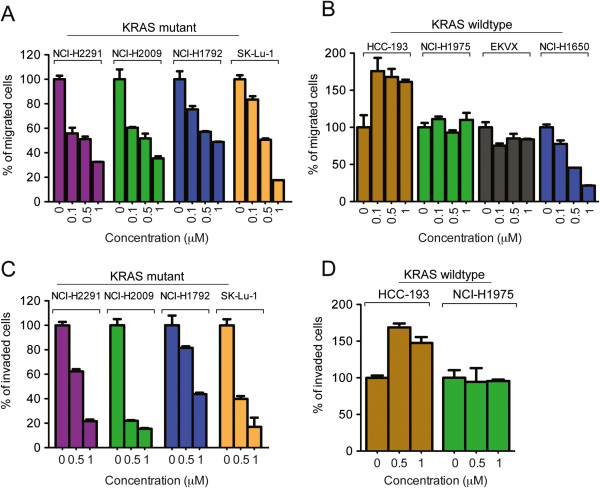
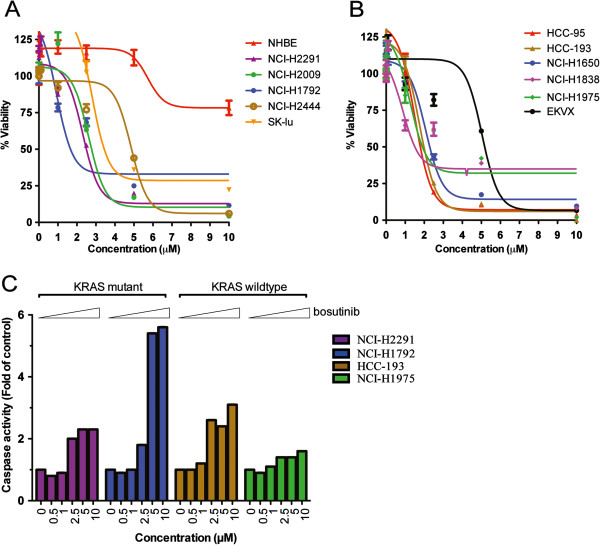
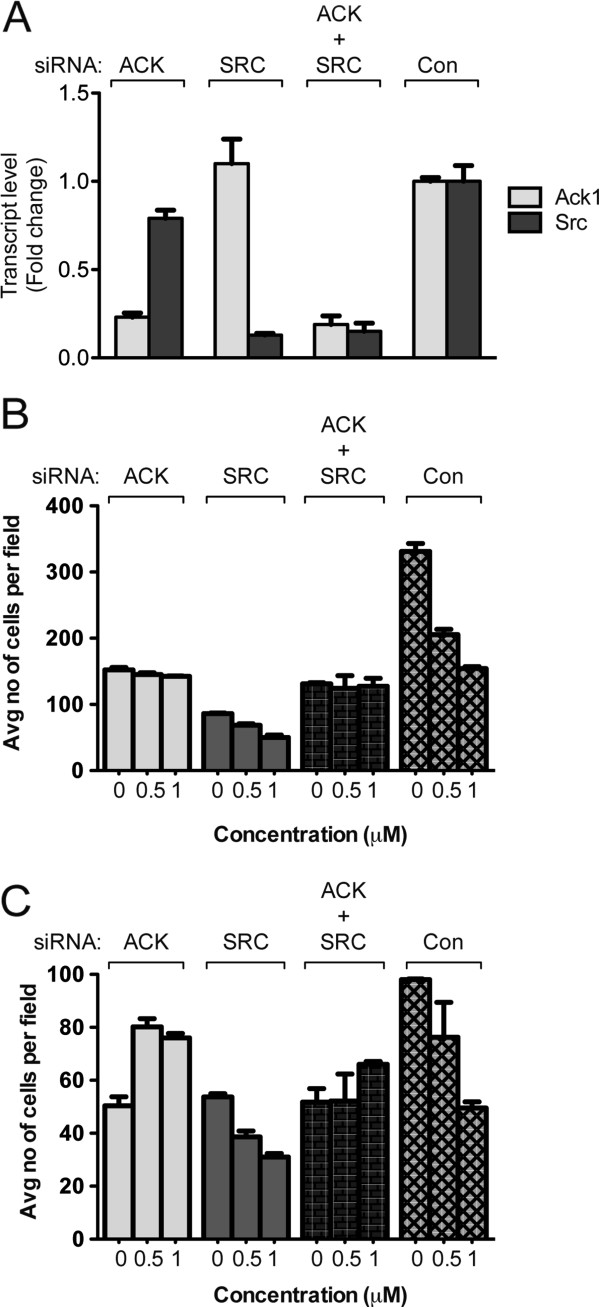
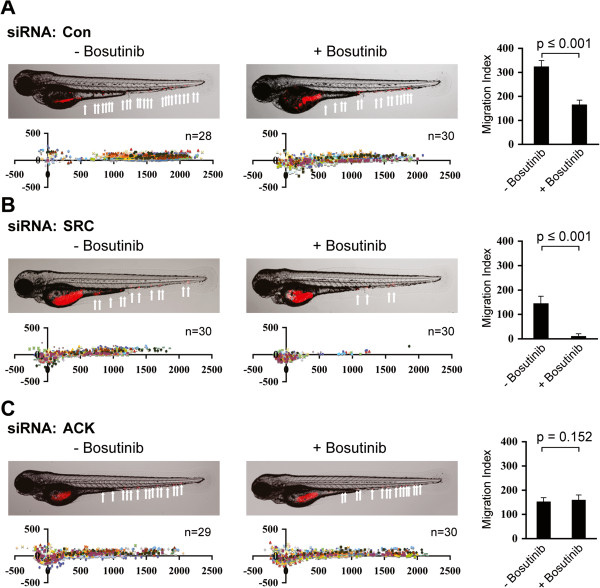
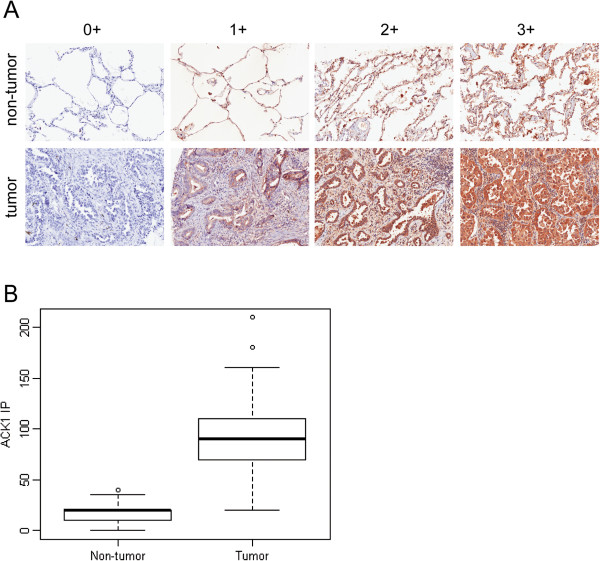
The advent of effective targeted therapeutics has led to increasing emphasis on precise biomarkers for accurate patient stratification. Here, we describe the role of ACK1, a non-receptor tyrosine kinase in abrogating migration and invasion in KRAS mutant lung adenocarcinoma. Bosutinib, which inhibits ACK1 at 2.7 nM IC50, was found to inhibit cell migration and invasion but not viability in a panel of non-small cell lung cancer (NSCLC) cell lines. Knockdown of ACK1 abrogated bosutinib-induced inhibition of cell migration and invasion specifically in KRAS mutant cells. This finding was further confirmed in an in vivo zebrafish metastatic model. Tissue microarray data on 210 Singaporean lung adenocarcinomas indicate that cytoplasmic ACK1 was significantly over-expressed relative to paired adjacent non-tumor tissue. Interestingly, ACK1 expression in "normal" tissue adjacent to tumour, but not tumour, was independently associated with poor overall and relapse-free survival. In conclusion, inhibition of ACK1 with bosutinib attenuates migration and invasion in the context of KRAS mutant NSCLC and may fulfil a therapeutic niche through combinatorial treatment approaches.
Overview
The claims and statistics of this paper haven’t been checked yet.
Free: it reads the open-access text and checks the first 5 claims that cite a source we can check. Create a free account to check every claim.
Integrity signals
Registry
Cites
Statistics
Figures
Verification
Claims the paper makes
The claims and statistics of this paper haven’t been checked yet.
Free: it reads the open-access text and checks the first 5 claims that cite a source we can check. Create a free account to check every claim.
Claims other papers make about this one
Each is checked against this paper’s own text: does it say what the citing paper says it does?
The cited source says what the claim attributes to it.
In the citing paper
“Dasatinib and bosutinib have anticancer activity against NSCLC (72, 73).”
From SRC kinase drives multidrug resistance induced by KRAS-G12C inhibition (2024) · cites this paper as [73]
Self-check
Percentages, sums and reported differences re-computed from the paper’s own numbers.
The self-check needs the paper’s full text.
Citations
Cites
Jemal, A., Bray, F., Center, M. M., Ferlay, J., Ward, E., & Forman, D. (2011) · CA: A Cancer Journal for Clinicians · doi:10.3322/caac.20107 · Cited by 54,679
Transforming Growth Factor β-1 Induces Snail Transcription Factor in Epithelial Cell Lines
Peinado, H., Quintanilla, M., & Cano, A. (2003) · Journal of Biological Chemistry · doi:10.1074/jbc.m211304200 · Cited by 642
Li, T., Kung, H.-J., Mack, P. C., & Gandara, D. R. (2013) · Journal of Clinical Oncology · doi:10.1200/jco.2012.45.3753 · Cited by 518 · cited 2×
“While EGFR mutant and ALK translocated NSCLC have been successfully targeted in the clinic, KRAS mutations account for 15-22% of cases and to date, there are no clinically validated targeted therapies [2,26].”
BackgroundGolas, J. M., Arndt, K. T., Etienne, C., Lucas, J., Nardin, D., Gibbons, J. J., Frost, P., Ye, F., Boschelli, D. H., & Boschelli, F. (2003) · PubMed · Cited by 457
A non-receptor tyrosine kinase that inhibits the GTPase activity of p21cdc42
Manser, E., Leung, T., Salihuddin, H., Tan, L., & Lim, L. (1993) · Nature · doi:10.1038/363364a0 · Cited by 318 · cited 1×
“domains such as CRIB where Cdc42 binds [4].”
BackgroundGlobal target profile of the kinase inhibitor bosutinib in primary chronic myeloid leukemia cells
Remsing Rix, L. L., Rix, U., Colinge, J., Hantschel, O., Bennett, K. L., Stranzl, T., Müller, A., Baumgartner, C., Valent, P., Augustin, M., et al. (2009) · Leukemia · doi:10.1038/leu.2008.334 · Cited by 284
Mahajan, N. P., Liu, Y., Majumder, S., Warren, M. R., Parker, C. E., Mohler, J. L., Earp, H. S., & Whang, Y. E. (2007) · Proceedings of the National Academy of Sciences · doi:10.1073/pnas.0700420104 · Cited by 274 · cited 2×
“High expression of phosphorylated ACK1 correlates with disease progression in breast, prostate and pancreatic cancers [12-14], with specific interactions between the ACK1 kinase and key signaling nodes e.”
BackgroundKRAS Mutation: Should We Test for It, and Does It Matter?
Roberts, P. J., & Stinchcombe, T. E. (2013) · Journal of Clinical Oncology · doi:10.1200/jco.2012.43.0454 · Cited by 228 · cited 1×
“While EGFR mutant and ALK translocated NSCLC have been successfully targeted in the clinic, KRAS mutations account for 15-22% of cases and to date, there are no clinically validated targeted therapies [2,26].”
BackgroundAXL Is a Potential Target for Therapeutic Intervention in Breast Cancer Progression
Zhang, Y.-X., Knyazev, P. G., Cheburkin, Y. V., Sharma, K., Knyazev, Y. P., Őrfi, L., Szabadkai, I., Daub, H., Kéri, G., & Ullrich, A. (2008) · Cancer Research · doi:10.1158/0008-5472.can-07-2661 · Cited by 210 · cited 1×
“In our NSCLC panel, we found that absence of AXL in NCI-H1792 had no effect on bosutinib-induced inhibition in cell migration and invasion (Additional file 4: Figure S3), suggesting that contradistinct to breast cancer [27].”
BackgroundSelf-citationA Portrait of Tissue Phosphoprotein Stability in the Clinical Tissue Procurement Process
Espina, V., Edmiston, K. H., Heiby, M., Pierobon, M., Sciro, M., Merritt, B., Banks, S., Deng, J., VanMeter, A. J., Geho, D. H., et al. (2008) · Molecular & Cellular Proteomics · doi:10.1074/mcp.m700596-mcp200 · Cited by 209 · cited 1×
“Secondly, the commercial available phospho-ACK1 antibody is not optimized for our TMAs, and artefactual dephosphorylation due to inconsistencies in time to fixation of paraffin embedded surgical samples may limit the accuracy of depicting intrinsic signaling activity [28,29].”
MethodZebrafish xenografts as a tool for in vivo studies on human cancer
Konantz, M., Balci, T. B., Hartwig, U. F., Dellaire, G., André, M. C., Berman, J. N., & Lengerke, C. (2012) · Annals of the New York Academy of Sciences · doi:10.1111/j.1749-6632.2012.06575.x · Cited by 203 · cited 1×
“Zebrafish is a well-recognized model of human malignancy due to conserved genetics and cell biology [25].”
BackgroundMelanoma chondroitin sulphate proteoglycan regulates cell spreading through Cdc42, Ack-1 and p130cas
Eisenmann, K. M., McCarthy, J. B., Simpson, M. A., Keely, P. J., Guan, J.-L., Tachibana, K., Lim, L., Manser, E., Furcht, L. T., & Iida, J. (1999) · Nature Cell Biology · doi:10.1038/70302 · Cited by 194 · cited 1×
“In melanoma cell lines, ACK1 is activated in response to integrin signaling, resulting in cell spreading [15].”
BackgroundAck1 Mediated AKT/PKB Tyrosine 176 Phosphorylation Regulates Its Activation
Mahajan, K., Coppola, D., Challa, S., Fang, B., Chen, Y. A., Zhu, W., Lopez, A. S., Koomen, J., Engelman, R. W., Rivera, C., et al. (2010) · PLoS ONE · doi:10.1371/journal.pone.0009646 · Cited by 175 · cited 1×
“shows that ACK1 phosphorylates AKT at Tyr 176, resulting in its activation [9].”
BackgroundStability of Phosphoprotein as a Biological Marker of Tumor Signaling
Baker, A. F., Dragovich, T., Ihle, N. T., Williams, R., Fenoglio-Preiser, C., & Powis, G. (2005) · Clinical Cancer Research · doi:10.1158/1078-0432.ccr-05-0422 · Cited by 170 · cited 1×
“Secondly, the commercial available phospho-ACK1 antibody is not optimized for our TMAs, and artefactual dephosphorylation due to inconsistencies in time to fixation of paraffin embedded surgical samples may limit the accuracy of depicting intrinsic signaling activity [28,29].”
MethodMetastatic properties and genomic amplification of the tyrosine kinase gene ACK1
van der Horst, E. H., Degenhardt, Y. Y., Strelow, A., Slavin, A., Chinn, L., Orf, J., Rong, M., Li, S., See, L.-H., Nguyen, K. Q. C., et al. (2005) · Proceedings of the National Academy of Sciences · doi:10.1073/pnas.0508014102 · Cited by 143 · cited 3×
“[10] showed that the ACK1 gene is amplified in numerous cancer types including lung cancers and this correlated with metastatic potential and poor prognosis.”
BackgroundTeo, M., Tan, L., Lim, L., & Manser, E. (2001) · Journal of Biological Chemistry · doi:10.1074/jbc.m008795200 · Cited by 124 · cited 3×
“Kato-Stankiewicz J, Ueda S, Kataoka T, Kaziro Y, Satoh T: Epidermal growth factor stimulation of the ACK1/Dbl pathway in a Cdc42 and Grb2-dependent manner.”
BackgroundBuettner, R., Mesa, T., Vultur, A., Lee, F., & Jove, R. (2008) · Molecular Cancer Research · doi:10.1158/1541-7786.mcr-08-0169 · Cited by 123 · cited 1×
“Since both SRC and ACK1 play a role in cell motility [17,21-24] and bosutinib can inhibit both kinases, we evaluated if one or both of these target kinases (ACK1 and SRC) were mediating the migratory effect.”
BackgroundShen, F., Lin, Q., Gu, Y., Childress, C., & Yang, W. (2007) · Molecular Biology of the Cell · doi:10.1091/mbc.e06-02-0142 · Cited by 102 · cited 3×
“Kato-Stankiewicz J, Ueda S, Kataoka T, Kaziro Y, Satoh T: Epidermal growth factor stimulation of the ACK1/Dbl pathway in a Cdc42 and Grb2-dependent manner.”
BackgroundDaud, A. I., Krishnamurthi, S. S., Saleh, M. N., Gitlitz, B. J., Borad, M. J., Gold, P. J., Chiorean, E. G., Springett, G. M., Abbas, R., Agarwal, S., et al. (2012) · Clinical Cancer Research · doi:10.1158/1078-0432.ccr-11-2378 · Cited by 92 · cited 2×
“Recently, the phase I study of bosutinib, including an expansion cohort in colon, lung and pancreatic cancer, was reported [20].”
BackgroundTan, D. S. W., Gerlinger, M., Teh, B. T., & Swanton, C. (2010) · European Journal of Cancer · doi:10.1016/j.ejca.2010.03.019 · Cited by 86 · cited 1×
“Although an increasing number of genetic alterations in non-small cell lung cancer (NSCLC) have become amenable to targeted therapeutics [2], an emerging challenge is the identification of co-factors that can modulate and attenuate intracellular signaling cascades implicated in drug response or resistance–so as to ena…”
BackgroundSelf-citationEffect of Ack1 tyrosine kinase inhibitor on ligand-independent androgen receptor activity.
Mahajan, K., Challa, S., Coppola, D., Lawrence, H., Luo, Y., Gevariya, H., Zhu, W., Chen, Y. A., Lawrence, N. J., & Mahajan, N. P. (2010) · The Prostate · doi:10.1002/pros.21163 · Cited by 86 · cited 1×
“High expression of phosphorylated ACK1 correlates with disease progression in breast, prostate and pancreatic cancers [12-14], with specific interactions between the ACK1 kinase and key signaling nodes e.”
BackgroundRachagani, S., Senapati, S., Chakraborty, S., Ponnusamy, M. P., Kumar, S., Smith, L. M., Jain, M., & Batra, S. K. (2011) · British Journal of Cancer · doi:10.1038/bjc.2011.31 · Cited by 77 · cited 6×
“Another interesting observation arising in this study is the relationship between KRAS, ACK1 and cell migration, invasion and EMT.”
BackgroundInfluentialAck1 Tyrosine Kinase Activation Correlates with Pancreatic Cancer Progression
Mahajan, K., Coppola, D., Chen, Y. A., Zhu, W., Lawrence, H. R., Lawrence, N. J., & Mahajan, N. P. (2012) · The American Journal of Pathology · doi:10.1016/j.ajpath.2011.12.028 · Cited by 71 · cited 1×
“High expression of phosphorylated ACK1 correlates with disease progression in breast, prostate and pancreatic cancers [12-14], with specific interactions between the ACK1 kinase and key signaling nodes e.”
BackgroundDown-regulation of Active ACK1 Is Mediated by Association with the E3 Ubiquitin Ligase Nedd4-2
Chan, W., Tian, R., Yeow-Fong, L., Sit, S.-T., Lim, L., & Manser, E. (2009) · Journal of Biological Chemistry · doi:10.1074/jbc.m806877200 · Cited by 69 · cited 3×
“Kato-Stankiewicz J, Ueda S, Kataoka T, Kaziro Y, Satoh T: Epidermal growth factor stimulation of the ACK1/Dbl pathway in a Cdc42 and Grb2-dependent manner.”
BackgroundWang, L., Zhu, J.-S., Song, M.-Q., Chen, G.-Q., & Chen, J.-L. (2006) · World Journal of Gastroenterology · doi:10.3748/wjg.v12.i43.6949 · Cited by 68 · cited 1×
“gastric, pancreatic and lung [10,11].”
The Rho-specific Guanine Nucleotide Exchange Factor Dbs Regulates Breast Cancer Cell Migration
Liu, Z., Adams, H., & Whitehead, I. P. (2009) · Journal of Biological Chemistry · doi:10.1074/jbc.m901853200 · Cited by 66 · cited 1×
“Since both SRC and ACK1 play a role in cell motility [17,21-24] and bosutinib can inhibit both kinases, we evaluated if one or both of these target kinases (ACK1 and SRC) were mediating the migratory effect.”
BackgroundAck1 Mediates Cdc42-dependent Cell Migration and Signaling to p130Cas
Modzelewska, K., Newman, L. P., Desai, R., & Keely, P. J. (2006) · Journal of Biological Chemistry · doi:10.1074/jbc.m604342200 · Cited by 64 · cited 1×
“Since both SRC and ACK1 play a role in cell motility [17,21-24] and bosutinib can inhibit both kinases, we evaluated if one or both of these target kinases (ACK1 and SRC) were mediating the migratory effect.”
BackgroundChua, B. T., Lim, S. J., Tham, S. C., Poh, W. J., & Ullrich, A. (2010) · Molecular Oncology · doi:10.1016/j.molonc.2010.03.001 · Cited by 59 · cited 4×
“We have previously demonstrated that ACK1 plays an important role in cell migration and epithelial mesenychmal transition in both in vitro over-expression and gene silencing systems [17].”
BackgroundSelf-citationCytoplasmic ACK1 Interaction with Multiple Receptor Tyrosine Kinases Is Mediated by Grb2
Pao-Chun, L., Chan, P. M., Chan, W., & Manser, E. (2009) · Journal of Biological Chemistry · doi:10.1074/jbc.m109.072660 · Cited by 58 · cited 5×
“Given the implicated role of ACK-1 in EGFR, KRAS and ALK signaling, we suggest a potential therapeutic niche for combination studies with bosutinib selecting for patients with ACK-1 overexpression, specifically in circumventing tumor metastasis and recurrence.”
BackgroundInfluentialEpidermal Growth Factor Stimulation of the ACK1/Dbl Pathway in a Cdc42 and Grb2-Dependent Manner
Kato‐Stankiewicz, J., Ueda, S., Kataoka, T., Kaziro, Y., & Satoh, T. (2001) · Biochemical and Biophysical Research Communications · doi:10.1006/bbrc.2001.5004 · Cited by 52 · cited 7×
“Given the implicated role of ACK-1 in EGFR, KRAS and ALK signaling, we suggest a potential therapeutic niche for combination studies with bosutinib selecting for patients with ACK-1 overexpression, specifically in circumventing tumor metastasis and recurrence.”
BackgroundInfluentialSchmidt, C. R., Gi, Y. J., Patel, T. A., Coffey, R. J., Beauchamp, R. D., & Pearson, A. S. (2005) · Surgery · doi:10.1016/j.surg.2005.06.007 · Cited by 37 · cited 6×
“Another interesting observation arising in this study is the relationship between KRAS, ACK1 and cell migration, invasion and EMT.”
BackgroundInfluentialRequirement of Activated Cdc42-Associated Kinase for Survival of v-Ras-Transformed Mammalian Cells
Nur‐E‐Kamal, A., Zhang, A., Keenan, S. M., Wang, X. I., Seraj, J., Satoh, T., Meiners, S. A., & Welsh, W. J. (2005) · Molecular Cancer Research · doi:10.1158/1541-7786.mcr-04-0152 · Cited by 27 · cited 2×
“[16].”
Background
Cited by
Choudhry, H., Albukhari, A., Morotti, M., Haider, S., Moralli, D., Smythies, J., Schödel, J., Green, C. M., Camps, C., Buffa, F., et al. (2015) · Oncogene · doi:10.1038/onc.2014.378 · Cited by 316
Zebrafish patient avatars in cancer biology and precision cancer therapy
Fazio, M., Ablain, J., Chuan, Y., Langenau, D. M., & Zon, L. I. (2020) · Nature Reviews Cancer · doi:10.1038/s41568-020-0252-3 · Cited by 257
Tumor matrix stiffness promotes metastatic cancer cell interaction with the endothelium
Reid, S. E., Kay, E. J., Neilson, L. J., Henze, A., Serneels, J., McGhee, E. J., Dhayade, S., Nixon, C., Mackey, J. B., Santi, A., et al. (2017) · The EMBO Journal · doi:10.15252/embj.201694912 · Cited by 192
ACK1/TNK2 tyrosine kinase: molecular signaling and evolving role in cancers
Mahajan, K. N., & Mahajan, N. P. (2014) · Oncogene · doi:10.1038/onc.2014.350 · Cited by 154
Zhang, T., Qu, R., Chan, S., Lai, M., Tong, L., Feng, F., Chen, H., Song, T., Song, P., Bai, G., et al. (2020) · Molecular Cancer · doi:10.1186/s12943-020-01202-9 · Cited by 141
“In addition to increased kinase activation in breast and prostate cancers, Ack1 gene amplification is a frequent event in NSCLC. Pharmacological inhibition of Ack1 attenuatesmigration and invasion in the context of KRASmutant NSCLC [38].”
Background
Metadata
- Authors
- Tan, D. S., Haaland, B., Gan, J. M., Tham, S. C., Sinha, I., Tan, E. H., Lim, K. H., Takano, A., Krisna, S. S., Thu, M. M. M., Liew, H. P., Ullrich, A., Lim, W.-T., & Chua, B. T.
- Affiliations
- National Cancer Centre Singapore (SG)
- National University of Singapore (SG)
- Agency for Science, Technology and Research (SG)
- Singapore General Hospital (SG)
- Max Planck Institute of Biochemistry (DE)
- Corresponding author
- Chua, Boon Tin
- Venue
- Molecular Cancer
- Published
- 2014-01-24
- Volume
- 13
- Issue
- 1
- Pages
- 13-13
- ISSN
- 1476-4598 (ISSN-L)
- PMC
- PMC3930897
- OpenAlex
- W2149055519
- Cited by
- 59
- References
- 32
- Citations by year
- 2026: 1 · 2025: 3 · 2024: 4 · 2023: 8 · 2022: 3 · 2021: 9 · 2020: 9 · 2019: 4 · 2018: 1 · 2017: 4 · 2016: 4 · 2015: 5 · 2014: 4
- FWCI
- 4.81
- Type
- journal article
- Language
- en
- Open access
- gold
- doi.org
- Licence
- cc-by
- Locations
- Molecular Cancer (publishedVersion, cc-by)
- Europe PMC (PubMed Central) (publishedVersion, cc-by)
- PubMed Central (publishedVersion, cc-by)
- PubMed (publishedVersion)
- National University of Singapore (submittedVersion, cc-by)
- Max Planck Digital Library (submittedVersion, other-oa)
- MPG.PuRe (Max Planck Society) (submittedVersion, other-oa)
- Funders
- National Cancer Centre of Singapore
- Medical Research Council
- National Medical Research Council
- Biomedical Research Council
- Topics
- Health Sciences › Medicine › Pulmonary and Respiratory Medicine › Lung Cancer Treatments and Mutations
- Life Sciences › Biochemistry, Genetics and Molecular Biology › Molecular Biology › Protein Kinase Regulation and GTPase Signaling
- Life Sciences › Biochemistry, Genetics and Molecular Biology › Molecular Biology › Mechanisms of cancer metastasis
- Keywords
- bosutinib, ACK1, KRAS mutation, non-small cell lung cancer, lung adenocarcinoma, cell migration, cell invasion, non-receptor tyrosine kinase, prognostic factors, survival, combination therapy
- MeSH terms
- Aniline Compounds, Animals, Antineoplastic Agents, Carcinoma, Non-Small-Cell Lung, Cell Movement, Humans, Lung Neoplasms, Mutation, Neoplasm Invasiveness, Nitriles, Protein-Tyrosine Kinases, Proto-Oncogene Proteins, Quinolines, Zebrafish, Blotting, Western, Proto-Oncogene Proteins p21(ras), ras Proteins, Xenograft Model Antitumor Assays, Cell Line, Tumor, Tissue Array Analysis, Gene Knockdown Techniques, Real-Time Polymerase Chain Reaction
About these checks
Registry, retraction, Cites and statistics results are computed, not judged, with one exception: a printed reference that no index lists is read once by a model before it counts as a citation error. Claims are extracted by a model and kept only when their quote appears verbatim in the text; each cited source is then checked, with a model’s help, for whether it says what the claim relies on. Those verdicts can be wrong — read the claim’s quote and the cited source before relying on one.
Statistics and arithmetic are recomputed, not judged.
Confidence bands are shown only for fields calibrated on our annotated test set. None is calibrated yet, so no band is shown.
What counts as a claim ›How we measure confidence ›How we check this ›
Are you an author, or do you see a problem with this page? Request a review
Data sources
Bibliographic data: Semantic Scholar, OpenAlex, Crossref.
Contains information from the Semantic Scholar Academic Graph Datasets, made available under the ODC Attribution License (ODC-BY 1.0).
Semantic Scholar’s data is described in: Kinney, R., et al. (2023). The Semantic Scholar Open Data Platform. arXiv:2301.10140.
