

The DOI matches its Crossref record; 1 of the 1 references it cites were found in a registry or an index.
Clinical significance of Polycomb gene expression in brain tumors
Abstract
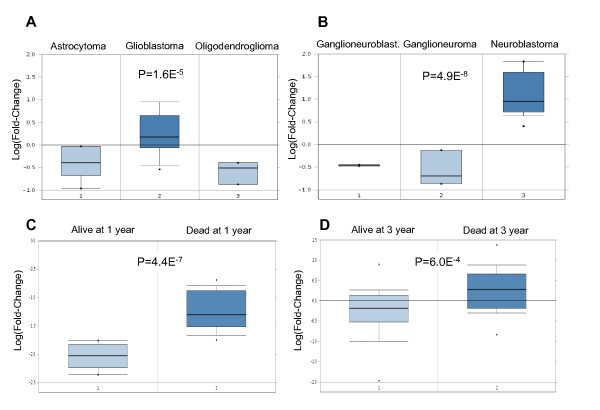
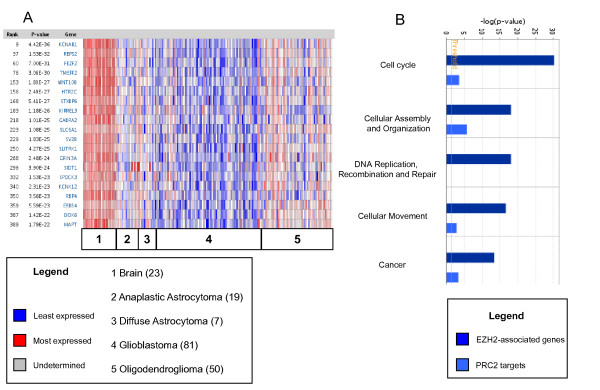
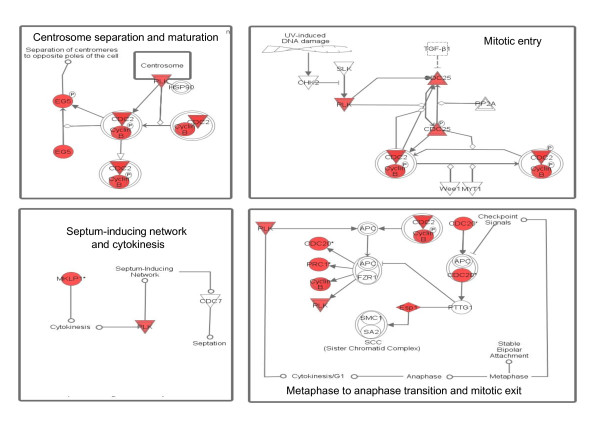
Polycomb group (PcG) proteins are crucial for neural cancer stem cell (NCSC) self-renewal. However, the relative expression levels of PcG genes in different subtypes of brain tumors, their prognostic role and their effects on cellular pathways have not been investigated. For this purpose, we queried the Oncomine database and found that 4 PcG genes (EZH2, RBBP7, SUZ12, YY1) are specifically expressed in brain tumors. EZH2 expression increases with tumor grade in adult and pediatric brain tumors, and is a poor prognostic factor. In glioblastoma, EZH2 inhibits differentiation, and activates cancer-, cell cycle- and cellular movement-related genes. In keeping with previously published data, our results suggest that EZH2 is both a prognostic factor and a promising therapy target in brain tumors.
Overview
The claims and statistics of this paper haven’t been checked yet.
Run the check — free, no account needed. It reads the open-access text and checks the sources it cites.
Integrity signals
Registry
Cites
Statistics
Figures
Verification
Claims the paper makes
The claims and statistics of this paper haven’t been checked yet.
Run the check — free, no account needed. It reads the open-access text and checks the sources it cites.
Claims other papers make about this one
Each is checked against this paper’s own text: does it say what the citing paper says it does?
In the citing paper
“Several studies showed that up-regulation of miR-128-3p profoundly reduced the expression of core protein components of PRC1 and PRC2: BMI-1 (Polycomb complex protein BMI-1)77,126,127 and SUZ12 (Polycomb protein SUZ12),77,128,129 respectively.”
From MiR-128-3p – a gray eminence of the human central nervous system (2024) · cites this paper as [129]
Self-check
Percentages, sums and reported differences re-computed from the paper’s own numbers.
The self-check needs the paper’s full text.
Citations
Cites
EZH2 is downstream of the pRB-E2F pathway, essential for proliferation and amplified in cancer.
Bracken, A. P., Pasini, D., Capra, M., Prosperini, E., Colli, E., & Helin, K. (2003) · The EMBO Journal · doi:10.1093/emboj/cdg542 · Cited by 1,196
Research works printed but not linked: 22
- Kaderali Z, Lamberti-Pasculli M, Rutka JT: The changing epidemiology of paediatric brain tumours: a review from the Hospital for Sick Children. Childs Nerv Syst. 2009, 25: 787-793. 10.1007/s00381-008-0771-9 · DOI
- MacDonald TJ, Rood BR, Santi MR, Vezina G, Bingaman K, Cogen PH, Packer RJ: Advances in the diagnosis, molecular genetics, and treatment of pediatric embryonal CNS tumors. Oncologist. 2003, 8: 174-186. 10.1634/theoncologist.8-2-174 · DOI
- Ohgaki H, Kleihues P: Epidemiology and etiology of gliomas. Acta Neuropathologica. 2005, 109: 93-108. 10.1007/s00401-005-0991-y · DOI
- Nagarajan RP, Costello JF: Epigenetic mechanisms in glioblastoma multiforme. Semin Cancer Biol. 2009, 19: 188-197. 10.1016/j.semcancer.2009.02.005 · DOI · Paper page
- Mathews LA, Crea F, Farrar WL: Epigenetic gene regulation in stem cells and correlation to cancer. Differentiation. 2009, 78: 1-17. 10.1016/j.diff.2009.04.002 · DOI
- Vogel T, Stoykova A, Gruss P: Differential expression of polycomb repression complex 1 (PRC1) members in the developing mouse brain reveals multiple complexes. Dev Dyn. 2006, 235: 2574-2585. 10.1002/dvdy.20876 · DOI
- Singh SK, Hawkins C, Clarke ID, Squire JA, Bayani J, Hide T, Henkelman RM, Cusimano MD, Dirks PB: Identification of human brain tumour initiating cells. Nature. 2004, 432: 396-401. 10.1038/nature03128 · DOI
- Salmaggi A, Boiardi A, Gelati M, Russo A, Calatozzolo C, Ciusani E, Sciacca FL, Ottolina A, Parati EA, La Porta C: Glioblastoma-derived tumorospheres identify a population of tumor stem-like cells with angiogenic potential and enhanced multidrug resistance phenotype. Glia. 2006, 54: 850-860. 10.1002/glia.20414 · DOI
- Fu J, Liu ZG, Liu XM, Chen FR, Shi HL, Pangjesse CS, Ng HK, Chen ZP: Glioblastoma stem cells resistant to temozolomide-induced autophagy. Chin Med J (Engl). 2009, 122: 1255-1259.
- Zeppernick F, Ahmadi R, Campos B, Dictus C, Helmke BM, Becker N, Lichter P, Unterberg A, Radlwimmer B, Herold-Mende CC: Stem cell marker CD133 affects clinical outcome in glioma patients. Clin Cancer Res. 2008, 14: 123-129. 10.1158/1078-0432.CCR-07-0932 · DOI
- Zhou BB, Zhang H, Damelin M, Geles KG, Grindley JC, Dirks PB: Tumour-initiating cells: challenges and opportunities for anticancer drug discovery. Nat Rev Drug Discov. 2009, 8: 806-823. 10.1038/nrd2137 · DOI
- Suva ML, Riggi N, Janiszewska M, Radovanovic I, Provero P, Stehle JC, Baumer K, Le Bitoux MA, Marino D, Cironi L: EZH2 Is Essential for Glioblastoma Cancer Stem Cell Maintenance. Cancer Res. 2009,
- Ben-Porath I, Thomson MW, Carey VJ, Ge R, Bell GW, Regev A, Weinberg RA: An embryonic stem cell-like gene expression signature in poorly differentiated aggressive human tumors. Nat Genet. 2008, 40: 499-507. 10.1038/ng.127 · DOI
- Hayry V, Tanner M, Blom T, Tynninen O, Roselli A, Ollikainen M, Sariola H, Wartiovaara K, Nupponen NN: Copy number alterations of the polycomb gene BMI1 in gliomas. Acta Neuropathol. 2008, 116: 97-102. 10.1007/s00401-008-0376-0 · DOI · Paper page
- Abdouh M, Facchino S, Chatoo W, Balasingam V, Ferreira J, Bernier G: BMI1 sustains human glioblastoma multiforme stem cell renewal. J Neurosci. 2009, 29: 8884-8896. 10.1523/JNEUROSCI.0968-09.2009 · DOI
- Chang CJ, Hsu CC, Yung MC, Chen KY, Tzao C, Wu WF, Chou HY, Lee YY, Lu KH, Chiou SH, Ma HI: Enhanced radiosensitivity and radiation-induced apoptosis in glioma CD133-positive cells by knockdown of SirT1 expression. Biochem Biophys Res Commun. 2009, 380: 236-242. 10.1016/j.bbrc.2009.01.040 · DOI
- Gieni RS, Hendzel MJ: Polycomb group protein gene silencing, non-coding RNA, stem cells, and cancer. Biochem Cell Biol. 2009, 87: 711-746. 10.1139/O09-057 · DOI
- Kohler C, Villar CB: Programming of gene expression by Polycomb group proteins. Trends Cell Biol. 2008, 18: 236-243. 10.1016/j.tcb.2008.02.005 · DOI
- Rhodes DR, Yu J, Shanker K, Deshpande N, Varambally R, Ghosh D, Barrette T, Pandey A, Chinnaiyan AM: ONCOMINE: a cancer microarray database and integrated data-mining platform. Neoplasia. 2004, 6: 1-6. · DOI
- Wang H, Ouyang Y, Somers WG, Chia W, Lu B: Polo inhibits progenitor self-renewal and regulates Numb asymmetry by phosphorylating Pon. Nature. 2007, 449: 96-100. 10.1038/nature06056 · DOI
- Dietzmann K, Kirches E, von B, Jachau K, Mawrin C: Increased human polo-like kinase-1 expression in gliomas. J Neurooncol. 2001, 53: 1-11. 10.1023/A:1011808200978 · DOI
- Degenhardt Y, Lampkin T: Targeting Polo-like kinase in cancer therapy. Clin Cancer Res. 16: 384-389. · DOI
Cited by
Sorted by citations
Stem cell programs in cancer initiation, progression, and therapy resistance
Huang, T., Song, X., Xu, D., Tiek, D., Goenka, A., Wu, B., Sastry, N., Hu, B., & Cheng, S.-Y. (2020) · Theranostics · doi:10.7150/thno.41648 · Cited by 524
MiR-128-3p – a gray eminence of the human central nervous system
Kiel, K., Król, S. K., Bronisz, A., & Godlewski, J. (2024) · Molecular Therapy Nucleic Acids · doi:10.1016/j.omtn.2024.102141 · Cited by 15
Metadata
- Authors
- Crea, F., Hurt, E. M., & Farrar, W. L.
- Venue
- Molecular Cancer
- Published
- 2010-09-30
- Volume
- 9
- Issue
- 1
- ISSN
- 1476-4598
- PMC
- PMC2958980
- Cited by
- 70
- References
- 1
- Language
- en
About these checks
Registry, retraction, Cites and statistics results are computed, not judged, with one exception: a printed reference that no index lists is read once by a model before it counts as a citation error. Claims are extracted by a model and kept only when their quote appears verbatim in the text; each cited source is then checked, with a model’s help, for whether it says what the claim relies on. Those verdicts can be wrong — read the claim’s quote and the cited source before relying on one.
Statistics and arithmetic are recomputed, not judged.
Confidence bands are shown only for fields calibrated on our annotated test set. None is calibrated yet, so no band is shown.
What counts as a claim ›How we measure confidence ›How we check this ›
Are you an author, or do you see a problem with this page? Request a review
