

Development and validation of the short version of the Psychological General Well-Being Index (PGWB-S)
Open accessThe DOI matches its Crossref record; 27 of the 27 references it cites were found in a registry or an index.
Abstract
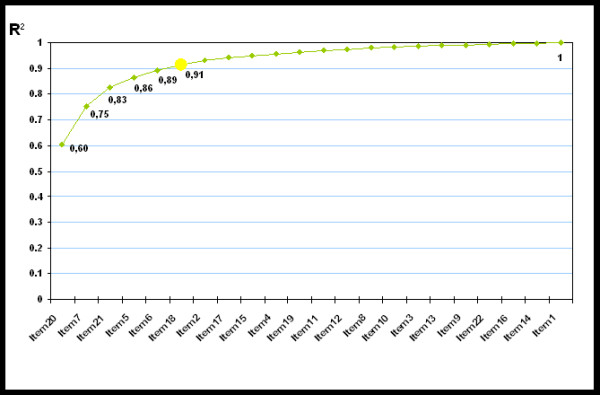
BACKGROUND: The PGWBI is a 22-item health-related Quality of Life (HRQoL) questionnaire developed in US which produces a self-perceived evaluation of psychological well-being expressed by a summary score. The PGWBI has been validated and used in many countries on large samples of the general population and on specific patient groups. Recently a study was carried out in Italy to reduce the number of items of the original questionnaire, yielding the creation of a shorter validated version of the questionnaire (PGWB-S). The purpose of the present paper is to describe the methods adopted and to report and discuss the relevance of results. METHODS: Data for this study were collected from 4 different population samples: two general population samples a student and a patient sample. On the basis of the results of the first (development) sample population, six relevant items were identified statistically from the original questionnaire and grouped to assemble a new summary scale. Following the newly created 6-item questionnaire was administered in three independent population samples. Descriptive statistics, correlation coefficients, univariate and multivariate regression analyses were used to compare the performance of the long and short questionnaire, within and between population samples and across relevant subgroups. A further independent sample extracted by an ongoing cancer clinical trial served as final validation step. RESULTS: Overall, the questionnaires were administered to 1443 subjects. Six items were selected by a step-wise approach to explain 90% of the variance of the summary measure of the original questionnaire. Response rates reached 100%, while missing items were not observed. University students (n = 400) showed the highest mean value of the summary measure (75.3); while the patient sample (n = 28) had the lowest score (71.5). The correlation coefficients between the summary measures and the single items according to the different studies were satisfactory, reaching the highest estimates in the student sample. The internal consistency showed high values of the Cronbach's alpha coefficient (range 0.80-0.92) for all three study samples, coming close to the value of the coefficient established for the original questionnaire (0.94). A cross-validation in an independent sample of 755 cancer patients confirmed the item selection procedure and amount of variance explained by the new shorter questionnaire (ranging from 90. 2 to 95.1 %, across age and sex strata). CONCLUSION: The newly identified PGWB-S showed good acceptability and validity for the use in various settings in Italy. The translation of the PGWB-S into different languages, and its use in other linguistic settings will add evidence about its cross-cultural validity.
Overview
The claims and statistics of this paper haven’t been checked yet.
Free: it reads the open-access text and checks the first 5 claims that cite a source we can check. Create a free account to check every claim.
Integrity signals
Registry
Cites
Statistics
Figures
Verification
Claims the paper makes
The claims and statistics of this paper haven’t been checked yet.
Free: it reads the open-access text and checks the first 5 claims that cite a source we can check. Create a free account to check every claim.
Claims other papers make about this one
Each is checked against this paper’s own text: does it say what the citing paper says it does?
The source backs part of the claim, not all of it — or backs it for a different population, condition or comparison.
In the citing paper
“We recruited 53 E-meter users who had previously passed a short screener (PG-WBI) [33].”
From Progressive Disclosure: When, Why, and How Do Users Want Algorithmic Transparency Information? (2020) · cites this paper as [33]
Experimental — accuracy not yet measured
Self-check
Percentages, sums and reported differences re-computed from the paper’s own numbers.
The self-check needs the paper’s full text.
Citations
Cites
(1992) · PubMed · Cited by 33,716
WARE, J. E., KOSINSKI, M., & KELLER, S. D. (1996) · Medical Care · doi:10.1097/00005650-199603000-00003 · Cited by 17,392 · cited 7×
“Kodraliu G, Mosconi P, Groth N, Carmosino GC, Donzelli A, Gianicolo E, Rossi C, Apolone G: Subjective health status assessment: evaluation of the Italian version of the SF-12 Health Survey.”
InfluentialMcHorney, C. A., Ware, J. E., Rachel Lu, J. F., & Sherbourne, C. D. (1994) · Medical Care · doi:10.1097/00005650-199401000-00004 · Cited by 4,458
Cross-Validation of Item Selection and Scoring for the SF-12 Health Survey in Nine Countries
Gandek, B., Ware, J. E., Aaronson, N. K., Apolone, G., Bjorner, J. B., Brazier, J. E., Bullinger, M., Kaasa, S., Leplege, A., Prieto, L., et al. (1998) · Journal of Clinical Epidemiology · doi:10.1016/s0895-4356(98)00109-7 · Cited by 2,907 · cited 6×
“Kodraliu G, Mosconi P, Groth N, Carmosino GC, Donzelli A, Gianicolo E, Rossi C, Apolone G: Subjective health status assessment: evaluation of the Italian version of the SF-12 Health Survey.”
InfluentialSelf-citationMeasuring Functioning and Well-Being: The Medical Outcomes Study Approach
Stewart, A., & Ware, J. (1992) · doi:10.7249/cb361 · Cited by 2,689 · cited 1×
“As emphasised in the literature [18,20-22], great care was taken to ensure and document the basic characteristics of the questionnaire in terms of acceptability, internal consistency (Cronbach's alpha coefficient), known-group validity and stability of results across samples and subgroups.”
Assessment of quality of life in clinical trials of cardiovascular therapies
Wenger, N. K., Mattson, M. E., Furberg, C. D., & Elinson, J. (1984) · The American Journal of Cardiology · doi:10.1016/s0002-9149(84)80232-5 · Cited by 982
(1984) · Medical Entomology and Zoology · Cited by 741
Methods for Testing Data Quality, Scaling Assumptions, and Reliability
Ware, J. E., & Gandek, B. (1998) · Journal of Clinical Epidemiology · doi:10.1016/s0895-4356(98)00085-7 · Cited by 618 · cited 1×
“As emphasised in the literature [18,20-22], great care was taken to ensure and document the basic characteristics of the questionnaire in terms of acceptability, internal consistency (Cronbach's alpha coefficient), known-group validity and stability of results across samples and subgroups.”
Dimenäs, E., Carlsson, G., Glise, H., Israelsson, B., & Wiklund, I. (1996) · Scandinavian Journal of Gastroenterology · doi:10.3109/00365529609095544 · Cited by 380
Assessment of Quality of Life in Clinical Trials of Cardiovascular Therapies
DMG (1985) · Thorax · doi:10.1136/thx.40.7.543 · Cited by 339
Research works printed but not linked: 5
- Hunt SM McKenna S A British adaptation of the general Well-being Index: a new tool for clinical research British J Med Economics 1992 2 49 60
- Bullinger M Heinisch M Ludwig M Geier S Skalen zur Erfassung des Wohlbefindens. Psychometrische Ueberpruefung des Profile of Mood States (POMS) und des Psychological General Well-Being Index (PGWBI) Z Differentielle Diagn Psychol 1990 11 53 61
- Rasmussen NA Norholm V Bech P The internal and external validity of the Psychological General Well-Being Schedule (PGWB) Quality of Life News Letter 1999 22 7
- Grossi E Mosconi P Groth N Niero M Apolone G IL Questionario Psychological General Well Being. Questionario per la valutazione dello stato generale di benessere psicologico. Versione Italiana. Istituto di Ricerche Farmacologiche "Mario Negri", Milan 2002
- Apolone G Mosconi P Quattrociochi L Gianicolo EAL Groth N Ware JE Jr Questionario sullo stato di salute SF-12 Versione Italiana Guerini e Associati Editore, Milan 2001
Cited by
Items 201–299 of 299
Angeline, J., & Rathnasabapathy, M. (2023) · Universal Journal of Public Health · doi:10.13189/ujph.2023.110607 · Cited by 6
Khraban, T. Y. (2023) · Educational Analytics of Ukraine · doi:10.32987/2617-8532-2023-1-51-66 · Cited by 6
Relationship between Exercise Frequency and Stress in Korean Postmenopausal Women
Cho, Y. J., & Lee, G. H. (2016) · Korean Journal of Stress Research · doi:10.17547/kjsr.2016.24.3.161 · Cited by 3
Viganò, F., Grossi, E., & Blessi, G. T. (2018) · Urban Studies and Public Administration · doi:10.22158/uspa.v1n2p301 · Cited by 3
Self-citationGo for it! Exercising makes you happy and strong.
Tramontano, D. (2021) · Translational Medicine UniSa · doi:10.37825/2239-9747.1019 · Cited by 3
HEALTH-RELATED QUALITY OF LIFE, SYMPTOMS AND COMORBIDITY IN INFLAMMATORY BOWEL DISEASE
Haapamäki, J. (2011) · Helda - University of Helsinki Institutional Repository · Cited by 11
Groff, E., Soccal, B., Carrossa, F., Vianello, F., Talomo, S., Feltrin, A., Scarzello, G., Ocagli, H., Gregori, D., & Martinato, M. (2024) · Frontiers in Endocrinology · doi:10.3389/fendo.2024.1472448 · Cited by 3
Rodrigues, M. F., Junkes, L., Appolinário, J. C., & Nardi, A. E. (2025) · Personalized Medicine in Psychiatry · doi:10.1016/j.pmip.2025.100148 · Cited by 3
Bicarbonate Natural Mineral Water from Source “F2 Păltiniș” Facilitates Digestion—A Pilot Study
Pace, F., Morselli‐Labate, A. M., Issa, A. A., & Zanasi, A. (2025) · Gastrointestinal Disorders · doi:10.3390/gidisord7030047 · Cited by 2
Self-citationNew development: The elephant in the room—Cultural participation for well-being
Lerouge, R., & Arnaboldi, M. (2025) · Public Money & Management · doi:10.1080/09540962.2025.2544041 · Cited by 4
Camisasca, E., Covelli, V., Cafagna, D., Manzoni, G. M., Cantoia, M. E. A., Bavagnoli, A., Crescenzo, P., Marsicovetere, V., Pesce, M., & Visco, M. A. (2023) · Frontiers in Psychology · doi:10.3389/fpsyg.2023.1166049 · Cited by 2
Donthu, R. K., Mohammed, A. S., Kiran, N. O. A. S., Kancharlapalli, P. K., & Pallem, A. (2024) · Industrial Psychiatry Journal · doi:10.4103/ipj.ipj_341_23 · Cited by 2
“PGWBI, [8] a 22-item scale measuring subjective psychological well-being across six domains, was used to evaluate anxiety, depression, positive well-being, self-control, general health, and vitality.”
Perinatal loss: attachment, grief symptoms and women’s quality of life
Vismara, L., Ahmad, M., Enrica, S., & Sechi, C. (2024) · Journal of Reproductive and Infant Psychology · doi:10.1080/02646838.2024.2419374 · Cited by 5
“To assess women’s psychological and general quality of life we used the Psychosocial General Well-Being Index (PGWBI; Grossi et al., 2006).”
Cacique, D. B., Passini, R., Osis, M. J. M. D., Oliveira, H. C., Padilha, K. M., Tedesco, R. P., Vettorazzi, J., Nascimento, D. J., Coutinho, P. R., Coutinho, I., et al. (2018) · Revista da Associação Médica Brasileira · doi:10.1590/1806-9282.64.12.1091 · Cited by 2
Fitness and psychological effects of tele-exercise in healthy populations. Preliminary study
Fucarino, A., Zimatore, G., Fabbrizio, A., Garrido, N. D., Reis, V. M., Vilaça‐Alves, J., Sausa, M., Matteo, B. M., Peixoto, R., Perušina, P., et al. (2024) · Frontiers in Digital Health · doi:10.3389/fdgth.2024.1496196 · Cited by 3
Gut Microbiota and Fear Processing in Women Affected by Obesity: An Exploratory Pilot Study
Scarpina, F., Turroni, S., Mambrini, S. P., Barone, M., Cattaldo, S., Mai, S., Prina, E., Bastoni, I., Cappelli, S., Castelnuovo, G., et al. (2022) · Nutrients · doi:10.3390/nu14183788 · Cited by 3
Developing a framework for culture-based interventions for well-being in Cluj-Napoca, Romania
Cacovean, C. M., Dascăl, M. D., & Zbranca, M.-R. (2022) · City Territory and Architecture · doi:10.1186/s40410-022-00182-1 · Cited by 3
““deliberate efforts to increase the impact of health service innovations successfully tested in pilot or experimental projects so as to benefit more people and to foster policy and programme development on a lasting basis” (in Hardee et al. 2012, p.2). According to Hardee et al. (2012), in practice scaling up may take…”
Brunani, A., Brenna, E., Zambon, A., Soranna, D., Donini, L. M., Busetto, L., Bertoli, S., Capodaglio, P., & Cancello, R. (2024) · Journal of Clinical Medicine · doi:10.3390/jcm13175237 · Cited by 4
Influencing Factors on Mid-Life Well-Being
Chang, H.-K. (2020) · Medico-Legal Update · doi:10.37506/mlu.v20i1.651 · Cited by 2
Riccio, M. P., Borrelli, M., Fioretti, M. T., Bene, M. D., Bravaccio, C., Poeta, M., & Santamaria, F. (2020) · Research Square · doi:10.21203/rs.3.rs-52268/v1 · Cited by 2
Sorbi, M. H., Rahmanian, M., & Azizi, R. (2019) · Thrita · doi:10.5812/thrita.63926 · Cited by 2
Pignataro, P., Simone, S., Dicarlo, M., Cassone, F., Caggiano, G., Guido, R., Piancone, F., Sivo, C., Dipalma, A. M., Russo, R., et al. (2026) · Frontiers in Psychology · doi:10.3389/fpsyg.2025.1734424 · Cited by 1
Cultural, social, sports, and leisure activities and subjective well-being during the pandemic
Blessi, G. T., & Grossi, E. (2026) · Academia Mental Health and Well-Being · doi:10.20935/mhealthwellb8204 · Cited by 1
Self-citationThe acromegaly patient experience: burden of treatment and quality of life
Geer, E. B., & Sisco, J. (2026) · The Journal of Clinical Endocrinology & Metabolism · doi:10.1210/clinem/dgag122 · Cited by 3
Toto, V., Faiola, A., Ponzo, M., Pazzaglia, M., Donato, F. D., Gratteri, M., Romano, F. D., Marangi, G. F., & Persichetti, P. (2026) · Journal of Plastic Reconstructive & Aesthetic Surgery · doi:10.1016/j.bjps.2026.07.006 · Cited by 1
Psychological General Well-Being Index (PGWBI)
Wang, I. Y., & Cheung, R. Y. M. (2025) · Springer eBooks · doi:10.1007/978-3-031-47219-0_109 · Cited by 1
Afolabi, O. A., Abel, C., Dabar, A. M., Oveh, R. O., Ibraheem, S. A., Sam-Agudu, N. A., Tantawi, M. E., Salako, A. O., Eleje, G. U., Lusher, J. M., et al. (2025) · Frontiers in Oral Health · doi:10.3389/froh.2025.1592482 · Cited by 2
Barbiani, D., Antonietti, A., & Pagnini, F. (2026) · International Journal of Clinical and Health Psychology · doi:10.1016/j.ijchp.2026.100673 · Cited by 1
Lifestyles, Self-Esteem and Mental Well-Being in Students Transitioning to Higher Education
Loureiro, L. M. D. J., Silva, A., & Pedreiro, A. T. (2026) · Healthcare · doi:10.3390/healthcare14060799 · Cited by 1
Zimatore, G., Cardinali, L., Baldari, C., Minozzi, M., du Mérac, É. R., Grimaldi, P., Mocini, E., Migliaccio, S., Vincenzo, O. D., Guidetti, L., et al. (2026) · Frontiers in Sports and Active Living · doi:10.3389/fspor.2026.1781555 · Cited by 3
Volpato, E., Poletti, V., Candia, M. D. D., Palma, L., Pilon, A., Carpagnano, G., Banfi, P., & Pierucci, P. (2026) · Medical Science · doi:10.3390/medsci14020270 · Cited by 1
“A validated short Italian version (PGWB-S, 6 items) [35], referring to the previous month, was also considered.”
Pugliese, E., Uvelli, A., van Emmerik, A., & Arntz, A. R. (2026) · Clinical Psychology in Europe · doi:10.32872/cpe.22027 · Cited by 1
“The Psychological General Well-Being Index – Short (PGWB-S; Grossi et al., 2006) is a 6-item self-report scale measuring overall subjective well-being.”
Progetto cultura e benessere sul territorio italiano: interazione tra cultura, salute e benessere
Grossi, E., Blessi, G. T., & Sacco, P. L. (2013) · Springer eBooks · doi:10.1007/978-88-470-2781-7_15 · Cited by 1
Self-citationLo psicologo di base: primi risultati dalla sperimentazione in Veneto
Santoro, P., Canale, N., Laugelli, E., Michieletto, N., Vieno, A., Simonelli, A., & Santinello, M. (2016) · PSICOLOGIA DELLA SALUTE · doi:10.3280/pds2016-003006 · Cited by 1
Ethical Considerations in Research and Medical Care of Menopause
Mendoza, C. C. C., Anguiano‐Robledo, L., Lugo‐Martínez, G., Jiménez‐Zamarripa, C. A., & Hernández-Caballero, M. E. (2018) · InTech eBooks · doi:10.5772/intechopen.74666 · Cited by 1
Subjective well-being in rural and urban Italy
Viganò, F., Grossi, E., & Blessi, G. T. (2023) · Manchester University Press eBooks · doi:10.7765/9781526161642.00033 · Cited by 1
Self-citation(2023) · European Chemical Bulletin · doi:10.48047/ecb/2023.12.si10.00308 · Cited by 2
Social Robotics and Human Computer Interaction for Promoting Wellbeing in the Contemporary City
Biloria, N. M., & Dritsa, D. (2018) · Lecture notes in computer science · doi:10.1007/978-3-319-91244-8_10 · Cited by 3
Well-Being as an Indicator of Quality or Quality-of-Life
Barofsky, I. (2011) · Springer eBooks · doi:10.1007/978-1-4419-9819-4_11 · Cited by 2
The effectiveness of a cross-cultural training programme on expatriate adjustment
Schutte, V. (2016) · Unisa Institutional Repository (University of South Africa) · Cited by 1
The moderating influence of personality on combat veterans transitioning into civilian college life
Davis, J. (2015) · UTC Scholar (University of Tennessee at Chattanooga) · Cited by 2
Rehabilitation Interventions and Health-Related Quality of Life after Myocardial Infarction
Aufman, E. L. (2009) · D-Scholarship@Pitt (University of Pittsburgh)
Approfondimenti su differenze di genere nell’influsso della cultura sul benessere psicologico
Lonardi, C., Grossi, E., Compare, A., Cerutti, R., & Niero, M. (2013) · Springer eBooks · doi:10.1007/978-88-470-2781-7_17
Self-citationde Oliveira, W. T., Michel, G., Benedetti, S., Marchi, J. A., Cassarotti, M. D. S., Wakiuchi, J., & Sales, C. A. (2013) · Cited by 1
Qualità della vita e benessere psicologico: il caso dell'acalasia esofagea
di Masi, M. N., Napolitano, C., & Bosco, A. (2015) · Rivista internazionale di filosofia e psicologia · doi:10.4453/rifp.2015.0053
Grossi, E. (2012) · Springer eBooks · doi:10.1007/978-88-470-2080-1_21
Self-citationAmaral, R. C. (2015) · Digital Library of Theses and Dissertations (Universidade de São Paulo) · doi:10.11606/t.5.2015.tde-05102015-090623 · Cited by 3
Psychometric Tests: Epistemology, Rationale, Aims, and Applicability in Cardiology. Open Issues
Giornetti, A. (2016) · Springer eBooks · doi:10.1007/978-3-319-33214-7_14
Manzoni, G. M., & Rossi, A. A. (2016) · The European Proceedings of Social & Behavioural Sciences · doi:10.15405/epsbs.2016.07.02.1
Methods prospectively collected data from patients with acromegaly, who have
Kyriakakis, N. (2015)
Mota, D. C. L. (2017) · Digital Library of Theses and Dissertations (Universidade de São Paulo) · doi:10.11606/t.59.2017.tde-02032017-141710 · Cited by 1
The Interdisciplinary Study of Generosity: The Sum Is Greater Than Its Parts
Herzog, P. S. (2019) · Springer eBooks · doi:10.1007/978-3-030-26500-7_5
Grossi, E., Massini, G., & Buscema, M. (2020) · Elsevier eBooks · doi:10.1016/b978-0-12-817133-2.00004-5
Self-citationSamajdar, S., & Halder, S. (2021) · Telangana Journal of Psychiatry · doi:10.4103/tjp.tjp_18_21 · Cited by 2
Assessment of the impact of coronavirus disease (COVID-19) on glycemic control
Aldabbagh, H. K. S., & Ali, W. M. (2022) · International Journal of Health Sciences · doi:10.53730/ijhs.v6ns5.11939
Leite, Â. M. T., Almeida, A. C., & Pereira, M. G. (2022) · Journal of Men s Health · doi:10.31083/j.jomh1805110 · Cited by 1
RICCIO, M. P., M†, B., Cave, V. D., Biondi, C., Ma, M., Corcione, A., & C, S. F. A. B. (2023) · Reports on Global Health Research · doi:10.29011/2690-9480.100166
Pierro, F. D., Agnelli, G. M., Conti, D. M., Maggio, A. D., Tomaino, S. C. M., Ingenito, M. R., Piontini, A., Bertuccioli, A., Zerbinati, N., Guasti, L., et al. (2023) · Minerva Gastroenterology · doi:10.23736/s2724-5985.23.03560-x
“I cannot see your fear!” Altered recognition of fearful facial expressions in anorexia nervosa
Vaioli, G., Bastoni, I., Villa, V., Mendolicchio, L., Castelnuovo, G., Mauro, A., & Scarpina, F. (2023) · Frontiers in Psychology · doi:10.3389/fpsyg.2023.1280719
Psychological General Well-Being Index (PGWB)
Grossi, E., & Compare, A. (2023) · Springer eBooks · doi:10.1007/978-3-031-17299-1_2309
Self-citationAttentional Differences Between Males and Females for Emojis During the Emotional Stroop Task
Patel, D., Bhagat, O. L., & Dixit, A. (2024) · Cureus · doi:10.7759/cureus.60428 · Cited by 1
Damilep, J. Z., Dachalson, E. M. M., & Ejikeme, G. G. (2023) · NIU journal of social sciences. · doi:10.58709/niujss.v9i4.1767
Cohort Profile: The St. Göran Bipolar ProjectPreprint
Pålsson, E., Jönsson, L., Klahn, A. L., Kardell, M., Göteson, A., Abé, C., Aspholmer, A., Liberg, B., Pelanis, A., Sparding, T., et al. (2024) · Research Square · doi:10.21203/rs.3.rs-4436841/v1
Petrovici, N., Pop, C., & Zbranca, R. (2024) · Empirical Studies of the Arts · doi:10.1177/02762374241291479 · Cited by 1
Disgust drivers do not impact on the altered body in action representation in anorexia nervosa
Scarpina, F., Vaioli, G., Brusa, F., Bastoni, I., Villa, V., Mendolicchio, L., Castelnuovo, G., Mauro, A., & Sedda, A. (2024) · Quarterly Journal of Experimental Psychology · doi:10.1177/17470218241298668 · Cited by 1
Нефедова, Т. (2023) · Kyiv journal of modern psychology and psychotherapy · doi:10.48020/mppj.2023.02.08
Effetti della Scrittura espressiva su un gruppo di soggetti affetti da schizofrenia
Bisagni, S., & Valenzano, V. (2025) · GRUPPI · doi:10.3280/gruoa2-2022oa19799
Impact on well-being and motivation to physical activity practice by ‘Moving Park’ project in Italy
Xu, Z., Marini, S., Mauro, M., Grigoletto, A., Barone, G., Pinelli, E., Zinno, R., Pilone, P. L., Arduini, S., Vitiello, M., et al. (2025) · Sport Sciences for Health · doi:10.1007/s11332-025-01447-1
Joseph, R. A., Turner, T. M., & Kim, J. J. (2025) · Journal of Christian Nursing · doi:10.1097/cnj.0000000000001289
Danioni, F., Paleari, F. G., Lumera, D., Franchini, C., & Regalia, C. (2025) · International Journal of Offender Therapy and Comparative Criminology · doi:10.1177/0306624x251345941
Hadi, H. A. (2025) · EKOMA Jurnal Ekonomi Manajemen Akuntansi · doi:10.56799/ekoma.v4i5.10583
Qualité de vie au travail : pour des organisations compétitives et inclusives
Bezzaa, A., & Yadari, K. E. (2025) · doi:10.3917/emi.farah.2025.01.0039
Blessi, G. T., Grossi, E., & Colleoni, M. (2025) · Urban Studies and Public Administration · doi:10.22158/uspa.v8n1p36
Self-citationUsubini, A. G., Ducale, S., Bondesan, A., Caroli, D., Frigerio, F., Savino, S., Abbruzzese, L., Castelnuovo, G., & Sartório, A. (2025) · Journal of Clinical Medicine · doi:10.3390/jcm14197127
Epifanio, M. S., Spicuzza, V., Riolo, M., Cusumano, E., Piombo, M. A., & Grutta, S. L. (2025) · Healthcare · doi:10.3390/healthcare13222915
Adolescent Oral, Mental and Sexual Wellness
Folayan, M. O., Fatusi, A., & Oladeji, B. D. (2025) · Frontiers research topics · doi:10.3389/978-2-8325-7245-0
A small-scale study on dancing for people living with Parkinson’s disease
Björkdahl, A., Fristedt, S., Filipowicz, K., Bergman, P., Johansson, I.-K., & Silva, I. S. T. (2025) · PLoS ONE · doi:10.1371/journal.pone.0335433
Bertolotti, M., Cassinari, A., Dacquino, M., AMaconi, & 高橋, 知. (2025) · Working Paper of Public Health · doi:10.4081/wpph.2025.10531 · Cited by 1
Self-citationEvaluating the sustained psychological benefits of on-site employee health programs
Clancy, S. S. (2012) · UTC Scholar (University of Tennessee at Chattanooga)
Amrullah, R. A., Arleiny, A., Imanto, F., Moejiono, M., & Prayitno, P. (2025) · Central Community Development Journal · doi:10.55942/ccdj.v5i2.1344
YANIK, G. D., Çakır, F. S., & Adıgüzel, Z. (2026) · European journal of training and development · doi:10.1108/ejtd-05-2025-0096 · Cited by 1
Facchin, F., Bonanomi, A. G., Vagnini, D., Cetera, G. E., & Saita, E. (2026) · BMC Psychology · doi:10.1186/s40359-026-04030-6 · Cited by 1
Pascucci, M., & Savio, S. D. (2026) · Naturaleza y libertad revista de estudios interdisciplinares · doi:10.24310/nyl.20.2026.21942
Suresh, C., Manjunath, S. B., Manivasagan, M. S., Chaithra, M., Chakrashali, S. B., Anethyar, Y., & Basavegowda, M. (2026) · Research Square · doi:10.21203/rs.3.rs-8624080/v1
Quality of life questionnaires in patients with acromegaly: a scoping review
Builes-Montaño, C. E., Contreras-Saldarriaga, J. E., Arroyo-Ripoll, O. F., & Donado-Gomez, J. H. (2026) · Journal of Patient-Reported Outcomes · doi:10.1186/s41687-026-01022-3
“It has been adapted to many languages and cross-culturally validated in various countries [160].”
Is Competitive Sport Associated with Hedonic Well-Being in Youth with Disabilities?
Fedortsova, D. (2026) · Journal of Applied Sport and Exercise Psychology · doi:10.1026/2941-7597/a000069
Hantelius, V., Johannsson, G., Jakobsson, S., Thurin, E., Hallén, T., Skoglund, T. S., & Ragnarsson, Ó. (2026) · Clinical Endocrinology · doi:10.1111/cen.70139
“…was chosen as an indicator of QoL since psychological well‐being is closely linked to the function of the HPG axis [17, 18], is validated and considered both reliable, consistent, and sensitive to evaluate psychological well‐ being in clinical populations across age and sex strata [18, 19].”
Cultural participation and life satisfaction: an investigation across different family backgrounds
Lerouge, R., & Arnaboldi, M. (2026) · PLoS ONE · doi:10.1371/journal.pone.0346887
Cunningham, C. J. L., Black, K. J., Vosika, E. C., & Gillespie, D. L. (2026) · Journal of Occupational and Environmental Medicine · doi:10.1097/jom.0000000000003744
Enhancing Psychological Resilience and Therapeutic Adherence in Organ Transplantation
(2026) · Frontiers research topics · doi:10.3389/978-2-8325-8084-4
Integrating physical activity into the workplace: opportunities for enhancing employee health
Signorini, G., Scurati, R., Bosio, A., Pagano, A., Magaldi, E., Invernizzi, P. L., & Rigon, M. (2026) · Frontiers in Psychology · doi:10.3389/fpsyg.2026.1812858
Fabio, R. A., Tripodi, R., & Picciotto, G. (2026) · Psychology the Journal of the Hellenic Psychological Society · doi:10.12681/psy_hps.42164
Yutuc, A. V. (2022) · PREO Journal of Business and Management · doi:10.67730/qgrkba87
Fraga, M., Gonçalves, S. D., Monteiro, M. J., & Caramelo, A. (2026) · doi:10.3390/proceedings2026148006
Pugliese, E., Uvelli, A., Barbaro, M. G. F., Papa, C., Visco‐Comandini, F., Mancini, F., & van Emmerik, A. (2026) · Clinical Psychology & Psychotherapy · doi:10.1002/cpp.70339
“Psychological well-being was conceptualized as a broad subjective appraisal of positive emotional and functional health, including positive affect, vitality, self-control and perceived general health, rather than merely the absence of psychological symptoms (Grossi et al. 2006).”
InfluentialCare or Climate? Decoding Psychological Well-Being Pathways in Malaysia’s F&B Workforce
Xia, J. K. P., Lee, L. Y. Y., Tang, K. C., Tang, H. X., Tay, P. H., Tham, K. W., Chaurasia, P., Dhaka, K., & Kee, D. M. H. (2026) · Journal of The Community Development in Asia · doi:10.32535/jcda.v9i3.5071
de Oliveira, E. C. F., Paiva, S. D. P. C., Bloise, E., & dos Reis, F. M. (2026) · Stress and Health · doi:10.1002/smi.70228
Grossi, E., & Cappiello, G. A. (2013) · Springer eBooks · doi:10.1007/978-88-470-2781-7_16
Self-citation
Metadata
- Authors
- Grossi, E., Groth, N., Mosconi, P., Cerutti, R., Pace, F., Compare, A., & Apolone, G.
- Affiliations
- Bracco (Italy) (IT)
- Novartis (Italy) (IT)
- Mario Negri Institute for Pharmacological Research (IT)
- Università Cattolica del Sacro Cuore (IT)
- Corresponding author
- Grossi, Enzo
- Venue
- Health and Quality of Life Outcomes
- Published
- 2006-11-14
- Volume
- 4
- Issue
- 1
- Pages
- 88-88
- ISSN
- 1477-7525 (ISSN-L)
- PMC
- PMC1647268
- OpenAlex
- W2135639115
- Cited by
- 291
- References
- 27
- Citations by year
- 2026: 20 · 2025: 29 · 2024: 25 · 2023: 25 · 2022: 24 · 2021: 20 · 2020: 26 · 2019: 13 · 2018: 15 · 2017: 8 · 2016: 14 · 2015: 16 · 2014: 7 · 2013: 16 · 2012: 9
- FWCI
- 2.42
- Type
- journal article
- Language
- en
- Open access
- gold
- doi.org
- Licence
- cc-by
- creativecommons.org/licenses/by/2.0 (tdm)
- Locations
- Health and Quality of Life Outcomes (publishedVersion, cc-by)
- PubMed (publishedVersion)
- Aisberg (University of Bergamo) (submittedVersion, other-oa)
- DOAJ (DOAJ: Directory of Open Access Journals) (submittedVersion)
- Topics
- Social Sciences › Decision Sciences › Management Science and Operations Research › Psychometric Methodologies and Testing
- Social Sciences › Psychology › Social Psychology › Psychological Well-being and Life Satisfaction
- Social Sciences › Economics, Econometrics and Finance › Economics and Econometrics › Health Systems, Economic Evaluations, Quality of Life
- Keywords
- Psychological General Well-Being Index, psychological well-being, health-related quality of life, questionnaire validation, item selection, cancer patients, university students, internal consistency, cross-cultural adaptation, Italian adaptation, psychometric properties, patient-reported outcomes, translation and back-translation, cross-cultural invariance
- MeSH terms
- Adolescent, Adult, Aged, Attitude to Health, Family Practice, Female, Humans, Italy, Male, Mental Health, Middle Aged, Psychometrics, Quality of Life, Surveys and Questionnaires, Self Concept, Stress, Psychological, Discriminant Analysis
About these checks
Registry, retraction, Cites and statistics results are computed, not judged, with one exception: a printed reference that no index lists is read once by a model before it counts as a citation error. Claims are extracted by a model and kept only when their quote appears verbatim in the text; each cited source is then checked, with a model’s help, for whether it says what the claim relies on. Those verdicts can be wrong — read the claim’s quote and the cited source before relying on one.
Statistics and arithmetic are recomputed, not judged.
Confidence bands are shown only for fields calibrated on our annotated test set. None is calibrated yet, so no band is shown.
What counts as a claim ›How we measure confidence ›How we check this ›
Are you an author, or do you see a problem with this page? Request a review
Data sources
Bibliographic data: Semantic Scholar, OpenAlex, Crossref.
Contains information from the Semantic Scholar Academic Graph Datasets, made available under the ODC Attribution License (ODC-BY 1.0).
Semantic Scholar’s data is described in: Kinney, R., et al. (2023). The Semantic Scholar Open Data Platform. arXiv:2301.10140.
